

Curious about the difference between naan and roti? While both are beloved South Asian breads, they differ in ingredients, texture, cooking methods, and nutrition. This guide explains everything you need to know, helping you choose the right bread for everyday meals, restaurant dining, and your favorite curries.
Difference Between Naan and Roti
If you are wondering about the difference between naan and roti, the answer goes beyond appearance. While both are popular South Asian flatbreads, they differ in ingredients, preparation, texture, nutrition, and cooking methods. This guide explains every difference to help you choose the perfect bread for every meal.
Why People Compare Naan and Roti
Naan and roti are two of the most popular breads served with Pakistani and Indian meals. At first glance, they may look similar because both are round flatbreads often paired with curries, grilled meat, and lentils.
However, they are made differently and have unique flavors and textures.
Some people prefer naan because it is soft, fluffy, and slightly chewy. Others enjoy roti because it is lighter, healthier, and perfect for everyday meals.
Understanding these differences helps you make better choices whether you are cooking at home, dining at a restaurant, or following a healthy diet.
What Is Naan?
Naan is a soft, leavened flatbread traditionally baked inside a hot tandoor, also known as a clay oven.
Unlike many everyday breads, naan contains ingredients that help it rise, giving it its signature fluffy texture.
Traditional naan dough often includes:
- All-purpose flour (maida)
- Yogurt
- Yeast
- Baking powder
- Water
- Salt
Some recipes also include milk, butter, or oil to make the bread even softer.
Once the dough has rested, it is stretched by hand and pressed onto the hot walls of a tandoor. The intense heat creates golden brown spots while keeping the inside soft and airy.
Today, naan is also cooked in ovens, skillets, and cast-iron pans when a tandoor is not available.
Popular Types of Naan
One reason naan is so popular is its variety.
Some of the most common types include:
- Butter naan
- Garlic naan
- Cheese naan
- Plain naan
- Kashmiri naan
- Peshawari naan
- Stuffed naan
Each variation offers a slightly different flavor while maintaining the same soft texture.
Garlic naan is especially popular because it combines melted butter with fresh garlic and cilantro, making it a favorite companion for rich curries.
What Is Roti?
Roti is an unleavened flatbread that has been part of South Asian cooking for centuries.
Unlike naan, roti is made using very simple ingredients.
Traditional roti usually contains:
- Whole wheat flour (atta)
- Water
- Salt (optional)
Some families also brush cooked roti with a little ghee or butter before serving.
Because roti contains no yeast or baking powder, it remains thinner, lighter, and slightly firmer than naan.
It is usually cooked on a flat tawa or griddle instead of inside a tandoor.
Many rotis puff up while cooking, creating a soft interior without requiring any leavening agents.
Types of Roti
Although many people think there is only one kind of roti, several variations exist across South Asia.
Popular types include:
- Chapati
- Tandoori roti
- Phulka
- Missi roti
- Rumali roti
Each version uses slightly different techniques or ingredients while maintaining the simplicity that makes roti a daily staple.
The Main Difference Between Naan and Roti
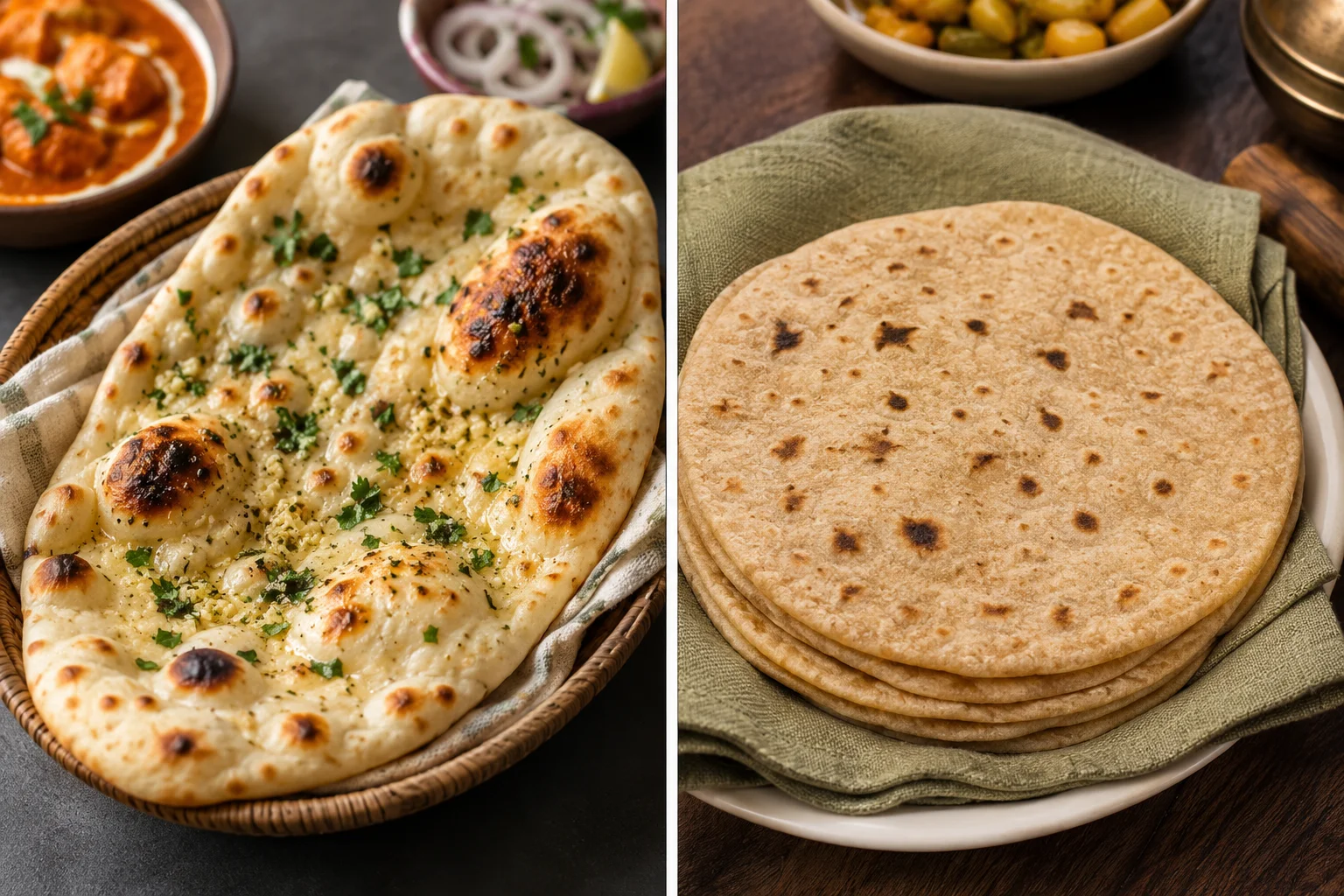
The difference between naan and roti becomes much easier to understand when comparing their basic characteristics.
Ingredients
The biggest difference begins with the flour.
Naan is commonly prepared using all-purpose flour (maida) along with yogurt and yeast.
Roti is traditionally made with whole wheat flour (atta) and water.
Because whole wheat flour contains more fiber, roti is often considered the healthier option.
Leavening
Another major difference is how the dough rises.
Naan uses yeast or baking powder to create a soft and fluffy texture.
Roti contains no leavening agents, making it thinner and lighter.
Cooking Method
Traditional naan is baked inside a very hot tandoor.
The high temperature creates its signature charred spots and chewy texture.
Roti, on the other hand, is cooked on a flat tawa or griddle over direct heat.
Some varieties are also briefly placed over an open flame to puff up.
Texture
Texture is another easy way to tell them apart.
Naan is:
- Thick
- Soft
- Chewy
- Fluffy
Roti is:
- Thin
- Soft
- Light
- Flexible
Because of these differences, each bread pairs well with different types of dishes.
Flavor
Naan has a richer taste because of ingredients like yogurt, butter, milk, and yeast.
Roti has a mild, nutty flavor that comes naturally from whole wheat flour.
Its simple taste allows curries and vegetables to remain the center of attention.
Naan vs Roti: Which Bread Is Healthier?
One of the most common questions people ask is whether naan or roti is healthier.
The answer depends on your dietary goals.
Generally, roti is considered healthier because it is made with whole wheat flour, contains more fiber, and usually includes fewer calories and less fat.
Naan often contains refined flour, butter, yogurt, and sometimes milk, making it richer and higher in calories.
However, naan can still be part of a balanced diet when enjoyed in moderation.
If you eat bread every day, roti is usually the better choice.
If you are enjoying a special meal or restaurant dinner, naan provides a richer dining experience.
Calories and Nutrition Comparison
The nutritional value of these breads differs because of their ingredients.
A typical roti usually contains:
- Fewer calories
- More dietary fiber
- Less fat
- Complex carbohydrates
- Whole grains
A traditional naan often contains:
- More calories
- More carbohydrates
- Higher fat content
- Less fiber
- Richer texture
These differences explain why health-conscious people often choose roti for regular meals while reserving naan for occasional treats.
Which Bread Is Better for Weight Loss?
If your goal is weight management, roti is generally the better option.
Its whole wheat flour provides more fiber, helping you feel full for longer.
Because it is lighter than naan, many people can enjoy a satisfying meal without consuming as many calories.
That said, portion size remains important.
Eating several rotis with high-fat curries can still increase your overall calorie intake.
A balanced meal with vegetables, lean protein, and moderate portions offers the best nutritional value.
Which Bread Tastes Better?
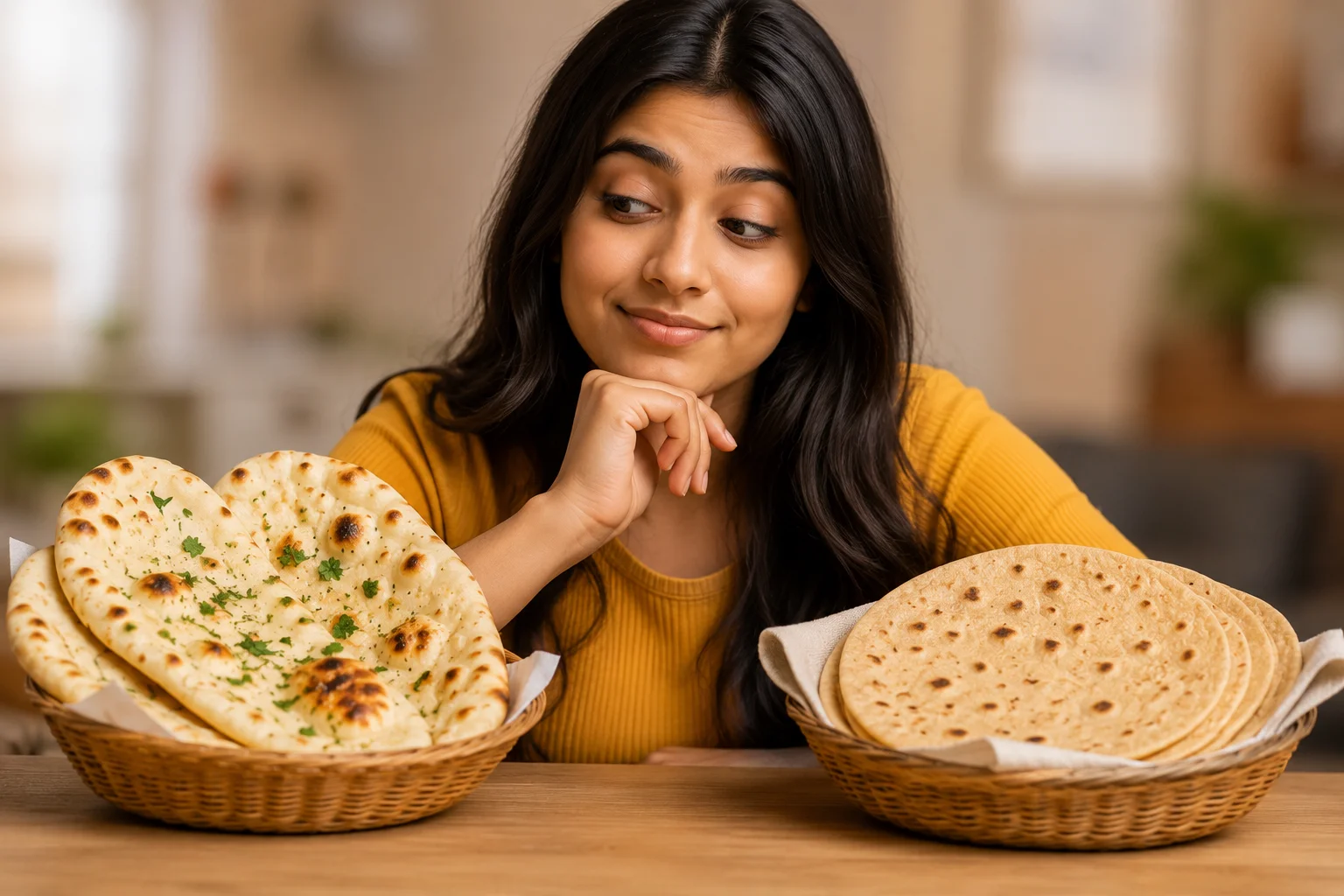
Taste is completely personal.
Some people love the buttery richness and chewy texture of naan.
Others enjoy the wholesome, earthy flavor of fresh roti.
Many families regularly eat both breads depending on the occasion.
For example:
- Naan is popular for restaurant meals and celebrations.
- Roti is commonly served for breakfast, lunch, and dinner at home.
Rather than choosing one over the other, many people appreciate each bread for different reasons.
Homemade Naan vs Homemade Roti
Making either bread at home is easier than many beginners expect.
Homemade roti requires only a few simple ingredients and can be prepared quickly with practice.
Naan takes slightly longer because the dough needs time to rise.
However, modern recipes allow you to cook naan in a skillet or oven if you do not own a tandoor.
Preparing both breads at home lets you control the ingredients, adjust the flavors, and enjoy freshly made flatbreads whenever you like.
Difference Between Naan and Roti in Everyday Cooking
The difference between naan and roti becomes even more noticeable when you see how each bread is used in everyday meals. Although both are popular in Pakistani and Indian cuisine, they are served for different occasions and pair well with different types of dishes.
For many families, roti is an everyday staple. It is quick to prepare, requires only a few ingredients, and complements almost every homemade meal. Since it is made with whole wheat flour (atta), it is filling without being too heavy. Many households prepare fresh roti several times a day because it cooks in only a few minutes.
Naan, however, is often reserved for restaurant meals, family gatherings, and special occasions. Because it is made with leavened dough and traditionally baked in a tandoor, it takes longer to prepare. Its rich flavor and soft texture make it an excellent choice for hearty curries and festive dinners.
How the Dough Is Prepared
One of the biggest reasons these two breads taste different is the way their dough is prepared.
Roti dough is simple and traditional. It is usually made with whole wheat flour, water, and sometimes a pinch of salt. After kneading, the dough rests briefly before being rolled into thin circles. Since it contains no yeast or baking powder, it remains light and cooks quickly.
Naan dough is richer and softer. It is commonly made with all-purpose flour (maida), yogurt, yeast, baking powder, water, and salt. Some recipes also include milk or oil to improve the texture. The dough must rest so the yeast can work, creating the soft and fluffy bread that naan is known for.
Although both breads begin with flour and water, the additional ingredients used in naan create a completely different eating experience.
Cooking Methods: Tandoor vs Tawa
The cooking method is another major difference between naan and roti.
Traditional naan is baked inside a hot clay tandoor. The intense heat cooks the bread quickly while creating slightly charred spots on the surface. This process gives naan its distinctive smoky aroma, chewy texture, and soft interior.
Roti is cooked on a flat tawa or griddle over direct heat. As it cooks, small air pockets begin to form. Many cooks then place the roti directly over an open flame for a few seconds, allowing it to puff up naturally. This creates a soft center while keeping the outside light and slightly crisp.
These traditional cooking methods give each bread its own unique character.
Texture and Appearance
The appearance of naan and roti clearly shows how different they are.
Fresh naan is thick, soft, fluffy, and slightly chewy. Its surface usually has golden brown patches created by the high heat of the tandoor. Many people enjoy naan brushed with melted butter or ghee, which makes it even richer.
Roti is thinner, softer, and more flexible. It has a smooth surface with light brown spots from the tawa. Because it contains no yeast, it is lighter than naan and has a more delicate texture.
These differences make each bread suitable for different meals and occasions.
Taste Comparison
The taste of each bread depends largely on its ingredients.
Naan has a rich, buttery flavor because it often contains yogurt, butter, milk, or oil. The fermentation process also gives it a subtle tang that pairs beautifully with creamy curries and grilled meats.
Roti has a mild, nutty taste that comes naturally from whole wheat flour. Its simple flavor allows the curry or vegetable dish to remain the main attraction instead of competing with the bread.
Neither bread is better than the other. They simply offer different flavors that suit different meals.
Which Bread Pairs Better With Different Dishes?
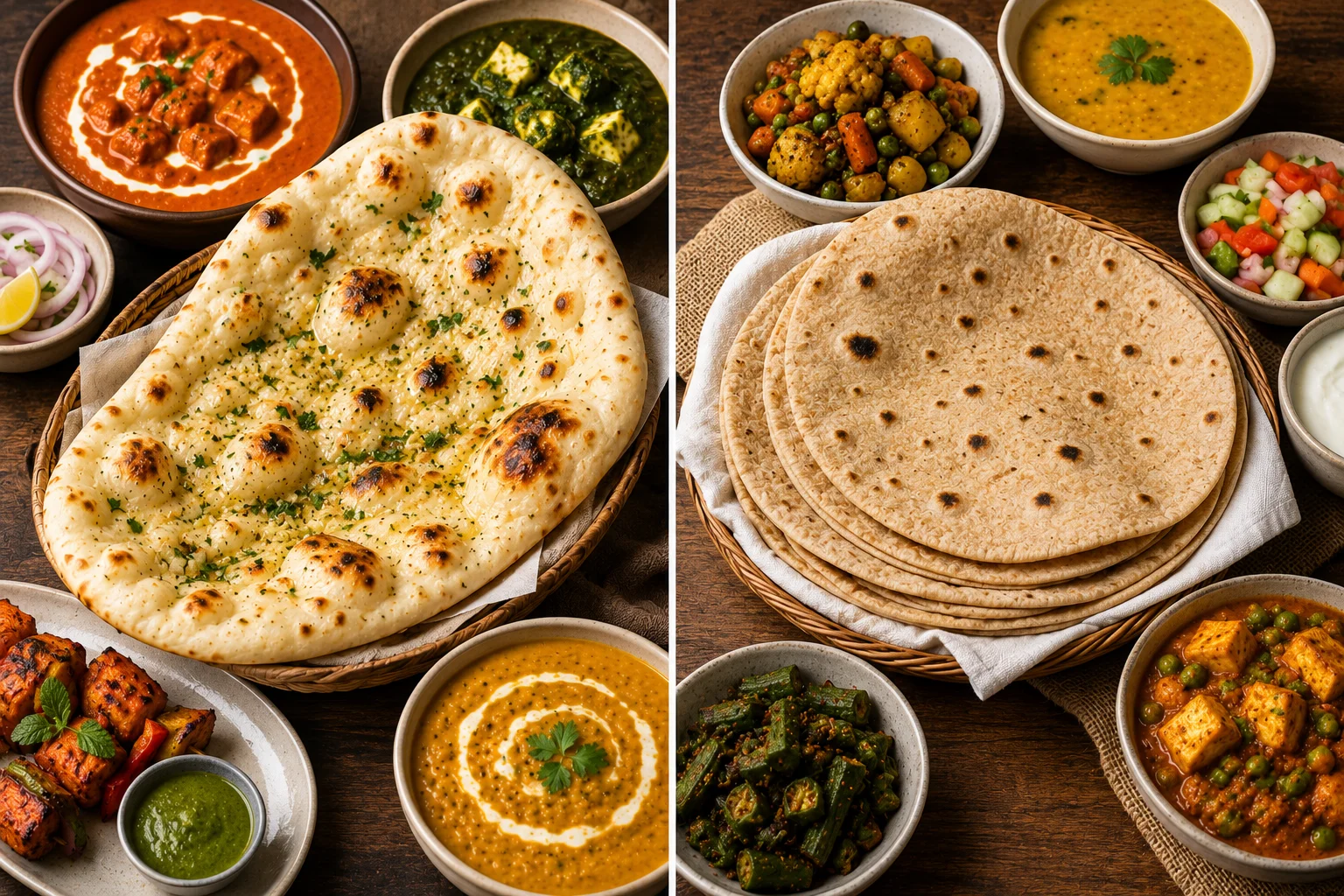
The difference between naan and roti also becomes clear when choosing the right bread for a meal.
Naan is an excellent companion for rich dishes such as Chicken Karahi, Butter Chicken, Korma, Nihari, and other thick curries. Its soft yet sturdy texture easily scoops up creamy gravies.
Roti is commonly served with homemade meals such as dal, vegetable curries, saag, chickpea curry, and lightly seasoned meat dishes. Since it is thinner and lighter, it complements everyday meals without making them feel too heavy.
Many restaurants serve both breads, allowing diners to choose whichever best matches their meal.
Is Naan or Roti Better for Everyday Meals?
For everyday cooking, many families choose roti because it is nutritious, affordable, and easy to prepare.
Since it is made with whole wheat flour, roti contains more fiber and is generally considered a healthier option for daily meals. It also cooks quickly, making it ideal for busy households.
Naan is usually enjoyed less often because its preparation takes more time and its ingredients are richer. Although it can certainly be eaten regularly, it is more commonly associated with celebrations, restaurant dining, and special family meals.
Can You Make Naan Without a Tandoor?
Many people believe that authentic naan can only be made in a traditional clay oven.
Fortunately, that is not the case.
Modern kitchens make it possible to prepare naan using a cast-iron skillet, oven, pizza stone, or heavy frying pan. While the flavor may differ slightly from tandoor-baked naan, it still develops a soft texture and beautifully browned surface.
Roti is even simpler to prepare because it only requires a tawa or any flat pan, making it one of the easiest traditional breads to cook at home.
Common Mistakes When Making Naan and Roti
Beginners often make a few common mistakes when preparing naan and roti.
Adding too much flour while kneading can make both breads dry instead of soft. Rolling the dough unevenly also causes some areas to cook faster than others, leading to inconsistent texture.
Cooking temperature is equally important. If the pan is not hot enough, the bread may become dry. If the heat is too high, the outside may burn before the inside finishes cooking.
For naan, skipping the resting time prevents the yeast from producing a light and fluffy texture. For roti, overcooking removes moisture and leaves the bread tough instead of soft.
With regular practice, these issues become easy to avoid.
Tips for Making Soft Naan and Roti at Home
Making delicious naan and roti at home becomes much easier with a few simple techniques.
Always use fresh flour and knead the dough until it is smooth and elastic. Let the dough rest before rolling so it becomes easier to handle and cooks more evenly.
Cook the bread on a properly heated surface to achieve the best texture. After cooking, keep naan and roti covered with a clean kitchen towel to retain their softness.
If you are preparing naan, brushing it with melted butter or ghee immediately after baking enhances both its flavor and texture. These small details help create homemade naan and roti that taste fresh, soft, and authentic every time.
Frequently Asked Questions
What is the difference between naan and roti?
The difference between naan and roti lies in their ingredients, preparation, and texture. Naan is a leavened bread made with all-purpose flour (maida), yogurt, and yeast, while roti is an unleavened bread made primarily with whole wheat flour (atta) and water. Naan is softer and fluffier, whereas roti is thinner and lighter.
Which has fewer calories, naan or roti?
Roti generally has fewer calories than naan because it is prepared with whole wheat flour and does not usually contain butter, yogurt, or oil. If you are watching your calorie intake, roti is often the better choice.
Can naan replace roti?
Yes, naan can replace roti in many meals, but the dining experience will be different. Naan is richer and heavier, making it ideal for creamy curries and special occasions. Roti is lighter and more suitable for everyday meals.
Can you make naan without a tandoor?
Yes. Although naan is traditionally baked in a clay tandoor, you can also prepare it in a cast-iron skillet, oven, or heavy frying pan at home. The texture may vary slightly, but it will still be soft and flavorful.
Is roti good for weight loss?
Roti can be a good choice for weight management because it contains whole grains, more fiber, and fewer calories than naan. When eaten with balanced portions of vegetables and lean protein, it fits well into a healthy eating plan.
Conclusion
Understanding the difference between naan and roti makes it easier to choose the right bread for every meal. Although both are popular in Pakistani and Indian cuisine, they differ in ingredients, cooking methods, texture, taste, and nutritional value.
If you prefer a light, wholesome bread for everyday meals, roti is an excellent option. Made with whole wheat flour, it is nutritious, easy to prepare, and pairs well with lentils, vegetables, and homemade curries. If you are looking for a richer bread with a soft, fluffy texture, naan is the perfect choice for enjoying creamy curries, grilled meats, and special occasion meals.
Neither bread is better than the other. The best choice depends on your personal taste, dietary goals, and the meal you are serving. By understanding how naan and roti differ, you can enjoy both breads in the way they were meant to be enjoyed.
Ready to explore more traditional South Asian foods? Visit Lagrub for more beginner-friendly food guides, authentic recipes, and helpful cooking tips that bring the flavors of Pakistani and South Asian cuisine to your kitchen.

Maimoona Ehtisham
Maimoona Ehtisham writes for LaGrub on cooking, recipes, and mindful culinary living.
Get a desi recipe worth cooking, every week
One tested recipe a week. Nothing else, and unsubscribe any time.


