

Gulab jamun is a classic South Asian dessert that brings warmth, sweetness, and celebration to every table. Making it perfectly at home depends on soft dough, smooth shaping, slow frying, and warm sugar syrup that soaks all the way through. This guide explains each step in a simple way so you can make soft, juicy, golden gulab jamun from scratch without cracks, hardness, or confusion.
How to Make Perfect Gulab Jamun from Scratch
How to make perfect gulab jamun from scratch is all about soft dough, smooth balls, gentle frying, warm sugar syrup, and enough soaking time. This guide explains every step clearly, so your homemade gulab jamun turns soft, juicy, golden, and melt-in-the-mouth instead of hard, cracked, or dry.
Gulab jamun is one of the most loved South Asian desserts. It is served at Eid, weddings, family dinners, festivals, and special gatherings. A bowl of warm gulab jamun carries sweetness, comfort, and celebration in every bite.
But making perfect gulab jamun at home can feel tricky. Sometimes the balls crack. Sometimes they break in oil. Sometimes they brown too fast but stay raw inside. Sometimes they become hard and do not absorb syrup. These problems are common, but they are easy to fix when you understand the method.
The secret is not only the recipe. The real secret is how you handle the dough, shape the balls, fry them slowly, and soak them in the right syrup. Once these steps are correct, gulab jamun from scratch becomes simple and reliable.
At Lagrub, we believe every dessert should feel warm, thoughtful, and made with care. This gulab jamun recipe is written for real home cooks who want soft, rich, and beautiful gulab jamun without confusion.
What Makes Gulab Jamun Perfect?
A perfect gulab jamun should be soft, smooth, golden brown, and fully soaked with syrup. It should not be dry or dense. It should not have cracks on the outside. When you press it lightly with a spoon, it should feel tender and juicy.
Good gulab jamun has:
- A smooth outer surface
- A soft center
- Even golden brown colour
- Light cardamom and rose aroma
- Juicy syrup inside
- No hard core
- No cracks
- No raw dough taste
- A melt-in-the-mouth texture
The main parts of a soft gulab jamun recipe are:
- The right base ingredient
- Gentle dough mixing
- Smooth shaping
- Controlled frying heat
- Thin warm sugar syrup
- Proper soaking time
If even one step goes wrong, the texture can change. For example, if you overwork the dough, the jamuns may turn hard. If the oil is too hot, they may burn outside and stay raw inside. If the syrup is too thick, they may not soak properly.
So, to learn how to make gulab jamun soft, you need to understand each step, not just follow ingredient amounts.
Ingredients You Need for Homemade Gulab Jamun
This recipe uses milk powder because it is easy to find and works well for home cooks. Traditional gulab jamun is often made with khoya or mawa, but milk powder gulab jamun is more practical for many kitchens.
For the Gulab Jamun Dough
You will need:
- 1 cup full-fat milk powder
- 3 tablespoons all-purpose flour or maida
- 1 tablespoon semolina or suji
- 1 tablespoon ghee
- 1 tablespoon thick yogurt or cream
- ¼ teaspoon baking powder
- 1 small pinch baking soda
- 3 to 4 tablespoons milk, as needed
- Oil or ghee for deep frying
For the Sugar Syrup
You will need:
- 1½ cups sugar
- 1½ cups water
- 4 green cardamom pods
- 1 teaspoon rose water
- A few saffron strands, optional
- ½ teaspoon lemon juice
- Chopped pistachios or almonds for garnish
Why These Ingredients Matter
Full-fat milk powder gives richness and softness. Maida helps bind the dough. Semolina gives light texture. Ghee adds aroma and tenderness. Yogurt or cream adds moisture. Baking powder helps the jamuns become light. Milk brings the dough together.
For syrup, cardamom, rose water, and saffron give the classic gulab jamun fragrance. Lemon juice helps stop the syrup from crystallizing.
This ingredient balance helps create soft and juicy gulab jamun.
Milk Powder vs Khoya: Which Is Better?
When making gulab jamun from scratch, many people wonder whether milk powder or khoya is better.
Both can make delicious gulab jamun, but they are different.
Milk Powder Gulab Jamun
Milk powder gulab jamun is easier for beginners. It uses simple pantry ingredients and does not require fresh khoya. It is also quicker and more reliable if you follow the right method.
Milk powder gulab jamun is good when you want:
- Easy ingredients
- Quick preparation
- Soft texture
- Beginner-friendly dough
- Homemade mithai without khoya
Khoya Gulab Jamun
Khoya gulab jamun or mawa gulab jamun is more traditional. It has a richer milk flavor and a deeper dessert-shop taste. But it also needs good-quality khoya. If the khoya is too dry or too moist, the dough can be difficult to handle.
Khoya gulab jamun is good when you want:
- Rich traditional flavor
- Festival-style mithai
- A deeper milk taste
- A more classic texture
Which One Should You Choose?
For most home cooks, milk powder is easier. It gives soft and beautiful results when handled gently. If you have fresh khoya and know its texture, you can use it. But for a practical Lagrub-style home recipe, milk powder is the better starting point.
Best Milk Powder for Gulab Jamun
 gulab jaman
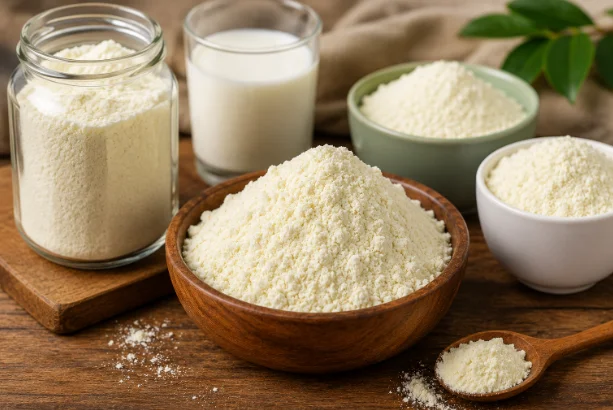
The best milk powder for milk powder gulab jamun recipe is full-fat milk powder. It gives better softness, flavor, and structure.
Avoid low-fat milk powder if possible. It can make the dough dry or weak. Also avoid tea whitener because it is not the same as milk powder.
A good milk powder should be:
- Full-fat
- Fine in texture
- Fresh
- Not lumpy
- Not mixed with tea whitener
- Good quality
If your milk powder has lumps, sift it before using. Lumps can create uneven dough and cracks.
Good milk powder helps make perfect gulab jamun smooth and soft.
How to Make Soft Gulab Jamun Dough
The dough is the most important part of this dessert. Gulab jamun dough is not like bread dough or paratha dough. You do not knead it hard. You only bring it together gently.
Step 1: Mix the Dry Ingredients
In a bowl, add milk powder, maida, semolina, baking powder, and a tiny pinch of baking soda. Mix everything gently.
Do not add too much baking soda. A little helps with softness, but too much can make the jamuns break, become too soft, or taste strange.
Step 2: Add Ghee
Add ghee and rub it lightly into the dry ingredients. This helps create a tender texture.
Step 3: Add Yogurt or Cream
Add thick yogurt or cream. Mix gently. The mixture will start to look moist.
Step 4: Add Milk Slowly
Add milk one tablespoon at a time. Mix gently after each addition. Stop when the dough comes together.
The dough should be soft and slightly sticky, but not wet. It should not be dry or crumbly.
Step 5: Do Not Over-Knead
This is very important. Do not knead the dough like bread. Do not press it again and again. Overworking can make homemade gulab jamun hard.
Just gather the dough softly. If it feels too sticky, rest it for 5 to 10 minutes. The semolina and milk powder will absorb moisture.
The perfect dough should feel:
- Soft
- Smooth
- Moist
- Slightly sticky
- Easy to shape
- Not dry
- Not crumbly
If the dough is dry, add a few drops of milk. If it is too wet, add a little milk powder.
How to Shape Smooth, Crack-Free Gulab Jamun
Smooth shaping is very important because cracks can make gulab jamun break while frying.
Step 1: Grease Your Palms
Rub a little ghee or oil on your palms. This helps shape smooth balls.
Step 2: Make Small Balls
Take a small portion of dough and roll it gently. The balls should be smaller than the final size because they expand while frying and soaking.
Step 3: Remove Cracks
Each ball should be smooth with no cracks. If you see cracks, press gently and roll again.
If the dough keeps cracking, it may be dry. Add a few drops of milk to the dough and mix gently.
Step 4: Keep Size Even
Make all balls similar in size. This helps them fry evenly.
Step 5: Cover While Working
Keep shaped balls covered with a cloth so they do not dry out.
Good smooth crack-free balls are the foundation of a successful gulab jamun recipe.
How to Make Sugar Syrup for Gulab Jamun
Gulab jamun sugar syrup should be warm, sweet, fragrant, and thin enough to soak into the jamuns.
It should not be very thick. It should not reach one-string consistency. Thick syrup stays outside and does not enter the jamun properly.
Step-by-Step Sugar Syrup
- Add sugar and water to a saucepan.
- Add cardamom pods.
- Heat on medium flame.
- Stir until sugar dissolves.
- Simmer for 5 to 7 minutes.
- Add lemon juice.
- Turn off the heat.
- Add rose water and saffron.
- Keep the syrup warm.
The syrup should feel slightly sticky between your fingers, but it should not form a thick string.
Should Syrup Be Hot or Warm?
The syrup should be warm when you add fried gulab jamun. It should not be boiling hot. It should not be cold.
If syrup is cold, the jamuns may not absorb it well. If it is boiling hot, the jamuns can become too soft or lose shape.
Warm syrup gives the best soaking.
This is one of the most important parts of how to make perfect gulab jamun from scratch.
How to Fry Gulab Jamun Evenly
Frying is where many mistakes happen. The oil temperature must be controlled.
If the oil is too hot, the outside browns quickly while the inside stays raw. If the oil is too cold, the gulab jamun may absorb too much oil or break.
Best Frying Heat
Use low to medium-low heat. The oil should be warm enough to create gentle bubbles, not fast sizzling.
Test One Ball First
Before frying the full batch, test one small ball.
If it rises slowly and browns gradually, the oil is ready.
If it browns too fast, the oil is too hot.
If it sinks and breaks, the oil may be too cold or the dough may be too soft.
Fry Gently
Add a few balls at a time. Do not crowd the pan. Stir gently with a slotted spoon so they brown evenly.
The colour should slowly change from pale to golden brown, then deeper brown.
How Long Does Frying Take?
Gulab jamun should fry slowly. It may take 6 to 10 minutes per batch, depending on size and heat.
Do not rush. Slow frying helps the center cook fully.
Good gulab jamun frying tips always begin with patience.
How Long to Soak Gulab Jamun
 gulab jaman
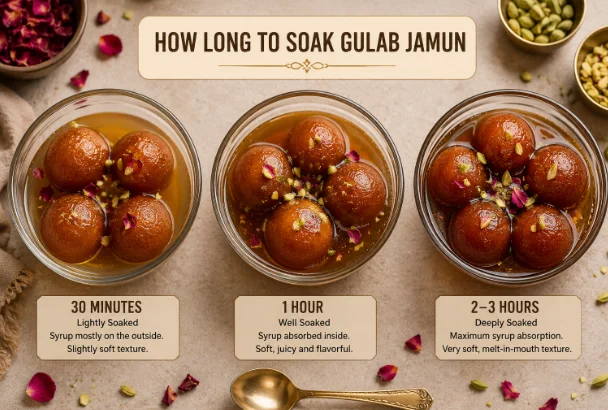
After frying, let the gulab jamun rest for 1 to 2 minutes. Then add them to warm syrup.
Do not add very hot jamuns to very hot syrup. The texture can become too soft outside.
Soaking Time Guide
| Soaking Time | Result |
|---|---|
| 15 minutes | Light syrup absorption |
| 30 minutes | Soft outside, better inside |
| 1 hour | Juicy and balanced |
| 2 to 3 hours | Best melt-in-mouth texture |
For the best result, soak them for at least 1 hour. If you have time, let them soak longer. The syrup slowly moves into the center and makes the gulab jamun soft and juicy.
This is the answer to how long to soak gulab jamun: at least 30 minutes, but longer is better.
Why Gulab Jamun Becomes Hard, Cracks, or Breaks
Many home cooks struggle with gulab jamun problems. Here are the main reasons and fixes.
Why Gulab Jamun Becomes Hard
Gulab jamun becomes hard when:
- Dough is over-kneaded
- Dough is too dry
- Too much flour is added
- Too much baking powder is used
- Oil is too hot
- Syrup is too thick
- Soaking time is too short
To fix it, make softer dough, mix gently, fry slowly, and use warm thin syrup.
This is the key to why gulab jamun becomes hard.
Why Gulab Jamun Cracks While Frying
Cracks happen when:
- Dough is dry
- Balls are not smooth
- Milk powder has lumps
- Dough was not rested
- Balls dried before frying
To fix it, grease your palms, roll smooth balls, and cover them while working.
Why Gulab Jamun Breaks in Oil
Gulab jamun can break in oil if:
- Dough is too wet
- Oil is too cold
- Too much baking soda is used
- Balls are not shaped properly
- Ingredients are not balanced
Always test one ball first before frying the full batch.
Why Gulab Jamun Stays Raw Inside
This happens when oil is too hot. The outside becomes brown before the center cooks.
Fry on low to medium-low heat and give the balls enough time.
Why Gulab Jamun Does Not Absorb Syrup
This can happen if:
- Syrup is too thick
- Syrup is cold
- Jamuns are too hard
- Jamuns were fried too dark
- Soaking time is too short
Use warm thin syrup and let them soak longer.
Common Mistakes to Avoid
Here are the most common mistakes in homemade gulab jamun.
- Using low-fat milk powder
- Using tea whitener instead of milk powder
- Adding too much flour
- Adding too much baking soda
- Making dough too dry
- Kneading dough too much
- Shaping balls with cracks
- Frying in very hot oil
- Frying too many at once
- Using thick sugar syrup
- Adding jamuns to cold syrup
- Not soaking long enough
- Serving too soon
Once you avoid these mistakes, your soft gulab jamun recipe becomes much easier.
Perfect Gulab Jamun Serving Ideas
Gulab jamun is beautiful on its own, but a few serving touches make it even better.
Serve it:
- Warm in a small dessert bowl
- With extra syrup spooned over it
- With chopped pistachios
- With sliced almonds
- With rose petals
- With saffron strands
- With vanilla ice cream
- With rabri
- As an Eid dessert
- As a wedding sweet
- As a family dinner dessert
Warm gulab jamun with cold vanilla ice cream is a lovely contrast. Soft gulab jamun with rabri feels rich and festive.
For a classic look, garnish with pistachios and a little syrup.
Storage and Reheating Tips
Gulab jamun stores well when kept in syrup.
At Room Temperature
If the weather is cool, gulab jamun can stay at room temperature for a few hours.
In the Fridge
Store it in an airtight container with syrup. It can last 4 to 5 days in the fridge.
In the Freezer
You can freeze gulab jamun, but the texture may change slightly. Freeze with syrup in a sealed container.
How to Reheat Gulab Jamun
Warm it gently before serving.
You can reheat it:
- In the microwave for 15 to 20 seconds
- In a pan on low heat with syrup
- In a warm water bath
Do not boil gulab jamun while reheating. Gentle heat keeps it soft.
Easy Homemade Gulab Jamun Recipe
Here is the full recipe in simple form.
Ingredients
For the dough:
- 1 cup full-fat milk powder
- 3 tablespoons all-purpose flour
- 1 tablespoon semolina
- ¼ teaspoon baking powder
- 1 small pinch baking soda
- 1 tablespoon ghee
- 1 tablespoon thick yogurt or cream
- 3 to 4 tablespoons milk, as needed
- Oil or ghee for frying
For the syrup:
- 1½ cups sugar
- 1½ cups water
- 4 cardamom pods
- 1 teaspoon rose water
- Few saffron strands, optional
- ½ teaspoon lemon juice
- Pistachios or almonds for garnish
Instructions
- Add sugar, water, and cardamom to a pan.
- Heat until the sugar dissolves.
- Simmer for 5 to 7 minutes.
- Add lemon juice, rose water, and saffron.
- Keep the syrup warm.
- In a bowl, mix milk powder, flour, semolina, baking powder, and baking soda.
- Add ghee and mix gently.
- Add yogurt or cream.
- Add milk slowly and form a soft dough.
- Do not over-knead.
- Rest the dough for 5 to 10 minutes.
- Grease palms and shape smooth balls.
- Make sure there are no cracks.
- Heat oil or ghee on low to medium-low heat.
- Test one ball first.
- Fry a few balls at a time.
- Stir gently for even browning.
- Fry until deep golden brown.
- Rest for 1 to 2 minutes.
- Add to warm syrup.
- Soak for at least 1 hour.
- Garnish and serve warm.
This homemade gulab jamun recipe gives soft, juicy, and fragrant results when each step is followed with care.
Expert Tips for Soft and Juicy Gulab Jamun
Use these tips every time:
- Use full-fat milk powder.
- Sift dry ingredients if lumpy.
- Do not use too much baking soda.
- Add milk slowly.
- Keep dough soft and moist.
- Do not over-knead.
- Grease palms before shaping.
- Make small, smooth balls.
- Remove all cracks.
- Fry on low to medium-low heat.
- Test one ball before frying all.
- Keep syrup warm, not boiling.
- Use thin sticky syrup, not thick syrup.
- Soak for at least 1 hour.
- Serve warm for best texture.
These tips help you make perfect gulab jamun from scratch with confidence.
FAQs About Gulab Jamun
What is gulab jamun made of?
Gulab jamun is usually made from milk solids such as khoya, mawa, or milk powder. It also includes flour, ghee, a leavening agent, and sugar syrup flavored with cardamom, rose water, or saffron.
How do you make perfect gulab jamun from scratch?
To make perfect gulab jamun from scratch, prepare soft dough, shape smooth crack-free balls, fry slowly on low to medium-low heat, and soak in warm thin sugar syrup until soft and juicy.
Why is my gulab jamun hard?
Gulab jamun becomes hard when the dough is dry, over-kneaded, fried too hot, or soaked in thick syrup. Use soft dough, gentle mixing, low heat, and warm thin syrup.
Why does gulab jamun crack while frying?
Cracks happen when the dough is dry, lumpy, or not shaped smoothly. Grease your palms and roll each ball until the surface is smooth.
Why does gulab jamun break in oil?
Gulab jamun may break if the dough is too wet, oil is too cold, or too much baking soda is used. Test one ball first before frying the full batch.
Should gulab jamun syrup be hot or warm?
The syrup should be warm, not boiling hot and not cold. Warm syrup helps the jamuns absorb sweetness without breaking.
What should be the syrup consistency for gulab jamun?
The syrup should be thin and slightly sticky. It should not be thick or one-string syrup because thick syrup does not soak well.
How long should gulab jamun soak?
Gulab jamun should soak for at least 30 minutes, but 1 to 3 hours gives better softness and deeper syrup absorption.
Can I make gulab jamun without khoya?
Yes. Milk powder gulab jamun is a popular and easy version. It gives soft and delicious results when made with full-fat milk powder and gentle dough handling.
Which milk powder is best for gulab jamun?
Full-fat milk powder is best. Avoid skimmed milk powder or tea whitener because they can affect texture and softness.
Why is my gulab jamun raw inside?
This usually happens when the oil is too hot. The outside browns too quickly while the inside stays uncooked. Fry on low to medium-low heat.
Can gulab jamun be made ahead?
Yes. Gulab jamun can be made ahead and stored in syrup. It often tastes better after soaking for several hours.
How do you reheat gulab jamun?
Warm gulab jamun gently in the microwave or in a pan with syrup on low heat. Do not boil it.
Conclusion
How to make perfect gulab jamun from scratch becomes easy when you understand the small details. Use full-fat milk powder, make soft dough, avoid over-kneading, shape smooth crack-free balls, fry slowly, and soak in warm thin syrup.
A good gulab jamun recipe should give you soft, golden, juicy sweets that absorb syrup all the way inside. If your gulab jamun becomes hard, cracks, breaks in oil, or stays raw in the center, the problem is usually dough texture, oil heat, syrup consistency, or soaking time.
This homemade gulab jamun is perfect for Eid, weddings, family meals, dinner parties, and sweet cravings. Serve it warm with pistachios, almonds, rose petals, or vanilla ice cream for a dessert that feels rich and comforting.
At Lagrub, we believe traditional sweets deserve patience and care. Try this soft gulab jamun recipe, enjoy it fresh, and explore more Lagrub dessert recipes for soulful food made with love.

Sahar Syed
Sahar Syed writes for LaGrub on cooking, recipes, and mindful culinary living.
Get a desi recipe worth cooking, every week
One tested recipe a week. Nothing else, and unsubscribe any time.


