

Working with food influencers can help food brands build trust, reach the right audience, and show their products in a more natural way. But successful influencer marketing is not just about free meals, gifted products, or one quick post. It works best when brands choose the right creators, set clear goals, allow honest content, track results, and build partnerships that feel real to the audience.
How Food Brands Should Work with Food Influencers
How food brands should work with food influencers is not just about sending free meals or asking for a quick post. The best results come from clear goals, strong creator fit, honest content, proper tracking, and long-term trust. This guide explains how food brands can build smart, natural, and effective influencer partnerships.
Food is one of the easiest things to show online, but one of the hardest things to sell with real trust. A beautiful photo may stop someone for a second. A real tasting video, a useful recipe, or an honest restaurant visit can make them care.
That is why food influencer marketing works so well when it is done correctly. People want to see food in real life. They want to know how it looks, how it tastes, how it is served, and whether it feels worth trying. A good food influencer can help a brand show all of that in a human way.
For Lagrub, food is never only a product. It is memory, appetite, comfort, culture, and daily life. So when food brands work with creators, the goal should not be a forced ad. The goal should be meaningful food content that feels useful, honest, and natural.
Why Food Influencers Matter for Food Brands
Food influencers matter because people trust people more than they trust polished brand claims. A food brand can say its sauce is rich, its burger is juicy, or its biryani is fragrant. But when a creator cooks with the product, cuts into the burger, pours the sauce, or tastes the biryani on camera, the message feels more real.
Food is visual. It has color, steam, texture, sound, and emotion. That makes it perfect for short videos, recipe reels, tasting clips, restaurant reviews, and behind-the-scenes content. A good creator can turn a dish into a moment.
Food influencer marketing can help with:
- Brand awareness
- Product launches
- New menu promotion
- Restaurant visits
- Online orders
- Recipe content
- Social proof
- Customer trust
- User-generated content
- Sales and bookings
However, the influencer must fit the brand. A café should not choose a creator only because they have many followers. A spice brand should not work with someone who never cooks. A healthy snack brand should not choose a creator whose audience only wants fast food.
Good food brand influencer marketing starts with fit, not fame.
Start with Clear Campaign Goals
Before contacting any creator, a food brand must know what it wants. Without clear goals, even a beautiful campaign can feel weak.
Ask one simple question first: what should this campaign do?
Your goal may be:
- Introduce a new product
- Promote a new restaurant location
- Increase table bookings
- Sell more online orders
- Create recipe content
- Build brand awareness
- Get more reviews
- Increase footfall
- Launch a seasonal menu
- Collect UGC for ads
- Grow social media pages
- Build trust in a new market
Each goal needs a different type of food influencer campaign.
For example, if a restaurant wants more local visits, it should work with local food influencers who have followers in the same city. If a packaged sauce brand wants recipe content, it should work with recipe creators or home cooks. If a bakery wants to promote a new dessert box, dessert reviewers or lifestyle creators may work better.
Clear goals also help with tracking. If the goal is awareness, you look at reach, impressions, shares, and saves. If the goal is sales, you track promo codes, links, orders, and customer questions.
Without goals, brands often judge the campaign only by likes. That is a mistake. Likes are useful, but they do not tell the full story.
Choose Food Influencers by Audience Fit, Not Followers
 food influencers
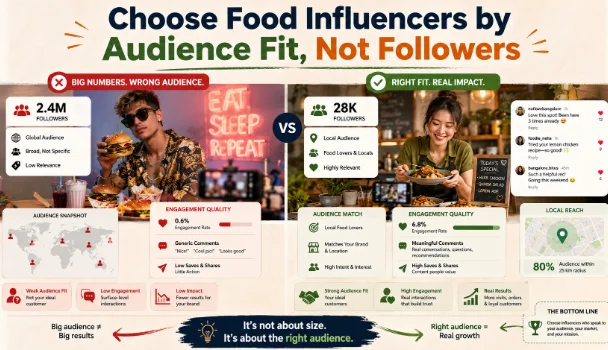
Many food brands make the same mistake. They choose influencers with big follower counts and ignore audience quality.
A large account is not always the best account. A creator with 20,000 loyal local followers may bring better results than a creator with 500,000 random followers from many countries. For restaurants, cafés, bakeries, and cloud kitchens, location matters a lot.
When choosing food influencers, check:
- Who follows them?
- Where is their audience located?
- Do their followers comment naturally?
- Do people ask about prices, locations, and menus?
- Does the creator reply to comments?
- Is the engagement real?
- Does their content match your food style?
- Do they already post about similar products?
- Do they have strong video quality?
- Do they understand food?
For influencer marketing for food brands, the right audience is more important than the biggest number. A creator should speak to the people who are likely to buy, visit, order, cook, or recommend your food.
A family restaurant may need a local family lifestyle creator. A premium café may need a stylish city food reviewer. A spice brand may need a recipe creator. A protein snack brand may need a fitness food creator. A vegan product should go to a vegan or plant-based creator.
The better the match, the more natural the content feels.
Why Local and Micro-Influencers Often Work Better
For many food brands, local creators and micro-influencers can be more useful than large influencers.
A micro-influencer usually has a smaller but more engaged audience. Their followers often trust them because their content feels personal. They may not look like celebrities. They feel closer to real customers.
This is especially powerful for restaurant influencer marketing. A restaurant does not need millions of views from people who live far away. It needs people nearby who can actually visit, order, book, or recommend the place.
Local food influencers can help with:
- Restaurant visits
- Local brand awareness
- Event promotion
- New branch openings
- Café launches
- Food truck visibility
- Cloud kitchen orders
- Weekend footfall
- Menu trials
- Community trust
Micro-influencers are also often easier to work with. They may be more flexible, more affordable, and more open to long-term partnerships. Many create strong content because they want to grow with good brands.
For small food businesses, this can be the best starting point. Instead of spending the full budget on one big influencer, a brand can work with five to ten smaller creators and compare results.
Match the Creator to the Food Product
Every creator has a food personality. Some love fine dining. Some love street food. Some review burgers. Some bake desserts. Some cook traditional recipes. Some focus on healthy eating. Some create family meal content.
A strong food marketing strategy matches the creator to the product.
Here are some useful matches:
- Spice brands should work with recipe creators and home cooks.
- Restaurants should work with local food reviewers.
- Cafés should work with lifestyle and dessert creators.
- Bakeries should work with dessert reviewers and event creators.
- Meal kit brands should work with busy parents or meal prep creators.
- Healthy snack brands should work with fitness and wellness creators.
- Sauce brands should work with cooking tutorial creators.
- Frozen food brands should work with family and convenience-focused creators.
- Beverage brands should work with lifestyle, café, and recipe creators.
- Cloud kitchens should work with local delivery-focused creators.
This is where many food brand collaborations succeed or fail. If the product does not fit the creator, the content looks forced. If it fits naturally, the audience understands why the creator is talking about it.
For example, a creator who regularly makes desi recipes can naturally use a new masala blend. A café explorer can naturally review a new brunch menu. A lunchbox creator can naturally show a school snack product.
Natural fit creates natural trust.
Create a Clear Brief Without Killing Creativity
A strong food influencer campaign needs a clear brief. But the brief should not control every word.
The brand should explain the goal, product details, key message, deadline, platform, deliverables, hashtags, tags, and disclosure needs. But the creator should still have creative freedom. They know how to speak to their audience.
A good brief should include:
- Brand name and product details
- Campaign goal
- Target audience
- Key selling points
- Must-mention details
- Content format
- Number of posts, stories, reels, or videos
- Publishing date
- Location tag if needed
- Website link or booking link
- Promo code or discount code
- Disclosure instructions
- Content usage rights
- Approval process
- Payment details
However, do not turn the creator into a script reader. Audiences can sense forced words. If every sentence sounds like a brand brochure, the content loses trust.
For authentic food content, give direction but allow personality. Let the influencer describe taste in their own words. Let them show the food in their own style. Let them explain why their audience should care.
The best brief protects the brand message without removing the creator’s voice.
Best Content Formats for Food Influencer Marketing
Food content works best when people can see the product in action. A simple product photo is not always enough. The audience wants movement, texture, use, taste, and story.
Here are the best content formats for food influencer marketing.
Recipe Videos
Recipe videos are excellent for food products like sauces, spices, oils, snacks, frozen items, rice, pasta, dairy, and meal kits.
A creator can show how to use the product in a real dish. This makes the product feel practical, not just pretty.
Examples include:
- “Easy weeknight pasta using this sauce”
- “Chicken karahi with this spice blend”
- “Lunchbox idea with this snack”
- “Quick dessert using this cream”
- “Ramadan iftar recipe with this frozen product”
Recipe content is useful because people save it. Saves are a strong sign of value.
Taste Tests
Taste tests work well for restaurants, packaged snacks, desserts, drinks, sauces, and new menu items.
A good tasting video should feel honest. The creator should describe texture, flavor, spice level, sweetness, freshness, and serving size.
Taste tests are powerful because the audience can imagine the experience.
Restaurant Reviews
Restaurant influencer marketing often depends on review-style content. A creator visits the location, shows the space, orders food, tastes dishes, and shares the experience.
This works best when the restaurant prepares properly. The food should look fresh. The service should be smooth. The lighting should support video. The staff should know the creator is coming if it is a planned visit.
A strong restaurant review may show:
- Entrance and atmosphere
- Signature dishes
- Menu highlights
- Prices or value
- Food close-ups
- Taste reaction
- Location
- Booking or delivery details
Product Unboxings
Unboxing content works well for packaged food, gift boxes, dessert boxes, meal kits, snacks, and drinks.
A beautiful unboxing can show packaging quality, portion size, product variety, and first impression. This is useful for brands that sell online or deliver.
Behind-the-Scenes Content
Behind-the-scenes content builds trust. It shows how the food is made, packed, served, or prepared.
This can include:
- Kitchen preparation
- Chef interviews
- Fresh ingredients
- Baking process
- Spice mixing
- Order packing
- Restaurant setup
- New menu testing
This type of content makes the brand feel more human.
Giveaways and Limited-Time Dishes
Giveaways can increase reach, followers, and comments. Limited-time dishes can create urgency.
However, giveaways should be simple. Too many rules can make people lose interest. A clear prize, clear deadline, and clear entry steps work better.
Paid vs Gifted Food Influencer Collaborations
Not every collaboration is the same. Some are paid. Some are gifted. Some include free meals. Some include affiliate commission. Some include long-term contracts.
Sponsored food content usually means the creator is paid or receives something valuable in exchange for promotion. This should be handled clearly and professionally.
Common collaboration types include:
- Paid post
- Gifted product
- Free restaurant meal
- Affiliate link
- Discount code
- Monthly brand ambassador deal
- Recipe development
- UGC content package
- Event attendance
- Product launch coverage
A gifted collaboration may work with small creators, but brands should not assume that free food is always enough. Creating good content takes time, planning, shooting, editing, writing, and audience trust.
If a brand wants strong content, clear timelines, multiple deliverables, and usage rights, it should expect to pay fairly.
Good food creator partnerships are based on respect.
How Restaurants Can Prepare for Influencer Visits
Restaurants should never invite influencers without preparing the experience.
If the food is late, the table is messy, the lighting is poor, or the staff is confused, the content may not work. A creator can only show what is in front of them.
Before an influencer visit, restaurants should prepare:
- Best-looking dishes
- Fresh garnishes
- Clean table setup
- Good lighting area
- Clear menu recommendations
- Staff awareness
- Smooth service
- Correct location details
- Special offers or promo code
- Brand story points
- Permission for filming
The restaurant should also decide if the visit is planned or anonymous. Both can work, but they serve different goals.
A planned visit helps with content quality. An anonymous visit may feel more natural. Either way, the brand and creator should agree on expectations.
For restaurant marketing with influencers, the dining experience matters as much as the post.
Disclosure and Transparency in Sponsored Food Content
Honesty is important in food influencer marketing.
If a creator is paid, gifted, invited for a free meal, given a discount, or earning commission, the audience should know. Clear disclosure protects trust. It also helps the brand look professional.
Disclosures may include words like:
- Paid partnership
- Sponsored
- Gifted
- Ad
- Hosted meal
- Affiliate link
- PR package
The exact rules can vary by country and platform. So brands should follow local advertising guidelines and ask creators to disclose clearly.
Do not hide the relationship. A hidden ad can damage trust. Audiences do not mind sponsored content when it is honest and useful. They mind when it feels fake.
For food brands, transparency should be part of the campaign from the start.
Usage Rights and Repurposing Influencer Content
UGC for food brands can be very valuable. A creator’s video or photo can often perform better than a polished studio ad because it feels real.
But brands should not reuse influencer content without permission. If the brand wants to use the content on its website, ads, emails, packaging, social media, or menu pages, this should be agreed before the campaign starts.
This is called usage rights or influencer content rights.
The agreement should answer:
- Can the brand repost the content?
- Can the brand use it in paid ads?
- Can it be used on the website?
- Can it be used in email marketing?
- Can it be used on menus or packaging?
- How long can the brand use it?
- Can the content be edited?
- Does the creator need credit?
- Is there an extra fee for paid ad usage?
This protects both sides. It also helps brands get more value from each campaign.
A strong creator video can become a website testimonial, social media post, ad creative, email banner, product page clip, or launch campaign asset.
How to Track Food Influencer Campaign Results
Tracking is where many food brands fall short. They run a campaign, get a post, count likes, and move on. That is not enough.
A strong food influencer campaign strategy includes tracking from the start.
Important metrics include:
- Reach
- Impressions
- Likes
- Comments
- Saves
- Shares
- Profile visits
- Website clicks
- Follower growth
- Promo code use
- Affiliate link clicks
- Table bookings
- Online orders
- Delivery orders
- Footfall
- Product inquiries
- Price questions
- Availability questions
- Branded search growth
- Repeat customers
- UGC performance
- Paid ad results
For restaurants, also track what happens after the post. Did more people call? Did customers mention the influencer? Did bookings increase? Did a dish sell more? Did delivery orders rise?
For packaged food brands, track website traffic, cart activity, code use, retail inquiries, and repeat purchases.
Good tracking helps brands understand what worked. Then they can repeat the right campaigns and avoid wasting budget.
Common Mistakes Food Brands Should Avoid
Many food businesses try influencer marketing but feel disappointed. Often, the problem is not the idea. It is the way the campaign is planned.
Avoid these common mistakes:
Choosing Followers Over Fit
A large audience does not always mean strong results. Fit matters more than size.
Sending Products Without a Plan
If the creator does not know the goal, the content may feel random.
Giving No Creative Freedom
If the brand controls every word, the post may sound fake.
Ignoring Local Audience
For restaurants, location is key. A viral post from the wrong city may not bring customers.
Not Checking Engagement Quality
Fake followers and weak engagement can waste money.
Forgetting Disclosure
Hidden sponsorships can hurt trust.
Not Discussing Usage Rights
Brands should not assume they can reuse creator content anywhere.
Running One-Off Campaigns Only
One post may create awareness, but repeated exposure builds trust.
Not Tracking Results
Without tracking, the brand cannot know what worked.
Overloading the Brief
Too many instructions can make content stiff and unnatural.
The best food brand collaborations are clear, respectful, creative, and measurable.
Why Long-Term Creator Partnerships Build More Trust
One-time posts can work, but long-term food creator partnerships often work better.
When an influencer mentions a brand once, the audience may notice it. When they use the brand again and again in natural ways, the audience begins to trust it.
For example, a recipe creator using the same spice blend in several recipes feels more believable than one sudden ad. A local food reviewer visiting the same café for different menu items feels more natural than one forced post. A fitness creator using the same protein snack in daily meals creates routine-based trust.
Long-term partnerships can include:
- Monthly recipe videos
- Seasonal menu reviews
- New product launches
- Brand ambassador content
- Event coverage
- Holiday campaigns
- Ongoing UGC creation
- Regular discount codes
- Creator-led product feedback
This also helps the creator understand the brand better. The content becomes stronger over time.
For influencer marketing for food brands, trust grows through repetition, not pressure.
How Small Food Brands Can Start with Influencers
 small brands work with influencers
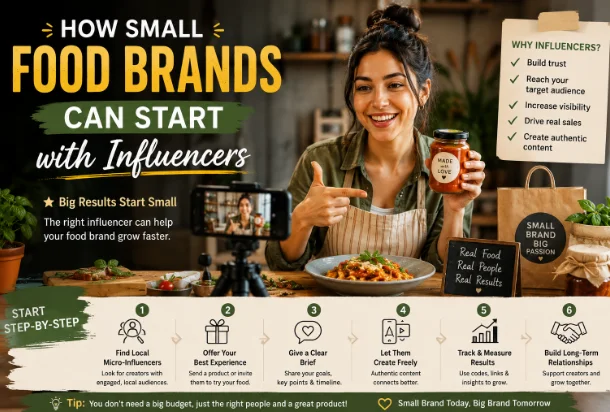
Small brands do not need huge budgets to begin.
A small restaurant, bakery, café, or packaged food brand can start with simple steps:
- Choose 5 to 10 local creators.
- Check their content and audience.
- Offer a clear product or meal experience.
- Share a simple brief.
- Use a trackable code.
- Ask for honest, natural content.
- Repost with permission.
- Compare results.
- Continue with the best creators.
Small campaigns can teach a lot. You may discover which product people like most, which content style works, and which creator brings real customers.
For a new food brand, this is better than spending everything on one big campaign.
What Makes Food Influencer Content Feel Authentic?
Authentic food content feels real because it shows food in a natural setting.
It may include:
- A real kitchen
- A real table
- Honest taste reaction
- Simple serving ideas
- Family-style eating
- Useful cooking tips
- Real texture shots
- Steam, crunch, pour, or bite moments
- Clear reasons to try the product
The creator should not sound like a menu card. They should sound like a person sharing food with their audience.
For example, instead of saying, “This product is premium and delicious,” a creator might say, “I used this sauce for a quick chicken wrap, and it saved me time because the flavor was already balanced.”
That kind of sentence feels more useful. It tells the audience how the product fits into life.
This is the heart of strong food influencer marketing.
Food Brands Should Think Beyond One Post
A single post is only one piece of the campaign. Smart food brands think about the full content journey.
One influencer collaboration can create:
- Awareness post
- Story poll
- Recipe video
- Product review
- Website testimonial
- Email content
- Paid ad creative
- Menu highlight
- Social proof
- Customer questions
- Sales data
- Future campaign ideas
This is why planning matters. If the campaign is built properly, one creator partnership can support many parts of the brand.
For example, a sauce brand can ask a recipe creator to make three dishes. The brand can use one video for Instagram, one for TikTok, one for the website, and short clips for ads, if usage rights are agreed.
This turns influencer marketing into a content system, not just a social media post.
FAQs About Food Brands Working with Food Influencers
How should food brands work with food influencers?
How food brands should work with food influencers starts with clear goals, strong creator fit, a simple brief, honest disclosure, fair payment, usage rights, and proper tracking. Brands should let creators show the food naturally instead of forcing scripted ads.
What is food influencer marketing?
Food influencer marketing is when restaurants, cafés, packaged food brands, grocery brands, bakeries, or food businesses work with creators to promote food through reviews, recipes, videos, tastings, stories, and social media content.
How do I choose the right food influencer?
Choose a food influencer based on audience fit, location, engagement quality, content style, food knowledge, and brand match. Do not choose only by follower count.
Are micro-influencers good for food brands?
Yes. Micro-influencers often have strong trust and better local engagement. They are especially useful for restaurants, cafés, bakeries, and small food brands that need real customers, not just views.
Should restaurants work with local food influencers?
Yes. Local food influencers are often the best choice for restaurants because their followers live nearby and can visit, book, order, or recommend the place.
What should be in a food influencer brief?
A brief should include the campaign goal, product details, key message, deliverables, deadline, platform, tags, hashtags, promo code, disclosure rules, usage rights, and payment terms.
Should food brands pay influencers or offer free products?
It depends on the campaign. Free products may work for small collaborations, but paid campaigns are better when the brand expects strong content, deadlines, multiple posts, and usage rights.
What is UGC for food brands?
UGC for food brands means user-generated or creator-made content that brands can use for social media, ads, websites, emails, or product pages, if permission and usage rights are agreed.
How can food brands track influencer results?
Brands can track results through promo codes, affiliate links, website clicks, bookings, online orders, footfall, comments, saves, shares, inquiries, and sales changes after the campaign.
What mistakes should food brands avoid?
Avoid choosing influencers only by followers, ignoring audience fit, giving unclear briefs, hiding sponsorships, skipping usage rights, not tracking results, and making content too scripted.
Conclusion
How food brands should work with food influencers comes down to trust, fit, planning, and real food storytelling. The best campaigns do not treat creators like walking ads. They treat them like creative partners who can show the food in a way people understand and believe.
A strong food influencer marketing campaign starts with a clear goal. Then the brand chooses the right creator, shares a helpful brief, gives creative freedom, follows disclosure rules, agrees on usage rights, and tracks results. Whether the business is a restaurant, café, bakery, cloud kitchen, snack brand, sauce company, spice brand, or meal kit service, the same rule applies: the content must feel natural.
Food is personal. People want to see it cooked, tasted, served, shared, and enjoyed. When food brands work with food influencers in that spirit, the result is not just more views. It is stronger trust, better content, and a brand people remember.
At Lagrub, we believe food should be shared with care and intention. If you want more practical guides on food business, cooking, recipes, and brand growth, explore more Lagrub stories and bring better flavor to every table.

Sahar Syed
Sahar Syed writes for LaGrub on cooking, recipes, and mindful culinary living.
Get a desi recipe worth cooking, every week
One tested recipe a week. Nothing else, and unsubscribe any time.


