

Biryani is one of the most loved rice dishes in the world, but many home cooks wonder exactly how long it takes to prepare. The answer depends on the type of biryani, the meat or vegetables used, and the cooking method. Whether you're making chicken, mutton, beef, egg, or vegetable biryani, understanding the cooking time for each stage helps you achieve tender meat, fluffy rice, and rich flavor. This guide breaks down biryani cooking times by type and method so you can plan your meal with confidence.
How Long Does Biryani Take to Cook? By Type and Method
Biryani usually takes 45 minutes to 3 hours to cook, depending on the meat, rice, and method. This guide explains biryani cooking time by type, from chicken and mutton to beef, vegetable, egg, dum, pressure cooker, Instant Pot, and oven biryani, so you can plan your recipe with confidence.
Biryani is one of those dishes that rewards patience. It is not only about rice and meat. It is about timing, steam, spice, and texture. If the rice cooks too much, the biryani turns soft. If the meat does not cook enough, the biryani feels unfinished. If the dum is too short, the aroma does not settle.
So, how long does biryani take to cook? The simple answer is: it depends on what kind of biryani you are making. Chicken biryani is faster. Mutton and beef biryani take longer. Vegetable and egg biryani are quicker. Dum biryani needs more care, while pressure cooker and Instant Pot biryani can save time.
At Lagrub, we believe good cooking starts with understanding the process. Once you know the timing of each stage, biryani becomes easier, calmer, and more enjoyable to make.
How Long Does Biryani Take?
Most biryani takes between 45 minutes and 3 hours from start to finish. The total time depends on the main ingredient, the cooking method, and how long you marinate the meat.
Here is a simple biryani cooking time table:
| Biryani Type | Average Cooking Time |
|---|---|
| Chicken biryani | 1 hour to 1 hour 30 minutes |
| Boneless chicken biryani | 45 minutes to 1 hour 15 minutes |
| Mutton biryani | 2 hours to 3 hours |
| Beef biryani | 2 hours 30 minutes to 3 hours 30 minutes |
| Vegetable biryani | 45 minutes to 1 hour |
| Egg biryani | 45 minutes to 1 hour |
| Dum biryani | 1 hour 30 minutes to 3 hours |
| Pressure cooker biryani | 35 minutes to 1 hour 30 minutes |
| Instant Pot biryani | 30 minutes to 1 hour |
| Oven-baked biryani | 1 hour to 2 hours |
The fastest biryani is usually vegetable, egg, or boneless chicken biryani. The slowest is usually beef or mutton biryani because red meat needs more time to become soft.
Why Biryani Timing Matters
Timing is the heart of biryani. A few extra minutes can change the whole dish.
Good biryani should have:
- Tender meat
- Fluffy rice
- Deep masala flavor
- Steam-set layers
- A rich aroma
- Separate rice grains
- A balanced spice taste
This is why how long to cook biryani is such an important question. Biryani has many steps. Each step has its own timing. The onions need time to brown. The meat needs time to soften. The rice needs to be partly cooked. The final dum needs slow heat.
When all these steps are timed well, the biryani tastes complete. The rice is not mushy. The chicken or meat is not hard. The spices do not taste raw. The aroma feels warm, rich, and layered.
Biryani Cooking Time by Type
Different types of biryani need different cooking times. The main reason is the protein. Chicken cooks quickly. Mutton and beef need more time. Vegetables and eggs need less time.
Chicken Biryani Cooking Time
Chicken biryani cooking time is usually 1 hour to 1 hour 30 minutes.
Chicken is the most common choice for home biryani because it cooks faster than mutton or beef. Bone-in chicken takes a little longer, but it gives better flavor. Boneless chicken cooks faster, but it can become dry if overcooked.
A normal chicken biryani timeline looks like this:
| Step | Time |
|---|---|
| Marinating chicken | 30 minutes to 2 hours |
| Cooking chicken masala | 25 to 35 minutes |
| Boiling rice | 8 to 12 minutes |
| Layering | 5 to 10 minutes |
| Dum cooking | 20 to 30 minutes |
| Resting | 10 minutes |
If you are short on time, use boneless chicken and marinate it for at least 20 to 30 minutes. If you want deeper flavor, use bone-in chicken and marinate it longer.
For best results, cook the chicken masala until the oil begins to separate. This shows that the onions, yogurt, tomatoes, ginger garlic paste, and spices have cooked properly. If you rush this step, the biryani may taste raw.
Boneless Chicken Biryani Cooking Time
Boneless chicken biryani usually takes 45 minutes to 1 hour 15 minutes.
It is faster because small boneless pieces cook quickly. This is a good option for weeknight meals, quick family dinners, or when you want a lighter biryani.
The key is not to overcook the chicken. Boneless chicken can become dry if cooked too long before dum. Keep the masala moist, not watery. The final dum will finish the cooking and help the chicken absorb flavor.
Mutton Biryani Cooking Time
Mutton biryani cooking time is usually 2 hours to 3 hours.
Mutton needs slow cooking. If the meat is not tender before layering, the final biryani will not feel right. Dum can help flavor the rice, but it cannot fully fix hard meat.
| Step | Time |
|---|---|
| Marinating mutton | 1 hour to overnight |
| Cooking mutton masala | 1 hour to 1 hour 45 minutes |
| Boiling rice | 8 to 12 minutes |
| Layering | 5 to 10 minutes |
| Dum cooking | 30 to 40 minutes |
| Resting | 10 to 15 minutes |
If you use a pressure cooker, mutton biryani can be faster. You can pressure cook the meat first, then layer it with parboiled basmati rice. This can reduce the total time to around 1 hour to 1 hour 30 minutes.
For softer meat, use medium pieces. Very large pieces take longer. Very small pieces may break apart.
Beef Biryani Cooking Time
Beef biryani cooking time is usually 2 hours 30 minutes to 3 hours 30 minutes.
Beef takes longer than chicken and often longer than mutton. The meat fibers are firmer, so slow cooking is important. If you use beef without a pressure cooker, give it enough time to become tender.
| Step | Time |
|---|---|
| Marinating beef | 1 hour to overnight |
| Cooking beef masala | 1 hour 30 minutes to 2 hours |
| Boiling rice | 8 to 12 minutes |
| Layering | 5 to 10 minutes |
| Dum cooking | 30 to 45 minutes |
| Resting | 10 to 15 minutes |
For faster beef biryani, pressure cook the beef with spices, yogurt, onions, and ginger garlic paste until tender. Then layer it with rice for dum.
Beef biryani should not be rushed. If the meat is chewy, the rice may be perfect, but the dish will still feel incomplete.
Vegetable Biryani Cooking Time
Vegetable biryani usually takes 45 minutes to 1 hour.
This is one of the quickest biryani options. Vegetables cook fast, so the main focus is rice texture and masala flavor. Potatoes, carrots, peas, beans, cauliflower, and bell peppers are common choices.
| Step | Time |
|---|---|
| Cutting vegetables | 10 to 15 minutes |
| Cooking vegetable masala | 15 to 20 minutes |
| Boiling rice | 8 to 10 minutes |
| Layering | 5 minutes |
| Dum cooking | 15 to 20 minutes |
| Resting | 5 to 10 minutes |
Do not overcook the vegetables before dum. They should be partly cooked, not fully broken. During dum, they soften more.
Egg Biryani Cooking Time
Egg biryani usually takes 45 minutes to 1 hour.
Since the eggs are boiled separately, the dish comes together quickly. The main time goes into cooking the masala, boiling the rice, and giving the biryani a short dum.
| Step | Time |
|---|---|
| Boiling eggs | 10 to 12 minutes |
| Cooking masala | 20 to 25 minutes |
| Boiling rice | 8 to 10 minutes |
| Layering | 5 minutes |
| Dum cooking | 15 to 20 minutes |
Biryani Cooking Time by Method
The cooking method also changes the total time. Traditional dum biryani takes longer. One-pot biryani is easier. Pressure cooker and Instant Pot biryani are faster. Oven biryani gives even heat and works well for large batches.
Traditional Dum Biryani Cooking Time
Dum biryani cooking time can be 1 hour 30 minutes to 3 hours, depending on the meat.
Dum is the slow steaming stage. The rice and meat are layered in a pot. Then the pot is sealed and cooked on low heat. This allows the steam to move through the layers.
Dum time by type:
| Type | Dum Time |
|---|---|
| Vegetable biryani | 15 to 20 minutes |
| Egg biryani | 15 to 20 minutes |
| Chicken biryani | 20 to 30 minutes |
| Mutton biryani | 30 to 40 minutes |
| Beef biryani | 35 to 45 minutes |
Dum should always be done on low heat. High heat can burn the bottom layer before the top layer is fully steamed. A heavy-bottomed pot or heat diffuser helps protect the base.
You can also place a flat tawa under the biryani pot. This spreads the heat and lowers the chance of burning.
One-Pot Biryani Cooking Time
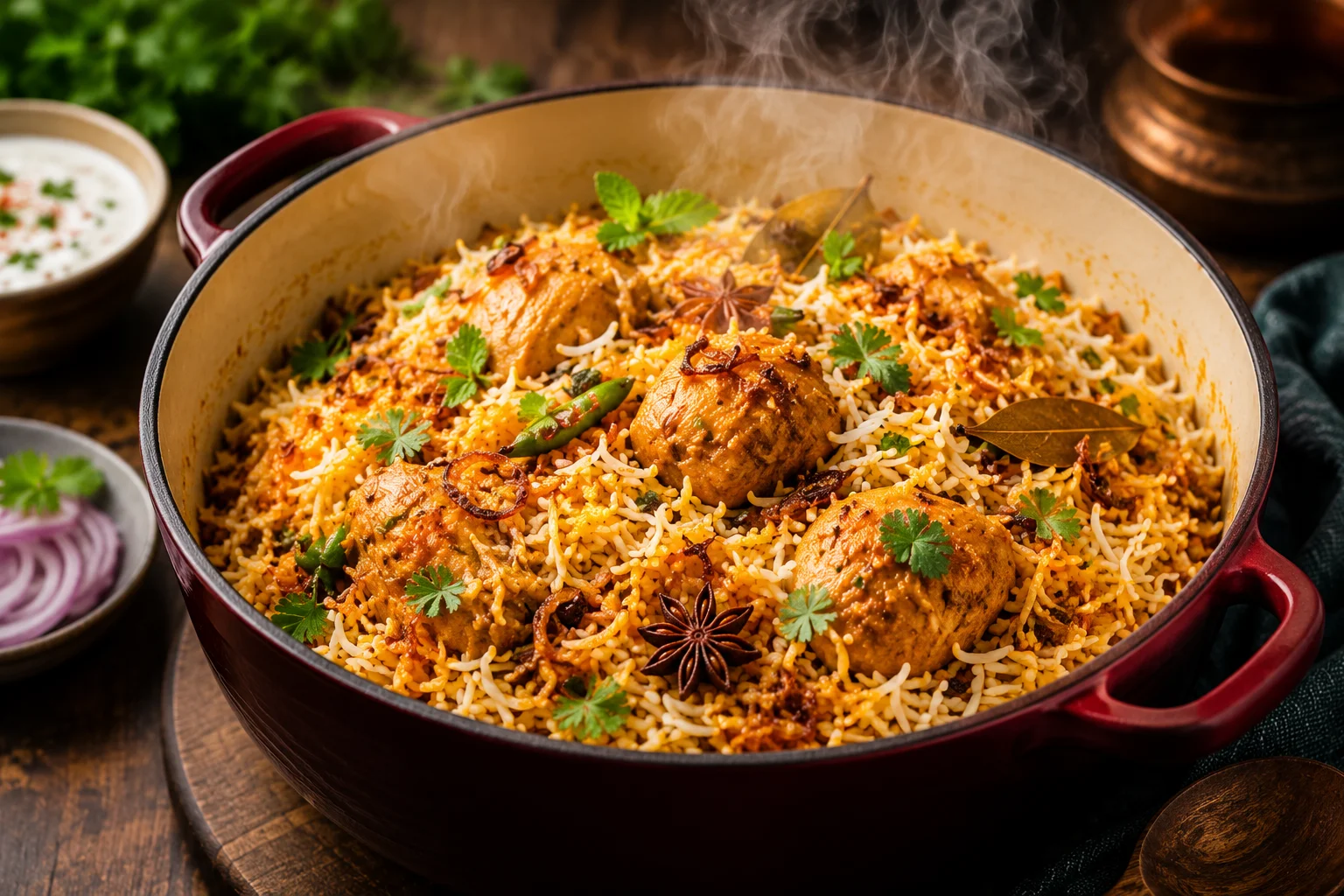
One-pot biryani usually takes 45 minutes to 1 hour 30 minutes.
In this method, the masala and rice cook in the same pot. It is simple and good for home cooks. But the water level must be right. Too much water makes the rice soft. Too little water leaves it hard.
One-pot timing:
- Vegetable one-pot biryani: 45 minutes
- Chicken one-pot biryani: 1 hour to 1 hour 15 minutes
- Mutton one-pot biryani: 1 hour 30 minutes or more
- Beef one-pot biryani: 2 hours or more, unless beef is cooked first
One-pot biryani is best for chicken or vegetables. For mutton or beef, cook the meat first before adding rice.
Pressure Cooker Biryani Time
Pressure cooker biryani time is usually 35 minutes to 1 hour 30 minutes.
This method is useful when you want biryani faster. It works especially well for mutton and beef because pressure cooking softens the meat quickly.
| Type | Pressure Cooker Time |
|---|---|
| Vegetable biryani | 30 to 40 minutes |
| Egg biryani | 35 to 45 minutes |
| Chicken biryani | 35 to 50 minutes |
| Mutton biryani | 1 hour to 1 hour 30 minutes |
| Beef biryani | 1 hour 15 minutes to 1 hour 45 minutes |
The biggest risk is mushy rice. To avoid this, use aged basmati rice, soak it only for 20 to 30 minutes, and do not add too much water.
Instant Pot Biryani Time
Instant Pot biryani time is usually 30 minutes to 1 hour, depending on the ingredients.
Instant Pot biryani is popular because it saves time and keeps the kitchen simple. But rice cooks very fast under pressure. A few extra minutes can make it soft.
For chicken or vegetables, the Instant Pot can make biryani quickly. For mutton and beef, it is better to pressure cook the meat first. Then add soaked rice and cook for a short time.
A safe method is:
- Cook meat masala first.
- Add soaked and drained rice.
- Add measured water.
- Pressure cook for a short time.
- Let the pressure release naturally for a few minutes.
- Gently fluff the rice.
Instant Pot biryani is fast, but it needs careful timing.
Oven-Baked Biryani Time
Oven-baked biryani usually takes 1 hour to 2 hours.
This method works well when making biryani for guests. The heat is even, and the biryani can stay warm for serving. You cook the meat masala and parboil the rice first. Then you layer everything in an oven-safe dish and bake it covered.
Oven dum timing:
| Type | Oven Dum Time |
|---|---|
| Vegetable biryani | 20 to 25 minutes |
| Chicken biryani | 25 to 35 minutes |
| Mutton biryani | 35 to 45 minutes |
| Beef biryani | 40 to 50 minutes |
Cover the dish tightly with foil or a lid. If steam escapes, the rice may dry out.
How Long Should Rice Cook for Biryani?
Biryani rice cooking time is usually 8 to 12 minutes.
Rice for biryani should not be fully cooked before layering. It should be around 70 to 80 percent cooked. This means the grain should be soft outside but slightly firm in the center.
The rice finishes cooking during dum.
For best results:
- Use aged basmati rice.
- Wash the rice until the water runs clear.
- Soak it for 20 to 30 minutes.
- Boil water before adding rice.
- Add enough salt to the boiling water.
- Cook until the rice is partly done.
- Drain it right away.
If rice is fully cooked before dum, it will become mushy. If it is too raw, it may stay hard even after dum.
A simple test is to press one rice grain between your fingers. It should break with a little pressure, but the center should still feel slightly firm.
How Long Should Biryani Stay on Dum?

Biryani should stay on dum for 15 to 45 minutes.
The exact time depends on the biryani type. Vegetable and egg biryani need short dum. Chicken needs medium dum. Mutton and beef need longer dum.
| Biryani Type | Dum Time |
|---|---|
| Vegetable biryani | 15 to 20 minutes |
| Egg biryani | 15 to 20 minutes |
| Chicken biryani | 20 to 30 minutes |
| Mutton biryani | 30 to 40 minutes |
| Beef biryani | 35 to 45 minutes |
After dum, let the biryani rest for 10 minutes before opening the lid. This resting time helps the steam settle. It also keeps the rice grains from breaking when you serve.
Do not stir biryani like plain rice. Use a flat spoon and lift gently from the side.
How Long Should You Marinate Meat for Biryani?
Marination adds flavor and helps tenderize meat. The ideal time depends on the meat.
| Meat | Minimum Marination | Best Marination |
|---|---|---|
| Boneless chicken | 20 to 30 minutes | 1 to 2 hours |
| Bone-in chicken | 30 minutes | 2 to 4 hours |
| Mutton | 1 hour | Overnight |
| Beef | 1 hour | Overnight |
The marinade usually includes yogurt, ginger garlic paste, lemon juice, salt, red chili, turmeric, coriander powder, garam masala, and biryani masala.
If you are making quick biryani, even 30 minutes of marination helps. But for red meat, longer marination gives better taste and softer texture.
Why Does Biryani Take So Long?
Biryani takes time because it has layers of cooking.
First, the onions need to brown. This builds sweetness and depth. Then the meat or vegetables are cooked in masala. The spices need time to release flavor. The rice is boiled separately, but only until partly cooked. Finally, everything is layered and steamed.
Each step adds something important.
If you rush the onions, the masala tastes flat.
If you rush the meat, it stays hard.
If you overcook the rice, it turns mushy.
If you skip the dum, the layers do not blend.
This is why traditional biryani can take a few hours. It is not hard, but it needs calm cooking.
How to Make Biryani Faster
You can reduce biryani cooking time without losing all the flavor. The secret is to prepare smartly.
Try these tips:
- Use boneless chicken for quick biryani.
- Use a pressure cooker for mutton or beef.
- Marinate meat the night before.
- Keep fried onions ready.
- Wash and soak rice before you start.
- Use store-bought biryani masala if needed.
- Cut meat into medium pieces.
- Keep mint, cilantro, green chilies, and spices ready.
- Use a heavy pot so the dum cooks evenly.
- Make egg or vegetable biryani when you need a fast meal.
If you want biryani in under an hour, choose chicken, egg, or vegetable biryani. If you want mutton or beef biryani, give yourself more time.
Best Rice for Faster and Better Biryani
The best rice for biryani is aged long-grain basmati rice. It gives long, separate grains and a good aroma.
Aged basmati rice is better because it stays firm after cooking. New rice can become sticky or soft. Sella basmati rice is also useful for beginners because it holds shape well.
For fluffy biryani rice:
- Do not over-soak the rice.
- Use plenty of boiling water.
- Salt the water well.
- Do not cover the pot while boiling rice.
- Drain rice when it is 70 to 80 percent cooked.
- Do not mix too much after layering.
Rice is one of the biggest reasons biryani succeeds or fails. Even if the masala is perfect, overcooked rice can ruin the texture.
Common Biryani Timing Mistakes
Biryani mistakes often happen because of timing. Here are the most common ones.
Cooking the Rice Fully Before Dum
This is the most common mistake. Rice should be partly cooked before layering. If it is fully cooked, dum will make it too soft.
Not Cooking the Meat Enough
Chicken cooks fast, but mutton and beef need time. Always check if the meat is tender before layering. Dum is not enough to soften hard meat fully.
Using High Heat for Dum
Dum should be slow and gentle. High heat burns the bottom and dries the rice.
Opening the Lid Too Often
Every time you open the lid, steam escapes. The biryani needs trapped steam to finish cooking.
Adding Too Much Water
This is common in one-pot and pressure cooker biryani. Too much water makes rice sticky.
Not Letting Biryani Rest
Resting helps the rice firm up slightly. It also makes serving easier.
How to Know Biryani Is Done
Biryani is done when the rice is fully cooked, the meat is tender, and the steam has settled into the layers.
Look for these signs:
- Rice grains are long and separate.
- Meat is soft when pressed.
- Masala is moist but not watery.
- Steam rises when the lid opens.
- The aroma is rich and cooked.
- There is no raw spice smell.
- The bottom is not burnt.
If the rice is still hard, sprinkle a little hot water, cover the pot, and keep it on low heat for 5 to 10 more minutes.
If the biryani is too wet, leave it uncovered for a few minutes on very low heat so extra moisture can escape.
Can You Make Biryani in 30 Minutes?
Yes, but only some types.
You can make a quick version of egg biryani, vegetable biryani, or Instant Pot chicken biryani in around 30 to 45 minutes. But traditional biryani usually takes longer.
A 30-minute biryani is possible if:
- The meat is already cooked.
- Fried onions are ready.
- Rice is washed and soaked.
- You use boneless chicken or eggs.
- You cook in an Instant Pot or pressure cooker.
- You keep the dum short.
For deep flavor, traditional biryani is still better. But for busy days, quick biryani can be very useful.
Chicken vs Mutton vs Beef Biryani: Which Takes Longer?
Chicken biryani is the fastest meat biryani. Mutton takes longer. Beef usually takes the longest.
Here is the simple order:
- Boneless chicken biryani: fastest
- Bone-in chicken biryani: still quick
- Mutton biryani: slow and rich
- Beef biryani: longest and deepest
The reason is meat texture. Chicken becomes tender quickly. Mutton needs slow cooking. Beef has stronger fibers, so it needs more time.
If you are cooking for guests and want less risk, chicken biryani is easier. If you want a rich weekend meal, mutton or beef biryani is worth the extra time.
Best Biryani Method for Beginners
For beginners, chicken biryani is the best choice. It is quicker than mutton or beef and more forgiving than one-pot rice dishes.
Start with a simple method:
- Marinate chicken.
- Cook the chicken masala.
- Parboil the rice.
- Layer chicken and rice.
- Add mint, cilantro, fried onions, and ghee.
- Cook on dum.
- Rest before serving.
This method teaches you the main biryani skills: rice timing, masala cooking, layering, and dum.
Vegetable biryani is also easy, but it can become soft if vegetables are overcooked. Egg biryani is the fastest and simplest option.
What to Serve with Biryani

Biryani is rich, so it pairs well with cool, fresh, or tangy sides.
Good options include:
- Mint raita
- Cucumber raita
- Vegetable raita
- Kachumber salad
- Onion salad
- Green chutney
- Shorba
- Salan
- Papad
- Lemon wedges
Raita is the most common side because it balances the spices. A fresh salad also helps lighten the meal.
If the biryani is very spicy, serve it with plain yogurt or mild raita.
Storage and Reheating Time
Biryani stores well if cooled and packed properly.
In the fridge, biryani can stay good for 3 to 4 days in an airtight container. In the freezer, it can last around 1 to 2 months.
To reheat biryani:
- Microwave: 2 to 4 minutes
- Stovetop: 8 to 10 minutes on low heat
- Oven: 15 to 20 minutes covered
- Steamer method: 8 to 12 minutes
Add a small splash of water before reheating. This brings back moisture and helps prevent dry rice.
Do not reheat biryani many times. Reheat only the portion you need.
FAQs
How long does chicken biryani take to cook?
Chicken biryani usually takes 1 hour to 1 hour 30 minutes. Boneless chicken cooks faster, while bone-in chicken takes a little more time but gives better flavor.
How long does mutton biryani take?
Mutton biryani usually takes 2 to 3 hours with the traditional method. If you use a pressure cooker, it may take around 1 hour to 1 hour 30 minutes.
How long does beef biryani take?
Beef biryani usually takes 2 hours 30 minutes to 3 hours 30 minutes. Beef needs more time to become tender, especially if you are not using a pressure cooker.
How long should rice cook for biryani?
Rice for biryani should cook for 8 to 12 minutes. It should be about 70 to 80 percent cooked before layering. It finishes cooking during dum.
How long should biryani stay on dum?
Biryani should stay on dum for 15 to 45 minutes. Chicken biryani needs around 20 to 30 minutes. Mutton and beef biryani need around 30 to 45 minutes.
Can biryani be cooked in 30 minutes?
Yes, quick biryani can be made in 30 to 45 minutes if you use eggs, vegetables, boneless chicken, or an Instant Pot. Traditional biryani usually takes longer.
Why does biryani take so long?
Biryani takes time because the meat, rice, masala, and steam all need separate attention. The slow process helps create tender meat, fluffy rice, and deep flavor.
How do I stop biryani rice from becoming mushy?
Do not fully cook the rice before layering. Use aged basmati rice, soak it for only 20 to 30 minutes, and drain it when it is 70 to 80 percent cooked.
What is the fastest biryani to make?
Egg biryani, vegetable biryani, and boneless chicken biryani are the fastest. They can usually be made in under 1 hour.
Is dum necessary for biryani?
Dum is important because it helps the rice and masala blend together. It also gives biryani its layered aroma. Even a short dum makes a big difference.
Should biryani be cooked on low or high heat?
Biryani should be cooked on low heat during dum. High heat can burn the bottom and dry the rice.
How long should biryani rest after cooking?
Biryani should rest for about 10 minutes after dum. This helps the steam settle and keeps the rice grains from breaking.
Conclusion
So, how long does biryani take to cook? Most biryani takes 45 minutes to 3 hours, depending on the type and method. Chicken biryani usually takes around 1 to 1.5 hours. Mutton biryani takes 2 to 3 hours. Beef biryani can take 2.5 to 3.5 hours. Vegetable and egg biryani are faster and can be ready in about 45 minutes to 1 hour.
The real secret is not only time. It is timing. Cook the meat until tender. Boil the rice until partly done. Keep the dum gentle. Let the biryani rest before serving.
When you cook with patience, biryani gives you everything back: aroma, warmth, comfort, and flavor in every layer.
For more practical recipe guides, cooking tips, and soulful food ideas, explore more recipes on Lagrub and bring better flavor to your table, one dish at a time.

Maimoona Ehtisham
Maimoona Ehtisham writes for LaGrub on cooking, recipes, and mindful culinary living.
Get a desi recipe worth cooking, every week
One tested recipe a week. Nothing else, and unsubscribe any time.


