

Soft homemade paratha is a comfort food that feels warm, simple, and deeply satisfying. With the right dough, proper resting time, gentle rolling, and balanced tawa heat, you can make parathas that stay soft, flexible, and lightly layered. This guide shares easy step-by-step tips to help you make perfect homemade paratha for breakfast, lunch, dinner, or a cozy family meal.
How to Make Soft Homemade Paratha
How to make soft homemade paratha is one of the most common questions in South Asian home cooking. A good paratha should be soft, warm, flexible, and lightly layered. This guide explains the right dough, resting time, rolling method, ghee layers, tawa heat, and simple tips to keep paratha soft.
A homemade paratha looks simple, but its softness depends on small details. If the dough is too dry, the paratha becomes hard. If the tawa is too cold, it turns dry. If you roll with too much pressure, the layers become dense. If you leave it uncovered after cooking, it loses moisture.
The good news is that soft homemade paratha is easy once you understand the method. You do not need special tools or complicated ingredients. You only need atta, water, a little salt, oil or ghee, and the right cooking rhythm.
At Lagrub, we believe everyday food should feel comforting and made with care. A fresh paratha with chai, eggs, curry, achar, or yogurt is more than breakfast. It is a warm part of home.
What Makes Homemade Paratha Soft?
The secret to soft homemade paratha starts with the dough. The dough must be soft, smooth, and easy to roll. It should not be stiff, dry, or cracked. It should also not be too sticky.
A soft paratha depends on five main things:
- Soft dough
- Enough resting time
- Light rolling
- Medium to medium-high tawa heat
- Proper covering after cooking
Many people think paratha becomes soft only because of ghee. Ghee helps, but it is not the only reason. If the dough is hard, even extra ghee will not make the paratha soft. If the tawa heat is wrong, the paratha may still turn dry.
So, when learning how to make paratha soft, focus on the full process. Each step matters.
A good paratha should have:
- A soft bite
- Light layers
- Golden brown spots
- Fresh wheat aroma
- Slight crispness outside
- Softness inside
- Easy folding texture
This balance comes from dough, rest, rolling, and heat.
Ingredients You Need for Soft Paratha
This soft paratha recipe uses simple pantry ingredients.
Main Ingredients
- 2 cups atta or whole wheat flour
- ½ teaspoon salt
- 1 tablespoon oil or ghee for the dough
- ¾ cup warm water, or as needed
- Dry flour for rolling
- Ghee or oil for layering and cooking
Optional Ingredients
You can also add:
- 1 teaspoon yogurt for extra softness
- ½ teaspoon sugar for light colour
- A pinch of ajwain for aroma
- A little milk mixed with water for a softer texture
These are optional. A basic homemade paratha recipe can still be soft with only flour, salt, water, and fat.
About Water Quantity
Do not add all the water at once. Different atta brands absorb water differently. Some need more water. Some need less. Add water slowly and mix as you go.
This is an important part of a good paratha dough recipe.
Best Flour for Soft Homemade Paratha
 soft paratha
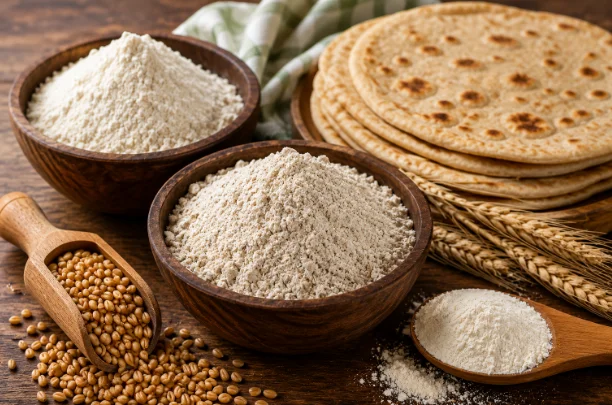
The best flour for soft homemade paratha is atta, also called whole wheat flour or roti flour.
Atta gives paratha its classic taste and soft texture. It has enough strength to roll well and enough softness for everyday flatbread.
You can use:
- Whole wheat atta
- Chakki atta
- Roti flour
- Fine wheat flour
If you use only all-purpose flour, the paratha may become softer but less traditional. It may also feel more like a flaky flatbread than a regular desi paratha.
For a balanced texture, you can mix:
- 1½ cups atta
- ½ cup all-purpose flour
This makes the paratha softer and easier to roll, but still close to the classic taste.
For daily cooking, atta is the best choice. It gives a warm, earthy flavor and works well for breakfast, lunch, or dinner.
How to Make Soft Paratha Dough
The dough is the heart of how to make soft homemade paratha. If the dough is right, half the work is done.
Step 1: Mix the Dry Ingredients
Add atta and salt to a mixing bowl. Mix them with your fingers or a spoon.
If you want softer paratha, add 1 tablespoon oil or ghee to the flour. Rub it lightly into the flour. This helps the dough stay moist.
Step 2: Add Warm Water Slowly
Add warm water little by little. Mix with your hand as you pour. The flour will first look crumbly. Then it will start coming together.
Do not rush this step. If you add too much water at once, the dough can become sticky. If you add too little, it becomes stiff.
Step 3: Knead the Dough
Once the flour comes together, knead it for 5 to 7 minutes.
The dough should become:
- Smooth
- Soft
- Pliable
- Easy to press
- Not sticky
- Not dry
If the dough feels dry, sprinkle a little water and knead again. If it feels sticky, add a little dry flour.
Step 4: Cover the Dough
Cover the dough with a damp cloth, lid, or plate. Do not leave it open. Open dough dries quickly and makes hard paratha.
This step is small, but it makes a big difference in soft paratha dough.
Why Resting the Dough Matters
Resting is one of the most important steps in a soft paratha recipe.
After kneading, let the dough rest for at least 20 minutes. If you have time, rest it for 30 minutes.
During this time, the flour absorbs water better. The dough becomes smoother. It becomes easier to roll. The paratha also becomes softer after cooking.
If you skip the resting time, the dough may feel tight. It may shrink while rolling. You may need more dry flour. The final paratha may become hard or chewy.
A good resting guide:
| Dough Resting Time | Result |
|---|---|
| 10 minutes | Better than no rest |
| 20 minutes | Good for soft paratha |
| 30 minutes | Best for smooth rolling |
| 1 hour | Very soft and easy dough |
Always keep the dough covered while resting.
This is one of the easiest answers to why paratha becomes hard. Many times, the dough simply did not rest enough.
How to Divide and Shape the Dough
After resting, knead the dough for 30 seconds again. Then divide it into equal balls.
For medium paratha, make 6 to 8 dough balls from 2 cups flour.
Each dough ball should be smooth. Roll it between your palms until the surface looks even. Keep the dough balls covered while you work.
Do not leave them open on the counter. They will dry out.
Before rolling, dust one dough ball lightly with dry flour. Use only a little flour. Too much dry flour can make paratha dry and dusty after cooking.
How to Roll Paratha Without Making It Hard
Rolling matters a lot when learning how to make paratha soft.
Use light hands. Do not press too hard. Heavy pressure can make the paratha dense. It can also press out the soft layers you created with ghee or oil.
Tips for Rolling Soft Paratha
- Roll gently.
- Use light dry flour.
- Roll evenly from all sides.
- Do not make it too thin.
- Do not press hard at the edges.
- Keep the shape simple.
- Avoid too much dry flour.
A very thin paratha can become crisp or dry. A very thick paratha may stay uncooked inside. Aim for medium thickness.
If the dough keeps shrinking, let it rest for 5 more minutes. This means the dough is still tight.
If the dough cracks while rolling, it is too dry. Add a few drops of water to the remaining dough and knead again.
How to Add Soft, Flaky Layers
Layers make paratha more special. They also help create a soft and flaky bite.
You can make a simple layered paratha in many ways. The easiest methods are square, triangle, and round.
Square Paratha Method
Roll the dough ball into a small circle. Spread a little ghee or oil on top. Sprinkle a little dry flour. Fold the sides to make a square. Roll it gently into a square paratha.
Triangle Paratha Method
Roll the dough into a small circle. Spread ghee. Fold it in half. Spread a little more ghee. Fold again into a triangle. Roll gently.
Round Layered Paratha Method
Roll the dough into a circle. Spread ghee. Make small pleats like a fan. Roll the pleated dough into a coil. Rest for 5 minutes, then roll gently.
For a soft daily paratha, the square or triangle method is easiest. For a more flaky paratha, the round coil method works well.
How Much Ghee Should You Use?
Use enough to lightly coat the surface. Do not flood the dough with ghee. Too much ghee can make rolling hard and can make the paratha oily.
A light layer is enough.
This gives you a soft and flaky paratha without making it heavy.
How to Cook Paratha on a Tawa
 soft paratha
The tawa heat is very important. Many parathas become hard because they are cooked on low heat for too long.
For the best tawa paratha, use medium to medium-high heat.
The tawa should be hot, but not smoking. If it is too cold, the paratha dries out before it cooks. If it is too hot, the outside burns before the inside cooks.
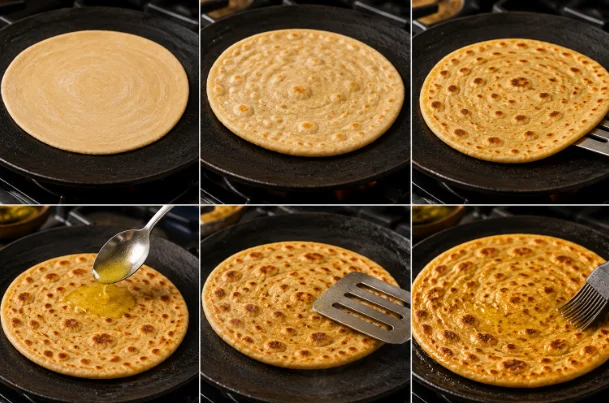
Step-by-Step Tawa Method
- Heat the tawa on medium heat.
- Place the rolled paratha on the hot tawa.
- Let it cook until small bubbles appear.
- Flip the paratha.
- Cook the second side until light brown spots appear.
- Add a little ghee or oil.
- Flip again and cook.
- Press gently with a spatula.
- Add ghee or oil on the other side.
- Cook until both sides have golden brown spots.
Do not keep flipping too many times. Two to four flips are enough.
How to Know Paratha Is Cooked
A cooked paratha should have:
- Golden brown spots
- Light puffing in some areas
- Soft center
- Slightly crisp surface
- No raw dough smell
- Flexible texture
If it feels stiff while cooking, the heat may be too low or the dough may be too dry.
Should You Use Oil, Ghee, or Butter?
You can use oil, ghee, or butter for paratha. Each gives a different result.
Oil
Oil keeps paratha soft and light. It is good for everyday cooking. It also works well for lunchbox parathas because it keeps them flexible.
Ghee
Ghee gives the best flavor. A ghee paratha has a rich aroma and a classic desi taste. It also helps create soft layers.
Butter
Butter adds flavor but can burn faster. Use it after cooking or mix it with oil if cooking on the tawa.
For daily soft paratha, use oil in the dough and ghee while cooking. This gives a good balance of softness and flavor.
How to Keep Paratha Soft After Cooking
Knowing how to keep paratha soft is just as important as cooking it.
A paratha can be soft on the tawa and still become hard if you leave it open. As it cools, it loses moisture. That is why covering is important.
Best Ways to Keep Paratha Soft
- Stack cooked parathas in a clean kitchen towel.
- Keep them in a covered casserole.
- Brush lightly with ghee after cooking.
- Do not leave them open on a plate.
- Serve them warm.
- Do not overcook them.
The steam inside the towel or casserole keeps the parathas soft. This is especially useful if you are making many parathas for family breakfast.
If you are packing paratha for lunch, let it cool slightly first. Then wrap it in foil or place it in an airtight box. If you pack it while very hot, too much steam can make it soggy.
Why Paratha Becomes Hard or Dry
If your paratha turns hard, dry, or chewy, one of these things may be the reason.
The Dough Was Too Dry
Dry dough makes hard paratha. Add water slowly, but make sure the final dough is soft.
The Dough Did Not Rest
Resting makes the dough relaxed and easy to roll. Without rest, paratha can become tight and chewy.
Too Much Dry Flour Was Used
Dry flour helps with rolling, but too much makes the paratha dry. Dust lightly.
The Paratha Was Rolled Too Thin
Thin paratha can become crisp and dry. Keep it medium thick.
The Tawa Was Too Cold
Low heat dries the paratha before it cooks. Use medium to medium-high heat.
The Tawa Was Too Hot
Very high heat burns the outside and leaves the inside undercooked.
The Paratha Was Overcooked
Cooking too long removes moisture. Remove it when golden spots appear.
It Was Left Uncovered
Paratha loses softness when left open. Keep it wrapped in a towel or covered dish.
Once you fix these mistakes, your homemade paratha recipe will improve quickly.
Common Mistakes to Avoid
Here are the most common mistakes people make when preparing soft homemade paratha.
- Making the dough too stiff
- Adding all water at once
- Not kneading enough
- Skipping resting time
- Leaving dough uncovered
- Using too much dry flour
- Rolling with heavy pressure
- Making paratha too thin
- Cooking on low heat
- Pressing too hard with a spatula
- Using too much ghee inside
- Leaving cooked paratha uncovered
- Reheating on very high heat
The best paratha comes from balance. Soft dough, light rolling, controlled heat, and gentle handling give the best results.
Soft Homemade Paratha Serving Ideas
A warm paratha can be served with many foods. It works for breakfast, lunch, dinner, and snacks.
Breakfast Ideas
Serve soft paratha with:
- Chai
- Omelet
- Fried egg
- Achar
- Yogurt
- Butter
- Jam
- Honey
- Malai
This is a classic Pakistani and South Asian breakfast.
Lunch or Dinner Ideas
Serve paratha with:
- Chicken karahi
- Keema
- Dal
- Chana masala
- Aloo bhujia
- Vegetable curry
- Kabab
- Raita
- Chutney
- Pickle
A fresh paratha with curry feels warm and filling. It can turn a simple meal into comfort food.
Kids’ Lunchbox Ideas
For children, you can fill paratha with:
- Egg
- Cheese
- Chicken
- Potato
- Jam
- Nut butter
- Leftover kebab
Roll it and pack it in a lunchbox. Use oil instead of too much ghee if you want it to stay soft for longer.
Storage Tips for Paratha Dough
You can make paratha dough ahead of time.
In the Fridge
Place the dough in an airtight container. Brush the top lightly with oil so it does not dry. Keep it in the fridge for 1 to 2 days.
Before rolling, bring it to room temperature. Cold dough is harder to roll and may crack.
In the Freezer
You can freeze dough balls too. Coat them lightly with oil and place them in a freezer-safe bag. Thaw them in the fridge overnight before using.
Fresh dough gives the best paratha, but make-ahead dough is helpful for busy mornings.
How to Store Cooked Paratha
Cooked parathas can also be stored.
Let them cool fully. Then place parchment paper between each paratha. Keep them in an airtight container or freezer bag.
In the Fridge
Cooked paratha can stay in the fridge for 2 to 3 days.
In the Freezer
Cooked paratha can be frozen for 1 to 2 months.
To avoid sticking, place parchment paper between parathas before freezing.
How to Reheat Paratha Without Drying It
Reheating can make paratha dry if the heat is too high or too long.
The best way is to reheat on a tawa.
Tawa Reheating Method
- Heat the tawa on medium heat.
- Place the paratha on it.
- Warm one side for 20 to 30 seconds.
- Flip and warm the other side.
- Brush lightly with ghee if needed.
- Serve right away.
You can also microwave paratha for 10 to 15 seconds, but it may become chewy if overheated. Wrap it in a slightly damp paper towel if microwaving.
This is a useful part of how to keep paratha soft after storage.
Easy Soft Homemade Paratha Recipe
Here is a simple recipe you can follow.
Ingredients
- 2 cups atta or whole wheat flour
- ½ teaspoon salt
- 1 tablespoon oil or ghee
- ¾ cup warm water, as needed
- Dry flour for rolling
- Ghee or oil for layering and cooking
Instructions
- Add atta and salt to a mixing bowl.
- Add oil or ghee and rub it into the flour.
- Add warm water slowly and mix.
- Knead for 5 to 7 minutes until the dough is soft.
- Cover and rest for 20 to 30 minutes.
- Divide the dough into 6 to 8 balls.
- Roll one dough ball into a small circle.
- Spread a little ghee or oil on top.
- Sprinkle a little dry flour.
- Fold into a square, triangle, or coil.
- Roll gently into a paratha.
- Heat a tawa on medium to medium-high heat.
- Place the paratha on the tawa.
- Flip when bubbles appear.
- Add ghee or oil and cook both sides.
- Press gently until golden brown spots appear.
- Keep cooked parathas covered in a towel.
- Serve warm.
This soft paratha recipe is simple enough for beginners and reliable for daily cooking.
Expert Tips for Soft and Flaky Paratha
Use these tips every time you make paratha:
- Use warm water for softer dough.
- Add water slowly.
- Knead until smooth.
- Rest the dough covered.
- Do not use too much dry flour.
- Roll with light hands.
- Keep the paratha medium thick.
- Use a hot tawa, not a cold one.
- Cook on medium to medium-high heat.
- Add ghee only after the first flip.
- Press gently, not heavily.
- Keep cooked paratha covered.
- Serve warm.
These paratha cooking tips help avoid hard, dry, or chewy parathas.
FAQs About Soft Homemade Paratha
How do you make soft homemade paratha?
To make soft homemade paratha, use soft dough, warm water, a little oil or ghee, proper resting time, gentle rolling, and medium to medium-high tawa heat. Keep cooked parathas covered so they stay soft.
Why does paratha become hard?
Paratha becomes hard when the dough is too dry, the dough is not rested, too much dry flour is used, the tawa is too cold, or the paratha is overcooked. Leaving cooked paratha uncovered also makes it hard.
How long should paratha dough rest?
Paratha dough should rest for at least 20 minutes. For softer dough, 30 minutes is better. Resting helps the flour absorb water and makes the dough easier to roll.
Should paratha dough be soft or firm?
Paratha dough should be soft, smooth, and pliable. It should not be stiff or very sticky. A soft dough gives softer paratha.
Should I use warm water for paratha dough?
Yes, warm water helps make the dough soft and easier to knead. Do not use very hot water. Lukewarm water is enough.
How do I keep paratha soft after cooking?
Keep cooked parathas wrapped in a clean kitchen towel or covered in a casserole. This traps light steam and keeps them soft.
Is ghee or oil better for paratha?
Both work well. Oil keeps paratha soft and flexible. Ghee gives rich flavor and soft layers. You can use oil in the dough and ghee while cooking.
Why does my paratha become chewy?
Paratha can become chewy if the dough is too tight, not rested enough, rolled too hard, or cooked on low heat for too long.
How do I make paratha flaky?
To make flaky paratha, spread ghee or oil on rolled dough, sprinkle a little flour, fold it, and roll gently. The fat and folding create layers.
Can I make paratha dough ahead of time?
Yes. You can keep paratha dough in the fridge for 1 to 2 days. Store it in an airtight container and bring it to room temperature before rolling.
Can cooked parathas be frozen?
Yes. Let cooked parathas cool, place parchment paper between them, and freeze in a sealed bag. Reheat on a medium hot tawa for the best texture.
What is the best flour for soft paratha?
Atta or whole wheat flour is best for traditional soft paratha. You can also mix a little all-purpose flour for extra softness.
Conclusion
How to make soft homemade paratha is simple when you understand the small steps. Start with soft dough. Add water slowly. Knead well. Let the dough rest. Roll with light hands. Use a little ghee or oil for layers. Cook on a properly heated tawa. Then keep the parathas covered after cooking.
A good soft homemade paratha should be warm, flexible, lightly layered, and easy to tear. It should not feel dry, stiff, or chewy. If your paratha becomes hard, check the dough softness, resting time, rolling pressure, heat level, and storage method.
This homemade paratha recipe is perfect for breakfast with chai, eggs, yogurt, or achar. It also pairs beautifully with dal, curry, kebabs, keema, and chicken karahi. Once you learn the method, paratha becomes one of the most comforting foods you can make at home.

Sahar Syed
Sahar Syed writes for LaGrub on cooking, recipes, and mindful culinary living.
Get a desi recipe worth cooking, every week
One tested recipe a week. Nothing else, and unsubscribe any time.


