


Wondering is Vietnamese food healthy? Vietnamese cuisine is known for fresh vegetables, herbs, rice noodles, seafood, lean meats and fragrant broths. From comforting pho to fresh spring rolls and flavourful noodle bowls, many dishes can be part of a balanced meal. However, the ingredients, sauces and cooking methods matter too.
Is Vietnamese food healthy? For many people, it can be a nutritious and satisfying choice. Vietnamese cuisine often uses fresh vegetables, herbs, rice noodles, seafood, lean meats and fragrant broths. However, not every dish is equally light. The ingredients, cooking method, sauces and portion size all make a difference. This guide explains what makes Vietnamese food healthy, how popular dishes such as pho and banh mi fit into a balanced diet, and what to order when you want a lighter meal.
What Makes Vietnamese Food Healthy?
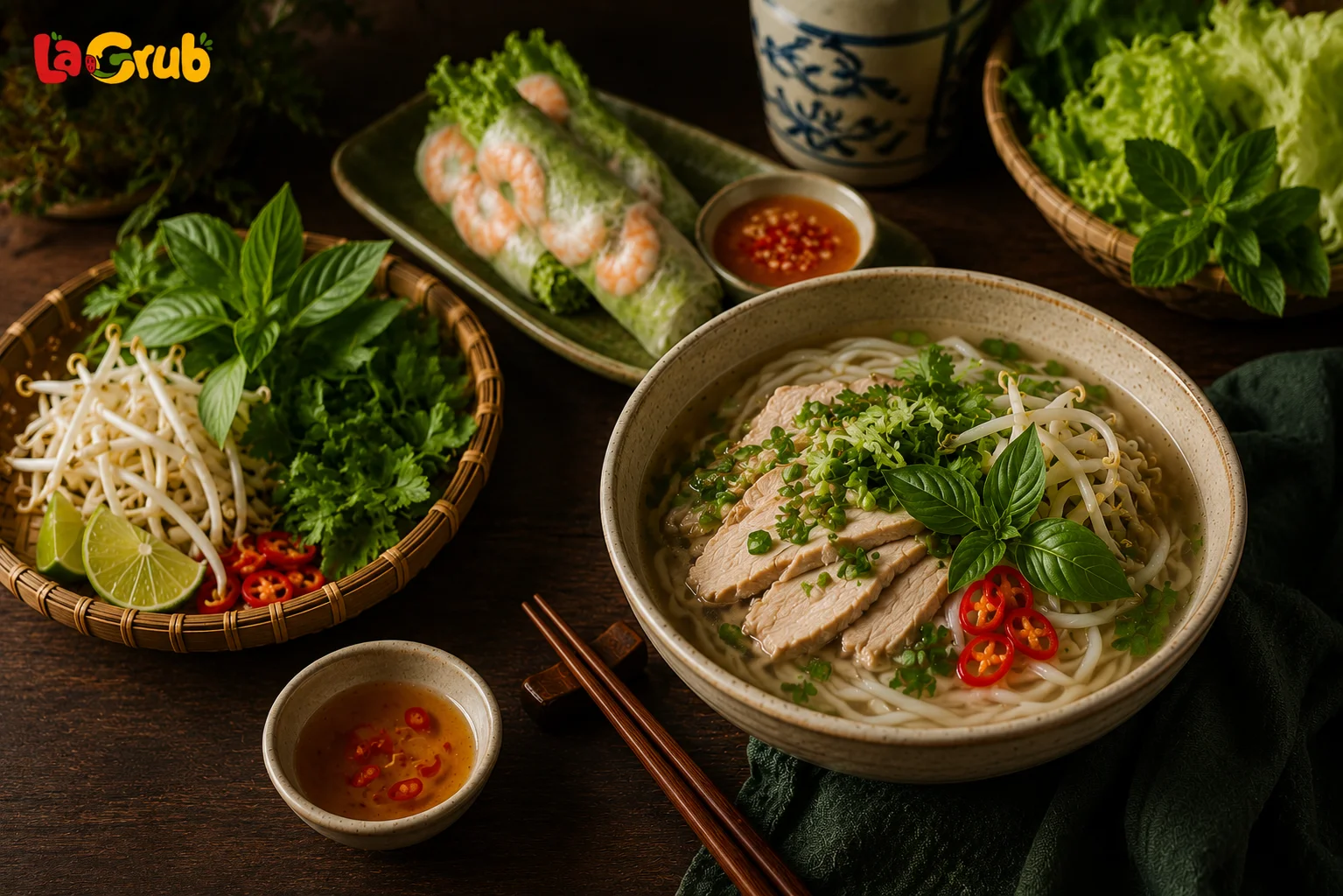
Vietnamese cuisine is known for fresh ingredients and balanced flavours. Many traditional meals combine vegetables, herbs, protein and rice or noodles in one dish. This makes it possible to enjoy a filling meal without relying only on rich sauces or heavy ingredients.
Fresh herbs are also a big part of the cuisine. Coriander, Thai basil, mint, spring onions, bean sprouts, lettuce and other greens can add colour, crunch and freshness.
Another important feature is the use of lime, chilli, garlic, ginger and fish sauce. These ingredients bring strong flavour without needing large amounts of rich sauces.
However, is Vietnamese food healthy for everyone? It depends on the dish. Fried foods, fatty meats, sugary drinks, salty sauces and large portions can make some meals much heavier.
The best approach is to look at the complete meal instead of judging the whole cuisine as healthy or unhealthy.
Is Vietnamese Food Actually Healthy?
Yes, many Vietnamese dishes can fit well into a balanced diet. Traditional cooking often includes vegetables, herbs, seafood, lean meat, rice and noodles. Broth-based soups and fresh rolls can also provide a satisfying meal without being heavily fried.
At the same time, Vietnamese cuisine includes plenty of richer options. Some dishes may contain fried ingredients, fatty cuts of meat, sweet sauces or a large amount of sodium.
Therefore, Vietnamese food can be healthy, but your choice matters.
A balanced Vietnamese meal may include:
A good source of protein such as chicken, fish, prawns, tofu or lean beef
Fresh vegetables and herbs
A moderate serving of rice or rice noodles
A small amount of dipping sauce
Fresh fruit or another simple side
This balance can make the meal both satisfying and flavourful.
Is Pho Healthy?
Pho is one of the best-known Vietnamese dishes. It is a noodle soup made with broth, rice noodles, herbs and meat, usually beef or chicken.
So, is pho healthy? It can be. Pho provides protein, carbohydrates and fluids, while fresh herbs and vegetables can add extra nutrients and texture.
However, the broth can contain a lot of sodium depending on how it is prepared. The portion of noodles and type of meat also affect the overall nutritional value.
If you want a lighter bowl, choose lean meat, add plenty of fresh herbs and vegetables, and avoid adding too much salty sauce.
Why Is Pho So Popular?
Pho is popular because it brings many flavours and textures together. The warm broth is comforting, the noodles are soft, the meat adds substance, and herbs and lime give the bowl a fresh finish.
You can also adjust the flavour with chilli, lime, bean sprouts and herbs. This makes pho easy to customise according to your taste.
Is Banh Mi Healthy?
Banh mi is a Vietnamese sandwich made with a crisp baguette and a variety of fillings. Depending on the recipe, it can include grilled meat, cold cuts, pâté, vegetables, herbs, pickles and sauces.
So, is banh mi healthy? It depends on the ingredients and portion.
A banh mi with lean protein and plenty of vegetables can be a satisfying meal. However, versions containing fatty meats, pâté and generous amounts of mayonnaise or sauce may be higher in fat, calories and sodium.
The pickled vegetables are an important part of the sandwich. They add a sharp, slightly sweet flavour that balances the savoury filling.
If you are choosing banh mi as a lighter meal, look for plenty of vegetables and a lean protein filling.
What Are the Healthiest Vietnamese Foods?
If you want to enjoy healthy Vietnamese food, there are several dishes worth considering.
Goi Cuon
Goi cuon, or fresh Vietnamese spring rolls, are made with rice paper and can contain prawns, vegetables, herbs and noodles.
Because they are fresh rather than deep-fried, they can be a lighter choice. However, remember that dipping sauce can add extra sugar and sodium.
Pho
A bowl of pho can provide protein, noodles and fresh herbs. Choose lean meat and be mindful of the amount of salty sauce you add.
Bun Dishes
Bun dishes usually combine rice noodles with fresh vegetables, herbs and a protein such as grilled meat or seafood.
The vegetables and herbs give these dishes plenty of freshness, while the protein makes them more filling.
Grilled Seafood
Vietnam has a strong seafood tradition. Grilled or steamed fish and prawns can be a good way to add protein without choosing a heavily fried meal.
Vegetable and Tofu Dishes
Tofu, mushrooms, greens and other vegetables are useful choices when you want a plant-based Vietnamese meal.
Why Does Vietnamese Food Use So Many Fresh Herbs?
Fresh herbs are one of the features that make Vietnamese cuisine so recognisable.
They are often served alongside noodles, soups, grilled meats and rice dishes. Instead of being used only as decoration, they provide real flavour and texture.
For example, mint can add freshness, Thai basil can provide a strong aroma, while coriander brings a bright herbal taste.
Bean sprouts can add crunch, while lime adds acidity.
This combination means that a simple bowl of noodles can have many layers of flavour without needing a heavy sauce.
Is Vietnamese Food Good for Weight Loss?
Many people ask whether Vietnamese food is good for weight loss. It can be included in a balanced weight-loss diet, but no particular cuisine automatically causes weight loss.
One advantage is that many Vietnamese dishes contain vegetables, herbs and protein. Broth-based soups can also be filling, while grilled dishes can provide protein without deep frying.
However, portions still matter.
Rice, noodles, fried foods, sugary sauces and sweet drinks all contribute calories. Therefore, the healthiest approach is to focus on the overall meal.
Try building your plate or bowl around:
Protein
Plenty of vegetables
Fresh herbs
A moderate serving of rice or noodles
A sensible amount of sauce
This gives you flavour while keeping the meal balanced.
Is Vietnamese Restaurant Food Healthy?
Vietnamese restaurant food can be healthy, but restaurant preparation may differ from home cooking.
Restaurants may use more salt, sugar, oil or sauce to create stronger flavours. Portion sizes may also be larger than what you would normally eat at home.
That does not mean you need to avoid Vietnamese restaurants.
Instead, make simple choices. Choose grilled, steamed or broth-based dishes more often. Ask for sauces separately when possible and add fresh herbs and vegetables to your meal.
If you are eating a fried appetiser, you can balance it with a lighter main dish.
The goal is not perfection. It is about making sensible choices.
What Are the Main Types of Vietnamese Food?
Vietnamese cuisine changes from one region to another. Northern, Central and Southern Vietnam each have their own food traditions.
Northern Vietnamese Food
Northern Vietnamese cooking is often associated with balanced and more subtle flavours. Pho is one of the dishes strongly connected with this region.
Central Vietnamese Food
Central Vietnamese cuisine is known for stronger flavours and dishes that can be more spicy and complex.
Southern Vietnamese Food
Southern Vietnamese food often has sweeter flavour profiles and makes good use of fresh herbs, vegetables and tropical produce.
These regional differences show why there is no single definition of Vietnamese food.
Famous Vietnamese Foods to Try
If you are new to Vietnamese cuisine, these dishes are a good starting point:
Pho: Rice noodle soup with broth, meat and fresh herbs.
Banh Mi: A Vietnamese sandwich with protein, vegetables, pickles and sauces.
Goi Cuon: Fresh rice-paper rolls with vegetables, herbs and protein.
Bun Cha: Grilled meat served with rice noodles, herbs and dipping sauce.
Com Tam: Broken rice served with meat and traditional accompaniments.
Banh Xeo: A crispy savoury pancake filled with ingredients such as prawns, meat and vegetables.
Each dish highlights a different part of Vietnamese cooking. Some focus on broth, others on grilling, fresh vegetables, noodles or crisp textures.
How to Order Healthy Vietnamese Food
Eating at a Vietnamese restaurant does not mean you have to give up your healthy eating habits.
Try these simple tips:
Choose grilled or steamed protein.
Add fresh herbs and vegetables.
Choose broth-based soups when you want a lighter option.
Ask for sauces separately.
Limit deep-fried appetisers.
Keep rice and noodle portions moderate.
Choose water or an unsweetened drink instead of a sugary beverage.
Small changes can make a big difference without taking away from the enjoyment of the meal.
Vietnamese Food and Fresh Ingredients
One reason is Vietnamese food healthy is such a common question is the cuisine's strong focus on fresh ingredients.
Fresh vegetables, herbs, citrus, seafood and other ingredients are used in many everyday dishes. This gives Vietnamese food a fresh taste and allows cooks to create meals with plenty of variety.
For example, a noodle bowl can include noodles, grilled protein, cucumber, herbs, lettuce, bean sprouts and a tangy dressing. Each ingredient adds something different.
You can explore more recipes and cooking ideas through LaGrub's recipe collection.
How to Enjoy Vietnamese Food at Home
You do not need a large collection of speciality ingredients to start cooking Vietnamese-inspired meals at home.
Begin with a few useful ingredients such as rice noodles, lime, garlic, ginger, chilli, fresh herbs and a savoury sauce. Then add vegetables and your preferred protein.
You can make simple noodle bowls, fresh rolls or soup-based meals without complicated equipment.
For more ideas from Asian cooking traditions, explore LaGrub's Chinese Culinary Heritage cookbook. It is a separate cuisine, but it can be useful for anyone who enjoys exploring different Asian flavours.
What Should You Limit When Eating Vietnamese Food?
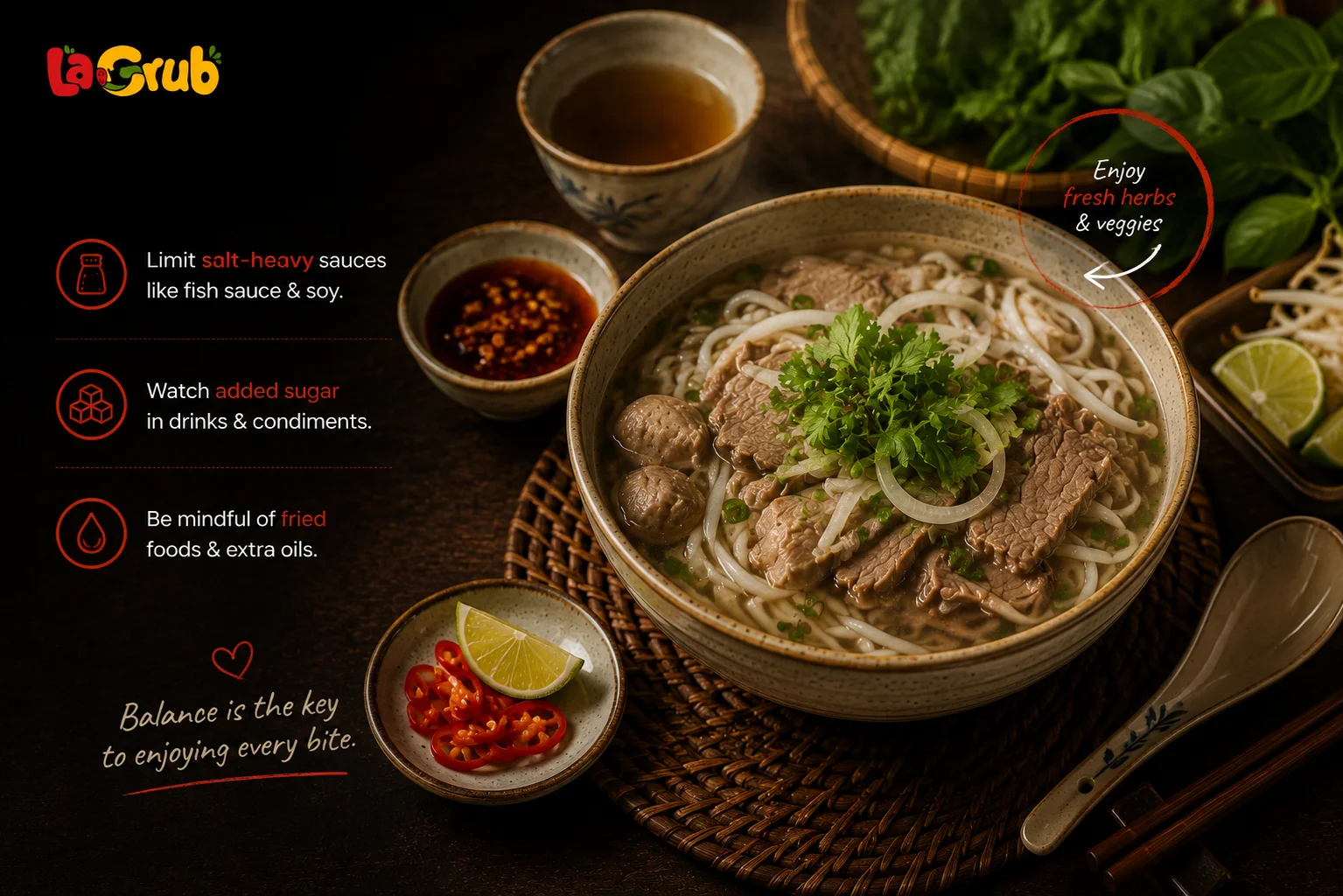
Although many dishes can be balanced, some choices are best enjoyed in moderation.
Deep-Fried Foods
Fried spring rolls and other fried appetisers can contain more fat and calories than fresh alternatives.
Sugary Sauces
Some dipping sauces contain added sugar. Using a smaller amount can help keep the overall meal more balanced.
Salty Sauces
Fish sauce and other savoury sauces provide strong flavour, but they can also add a significant amount of sodium.
Fatty Meats
Choose leaner cuts more often if you are trying to keep the meal lighter.
Sugary Drinks
Vietnamese coffee and sweet drinks can contain added sugar. Enjoy them occasionally or choose an unsweetened option when possible.
How to Make Vietnamese Food More Balanced
You do not have to completely change a traditional dish to make it fit your eating style.
Instead, focus on balance.
Add more vegetables to noodle dishes. Choose grilled protein instead of fried protein. Use sauces in smaller amounts. Keep rice and noodle portions sensible.
You can also serve fresh fruit on the side instead of a very sweet dessert.
This approach lets you enjoy healthy Vietnamese dishes without making every meal feel restrictive.
Why Is Vietnamese Food So Popular?
Vietnamese cuisine has become popular around the world because it combines freshness, texture and bold flavour.
A single meal may include:
Fresh herbs
Crunchy vegetables
Rice noodles
Grilled meat
Seafood
Fragrant broth
Lime
Chilli
Savoury dipping sauces
The cuisine also offers variety. Meat lovers can enjoy beef or chicken, seafood lovers can choose prawns or fish, and vegetarians can find tofu and vegetable-based dishes.
This flexibility makes Vietnamese food easy to enjoy in many different ways.
Vietnamese Food for Different Eating Preferences
Another advantage of Vietnamese cuisine is its variety.
For Meat Lovers
Grilled beef, chicken and pork are common choices.
For Seafood Lovers
Fish, prawns and other seafood can be found in many Vietnamese dishes.
For Vegetarians
Tofu, mushrooms, vegetables and rice-based dishes can form the base of a satisfying meal.
For People Looking for Lighter Meals
Fresh rolls, vegetable-heavy noodle bowls and broth-based soups can be good options.
However, always check sauces and preparation methods because these can change the nutritional profile of a dish.
Frequently Asked Questions
Is Vietnamese food healthy?
Yes, many Vietnamese dishes can be part of a balanced diet because they use vegetables, fresh herbs, protein, rice and noodles. However, fried foods, sugary sauces, salty broths and large portions can make some meals less balanced.
What is the healthiest Vietnamese food?
Fresh spring rolls, vegetable-rich noodle bowls, broth-based soups, grilled seafood and grilled meat with vegetables can be good choices. Choose moderate portions and use dipping sauces carefully.
Is pho healthy?
Pho can be a balanced meal because it contains broth, rice noodles, protein and fresh herbs. However, its sodium content can vary, so be mindful of salty sauces and portion size.
Is banh mi healthy?
Banh mi can be a satisfying meal when it contains lean protein and plenty of vegetables. However, some versions contain fatty meats, pâté and mayonnaise, which can make them higher in fat and calories.
Is Vietnamese food good for weight loss?
Vietnamese food can fit into a weight-loss eating plan. Many dishes contain vegetables, herbs and protein, but portion sizes, sauces, noodles, rice and drinks still affect total calorie intake.
Conclusion
So, is Vietnamese food healthy? In many cases, it can be. Vietnamese cuisine offers plenty of fresh vegetables, herbs, seafood, lean proteins, rice noodles and broth-based dishes. However, not every dish has the same nutritional value.
The best choice depends on the ingredients, cooking method, portion size and sauces. Grilled, steamed, fresh and broth-based dishes are often easier to fit into a balanced meal than heavily fried options.
Most importantly, you do not have to avoid your favourite Vietnamese dishes. Enjoy them in sensible portions, add fresh vegetables and herbs, and choose sauces thoughtfully.
If you want to discover more food ideas and recipes, explore LaGrub's recipes and keep building your home cooking collection. You can also discover LaGrub's Istanbul Sofra Turkish cookbook if you enjoy exploring more international flavours and traditional cooking.

Maimoona Ehtisham
Maimoona Ehtisham writes for LaGrub on cooking, recipes, and mindful culinary living.
Get a desi recipe worth cooking, every week
One tested recipe a week. Nothing else, and unsubscribe any time.


