

Pakistani food around the world is not just about taste. It is a story of people, migration, memory, and belonging. Wherever Pakistanis have settled, they have carried their food traditions with them, from biryani and karahi to nihari, chai, kebabs, and Eid sweets. These dishes have helped families stay connected to home while introducing Pakistani flavors to new cultures, new cities, and new generations.
Pakistani Food Around the World: A Diaspora Story
Pakistani food around the world is more than a story of recipes. It is a story of migration, memory, family, and identity. From biryani in London to karahi in Dubai and nihari in Toronto, Pakistani cuisine has travelled with people who carried home in their spices, meals, and traditions.
Food does not travel alone. It travels with mothers who pack masala in suitcases, students who learn to make chai in shared kitchens, workers who look for halal meals after long shifts, and families who keep Eid tables alive in new countries. This is why Pakistani diaspora food has such a deep emotional place in global food culture.
Across the world, Pakistani dishes are served in restaurants, food trucks, home kitchens, weekend markets, and family gatherings. Some dishes are famous. Others are still hidden. But together, they show how Pakistani food culture keeps growing far beyond Pakistan.
Why Pakistani Food Around the World Is More Than Cuisine
To understand Pakistani food around the world, we must first understand what food means to Pakistani families.
In many homes, food is not only for hunger. It is care. It is welcome. It is respect. It is the way people say, “You are part of us.” A plate of biryani, a cup of chai, or a bowl of hot nihari can carry more feeling than a long conversation.
This is why Pakistani cuisine abroad feels so powerful. It gives people a way to stay connected with their roots. It reminds them of homes they left behind, streets they grew up on, and family meals that shaped their childhood.
For the Pakistani diaspora, food becomes a language. Even when children grow up speaking English, Italian, Arabic, or French, they may still know the smell of cumin, the comfort of dal chawal, the joy of Eid seviyan, and the sound of paratha hitting a hot tawa.
That is the real beauty of Pakistani diaspora food. It keeps memory alive in simple, everyday meals.
How Migration Carried Pakistani Food Abroad
Pakistani food moved around the world because Pakistanis moved around the world.
Families migrated for work, study, safety, business, marriage, and better futures. Many went to the UK, Canada, the United States, Italy, the Middle East, Australia, and other parts of Europe. Wherever they went, they carried their food habits with them.
At first, many people cooked at home because familiar ingredients were hard to find. A family might search for basmati rice, halal meat, green chilies, fresh coriander, or the right kind of atta for roti. Sometimes they replaced one ingredient with another. Sometimes they waited for someone travelling from Pakistan to bring spices, pickles, or tea.
Over time, Pakistani grocery stores, halal butcher shops, and South Asian markets began to appear. Then came small restaurants, takeaway counters, home-based catering, and food stalls. Slowly, Pakistani restaurants abroad became places where immigrants could taste home again.
This is how Pakistani food traditions survived. They did not survive because everything stayed the same. They survived because people adapted without forgetting the heart of the food.
The Diaspora Kitchen: Where Memory Becomes a Meal
The strongest story of Pakistani food abroad is not always in restaurants. It is in home kitchens.
A mother in Manchester makes aloo gosht the way her mother made it in Lahore. A student in Toronto learns to cook chicken karahi by calling home on video. A father in Dubai prepares chai after work because the smell makes the apartment feel less lonely. A family in New York makes biryani every Eid so the children understand what celebration tastes like.
These kitchens are quiet cultural spaces. They protect family recipes, language, taste, and tradition.
In many diaspora homes, recipes are not written down. They are taught by watching. A pinch of salt. A handful of coriander. A spoon of ginger garlic paste. A little more oil because “the masala is not ready yet.” This style of cooking is part of Pakistani home cooking. It is based on feeling, practice, and memory.
That is why Pakistani family recipes are so important. They are not only instructions. They are inheritance.
Why Pakistani Cuisine Has Often Lacked Visibility
Although Pakistani cuisine is rich, it has not always received the global attention it deserves.
One reason is that Pakistani food around the world has often been placed under broad labels like Indian food, curry house food, or South Asian food. In many cities, Pakistani-owned restaurants served dishes cooked by Pakistani chefs, but the cuisine was not always named as Pakistani.
This caused a visibility problem. People tasted Pakistani flavors, but they did not always know they were eating Pakistani food.
Another reason is that Pakistani food is very regional. It is not easy to define it in one sentence. The food of Lahore is different from the food of Karachi. Peshawar has its own meat and grill traditions. Balochistan has sajji and rosh. Sindh has bold spice and rice dishes. Coastal Pakistan has seafood. Migrant communities have their own food memories too.
So when people ask, “What is Pakistani food?” the answer is not simple. And that is exactly what makes it special.
Pakistani food culture deserves more global recognition because it is layered, diverse, and deeply connected to history.
Pakistani Food vs Indian Food: Shared Roots, Separate Identity
It is natural that people compare Pakistani and Indian food. Both cuisines share history, ingredients, spices, and regional links. Dishes like biryani, kebabs, korma, roti, dal, and chai exist across borders in different forms.
However, Pakistani food vs Indian food should not be treated as a competition. It is better to see them as related cuisines with different voices.
Pakistani cuisine has its own identity shaped by geography, migration, Muslim food traditions, regional meat dishes, street food, and home cooking. Meat plays a strong role in many Pakistani dishes. Beef, mutton, chicken, and lamb appear in foods like nihari, paye, kebabs, karahi, pulao, and rosh.
Pakistani food also carries the influence of Central Asia, Afghanistan, Iran, the Middle East, and South Asia. This mix gives it a unique place in global food culture.
So yes, there are shared roots. But there is also a clear Pakistani food identity that deserves to stand under its own name.
The Regional Diversity Behind Pakistani Cuisine
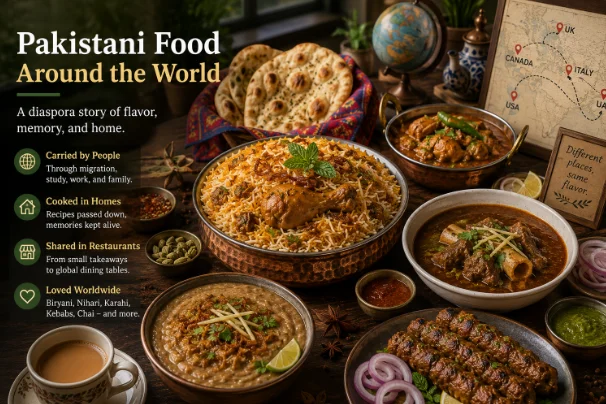 dispora story
One of the biggest strengths of Pakistani food culture is regional diversity. Pakistan is not one flavor. It is many food worlds living together.
Punjab and the Comfort of Karahi, Gravy, and Naan
Punjabi food is often rich, warm, and generous. It includes dishes like chicken karahi, mutton karahi, buttered naan, saag, makki roti, aloo gosht, chana, and lassi.
In diaspora restaurants, Punjabi-style dishes are often the most visible. Karahi, naan, tandoori chicken, seekh kebab, and rich gravies are common on menus. These dishes are popular because they are bold, comforting, and easy to share.
A good karahi has a fresh tomato base, green chilies, ginger, garlic, and tender meat. It is served hot, often with naan. For many people abroad, this is one of the first tastes of traditional Pakistani dishes.
Sindh, Karachi, and the Food of Many Communities
Sindh and Karachi bring another layer to Pakistani cuisine.
Karachi is a city of migrants, traders, workers, and many communities. Its food reflects that mix. You can find biryani, bun kebab, nihari, haleem, fried fish, prawn biryani, rolls, kebabs, and street snacks.
Karachi-style biryani is especially famous. It is spicy, colorful, and full of aroma. It often includes potatoes, tender meat, fried onions, yogurt, green chilies, mint, and basmati rice.
For many Pakistanis abroad, Karachi-style biryani is not just food. It is a memory of weddings, street corners, family dinners, and weekend gatherings.
Khyber Pakhtunkhwa and the Power of Meat, Grill, and Pulao
Khyber Pakhtunkhwa is known for meat-heavy dishes, simple spices, and strong grill traditions.
Chapli kebab, lamb karahi, Kabuli pulao, tikka, and grilled meats are important parts of this region’s food. The flavor is often less about heavy spice and more about quality meat, fat, salt, heat, and smoke.
In global Pakistani restaurants, chapli kebab has become a powerful symbol of regional food. It is crisp on the edges, juicy inside, and full of flavor from coriander seeds, chili, herbs, and spices.
This shows that global Pakistani cuisine is not only about curry. It is also about grills, kebabs, rice, and rustic meat dishes.
Balochistan and the Slow Beauty of Sajji and Rosh
Balochistan gives Pakistani food some of its most beautiful slow-cooked dishes.
Balochi sajji is simple but memorable. Meat is seasoned, cooked slowly, and often served with rice or naan. Rosh is another powerful dish, usually made with tender meat, light seasoning, and broth-like comfort.
These dishes show another side of Pakistani food: clean, earthy, slow, and deeply satisfying.
As Pakistani food around the world grows, these regional dishes deserve more space on global menus.
Coastal Pakistan and Seafood Traditions
Pakistani seafood is still less known abroad, but it has great potential.
Karachi’s coastal food includes fried fish, prawn biryani, crab, fish curry, and seafood cooked with spice, lemon, herbs, and rice. Dishes like Kiamari prawn biryani and black pepper crabs show how rich coastal Pakistani food can be.
This side of Pakistani cuisine abroad is still waiting for more recognition. It can help the world see that Pakistani food is not only meat, rice, and curry. It also has bright seafood traditions.
Pakistani Restaurants Abroad: From Hidden Gems to Global Tables
Pakistani restaurants abroad play a major role in keeping the cuisine visible.
In many countries, Pakistani restaurants first served immigrant communities. They offered familiar dishes at affordable prices. Workers, students, taxi drivers, families, and travelers could come in and eat food that reminded them of home.
Over time, these restaurants began attracting wider audiences. People from other cultures started enjoying biryani, kebabs, karahi, naan, samosas, and chai.
Today, Pakistani food appears in many forms:
- Family-run restaurants
- Halal takeaway shops
- Food trucks
- Weekend food stalls
- Home-based catering
- Modern fusion kitchens
- Fine dining restaurants
- Supper clubs
- Pop-up food events
This growth is helping Pakistani food visibility improve. However, there is still more work to do. Pakistani food should not stay hidden under general labels. It deserves clear naming, better storytelling, and stronger presentation.
Pakistani Food in the UK
The UK has one of the strongest Pakistani diaspora communities. Cities like London, Birmingham, Manchester, Bradford, and Glasgow have long histories with South Asian food.
In many areas, Pakistani food is part of daily life. You can find biryani shops, kebab houses, curry restaurants, sweet shops, halal butchers, and bakeries selling naan, samosas, and mithai.
For decades, many “curry houses” in the UK were shaped by Pakistani and Bangladeshi families. Yet the food was often grouped under one broad identity. Today, there is more interest in naming regional cuisines correctly.
This is a major step for Pakistani cuisine abroad. When food is named properly, people can understand its story better.
Pakistani Food in America and Canada
In the United States and Canada, Pakistani food culture is growing through restaurants, grocery stores, food bloggers, and home cooks.
Cities like Houston, Chicago, New York, Toronto, Mississauga, and Vancouver have strong Pakistani food scenes. In these places, people can find nihari, haleem, biryani, karahi, kebabs, paratha rolls, halwa puri, and chai.
For many young Pakistani-Americans and Pakistani-Canadians, food is one of the strongest links to heritage. They may grow up between cultures, but food gives them a way to return to family history.
A plate of biryani at a wedding, a box of mithai at Eid, or a weekend trip to a Pakistani restaurant becomes part of identity.
This is why Pakistani diaspora cuisine matters. It helps second-generation families understand where they come from.
Pakistani Food in Italy and Europe
Pakistani communities in Italy and other parts of Europe have also helped carry the cuisine abroad.
In Italy, Pakistani food often grows around halal restaurants, migrant neighborhoods, family kitchens, and cultural events. People look for familiar meals like biryani, kebabs, nihari, haleem, and chicken karahi.
However, Pakistani food in Europe also adapts. Some dishes become milder. Some ingredients change. Some restaurants serve mixed menus to attract wider customers. In many places, Pakistani food appears beside Indian, Turkish, Middle Eastern, or general halal food.
This is both a challenge and an opportunity. The challenge is visibility. The opportunity is introduction. Every restaurant, home cook, and food event can help people understand Pakistani food heritage more clearly.
Pakistani Food in the Middle East
The Middle East has a large Pakistani community. Countries like the UAE, Saudi Arabia, Qatar, Oman, and Kuwait have many Pakistani workers, families, and businesses.
In cities like Dubai, Abu Dhabi, Jeddah, Riyadh, and Doha, Pakistani food is easy to find. There are restaurants serving biryani, karahi, BBQ, nihari, haleem, paratha rolls, paye, and chai.
For workers living away from family, these meals can bring comfort. A simple plate of rice and curry after a long workday can feel like home.
At the same time, Pakistani food in the Middle East often mixes with Arab, Indian, Afghan, and Persian food cultures. This creates new food habits while keeping Pakistani flavors alive.
The Dishes That Became Global Pakistani Symbols
Some dishes have become strong symbols of Pakistani food around the world.
Biryani
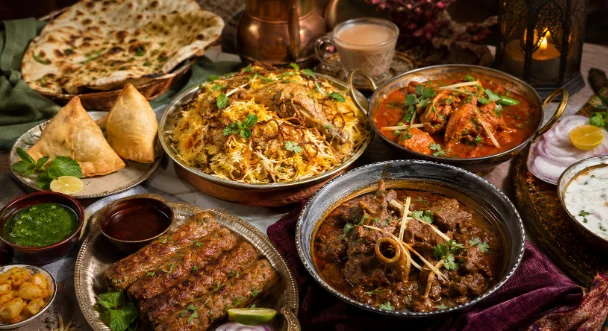
Biryani is one of the most famous Pakistani dishes abroad. It is served at weddings, Eid gatherings, restaurants, and family dinners. Pakistani biryani is often bold, aromatic, and layered with rice, meat, yogurt, fried onions, mint, and spices.
Nihari
Nihari is slow, rich, and deeply comforting. It is often made with beef or mutton and cooked until tender. For many people, nihari is weekend food, family food, and breakfast-after-Fajr food.
Haleem
Haleem is made with meat, lentils, wheat or barley, and spices. It is slow-cooked until thick and smooth. During Ramadan, haleem becomes especially popular in many Pakistani communities.
Chicken Karahi
Chicken karahi is one of the most loved restaurant dishes. It is cooked with tomatoes, ginger, garlic, green chilies, and spices. It is often served sizzling hot with naan.
Chapli Kebab
Chapli kebab represents the bold food of Khyber Pakhtunkhwa. It is spicy, juicy, and full of texture. It has become popular in many Pakistani restaurants abroad.
Sajji and Rosh
Sajji and rosh show the simple, meat-focused beauty of Balochi food. These dishes deserve more global attention because they offer a different side of Pakistani cuisine.
Chai
Chai is not just a drink. It is a ritual. It is served in homes, offices, roadside stalls, and restaurants. Abroad, chai becomes a small daily comfort for many Pakistanis.
How Pakistani Food Changes Abroad
When food travels, it changes. This is normal. Pakistani food abroad often adapts to local ingredients, local taste, and local life.
Some changes include:
- Spice levels become milder.
- Local vegetables replace Pakistani ones.
- Frozen parathas replace homemade roti.
- Ready-made masalas save time.
- Restaurants adjust dishes for non-Pakistani customers.
- Halal meat availability shapes menus.
- Fusion dishes appear, like biryani bowls or karahi tacos.
- Food is plated in a more modern style.
These changes do not always mean the food loses its soul. Sometimes adaptation helps food survive.
A student cooking biryani in a small apartment may not make it exactly like home. But the smell, rice, spice, and effort still carry meaning.
That is the heart of Pakistani food and identity.
Why Pakistani Food Is Entering a New Global Chapter
Today, Pakistani food visibility is improving.
Younger chefs, food writers, recipe bloggers, YouTube cooks, and home caterers are telling better stories about the cuisine. They are not only cooking the food. They are explaining where it comes from, what makes it different, and why it matters.
This is helping global Pakistani cuisine enter a new chapter.
Pakistani food is also becoming more confident. It no longer needs to hide under broad labels. More people are saying clearly: this is Pakistani food. This is Sindhi food. This is Lahori food. This is Pashtun food. This is Karachi-style biryani. This is Balochi sajji.
That naming matters. It gives food its history back.
The Role of Home Cooks, Food Bloggers, and Recipe Websites
Restaurants are important, but home cooks are just as powerful.
Many people learn about Pakistani food culture through recipe websites, food blogs, Instagram pages, YouTube channels, and family cooks. These platforms make the food easier to understand.
A clear recipe can help someone make biryani for the first time. A simple guide can teach them how to cook karahi, knead atta, fry pakoras, or make raita. A food story can help them see why a dish matters.
This is where platforms like Lagrub can play a meaningful role. Food content should not only give ingredients. It should also explain the feeling, timing, method, and memory behind the dish.
Good food writing helps people cook with intention.
Pakistani Food as Cultural Identity
For the diaspora, food is often one of the last things to fade.
Clothes may change. Language may become mixed. Children may grow up with new habits. But food stays close. It appears at weddings, funerals, Eid mornings, Ramadan evenings, family visits, and weekend meals.
This is why Pakistani food and cultural identity are deeply linked.
A child may not know every village, city, or family story. But they may know that Eid means sheer khurma or seviyan. Ramadan means pakoras and fruit chaat. Sunday means paratha and omelet. A family gathering means biryani. A cold day means nihari. A guest means chai.
These food memories become identity.
The Future of Pakistani Cuisine Around the World
 dispora story
The future of Pakistani cuisine around the world looks strong, but it needs better storytelling.
Pakistani food has the flavor, variety, and emotional depth to stand proudly on global tables. But for that to happen, chefs, writers, restaurants, and home cooks must name the food clearly and share its stories.
The future may include:
- More regional Pakistani restaurants
- Better Pakistani fine dining
- More Pakistani food festivals
- More recipe websites focused on authentic cooking
- More young chefs exploring family recipes
- More global interest in dishes beyond biryani
- More storytelling around Pakistani food heritage
- More visibility for Sindhi, Balochi, Pashtun, Punjabi, and Karachi foods
Pakistani food does not need to become less Pakistani to become global. It needs to become more clearly understood.
FAQs About Pakistani Food Around the World
What is Pakistani food known for?
Pakistani cuisine is known for rich spices, tender meat, aromatic rice, slow-cooked dishes, kebabs, flatbreads, curries, and strong hospitality. Popular dishes include biryani, nihari, haleem, karahi, chapli kebab, pulao, and chai.
Why is Pakistani food popular abroad?
Pakistani food abroad is popular because it is flavorful, comforting, generous, and closely tied to family and community. Diaspora communities have helped spread it through restaurants, home kitchens, food trucks, and cultural events.
Why does Pakistani food lack visibility?
Pakistani food has often lacked visibility because it was placed under broad labels like Indian food or South Asian food. Many Pakistani restaurants and dishes existed abroad, but they were not always named clearly as Pakistani.
What are the most popular Pakistani dishes around the world?
The most popular traditional Pakistani dishes abroad include biryani, chicken karahi, nihari, haleem, seekh kebab, chapli kebab, korma, pulao, halwa puri, samosas, pakoras, and chai.
Is Pakistani food the same as Indian food?
No, Pakistani and Indian cuisines are not the same, although they share history and ingredients. Pakistani food culture has its own identity shaped by regional dishes, meat traditions, migration, street food, and local cooking styles.
Where is Pakistani food most popular outside Pakistan?
Pakistani food is especially popular in the UK, Canada, the United States, the Middle East, Italy, and parts of Europe. Cities with large Pakistani communities often have strong Pakistani food scenes.
What makes Pakistani diaspora food special?
Pakistani diaspora food is special because it carries memory and identity. It connects families to Pakistan through recipes, spices, Eid meals, Ramadan traditions, and everyday home cooking.
How has Pakistani food changed abroad?
Pakistani food abroad often changes through local ingredients, milder spice levels, ready-made masalas, fusion dishes, and modern restaurant styles. Still, the heart of the food often stays connected to Pakistani tradition.
What is the future of Pakistani cuisine globally?
The future of global Pakistani cuisine looks promising. More chefs, food writers, recipe creators, and restaurants are helping Pakistani food gain recognition under its own name.
Conclusion: A Plate That Still Remembers Home
Pakistani food around the world is not only about biryani, nihari, karahi, kebabs, or chai. It is about people who carried their food memories into new countries and kept them alive in small kitchens, busy restaurants, family gatherings, and festival tables.
This is why Pakistani cuisine matters so deeply. It holds migration, love, loss, comfort, and belonging. It tells the story of families who left home but did not leave their taste behind.
As Pakistani food culture gains more global recognition, its future depends on clear storytelling. The world does not only need to taste Pakistani food. It needs to understand it.
At Lagrub, we believe food is more than a recipe. It is memory, identity, and care served on a plate. Explore more stories, recipes, and cooking guides on Lagrub, and bring the soul of food back to your table.

Sahar Syed
Sahar Syed writes for LaGrub on cooking, recipes, and mindful culinary living.
Get a desi recipe worth cooking, every week
One tested recipe a week. Nothing else, and unsubscribe any time.


