


Wondering what food is Puerto Rico known for? Puerto Rican cuisine is famous for flavourful dishes such as mofongo, arroz con gandules, lechón asado, pernil, pasteles and tostones. From savoury rice and slow-cooked pork to sweet plantains, these traditional foods reflect the island’s rich culture, history and love for comforting home-style meals.
Wondering what food is Puerto Rico known for? Puerto Rico is famous for bold, comforting dishes such as mofongo, arroz con gandules, lechón asado, pasteles and tostones. Its cuisine blends Taino, Spanish and African influences, creating food rich in garlic, herbs, spices, plantains, rice and slow-cooked meats.
What Food Is Puerto Rico Known For?
When people ask what food is Puerto Rico known for, one dish often comes to mind first: mofongo. However, Puerto Rican cuisine is much more than one famous recipe.
Puerto Rico has a rich food culture built around simple ingredients, strong seasoning and traditional cooking methods. Plantains, rice, beans, pork, chicken, seafood, root vegetables and fresh herbs appear in many classic dishes.
Mofongo is one of the best-known foods. It is made with fried green plantains that are mashed with garlic and other ingredients. It is often served with meat, seafood or a rich sauce.
Another important dish is arroz con gandules. This rice dish is made with pigeon peas and seasoned with sofrito and spices. It is especially popular at family gatherings and celebrations.
Lechon asado is another food that represents Puerto Rican cooking. Slow-roasted pork develops a rich flavour and tender texture. It is often enjoyed during special occasions and large family meals.
Pasteles, tostones, maduros, alcapurrias and pernil are also important parts of the cuisine.
So, if you are looking for the short answer to what food is Puerto Rico known for, start with mofongo, arroz con gandules and lechón. Then explore the many other dishes that make Puerto Rican food special.
For more food inspiration from different cuisines, explore LaGrub’s recipe collection.
What Is Puerto Rican Food Like?
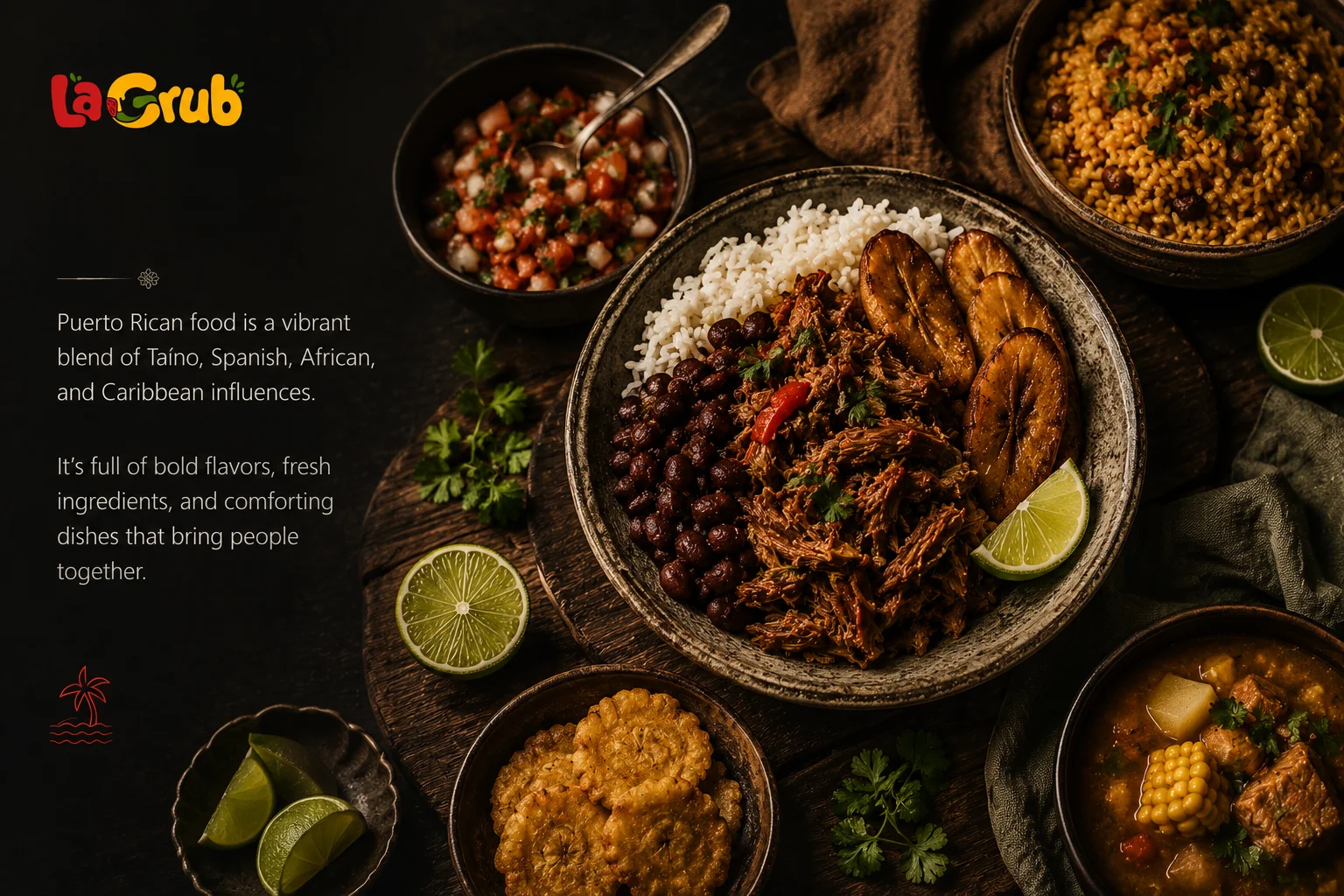
Puerto Rican food is comforting, filling and full of flavour. It often combines savoury meats with rice, beans, plantains and vegetables.
One of the most important parts of the cuisine is sofrito. It is a flavourful mixture commonly made with ingredients such as herbs, peppers, onion and garlic. It forms the base of many Puerto Rican dishes.
Garlic is also widely used. It gives meat, sauces, rice and vegetables a deep savoury taste.
Plantains are another key ingredient. Green plantains can be fried and made into tostones or mashed for mofongo. Ripe plantains become sweeter and softer and are often cooked as maduros.
Rice and beans are also common. They can be served as a side dish or become part of a complete meal.
The result is food that can be simple but deeply satisfying.
Is Puerto Rican Food Spicy?
A common question when learning about Puerto Rican cuisine is whether the food is spicy.
Puerto Rican food can be well seasoned, but it is not necessarily very hot. Its flavour often comes from garlic, onion, herbs, peppers, sofrito and spices rather than a large amount of chilli.
This is an important difference.
A dish can have plenty of flavour without being extremely spicy. Puerto Rican cooking often focuses on building a savoury and aromatic base.
For example, sofrito can give rice, beans, meat and stews a strong flavour. Garlic can add warmth, while herbs bring freshness.
Of course, some recipes can include chilli or hotter peppers. However, heat is not the main feature of the entire cuisine.
This means Puerto Rican food can appeal to people who enjoy strongly seasoned meals but do not always want intense chilli heat.
What Is Mofongo?
Mofongo is one of the most famous foods associated with Puerto Rico.
It is traditionally made by frying green plantains and then mashing them with garlic and other ingredients. The mashed plantain mixture is usually shaped into a mound or served in a bowl.
Mofongo can be enjoyed with different fillings and sauces. Meat, seafood and rich broths are common choices.
The texture is part of its appeal. The plantain provides a hearty base, while garlic and other seasonings give it a strong savoury flavour.
There are also different ways to prepare mofongo. Some versions may include pork cracklings or other ingredients for extra flavour and texture.
For someone trying Puerto Rican food for the first time, mofongo is an excellent dish to understand how the cuisine uses plantains in a savoury way.
Why Is Arroz con Gandules So Popular?
Arroz con gandules is another dish you should know when exploring what food is Puerto Rico known for.
It combines rice with pigeon peas and a flavourful seasoning base. Sofrito plays an important role in giving the dish its characteristic taste.
The dish is especially associated with family meals, celebrations and festive occasions.
What makes arroz con gandules so appealing is its balance. The rice is filling, the pigeon peas add texture and the seasoning gives the entire dish a rich savoury taste.
It can be served alongside roasted pork, chicken or other traditional dishes.
For many people, it represents the comfort of a home-cooked Puerto Rican meal.
What Is Lechon Asado?
Lechon asado is slow-roasted pork and is one of the most famous traditional foods from Puerto Rico.
The pork is seasoned before being cooked slowly. This allows the meat to become tender while developing a rich outer flavour.
Lechon is strongly connected with gatherings and celebrations. It is the kind of dish that can feed a large group and is often enjoyed as part of a bigger meal.
The seasoning can include garlic, herbs and other traditional flavours.
The slow cooking process is important. Instead of rushing the meat, the traditional approach allows time for the flavours to develop.
If you enjoy roast meat, lechon asado is one of the Puerto Rican dishes worth trying.
What Are Pasteles?
Pasteles are another traditional Puerto Rican food, particularly associated with festive meals and holidays.
They are made using a seasoned mixture that can include grated green bananas, plantains and other root vegetables. A savoury filling, often involving meat, is added before the mixture is wrapped and cooked.
Making pasteles can be a time-consuming process. However, preparing them is often connected with family traditions.
Several people may work together to prepare a large batch. This makes pasteles more than just a dish. They can also be part of family celebrations and cultural traditions.
Their soft texture and rich filling make them very different from everyday fast food.
What Are Tostones?
Tostones are fried green plantains that are flattened and fried again.
They are one of the most popular plantain dishes in Puerto Rican cuisine.
The outside becomes crisp while the inside remains firm and starchy. They are commonly served as a side dish or snack.
Tostones are often enjoyed with a dipping sauce. Their simple preparation allows the natural flavour of green plantains to shine.
They are also a good example of how one ingredient can be used in different ways.
Green plantains can become crispy tostones, while ripe plantains can be cooked into sweet maduros. Plantains can also be mashed and used to prepare mofongo.
What Are Maduros?
Maduros are ripe plantains that are cooked until soft and caramelised.
Unlike green plantains, ripe plantains have a naturally sweet flavour. Cooking them brings out even more sweetness.
They are often served as a side dish with savoury foods.
The combination of sweet maduros with salty meats, rice and beans creates a pleasant contrast.
If you are new to Puerto Rican food and enjoy sweet and savoury combinations, maduros are worth trying.
What Is Pernil?
Pernil is a slow-roasted seasoned pork dish.
It is known for tender meat and a deeply seasoned exterior. Garlic and other traditional seasonings help give it its distinctive flavour.
Pernil is especially popular during celebrations and family gatherings.
Like lechón, it shows how important pork is in Puerto Rican cooking. However, the preparation and presentation can differ.
A plate with pernil, rice, beans and plantains is a good example of the hearty nature of traditional Puerto Rican meals.
What Are Alcapurrias?
Alcapurrias are a popular Puerto Rican fritter made from a seasoned root vegetable or plantain-based dough with a savoury filling.
They are often associated with street food and casual eating.
The outside is fried until crisp, while the filling provides a rich savoury centre.
Different fillings can be used, giving people plenty of options.
Alcapurrias are a good choice if you want to explore the snack side of Puerto Rican cuisine rather than sitting down for a large rice-based meal.
What Is Asopao?
Asopao is a comforting Puerto Rican soup or stew-like dish made with rice and a flavourful broth.
It can be prepared with ingredients such as chicken or seafood.
The consistency is usually thicker than a simple soup because rice is an important part of the dish.
Asopao is especially appealing when you want something warm and comforting.
The seasoning base gives the broth plenty of flavour, while the rice makes the dish filling.
It is another example of how Puerto Rican cooking can turn everyday ingredients into a satisfying meal.
What Puerto Rican Food Should You Try First?
If you have never tried Puerto Rican food before, you may wonder where to begin.
Start with dishes that show different parts of the cuisine.
Mofongo is ideal if you want to experience the importance of plantains. Arroz con gandules introduces you to seasoned rice and pigeon peas. Lechón or pernil shows the role of slow-cooked pork.
Tostones provide a crispy plantain option, while maduros offer a sweeter alternative.
You can also try pasteles if you want to experience a traditional festive food.
A good first meal could include:
Mofongo with a savoury filling
Arroz con gandules
Tostones
Pernil or lechón
Maduros
Trying several dishes together gives you a better idea of how Puerto Rican flavours work as a complete meal.
What Makes Puerto Rican Food Flavourful?
The answer is not just one ingredient.
Puerto Rican food develops its flavour through a combination of fresh ingredients, seasoning and cooking methods.
Sofrito is especially important. It creates a flavourful base that can be added to rice, beans, stews and meat dishes.
Garlic is another major flavour. It can be used in marinades, sauces and cooked dishes.
Herbs also add freshness and depth.
Slow cooking is equally important. Pork dishes such as pernil and lechón benefit from longer cooking because it allows the meat to become tender and the seasoning to develop.
Frying is another common technique. Tostones and alcapurrias show how frying can create a crisp outer texture while keeping the inside satisfying and filling.
Therefore, Puerto Rican food does not depend on chilli alone for flavour. It builds taste in layers.
What Influences Puerto Rican Cuisine?
Puerto Rican cuisine developed through several cultural influences.
Taíno food traditions contributed ingredients and cooking practices that remain part of the island's food culture.
Spanish influence introduced and expanded the use of ingredients and cooking traditions that became part of Puerto Rican cuisine.
African influence also played an important role, especially in the use of plantains and other ingredients and cooking techniques.
Over time, these influences came together with local ingredients and traditions.
That is why Puerto Rican food can feel familiar and unique at the same time.
You may recognise ingredients such as rice, pork, beans and plantains, but the seasoning, preparation and combination of these ingredients create a distinct food culture.
Is Puerto Rican Food Good for Family Meals?
Puerto Rican cuisine works especially well for family meals because many dishes can be prepared in large quantities.
Rice and beans are easy to serve to a group. Roasted pork can become the centre of a large meal. Plantain dishes can be prepared as sides or snacks.
This style of cooking also encourages sharing.
Instead of preparing one small dish for each person, families can place several dishes on the table and enjoy them together.
That makes Puerto Rican food more than something to eat. It can be part of celebrations, gatherings and family traditions.
For more recipes and food ideas to enjoy at home, visit LaGrub.
What Puerto Rican Food Is Eaten During Celebrations?
Celebrations often feature some of the most traditional foods.
Pasteles, arroz con gandules, roasted pork and other hearty dishes are strongly associated with festive meals.
These foods can take time to prepare, which is one reason they are often connected with special occasions.
Preparing food together can also become a family tradition.
Recipes may be passed from one generation to another, with each family adding its own small changes.
That personal element is an important part of traditional cooking.
Two families can prepare the same dish in slightly different ways while both considering it an authentic part of their food culture.
What Puerto Rican Street Foods Should You Try?
Puerto Rican food is not limited to large family meals.
Street food offers another side of the cuisine.
Alcapurrias are a popular choice because they are crispy, filling and easy to eat. Pinchos, or skewered meats, are another familiar street-food option.
Empanadilla-style pastries can also be found with savoury fillings.
These foods are convenient, but they still reflect the same love of strong seasoning and satisfying textures found in traditional home cooking.
Street food is particularly useful for someone who wants to sample several flavours without committing to a large meal.
Is Puerto Rican Food Similar to Other Caribbean Food?
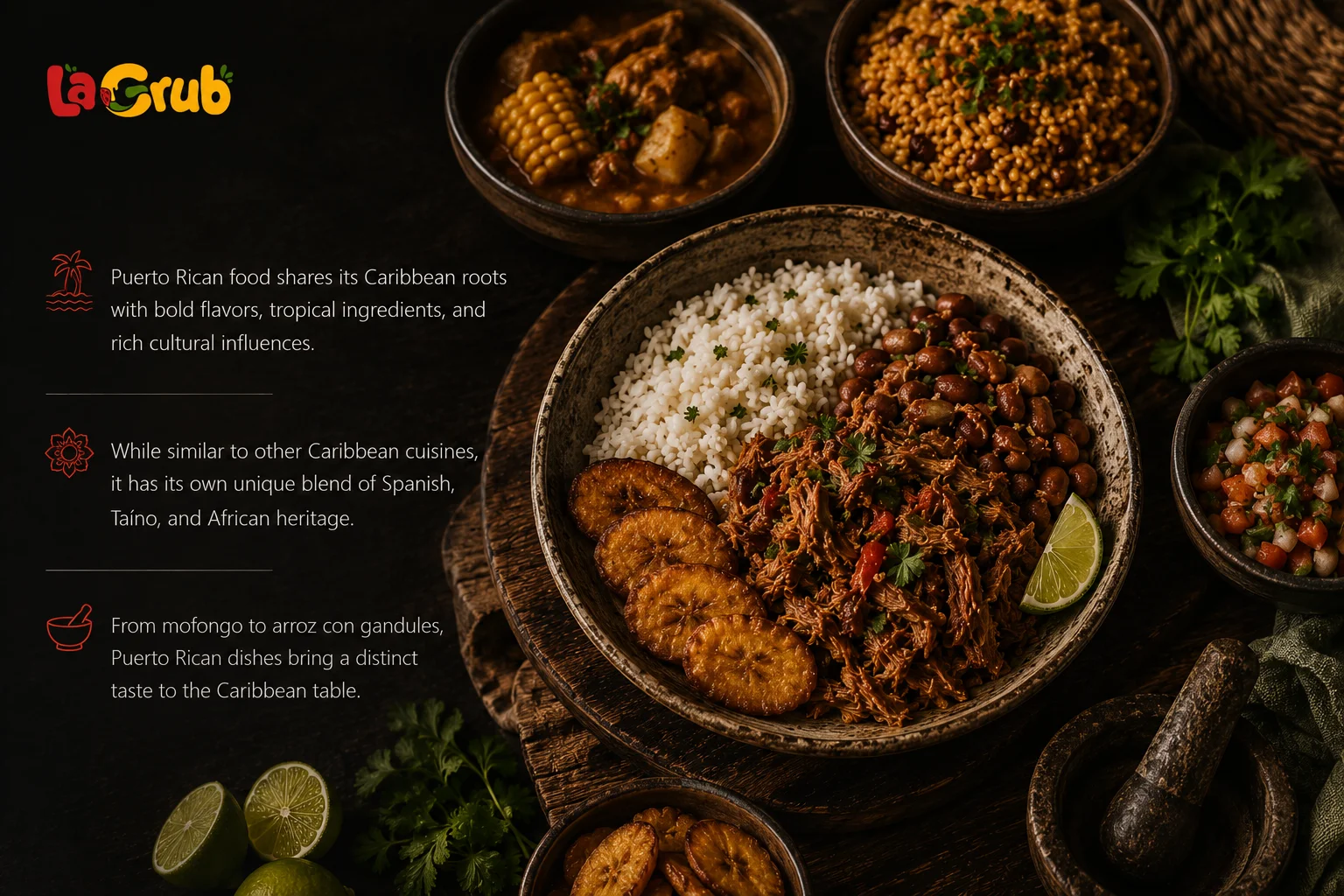
Puerto Rican cuisine shares some ingredients and cooking ideas with other Caribbean cuisines, but it has its own identity.
Plantains, rice, beans, seafood and tropical ingredients are common across the region. However, each island has developed its own combinations, seasonings and traditional dishes.
Puerto Rican food is especially recognised for ingredients such as sofrito and its strong use of garlic, plantains, rice and pork.
The cuisine also reflects the island's own history and cultural influences.
So, while you may find similarities with other Caribbean food, Puerto Rican cooking should be appreciated on its own terms.
Can You Make Puerto Rican Food at Home?
Yes. Many Puerto Rican dishes can be made at home with ingredients that are easy to find.
Rice, beans, plantains, chicken, pork, garlic, onion and herbs form the basis of many recipes.
The key is not to rush the seasoning.
Allow your sofrito base to cook properly. Season meat well before cooking. Give stews enough time for their flavours to develop.
Plantains also become easier to work with once you understand their stages of ripeness.
Green plantains are ideal for savoury dishes such as tostones and mofongo, while ripe plantains are better for sweeter preparations such as maduros.
If you enjoy trying international recipes at home, you can explore LaGrub's cookbook for more cooking inspiration.
Frequently Asked Questions
What food is Puerto Rico known for?
Puerto Rico is especially known for mofongo, arroz con gandules, lechón asado, pernil, pasteles, tostones and maduros. These dishes highlight the importance of plantains, rice, pork, beans, garlic and traditional seasonings in Puerto Rican cuisine.
What is the most famous Puerto Rican food?
Mofongo is one of the most famous Puerto Rican dishes. It is made with fried green plantains that are mashed with garlic and served with different meats, seafood or sauces.
Is Puerto Rican food spicy?
Puerto Rican food can be strongly seasoned, but it is not always very spicy. Much of its flavour comes from sofrito, garlic, herbs, onion and peppers rather than relying mainly on chilli heat.
What should I try first when eating Puerto Rican food?
Mofongo, arroz con gandules, tostones and lechón or pernil are good starting points. Together, they show several important flavours, ingredients and cooking methods used in Puerto Rican cuisine.
What is the national food of Puerto Rico?
There is not one universally agreed dish that represents every Puerto Rican meal. However, dishes such as mofongo and arroz con gandules are strongly associated with Puerto Rican food culture and are often highlighted when discussing the island's traditional cuisine.
Conclusion
Now that you know what food is Puerto Rico known for, it is clear that the cuisine offers much more than one famous dish. Mofongo, arroz con gandules, lechón asado, pernil, pasteles, tostones and maduros each show a different side of Puerto Rican cooking.
The cuisine brings together plantains, rice, beans, pork, seafood, garlic, herbs and sofrito to create food that is comforting and full of flavour. It can be savoury, sweet, crispy, tender or rich, often within the same meal.
Most importantly, Puerto Rican food reflects family, celebration and cultural history. From a plate of mofongo to a large family meal of arroz con gandules and roasted pork, traditional dishes are made to be enjoyed and shared.
Ready to discover more flavours from around the world? Explore LaGrub and find your next favourite dish to make at home.

Maimoona Ehtisham
Maimoona Ehtisham writes for LaGrub on cooking, recipes, and mindful culinary living.
Get a desi recipe worth cooking, every week
One tested recipe a week. Nothing else, and unsubscribe any time.


