


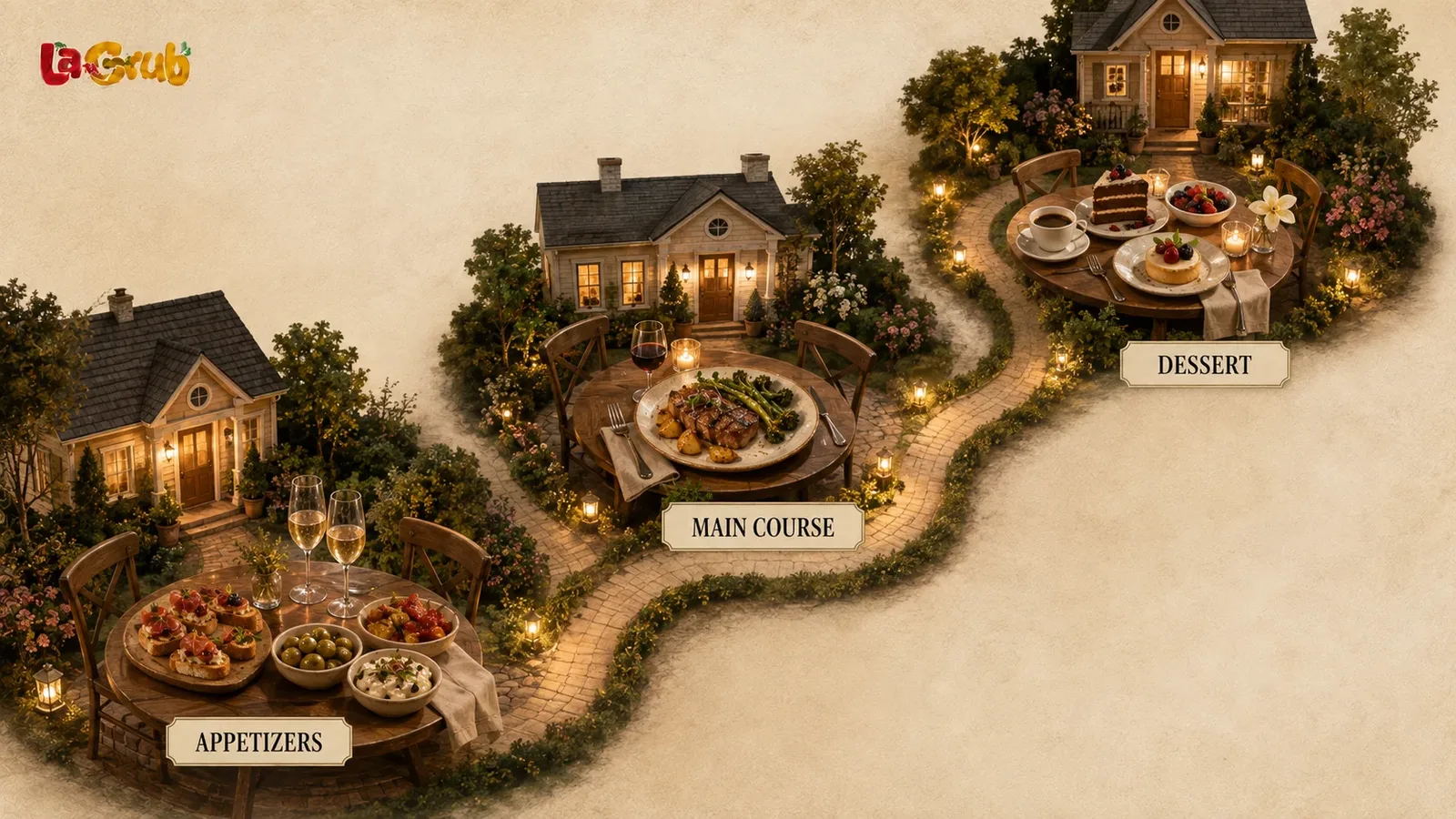
A progressive dinner is a multi-course meal served across two or more locations. Instead of remaining at one table all evening, guests enjoy each stage of the meal at a different home, restaurant, or space.
A progressive dinner is a social dining experience in which guests move from one location to another as the meal progresses. Appetizers might be served at one home, the main course at another, and dessert at a third. The same group travels together, so every stop feels like another chapter of one continuous dinner party.
The format is sometimes called a progressive supper, round-robin dinner, safari supper, or travelling dinner. Whatever name is used, the central idea remains the same: different hosts or venues take responsibility for different courses.
Progressive dinners work especially well among neighbors, close friends, extended families, supper clubs, and community groups. They combine the pleasure of a multi-course meal with a change of scenery, while spreading the cooking, cost, and cleanup among several hosts.
How Does a Progressive Dinner Work?
what is a progressive dinner
A traditional progressive dinner usually has three or four stops. Guests gather at the first location, enjoy one course, and then move together to the next destination at an agreed time.
A simple evening might follow this order:
First stop: Welcome drinks and light appetizers
Second stop: Soup, salad, or another starter
Third stop: The main course
Final stop: Dessert, coffee, or after-dinner drinks
Not every dinner needs four stops. A compact version can use just two homes, with drinks and appetizers at the first and the main course and dessert at the second. Three stops are often the most manageable because they provide variety without creating too much travel or disrupting the flow of the meal.
Why Is It Called a Progressive Dinner?
The word “progressive” refers to the guests progressing through the meal and from one setting to the next. The dinner advances course by course, but the diners also physically move as the evening unfolds.
The name is not connected to a political position, a special diet, or progressive cuisine. It simply describes the movement from one course and location to another.
Progressive Dinner vs. Potluck Dinner
A progressive dinner and a potluck both distribute the work among several people, but they are not the same kind of gathering.
At a potluck, guests usually bring dishes to one location, where all the food is served. At a progressive dinner, courses are served sequentially at different locations. Each host prepares or coordinates the food for one stage of the evening, and the guests travel between those stages.
A progressive dinner can still include potluck elements. For example, several guests might contribute appetizers to the first stop. The defining feature, however, is movement between locations rather than the way individual dishes are assigned.
Can a Progressive Dinner Take Place at Restaurants?
Yes. A restaurant-based progressive dinner follows the same structure without requiring anyone to host at home. The group might order appetizers at one restaurant, eat the main course at another, and finish with dessert somewhere else.
This version is often called a restaurant crawl or dining crawl. It is particularly useful for travelers, city groups, or friends who live too far apart to move comfortably between homes.
Choose restaurants within walking distance, check whether they accept reservations, and confirm that each venue can accommodate the entire group. Ordering one planned course at each stop also helps control both timing and cost.
How to Plan a Progressive Dinner
1. Choose the Hosts and Locations
Begin by finding two to four people who are comfortable hosting. Ideally, the homes should be in the same neighborhood or no more than a short drive apart. Long journeys between courses make the event feel fragmented and can leave food sitting longer than intended.
If the homes are not within walking distance, decide in advance how everyone will travel. Arrange designated drivers, shared rides, or another safe transport plan, particularly if alcoholic drinks will be served.
2. Select a Manageable Guest List
Progressive dinners are usually easiest with a small or medium-sized group. Eight to twelve guests can move between homes without placing too much pressure on seating, serving, or transportation.
Larger events are possible, but every host must have enough space, dishes, glasses, and bathroom access. For a community event, guests can also be divided into smaller groups that follow separate routes.
3. Create One Coordinated Menu
Although different people host each course, the food should still feel like part of one meal. Decide on a general theme, flavor direction, or cuisine before anyone starts shopping.
A Mediterranean-inspired dinner, for example, could begin with dips and flatbread, continue with grilled meat or vegetables, and end with fruit, pastries, and coffee. Hosts searching for generous sharing dishes can also draw inspiration from the Saffron Majlis Arabic cookbook.
Other easy themes include Italian night, foods from around the world, seasonal harvest, comfort-food classics, tapas, or dishes inspired by one shared ingredient.
4. Keep the Early Courses Light
A common mistake is serving so much food at the first stop that nobody wants the main course. Appetizers should be genuinely small, easy to eat, and ready when guests arrive.
Dips, skewers, stuffed vegetables, small pastries, crostini, and individual tasting portions work well. Browse LaGrub’s starter recipes when planning an opening course that feels inviting without being too filling.
5. Build a Realistic Schedule
what is a progressive dinner
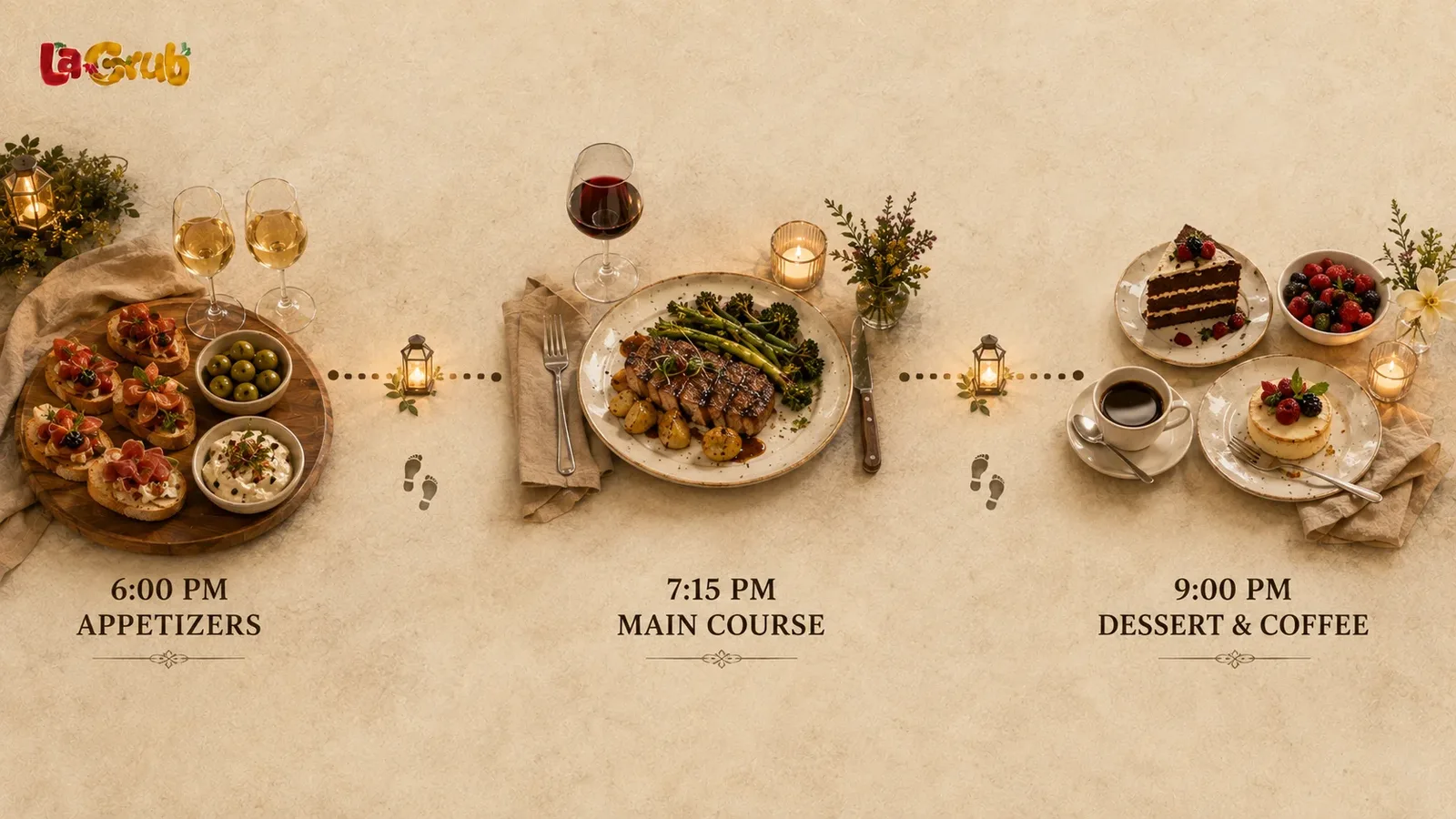
Assign an arrival and departure time to every location. As a starting point, allow approximately 45 to 60 minutes for appetizers, 60 to 90 minutes for the main course, and at least 45 minutes for dessert. Add travel time between each stop.
A sample schedule could look like this:
6:00 p.m.: Drinks and appetizers
7:00 p.m.: Move to the second home
7:15 p.m.: Main course
8:45 p.m.: Move to the final home
9:00 p.m.: Dessert and coffee
The timetable should guide the evening rather than control every minute. Leave enough flexibility for conversation, small delays, and guests who need more time to move between locations.
6. Plan for Dietary Requirements
Ask about allergies, intolerances, religious requirements, and dietary preferences before finalizing the menu. Share this information with every host rather than assuming one person will remember it for the entire group.
Clearly identify dishes containing common allergens and keep serving utensils separate where cross-contact is a concern. Guests with severe allergies may need to speak directly with each host about ingredients and preparation.
7. Decide Who Provides What
Hosting a course involves more than cooking one dish. Each host may also need to provide drinks, garnishes, ice, serving utensils, plates, napkins, and seating. Write down the assignments so essential items are not forgotten and costs remain reasonably balanced.
One person should act as the overall coordinator. That person confirms the route, shares addresses, keeps the group informed, and checks that each host is ready before guests begin moving.
What Foods Work Best for a Progressive Dinner?
The best progressive-dinner foods can be prepared ahead, held safely until serving, and portioned without complicated last-minute work.
Good Appetizer Choices
Dips with bread, crackers, or vegetables
Cheese, fruit, and antipasto boards
Small skewers or kebabs
Stuffed mushrooms or stuffed peppers
Mini tartlets, pastries, or savory bites
Good Main-Course Choices
Slow-cooked stews and braises
Baked pasta or layered casseroles
Curries served with rice or flatbread
Roasted chicken with prepared side dishes
A taco, mezze, or grain-bowl spread
Good Dessert Choices
Individual puddings or parfaits
Brownies, cookies, and small cakes
Fruit tarts or fruit platters
Chocolate truffles and bite-sized sweets
Make-ahead chilled desserts
The final course can be the most relaxed part of the evening, so choose something that does not require frantic assembly as guests arrive. LaGrub’s collection of dessert recipes offers several ideas for giving the dinner a memorable finish.
Progressive Dinner Theme Ideas
A theme makes it easier for separate hosts to build a unified menu. It can be as specific as one cuisine or as loose as a color, season, or mood.
Around the world: Serve each course from a different country.
Local favorites: Feature dishes or restaurants associated with your city.
Seasonal supper: Build every course around autumn produce, summer ingredients, or a festive holiday.
Mystery dinner: Reveal the address or theme of each stop through clues.
Childhood comfort food: Ask every host to reinterpret a nostalgic favorite.
One-ingredient challenge: Feature the same ingredient in a different way at every stop.
Decades night: Give each location a different decade, complete with food and music.
Progressive Dinner Etiquette for Guests
Arrive on time because one late guest can delay every host on the route. Let the organizer know about dietary restrictions early, and do not bring an unexpected guest unless the entire group has approved the change.
Eat modest portions at the first stops and remember that more courses are coming. When it is time to move, help the host gather glasses or plates if appropriate, but avoid beginning a major cleanup that delays the group.
A small contribution, flowers, or a message of thanks is a thoughtful gesture, especially if some households have taken on more expensive courses. When several hosts are involved, remember to thank each one individually.
Common Progressive Dinner Mistakes
Choosing Locations That Are Too Far Apart
The travel should feel like a refreshing pause, not a commute. Keep the route compact whenever possible.
Serving Oversized Portions
Progressive dinners involve several courses. Smaller portions allow guests to enjoy the complete experience without feeling uncomfortably full halfway through.
Preparing a Fussy Main Course
The main-course host may attend the earlier stops, so a dish demanding constant attention is a poor choice. Select food that can be prepared in advance and reheated or finished quickly.
Ignoring the Transition Time
Guests need time to collect coats, say goodbye, travel, park, and settle into the next location. Include these transitions in the schedule.
Failing to Share the Full Plan
Every participant should receive the route, addresses, timings, host contact information, transport arrangements, menu outline, and any accessibility notes before the event.
Can You Host a Progressive Dinner in One Building?
A progressive dinner does not require a neighborhood of separate houses. Apartment residents can move between different units, while one large home can use a patio, dining room, kitchen, and garden as separate stops.
The concept also works across different rooms at an office, community center, school, hotel, or event venue. What matters is the sense of progression: a new course, a changed setting, and a distinct hosting experience at each stage.
Is a Progressive Dinner Worth Hosting?
A progressive dinner requires more coordination than an ordinary meal, but it offers something a single-location dinner cannot: movement, surprise, shared responsibility, and several changes of atmosphere in one evening.
It is particularly rewarding when hosts live close together and enjoy collaborating. With a coordinated menu, realistic schedule, modest portions, and short travel times, the evening feels less like a complicated logistical exercise and more like a delicious journey shared with friends.
Frequently Asked Questions
What is the meaning of a progressive dinner?
A progressive dinner is a multi-course meal held across two or more locations. Guests move to a new home, restaurant, or space for each stage of the meal.
How many stops should a progressive dinner have?
Most progressive dinners have two to four stops. Three stops—appetizers, main course, and dessert—usually provide the best balance between variety and manageable travel.
Who pays for a progressive dinner?
For a home-based dinner, each host commonly pays for the course served at their home, although the group can agree to divide the total cost evenly. At restaurants, guests may pay for themselves or split the bill at each venue.
How long does a progressive dinner last?
A three-stop progressive dinner generally lasts three to four hours, including travel. The exact length depends on the number of courses, distance between locations, and size of the group.
Does every guest have to host a course?
No. Some guests can contribute food, drinks, transportation, setup, or cleanup instead. The responsibilities should simply be agreed upon before the event.
Can you have a progressive dinner at fast-food restaurants?
Yes. A casual version might involve ordering fries or appetizers at one restaurant, a main item at another, and ice cream or another dessert at the final stop. This is more commonly described as a food crawl, but it uses the same progressive format.
What should I bring to a progressive dinner?
Bring whatever the organizer assigns, arrive on time, and dress for the travel involved. If you are attending only as a guest, a small host gift or contribution to the shared drinks is a considerate gesture.

Sahar Syed
Sahar Syed writes about practical home cooking, global food culture, and approachable culinary guides for readers who want clearer kitchen inspiration.
Get a desi recipe worth cooking, every week
One tested recipe a week. Nothing else, and unsubscribe any time.


