


Creole food is the taste of cultures meeting in Louisiana: French technique, African foodways, Spanish influence, Indigenous ingredients, Caribbean connections and generations of local creativity.
Creole food is the historic multicultural cuisine of Louisiana, especially New Orleans. It developed as people of African, European, Caribbean and Indigenous backgrounds brought their ingredients, knowledge and cooking traditions together in the same region.
The result is a cuisine known for layered seasoning, slow-built sauces, seafood, rice, tomatoes, aromatic vegetables and deeply comforting one-pot dishes. Gumbo, jambalaya, shrimp Creole and red beans and rice are among its most recognizable foods, but Creole cooking extends far beyond these familiar names.
Creole food is sometimes treated as another name for Cajun food. The two traditions are closely connected and share many dishes, techniques and ingredients, but they are not identical. Understanding Creole food requires looking at its cultural roots as well as what appears on the plate.
What Exactly Is Creole Food?
Creole food is a Louisiana cuisine shaped primarily in and around New Orleans. Historically, the word “Creole” has carried several meanings, and its use has changed across periods and communities. In the context of food, it generally describes the cooking that emerged from Louisiana's unusually diverse colonial and port-city population.
French and Spanish colonial traditions contributed sauces, stews, pastries and formal cooking techniques. West and Central African foodways profoundly influenced the cuisine's use of okra, rice, greens and highly seasoned one-pot dishes. Indigenous communities contributed local ingredients and knowledge, including filé powder made from ground sassafras leaves. Caribbean and later immigrant communities added further layers to the food of New Orleans.
Creole cuisine is therefore not simply French food prepared in Louisiana. It is a distinct culinary tradition created through exchange, adaptation and survival.
Where Did Creole Food Originate?
Creole cuisine developed in colonial Louisiana and became strongly associated with New Orleans. As a port city, New Orleans connected people, ingredients and ideas arriving from Europe, Africa, the Caribbean and other parts of the Americas.
Cooks adapted European recipes to Louisiana's climate and available produce. They worked with rice, Gulf seafood, wild game, tomatoes, peppers, herbs and local vegetables. African and Afro-Creole cooks were especially influential in building the cuisine, both in private households and in the city's commercial food culture.
The development of Creole food cannot be separated from the history of enslavement. Enslaved cooks carried culinary knowledge with them, preserved techniques under brutal conditions and helped create dishes that later became central to Louisiana's identity. Free people of color also played an important role in the city's food businesses, markets, restaurants and domestic kitchens.
Creole cuisine continued to evolve as Sicilian, German, Irish, Filipino and other communities settled in Louisiana. This is why it is better understood as a living regional cuisine than as a fixed collection of old recipes.
What Does Creole Food Taste Like?
Creole food tastes savory, aromatic, rich and deeply layered. Many dishes begin with vegetables cooked in fat before herbs, spices, stock, seafood or meat are added. The flavors are developed gradually rather than created by pouring in one extremely hot seasoning.
Common flavor notes include:
Savory depth: Roux, stock, sausage, shellfish and slowly cooked vegetables form substantial flavor foundations.
Aromatic freshness: Onion, celery, bell pepper, garlic, parsley, thyme and bay leaves appear frequently.
Earthiness: Okra, filé powder, beans and dark roux can bring earthy complexity.
Gentle sweetness: Tomatoes, onions, peppers and shellfish contribute natural sweetness.
Warm spice: Black pepper, white pepper, cayenne and hot sauce provide adjustable heat.
Smokiness: Sausage and smoked meat can give beans, gumbo and rice dishes a rounded smoky character.
Creole food can be spicy, but it should not taste like undifferentiated heat. A successful dish allows its seafood, vegetables, stock and herbs to remain recognizable.
Creole Food vs Cajun Food: What Is the Difference?
what is creole food
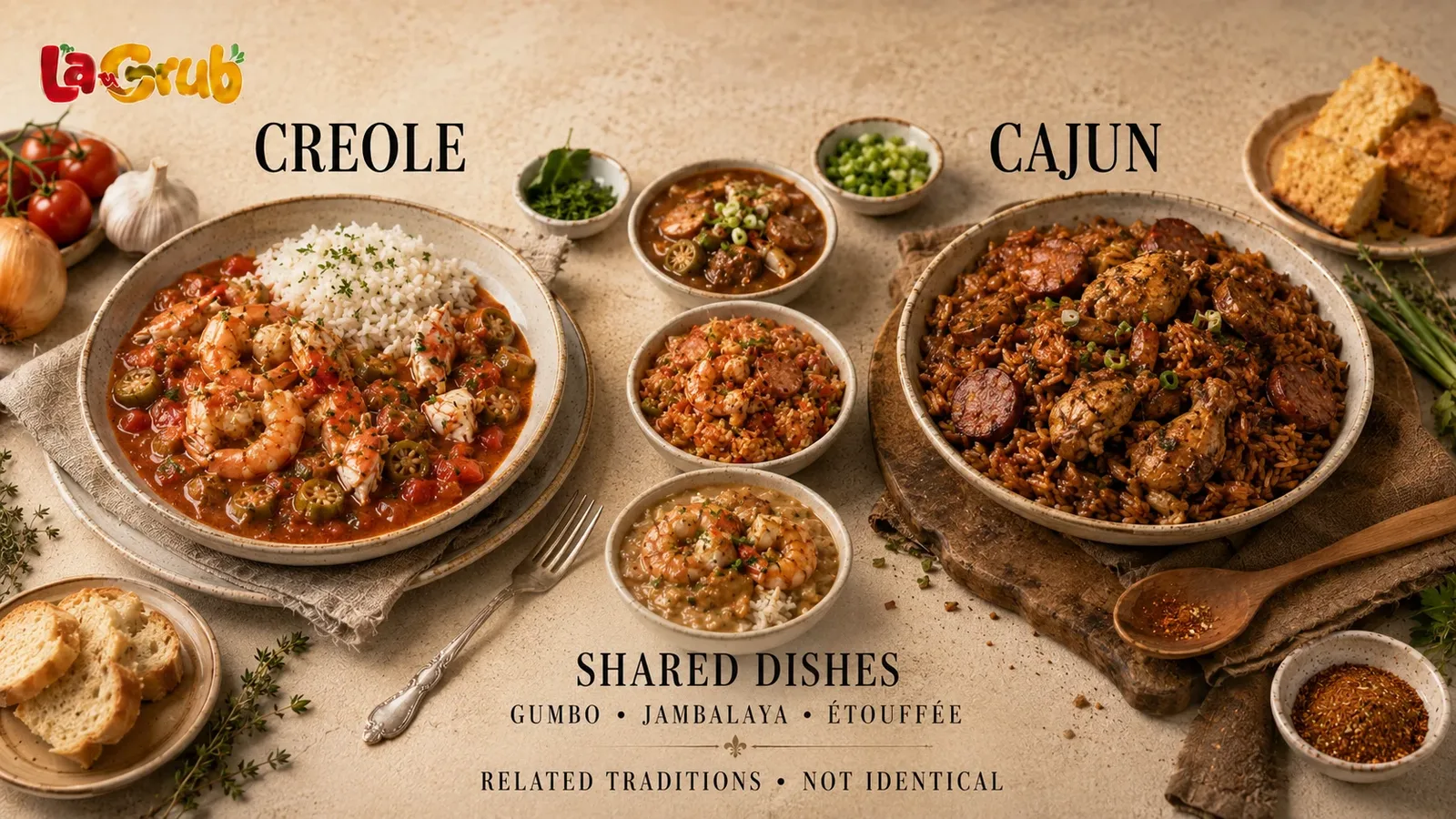
Creole and Cajun cuisines developed in the same state, influenced one another and share numerous dishes. There is no single rule that separates every Creole recipe from every Cajun one. Still, their histories and traditional associations provide some helpful distinctions.
Creole Cooking Is Closely Associated With New Orleans
Creole cuisine is generally linked with the multicultural, urban cooking of New Orleans. Access to markets, imported ingredients, professional kitchens and a diverse population helped produce elaborate sauces, composed dishes and multicourse dining traditions.
Cajun Cooking Has Rural Acadian Roots
Cajun cuisine developed among Acadian descendants who settled primarily in rural South Louisiana. Their cooking adapted to local waterways, wetlands, farms and available wildlife. It is often associated with hearty one-pot meals, smoked meats and practical country cooking.
The Tomato Rule Is Not Absolute
A popular shortcut claims that Creole dishes contain tomatoes while Cajun dishes never do. Tomatoes do appear prominently in foods such as shrimp Creole and many Creole jambalayas, but this rule is too simple. South Louisiana recipes vary by location, family, period and cook, and Cajun dishes can also contain tomatoes.
Many Dishes Belong to Both Traditions
Gumbo, jambalaya and étouffée cannot always be assigned neatly to only one category. Creole and Cajun cooks may prepare different versions, and the boundaries have become even more fluid through restaurants, travel, family relationships and commercial seasoning blends.
A better approach is to treat Cajun and Creole as related Louisiana traditions with distinct histories, considerable overlap and constant regional variation.
The Creole Holy Trinity
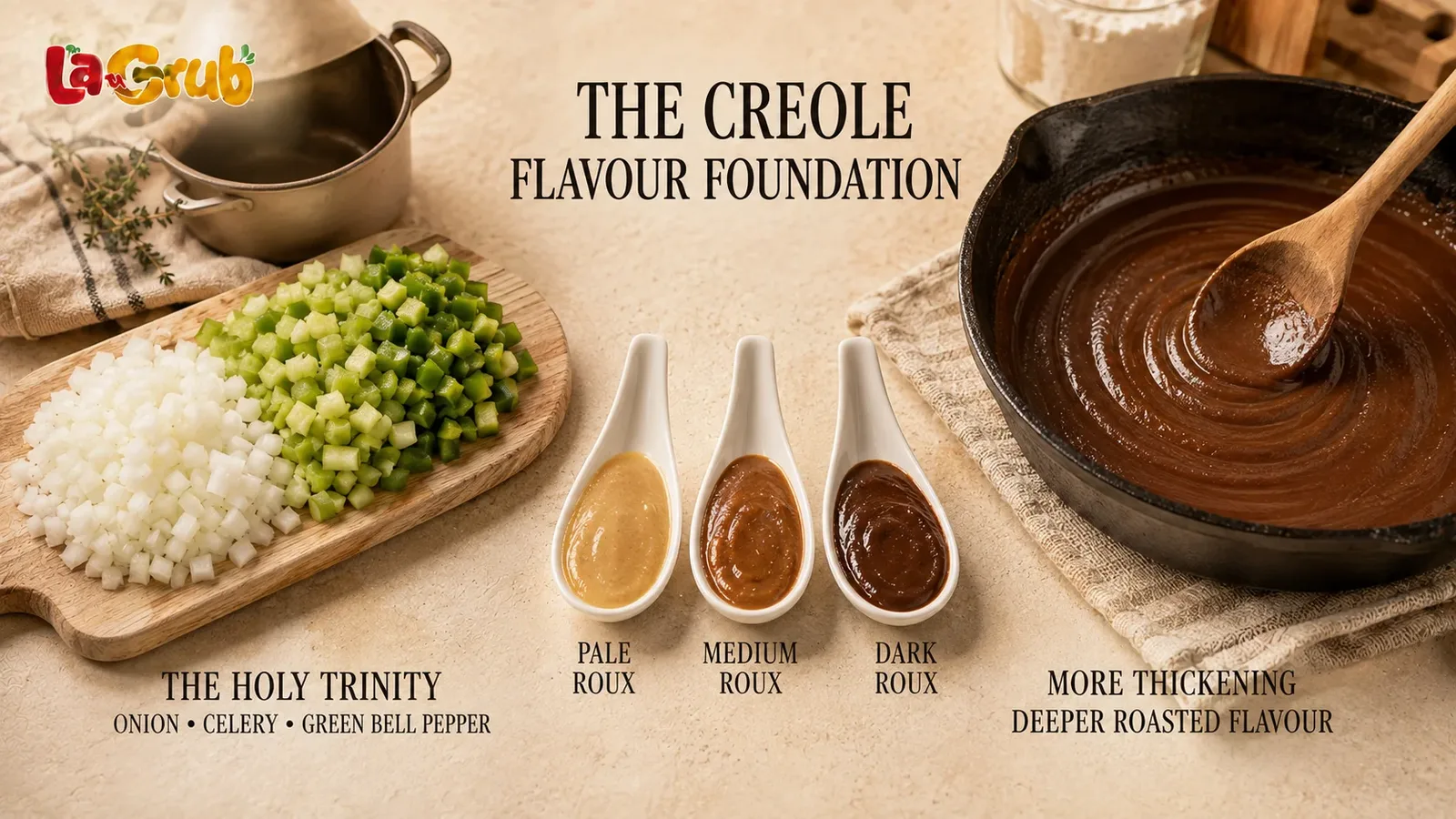
Onion, celery and green bell pepper form the aromatic base commonly called the holy trinity in Louisiana cooking. These vegetables are chopped and cooked together at the beginning of dishes such as gumbo, jambalaya and étouffée.
The holy trinity is related in purpose to the French combination of onion, carrot and celery known as mirepoix. The use of bell pepper instead of carrot gives the Louisiana base its own character. Understanding LaGrub's classic mirepoix recipe makes it easier to see how cooks adapt aromatic foundations to different cuisines.
Garlic is frequently added to the trinity, along with parsley, green onions, thyme or bay leaves. The vegetables may sound simple, but cooking them patiently creates the first layer of flavor on which the entire dish depends.
Why Roux Matters in Creole Cooking
what is creole food
Roux is a cooked mixture of fat and flour used to thicken and flavor sauces, soups and stews. In Louisiana cooking, it can range from pale and buttery to dark brown with a roasted, almost nutty aroma.
A light roux provides greater thickening power and a delicate flavor. A darker roux thickens less but adds much deeper taste. Gumbo recipes may call for different shades depending on their ingredients, regional tradition and the cook's preference.
Making a dark roux requires attention because flour can burn quickly. The mixture must be stirred carefully as its color changes. A properly developed roux should smell toasted and rich, never scorched or bitter.
Not every Creole dish uses roux, and not every gumbo is thickened in exactly the same way. Okra and filé powder are two other traditional thickening ingredients.
Essential Ingredients in Creole Food
Creole cooking is flexible, but several ingredients appear repeatedly:
Rice: A central staple served under gumbo, cooked inside jambalaya and paired with beans or saucy seafood dishes.
Seafood: Shrimp, oysters, crab, crawfish and fish reflect Louisiana's relationship with the Gulf Coast and surrounding waterways.
Tomatoes: Particularly important in shrimp Creole, red jambalaya and many sauces.
Okra: Used as a vegetable and thickener, especially in certain styles of gumbo.
Beans: Red beans are famously cooked with aromatics and smoked or seasoned meat.
Sausage: Smoked sausage and andouille add salt, spice and depth to gumbo, beans and rice dishes.
Herbs: Parsley, thyme, bay leaves and green onions bring fragrance and freshness.
Seasonings: Paprika, cayenne, black pepper, white pepper and hot sauce are used in varying amounts.
Filé powder: Ground sassafras leaves used to flavor and thicken some gumbos.
Famous Creole Dishes You Should Know
Gumbo
Gumbo is one of Louisiana's defining dishes. It is a richly flavored soup or stew served with rice and made in countless variations. Seafood gumbo may contain shrimp, crab and oysters, while other versions combine chicken with sausage.
Some gumbos begin with a dark roux. Others rely more heavily on okra or use filé powder for flavor and thickening. The absence of one universal recipe is not a flaw; it reflects the dish's long multicultural history and regional evolution.
Jambalaya
Jambalaya is a seasoned rice dish in which the rice cooks with vegetables, stock and proteins. Chicken, sausage and seafood can appear separately or together.
Creole jambalaya is often associated with tomatoes and is sometimes called red jambalaya. Brown jambalaya, more commonly associated with Cajun cooking, typically develops its color through browned meat and stock. These labels remain useful guides rather than unbreakable laws.
Shrimp Creole
Shrimp Creole features shrimp simmered in a tomato-based sauce with onion, celery, bell pepper, garlic, herbs and spices. It is usually served over rice.
The sauce is brighter and more tomato-forward than many gumbos. Because the shrimp cook quickly, they are commonly added near the end so they stay tender.
Red Beans and Rice
Red beans and rice is one of New Orleans' great comfort foods. Red kidney beans are slowly cooked with the holy trinity, herbs and frequently smoked meat or sausage until creamy, then spooned over rice.
The dish was traditionally associated with Monday meals, when beans could simmer with minimal attention while household chores were completed. It remains an economical, satisfying and deeply familiar part of the city's food culture.
Étouffée
Étouffée is a thick, savory dish most commonly made with crawfish or shrimp. Its name comes from a French word meaning smothered. The seafood is surrounded by a seasoned sauce built from aromatics, fat, flour and stock, then served with rice.
Versions differ in color, thickness and whether they use tomatoes. Some are associated more strongly with Cajun cooking, while others appear within Creole traditions.
Grillades and Grits
Grillades are pieces of meat slowly braised in a rich gravy and traditionally served with grits. The dish is especially associated with New Orleans brunch and demonstrates the cuisine's love of carefully developed sauces.
Oysters Rockefeller
Oysters Rockefeller originated in New Orleans. Oysters on the half shell are topped with a rich green herb mixture and baked or broiled. The exact original formula has long been guarded, so modern versions differ considerably.
Muffuletta
The muffuletta reflects New Orleans' Sicilian heritage. It is a large round sandwich filled with cured meats, cheese and a sharply flavored olive salad. Though different from gumbo or shrimp Creole, it demonstrates how immigrant communities continued to reshape the city's cuisine.
Calas
Calas are rice fritters with deep roots in African American Creole food culture. Historically sold by street vendors, they are made from cooked rice combined with batter and fried until golden. They may be served sweet, although savory interpretations also exist.
Beignets
Beignets are pieces of yeast-raised dough fried until puffed and generously covered with powdered sugar. Closely associated with New Orleans café culture, they are often enjoyed hot with coffee.
Is Creole Food Always Spicy?
No. Creole food is seasoned, but seasoned and extremely hot are not the same thing. Onion, celery, bell pepper, garlic, herbs, roux, stock, tomatoes and seafood create most of the cuisine's depth.
Cayenne, hot sauce and fresh peppers may add heat, but cooks can adjust their quantities. Many traditional dishes offer warmth without overwhelming the palate.
The assumption that all Louisiana food must be fiery often comes from heavily seasoned restaurant versions and commercial spice blends. Authenticity is not measured by how much pain a dish causes. Balance matters more.
Is Creole Food the Same as Soul Food?
Creole food and soul food are distinct traditions, but they intersect through African American history and Southern foodways. Both may include rice, greens, beans, cornmeal, smoked meats and slow cooking, yet each has its own geography, development and cultural context.
Creole food is particularly connected to Louisiana and the multicultural history of New Orleans. Soul food emerged from broader African American culinary experiences across the American South and later developed in communities throughout the country.
The cuisines have influenced one another and may share individual dishes or techniques. LaGrub's Southern collard greens recipe offers one example of the slow-simmered greens tradition found across Southern cooking.
Is Creole Food Healthy?
Creole cuisine cannot be labeled entirely healthy or unhealthy. Its nutritional profile depends on the dish, ingredients, cooking method and serving size.
Seafood, beans, vegetables, herbs and rice can form balanced meals. Gumbo filled with vegetables and lean seafood may offer protein and variety, while red beans provide fiber and plant-based protein.
Other preparations can contain substantial sodium or saturated fat, especially when made with large amounts of sausage, butter, fried ingredients or salty stock. Rice portions and rich sauces can also make a meal more calorie-dense.
For a lighter plate, emphasize seafood, beans and vegetables, use sausage as a flavoring rather than the main protein, choose lower-sodium stock and serve a moderate amount of rice.
What Creole Food Should You Try First?
Gumbo is the most revealing introduction because it brings together several essential elements: an aromatic base, patient cooking, regional ingredients and the layering of cultural traditions. Choose seafood gumbo if you enjoy shellfish or chicken-and-sausage gumbo for a smoky, substantial meal.
Shrimp Creole is approachable for diners who enjoy tomato-based sauces, while red beans and rice offers a gentler introduction to everyday New Orleans comfort food. Jambalaya is a good choice for anyone who prefers a complete rice dish rather than a stew served over rice.
Follow the savory dishes with warm beignets for a classic New Orleans finish.
Can You Make Creole Food Outside Louisiana?
Yes. Many foundational ingredients—onion, celery, bell pepper, garlic, rice, beans, flour, herbs and tomatoes—are widely available. Fresh Louisiana seafood and specific smoked sausages may be more difficult to find, but thoughtful substitutions can still produce a satisfying meal.
Choose a smoked sausage with a firm texture when andouille is unavailable. Use locally available shrimp, crab or firm fish rather than low-quality seafood transported over great distances. The objective should be to preserve the dish's structure and balance instead of forcing an exact ingredient that is not fresh or accessible.
French culinary techniques contributed to Creole cooking but evolved considerably in Louisiana's multicultural kitchens. Readers interested in exploring those French foundations separately can visit Maison Dorée: Classic French Recipes, LaGrub's collection of traditional sauces, soups, pastries and bistro dishes.
Common Misconceptions About Creole Food
Creole and Cajun Mean the Same Thing
They are related but historically distinct Louisiana traditions. Their dishes overlap, and modern cooking has made the dividing line less rigid, but the terms should not be used carelessly as synonyms.
Creole Food Is Simply French Food
French cooking contributed important techniques, but African, Indigenous, Spanish, Caribbean and immigrant influences are fundamental to Creole cuisine. Removing those contributions gives an incomplete account of its history.
Every Dish Must Be Extremely Hot
Creole cooking depends on layers of flavor rather than maximum chili heat. Spices should support the other ingredients, not conceal them.
All Gumbo Must Contain the Same Ingredients
There is no single universal gumbo formula. Roux color, proteins, vegetables and thickeners vary among communities, families and individual cooks.
Tomatoes Always Determine Whether a Dish Is Creole
Tomatoes are prominent in several Creole dishes, but their presence does not automatically make a recipe Creole, nor does their absence make it Cajun. History and cooking context are more informative than one ingredient.
Frequently Asked Questions About Creole Food
What is Creole food in simple terms?
Creole food is a multicultural Louisiana cuisine strongly associated with New Orleans. It combines African, French, Spanish, Indigenous, Caribbean and other influences using local ingredients and regional cooking techniques.
What are the most popular Creole dishes?
Popular Creole foods include gumbo, jambalaya, shrimp Creole, red beans and rice, étouffée, grillades and grits, oysters Rockefeller, calas and beignets.
What are the three main vegetables in Creole cooking?
Onion, celery and green bell pepper form the aromatic combination known as the holy trinity. Garlic, parsley and green onions are also frequently added.
What is the difference between gumbo and jambalaya?
Gumbo is a soup or stew typically served with separately cooked rice. In jambalaya, the rice cooks directly with the seasoned liquid, vegetables and proteins.
Does Creole food contain tomatoes?
Many Creole dishes use tomatoes, including shrimp Creole and numerous versions of jambalaya. However, not every Creole recipe contains them, and tomatoes are not an absolute test for distinguishing Creole food from Cajun food.
Is jambalaya Cajun or Creole?
Jambalaya belongs to both traditions. Tomato-rich red jambalaya is often associated with Creole cooking, while brown jambalaya is frequently associated with Cajun cooking, but recipes vary throughout Louisiana.
Is gumbo Cajun or Creole?
Gumbo exists in both Cajun and Creole cuisines. Its ingredients, roux, consistency and seasonings differ according to region, family tradition and the cook preparing it.
Is Creole seasoning very hot?
Creole seasoning may contain cayenne and other peppers, but it is usually intended to be aromatic and balanced. Heat levels can be adjusted without losing the cuisine's essential character.
A Cuisine Created Through Connection
Creole food tells the story of Louisiana through rice, seafood, vegetables, roux, herbs and simmering pots. It reflects New Orleans' role as a meeting place while carrying the knowledge of communities whose contributions were not always properly recognized.
Its greatest dishes are more than combinations of ingredients. Gumbo demonstrates cultural exchange in a single bowl. Red beans and rice transforms an economical meal into a lasting tradition. Shrimp Creole turns local seafood and a carefully built sauce into something unmistakably regional.
To understand Creole food, look beyond simplistic rules about tomatoes or spice. Pay attention to history, technique and the patient layering of flavor. That is where the true character of the cuisine lives.

Sahar Syed
Sahar Syed writes about practical home cooking, global food culture, and approachable culinary guides for readers who want clearer kitchen inspiration.
Get a desi recipe worth cooking, every week
One tested recipe a week. Nothing else, and unsubscribe any time.


