

Wondering what is Middle Eastern food and what makes it different from other cuisines? From creamy hummus and crispy falafel to smoky kebabs, fresh salads and warm flatbreads, Middle Eastern cuisine offers a rich mix of flavours and traditions. Learn about its popular dishes, key ingredients, spices and simple cooking methods.
Wondering what is Middle Eastern food and why it is loved around the world? Middle Eastern cuisine brings together fragrant spices, fresh herbs, grilled meats, creamy dips, warm breads and colourful salads. From hummus and falafel to shawarma and mezze, discover the flavours, ingredients and traditions that define this diverse food culture.
What Is Middle Eastern Food?
Middle Eastern food is a broad term for the many cuisines found across the Middle East. It is not one single style of cooking. Instead, it includes different regional traditions, ingredients, recipes and cooking methods that have developed over generations.
You may already know dishes such as hummus, falafel, shawarma, kebabs and tabbouleh. However, Middle Eastern cuisine goes far beyond these familiar favourites. It includes comforting soups, rice dishes, grilled meats, stuffed vegetables, fresh salads, flatbreads, creamy dips, pickles and delicate desserts.
One of the best things about this cuisine is its balance. A meal may combine smoky grilled meat with fresh herbs, creamy yoghurt with sharp lemon, or warm spices with sweet dates. As a result, the food can feel rich without always being heavy.
The term Middle Eastern cuisine also covers a wide range of food cultures. A dish from Lebanon may taste quite different from one from Saudi Arabia, Iran or Türkiye. Yet many of these cuisines share ingredients and cooking traditions because of centuries of trade, migration and cultural exchange.
So, if you are asking what is Middle Eastern food, the simplest answer is this: it is a diverse collection of regional cuisines known for aromatic spices, fresh ingredients, slow cooking, grilled foods, shared dishes and bold but balanced flavours.
Which Countries Are Part of Middle Eastern Cuisine?
The Middle East covers a large and culturally diverse region, so there is no single list that everyone uses. Countries commonly associated with Middle Eastern food include Lebanon, Syria, Jordan, Palestine, Iraq, Saudi Arabia, Yemen, Oman, the United Arab Emirates, Qatar, Kuwait and Bahrain.
Iran, Türkiye and Egypt are also often discussed alongside Middle Eastern cuisine, although each has its own distinct culinary identity and history.
This matters because food traditions do not stop at modern borders. Recipes and cooking methods have travelled between neighbouring regions for centuries. Therefore, you will often find similar dishes with different names, ingredients or preparation methods.
For example, grilled meat appears across the region, but the spices, shape and cooking method can change from one place to another. Likewise, rice is important in many Middle Eastern meals, yet the way it is seasoned and served varies widely.
That is why it is better to think of Middle Eastern cuisine as a family of related food traditions rather than a single menu.
What Does Middle Eastern Food Taste Like?
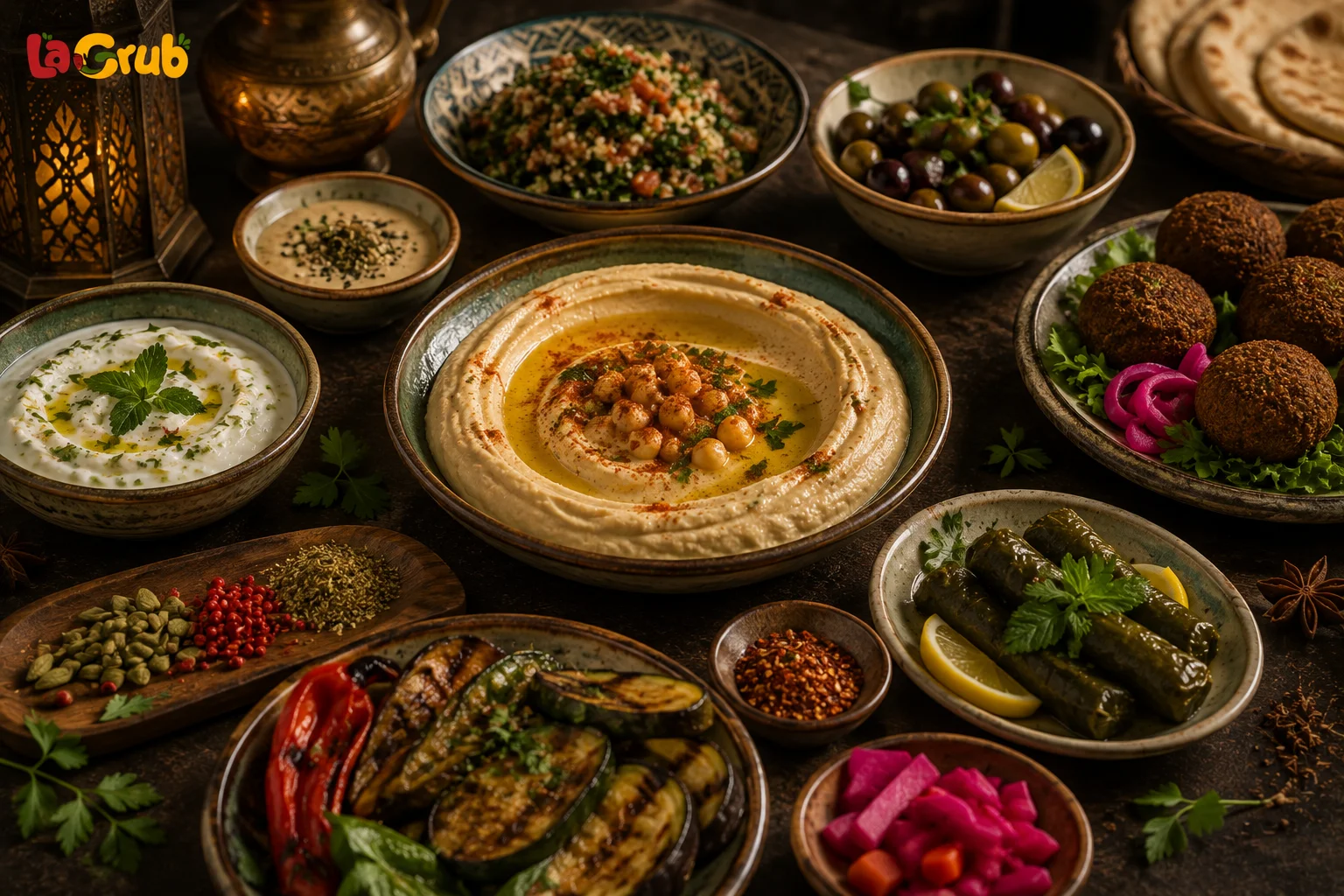
If you are new to Middle Eastern food, you may wonder whether it is spicy, sweet, smoky or heavily seasoned. In reality, the flavour depends on the dish and region.
Many Middle Eastern recipes are aromatic rather than simply hot. Cumin, coriander, cinnamon, cardamom, sumac and za’atar can add layers of flavour without making a dish extremely spicy.
Fresh ingredients are also important. Lemon juice can brighten a rich dish, while fresh parsley can make a hearty meal feel lighter. Garlic adds depth, olive oil brings richness and yoghurt provides a cool contrast.
Is Middle Eastern Food Spicy?
Not necessarily. This is a common misunderstanding.
Some dishes can be hot, especially those made with chilli or spicy sauces. However, Middle Eastern spices are often used to create warmth and aroma rather than intense heat.
For example, cumin gives an earthy flavour, while sumac provides a sharp, lemony taste. Cinnamon can add gentle sweetness to savoury dishes, and cardamom brings a fragrant note.
Therefore, someone who does not enjoy very spicy food can still find plenty of Middle Eastern dishes to enjoy.
What Ingredients Are Common in Middle Eastern Food?
The ingredients used in Middle Eastern cooking are simple, but they can create layers of flavour when combined well.
Chickpeas are one of the best-known ingredients. They are used in hummus, falafel and many other dishes. Lentils are also common in soups, stews and rice dishes.
Olive oil is another important ingredient. It is used for cooking, dressings, marinades and finishing dishes. Fresh herbs such as parsley, mint and coriander can add freshness.
Yoghurt appears in sauces, marinades and side dishes, while tahini brings a creamy, nutty taste. Tahini is made from sesame seeds and is a key ingredient in hummus and several other dishes.
Other common ingredients include:
Chickpeas and lentils for hearty plant-based meals
Tahini and sesame for creamy sauces and dips
Olive oil for cooking and dressings
Lemon and garlic for freshness and depth
Rice and bulgur for filling side dishes and mains
Eggplant for dips and vegetable dishes
Fresh herbs such as parsley and mint
Yoghurt for creamy sauces and cooling sides
Dates and nuts for sweet and savoury dishes
These ingredients make it easy to understand why Middle Eastern food ingredients are so useful in everyday cooking. Many can be used across several recipes, so you do not need a huge collection of unusual products to get started.
What Spices Are Used in Middle Eastern Food?
Spices are an important part of the flavour profile, but they are usually balanced with herbs, citrus and other fresh ingredients.
Cumin is especially popular. It adds an earthy, warm flavour to meat, vegetables, dips and soups. Coriander can add a lighter citrus-like note, while cinnamon is often used in both sweet and savoury recipes.
Sumac is another ingredient worth knowing. It has a bright, tangy flavour that can lift salads, grilled meat and dips.
Za’atar is a popular herb and spice blend. Its exact ingredients can vary, but it often has a herby, nutty and slightly tangy character.
Other familiar flavours include:
Cardamom
Cinnamon
Cumin
Coriander
Sumac
Za’atar
Black pepper
Allspice
Saffron
The key is not to use every spice at once. Good Middle Eastern recipes often rely on a few well-matched flavours rather than a long list of spices.
Popular Middle Eastern Foods You Should Know
Once you understand the ingredients, the dishes become much easier to recognise. Many of the most popular foods are built around simple combinations of grains, vegetables, legumes, meat, yoghurt and herbs.
Hummus
Hummus is one of the most recognised Middle Eastern dishes. It is traditionally made with chickpeas, tahini, lemon juice, garlic and olive oil.
The result is creamy, nutty, tangy and savoury. It can be served as a dip with pita bread, alongside grilled meats or as part of a larger mezze spread.
Falafel
Falafel is made from ground legumes, herbs and spices. The mixture is shaped into small balls or patties and cooked until crisp on the outside.
It is a popular vegetarian option and is often served in pita with salad, pickles and tahini sauce.
Shawarma
Shawarma is made from seasoned meat that is cooked slowly and sliced into thin pieces. Chicken, lamb and beef versions are common.
It is often served with flatbread, vegetables, pickles and sauces. The combination of tender meat, fresh toppings and warm spices makes shawarma a popular street-food choice.
Kebabs and Kofta
Grilled meat is a major part of many Middle Eastern meals. Kebabs can be made with different meats and seasonings, while kofta is commonly prepared from seasoned minced meat.
The meat may be shaped around skewers or formed into patties before grilling. The smoky cooking method adds a deep flavour.
Tabbouleh
Tabbouleh is a fresh salad made with parsley, bulgur, tomatoes, lemon juice and other ingredients.
It works particularly well alongside richer dishes because its fresh and tangy flavour adds balance.
Fattoush
Fattoush is another popular salad. It combines fresh vegetables with pieces of toasted or crisp flatbread and a tangy dressing.
It is a great example of how Middle Eastern cuisine can combine texture and freshness in one dish.
Baba Ghanoush
Baba ghanoush is a smoky aubergine dip. The aubergine is cooked until tender and smoky, then combined with ingredients such as tahini, lemon and garlic.
Its smoky taste makes it a perfect partner for warm bread and other mezze dishes.
Labneh
Labneh is a thick, creamy strained yoghurt. It can be served with olive oil, herbs, spices or vegetables.
Its cool and slightly tangy flavour makes it especially useful alongside grilled or heavily seasoned foods.
What Is Mezze?
If you want to understand what is Middle Eastern food, learning about mezze is essential.
Mezze is a style of serving food where several smaller dishes are placed on the table for people to share. Instead of preparing one large main course, a meal can include dips, salads, bread, pickles, vegetables and grilled foods.
A mezze table may include hummus, baba ghanoush, labneh, falafel, tabbouleh, olives and warm pita. Depending on the region and occasion, it may also include meat dishes.
This style of eating makes the meal social. People can try different flavours and build their own combinations.
For a home cook, mezze is also a practical way to serve food. Several dishes can be prepared ahead of time, while grilled items can be cooked just before serving.
Is Middle Eastern Food the Same as Mediterranean Food?
Middle Eastern food and Mediterranean food have some clear similarities, but they are not the same thing.
Both can use olive oil, vegetables, herbs, yoghurt, grains and fresh ingredients. Some dishes may also share techniques or ingredients because neighbouring food cultures have influenced one another.
However, the Mediterranean region is much larger geographically and includes cuisines from southern Europe, North Africa and the eastern Mediterranean. Middle Eastern cuisine covers its own broad group of regional traditions.
For example, hummus is strongly associated with Middle Eastern cuisine, while other Mediterranean cuisines have their own signature dishes and methods.
The easiest way to remember the difference is that there is overlap, but neither term should be treated as a direct replacement for the other.
Is Middle Eastern Food the Same as Arabic Food?
Not exactly.
Arabic food usually refers to the cuisines of Arab countries and communities. Middle Eastern food is a broader geographical term and can include culinary traditions from both Arab and non-Arab communities.
This is why it is useful to be specific when talking about food. A Lebanese dish, Iranian dish, Turkish dish and Saudi dish may all be described as Middle Eastern, but they do not necessarily taste the same.
Each cuisine has its own history, ingredients and cooking methods.
Is Middle Eastern Food Healthy?
Many Middle Eastern foods can fit easily into a balanced diet because the cuisine includes plenty of vegetables, legumes, whole grains, herbs and yoghurt.
Dishes such as hummus, lentil soup, tabbouleh and grilled vegetables can provide a mix of plant-based ingredients. Grilled meats can also be paired with salads, vegetables and grains.
However, not every dish has the same nutritional profile. Fried foods, rich desserts and large portions can naturally be higher in calories.
The best approach is to look at the whole meal rather than calling an entire cuisine healthy or unhealthy.
A balanced Middle Eastern meal might include grilled protein, a fresh salad, a small serving of rice or bread, and a vegetable-based dip.
What Middle Eastern Food Is Best for Vegetarians?
Vegetarian cooks have plenty of choices.
Falafel and hummus are obvious favourites, but the options go much further. Lentil soups, stuffed vegetables, eggplant dishes, salads, yoghurt-based sides and bean dishes can all form part of a satisfying meal.
Mezze is especially useful because it allows you to combine several vegetarian dishes on one table.
For example, you could serve hummus with warm pita, tabbouleh, baba ghanoush, olives and falafel. The result is filling, colourful and full of different textures.
This variety is one reason Middle Eastern vegetarian food has become popular with people who want to eat less meat without giving up flavour.
What Should Beginners Try First?
If you have never cooked this cuisine before, you do not need to start with a complicated dish.
Begin with recipes that use familiar ingredients and simple techniques. Hummus is a good starting point because it requires blending rather than complex cooking. Tabbouleh is another easy choice because fresh herbs and vegetables do most of the work.
For something more filling, try falafel, shawarma-style chicken or simple kofta.
You can also create a small mezze-style meal at home. Choose one dip, one salad, one bread and one main dish. This gives you a taste of several parts of Middle Eastern cuisine without making the cooking process overwhelming.
How Is Middle Eastern Food Usually Served?
Presentation is an important part of the experience. Many meals are designed to be shared, so dishes are often placed in the centre of the table.
Bread can be used to scoop dips and sauces, while salads and pickles provide freshness beside grilled meats or rice.
A typical meal does not always follow the same starter-main-dessert format used in some Western dining settings. Instead, several dishes can arrive together and be enjoyed throughout the meal.
This creates a relaxed and social experience.
It also means that you can mix textures and flavours. A creamy dip can be paired with crisp vegetables. A smoky kebab can be served with a sharp salad. Warm bread can bring everything together.
Middle Eastern Street Food
Street food is another important part of the region's food culture.
Shawarma, falafel sandwiches, grilled meats and flatbreads are popular examples. These foods are often designed to be filling, practical and easy to eat while travelling.
The flavours can be bold, but the food is not always extremely spicy. Garlic sauces, pickles, herbs, tahini and fresh vegetables often provide as much flavour as chilli.
Street food also shows how everyday cooking can be different from formal meals. Recipes are often adapted to local tastes, available ingredients and busy city life.
Middle Eastern Rice and Main Dishes
Rice plays an important role in many regional cuisines. It can be served alongside grilled meat, vegetables or stews and may be seasoned with spices, herbs, nuts or dried fruit.
Meat-based dishes can also range from quick grilled foods to slow-cooked meals.
Lamb, chicken and beef appear in many regional recipes, although the preferred meat and cooking style can change from one country to another.
Slow cooking is particularly useful for tougher cuts of meat because it allows them to become tender while absorbing the flavours of the sauce and spices.
Middle Eastern Bread and Flatbreads
Bread is much more than a side dish in many Middle Eastern meals.
Pita and other flatbreads can be used to scoop dips, wrap grilled meat or accompany stews. Warm bread can also become part of a mezze spread.
Because bread works with so many foods, it is one of the easiest ways to make a homemade Middle Eastern meal feel complete.
Pair warm flatbread with hummus, labneh or baba ghanoush, and you already have the foundation of a simple meal.
Middle Eastern Desserts
The cuisine is not only about savoury food. Middle Eastern desserts often combine nuts, dates, syrup, rose water, cardamom and fragrant spices.
Baklava is one of the best-known examples. It is made with thin pastry layers, nuts and sweet syrup.
Dates are also widely enjoyed and can appear in both everyday snacks and festive dishes. Other desserts may use semolina, milk, pistachios or aromatic waters.
These sweets often have a rich flavour, so small portions can be enough to finish a meal.
How to Bring Middle Eastern Flavours Into Your Kitchen
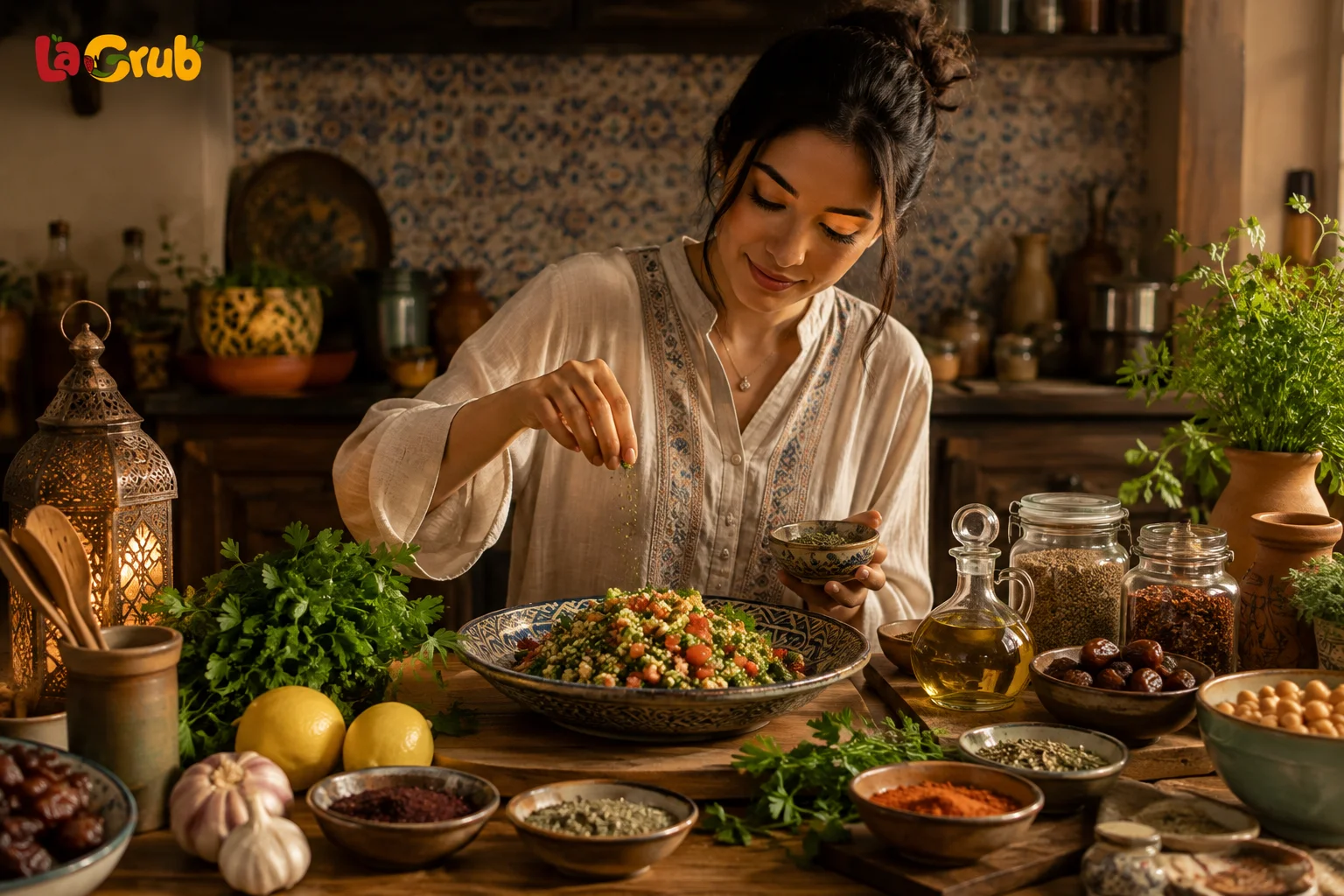
You do not need to change your entire pantry to start cooking Middle Eastern food.
Begin with a few versatile ingredients. Keep chickpeas, yoghurt, tahini, lemons, garlic, olive oil and fresh herbs available. Then add spices such as cumin, coriander and sumac.
From there, you can make simple dips, salads and marinades.
The key is balance. Use lemon to brighten rich foods, herbs to add freshness and spices to build warmth. Do not rely on chilli alone for flavour.
You can also prepare several components ahead of time. Hummus, sauces, salads and marinades can often be prepared before the main meal. This makes the cuisine practical for family dinners and gatherings.
For more cooking inspiration, explore LaGrub's Arabic cookbook collection, where you can discover more traditional recipes and food ideas.
Frequently Asked Questions
What is the most popular Middle Eastern food?
There is no single dish that represents the entire region. However, hummus, falafel, shawarma, kebabs, tabbouleh, baba ghanoush and pita are among the foods most widely recognised outside the region.
What spices are common in Middle Eastern food?
Cumin, coriander, sumac, za’atar, cinnamon, cardamom, allspice and black pepper are commonly used. The exact combination depends on the dish and region.
Is Middle Eastern food good for vegetarians?
Yes. There are many vegetarian choices, including hummus, falafel, tabbouleh, baba ghanoush, lentil dishes, salads and vegetable-based meals.
What is a good Middle Eastern meal for beginners?
A simple mezze spread is an excellent starting point. Try hummus, warm pita, tabbouleh and falafel. Once you are comfortable with these flavours, you can move on to shawarma, kebabs and more complex dishes.
What is the difference between Middle Eastern and Mediterranean food?
They overlap in ingredients and some cooking traditions, but they describe different groups of cuisines. Middle Eastern food covers many cuisines from the region, while Mediterranean food includes culinary traditions from countries around the Mediterranean Sea.
Conclusion
So, what is Middle Eastern food? It is a diverse collection of regional cuisines built around fresh ingredients, fragrant spices, grilled foods, hearty grains, creamy dips, warm breads and shared meals. Its appeal comes from balance: smoky meat with fresh herbs, rich dips with sharp lemon, and warm spices with cooling yoghurt.
From hummus and falafel to shawarma, kebabs, tabbouleh and mezze, there is plenty for beginners to explore. You do not need to master complicated techniques to enjoy these flavours at home. Start with a few simple ingredients, choose one or two dishes and build from there.
Ready to discover more comforting recipes and bring new flavours to your table? Explore LaGrub's Middle Eastern-inspired recipes and keep exploring the world of food, one dish at a time.

Maimoona Ehtisham
Maimoona Ehtisham writes for LaGrub on cooking, recipes, and mindful culinary living.
Get a desi recipe worth cooking, every week
One tested recipe a week. Nothing else, and unsubscribe any time.


