


Wondering what is Russian food and what people in Russia actually eat? Russian cuisine is much more than borscht and potatoes. From hearty soups and tender dumplings to blini, buckwheat, pastries and festive salads, discover the traditional flavours, everyday meals and popular dishes that make Russian food so comforting.
Russian food is hearty, comforting and shaped by a long history of regional cooking. It includes warming soups, dumplings, grains, potatoes, vegetables, meat, fish, breads, pastries and sweet treats. If you are wondering what is Russian food, this guide explores its flavours, popular dishes, everyday meals and food traditions.
What Is Russian Food?
Russian food is a style of cooking built around simple, filling ingredients and comforting flavours. It developed across a huge country with different climates, regions and local traditions. Because of this, Russian cuisine is much more varied than many people expect.
Traditional Russian meals often use ingredients that are practical and easy to store. Potatoes, cabbage, beetroot, carrots, onions, grains, flour, mushrooms and pickled vegetables are common. Meat and fish are also important, while sour cream, butter and fresh herbs are often used to add richness and flavour.
When people ask what is Russian food, they often think first of famous dishes such as borscht, pelmeni and blini. These are certainly important, but they are only part of the wider food culture.
Russian cooking is also strongly connected with home meals. A typical table may include a bowl of soup, a meat or fish dish, potatoes or grains, vegetables, bread and something sweet afterwards.
The food can feel familiar because many dishes are based on everyday ingredients. However, the combinations, cooking methods and flavours give them a distinct character.
What Makes Russian Cuisine Different?
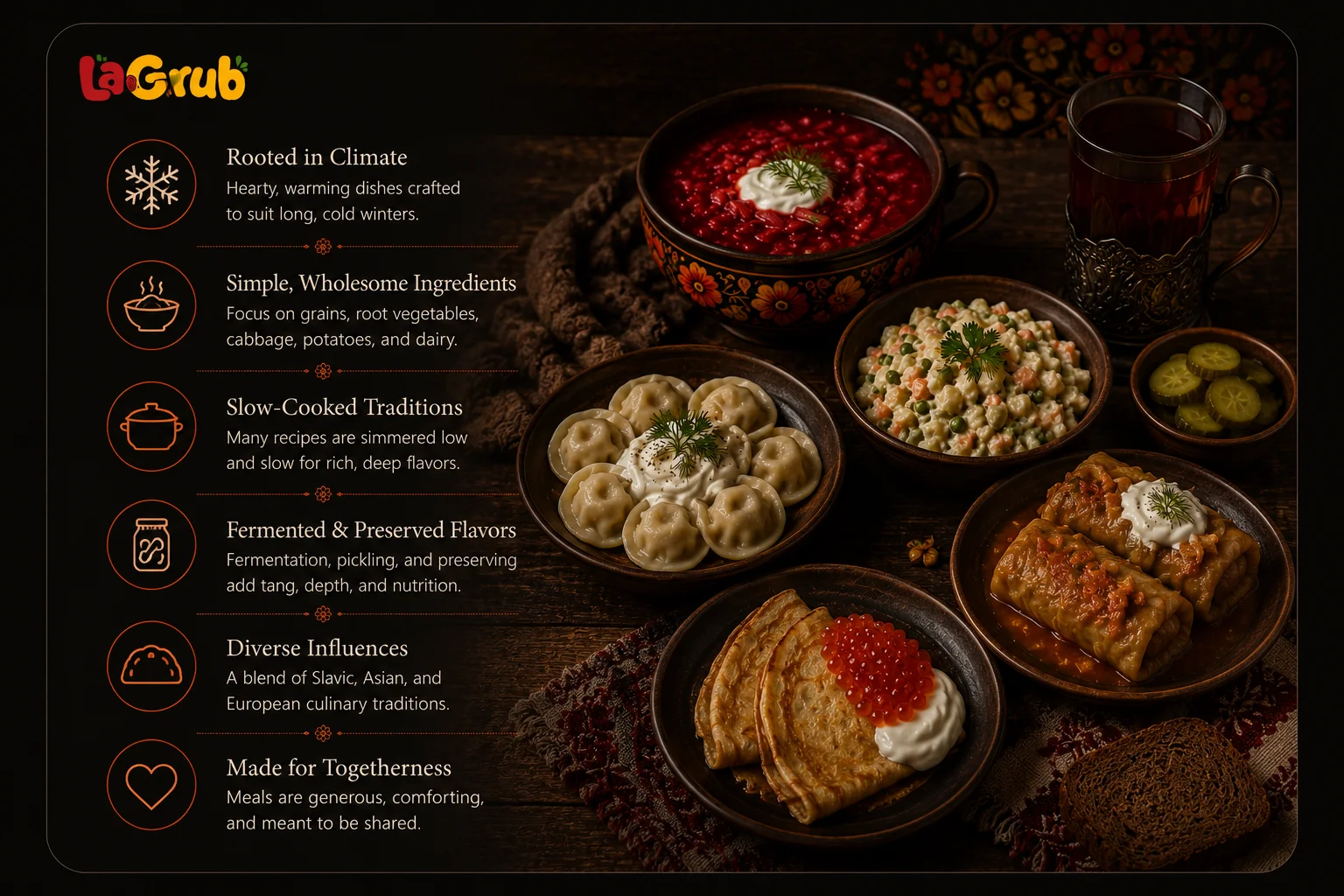
One of the most interesting things about Russian cuisine is its focus on warmth, comfort and practicality. Instead of relying heavily on hot spices, traditional dishes often build flavour through slow cooking, fermentation, pickling, herbs and rich ingredients.
The climate has also influenced the food. In colder areas, people have traditionally relied on filling foods that provide plenty of energy. Soups, stews, potatoes, grains and dumplings can all make a meal satisfying.
Another important feature is preservation. Pickling, fermenting, drying and salting have long been useful ways to keep food available through colder months.
This is why ingredients such as pickled cucumbers, fermented cabbage, mushrooms and preserved fish appear in many traditional meals.
Russian food also has a strong connection with tea. Tea is often enjoyed during social occasions and alongside pastries, biscuits or other sweet foods.
So, what is Russian food in simple terms? It is comforting, filling and varied, with an emphasis on seasonal ingredients, home cooking and dishes that can be shared with family.
Is Russian Food Spicy?
Generally, Russian food is not known for being very spicy.
Unlike cuisines that use large amounts of chilli peppers, traditional Russian cooking usually focuses on savoury, sour, earthy and creamy flavours. Black pepper, mustard, horseradish, garlic and fresh herbs can add heat or sharpness, but the overall flavour is usually not chilli-hot.
This makes many Russian dishes approachable for people who prefer mild food.
For example, a warm bowl of soup may taste rich and savoury rather than fiery. Dumplings may be served with sour cream, butter or a simple sauce instead of a hot chilli sauce.
However, modern Russian cooking can vary. Restaurants and home cooks may add different spices and ingredients based on personal taste.
Therefore, if you enjoy mild comfort food, traditional Russian food has plenty to offer.
What Ingredients Are Common in Russian Food?
The ingredients used in Russian cuisine are often simple, but they can create very satisfying dishes.
Potatoes
Potatoes are widely used in Russian cooking. They can be boiled, baked, fried, mashed or added to soups and other dishes.
Their mild taste makes them a useful side dish and a filling base for meals.
Cabbage
Cabbage is another important ingredient. It can be cooked into soups, used in fillings or fermented and served as a side dish.
Both fresh and preserved cabbage have a place in traditional cooking.
Beetroot
Beetroot is strongly associated with Russian food because of dishes such as borscht. It adds a beautiful colour and a naturally sweet, earthy taste.
Grains
Buckwheat is particularly important in Russian cooking. It can be served as a side dish or used as the base of a meal.
Other grains can also appear in breakfast dishes, soups and everyday cooking.
Mushrooms
Mushrooms are popular in many parts of Russia. They can be fried, added to soups, used in fillings or preserved for later use.
Dairy
Sour cream, butter, cheese and other dairy products are common. Sour cream, in particular, is often served alongside soups, dumplings and pancakes.
Meat and Fish
Beef, pork and chicken can be used in many traditional dishes. Fish is also important, especially in areas where freshwater and other fish are readily available.
What Does a Typical Russian Dinner Look Like?
If you want to understand what is Russian food beyond famous restaurant dishes, it helps to look at an everyday dinner.
A typical home meal does not need to be complicated. It may include a hearty soup followed by meat or fish with potatoes, buckwheat or vegetables.
Bread is also commonly served with meals.
For example, a simple dinner could include:
Soup with cabbage and vegetables
Chicken or another meat dish
Boiled potatoes or buckwheat
Fresh or pickled vegetables
Bread
Tea afterwards
Of course, there is no single typical Russian dinner. Meals differ depending on the region, season, family and ingredients available.
Modern Russian families also eat many foods that are common across the world. Pasta, rice, sandwiches and other simple meals can all appear in everyday kitchens.
The important point is that traditional home cooking tends to be practical and satisfying rather than overly complicated.
Popular Traditional Russian Food
There are many traditional Russian foods worth trying. Some are well known around the world, while others are less familiar outside the region.
Borscht
Borscht is a beetroot-based soup commonly associated with Eastern European cuisine. It can contain beetroot, cabbage, potatoes, carrots, onions and other ingredients.
It is often served with sour cream and fresh herbs.
Its bright colour makes it instantly recognisable, while its warm and savoury flavour makes it a popular comfort food.
It is worth noting that borscht has strong Ukrainian culinary roots and is also widely prepared across other Eastern European countries. It should not be treated as an exclusively Russian dish.
Pelmeni
Pelmeni are small dumplings filled with meat. The dough is thin, and the dumplings are usually boiled before serving.
They can be eaten with butter, sour cream or other simple additions.
Pelmeni are especially interesting because they show how Russian food can turn basic ingredients into a filling meal.
They can also be prepared in large quantities, making them practical for family meals.
Blini
Blini are thin Russian pancakes that can be served with both sweet and savoury toppings.
They may be enjoyed with sour cream, jam, honey, fish or other fillings.
Because they can be adapted in different ways, blini are suitable for breakfast, snacks, celebrations or dessert.
Shchi
Shchi is a traditional cabbage soup. It can be made with fresh cabbage or fermented cabbage, depending on the version.
The soup may also contain potatoes, carrots, onions and meat.
It is a simple example of how vegetables can become a hearty and comforting meal.
Pirozhki
Pirozhki are small baked or fried pastries with different fillings.
Depending on the recipe, the filling may include meat, potatoes, cabbage, mushrooms or sweet ingredients.
They are convenient to eat and can work as a snack, side dish or light meal.
Olivier Salad
Olivier salad is a popular festive salad made with ingredients such as potatoes, carrots, peas, eggs and other additions, often combined with mayonnaise.
It is particularly associated with celebrations and special occasions.
Different families may have their own preferred version, which makes this dish a good example of how Russian food culture can vary from one household to another.
Syrniki
Syrniki are small fried cakes made mainly from farmer-style cheese or curd cheese.
They are often served for breakfast with sour cream, jam, honey or fruit.
Their soft centre and lightly browned outside make them a popular comfort food.
What Do Russians Eat for Breakfast?
Russian breakfast can be simple, warm and filling.
One common option is porridge. Buckwheat, oats and other grains can be prepared with milk or water and served with different toppings.
Eggs, bread, cheese and dairy products can also be part of breakfast.
Syrniki are another popular choice, especially for people who enjoy a slightly sweet breakfast.
Blini can also be served in the morning, with toppings ranging from sour cream to jam.
Tea is an important part of many breakfast tables. It can be served alongside bread, pastries or other light foods.
Therefore, Russian breakfast is not limited to one traditional dish. Like breakfast in many countries, it can range from a quick meal to something more substantial.
What Do Russians Eat for Lunch?
Lunch is often considered an important meal and may include soup as a first course.
A hearty soup can be followed by meat, fish, potatoes, buckwheat or vegetables.
For example, someone may enjoy a bowl of cabbage soup followed by chicken and buckwheat. Another meal might include dumplings with sour cream and a vegetable side.
Bread is also a common addition.
This style of eating reflects the traditional idea of building a meal around warm, filling foods.
Russian Soups You Should Know
Soup is one of the strongest parts of traditional Russian food.
Russian soups can be thick, light, sour, creamy or meat-based. They are especially comforting during cold weather.
Besides borscht and shchi, solyanka is another well-known soup.
Solyanka
Solyanka is a rich soup with a distinctive sour and savoury taste. It can contain meat, fish or mushrooms depending on the version.
Pickled ingredients often help create its characteristic flavour.
The result is much bolder than a simple vegetable soup.
Ukha
Ukha is a traditional fish soup. It is often made with fish, vegetables and herbs.
The flavour is lighter than some meat-based soups, allowing the fish to remain the main focus.
Russian Food and Sour Cream
Sour cream is one ingredient that appears again and again when exploring what is Russian food.
Its creamy and slightly tangy flavour works well with many traditional dishes.
It can be served with:
Dumplings
Pancakes
Soups
Potatoes
Pastries
Sour cream can also help balance salty or earthy flavours.
This combination of creamy dairy with warm, savoury foods is one reason Russian comfort food can feel so satisfying.
Is Russian Food Healthy?
The answer depends on the dish and how it is prepared.
Many Russian dishes contain vegetables, grains, potatoes, fish and other nutritious ingredients. Soups can provide vegetables and protein, while buckwheat offers a filling grain option.
However, some traditional dishes can also contain plenty of butter, cream, mayonnaise, sugar or fried ingredients.
So it is better to look at individual meals rather than describe the whole cuisine as healthy or unhealthy.
A balanced plate can include vegetables, a protein source and a moderate portion of grains or potatoes. Richer dishes can be enjoyed as part of a varied diet.
Home cooking also gives people more control over ingredients, salt and cooking methods.
Russian Food for Vegetarians
Although meat and fish feature in many traditional meals, there are also plenty of options for vegetarians.
Vegetarian-friendly Russian dishes can include:
Buckwheat with vegetables
Potato dishes
Mushroom dishes
Cabbage soups
Vegetable soups
Blini with suitable fillings
Syrniki
Vegetable salads
Mushrooms, cabbage, potatoes and grains are particularly useful because they can create filling meals without meat.
This also shows why Russian cuisine is more diverse than it may first appear.
Russian Food and Pickled Flavours
Pickling is an important part of the food culture.
Pickled cucumbers, cabbage and other vegetables can provide a sharp, sour flavour that cuts through richer foods.
This creates an interesting balance.
For example, a rich meat dish can taste less heavy when served alongside something tangy and crisp.
These preserved foods were also practical in the past because they helped households keep vegetables available for longer.
Today, they remain part of many traditional meals.
Russian Desserts and Sweet Foods
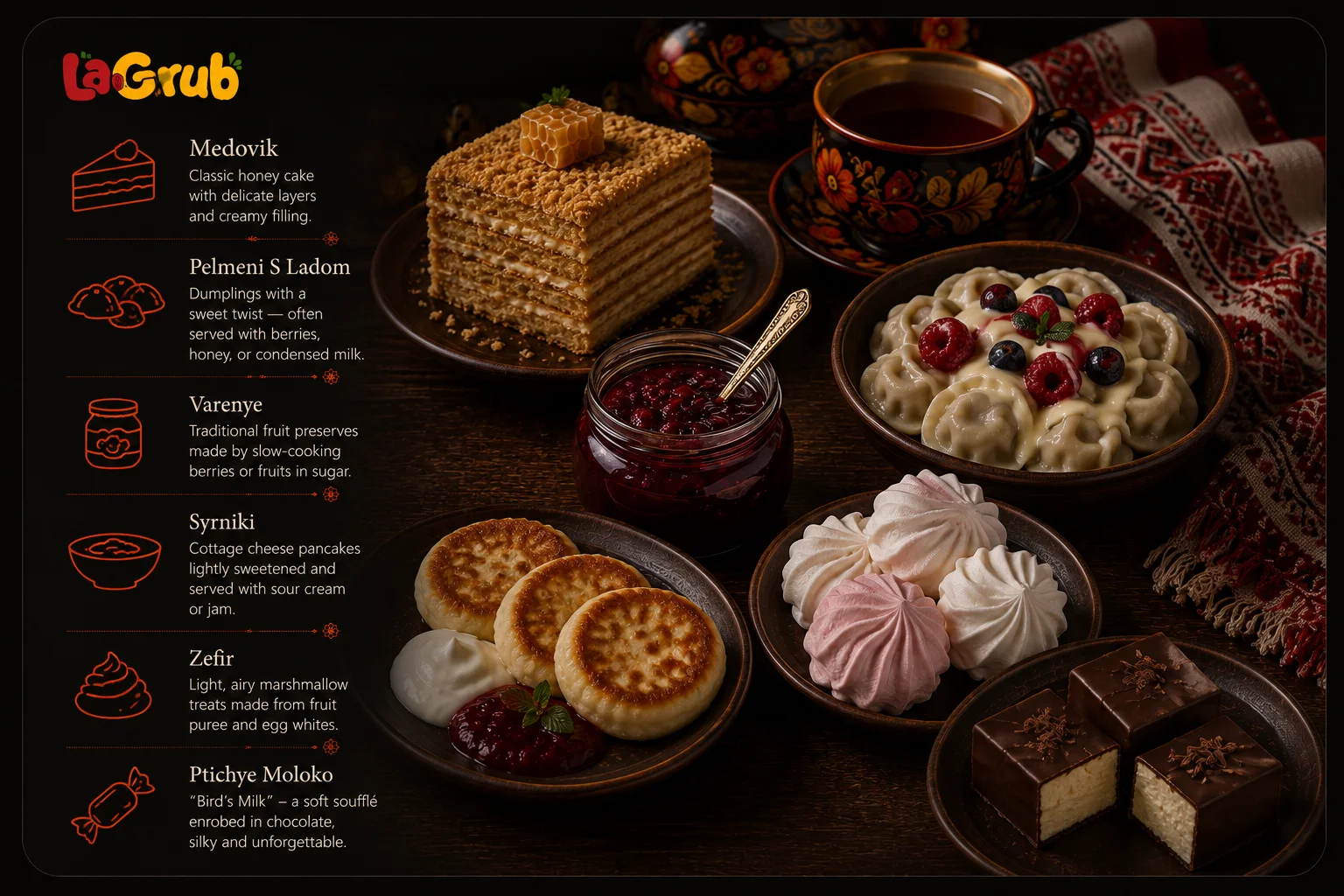
Russian food is not only about savoury dishes. There are also plenty of sweet options.
Syrniki can be served sweet with jam, honey or fruit.
Blini can also become a dessert when filled with sweet ingredients.
Pirozhki may be made with sweet fillings as well as savoury ones.
Tea and sweet pastries are another familiar combination.
These foods are often enjoyed during family gatherings, celebrations or relaxed afternoon meals.
For desserts that can complement a relaxed meal, you can also discover LaGrub's desserts recipes.
Russian Food During Celebrations
Food plays an important role during Russian celebrations.
Special occasions often involve dishes that take more preparation than everyday meals.
Olivier salad is strongly associated with festive gatherings. Different salads, pastries, meat dishes and desserts may also be prepared for guests.
The focus is often on sharing food rather than preparing one single main dish.
A celebration table can therefore contain several different flavours and textures.
This is one of the most enjoyable parts of exploring Russian food culture because it shows how food can bring families and friends together.
How Russian Home Cooking Differs From Restaurant Food
There can be a big difference between traditional home cooking and restaurant-style food.
Restaurant menus may focus on famous dishes because visitors want to try foods they recognise.
At home, however, people may prepare much simpler meals.
A bowl of soup, buckwheat with meat, potatoes with vegetables or dumplings can be enough for a satisfying dinner.
This distinction is important when learning what is Russian food.
Cuisine is not only made up of famous dishes. It also includes everyday meals that families prepare regularly.
What Does Russian Food Taste Like?
The flavour of Russian food can be described as comforting, earthy, savoury and sometimes tangy.
Many dishes have a mild flavour profile, but that does not mean they are boring.
Fresh dill can add brightness. Garlic can provide depth. Mustard and horseradish can bring sharpness. Pickled vegetables add acidity, while sour cream creates richness.
Slow cooking can also develop deep flavours without the need for lots of spices.
The result is food that often feels hearty and familiar.
How to Explore Russian Food at Home
You do not need to prepare an elaborate feast to experience Russian flavours.
Start with one simple dish.
A bowl of cabbage soup is a good introduction to traditional flavours. Pelmeni are another option if you enjoy dumplings. Blini can introduce you to Russian-style pancakes, while syrniki are ideal if you prefer something sweet.
You can also build a simple meal around potatoes, buckwheat, vegetables and a protein of your choice.
If you enjoy exploring different food cultures, you can explore LaGrub's recipe collection for more ideas to add variety to your home cooking.
Frequently Asked Questions
What is Russian food best known for?
Russian food is best known for hearty soups, dumplings, pancakes, potatoes, cabbage dishes, buckwheat, pastries and festive salads. Borscht, pelmeni, blini, shchi and Olivier salad are among the dishes commonly associated with the cuisine.
Is Russian food spicy?
Traditional Russian food is generally mild rather than chilli-hot. It uses ingredients such as black pepper, mustard, garlic, horseradish and herbs for flavour instead of relying heavily on chilli peppers.
What is a typical Russian dinner?
A typical Russian dinner can include soup, meat or fish, potatoes or buckwheat, vegetables and bread. However, there is no single dinner that everyone eats, as meals vary between families and regions.
What are the most popular Russian dishes?
Popular Russian dishes include pelmeni, blini, shchi, borscht, pirozhki, syrniki and Olivier salad. Russian cuisine also includes many regional and less widely known dishes.
Is Russian food healthy?
Some Russian dishes can be part of a balanced diet, especially meals based on vegetables, grains, fish and soups. However, richer dishes may contain more butter, cream, mayonnaise or sugar, so the nutritional value depends on the specific dish and portion.
Conclusion
Now that you know what is Russian food, it is clear that this cuisine is about much more than a few famous dishes. Russian cooking brings together hearty soups, dumplings, grains, potatoes, vegetables, meat, fish, pastries and comforting desserts.
Its flavours are usually mild but satisfying, with sour cream, herbs, pickled foods, mustard and other simple ingredients adding character. From everyday home meals to festive tables, Russian food reflects the importance of comfort, family and seasonal cooking.
If you enjoy discovering food from different cultures, explore LaGrub’s Cookbooks for easy recipes, cooking inspiration and dishes you can recreate at home.

Maimoona Ehtisham
Maimoona Ehtisham writes for LaGrub on cooking, recipes, and mindful culinary living.
Get a desi recipe worth cooking, every week
One tested recipe a week. Nothing else, and unsubscribe any time.


