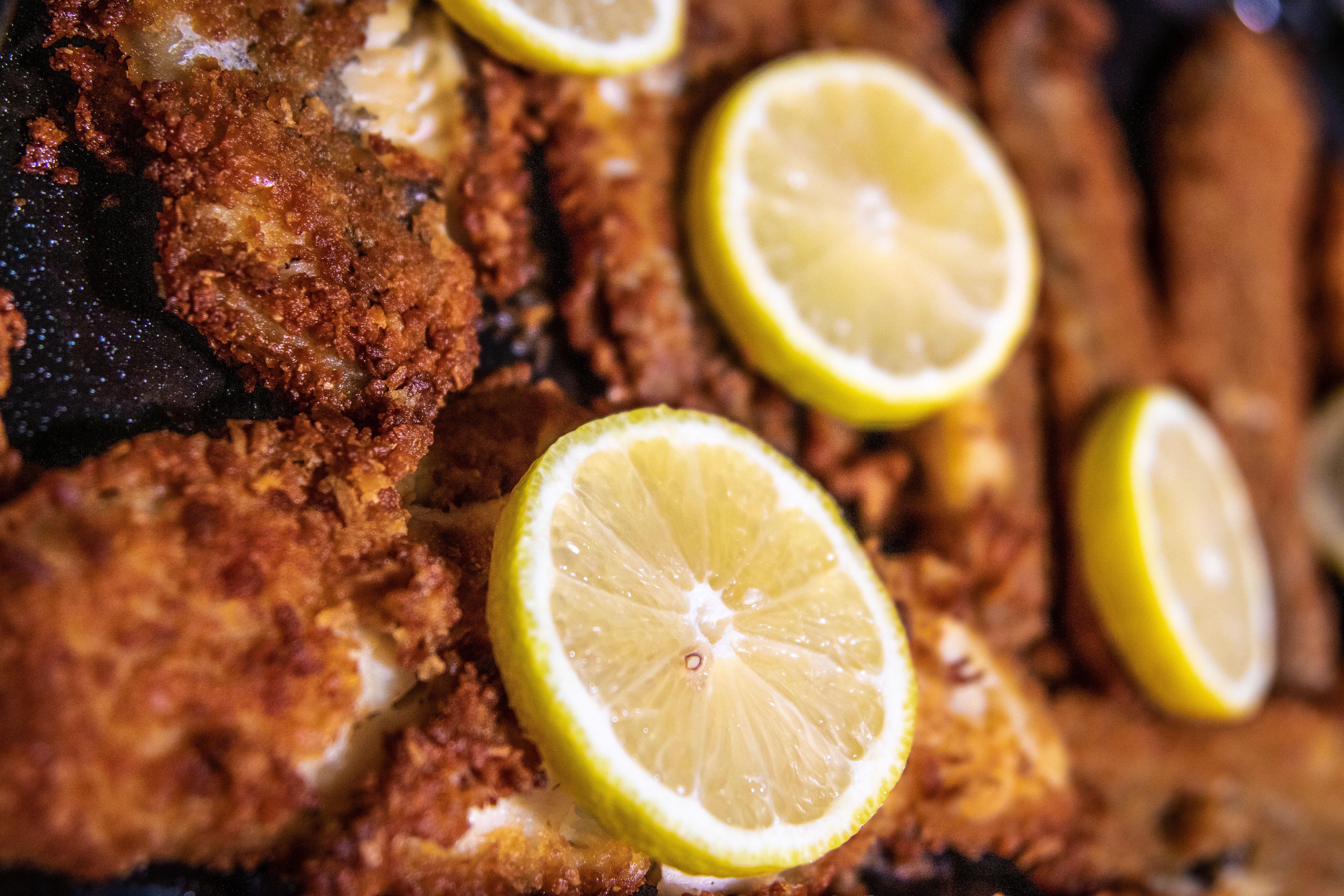
This crispy beer batter recipe combines cold lager, wheat flour, rice flour and cornstarch to create a light golden coating for flaky white fish, onion rings and vegetables.
Calories
430kcal
Protein
28g
Carbs
39g
Fat
18g
Check the fish carefully for bones. Cut it into evenly sized strips or portions approximately 2–3 cm thick. Pat every surface thoroughly dry with paper towels so the flour and batter can adhere properly.
Pour the oil into a large, deep, heavy-based saucepan, filling it no more than halfway. Heat it over medium-high heat to 180°C or 350°F. Place a wire rack over a baking tray nearby for draining the cooked fish.
Season the dry fish pieces evenly with ¾ teaspoon salt and the black pepper. Place the 60 g rice flour in a shallow bowl. Coat several fish pieces lightly in the rice flour and shake away all loose excess.
In a large chilled bowl, stir together the all-purpose flour, 50 g rice flour, cornstarch, baking powder, ½ teaspoon salt, garlic powder and paprika until evenly distributed.
Make the wet batter immediately before frying. Pour 300 ml of the ice-cold lager into the dry mixture and stir briefly with a fork or whisk. Stop as soon as no large dry pockets remain. A few small lumps are desirable. Add the remaining beer one tablespoon at a time only if the batter is too thick. It should flow from a spoon while leaving an even coating on its back.
Dip two or three dusted fish pieces into the batter and turn them until fully coated. Lift one piece at a time and allow the excess batter to drip back into the bowl for approximately two seconds.
Carefully lower each battered fish piece into the oil away from your body. Do not crowd the pan. Fry for 3–5 minutes, turning once, until the coating is crisp and deep golden. Keep the oil between 175°C and 180°C or 347°F and 350°F. The centre of the fish should reach 63°C or 145°F.
Lift the cooked fish from the oil with a slotted spoon or metal spider and place it on the wire rack. A rack allows steam to escape and helps prevent the underside from becoming soft. Season lightly with additional salt only if needed.
Allow the oil to return to 180°C or 350°F before frying the next batch. Dust and batter only a few pieces at a time. Keep the batter refrigerated between batches if the kitchen is warm.
Serve the beer-battered fish while hot and crisp with lemon wedges. Discard any remaining wet batter because it has been in contact with raw fish.
This beer batter recipe creates a light, crisp and golden coating for white fish. A combination of all-purpose flour, rice flour and cornstarch gives the coating colour, structure and crunch, while very cold lager and baking powder produce a delicate, airy texture.
The recipe includes enough batter for approximately 750 g of fish and can also be used for onion rings, courgettes, mushrooms, cauliflower, prawns and other quick-cooking foods. The food must be dry, lightly dusted with flour and fried in small batches for the batter to adhere and remain crisp.
All-purpose flour helps the coating turn golden and provides enough structure to surround the food. Rice flour and cornstarch reduce the heaviness that can result from using wheat flour alone. Baking powder creates additional air pockets as the batter enters the hot oil.
The lager must be very cold and the oil must remain hot. This temperature contrast helps the outside set quickly instead of absorbing excessive oil. The batter is mixed only briefly because prolonged whisking encourages gluten development and produces a denser coating.
A cold pale lager is the most versatile choice because it is highly carbonated and has a relatively mild flavour. A lightly flavoured pale ale can also be used.
Dark stout, porter and strongly bitter beer create a darker coating and contribute a more noticeable malt or bitter flavour. They may suit particular foods but are less neutral than lager.
For a version without ordinary beer, use chilled 0.0% beer or plain sparkling water. Brief frying should not be treated as a guarantee that every trace of alcohol has disappeared.
Wheat flour provides colour and strength, but a batter made entirely with wheat flour can become firm or soften as it stands. Rice flour creates a brittle, delicate crispness, while cornstarch limits gluten and helps produce a lighter shell.
The dry rice-flour coating placed directly on the fish also absorbs small amounts of surface moisture. This gives the wet batter a dry layer to grip.
The batter should be thinner than pancake batter but thick enough to cover the back of a spoon. It should flow in a steady ribbon rather than fall in a solid lump.
A few small lumps are useful and should not be whisked away. If the batter is excessively thick, add cold beer one tablespoon at a time. If it becomes too thin, stir in a small amount of equal parts all-purpose flour and rice flour.
Maintain the oil between 175°C and 180°C. If the oil is too cool, the batter takes longer to set and can absorb more oil. If it is too hot, the coating can darken before the fish cooks through.
Check the temperature before every batch. The temperature naturally falls when cold food enters the saucepan, so allow the oil to recover before adding more.
Choose firm, mild white fish that can hold its shape during coating and frying. Cod, haddock, hake, pollock and similar white fish are suitable choices.
Cut the fish into pieces of similar thickness so they finish cooking at approximately the same time. Very thick portions should be divided horizontally because the outside may brown before the centre cooks.
Yes. It works with onion rings, courgette slices, mushrooms, cauliflower florets, green beans, pickles and other vegetables. Dry the vegetables thoroughly and cut dense vegetables into pieces that will become tender within a few minutes.
Hard vegetables such as thick carrots or large potato pieces should be partially cooked before battering. Wet vegetables and foods packed in brine must be drained and dried especially well.
Warm liquid produces a warmer batter and flat beer provides less carbonation. Keep the unopened beer refrigerated until the dry ingredients and frying oil are ready.
The batter thickens as it stands and gradually loses carbonation. Combine the beer with the flour immediately before the first batch enters the oil.
Too much whisking develops gluten and produces a tougher coating. Stir only until the main dry pockets disappear.
Wet batter can slide away from moist fish. A light coating of rice flour helps the batter adhere.
Too many pieces lower the oil temperature and may stick together. Fry in small batches with room around every piece.
Paper absorbs oil but can trap steam under the fish. A wire rack allows air to circulate and helps the bottom remain crisp.
The coating may appear golden before a thick piece of fish is safely cooked. Fish should reach 63°C or 145°F in its thickest part.
Place cooked pieces in a single layer on a wire rack. Do not stack them or cover them, because trapped steam softens the coating.
When preparing several batches, keep the rack in a low oven at approximately 100°C or 210°F for a short period. Do not leave the fish there for too long because the interior may dry out.
The combined wet batter should not be made far in advance because it loses carbonation and becomes thicker as it rests. The dry ingredients can be mixed several hours ahead and refrigerated in a covered bowl.
Keep the beer unopened and cold. Add it to the prepared dry mixture only when the frying oil is almost ready.
Cool leftover cooked fish promptly and transfer it to an airtight container. Refrigerate it for up to two days. The coating will soften during refrigeration.
Reheat the fish on a wire rack in a hot oven or air fryer until the coating is crisp and the centre is thoroughly hot. Microwave reheating is not recommended when crispness is important.
Discard unused wet batter that has touched raw fish. It should not be stored for later use.
A mild pale lager contributes only a light savoury and malty flavour. Strongly flavoured or dark beer will be more noticeable.
Yes. Use a very cold 0.0% lager for similar flavour and carbonation. Plain chilled sparkling water also works but will not contribute malt flavour.
The beer may have been warm or flat, the batter may have been overmixed, the oil may have been too cool, or the pan may have been overcrowded.
The fish may be wet, the dry flour coating may have been skipped, or excess loose flour may have remained on the surface. Dry and dust the fish carefully before dipping.
Yes. Replace it with additional all-purpose flour or cornstarch, but the resulting texture and how long it remains crisp may differ.
Yes. Replace the all-purpose flour with self-rising flour and reduce the added baking powder. Keep the rice flour and cornstarch for a lighter texture.
Maintain the frying oil between 175°C and 180°C. Check it with a deep-frying or sugar thermometer before each batch.
It can, but the chicken must be cut into appropriately small pieces and cooked to a safe internal temperature of 74°C or 165°F. Frying time will be longer than for thin fish or vegetables.
Allow the oil to cool completely, strain it and store it in a clean sealed container only if it has not burnt, foamed excessively or developed an unpleasant smell. Follow local guidance for safe oil storage and disposal.
Enjoyed this free beer batter recipe? Explore the LaGrub app for premium recipe collections, exclusive dishes, organised cooking inspiration and new subscriber recipes.
Log in to read and share comments, recipes tips, and connect with other food lovers.
Unlock the full recipe library, premium cookbooks, and members-only weekly drops. Cancel anytime.
Already a member? Sign in to unlock everything.
Explore more delicious recipes from our collection