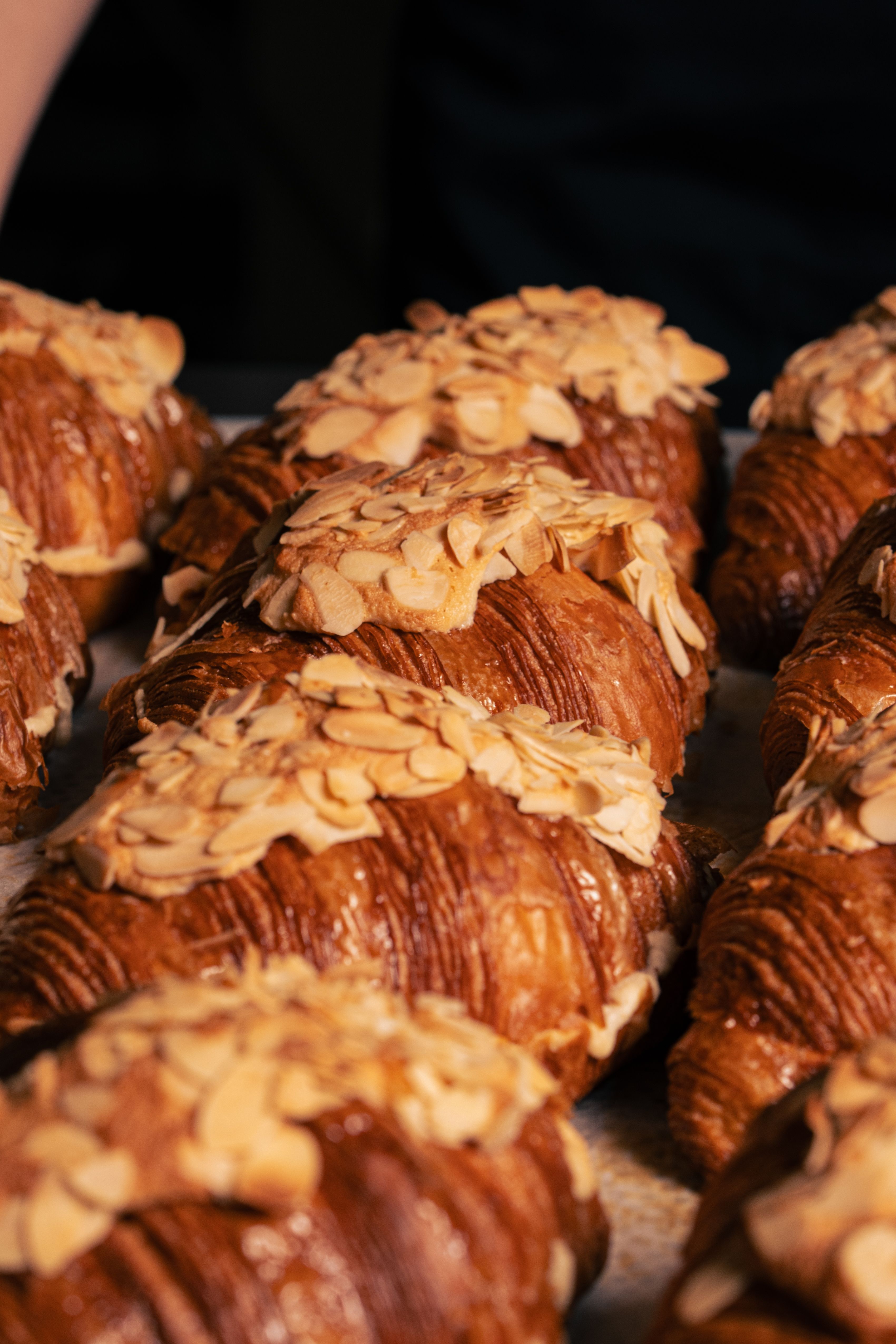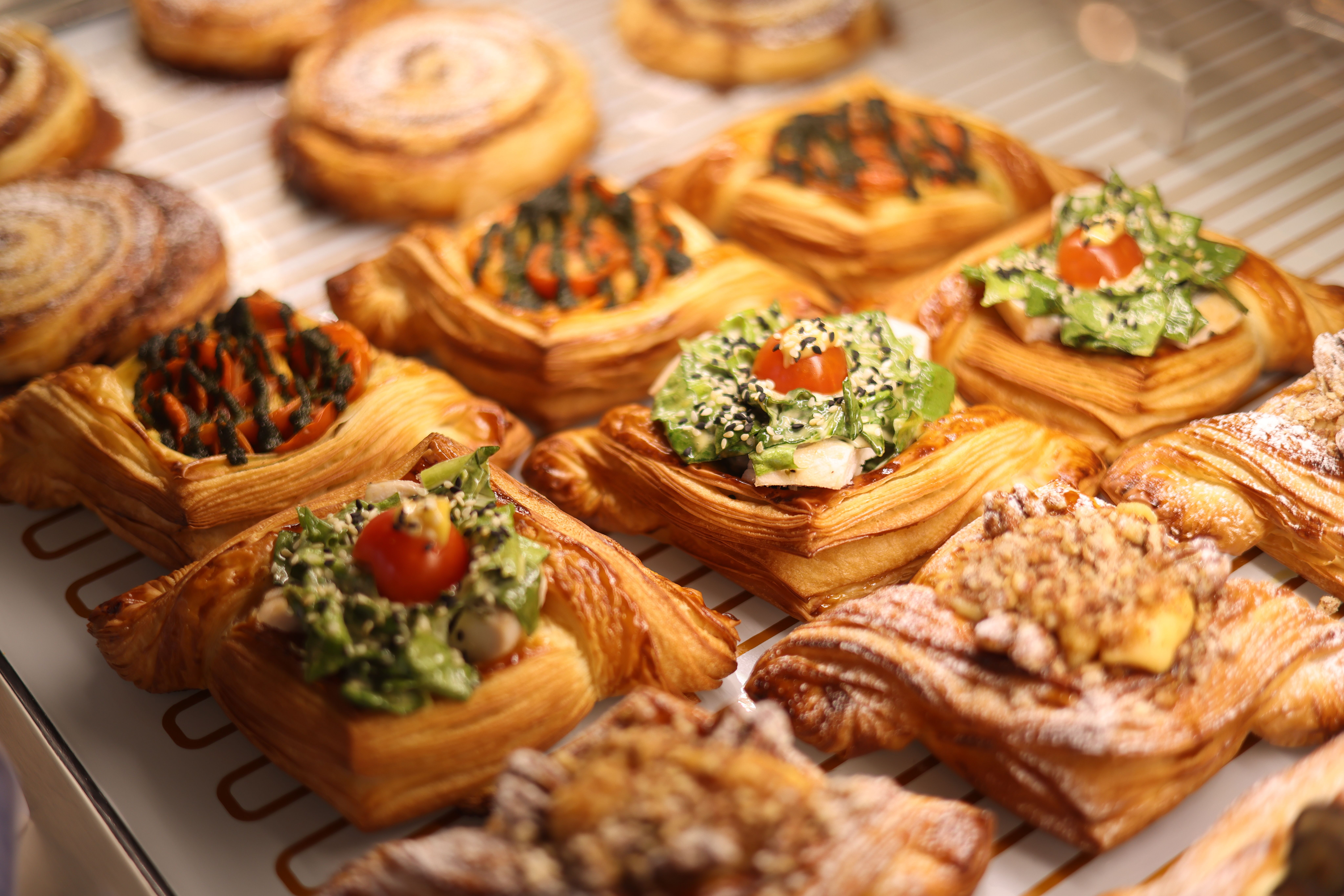
Light, buttery Danish pastries made with flaky laminated dough and filled with creamy vanilla custard and fruit or your favourite fillings.
Calories
395kcal
Protein
7g
Carbs
36g
Fat
25g
Mix the flour, sugar, yeast, and salt. Add the warm milk, softened butter, and egg, then knead until a smooth dough forms. Cover and refrigerate for at least 1 hour.
Roll the dough into a rectangle, enclose the cold butter block, and perform three letter folds, chilling the dough between each fold until light, flaky layers develop.
Beat the cream cheese, sugar, vanilla extract, and egg yolk together until smooth and creamy.
Roll the laminated dough to about ¼-inch thickness, cut into squares, fold or shape as desired, and add a spoonful of filling in the centre. Top with fruit or jam if using.
Arrange the pastries on lined baking trays, cover lightly, and let them rise until puffy but not doubled.
Brush each pastry with egg wash and bake in a preheated 200°C (400°F) oven for 18–20 minutes until deeply golden and crisp.
Allow the pastries to cool slightly before drizzling with vanilla glaze. Serve warm or at room temperature.
Nothing compares to the aroma of freshly baked Danish pastries with their delicate, buttery layers and beautifully crisp exterior. Originating from European baking traditions, Danish pastries are celebrated for their light, flaky texture and endless variety of fillings, making them a favourite for breakfast, brunch, or an afternoon coffee break.
Although laminated dough has a reputation for being challenging, the process is simply a matter of patience and keeping the butter cold. With a little care, you'll be rewarded with golden pastries that rival those found in artisan bakeries. Whether filled with vanilla cream, fresh berries, fruit preserves, or sweet cream cheese, homemade Danish pastries are well worth the effort.
Danish pastries are made using laminated yeast dough, where thin layers of butter are folded repeatedly into the dough. As the pastries bake, the butter releases steam, creating the signature flaky layers that make each bite light and airy. Unlike puff pastry, Danish dough also contains yeast, giving it a tender interior with a rich, buttery flavour.
One of the best things about Danish pastries is their versatility. Cream cheese, vanilla pastry cream, fruit preserves, fresh berries, apples, peaches, cherries, and almonds all work beautifully. Choose fillings that aren't overly wet, as excessive moisture can prevent the pastry from baking evenly and reduce its crisp texture.
Serve Danish pastries warm with freshly brewed coffee, cappuccino, tea, or hot chocolate. They're equally delicious as part of a brunch spread alongside fresh fruit, yoghurt, scrambled eggs, or smoked salmon. For dessert, pair them with whipped cream or a scoop of vanilla ice cream.
Fresh Danish pastries are best enjoyed on the day they're baked, but leftovers can be stored in an airtight container for up to two days at room temperature or refrigerated for up to four days. Reheat briefly in the oven to restore their crisp, flaky texture.
The laminated dough can also be prepared a day in advance and kept refrigerated until you're ready to shape and bake the pastries, making it ideal for entertaining or holiday breakfasts.
Yes. Freeze baked pastries once completely cooled, then warm them in the oven before serving to refresh their flaky texture.
Absolutely. The dough develops even better flavour after resting overnight in the refrigerator, making advance preparation a great option.
Flakiness depends on keeping the butter cold during lamination. If the butter melts into the dough before baking, the distinct layers won't develop properly.
Yes. Danish pastries are incredibly versatile and can be filled with fruit preserves, pastry cream, cream cheese, chocolate, nuts, or seasonal fruits depending on your preference.
Homemade Danish pastries are a rewarding baking project that combines crisp, buttery layers with endless filling possibilities. Whether you prefer classic vanilla cream, fresh fruit, or rich cream cheese, these pastries bring the charm of an artisan bakery straight to your kitchen. Once you master the lamination process, you'll have a versatile dough that's perfect for creating a variety of bakery favourites throughout the year.
At LaGrub, we believe that great baking starts with clear guidance and dependable recipes. Explore our growing collection of original recipes to discover more homemade breads, pastries, desserts, and everyday favourites that make baking enjoyable for every home cook.
Log in to read and share comments, recipes tips, and connect with other food lovers.
Unlock the full recipe library, premium cookbooks, and members-only weekly drops. Cancel anytime.
Already a member? Sign in to unlock everything.
Explore more delicious recipes from our collection