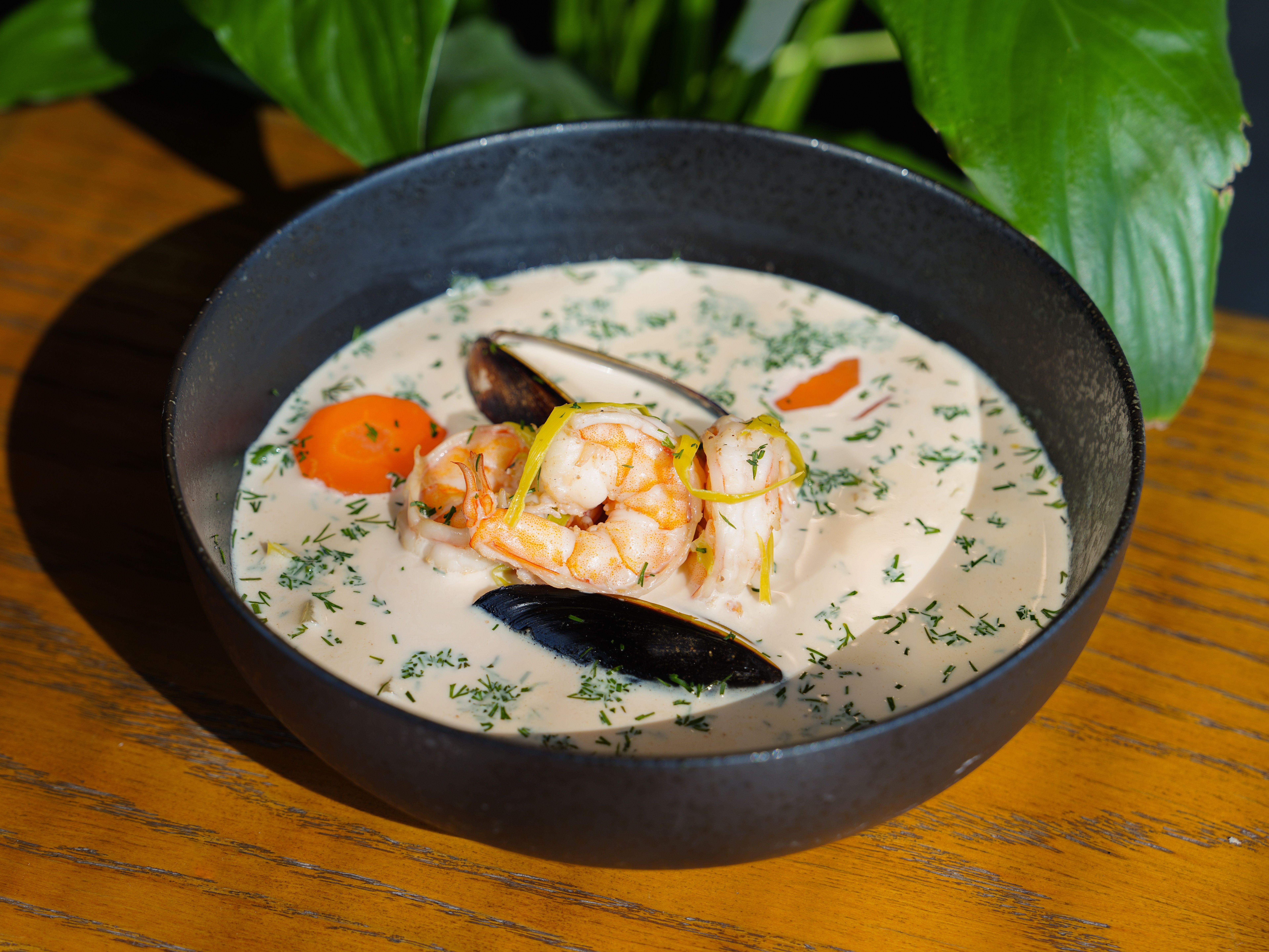
This creamy fish chowder recipe combines tender cod, salmon, potatoes, leeks and sweet corn in a rich but balanced herb broth for a comforting one-pot meal.
Calories
440kcal
Protein
31g
Carbs
43g
Fat
17g
Pat the white fish and salmon dry with paper towels. Cut them into even 3 cm pieces and remove any remaining bones. Season with ½ teaspoon salt and ¼ teaspoon black pepper, then refrigerate while preparing the chowder base.
Melt the butter with the olive oil in a large heavy-based pot over medium heat. Add the leek, onion and celery. Cook for 7–9 minutes, stirring regularly, until soft and translucent but not deeply browned.
Stir in the garlic and dried thyme. Cook for 30–45 seconds until fragrant, keeping the heat moderate so the garlic does not brown.
Sprinkle the flour evenly over the vegetables. Stir continuously for 1–2 minutes until the flour coats the vegetables and no dry patches or raw flour aroma remain.
Pour in the white wine, if using, and stir while scraping the bottom of the pot. Simmer for 2–3 minutes until reduced by about half. For the alcohol-free version, use 120 ml of the measured stock and continue directly to the next step.
Slowly stir in the remaining fish stock to keep the broth smooth. Add the potatoes, bay leaf, ¾ teaspoon salt and ¼ teaspoon black pepper. Bring to a gentle simmer, partially cover and cook for 12–15 minutes until the potatoes are almost tender.
Remove about 1 cup of potatoes and broth to a bowl. Mash until mostly smooth, then stir the mixture back into the pot. This adds body without requiring a large amount of flour or cream.
Reduce the heat to low. Stir in the whole milk and corn. Heat gently for 4–5 minutes until steaming and the potatoes are fully tender. Do not allow the chowder to boil after the milk has been added.
Add the chilled white fish and salmon pieces in a single layer where possible. Simmer very gently for 5–7 minutes, stirring only once or twice with a broad spoon, until the fish is opaque, flakes easily and reaches 63°C or 145°F in the thickest pieces.
Remove the pot from direct heat and discard the bay leaf. Stir in the heavy cream, lemon zest, 1 tablespoon lemon juice, 1 tablespoon dill and 1 tablespoon parsley. Taste before adding the remaining lemon juice, salt or pepper.
Let the chowder stand uncovered for 5 minutes. This allows the broth to settle and thicken slightly while protecting the fish from further cooking.
Ladle the chowder into warm bowls, keeping the fish pieces as intact as possible. Garnish with the remaining dill and parsley. Serve immediately with crusty bread, crackers or a simple green salad.
This fish chowder recipe combines firm white fish, salmon, potatoes, leeks and sweet corn in a creamy herb broth. It is substantial enough for dinner but balanced with fresh dill, parsley and lemon so the finished soup does not feel excessively heavy.
The potatoes are cooked before the fish is added. A small portion is mashed back into the broth to create natural thickness, while the fish is gently poached during the final minutes so the pieces stay tender and intact.
Fish chowder is a hearty soup built around fish, potatoes and an aromatic broth. Many versions include milk or cream, while others use a lighter stock-based base. The thickness, seafood mixture and vegetables differ by region and household.
This version sits between a very thick New England-style chowder and a lighter seafood soup. It is creamy enough to coat a spoon but remains easy to ladle and does not hide the flavour of the fish.
Leek, onion and celery form a gentle savoury base. Flour provides light thickening, while mashed potato adds body without making the soup pasty. Fish stock supports the seafood flavour, and whole milk creates creaminess without relying only on heavy cream.
Two types of fish provide contrast. Firm white fish has a mild flavour and flaky texture, while salmon contributes richness and colour. Both are cut into similar pieces so they cook evenly.
Lemon, dill and parsley are added after the pot leaves direct heat. This keeps their flavour fresh and prevents the acidity from disturbing the dairy.
Choose firm fillets that remain in noticeable pieces after poaching. Cod, haddock, hake and pollock are reliable white-fish options. Halibut can also work, although it is usually more expensive.
Salmon adds richness, but it can be replaced with more white fish. Avoid extremely thin or delicate fillets that fall apart as soon as they are stirred.
Fresh or properly thawed frozen fish can be used. Pat thawed fish thoroughly dry before cutting it because excess liquid can dilute the chowder.
Yes. Combining fish gives the chowder a more interesting flavour and appearance. Keep the total fish weight close to the amount in the recipe and cut every variety into similarly sized pieces.
Smoked haddock can replace a small portion of the fresh white fish for a deeper flavour. Because smoked fish is salty, reduce the added salt and season only after tasting the completed chowder.
Prawns, mussels or scallops can also be added, but their cooking times differ. Add prawns and scallops near the end. Steam mussels separately, discard any that do not open and stir the cooked meat into the chowder just before serving.
A mild, reduced-sodium fish stock produces the clearest seafood flavour. Avoid an extremely concentrated stock that can make the chowder taste harsh or overly salty.
Chicken stock is a practical substitute and creates a savoury background without making the soup taste like chicken. Light vegetable stock can also be used.
When using a salty stock, begin with less added salt. The fish, stock and any smoked ingredients can increase the final sodium level considerably.
Leeks often hold soil between their layers. Slice the white and light green sections, place them in a bowl of cold water and separate the rings with the fingers. Lift the clean leek from the water rather than pouring the sandy water over it.
Drain and dry the slices before cooking. The dark green leaves are too fibrous for this chowder but can be saved for homemade stock.
This recipe uses two methods. A modest amount of flour is cooked with the vegetables, and a cup of cooked potatoes and broth is mashed and returned to the pot.
If the chowder is still thinner than preferred, let it stand for five minutes before changing it. The broth thickens slightly as it cools.
For additional thickness, mash a few more potatoes directly against the side of the pot. Avoid adding large amounts of flour after the fish has cooked because vigorous whisking will break the pieces apart.
Bring the milk closer to room temperature and reduce the heat before adding it. The chowder should steam gently rather than boil hard.
Add lemon juice only after removing the pot from direct heat. Stir it in gradually and taste between additions.
Fresh dairy is also important. Milk or cream close to spoiling is more likely to separate when heated.
Add the fish after the potatoes are tender and the dairy base is hot. Most 3 cm pieces need only five to seven minutes of gentle poaching.
Stir carefully and infrequently. A broad spoon or flexible spatula moves the chowder without shredding the fish.
The fish is ready when it is opaque, separates easily with a fork and reaches 63°C or 145°F in the thickest pieces.
Very fragile fillets can dissolve into the soup. Choose firm white fish and cut it into substantial pieces.
A hard boil can cause the milk or cream to split. Keep the heat low once the dairy has been added.
The fish will overcook while the potatoes finish. Cook the potatoes first and add seafood during the final minutes.
Frequent vigorous stirring breaks the cooked fish into small flakes. Stir only when necessary and use broad, gentle movements.
Chowder should be creamy but still pourable. Remember that potatoes and flour continue thickening the soup as it stands.
Stock and fish vary in saltiness. Complete the seasoning after the fish, dairy and lemon have been added.
Lemon should brighten the chowder rather than make it sharply sour. Add it gradually off the heat.
Replace the salmon with an equal weight of cod, haddock, hake or pollock for a milder, uniformly white chowder.
Replace 100–150 g of the white fish with smoked haddock. Reduce the salt and omit the lemon until the finished soup has been tasted.
Replace part of the fish with prawns or scallops. Add them during the final few minutes and cook only until opaque and firm.
Cook 100 g chopped bacon until crisp, remove it from the pot and use a small amount of the rendered fat with the butter. Sprinkle the bacon over the finished bowls.
Replace the wine with additional fish stock. The chowder will still have full flavour from the vegetables, herbs and seafood.
Omit the flour. Once the potatoes are tender, add a slurry of two tablespoons cornstarch and three tablespoons cold milk. Simmer gently until the broth thickens before adding the fish.
Replace the heavy cream with additional whole milk. The chowder will be lighter and slightly less silky but will retain its potato-thickened body.
Bread is especially useful for absorbing the creamy broth. Choose a simple side that does not compete with the delicate fish.
The vegetable and potato base can be prepared several hours ahead without the fish, cream, lemon or fresh herbs. Cool it promptly and refrigerate it.
Reheat the base gently, add the milk if it was held back, then poach the fish shortly before serving. This produces a better texture than repeatedly reheating already-cooked fish.
Completed chowder can still be made ahead, but the fish will become slightly firmer when reheated.
Cool the chowder promptly and transfer it to shallow airtight containers. Refrigerate it within two hours and use it within three to four days.
Do not leave a large hot pot at room temperature for a long period. Smaller shallow containers cool more quickly and evenly.
Reheat the chowder gently in a saucepan over low to medium-low heat, stirring carefully. Add a little milk or stock if the broth has become too thick.
Avoid repeated boiling because it can split the dairy and toughen the fish. Reheated leftovers should reach 74°C or 165°F throughout.
Freezing is possible, but it is not recommended when the best texture is important. Potatoes may become grainy, dairy can separate and cooked fish may become dry after thawing.
For a freezer-friendly approach, prepare and freeze the stock-and-vegetable base without milk, cream or fish. Thaw it in the refrigerator, reheat it, then add fresh dairy and fish to complete the chowder.
Firm white fish such as cod, haddock, hake and pollock works well. Salmon can be added for richness and colour.
Yes. Thaw it safely in the refrigerator, drain away excess liquid and pat it dry before cutting it into pieces.
Yes. Reduced-sodium chicken stock is a useful substitute when fish stock is unavailable. The fresh fish will still provide seafood flavour as it poaches.
Mash some of the cooked potatoes into the broth or simmer the base gently before adding the fish. Avoid hard boiling after the dairy has been added.
The dairy may have boiled, the lemon may have been added over direct heat or the milk may have been very cold. Use low heat and add acidity last.
Use firm fillets, cut them into large even pieces, add them near the end and stir only once or twice during poaching.
Yes. Replace the cream with additional milk or stock. Mashing a portion of the potatoes will still give the broth body.
A small bowl can be served as a starter, while a larger portion with bread or salad makes a complete lunch or dinner.
Properly cooled and refrigerated chowder can be kept for three to four days. Reheat only the amount needed and avoid repeated heating.
Enjoyed this free fish chowder recipe? Explore the LaGrub app for premium soup collections, exclusive seafood dishes, organised cooking inspiration and new subscriber recipes.
Log in to read and share comments, recipes tips, and connect with other food lovers.
Unlock the full recipe library, premium cookbooks, and members-only weekly drops. Cancel anytime.
Already a member? Sign in to unlock everything.
Explore more delicious recipes from our collection