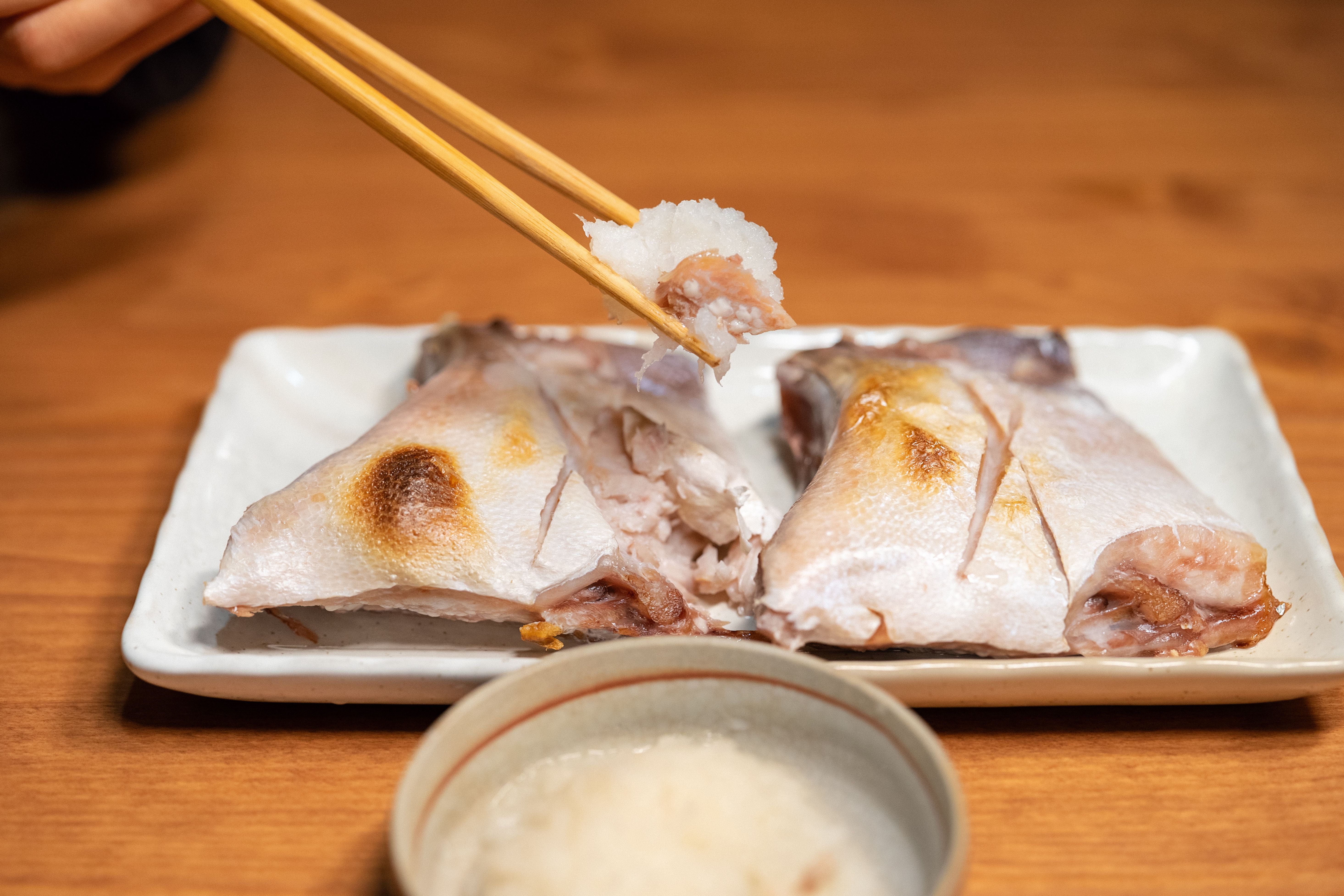
This hamachi kama recipe broils yellowtail collars until golden and crisp, then serves them with fresh daikon oroshi and a bright homemade citrus ponzu.
Calories
320kcal
Protein
29g
Carbs
5g
Fat
20g
If frozen, thaw the yellowtail collars overnight in the refrigerator. Remove them from their packaging, inspect the cavities for remaining scales or loose material and pat every surface thoroughly dry.
Place the collars skin-side down on a wire rack set over a tray. Sprinkle the kosher salt evenly over the exposed flesh and edges. Refrigerate uncovered for 30 minutes.
While the fish is resting, pour the mirin into a small saucepan. Bring it to a gentle simmer over medium-low heat and cook for 1 minute. Remove it from the heat and allow it to cool for several minutes.
Combine the cooked mirin, soy sauce, yuzu juice, lemon juice, rice vinegar, sugar and grated ginger. Stir until the sugar dissolves. Refrigerate the sauce until serving.
Place the grated daikon in a fine-mesh strainer. Press it gently with the back of a spoon to remove excess liquid while leaving it moist and fluffy. Mix in half of the spring onions and the shichimi togarashi, if using.
Position an oven rack approximately 15 cm or 6 inches below the upper heating element. Preheat the broiler on medium-high, approximately 260°C or 500°F, for at least 5 minutes.
Line a sturdy rimmed baking tray with heavy-duty foil. Crinkle the foil slightly to reduce the contact area between the skin and tray, then brush it lightly with some of the neutral oil.
Remove the salted collars from the refrigerator. Blot away the moisture drawn to the surface without rinsing off the fish. Brush the flesh and skin lightly with the remaining oil.
Arrange the collars skin-side down with the fleshy sides facing the heating element. Broil for 8–10 minutes, watching closely, until the exposed flesh is browned in spots and the thinner edges begin to blister.
Carefully turn the collars skin-side up using a wide metal spatula and tongs. Broil for another 2–4 minutes until the skin is blistered and lightly charred around the edges.
Insert an instant-read thermometer into the thickest fleshy section without touching bone. The fish should reach 63°C or 145°F. The meat should also be opaque and separate easily from the cartilage.
Transfer the cooked collars to warm serving plates and rest them for 2–3 minutes. Handle them carefully because the meat around the collar bones is delicate.
Place a small mound of daikon oroshi beside each collar. Garnish with the remaining spring onions and add a lemon wedge. Serve the citrus ponzu in small individual bowls for light dipping rather than pouring it heavily over the fish.
This hamachi kama recipe broils yellowtail collars until the exposed meat is golden and the skin is blistered around the edges. The rich fish is served with fresh daikon oroshi, lemon and a balanced yuzu-citrus ponzu.
The collars require only a brief dry brine and approximately 12–14 minutes beneath a hot broiler. Their irregular shape makes a thermometer more dependable than cooking time alone.
Hamachi kama is the collar section of yellowtail. It sits behind the fish's head and around the base of the gills and pectoral fin.
Each fish has two collars. Although the pieces contain cartilage and curved bones, they also hold tender meat protected by natural fat.
Hamachi kama is commonly offered in Japanese restaurants as grilled or broiled yellowtail collar. Diners lift the meat from around the bones with chopsticks, a fork or clean fingers.
A short dry brine seasons the thickest meat while drawing moisture from the surface. Drier fish browns more efficiently beneath the broiler.
The collars are cooked flesh-side up first so the exposed meat develops colour. They are then turned briefly to crisp and blister the skin without overcooking the centre.
The dipping sauce combines Japanese soy sauce, yuzu, lemon, rice vinegar and mirin. It is sharp enough to balance the rich yellowtail but not sweet enough to resemble teriyaki glaze.
Grated daikon provides a cool, fresh contrast. It is drained gently so it remains moist rather than becoming dry and fibrous.
Yellowtail collar has a clean, savoury flavour and a richer texture than many yellowtail fillets. The meat closest to the bone is especially tender.
Its flavour is generally milder than strongly flavoured oily fish. Citrus, soy sauce and grated daikon complement it without masking the natural taste.
Look in Japanese or Korean supermarkets, speciality fish markets and seafood shops. It may be labelled hamachi kama, yellowtail collar, Japanese amberjack collar or buri kama.
Frozen collars are often easier to find than fresh ones and can produce excellent results when thawed slowly and dried properly.
Ask a fishmonger whether collars are available even when they are not displayed. They may remain after whole yellowtail is divided into fillets.
Fresh collars should smell clean and mildly oceanic rather than strongly fishy. The meat should appear moist but not slimy, with no dried or darkened edges.
Frozen collars should be firmly sealed without severe freezer burn or a large collection of loose ice crystals inside the package.
Choose pieces of similar weight when possible. Equal-sized collars are easier to cook evenly in one batch.
Salt draws a small amount of liquid from the surface and begins seasoning the meat. After approximately 30 minutes, that moisture is blotted away before cooking.
This improves browning and gives the thick meat around the collar a more complete flavour than seasoning it immediately before broiling.
A longer brine is unnecessary for pieces of this size and can make the exterior excessively salty, particularly when ponzu is served alongside.
Position the fish close enough to the upper heating element to brown quickly, but not so close that the fins burn before the thick meat cooks.
Broil the collars skin-side down first. Their fleshy surfaces should face the heating element and begin blistering in several areas.
Turn them only after the flesh has developed colour. The second side requires less time because the fish is already mostly cooked.
Broiler strength differs between ovens. Watch the fish continuously during the final several minutes.
The surface should be browned and the meat should appear opaque rather than translucent. A fork or chopstick should separate the flesh easily from the cartilage.
Check the thickest edible portion with an instant-read thermometer. Avoid touching a bone with the probe because it can produce a misleading result.
Remove the collars once they reach the safe temperature. Continuing to broil them after the centre is ready can dry the thinner outer meat.
Daikon oroshi is finely grated daikon radish. It is often served with grilled fish, tempura and other rich Japanese dishes.
Fresh daikon has a lightly sweet and peppery flavour. Grating releases its juice and produces a soft, fluffy texture.
Drain only enough liquid to prevent a puddle on the plate. The garnish should remain cool and moist.
Ponzu is a citrus-forward Japanese condiment frequently combined with soy sauce. This version uses both yuzu and lemon for a fragrant but accessible flavour.
Mirin is simmered briefly before it is mixed with the other ingredients. Sugar softens the acidity, while ginger adds a clean background warmth.
Serve ponzu in a small dish. Lightly dipping each piece gives better control than pouring the complete sauce over the crisp fish.
Yes. Preheat a clean grill to medium-high or high heat and oil the grates carefully. Cook the collars with the skin facing the cooler part of the grill initially.
Turn them once the flesh releases easily and has developed grill marks. Continue cooking until the centre is opaque and reaches the safe internal temperature.
A fish basket can make irregular collars easier to turn and reduces the chance of losing small pieces through the grates.
Preheat the air fryer to approximately 200°C or 400°F. Lightly oil the basket and both sides of the dried, salted collars.
Arrange the pieces in one layer. Cook for approximately 8–12 minutes, turning near the end when additional skin browning is required.
Air fryers vary in size and heating power. Use the internal temperature and texture to determine doneness.
Wet collars steam before they brown. Pat them dry before salting and again after the short brine.
The ponzu already contains soy sauce. Season the fish lightly so the complete dish remains balanced.
Collar fins and thin edges can burn quickly. Watch the fish continuously during the final stage.
Collars vary greatly in size and shape. Check both the thickest meat and its internal temperature.
The thinner meat around the edges can become dry. Remove the collars as soon as the centre is safely cooked.
Excess sauce can hide the yellowtail flavour and soften the crisp skin. Dip the fish lightly instead.
Daikon oroshi should be moist and refreshing. Excessive pressing creates a coarse garnish.
Omit the homemade ponzu and serve the salted fish with lemon wedges and a small dish of Japanese soy sauce.
Add extra shichimi togarashi to the daikon or stir a small amount into the ponzu. Keep the spice moderate so the yellowtail remains the main flavour.
Brush the almost-cooked collars with a thin mixture of white miso, mirin and sake during the final minute. Watch closely because miso and sugar brown rapidly.
Apply a reduced soy, sake, mirin and sugar glaze only near the end of cooking. Repeated early glazing can burn beneath the broiler.
Salmon collars work with the same seasonings. Their dimensions may differ, so begin checking the temperature earlier.
One large collar with rice and vegetables makes a satisfying dinner. Smaller collars can be shared as an appetiser.
Begin with the exposed meat and lift it gently from the cartilage. Turn the collar as needed to reach the pockets around the fin and curved bones.
Watch carefully for small bones. The skin is edible when crisp, but very hard fin sections and cartilage should be left on the plate.
Add a squeeze of lemon or a small amount of daikon between bites. Dip the fish lightly into ponzu as desired.
Remove accessible meat from the collar bones or refrigerate the complete cooked pieces in an airtight container. Cool and refrigerate them promptly.
For the best texture, eat refrigerated leftovers within two days. Keep the ponzu and daikon in separate covered containers.
Grated daikon loses freshness and becomes stronger during storage, so preparing a fresh portion is preferable.
Reheat the collar in a moderate oven or air fryer until hot. A short period of dry heat restores more surface texture than microwave reheating.
Avoid prolonged reheating because the meat has already been cooked and can dry out. Leftover meat can also be served cold in a rice bowl or salad.
Hamachi commonly refers to Japanese yellowtail or Japanese amberjack, although naming can vary according to the fish's age, size and region.
Prices vary, but collars may cost less than centre-cut sashimi or fillets. Their limited availability can make restaurant portions comparatively expensive.
Yes. Thaw it safely in the refrigerator and dry it thoroughly before salting.
Yes. The collar surrounds curved bones and cartilage. Eat carefully and lift the meat away in small pieces.
Yes. Bake at approximately 220°C or 425°F until cooked through, then use the broiler briefly when additional browning is needed.
The foil may not have been oiled, or the fish may have been turned before it browned sufficiently. Crinkled, greased foil reduces contact and sticking.
Yes. Replace it with additional fresh lemon juice or a combination of lemon and lime.
Yes. Mix it up to several days in advance and keep it refrigerated in a covered container.
Cook the thickest edible section to 63°C or 145°F, or until the meat is opaque and separates easily.
Enjoyed this free hamachi kama recipe? Explore the LaGrub app for premium Japanese dishes, seafood dinners, homemade sauces and organised cooking inspiration.
Log in to read and share comments, recipes tips, and connect with other food lovers.
Unlock the full recipe library, premium cookbooks, and members-only weekly drops. Cancel anytime.
Already a member? Sign in to unlock everything.
Explore more delicious recipes from our collection