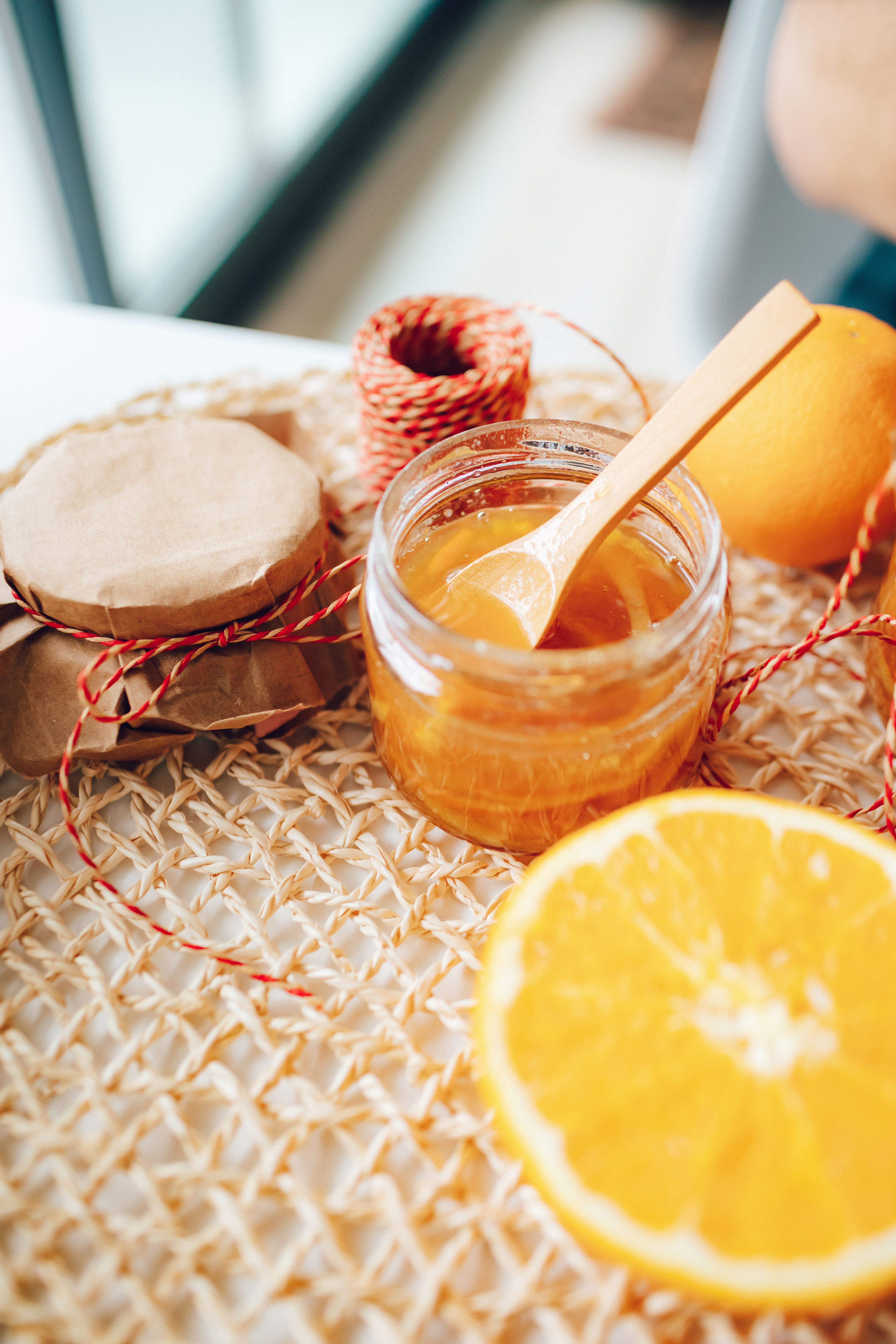
This lemon jam recipe turns fresh lemon pulp, juice and fragrant zest into a bright, silky citrus spread without commercial pectin or bitter white pith.
Calories
48kcal
Protein
0.1g
Carbs
12g
Fat
0g
Wash two or three heatproof jars and their lids thoroughly with hot soapy water, rinse well and leave them to dry. Place two small plates in the freezer for testing the jam later.
Scrub the lemons thoroughly under running water and dry them. Remove any stickers, stems or damaged areas.
Use a vegetable peeler to remove thin strips of yellow zest from 4 lemons. Avoid taking the thick white pith underneath. Finely slice or chop the zest.
Place the chopped zest in a small saucepan with the 1 litre water. Bring to a boil and simmer for 5 minutes. Drain, cover with fresh water from the tap and simmer for another 3 minutes. Drain thoroughly.
Cut the peel and all visible white pith from every lemon. Working over a bowl to catch the juice, cut between the membranes to release the segments. Remove every seed and any thick membrane from the pulp.
Place the collected lemon seeds and membranes in a small piece of cheesecloth and tie it securely with kitchen string. Alternatively, place them in a reusable fine-mesh spice bag or tea infuser.
Weigh 500 g of the combined lemon pulp and collected juice. Chop or pulse the pulp briefly if a smoother jam is preferred, but do not blend it into a completely foamy liquid.
Place the measured pulp and juice, blanched zest, 120 ml water and the tied membrane-and-seed bag in a wide heavy-based saucepan. Bring to a gentle simmer and cook for 12–15 minutes, stirring occasionally.
Reduce the heat to low. Add the granulated sugar in three additions, stirring after each one until the crystals have completely dissolved. Check the bottom of the pan with the spoon before increasing the heat.
Increase the heat to medium-high and bring the mixture to a strong but controlled boil. Cook for approximately 12–18 minutes, stirring frequently and scraping the base and corners to prevent scorching.
Begin testing when the jam reaches approximately 104°C or 219°F. The bubbles should look thicker and slower, and the mixture should begin coating the spoon rather than running off like water.
Remove the saucepan from the heat. Place 1 teaspoon of jam on a frozen plate and wait 30 seconds. Push it gently with a fingertip. It is ready when the surface wrinkles slightly and the liquid does not immediately flood back together.
If the test remains very runny, return the saucepan to the heat and boil for another 2 minutes. Repeat the cold-plate test rather than cooking for one fixed amount of time.
Carefully lift out the hot membrane-and-seed bag with tongs. Hold it over the pan and press it gently against a spoon to release the liquid, but do not touch or squeeze it with bare hands.
Stir in the fine sea salt and vanilla extract, if using. Remove any foam from the surface with a clean spoon for a clearer-looking jam.
Carefully ladle the hot jam into the clean heatproof jars, leaving approximately 1 cm of space at the top. Wipe away spills from the jar rims with a clean damp cloth.
Leave the jars uncovered for approximately 30 minutes, until no longer extremely hot. Apply the lids and refrigerate promptly. Do not store this independently formulated refrigerator recipe in a pantry.
Chill the lemon jam for at least 8 hours before judging the final consistency. It will become noticeably thicker after cooling completely.
This lemon jam recipe transforms fresh lemon pulp, juice and fragrant yellow zest into a bright, silky citrus spread. The bitter white pith is removed, while the lemon membranes and seeds are simmered in a removable bag to contribute natural pectin.
The result sits between a smooth fruit jam and a finely textured citrus preserve. It has enough tartness to taste unmistakably of lemon, balanced with sufficient sugar to create a glossy, spoonable consistency.
Lemon jam is a sweet citrus spread prepared primarily from lemon pulp, juice, zest and sugar. Unlike many marmalades, this version does not contain strips of thick white pith or large pieces of complete peel.
Removing the pith creates a smoother, less aggressively bitter flavour. Finely chopped zest retains the aromatic oils that make the finished spread smell and taste fresh.
The terms lemon jam and lemon marmalade are sometimes used interchangeably. In general, marmalade contains noticeable pieces of citrus peel suspended in a clear or softly set gel.
This lemon jam removes the white pith and tough segment membranes. Only finely prepared yellow zest is returned to the pan, giving the spread a more uniform texture.
It still contains citrus zest, so some cooks may describe it as a fine-cut or pith-free marmalade. The practical difference is its softer bitterness and smoother consistency.
The recipe uses the lemon in several ways. The pulp and juice provide acidity and fresh flavour, while the yellow zest supplies fragrant citrus oils.
The seeds and segment membranes are retained temporarily because they contain natural pectin. They are enclosed in a removable bag so they can support the set without leaving tough pieces in the jam.
Blanching the zest reduces excess bitterness. Two short blanching stages soften it without requiring hours of soaking.
A wide saucepan encourages efficient evaporation. The jam reaches its setting stage more quickly, helping preserve a brighter flavour than extremely prolonged cooking.
Choose lemons that feel heavy for their size, indicating that they contain plenty of juice. The skins should be firm and fragrant rather than dry, shrivelled or badly damaged.
Unwaxed lemons are preferable because the zest is used. When only waxed lemons are available, scrub them thoroughly under warm running water and dry them before peeling.
Ordinary yellow lemons give the jam a clean, sharp citrus flavour. Meyer lemons are sweeter, less acidic and more floral, creating a gentler preserve.
The thick white layer beneath lemon peel can have an intense bitterness. Some marmalade recipes retain it and use soaking or repeated boiling to moderate its flavour.
This recipe removes the pith completely. The yellow zest is prepared separately and blanched, allowing better control over the bitterness without losing the lemon aroma.
Use a sharp knife to cut away every thick white section after removing the zest. Small traces are acceptable, but large pieces can create harsh bites.
Blanching draws some bitter compounds from the zest and begins softening its texture. The first cooking water is discarded rather than added to the jam.
A second short blanch is useful for ordinary thick-skinned lemons. Very thin Meyer lemon zest may require only one blanching stage.
Do not boil the zest for an excessive period because prolonged cooking can remove too much citrus fragrance.
Pectin is a naturally occurring substance found in plant cell walls. Citrus peel, membranes and seeds are particularly useful sources.
The lemon flesh used in the jam does not always contain enough accessible pectin on its own, especially after the white pith and membranes have been removed. Simmering those discarded parts in a removable bag allows some of their pectin to enter the liquid.
The bag must be removed before the jam is placed in jars. Press it carefully with a spoon because it will contain extremely hot liquid.
Sugar balances the strong acidity of the lemons, contributes to the set and gives the spread a glossy texture. It also binds some available water and improves refrigerated keeping quality.
Reducing the sugar substantially can create a thinner, sharper jam with a shorter storage life. A properly developed low-sugar version normally requires low-sugar pectin and a separately tested formula.
The sugar should dissolve completely before the jam reaches a strong boil. Undissolved crystals can encourage a grainy texture later.
The jam changes visibly as it cooks. Its bubbles become slower and more glossy, and the mixture begins coating the stirring spoon.
A thermometer should read approximately 104–105°C or 219–221°F near sea level. Temperature is useful, but it should be confirmed with a cold-plate test.
Place a small amount on a frozen plate, wait briefly and push it with a fingertip. A slight wrinkle and slow movement indicate a soft jam set.
The finished jam continues thickening in the refrigerator. It should not be cooked until stiff inside the hot saucepan.
The mixture may not have reached its setting stage, the batch may have been cooked in a narrow pan, or the fruit may have contained less natural pectin than expected.
Allow the jam to chill overnight before deciding that it is too soft. A hot citrus preserve can look considerably thinner than its final refrigerated texture.
When a fully chilled batch remains runny, use it as a lemon sauce or return it to a clean saucepan and boil it for several additional minutes.
Overcooking evaporates too much water and can create a firm, sticky preserve. Remember that the jam will thicken further while cooling.
If the cold-plate sample forms a solid mass or becomes rubbery, remove the saucepan from the heat immediately.
A very firm refrigerated jam can be loosened by stirring a small amount of hot water into the portion being served.
Ensure that every sugar crystal dissolves over low heat before bringing the mixture to a full boil. Run the spoon across the bottom and sides to check for remaining granules.
Avoid scraping dried sugar crystals from the upper sides of the saucepan back into the finished jam.
Store the jam in a tightly covered container. Evaporation during refrigerator storage can increase the concentration of sugar and encourage crystals.
Add the optional vanilla extract after removing the pan from the heat. Use a restrained amount so the vanilla softens the acidity without hiding the citrus.
Add one or two teaspoons of finely grated fresh ginger during the initial simmer. Strain it out for a completely smooth spread or leave it in for a stronger flavour.
Add three lightly crushed cardamom pods to the saucepan with the pectin bag. Remove them before filling the jars.
Use Meyer lemons for a softer, floral flavour. Begin with slightly less sugar, then evaluate the balance before the jam reaches its final boil.
Add one small rosemary sprig during the first simmer and remove it before adding the sugar. Too much rosemary can make the spread taste medicinal.
Prepared lemon pulp and juice can be frozen before making the jam. Thaw them in the refrigerator and include all released liquid when weighing the fruit.
Freeze the zest separately so its fragrance is protected. The natural pectin contribution may vary, making the cold-plate test particularly important.
This independently developed recipe is intended for refrigerator storage. It has not been laboratory tested with a specific jar size, headspace, altitude adjustment and boiling-water processing time.
Sealing a hot jar does not automatically make its contents safely shelf-stable. Anyone wanting pantry-stable citrus preserves should use a current research-tested marmalade recipe from a recognised food-preservation authority and follow it without untested changes.
Place the covered jars in the refrigerator after their initial brief cooling period. Keep the refrigerator at or below 4°C or 40°F.
Use a clean, dry spoon each time. Introducing crumbs, butter or other food into the jar can shorten its storage life.
For best quality, use the jam within approximately one month. Discard the complete jar when mould, fermentation, gas, an unusual smell or another sign of spoilage appears.
Yes. Transfer completely cooled jam to freezer-safe containers, leaving expansion space at the top. Freeze smaller portions so only the amount required needs to be thawed.
Thaw frozen lemon jam in the refrigerator and stir it before serving. The texture may become slightly softer after freezing.
No. Lemon curd contains eggs and butter, producing a rich custard-like spread. Lemon jam is made primarily with fruit, sugar and water.
No. Lemon membranes and seeds are simmered in a removable bag to contribute natural pectin.
Fresh lemons are necessary because the recipe uses pulp and zest as well as juice. Bottled juice alone will not produce the same texture or aroma.
Too much white pith may have remained, the zest may not have been blanched sufficiently, or the seeds may have escaped from their bag.
A small adjustment may be possible, particularly with Meyer lemons, but a substantial reduction changes the set and storage characteristics. Use a specifically developed low-sugar recipe for a major reduction.
It may have cooked for too long, caramelised on the saucepan base or been exposed to excessive heat. A wide pan and frequent stirring reduce that risk.
For a smoother texture, blend the prepared lemon pulp before adding sugar. Blending extremely hot jam can cause dangerous splashing and pressure inside a blender.
It begins thickening during cooling but should be refrigerated for at least eight hours before its final consistency is assessed.
Making two separate batches is more reliable. A doubled batch evaporates differently and can require prolonged cooking that darkens the lemon flavour.
Enjoyed this free lemon jam recipe? Explore the LaGrub app for premium preserves, homemade sauces, breakfast spreads and organised seasonal cooking inspiration.
Log in to read and share comments, recipes tips, and connect with other food lovers.
Unlock the full recipe library, premium cookbooks, and members-only weekly drops. Cancel anytime.
Already a member? Sign in to unlock everything.
Explore more delicious recipes from our collection