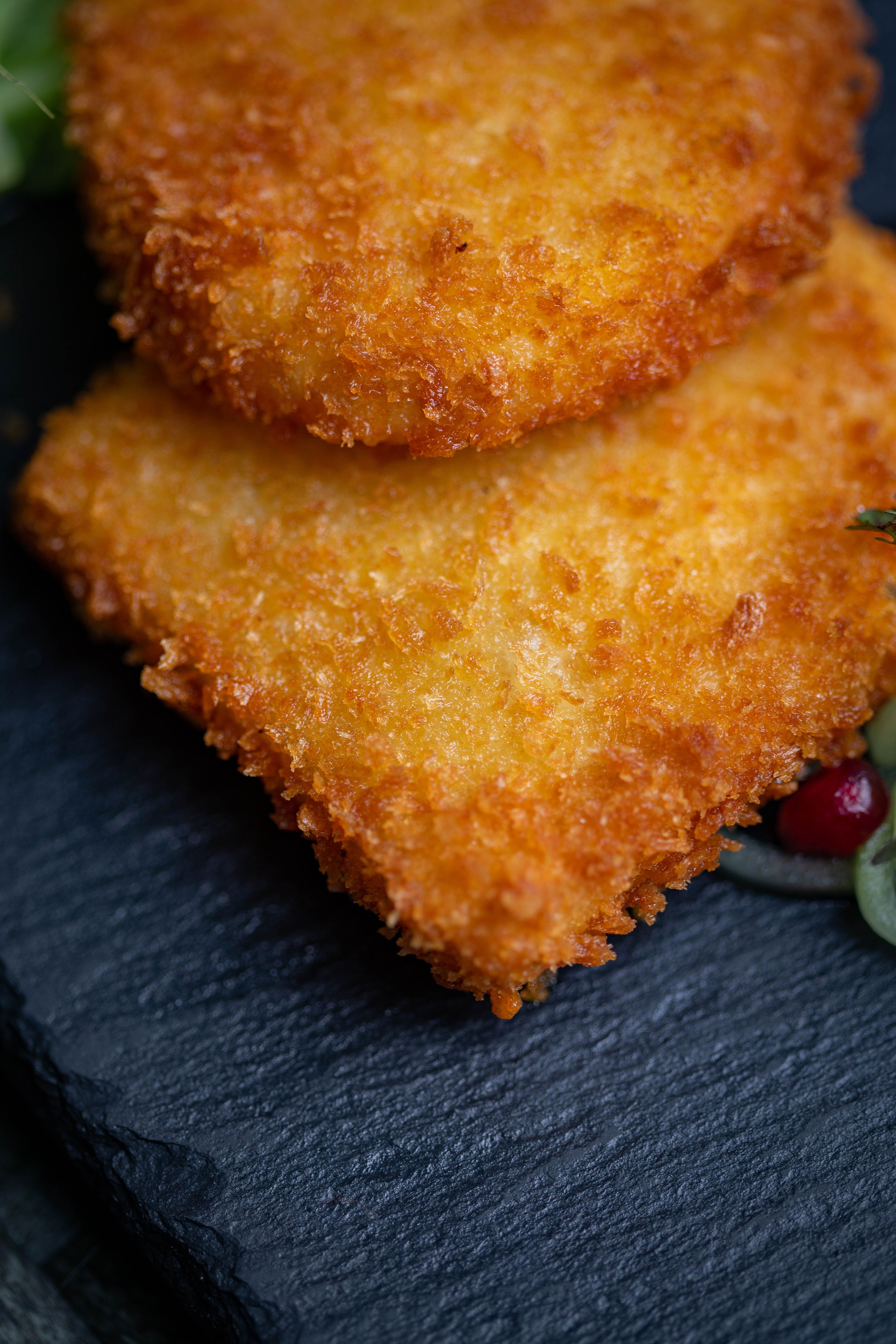
This McDonald's-style hash brown recipe turns russet potatoes into crisp golden breakfast patties with fluffy centres, savoury seasoning and an irresistible crunch.
Calories
230kcal
Protein
3g
Carbs
28g
Fat
13g
Peel the potatoes and grate them through the large holes of a box grater. Work steadily so the exposed potato does not remain in the air long enough to discolour significantly.
Place the grated potatoes in a large bowl with the cold water. Agitate them gently for approximately 20 seconds, then drain immediately through a fine colander. A brief rinse removes sticky surface starch without soaking away too much natural potato flavour.
Transfer the grated potatoes to the centre of a clean, lint-free kitchen towel. Gather the towel tightly and wring it firmly over the sink until almost no additional liquid comes out. Divide the potatoes between two towels if necessary.
Heat the 2 tablespoons of neutral cooking oil in a large non-stick or well-seasoned skillet over medium-low heat. Add the grated potatoes and cook for 5–7 minutes, turning and separating them regularly. They should become flexible and slightly translucent without developing a brown crust.
Spread the partially cooked potatoes in a thin layer on a clean rimmed tray. Leave them for approximately 10 minutes, until cool enough to handle. Do not mix starch into steaming-hot potatoes because it can become sticky and pasty.
Sprinkle the potato starch, cornstarch, 6 g of the salt, sugar, onion powder and white pepper evenly over the cooled potatoes. Fold gently with clean hands until the seasonings are distributed and the mixture holds together when compressed. Do not mash it into a smooth paste.
Divide the mixture into eight equal portions weighing approximately 115 g each. Keep the portions covered while shaping so the potato does not dry out.
Press each portion firmly into an oval patty approximately 10 cm long, 6 cm wide and 1.2–1.5 cm thick. Smooth cracked edges with damp fingers and compress the patties sufficiently to hold together without crushing all the potato strands.
Arrange the shaped patties on a parchment-lined tray without allowing them to touch. Freeze uncovered for 60–90 minutes, until completely firm. They can also be covered and frozen overnight.
Pour the frying oil into a deep, heavy-based saucepan, ensuring the pan is no more than halfway full. Heat the oil to 180°C or 355°F. Place a wire rack over a clean tray near the stove.
Lower two frozen patties carefully into the hot oil using a metal spider or slotted spoon. Fry for 4–5 minutes, turning once if necessary, until deeply golden, crisp and hot throughout. Allow the oil to return to 180°C or 355°F before adding each new batch.
Lift the hash browns from the oil and allow excess oil to drain over the saucepan for several seconds. Transfer them to the wire rack rather than placing them directly on paper towels, which can trap steam against the undersides.
Sprinkle the hot patties with the remaining 2 g salt. Leave them on the rack for 2 minutes so the crust settles, then serve immediately.
This McDonald's hash brown recipe creates crisp oval potato patties with fluffy centres and a simple savoury seasoning. The grated russet potatoes are partially cooked, shaped, frozen and fried until deeply golden.
This is an independently developed copycat recipe. McDonald's is a trademark of its respective owner, and LaGrub is not affiliated with or endorsed by McDonald's.
Starchy russet potatoes provide the dry, fluffy texture required for a crisp potato patty. The grated potatoes are rinsed briefly and squeezed thoroughly, removing the moisture that commonly causes homemade hash browns to become soft or fall apart.
Partial cooking softens the strands and releases enough starch for them to adhere. Potato starch strengthens the patties without making the centres heavy, while a smaller amount of cornstarch encourages a brittle golden crust.
Freezing gives each oval enough rigidity to survive being lowered into hot oil. It also allows the outside to crisp while the inside heats gradually and remains soft.
Russet potatoes contain more starch and less moisture than many waxy varieties. This makes them particularly suitable for fries, baked potatoes and crisp hash browns.
Yukon Gold potatoes can be used, but the patties may have a denser, creamier centre and slightly less brittle crust. Red or new potatoes are generally too waxy for the closest fast-food-style result.
Water interferes with browning and turns to steam when the patties enter hot oil. Excessive water can make the potato mixture loose, weaken the crust and create dangerous oil splattering.
After rinsing, twist the grated potatoes firmly inside a strong kitchen towel. Continue until the strands feel relatively dry and no more than a few drops of liquid emerge.
Do not use a delicate towel that may tear under pressure. A potato ricer can also be used to press moisture from smaller batches of grated potato.
Completely raw grated potatoes can remain firm inside a thick patty even after the exterior has browned. Partial cooking gives the strands flexibility and begins gelatinising their starch.
The potatoes should soften without becoming mashed or deeply coloured. Browning them at this stage can produce hard pieces and makes the final texture less uniform.
Potato starch binds naturally with the potato mixture and supports a fluffy interior. Cornstarch forms a slightly drier, crisper coating during frying.
Using a modest amount of each creates enough structure without making the hash browns taste floury. Adding excessive starch can produce a rubbery or pasty centre.
Divide the potato mixture by weight for patties that cook at the same rate. Shape each portion into an elongated oval with rounded ends.
Compress the edges carefully because loose potato strands around the perimeter are most likely to break during frying. Keep the middle approximately 1.2–1.5 cm thick so it remains fluffy without requiring an excessively long cooking time.
Damp hands prevent sticking. A homemade cardboard template covered securely with food-safe wrap can help produce identical shapes, but freehand shaping works well.
Freshly shaped patties are fragile because their starches have not fully settled. Freezing locks the strands together and makes the patties easier to transfer.
The frozen exterior also delays rapid oil absorption. The patties can form a crust before their centres soften completely.
Freeze them in a single layer first. Once solid, they may be stacked with parchment between the layers and stored in an airtight freezer container.
Maintain the frying oil near 180°C or 355°F. At this temperature, the surface browns quickly while the frozen centre has enough time to heat through.
Adding frozen patties lowers the oil temperature. Fry only two at a time and wait for the thermometer to return to the target temperature before beginning another batch.
If the oil falls too low, the potatoes absorb more fat and become greasy. If it becomes excessively hot, the crust can darken before the inside is ready.
Deep-frying surrounds the patties with heat and produces the most evenly crisp, fast-food-style result. It also requires careful oil-temperature control and a deep, stable saucepan.
For shallow frying, pour enough oil into a heavy skillet to reach approximately halfway up the sides of the patties. Cook over medium to medium-high heat for about five minutes per side, adjusting the heat to prevent burning.
Turn shallow-fried patties only after a firm crust develops. Premature movement can break them apart.
Preheat the air fryer to 200°C or 400°F. Brush or spray both sides of the frozen patties generously with neutral oil.
Arrange them in one layer without overlap. Air-fry for approximately 16–20 minutes, turning halfway and adding another light coating of oil after turning.
Air-fried patties can become crisp and golden, although they normally have a drier, less evenly fried surface than patties submerged in oil.
Preheat a dark metal baking tray in a 220°C or 425°F oven. Brush both sides of the frozen patties with oil and place them carefully on the hot tray.
Bake for approximately 25–30 minutes, turning once, until golden and crisp. The baked version is convenient for large batches but will differ somewhat from a deep-fried restaurant-style patty.
Waxy potatoes retain more moisture and do not produce the same fluffy centre. Use russets for the most reliable result.
Moist potato strands struggle to brown and can cause the hot oil to spit. Squeeze them extremely well.
Fully cooked potatoes can turn into mash when mixed. Stop when the strands are flexible but still distinct.
Hot moisture can make starch gelatinise unevenly and create sticky lumps. Spread the potato out and cool it first.
Lightly packed grated potato may separate in the oil. Press the mixture firmly, particularly around the perimeter.
Unchilled patties are considerably more fragile. Freeze until completely firm before frying.
Cool oil produces greasy hash browns, while excessively hot oil burns the exterior. Use a thermometer rather than estimating from appearance.
Too many frozen patties can lower the temperature abruptly and may make the oil rise dangerously. Work in small batches.
Paper absorbs surface oil but can trap steam underneath. A wire rack preserves the crust more effectively.
Omit the onion powder and white pepper, leaving only salt and the small amount of sugar for browning.
Add a small amount of garlic powder with the onion powder. Avoid fresh garlic, which can burn during frying.
Add cayenne pepper, chilli powder or smoked paprika to the potato mixture. Use a restrained amount so the seasonings do not dominate the potato.
Mix in a modest quantity of finely grated, low-moisture cheese. Cheese may leak during deep-frying, so this variation is better suited to shallow frying or air-frying.
Add finely chopped chives or parsley after the precooked potatoes have cooled. Avoid wet herbs or large quantities that weaken the patties.
The patties can also replace bread in a breakfast stack with eggs, cheese and grilled vegetables.
Yes. Shape and freeze the patties until solid, then transfer them to an airtight freezer bag or container with parchment between each one.
Cook them directly from frozen. There is no need to thaw them, and thawing may make the patties fragile.
Frozen uncooked patties are best used within approximately two months for good texture and flavour.
Cool leftover hash browns promptly and place them in an airtight container. Refrigerate them for up to three to four days.
Do not seal the patties while they are still steaming. Trapped condensation will soften the crust.
Reheat refrigerated patties in a 200°C or 400°F oven or air fryer until hot and crisp. An air fryer generally takes approximately five to eight minutes.
A microwave warms the centre but softens the crust. It is less suitable when a crisp texture is important.
The potatoes may still contain too much water, the patties may be packed too loosely, or they may not have been frozen until completely firm.
All-purpose flour can bind the potatoes, but it creates a heavier and less crisp result. Potato starch and cornstarch are better suited to this style.
Yes. They produce a creamier centre and may require especially thorough moisture removal.
No. Properly prepared potatoes and starch provide sufficient binding. Omitting egg also keeps the centres closer to a pure potato texture.
Yes. Use the coarse grating disc and avoid processing the potatoes into very fine shreds or puree.
The frying oil was probably too cool, the saucepan was overcrowded, or the patties remained in the oil longer than necessary.
Allow the oil to cool completely, strain it and store it in a sealed container. Discard it when it becomes dark, foamy or unpleasant-smelling.
The basic ingredients contain no wheat, but anyone requiring a strict gluten-free diet should use certified gluten-free starches and seasonings and prevent kitchen cross-contact.
No homemade copycat can be completely identical to a product made with commercial equipment and a proprietary formula. This recipe is designed to reproduce the familiar oval shape, crisp exterior, fluffy centre and lightly seasoned flavour using accessible ingredients.
Enjoyed this free McDonald's-style hash brown recipe? Explore the LaGrub app for premium breakfast collections, savoury snacks, organised meal inspiration and new subscriber recipes.
Log in to read and share comments, recipes tips, and connect with other food lovers.
Unlock the full recipe library, premium cookbooks, and members-only weekly drops. Cancel anytime.
Already a member? Sign in to unlock everything.
Explore more delicious recipes from our collection