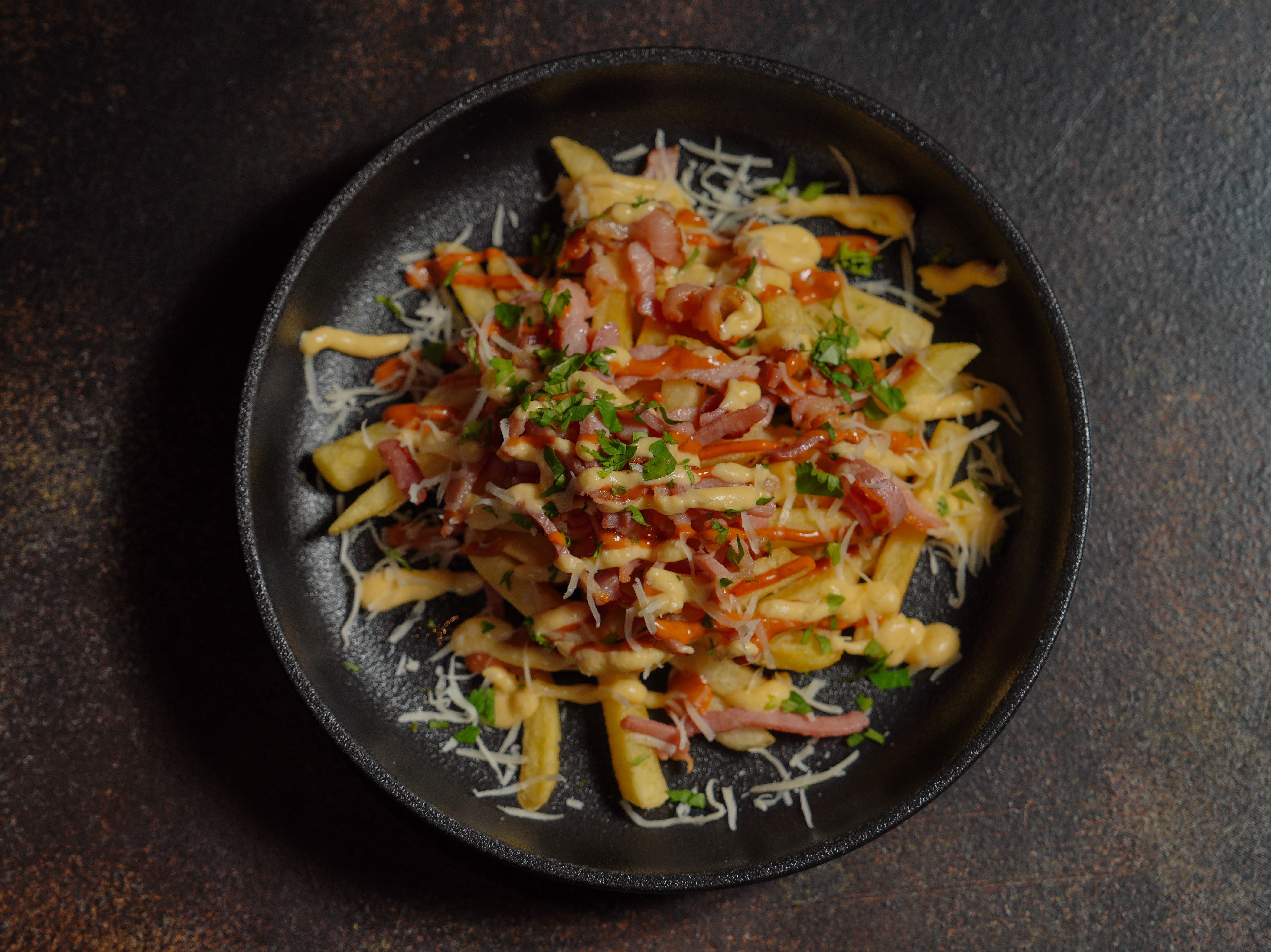
This authentic Canadian poutine recipe combines double-fried potatoes, fresh cheese curds and rich homemade brown gravy for a crisp, savoury and comforting meal.
Calories
690kcal
Protein
20g
Carbs
67g
Fat
37g
Cut the potatoes lengthwise into fries approximately 1 cm thick. Place them in a large bowl, cover with cold water and soak for 30 minutes. This removes excess surface starch and helps the fries cook more evenly.
Drain the potatoes and rinse them once under cold water. Spread them over clean kitchen towels and dry every surface carefully. The potatoes must be dry before entering the hot oil.
Melt 15 g of the butter in a medium saucepan over medium heat. Add the chopped shallot and cook for 3–4 minutes, stirring regularly, until soft and lightly golden.
Add the remaining butter to the saucepan. Once melted, sprinkle in the flour and whisk until smooth. Cook for 3–4 minutes, whisking frequently, until the mixture becomes golden and no longer smells like raw flour.
Gradually add the beef stock in a thin stream while whisking continuously. Add the chicken stock, tomato paste, Worcestershire sauce and black pepper. Whisk until completely smooth.
Bring the gravy to a gentle simmer and cook uncovered for 12–15 minutes, stirring and scraping the bottom regularly. It should become glossy and thick enough to coat the back of a spoon while remaining easy to pour.
Remove the gravy from the heat and stir in the apple cider vinegar. Taste before adding the measured salt because the stocks and cheese curds may already provide enough seasoning. Cover and keep warm while frying the potatoes.
Heat the frying oil in a deep, heavy-based pot to 150°C or 300°F. Fill the pot no more than halfway with oil. Fry the potatoes in small batches for 5–7 minutes, until tender inside but still pale. Transfer them to a wire rack and allow them to rest for at least 10 minutes.
Increase the oil temperature to 190°C or 375°F. Return the fries to the oil in small batches and cook for 2–4 minutes, until deeply golden and crisp. Allow the oil to return to temperature between batches.
Transfer each finished batch to a clean wire rack or a large bowl lined briefly with absorbent paper. Season the fries with salt while they are still hot.
Divide half of the hot fries among six warm, shallow serving bowls. Scatter half of the room-temperature cheese curds over them. Add the remaining fries and finish with the remaining curds.
Reheat the gravy if necessary until steaming hot and pourable. Ladle it generously over each portion, making sure some gravy reaches both layers of fries and cheese curds. Finish with black pepper if desired and serve immediately.
This poutine recipe brings together crisp double-fried potatoes, fresh white cheddar cheese curds and smooth brown gravy. The hot gravy softens the curds while the fries remain crisp underneath, creating the contrasting textures that make Canadian poutine so distinctive.
The recipe includes a 30-minute potato-soaking period within the stated preparation time. For the best result, have the gravy warm, the cheese curds near room temperature and the fries freshly cooked before beginning assembly.
Poutine is a Canadian dish made from French fries, cheese curds and brown gravy. It is strongly associated with Quebec and is now served throughout Canada in restaurants, diners, food trucks and homes.
A classic poutine relies on three simple components. Because there are so few ingredients, the texture and temperature of each component matter. The fries should be crisp, the cheese curds should be fresh and the gravy should be hot, savoury and pourable.
The potatoes are soaked before cooking to remove excess surface starch. They are then fried twice: first at a lower temperature to cook the centres and again at a higher temperature to produce a deeply golden exterior.
The gravy combines beef and chicken stock. Beef stock provides depth and colour, while chicken stock keeps the flavour from becoming excessively heavy. A small amount of tomato paste, Worcestershire sauce and vinegar gives the gravy savoury complexity and balance without overwhelming the cheese curds.
The poutine is assembled in two layers rather than placing all the cheese on top. This distributes the curds and gravy more evenly, giving each serving a mixture of crisp fries, softened cheese and rich sauce.
Traditional-style poutine works best with sturdy fries that remain crisp long enough to support the gravy. Russet potatoes have a high starch content and produce fluffy centres with crisp surfaces when fried correctly.
Cut the potatoes to an even thickness so they cook at the same rate. Very thin fries soften quickly under gravy, while extremely thick fries may remain undercooked inside.
Cheese curds are small pieces of fresh cheese with a mild, slightly salty flavour and a characteristically springy or squeaky texture. White cheddar curds are the preferred choice for traditional Canadian poutine.
Use curds as fresh as possible and allow them to approach room temperature before assembly. The hot fries and gravy should soften them, but they should not disappear into a completely melted cheese sauce.
Poutine gravy should be savoury, glossy and thick enough to cling to the fries. It should still pour easily from a ladle and reach the lower layers of the dish.
A gravy that is too thin collects at the bottom without coating the potatoes. A gravy that is too thick sits heavily on top and can make the poutine feel pasty.
The first fry cooks the potato centres at a moderate temperature without adding much colour. Resting the potatoes allows surface steam to escape.
The second fry takes place at a higher temperature and creates the golden, crisp exterior. Cooking the potatoes only once can result in fries that are either pale and soft or dark outside but firm inside.
After soaking, dry the potatoes thoroughly. Moisture cools the frying oil and creates steam around the surface of each fry.
Cook in small batches so the oil temperature does not fall dramatically. Place cooked fries on a wire rack rather than leaving them in a deep pile, where trapped steam can soften them.
Do not add gravy until everyone is ready to eat. Even excellent fries naturally become softer after being covered with hot liquid.
Cook the butter and flour together until the mixture is golden and the raw flour aroma disappears. Add the stock gradually while whisking continuously.
If the liquid is added too quickly, the roux may form lumps. Small lumps can sometimes be removed with vigorous whisking, but severely lumpy gravy should be passed through a fine sieve.
Simmer the gravy until it coats the back of a spoon. Remember that it thickens slightly as it cools, so keep it a little looser than the final desired consistency.
Shredded cheese melts too quickly and produces a different texture. Authentic-style poutine requires cheese curds that soften while remaining recognisable.
Very cold curds may remain firm after the gravy is added. Bring them closer to room temperature before assembly.
The gravy must be hot enough to warm and soften the curds. Reheat it immediately before serving if it has cooled during frying.
Water causes dangerous splattering and prevents crisp browning. Dry every surface before the potatoes enter the oil.
A large quantity of cold potatoes lowers the oil temperature, leading to greasy or soft fries. Work in several small batches.
Poutine has its best texture immediately after assembly. Do not prepare completed portions in advance.
Fresh cheese curds are essential for the closest authentic result. When they are unavailable, tear a young, mild block of low-moisture mozzarella into irregular bite-sized pieces.
Do not use fresh mozzarella packed in water because it can release unwanted moisture. Avoid finely shredded cheddar because it melts into the gravy rather than retaining curd-like pieces.
Yes, although the texture will differ from traditional deep-fried poutine. Thick-cut frozen fries can be baked or air-fried according to their package directions and then topped with cheese curds and homemade gravy.
Homemade potato fries can also be oven-baked, but they should be spread in a single layer and cooked until deeply golden so they can withstand the gravy.
Replace the beef and chicken stocks with a rich mushroom or roasted vegetable stock. Check that the Worcestershire sauce is vegetarian or replace it with a small amount of soy sauce.
Add small pieces of cooked roast chicken over the fries before adding the cheese curds and gravy.
Top each portion with warm shredded beef. Use a moderate amount so the fries, curds and gravy remain the main features.
Add mushrooms sautéed until deeply browned. Their savoury flavour works especially well with vegetarian gravy.
Add pickled jalapeños, chilli flakes or a small amount of hot sauce immediately before serving.
The gravy can be prepared up to three days ahead. Cool it promptly, refrigerate it in an airtight container and reheat it gently while whisking in a little stock or water if necessary.
The potatoes can be cut and soaked several hours in advance when kept refrigerated. Drain and dry them immediately before frying.
Do not fry the potatoes or assemble the poutine far in advance. Freshly fried potatoes provide the best contrast with the hot gravy.
Completed poutine is best eaten immediately. If leftovers remain, refrigerate them promptly in an airtight container and use them within two days.
The fries will absorb gravy and become soft during storage. Reheat leftovers on a baking tray in a hot oven until thoroughly heated, understanding that the original crisp texture cannot be fully restored.
For better results, store unused fries, gravy and cheese curds separately whenever possible. Refrigerate the gravy for up to three days and follow the storage instructions supplied with the cheese curds.
Traditional Canadian poutine contains French fries, fresh cheese curds and hot brown gravy.
Fresh white cheddar cheese curds are the preferred choice. They have a mild flavour and a springy texture that softens under hot gravy.
Torn pieces of young, low-moisture mozzarella are the closest widely available substitute, but the texture will not be identical to fresh cheese curds.
The potatoes may not have been fried until crisp, the pan may have been overcrowded or the gravy may have been added too early. Serve immediately after assembly.
They should soften and become warm while retaining some shape and texture. They are not intended to melt completely into a smooth cheese sauce.
Yes. Choose thick-cut fries and cook them until deeply golden and crisp before adding the cheese curds and gravy.
Yes. Refrigerate cooled gravy in an airtight container for up to three days. Reheat it gently and adjust the consistency with a little stock or water.
Poutine can be served as a substantial snack, a side dish or a main meal depending on the portion size and any additional toppings.
Beef stock provides darker colour and depth, while chicken stock gives the gravy a lighter savoury balance.
Enjoyed this free poutine recipe? Explore the LaGrub app for premium recipe collections, exclusive comfort-food dishes, organised cooking inspiration and new recipes for subscribers.
Log in to read and share comments, recipes tips, and connect with other food lovers.
Unlock the full recipe library, premium cookbooks, and members-only weekly drops. Cancel anytime.
Already a member? Sign in to unlock everything.
Explore more delicious recipes from our collection