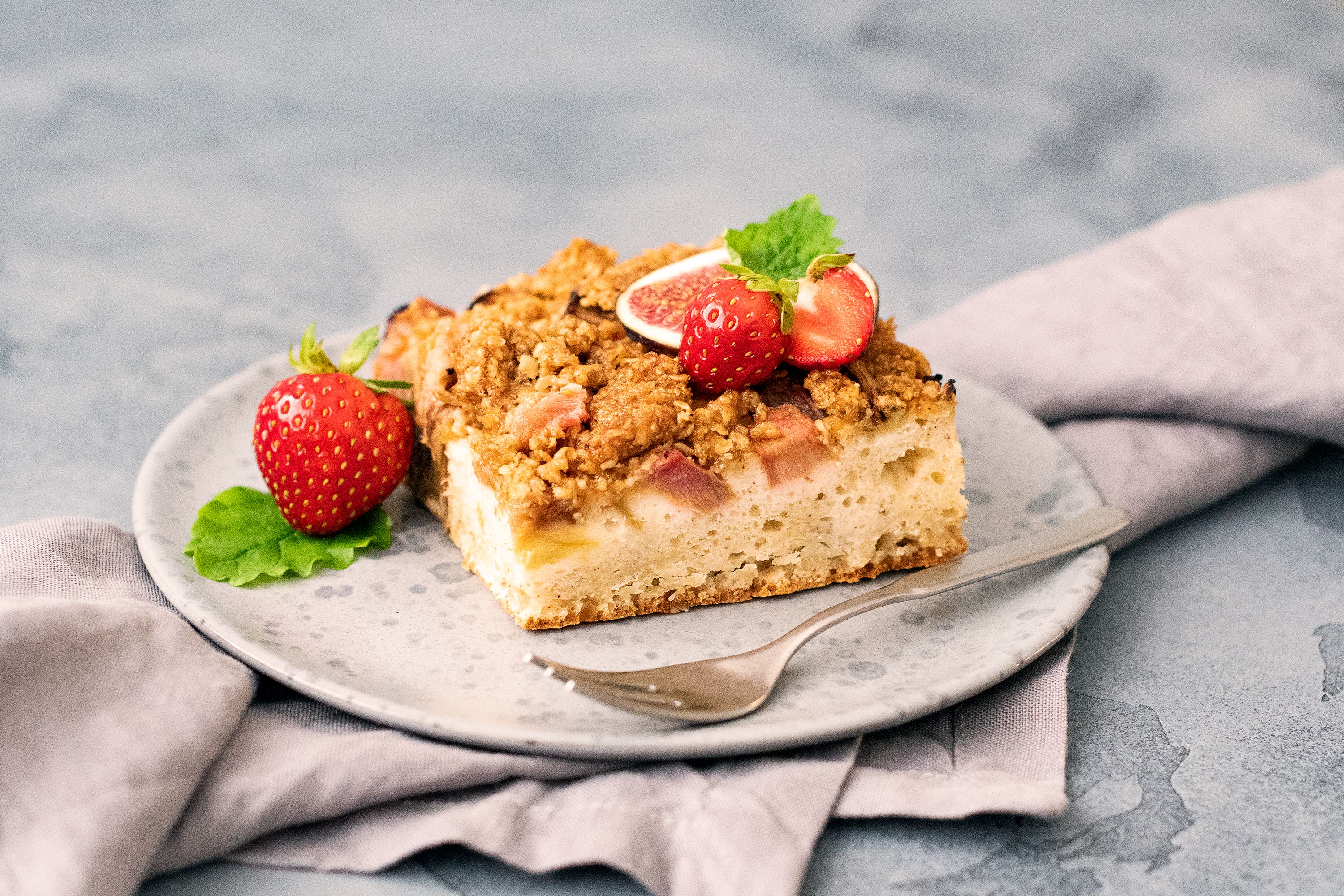
This rhubarb crisp recipe pairs tart rhubarb and juicy strawberries with orange, vanilla and a buttery brown sugar oat topping for an easy fruit dessert.
Calories
450kcal
Protein
5g
Carbs
70g
Fat
18g
Preheat the oven to 190°C or 375°F. Grease a 23 cm or 9-inch square baking dish with the 5 g softened butter. Place the dish on a rimmed baking tray to catch any bubbling fruit juices.
Place the rolled oats, flour, brown sugar, cinnamon and salt in a large bowl. Stir thoroughly, breaking apart any compact pieces of brown sugar.
Add the cold butter cubes to the oat mixture. Rub the butter into the dry ingredients with the fingertips or use a pastry cutter until the mixture contains moist crumbs and several larger clumps.
Refrigerate the prepared topping for approximately 15 minutes while making the fruit filling. Keeping the butter cold helps the topping form crisp, distinct clusters.
Confirm that every rhubarb leaf has been removed and discarded. Wash and dry the stalks and strawberries. Cut the rhubarb into even 2 cm pieces and quarter the strawberries.
In a large bowl, whisk together the granulated sugar, cornstarch, ground ginger and salt until completely combined. Mixing the cornstarch with sugar first helps prevent white starch lumps in the baked filling.
Add the rhubarb, strawberries, orange juice, orange zest and vanilla to the sugar mixture. Toss gently until every piece is coated. Leave the fruit for 10 minutes, then stir once more to distribute the released juices.
Transfer the complete fruit mixture and all collected juices to the prepared baking dish. Spread it into an even layer. Scatter the chilled oat topping over the fruit, keeping some larger clusters intact and covering the edges as well as the centre.
Bake on the centre oven rack for 40–50 minutes. The topping should be deep golden brown and the thickened fruit juices should bubble around the edges and through several openings near the centre.
If the topping becomes sufficiently brown before the centre begins bubbling, cover the dish loosely with foil and continue baking. Do not remove the crisp based only on the colour of the topping.
Transfer the baking dish to a wire rack and cool for at least 25–30 minutes. The fruit filling will be very loose when first removed from the oven and will thicken as it rests.
Spoon the crisp into bowls while it is still slightly warm. Serve it plain or with vanilla ice cream, whipped cream, pouring cream or vanilla yoghurt.
This rhubarb crisp recipe combines tart rhubarb, juicy strawberries and fresh orange with a buttery brown sugar oat topping. The fruit becomes soft and jammy during baking, while the chilled topping forms crisp golden clusters.
The recipe makes eight servings and is designed for a 23 cm or 9-inch square baking dish. It takes approximately 25 minutes to prepare and 40–50 minutes to bake, followed by a short cooling period that allows the filling to set.
Rhubarb crisp is a baked fruit dessert made by covering sweetened rhubarb with a crumbly topping. Unlike pie, it does not require pastry. The topping is generally made with oats, flour, brown sugar and butter.
As the dessert bakes, the rhubarb releases its juices and softens into a tangy filling. The topping remains exposed to the oven heat, allowing it to become crisp and golden.
The filling contains more rhubarb than strawberries, keeping the dessert recognisably rhubarb-forward. Strawberries provide natural sweetness, colour and a softer fruit texture without masking the rhubarb's pleasant tartness.
Cornstarch thickens the released fruit juices. Mixing it with granulated sugar before adding the fruit distributes it evenly and reduces the chance of dry white lumps.
Orange zest, orange juice, vanilla and ginger add fragrance and balance. These flavours remain in the background rather than turning the crisp into an orange or spice dessert.
The oat topping is chilled before baking. Cold butter melts gradually in the oven, helping create crisp crumbs and larger clusters rather than a flat, greasy layer.
Choose stalks that feel firm and crisp rather than soft, limp or badly bruised. Both red and green rhubarb stalks can be used; colour is not a dependable measure of sweetness.
Thin, young stalks are generally tender and can be cut after washing and trimming. Very thick stalks may have fibrous outer strings that can be pulled away with a small knife.
Always remove and discard rhubarb leaves. Only the stalks should be used for cooking.
Most fresh rhubarb does not require peeling. Its skin softens during baking and contributes colour to the filling.
Peel only sections that are noticeably woody or stringy. Removing all the skin from tender stalks is unnecessary and may reduce the pink colour of the baked filling.
Rhubarb has a distinctly tart flavour, while ripe strawberries contribute sweetness and aroma. Combining them creates a balanced filling that generally requires less added sugar than a dessert made entirely from rhubarb.
The strawberries also break down more quickly than the rhubarb, creating a sauce around the tender pieces of stalk. This contrast gives the filling a more interesting texture.
Measure the fruit and cornstarch accurately. Using substantially more fruit without increasing the thickener may create a loose filling.
Do not remove the dessert from the oven as soon as the topping turns brown. The fruit juices should bubble near the centre, showing that the filling has become hot enough for the cornstarch to work properly.
Cooling is equally important. The filling appears loose while extremely hot and thickens during the first 25–30 minutes after baking.
Use old-fashioned rolled oats rather than instant oats. Their larger flakes retain more texture and create a substantial topping.
Keep the butter cold and work it into the dry ingredients until the mixture contains both small crumbs and larger clusters. The different sizes create a more interesting texture.
Scatter the topping loosely over the fruit. Pressing it into a compact layer can prevent steam from escaping and create a heavy crust instead of a crisp crumble.
The topping should be deep golden rather than pale. More importantly, the fruit juices should bubble around the sides and through openings near the centre.
If the topping browns too quickly, cover the dish loosely with foil. Continue baking until the centre is visibly bubbling.
The rhubarb should be tender but does not need to disappear completely. A few distinct pieces create a more appealing filling.
Rhubarb leaves are not edible. Remove and discard them completely before preparing the stalks.
Large pieces remain firm while small pieces collapse. Cut the stalks into similarly sized sections for even cooking.
Rhubarb and strawberries release a considerable amount of juice. Use the measured cornstarch and include the resting time after baking.
Instant oats absorb moisture quickly and produce a softer, finer topping. Old-fashioned rolled oats provide better crispness.
Soft or melted butter can make this particular topping spread rather than form clusters. Refrigerate the prepared crumbs before assembly.
The centre must also become hot enough to thicken. Protect the topping with foil and continue baking when necessary.
The filling needs time to settle. Serving straight from the oven can produce a thin sauce and may cause burns from extremely hot fruit.
Frozen rhubarb can be used without thawing. Thawing releases liquid before baking and can make accurate thickening more difficult.
Add a small amount of extra cornstarch and expect the dessert to require several additional minutes in the oven. Confirm doneness by checking for bubbling in the centre.
Frozen strawberries may also be used, although the filling will generally be softer and may contain more liquid than one prepared with fresh berries.
Replace the strawberries with additional rhubarb. Increase the sugar slightly to balance the more intensely tart filling.
Replace the strawberries with peeled, thinly sliced apples. Firm baking apples provide sweetness while maintaining their shape.
Add approximately 60 g sliced almonds to the oat topping. Check for nut allergies before serving.
Increase the ground ginger to one teaspoon or add a small amount of finely chopped crystallised ginger to the filling.
Use certified gluten-free rolled oats and replace the all-purpose flour with a gluten-free one-to-one baking blend.
Replace the butter with a firm dairy-free baking block. Avoid soft spreads containing large amounts of water because they may make the topping greasy or soft.
A cool, creamy accompaniment softens the tartness of the fruit and contrasts with the warm topping. The crisp is also flavourful enough to serve without an additional topping.
The oat topping can be prepared ahead and refrigerated in a covered container. The rhubarb and strawberries can also be cleaned and cut in advance, but keep them separate from the sugar and cornstarch until near baking time.
Once fruit is combined with sugar, it begins releasing juice. Leaving the assembled raw crisp for too long can make the topping damp.
For the best texture, assemble the dessert shortly before placing it in the oven.
Allow the dessert to cool, cover the baking dish and refrigerate the leftovers. Use them within three to four days for the best flavour and texture.
The topping softens gradually as it absorbs moisture from the fruit. Refrigeration is recommended because the filling contains cooked fresh fruit.
Warm the complete dish in a 175°C or 350°F oven until the filling is hot and the topping becomes crisp again.
Individual portions can be reheated in the microwave, although the topping will remain softer. An oven or air fryer is better when crispness is important.
Baked rhubarb crisp can be frozen after cooling completely. Wrap the dish securely or transfer portions to freezer-safe containers.
Thaw overnight in the refrigerator and reheat in the oven. The topping may be slightly softer and the fruit filling may release a little additional liquid after freezing.
Rhubarb naturally contains acids that create its sharp flavour. Sugar and sweeter fruits such as strawberries balance that tartness during cooking.
Yes. Green stalks can be safe and flavourful. The colour of the stalk depends largely on the variety and does not reliably indicate ripeness or sweetness.
Yes. Replace them with more rhubarb and increase the sugar slightly to compensate for the lost sweetness.
The fruit may have been particularly juicy, the dessert may have been removed before the centre bubbled or it may not have cooled long enough.
Instant oats, warm butter, an underheated oven or covering the dessert while warm can all soften the topping.
Quick oats can be used, but they create a finer and softer topping. Old-fashioned oats give better texture.
A modest reduction is possible when the strawberries are very sweet. Removing too much sugar can leave the rhubarb sharply sour and may reduce the amount of syrup in the filling.
No. The evenly cut stalks soften sufficiently during baking and release their juices directly into the filling.
Allow at least 25–30 minutes. The dessert can still be served warm after this resting period, but the filling will hold together more effectively.
Enjoyed this free rhubarb crisp recipe? Explore the LaGrub app for premium dessert collections, seasonal fruit recipes, organised cooking inspiration and new subscriber dishes.
Log in to read and share comments, recipes tips, and connect with other food lovers.
Unlock the full recipe library, premium cookbooks, and members-only weekly drops. Cancel anytime.
Already a member? Sign in to unlock everything.
Explore more delicious recipes from our collection