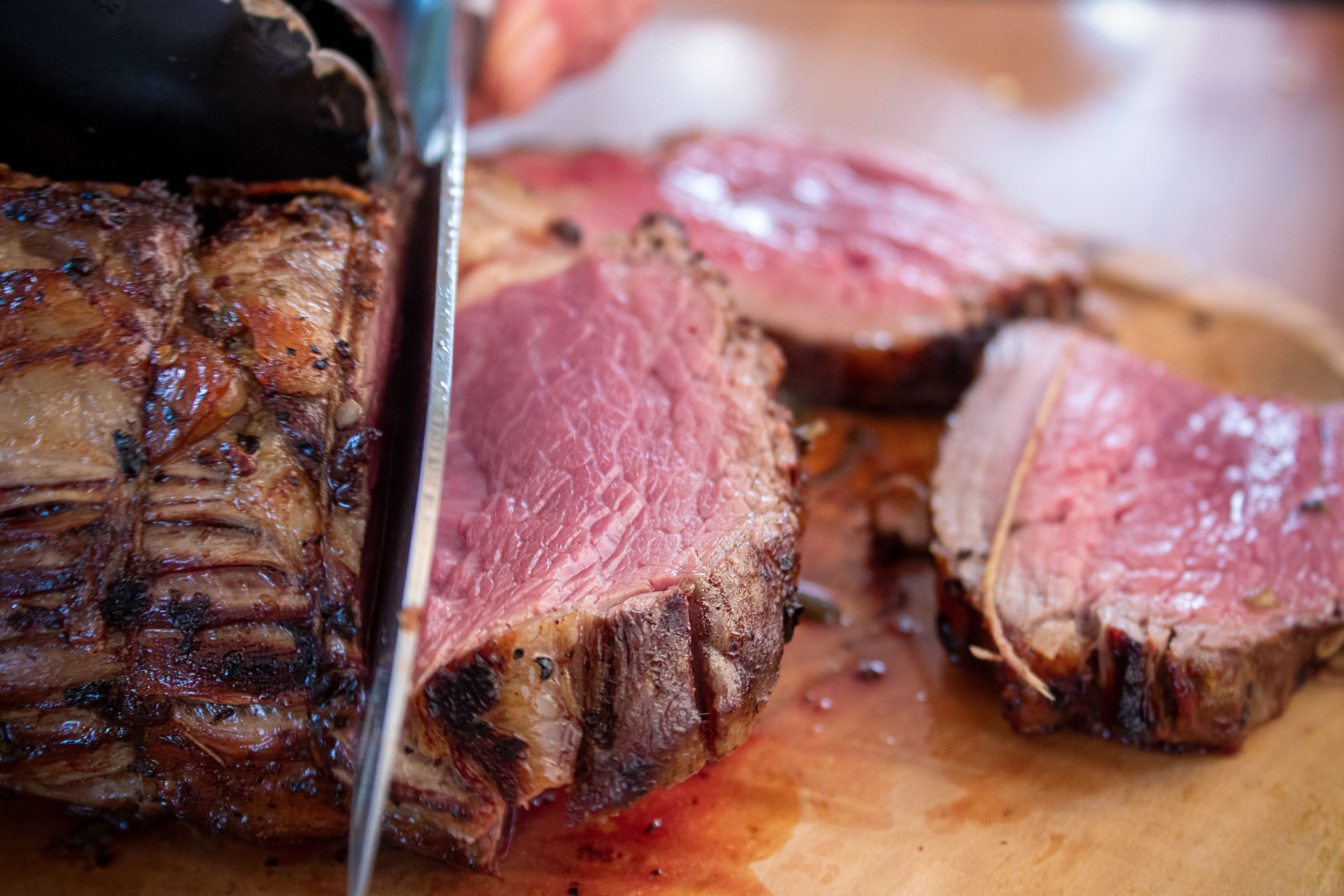
This ribeye roast recipe uses overnight seasoning, gentle reverse-sear roasting and a garlic herb crust to create juicy beef with a deeply browned exterior and rich pan jus.
Calories
610kcal
Protein
48g
Carbs
5g
Fat
43g
One to two days before cooking, remove the packaging and pat the roast thoroughly dry. Trim only unusually thick or hard exterior fat, leaving an even fat cap approximately 6–10 mm thick. Tie the roast between the bones if it is not already secured.
Season the complete surface evenly with the kosher salt. Place the roast bone-side down on a wire rack set over a rimmed tray. Refrigerate uncovered for 24–48 hours. This seasons the interior gradually and dries the surface for better browning.
Remove the roast from the refrigerator approximately 45–60 minutes before cooking. Preheat the oven to 120°C or 250°F. Position a rack in the lower-middle part of the oven.
Combine the softened butter, olive oil, Dijon mustard, garlic, rosemary, thyme, black pepper and lemon zest. Mix until the herbs and garlic are distributed evenly.
Spread the onion wedges and carrots across the bottom of a roasting pan. Pour in 150 ml of the beef stock. Place a roasting rack over the vegetables, then position the roast bone-side down and fat-side up.
Spread the garlic herb butter over the top, sides and ends of the roast. Insert an oven-safe probe thermometer into the thickest central part of the meat, avoiding bones and large pockets of fat.
Roast uncovered for approximately 2½–3½ hours. Begin checking early because the exact time depends on the roast's shape, starting temperature and oven. For this safety-focused version, continue until the centre reaches approximately 58–60°C or 136–140°F before the final high-heat stage.
Transfer the roast and rack to a clean rimmed tray. Leave the roast uncovered for 25–30 minutes while increasing the oven temperature to 260°C or 500°F. The rest slows the internal cooking and allows time to prepare the jus.
Place the roasting pan with the onions, carrots and drippings over medium heat. Pour in the red wine and scrape the bottom thoroughly with a wooden spoon. Simmer for 4–5 minutes until the wine reduces by approximately half.
Add the remaining 450 ml beef stock and Worcestershire sauce. Simmer for 10–15 minutes until the flavour is concentrated and the liquid has reduced to approximately 400 ml.
Strain the liquid through a fine sieve into a small saucepan, pressing gently on the vegetables. Discard the cooked vegetables. Stir in the balsamic vinegar, taste and add the measured fine salt or pepper only if needed. Keep warm over very low heat.
Return the rested roast to the fully heated oven. Roast for 6–10 minutes until the exterior is deeply browned and crisp. Confirm that the centre reaches at least 63°C or 145°F with an instant-read thermometer.
Transfer the roast to a carving board and rest it uncovered or very loosely tented with foil for at least 10–15 minutes. Do not wrap it tightly because trapped steam can soften the crust.
Reheat the jus gently if necessary. Remove it from the heat and whisk in the cold butter cubes one at a time until the sauce is glossy. Do not boil after adding the butter.
Cut along the curve of the rib bones to separate them from the roast. Slice the meat across the grain into pieces approximately 1–2 cm thick. The bones can be divided and served separately.
Arrange the ribeye slices on a warm platter and spoon over a small amount of red wine jus. Serve the remaining jus separately with mashed potatoes, roast potatoes or vegetables.
This ribeye roast recipe produces juicy, evenly cooked beef with a deeply browned garlic, rosemary and thyme crust. The roast is salted in advance, cooked gently at a low temperature and returned to a very hot oven shortly before serving.
The reverse-sear method provides more control than beginning with intense heat. It also gives the cook time to prepare a red wine pan jus while the meat rests between roasting stages.
A ribeye roast comes from the rib section of the animal and contains the same richly marbled meat used for ribeye steaks. It may be sold bone-in, boneless, as a standing rib roast or as a rib roast.
The terms ribeye roast and prime rib are often used interchangeably, although prime is also an official beef quality grade. A rib roast does not need to be graded Prime to make an excellent special-occasion meal.
Salting the beef one or two days ahead seasons more than the outer surface. Leaving it uncovered also dries the exterior, helping the roast develop a stronger crust.
Low-temperature roasting reduces the thick grey overcooked band that can form around meat cooked entirely at high heat. The short final sear creates browning after the interior is almost finished.
The garlic herb butter contains Dijon mustard, rosemary, thyme, black pepper and lemon zest. The mustard helps the mixture cling to the roast, while the zest adds freshness without making the beef taste strongly of lemon.
A bone-in ribeye roast has an impressive appearance, and the ribs lift part of the meat away from direct pan heat. The bones can also be served separately after carving.
A boneless roast is easier to slice and may cook a little faster. Ask the butcher to tie a boneless roast at regular intervals so it retains an even cylindrical shape.
The same method works for either style, but the thermometer rather than the clock must determine when the roast is ready.
A 2.5 kg bone-in roast generally serves approximately eight people when accompanied by potatoes, vegetables and sauce. Allow more when guests have large appetites or when leftovers are particularly desirable.
A boneless roast produces a higher edible yield because there are no rib bones. Approximately 225–275 g of raw boneless beef per person is usually generous for a celebration meal.
Dry-brining means seasoning the roast with salt and refrigerating it before cooking. The salt first draws a small amount of moisture to the surface and then dissolves into that moisture before moving back into the meat.
The process improves seasoning and dries the exterior. A dry surface browns more readily than a damp one.
Place the roast on a rack so air can circulate around it and keep it refrigerated throughout the process. Do not leave raw beef at room temperature overnight.
A reverse sear begins with gentle heat and ends with a short high-temperature roasting stage. The low oven raises the internal temperature gradually, making it easier to avoid overcooking the outer layers.
The roast rests before the final sear, allowing the exterior to cool slightly. It can then tolerate enough high heat to form a crust without dramatically increasing the temperature of the centre.
Roast shape, bone size, marbling, oven calibration and starting temperature all influence cooking time. Two roasts of the same weight may finish at different times.
Insert an oven-safe probe into the thickest central portion from the side. Avoid touching bone or placing the tip in a large seam of fat, as either can produce a misleading reading.
Confirm the temperature in one or two additional locations with an instant-read thermometer before completing the final rest.
Dry the surface before salting and leave the roast uncovered during refrigeration. Apply the herb butter in an even layer rather than leaving thick clumps of garlic or herbs.
Allow the oven to reach its complete final temperature before returning the roast. A partially heated oven extends the cooking time without delivering the same rapid browning.
Watch closely during the high-heat stage. Garlic, butter and herbs can move from deeply browned to burned quickly.
The onions and carrots catch the beef drippings and provide additional savoury flavour. Wine loosens the browned residue from the pan, while beef stock creates the body of the jus.
The liquid is reduced rather than thickened heavily with flour. Balsamic vinegar provides gentle acidity, and cold butter gives the strained jus a glossy finish.
After adding the final butter, keep the sauce below a boil so the fat remains blended into the liquid.
Minutes per kilogram are useful for planning but cannot confirm doneness. Always use a thermometer.
Seasoning immediately before roasting flavours mainly the surface. Advance salting produces more even seasoning and better browning.
Bone can conduct heat differently from the centre of the meat. Position the probe in the thickest muscle section.
High heat can brown the exterior before the centre cooks evenly. The reverse-sear approach offers greater control.
Tight foil traps steam and softens the crust. Rest uncovered or use a very loose foil tent.
Carving too soon releases more juice onto the cutting board. Allow the roast to rest before slicing.
A dull blade tears the crust and compresses the meat. Use a long, sharp slicing knife and smooth strokes.
The roast should be salted one or two days ahead. The garlic herb butter can also be mixed in advance and refrigerated in a covered container.
Bring the herb butter back to a spreadable texture before applying it. The onions and carrots can be cut several hours ahead and refrigerated separately.
For the best result, roast the beef shortly before the meal rather than fully cooking and reheating the complete roast.
Cool leftovers promptly and refrigerate them in an airtight container. Keep sliced meat with a small amount of jus to reduce moisture loss.
Use refrigerated cooked beef within three to four days. Freeze portions that will not be eaten within that period.
Place slices in a covered baking dish with a spoonful of beef stock or jus. Warm them gently in a low oven until heated through.
High heat and prolonged microwaving can turn tender ribeye firm and grey. Reheat only the amount required and avoid repeated heating.
They come from the same rib section. Prime rib commonly refers to a bone-in rib roast preparation, while ribeye roast may be bone-in or boneless.
No. Roast it uncovered so moisture can escape and the exterior can brown. Foil is used only loosely during resting when additional warmth is needed.
Yes. Positioning the fat cap upward exposes it to the oven heat and creates an attractive browned surface.
Yes. Replace each tablespoon of fresh herbs with approximately one teaspoon of dried herbs. Crush dried rosemary finely so it does not remain hard.
Yes. Replace it with the same quantity of beef stock. The balsamic vinegar will still provide enough acidity to balance the jus.
It may have been smaller in diameter, warmer when it entered the oven or cooked in an oven running above its displayed temperature. Follow the thermometer reading rather than extending the time.
For food safety, cook the centre to at least 63°C or 145°F and allow it to rest for at least three minutes.
Yes. Tie the boneless roast to maintain its shape and begin checking its temperature earlier because it may cook more quickly.
Enjoyed this free ribeye roast recipe? Explore the LaGrub app for premium holiday menus, special-occasion dinners, organised cooking inspiration and new subscriber recipes.
Log in to read and share comments, recipes tips, and connect with other food lovers.
Unlock the full recipe library, premium cookbooks, and members-only weekly drops. Cancel anytime.
Already a member? Sign in to unlock everything.
Explore more delicious recipes from our collection