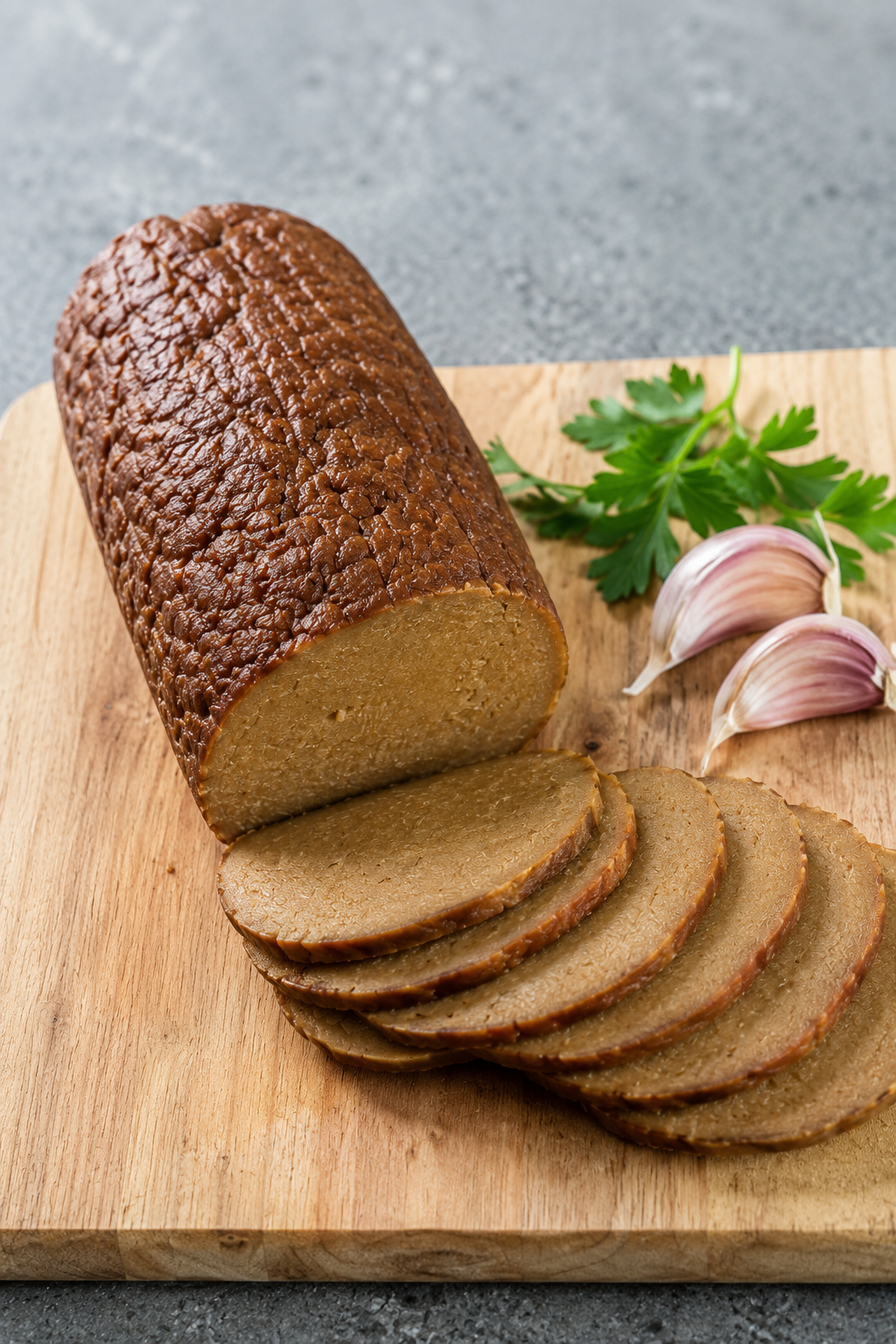
Learn how to make chewy, flavorful homemade seitan using vital wheat gluten, vegetable broth, and simple seasonings. A versatile high-protein meat alternative for countless meals.
Calories
215kcal
Protein
Carbs
Fat
Combine the vital wheat gluten, nutritional yeast, garlic powder, onion powder, smoked paprika, black pepper, and salt.
Seitan has been enjoyed for centuries as a satisfying plant-based protein with a remarkably meat-like texture. Made primarily from vital wheat gluten, it is valued for its versatility, high protein content, and ability to absorb a wide range of flavours. Whether you're following a vegan lifestyle, reducing your meat consumption, or simply looking for new ingredients to cook with, homemade seitan is an excellent addition to your kitchen.
Making seitan from scratch allows you to control the ingredients, seasoning, and texture while avoiding unnecessary preservatives often found in store-bought versions. Once prepared, it can be sliced, diced, shredded, grilled, roasted, or pan-fried, making it suitable for everything from sandwiches and stir-fries to curries, pasta dishes, wraps, and salads.
Seitan, often called wheat meat or wheat gluten, is a protein-rich food made by developing the gluten found in wheat. Unlike tofu or tempeh, seitan has a dense, chewy texture that closely resembles many traditional meat dishes. Because of its mild flavour, it readily takes on the taste of herbs, spices, sauces, and marinades, making it one of the most adaptable ingredients in plant-based cooking.
The texture of homemade seitan depends on proper mixing and gentle cooking. Kneading the dough just enough helps develop structure without making it overly firm, while a gentle simmer keeps the finished seitan tender and juicy. Allowing it to cool before slicing also improves both flavour and consistency.
Cooked seitan keeps well in the refrigerator for up to five days when stored in an airtight container with a little of its cooking broth. Keeping it moist helps preserve its tender texture and prevents it from drying out.
For longer storage, freeze individual portions for up to three months. Thaw overnight in the refrigerator before reheating in your favourite sauce or marinade.
Traditional seitan relies on wheat gluten to achieve its signature chewy texture. While other plant-based alternatives exist, they produce different results and are not considered classic seitan.
Yes. Freeze cooked seitan in portions to make future meals quick and convenient. Thaw in the refrigerator before reheating.
Over-kneading or boiling the seitan can make it dense and rubbery. Gentle mixing and a slow simmer help create a more tender texture.
Seitan is naturally high in protein and low in fat, making it a popular choice for many plant-based diets. Since it's made from wheat gluten, it isn't suitable for people with coeliac disease or gluten intolerance.
Homemade seitan is an incredibly versatile ingredient that opens the door to a wide variety of satisfying plant-based meals. With its hearty texture, excellent ability to absorb flavour, and impressive protein content, it's a fantastic staple for everything from quick weeknight dinners to creative weekend cooking. Once you've mastered the basics, you'll find endless ways to customise it with your favourite herbs, spices, and sauces.
At LaGrub, we're committed to sharing reliable, original recipes that help home cooks prepare delicious meals with confidence. Explore our growing collection of plant-based recipes, comforting classics, and international favourites to discover even more inspiration for your everyday cooking.
Log in to read and share comments, recipes tips, and connect with other food lovers.
Unlock the full recipe library, premium cookbooks, and members-only weekly drops. Cancel anytime.
Already a member? Sign in to unlock everything.
Explore more delicious recipes from our collection