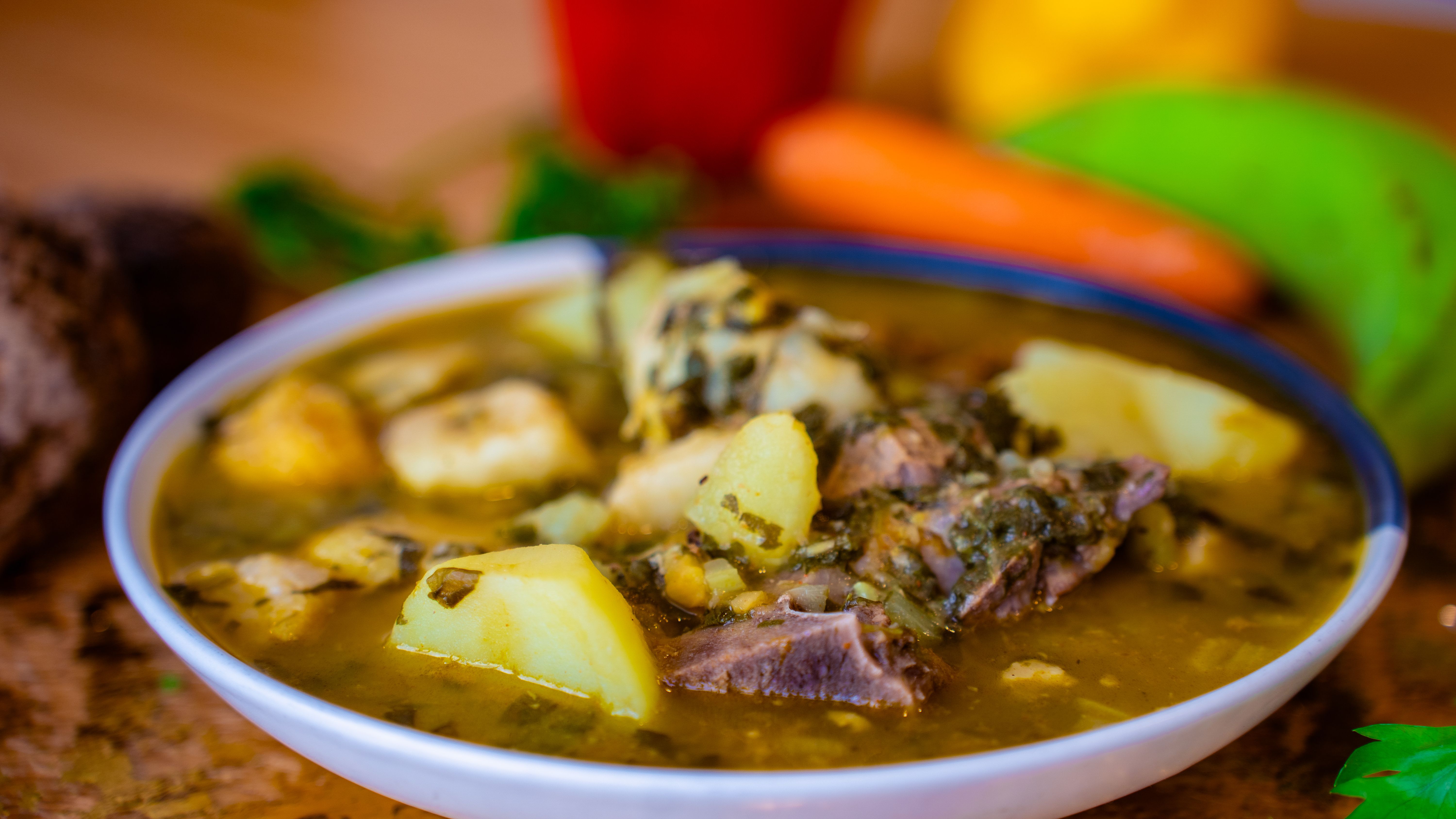
This traditional beef stew recipe slowly braises browned beef chuck with potatoes, carrots, celery and herbs in a rich, glossy gravy for a deeply comforting dinner.
Calories
545kcal
Protein
39g
Carbs
38g
Fat
25g
Preheat the oven to 160°C or 325°F. Pat the beef completely dry with paper towels. Season it with 1 teaspoon of the salt and ¾ teaspoon of the black pepper, then toss it with the flour until each piece has a thin, even coating. Shake away loose flour.
Heat 1 tablespoon of oil in a large Dutch oven over medium-high heat. Add a single uncrowded layer of beef and brown it for 6–8 minutes, turning to colour several sides. Transfer the browned pieces to a plate. Repeat with the remaining beef and oil, allowing the pot to become hot again between batches.
Reduce the heat to medium. Add the onion and celery to the same pot with a small splash of stock if the surface is very dry. Cook for 6–8 minutes, stirring and scraping up the browned residue, until the onion is soft and lightly golden.
Add the garlic and cook for 30 seconds. Stir in the tomato paste and cook for 1–2 minutes, stirring continuously, until it becomes slightly darker and begins coating the bottom of the pot.
Pour in the red wine, or the same amount of beef stock for the alcohol-free version. Scrape the bottom of the pot thoroughly with a wooden spoon. Simmer for 4–5 minutes, until the liquid reduces by roughly half and its sharp aroma softens.
Return the beef and any collected juices to the pot. Add 900 ml of the beef stock, Worcestershire sauce, Dijon mustard, bay leaves, thyme and rosemary. Stir well and bring the liquid just to a gentle simmer.
Cover the Dutch oven and transfer it to the preheated oven. Cook for 75 minutes. The liquid should bubble gently rather than boil vigorously. Check near the end and add a little of the reserved stock if the beef is no longer mostly covered.
Carefully remove the pot from the oven. Stir in the potatoes and carrots, pushing them below the surface of the gravy as much as possible. Add up to 200 ml of the remaining stock if needed to keep the mixture moist but not soupy.
Cover and return the pot to the oven for 45–60 minutes. The stew is ready for finishing when the beef separates easily with a fork and the potatoes and carrots are tender without falling apart.
Remove the pot from the oven and discard the bay leaves. Stir in the frozen peas and simmer uncovered on the stovetop over medium-low heat for 4–5 minutes. If the gravy is too thin, simmer it uncovered for several additional minutes. If it is too thick, add reserved stock a little at a time.
Stir in the balsamic vinegar and 2 tablespoons of the parsley. Taste carefully, then add the remaining salt and black pepper only as needed. The gravy should taste rich and savoury with gentle brightness rather than noticeable sweetness.
Let the stew rest uncovered for 10 minutes so the gravy settles and thickens slightly. Garnish with the remaining parsley and serve hot with crusty bread, biscuits, mashed potatoes or buttered noodles.
This traditional beef stew recipe combines deeply browned beef chuck, potatoes, carrots, celery and peas in a rich herb gravy. The beef is slowly braised until fork-tender, while the vegetables are added later so they keep their shape and texture.
The recipe is designed for a Dutch oven and takes about three hours from beginning to serving, including preparation and a short resting period. It makes a generous family dinner and tastes even better after the flavours have had time to develop.
A traditional beef stew is built from a tough, flavourful cut of beef that becomes tender through slow, moist cooking. The meat is browned first, then braised with aromatic vegetables, stock and herbs. Potatoes and carrots make the stew substantial enough to serve as a complete meal.
The finished gravy should be richer and thicker than soup but still loose enough to spoon easily. Every piece of beef should be tender, and the vegetables should be cooked through without becoming a mash.
Beef chuck contains connective tissue that softens during long cooking, giving the stew a fuller texture and deeper beef flavour. Browning the pieces in batches creates a dark crust and leaves flavourful residue on the bottom of the pot.
Red wine or beef stock is used to loosen those browned bits before the remaining liquid is added. Tomato paste, Worcestershire sauce and Dijon mustard strengthen the savoury flavour without making the stew taste strongly of any one ingredient.
The beef braises before the potatoes and carrots are added. This timing allows the meat to become tender while protecting the vegetables from overcooking. A small amount of balsamic vinegar added at the end balances the richness and brightens the gravy.
Boneless beef chuck is an excellent choice because it contains enough fat and connective tissue to remain juicy during a long braise. Buy a whole chuck roast when possible and cut it into even pieces yourself.
Pre-cut stew meat can contain pieces from different parts of the animal, which may soften at different rates. Lean quick-cooking cuts such as sirloin are less suitable because they can become dry before the gravy develops enough flavour.
Cut the beef into pieces approximately 4 cm or 1½ inches thick. Very small cubes can dry out, while oversized pieces may require considerably longer cooking.
Browning creates a savoury crust on the surface of the meat and leaves caramelised residue in the pot. That residue dissolves into the wine or stock during deglazing and becomes part of the gravy.
Pat the meat completely dry before seasoning it. Wet beef releases steam and struggles to brown. Heat the pot properly and cook only one uncrowded layer at a time.
Do not try to brown every side perfectly. Colouring several broad surfaces is enough to build flavour without spending excessive time at the stove.
Yes. Replace the wine with the same amount of reduced-sodium beef stock. The stew will have a slightly different flavour but will still be rich and savoury.
When making the alcohol-free version, scrape the pot thoroughly with the stock and continue reducing it for several minutes. Add the balsamic vinegar at the end as written rather than increasing it early in the recipe.
The light flour coating on the beef thickens the cooking liquid gradually as the stew braises. Potatoes also release a small amount of starch, giving the gravy additional body.
If the finished stew is thinner than desired, remove the lid and simmer it gently on the stovetop for several minutes. Reduction concentrates the flavour without introducing a separate thickener.
If a faster adjustment is required, mix one tablespoon of cornstarch with one tablespoon of cold water. Stir half of the slurry into the gently bubbling stew and add the rest only if needed. Simmer briefly so the gravy loses any raw starch taste.
Add the potatoes and carrots only after the beef has already braised for approximately 75 minutes. The vegetables then have enough time to become tender without being exposed to the full cooking period.
Use waxy or all-purpose potatoes such as Yukon Gold. Very floury potatoes can break down more quickly and may cloud the gravy.
Cut the carrots and potatoes into substantial pieces of similar size. Small pieces cook too quickly and are more likely to collapse while the beef finishes tenderising.
The oven provides gentle heat from several directions and requires less frequent stirring. It is the preferred method for this recipe because the beef cooks evenly and the bottom of the pot is less likely to scorch.
For a stovetop version, keep the covered pot over the lowest heat that maintains a very gentle simmer. Stir every 20–25 minutes and check that the bottom is not catching. Add the vegetables after the beef has cooked for approximately 75–90 minutes, then continue until everything is tender.
Brown the floured beef and cook the onion, celery, garlic and tomato paste on the stovetop as written. Deglaze the pan, then transfer everything to a slow cooker with 800 ml of stock, the seasonings, potatoes and carrots.
Cook on low for approximately 7–8 hours or until the beef is fork-tender. Stir in the peas during the final 10 minutes. Slow cookers retain more liquid, so use less stock initially and adjust only after cooking.
Lean beef can dry out during the long cooking period. Choose chuck or another well-marbled braising cut.
A crowded pot traps steam and prevents proper browning. Sear the beef in several batches.
Hard boiling can tighten the meat and break apart the vegetables. Maintain a gentle simmer throughout the braising stage.
Vegetables exposed to the full braising time may become soft and ragged. Add them after the beef has partially tenderised.
Beef chuck can pass through a firm stage before its connective tissue softens. If the meat is still chewy, continue cooking and check again after 15–20 minutes.
Stock reduces and becomes saltier as the stew cooks. Use reduced-sodium stock and complete the seasoning near the end.
A short rest allows the gravy to settle and gives the flavours a more balanced finish.
Brown 250 g sliced mushrooms separately and stir them into the stew with the potatoes and carrots. Browning them first prevents them from watering down the gravy.
Replace part of the potatoes with rinsed pearl barley. Barley absorbs a significant amount of liquid, so additional stock may be required.
Replace some of the potatoes with parsnips, swede or turnips. Cut all root vegetables into similarly sized pieces so they cook evenly.
Replace the wine with additional stock. The recipe already includes this option and requires no other major changes.
The stew already includes potatoes and vegetables, so bread or a light salad is often enough to complete the meal.
Yes. Beef stew is well suited to advance preparation because the flavour becomes more cohesive after chilling and reheating.
Cool the stew promptly, transfer it to shallow covered containers and refrigerate it. Remove any firm fat from the chilled surface if desired, then reheat gently with a small amount of stock or water.
Refrigerate cooled beef stew in an airtight container for up to four days. Reheat only the amount needed until it is steaming hot throughout, stirring several times so the centre heats evenly.
The gravy thickens in the refrigerator. Add beef stock or water in small amounts during reheating until the original consistency returns.
Freeze cooled stew in airtight freezer-safe containers for up to three months. Leave some room for expansion and label each container with the date.
Potatoes may become slightly softer after freezing and thawing. For the best texture, freeze the stew before adding potatoes or accept that the thawed vegetables will be more tender.
Thaw frozen stew in the refrigerator when possible, then reheat it gently until steaming hot throughout.
The meat may not have cooked long enough, the temperature may have been too high, or the cut may have been too lean. Continue braising chuck gently until it separates easily with a fork.
This oven-braised version takes approximately two and a half hours of cooking, plus preparation and resting time. The exact time depends on the size of the beef pieces and the tenderness of the cut.
Yes, but inspect the pieces and trim them to a similar size. A whole chuck roast provides more control over the cut and usually cooks more evenly.
No. Thin-skinned potatoes can be scrubbed and left unpeeled. Peel them when the skins are thick, damaged or not preferred.
Yes. Omit the flour and reduce the uncovered gravy near the end. The result will be slightly lighter but still flavourful.
Too much stock may have been added, the pot may not have simmered long enough, or the stew may not have rested. Simmer uncovered to reduce the gravy before adding any slurry.
Add peas near the end so they remain green and retain some texture. They only need a few minutes to heat through.
Yukon Gold or another waxy all-purpose potato holds its shape well while still absorbing the gravy. Very floury potatoes break down more readily.
Many cooks prefer the flavour after an overnight rest because the gravy and seasonings become more integrated. Reheat it gently and adjust the consistency before serving.
Enjoyed this free traditional beef stew recipe? Explore the LaGrub app for premium recipe collections, exclusive dinner ideas, organised cooking inspiration and new subscriber recipes.
Log in to read and share comments, recipes tips, and connect with other food lovers.
Unlock the full recipe library, premium cookbooks, and members-only weekly drops. Cancel anytime.
Already a member? Sign in to unlock everything.
Explore more delicious recipes from our collection