

Wondering is biryani Indian food or Pakistani? Biryani belongs to both cuisines today, while its history goes back centuries before modern India and Pakistan took their current form. Persianate influence, South Asian cooking traditions, migration, and regional tastes helped create distinctive versions such as Sindhi, Hyderabadi, Awadhi, and Kolkata biryani.
Is biryani Indian food or Pakistani? Today, biryani belongs to both Indian and Pakistani cuisines. Its history began long before the modern borders of either country took shape. Over centuries, different regions developed their own versions, from Sindhi and Karachi biryani to Hyderabadi, Awadhi, Kolkata, and other distinctive styles.
Is Biryani Indian Food or Pakistani?
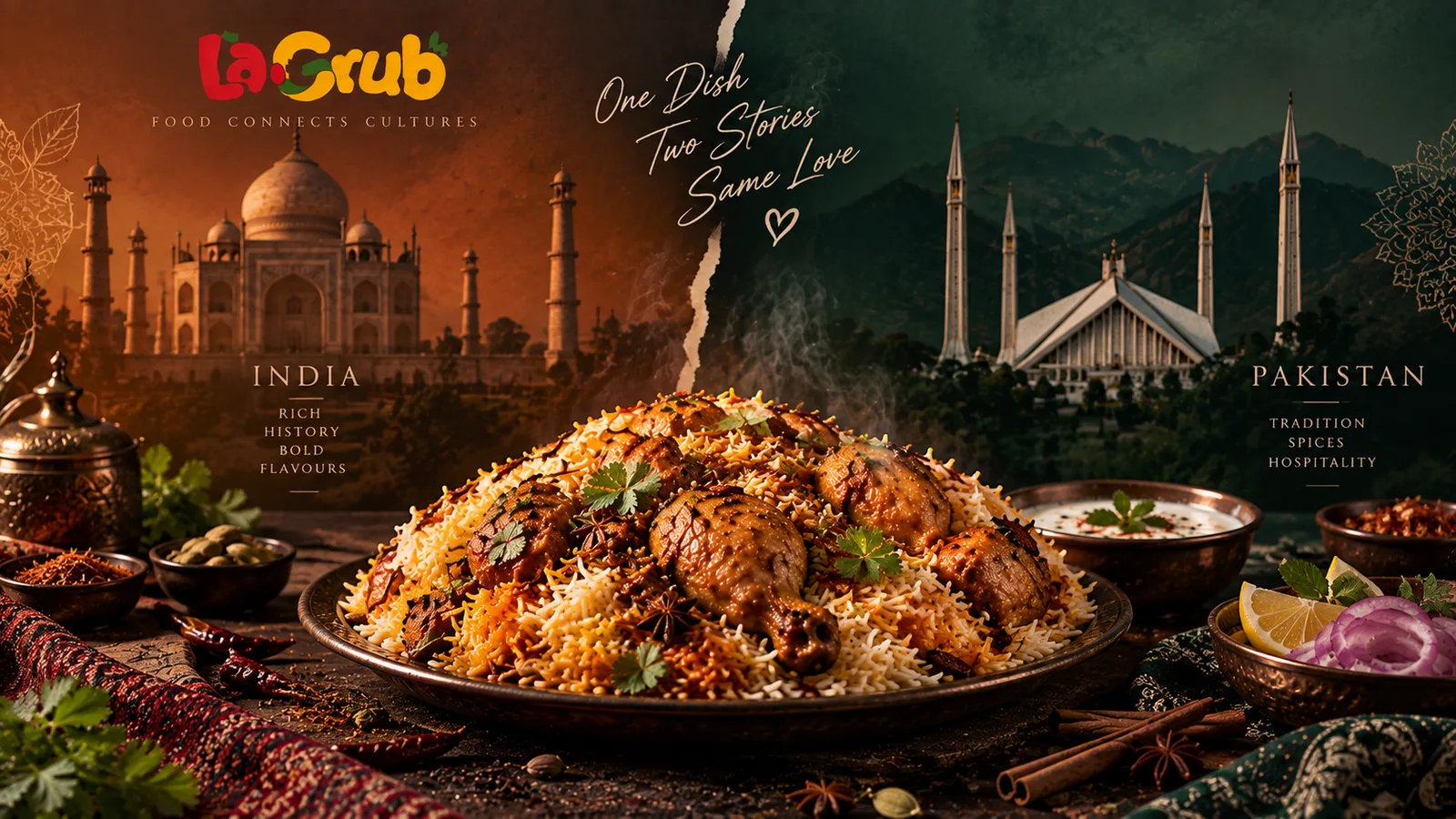
The simplest answer is that biryani is both Indian and Pakistani food today.
Trying to give the entire dish to only one modern country makes its history seem much simpler than it really is.
Biryani was being cooked in the Indian subcontinent centuries before Pakistan became an independent country in 1947. During that long history, rice dishes developed through local cooking traditions, migration, royal kitchens, trade, and Persianate influence.
Then came Partition.
New political borders divided British India, but they did not neatly divide centuries of food culture. Families, cooks, recipes, languages, and culinary traditions existed across areas that became modern India and Pakistan.
Today, biryani has a strong identity in both countries.
In Pakistan, it appears at weddings, family dinners, Eid gatherings, office lunches, restaurants, and ordinary weekend meals. India also has an enormous biryani culture, with regional styles that can taste completely different from one another.
Therefore, the better question is not who can exclusively claim biryani. It is how the dish developed into so many regional forms.
Where Did Biryani Actually Originate?
The origin of biryani is more complicated than many short online explanations suggest.
One popular story says biryani arrived from Persia and developed under the Mughals. Another view gives greater importance to older South Asian traditions of cooking meat and rice together.
The most reasonable way to understand its history is through cultural exchange.
Persian and Central Asian food traditions had a strong influence on royal and elite cooking in the Indian subcontinent. At the same time, South Asia already had rice, spices, meat dishes, and its own cooking methods.
Over time, these traditions interacted.
Different cooks adapted rice-and-meat preparations according to local ingredients and tastes. That long process helped create the large family of dishes now called biryani.
This also explains why finding one person, one kitchen, or one modern country that “invented” every form of biryani is difficult.
Is Biryani Persian or South Asian?
Biryani has clear connections with Persianate food culture, but the biryani people eat today is deeply South Asian.
Even its name is often connected to Persian words and culinary traditions. Persian-style rice dishes also influenced cooking across the region.
However, influence and ownership are different things.
A dish can begin with ideas from one food culture and become transformed somewhere else.
South Asian cooks adapted rice-and-meat cooking to local spices, ingredients, climate, preferences, and techniques. Eventually, regional versions became distinct enough to develop identities of their own.
That is why Pakistani biryani does not simply taste like Persian rice, and Hyderabadi biryani is not identical to an old Persian pilaf.
The dish evolved.
Today, biryani is best understood as a South Asian food with a complex history that includes Persianate influence.
Did the Mughals Invent Biryani?
The Mughals are strongly connected with the history of biryani, but saying they simply “invented biryani” is too definite.
Mughal kitchens played an important role in developing and spreading many elaborate rice and meat preparations. Persianate court culture also influenced cooking methods, ingredients, presentation, and dining habits.
Yet rice and meat were not unknown in South Asia before Mughal rule.
That means biryani did not necessarily appear from nothing when the Mughals arrived.
Instead, royal cooking, local food traditions, migration, and regional adaptation likely contributed to the dish as it developed.
So, when asking is biryani Indian food or Pakistani, it helps to remember that biryani's story began before either modern national food identity existed in its current form.
Did South Asia Have Meat and Rice Dishes Before Biryani?
Yes. The broader idea of combining rice with meat has a long history in South Asia.
However, an old meat-and-rice preparation should not automatically be called modern biryani.
Today's biryani often involves specific techniques and flavour-building stages. Depending on the regional style, these can include marination, aromatic whole spices, separately prepared rice, layering, dum cooking, fried onions, herbs, saffron, chillies, yoghurt, or sour ingredients.
Those details matter.
It is therefore more accurate to say that South Asia already had culinary traditions that could contribute to biryani's later development.
Biryani emerged through evolution rather than appearing as one completely fixed recipe.
Did Biryani Exist Before Pakistan?
Yes, and this is essential to understanding the primary question.
Pakistan became independent in 1947. Biryani history goes back centuries before that.
However, this does not mean biryani cannot be Pakistani food.
Modern countries inherit food traditions from the people, cities, regions, and communities that became part of them.
A recipe does not have to be invented after a country's independence to become an important part of that country's cuisine.
Biryani became deeply rooted in Pakistan because people continued cooking it, adapting it, selling it, sharing it, and developing regional preferences.
Therefore, saying “biryani existed before Pakistan” and saying “biryani is Pakistani food” are not contradictory statements.
Both can be true.
Why Do India and Pakistan Both Claim Biryani?
Because both countries inherited parts of a much older South Asian food culture.
Before 1947, communities across the subcontinent shared ingredients, cooking methods, languages, trade routes, royal influences, and family recipes.
Partition created new national borders. It did not erase those connections.
Migration also played an important role. Families moved between regions and brought food traditions with them.
As generations continued cooking those foods, dishes developed new local associations.
That is why several foods can be familiar on both sides of the border while still having distinctive Pakistani or Indian expressions.
Biryani is one of the clearest examples.
Rather than seeing this as a problem, it makes more sense to recognise biryani as a dish with shared South Asian heritage and many local identities.
Why Is Biryani So Important in Pakistani Food Culture?
Few dishes can bring a Pakistani gathering to life quite like a large pot of biryani.
It works for both ordinary and special occasions.
You may find biryani at a wedding, Eid gathering, family dawat, birthday, office lunch, university event, restaurant, roadside food shop, or weekend dinner at home.
It is practical for feeding groups, but that is only part of its appeal.
Biryani combines several experiences in one plate:
Fragrant basmati rice with whole spices and herbs
Meat or chicken coated in concentrated masala
Heat from chillies balanced with yoghurt, raita, salad, or chutney
Layers of aroma, acidity, savoury flavour, and texture
A feeling of celebration that makes it ideal for sharing
In Pakistan, biryani is more than an imported historical recipe. Generations of cooking have made it part of modern Pakistani food culture.
Pakistani Biryani vs Indian Biryani
A common mistake is comparing “Pakistani biryani” with “Indian biryani” as though each country has only one recipe.
They do not.
Both countries contain regional variations.
Pakistani Biryani Styles
Pakistani biryani is often associated with bold seasoning, fragrant rice, meat, chillies, tomatoes, yoghurt, herbs, and sour notes. However, recipes vary greatly.
Sindhi biryani is particularly famous. It can have strong spice, tanginess, herbs, chillies, and potatoes depending on the recipe.
Karachi is also famous for biryani culture. Individual shops and families often have their own preferred balance of rice, masala, meat, potatoes, heat, and acidity.
Other parts of Pakistan have developed their own preferences too.
Therefore, Pakistani biryani should be understood as a collection of styles rather than one national recipe.
Indian Biryani Styles
India's biryani landscape is even broader because of its enormous regional diversity.
Hyderabadi biryani is perhaps one of the best-known examples. Awadhi or Lucknowi biryani is often associated with a more delicate balance of aroma and spice.
Kolkata biryani is famous for including potatoes in many versions.
Southern India has several other distinctive traditions, including Thalassery and Dindigul biryani.
Rice variety, meat, spice level, cooking method, acidity, aroma, and texture can all change.
Therefore, saying Indian biryani is always mild or Pakistani biryani is always spicy would be inaccurate.
What Is Sindhi Biryani?
Sindhi biryani is one of the most recognisable Pakistani biryani styles.
It is known for bold flavours.
Recipes often combine basmati rice with meat or chicken, yoghurt, tomatoes, chillies, herbs, whole spices, and sour elements. Potatoes may also appear.
The final result can be fragrant, spicy, tangy, and deeply savoury.
What makes it interesting is the contrast.
The rice should still feel distinct rather than turning into a uniform curry rice. At the same time, parts of the rice absorb colour and masala from the meat mixture.
Raita and salad can provide a cool contrast to the spice.
Sindhi biryani is also a good example of why the question is biryani Indian food or Pakistani cannot be answered only through ancient history. Modern Pakistani communities have developed their own recognised biryani traditions.
What Is Hyderabadi Biryani?
Hyderabadi biryani is one of India's most famous regional biryanis.
It is closely associated with Hyderabad and its long history of royal and regional cooking.
One of the most famous methods is kacchi biryani, where marinated raw meat is layered with partially cooked rice before the pot is sealed and cooked.
The technique requires careful control.
The meat needs enough time to become tender while the rice must finish cooking without becoming soft and mushy.
Hyderabadi biryani demonstrates how regional history shaped the broader biryani family.
It also shows why comparing an Indian Hyderabadi biryani directly with a Pakistani Sindhi biryani and expecting them to taste the same misses the point.
They are related dishes with distinct identities.
Is Biryani Traditional Punjabi Food?
This question becomes especially interesting because Punjab itself was divided by Partition.
Rice is eaten in Punjab, but wheat and breads such as roti have historically held a major place in many Punjabi diets.
That means biryani was not necessarily the everyday rice dish of every Punjabi family.
Today, however, biryani is widely eaten in Pakistani Punjab.
Restaurants sell it, families cook it, and it appears at gatherings. Modern popularity does not require a dish to have been equally common in every household centuries ago.
Indian Punjabi food culture also varies by family and location.
So, rather than asking whether every Punjabi traditionally cooked biryani, it is more useful to recognise that food habits change.
Migration, cities, restaurants, marriage, media, and changing tastes can all make a dish popular far beyond the region most strongly associated with its earlier history.
Biryani vs Pulao: What's the Difference?
The difference between biryani and pulao can cause almost as much debate as the origin of biryani.
There is no perfect rule that covers every regional recipe.
Generally, pulao is more integrated during cooking. Rice absorbs seasoned stock and the flavours of meat, vegetables, or spices.
Biryani often involves stronger masala and more distinct layers or stages of cooking.
However, regional recipes can blur that line.
A useful way to understand biryani is through its two common cooking approaches.
What Is Kacchi Biryani?
In kacchi biryani, raw marinated meat is layered with partially cooked rice.
The layers then finish cooking together, often using dum, where the pot is sealed to retain steam and aroma.
This method requires skill because the meat and rice need to reach the right texture at roughly the same time.
What Is Pakki Biryani?
In pakki biryani, the meat and masala are cooked before they are combined with the rice.
The layers then finish together so aromas and flavours can mingle.
For home cooks, this approach can feel easier because the meat can be checked before the final layering stage.
If you enjoy exploring rice-based dishes and authentic South Asian cooking techniques, LaGrub's recipe collection offers more dishes to try at home.
Why Does Biryani Taste Different in Every Region?
Biryani travelled, adapted, and changed.
Local ingredients played a major role.
One area might favour a particular rice. Another may use different meat, chillies, herbs, souring ingredients, or aromatic spices.
Local preferences matter too.
Some people want intense chilli heat. Others care more about fragrance. Some biryanis are moist and heavily masala-coated, while others keep the rice lighter and more delicate.
The cooking fat can change as well. Oil and ghee produce different aromas.
Even potatoes can become a serious point of debate.
Instead of treating these differences as evidence that one version is “real” and the others are wrong, they show how successful the dish has been at adapting.
That is why biryani is better understood as a family of regional South Asian rice dishes.
Why Isn't Biryani Equally Popular Everywhere in South Asia?
A dish can be famous nationally without having the same importance in every region.
South Asia contains countless food cultures.
Rice is central to some regional diets, while wheat or other staples have greater importance elsewhere. Religion, climate, agriculture, migration, royal history, local ingredients, and family traditions also affect what people cook.
That is why one city may have an intense biryani culture while another region prefers pulao or completely different rice dishes.
National labels can hide this local diversity.
The same is true in Pakistan.
Biryani is enormously popular, but that does not mean every Pakistani family cooks the same version or considers it their most traditional local dish.
Why Isn't Biryani More Famous Worldwide?
Biryani is already popular across South Asia, the Middle East, the UK, North America, and many diaspora communities. Still, some people outside these communities may recognise naan, curry, or butter chicken more quickly.
One possible reason is that biryani is difficult to standardise.
Good biryani depends on several things working together.
The rice needs to stay separate. The meat needs to be tender. The masala needs enough flavour without making the rice wet. Aromatics need balance. Layering and steaming need good timing.
Poorly made biryani can easily become dry rice with meat or a wet, heavily spiced rice mixture.
Another reason is diversity itself.
Someone who eats mild Awadhi-style biryani and then orders a bold Sindhi-style version may wonder why the two dishes share the same name.
That diversity, however, is exactly what makes biryani worth exploring.
What Makes an Authentic Biryani?
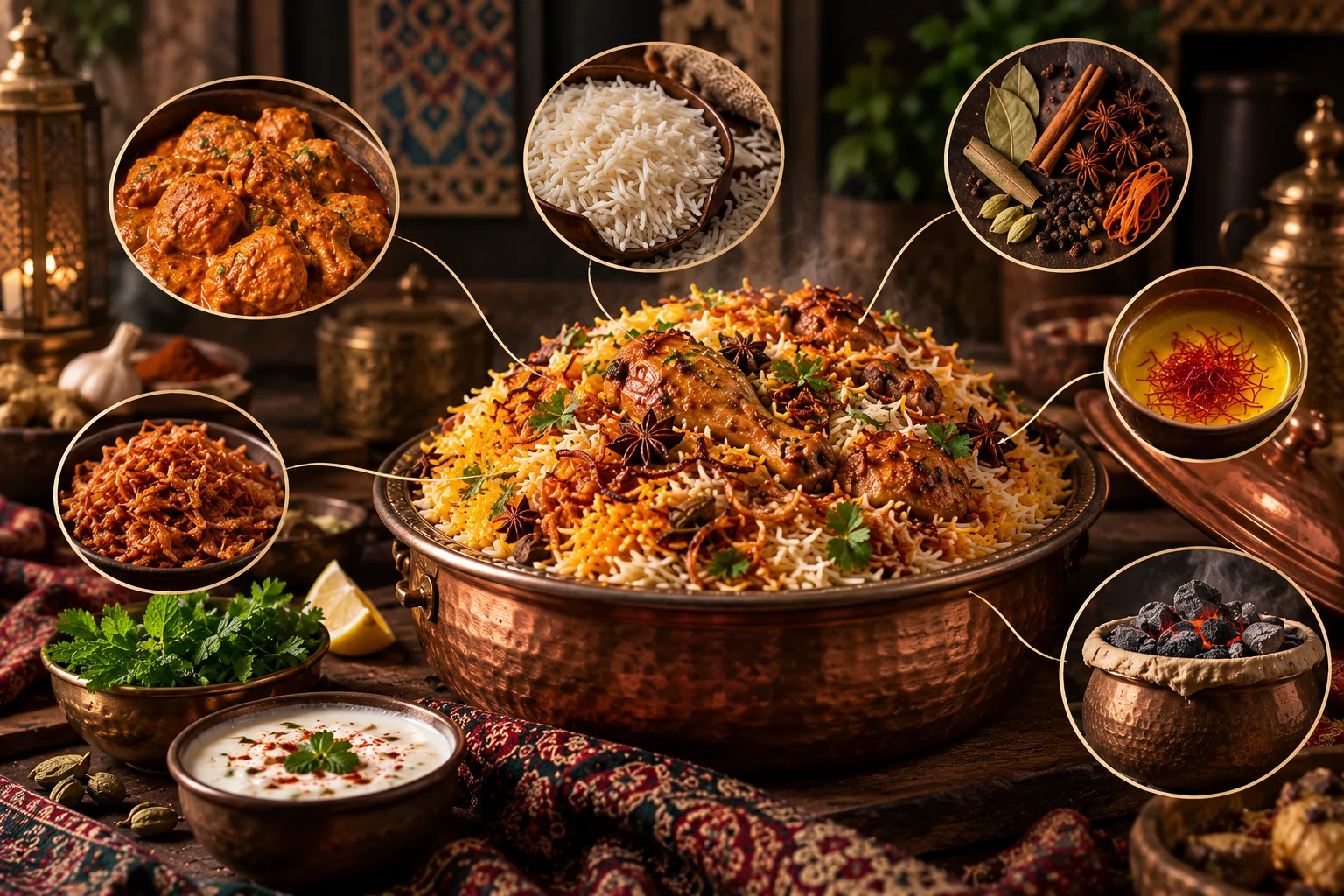
There is no single ingredient list that defines every authentic biryani.
Authenticity depends partly on which regional style you are trying to make.
Still, a good biryani usually shows care in the way rice, seasoning, protein, moisture, and aroma are handled.
Three things are especially important:
Rice texture: The grains should not collapse into a soft, sticky mass.
Balanced masala: Spices should support the rice and meat instead of overwhelming everything with raw chilli.
Aroma: Whole spices, herbs, fried onions, saffron, kewra, or other ingredients may create fragrance depending on the style.
Moisture: Biryani should not feel like rice swimming in curry.
Layering and timing: Each component needs to reach the right stage before the final cooking.
For a broader look at how Pakistani food differs from neighbouring cuisines, LaGrub's Pakistani vs Indian Food Differences guide explores how history, regions, ingredients, and cooking traditions overlap while still producing distinct food identities.
Is It Fair to Call Biryani Both Indian and Pakistani?
Yes.
Modern food identity does not always require exclusive ownership.
Biryani can be Indian and Pakistani while also having Persianate influences and many regional identities.
A Sindhi biryani belongs to its Pakistani context. A Hyderabadi biryani belongs to its Indian regional context. Neither fact requires us to erase the shared history behind the wider dish.
This way of thinking also makes food history more interesting.
Instead of reducing biryani to a national argument, we can ask how people transformed it.
Why did one region add more chilli? Why did another emphasise aroma? Why did potatoes become important in certain versions? Why did different cooking methods survive?
Those questions tell us much more about food culture.
Readers who want to go beyond individual recipes can also explore LaGrub's cookbook collection for curated journeys through Pakistani, Asian, Middle Eastern, and other culinary traditions.
FAQs
Which Country Invented Biryani?
There is no simple modern-country answer. Biryani developed centuries before the current borders of India and Pakistan. Its history includes Persianate culinary influence as well as South Asian ingredients and cooking traditions. Over time, different regions created distinctive versions of the dish.
Is Biryani Originally Indian or Pakistani?
Biryani existed in the Indian subcontinent before Pakistan became independent in 1947. Today, however, it is firmly part of both Indian and Pakistani cuisine. Pakistan has developed strong biryani traditions of its own, including Sindhi and Karachi styles.
Did Biryani Come From Persia?
Persian and Persianate culinary traditions influenced the development of biryani, but saying that today's biryani was simply transported unchanged from Persia is misleading. South Asian ingredients, techniques, regional preferences, and older rice-and-meat traditions also played roles in its development.
What Is the Difference Between Pakistani and Indian Biryani?
There is no single difference because both countries have several regional varieties. Pakistani styles such as Sindhi biryani can be bold, spicy, and tangy, while India has Hyderabadi, Awadhi, Kolkata, Thalassery, Dindigul, and many other styles. It is better to compare specific regional biryanis rather than two national recipes.
Is Biryani Pakistan's National Dish?
Biryani is one of Pakistan's most famous and widely loved foods, but calling it the country's official national dish can be misleading. Different sources and popular discussions use the phrase loosely. What is clear is that biryani has a major place in modern Pakistani food culture, from family meals to weddings and restaurant dining.
Conclusion
So, is biryani Indian food or Pakistani?
The most accurate answer is both.
Biryani's history began long before the modern borders of India and Pakistan. Its development reflects centuries of cultural exchange, regional cooking, migration, Persianate influence, South Asian ingredients, and changing local tastes.
After Partition, those traditions did not disappear.
Pakistan developed a powerful biryani culture of its own. Sindhi biryani, Karachi-style preparations, family recipes, restaurant versions, and celebration meals have made biryani deeply connected with modern Pakistani cuisine.
India has equally important traditions, from Hyderabadi and Awadhi biryani to Kolkata, Thalassery, Dindigul, and many other regional forms.
One country's connection does not cancel the other's.
Instead, biryani shows how food can cross borders while developing strong local identities.
The next time you eat a plate of biryani, pay attention to more than the country name. Notice the rice, masala, meat, aroma, heat, acidity, cooking method, and regional style. Those details tell a much richer story.
Explore LaGrub for more Pakistani food guides, authentic recipes, and curated cookbooks, and discover how South Asia's most-loved dishes developed from shared histories into the distinctive foods people cook today.

Maimoona Ehtisham
Maimoona Ehtisham writes for LaGrub on cooking, recipes, and mindful culinary living.
Get a desi recipe worth cooking, every week
One tested recipe a week. Nothing else, and unsubscribe any time.


Comments