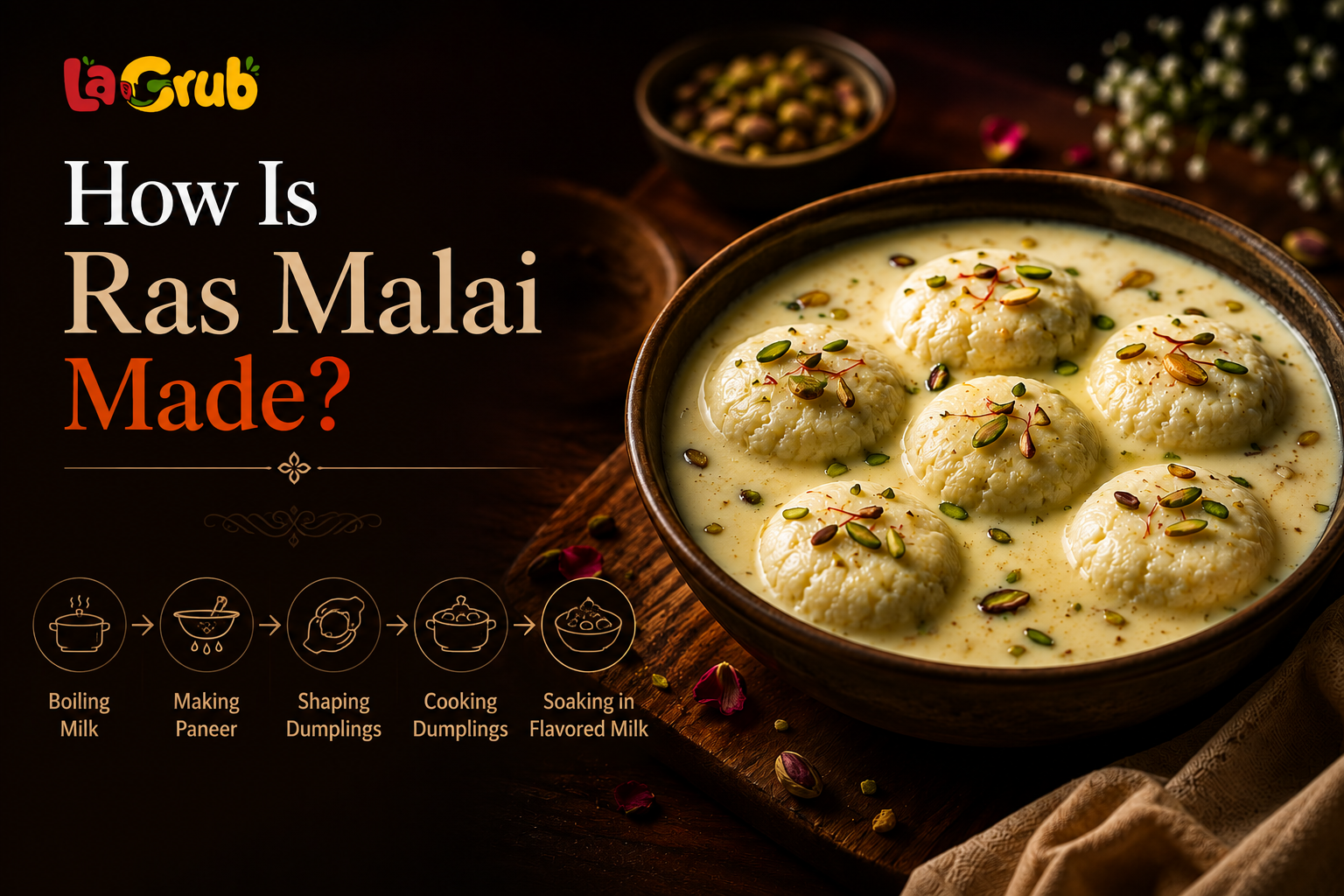
Wondering how is ras malai made at home? This easy recipe shows you how to make soft, spongy chhena dumplings and soak them in creamy, sweetened milk flavoured with cardamom and saffron. Follow simple steps, learn how to avoid hard or broken dumplings, and create delicious ras malai for family gatherings.
If you are wondering how is ras malai made, this easy homemade recipe walks you through every stage, from making soft chhena dumplings to preparing creamy cardamom milk. Learn how to get light, spongy ras malai, avoid common mistakes, balance sweetness, and serve this classic South Asian dessert for family gatherings and celebrations.
What Is Ras Malai?
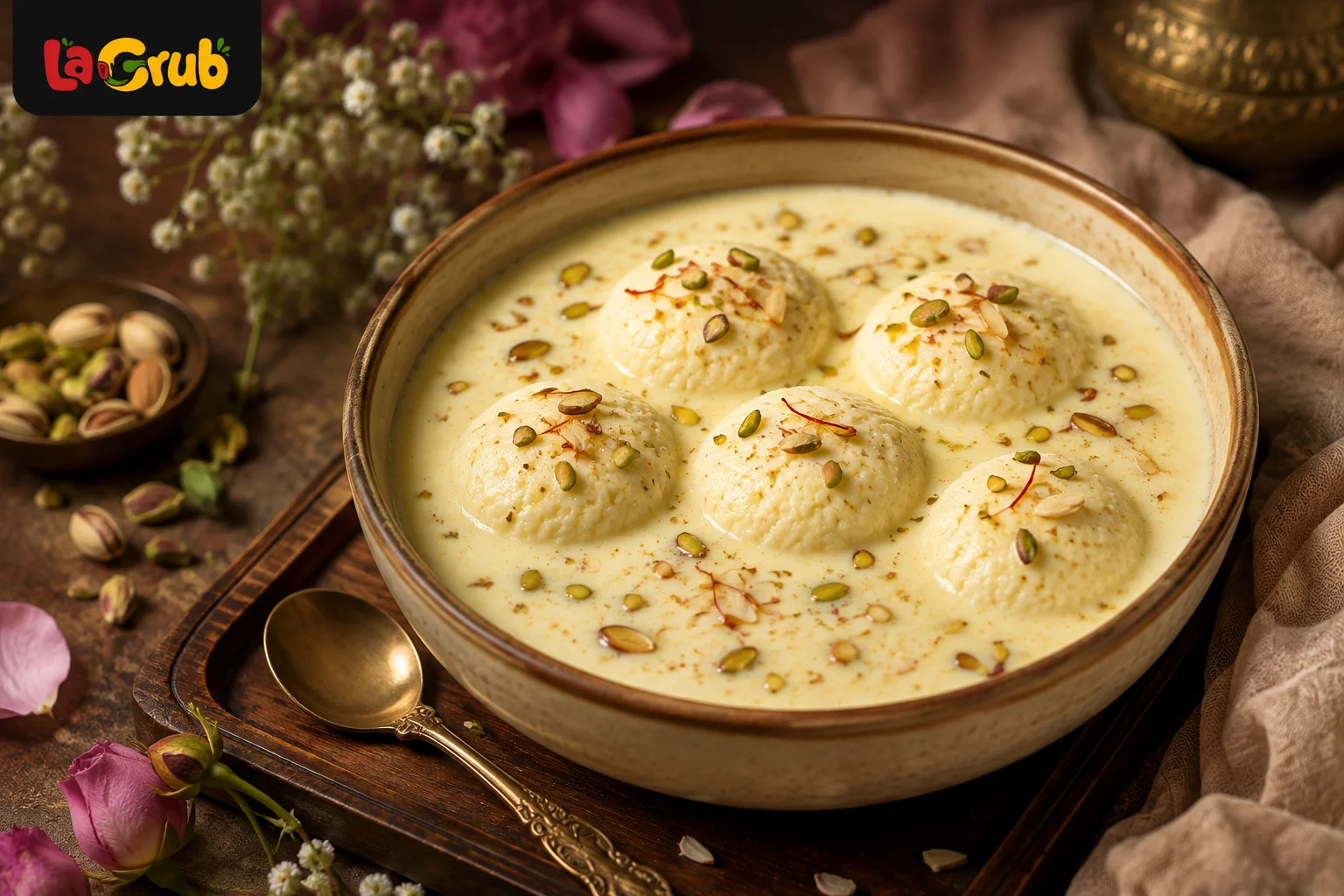
Ras malai is a soft, creamy South Asian dessert made with delicate chhena dumplings soaked in sweetened, flavoured milk. The dumplings are light and spongy, while the milk is rich with cardamom, saffron, and nuts.
The name comes from two words: “ras”, meaning juice or liquid, and “malai”, meaning cream. Together, they describe the soft dumplings sitting in a rich milk mixture.
Although ras malai is enjoyed across South Asia, it is especially popular at weddings, Eid gatherings, family dinners, and other celebrations.
The good news is that you can make it at home without a ready-made mix. The process takes some care, but each stage is simple once you understand what the chhena should look and feel like.
For more traditional and modern food ideas, explore LaGrub's recipe collection.
What Is Ras Malai Made Of?
Before learning how is ras malai made, it helps to understand its two main components.
1. Chhena Dumplings
The soft balls are made from fresh chhena, which is created by curdling milk and separating the milk solids from the whey.
The chhena is then drained, kneaded until smooth, shaped into small discs or balls, and cooked in a light sugar syrup.
2. Sweetened Milk
The cooked dumplings are transferred to thick, sweetened milk flavoured with cardamom and saffron.
Chopped almonds and pistachios add texture and make the dessert look beautiful.
Ingredients for Homemade Ras Malai
For approximately 12–14 pieces, you will need the following ingredients.
For the Chhena
1 litre full-fat milk
2–3 tbsp lemon juice or vinegar
2–3 tbsp water, if needed
Cold water for rinsing
For the Sugar Syrup
1 litre water
250 g sugar
For the Ras Malai Milk
1 litre full-fat milk
100–150 g sugar, adjusted to taste
4 green cardamom pods
A small pinch of saffron
2 tbsp chopped almonds
2 tbsp chopped pistachios
Optional
1 tsp rose water
Extra saffron for garnish
A few additional pistachios or almonds
Full-fat milk is the best choice because it produces richer chhena and creamier milk.
How Is Ras Malai Made From Scratch?
The homemade process has several stages, but each one is important. Take your time, especially when preparing the chhena.
Step 1: Make the Chhena
Pour the milk into a heavy-bottomed saucepan and bring it to a gentle boil.
Once the milk starts boiling, lower the heat.
Add lemon juice gradually while stirring gently. Continue adding a little at a time until the milk separates into soft white curds and pale greenish whey.
Do not add all the acid at once. You may not need the entire amount.
Once the milk has separated, turn off the heat.
Place a clean muslin cloth or cheesecloth over a strainer and pour the mixture through it.
The chhena will remain in the cloth while the whey drains away.
Step 2: Rinse the Chhena
Rinse the chhena gently with cool water.
This removes any remaining lemon or vinegar flavour and also helps cool it down enough to handle.
Do not squeeze it aggressively yet. You want to remove excess water while keeping enough moisture for soft dumplings.
Step 3: Drain the Chhena
Tie the cloth and allow the chhena to drain.
It should be moist but not dripping wet.
This balance matters.
If the chhena is too wet, the dumplings may struggle to hold their shape. If it is too dry, the finished ras malai can become hard.
A gentle pressing of the cloth is enough. Avoid drying it completely.
Step 4: Knead the Chhena
Transfer the chhena to a clean plate or work surface.
Knead it gently with the heel of your hand.
Continue for around 8–10 minutes, or until the chhena becomes smooth and soft.
This is one of the most important parts of how is ras malai made because the texture of the finished dumplings depends heavily on the chhena.
You should no longer see large curds. The mixture should come together into a smooth, soft dough.
Do not add flour unless a specific variation calls for it. Properly prepared chhena should be enough.
Step 5: Shape the Dumplings
Divide the chhena into small equal portions.
Roll each portion gently between your palms, then flatten it slightly.
Ras malai pieces are usually flatter than rasgulla because they need to absorb the sweet milk later.
Make sure there are no visible cracks around the edges.
If you see cracks, knead the chhena a little more before shaping.
Keep the pieces similar in size so they cook evenly.
Step 6: Prepare the Sugar Syrup
Add the water and sugar to a wide saucepan.
Bring the mixture to a rolling boil.
The syrup does not need to become thick like a dessert syrup. It should remain fairly light because the dumplings need space to expand while cooking.
A wide pan is helpful because it prevents the pieces from being crowded.
Step 7: Cook the Chhena Dumplings
Carefully place the shaped chhena discs into the boiling syrup.
Cover the pan with a lid.
Cook over medium heat for around 12–15 minutes.
The dumplings should expand as they cook.
Avoid opening the lid repeatedly because this can affect the cooking environment and make it harder for the pieces to expand evenly.
Once cooked, turn off the heat and allow them to sit in the syrup briefly.
The cooked dumplings should feel soft and springy rather than firm.
Step 8: Prepare the Ras Malai Milk
While the dumplings are cooking, prepare the milk.
Pour full-fat milk into a wide, heavy-bottomed pan.
Bring it to a gentle boil, then reduce the heat.
Add crushed cardamom pods and saffron.
Simmer the milk slowly, stirring regularly so it does not stick to the bottom.
You do not need to reduce the milk until it becomes extremely thick. It should become noticeably richer and slightly creamy.
Add sugar and stir until dissolved.
If you are using rose water, add it near the end.
Step 9: Add the Dumplings to the Milk
This is where the separate parts become ras malai.
Gently remove the cooked dumplings from the syrup.
Do not squeeze them aggressively. A gentle press can remove some excess syrup if needed.
Place the dumplings into the warm sweetened milk.
Allow them to simmer gently for a few minutes so they begin absorbing the flavoured milk.
Do not boil them aggressively at this stage.
Step 10: Add Nuts and Chill
Add chopped almonds and pistachios.
Turn off the heat and allow the dessert to cool.
Transfer it to the refrigerator and chill for at least a few hours.
As it rests, the dumplings absorb more of the sweet milk and develop the soft, juicy texture that makes ras malai so enjoyable.
Garnish with extra pistachios and saffron before serving.
How Do You Make Ras Malai Soft and Spongy?
The texture is probably the biggest challenge when learning how is ras malai made at home.
Several small details make a major difference.
First, use fresh full-fat milk to make the chhena.
Second, drain the chhena properly. It should retain some moisture.
Third, knead it until smooth. Under-kneaded chhena can produce rough or dense dumplings.
Finally, shape the pieces without cracks and cook them in a properly boiling but not overly thick syrup.
The finished dumplings should feel soft and spring back gently when pressed.
Why Does Ras Malai Become Hard?
Hard ras malai is usually linked to the chhena rather than the milk.
Common reasons include:
Chhena that was drained for too long
Not enough kneading
Over-kneading or very rough kneading
Chhena that was too dry
Dumplings that were too large
Incorrect cooking temperature
Overcooking
The goal is to create chhena that is smooth and moist.
Do not treat the chhena like firm paneer. Ras malai needs a softer texture.
Why Do Ras Malai Dumplings Break?
If the dumplings break during cooking, the chhena may have been too wet or not kneaded enough.
Cracks on the surface are also a warning sign.
Before cooking, roll one piece and check it carefully.
If it cracks easily, knead the mixture again until smoother.
Also avoid overcrowding the pan. The dumplings expand during cooking and need enough room.
How Do You Make Ras Malai Milk Thick and Creamy?
You do not need extremely thick milk.
Start with full-fat milk and simmer it slowly in a wide pan.
As some water evaporates, the milk becomes richer.
Stir regularly and scrape the bottom gently if needed.
Add sugar after the milk has reduced slightly. This gives you more control over the final consistency.
Remember that the milk will also seem thicker once chilled.
Can Ras Malai Be Made With Paneer?
Yes, but there is an important difference.
Fresh homemade chhena is softer and more suitable for making delicate ras malai dumplings.
Ready-made paneer is often firmer and drier, so it may not produce the same soft texture.
If you are making it from scratch, fresh chhena is the better option.
Can You Make Ras Malai Without Saffron?
Absolutely.
Saffron adds a beautiful aroma and golden colour, but it is optional.
Cardamom provides plenty of fragrance on its own.
If saffron is not available, simply leave it out and finish the dessert with cardamom, almonds, and pistachios.
Can You Make Ras Malai Without Rose Water?
Yes.
Rose water is an optional flavouring. Some people enjoy its floral aroma, while others prefer a stronger cardamom and saffron flavour.
If using rose water, add only a small amount. Too much can overpower the delicate milk flavour.
How to Get Ras Malai to Absorb More Milk
The dumplings need to be properly cooked and soft before they are placed in the flavoured milk.
If they are too dense, they will not absorb the milk as easily.
Once the dumplings are transferred into the milk, allow them to rest rather than constantly stirring them.
Chilling also helps.
As the dessert rests in the refrigerator, the dumplings gradually take in the sweet milk.
Common Ras Malai Mistakes to Avoid
Using Low-Fat Milk
Low-fat milk may produce less rich chhena and a thinner milk base.
Full-fat milk is preferable for a traditional result.
Making the Chhena Too Dry
Dry chhena creates dense dumplings.
Keep some moisture in the mixture.
Skipping the Kneading Stage
Kneading is essential for a smooth texture. Do not rush this step.
Making Huge Dumplings
The pieces expand during cooking. Start with smaller portions.
Boiling the Milk Aggressively
The milk can stick or scorch.
Keep the heat low once it begins simmering.
Adding Too Much Sugar
Excessive sweetness can hide the delicate flavour of the milk and cardamom.
Start with less and adjust to taste.
Serving Immediately
You can eat ras malai warm, but chilling allows the flavours to come together and gives the dumplings more time to absorb the milk.
How Long Should Ras Malai Chill?
For the best texture, chill the dessert for at least 3–4 hours.
Overnight is even better if you are preparing it for a gathering.
The longer resting period gives the chhena dumplings time to absorb the flavoured milk.
That makes ras malai an excellent make-ahead dessert.
How to Make Ras Malai for Eid or Guests
Ras malai is ideal for special occasions because most of the work can be completed before guests arrive.
Prepare the chhena dumplings, make the milk, combine everything, and refrigerate.
Before serving, garnish with freshly chopped pistachios and almonds.
For a larger dessert table, serve individual portions in small glass bowls.
The pale milk, golden saffron, and green pistachios create an elegant presentation without requiring complicated decoration.
If you are planning a Pakistani dessert table, you can also explore LaGrub's dessert recipes for more sweet dishes.
Ras Malai vs Rasgulla: What Is the Difference?
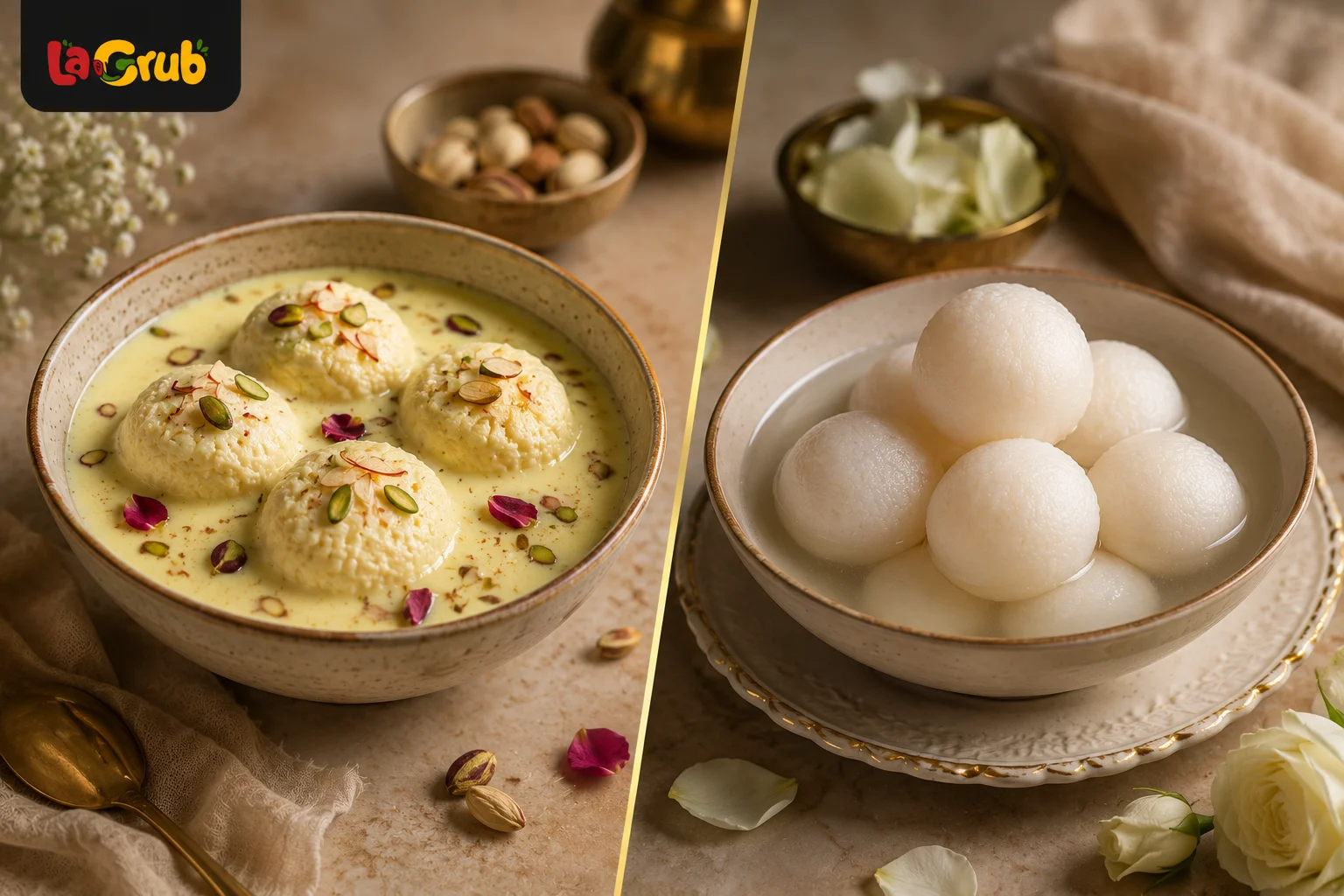
Ras malai and rasgulla both use chhena-based dumplings, so they can look similar at first.
The main difference is how they are served.
Rasgulla is traditionally cooked and served in a light sugar syrup.
Ras malai uses cooked chhena dumplings that are served in sweetened, flavoured milk.
Ras malai is also usually flavoured with ingredients such as cardamom and saffron and finished with nuts.
So, while the two desserts share a base, their textures, flavours, and serving styles are different.
How to Serve Homemade Ras Malai
Serve ras malai chilled in small bowls.
Garnish each portion with:
Sliced pistachios
Almond slivers
A few saffron strands
Crushed cardamom
For a festive presentation, use small glass dessert bowls so the soft dumplings and creamy milk are visible.
You can also add a few finely chopped nuts immediately before serving for extra texture.
How to Store Ras Malai
Store homemade ras malai in a clean, airtight container in the refrigerator.
Because it contains milk and fresh dairy, keep it chilled and avoid leaving it at room temperature for extended periods.
Use clean utensils when serving.
For the best quality, enjoy it within a few days.
If you are making it for an event, prepare it close enough to the occasion that the texture remains fresh and delicate.
Can Ras Malai Be Made Ahead?
Yes. In fact, making it ahead can improve the final result.
Preparing ras malai several hours before serving allows the dumplings to absorb the flavoured milk.
This makes it particularly useful for:
Eid
Ramadan Iftar
Weddings
Dinner parties
Family gatherings
Festive meals
For another creamy Pakistani dessert that works beautifully for celebrations, try LaGrub's Classic Shahi Tukray.
Tips for Perfect Homemade Ras Malai
Keep these points in mind before you start:
Use fresh full-fat milk.
Make soft, moist chhena.
Drain excess water without drying the chhena completely.
Knead until completely smooth.
Shape dumplings without cracks.
Keep the sugar syrup light.
Give the dumplings enough room to expand.
Simmer the milk slowly.
Avoid excessive stirring once the dumplings are in the milk.
Chill before serving.
Add nuts just before serving for the best appearance.
Frequently Asked Questions
How is ras malai made from scratch?
Ras malai is made by preparing fresh chhena from milk, kneading it until smooth, shaping it into small discs, cooking the discs in light sugar syrup, and then soaking them in sweetened milk flavoured with cardamom, saffron, and nuts.
Why is my homemade ras malai hard?
Hard ras malai can result from dry chhena, insufficient kneading, overcooking, or incorrect cooking conditions. Keep the chhena moist and knead it until smooth and soft before shaping.
How do I make soft and spongy ras malai?
Use fresh full-fat milk, prepare moist chhena, knead it thoroughly, shape smooth dumplings without cracks, and cook them gently in boiling syrup. Chilling them in the milk also helps create the desired texture.
Can I make ras malai without saffron?
Yes. Saffron is optional. Cardamom alone can provide a lovely aroma. You can also garnish the dessert with almonds and pistachios for extra flavour and colour.
How long should homemade ras malai chill before serving?
Chill ras malai for at least 3–4 hours. Leaving it overnight gives the dumplings more time to absorb the sweetened milk and allows the flavours to develop.
Conclusion
Learning how is ras malai made at home becomes much easier once you understand the role of each stage. Fresh chhena creates the soft dumplings, gentle cooking helps them expand, and slow-simmered milk gives the dessert its creamy, fragrant finish.
The most important part is patience. Take time to prepare smooth chhena, keep the dumplings moist, cook them correctly, and let the finished dessert rest in the refrigerator.
Whether you are making it for Eid, a family dinner, a wedding celebration, or simply because you are craving a homemade South Asian sweet, this recipe can help you create soft and creamy ras malai from scratch.
Ready to make more traditional desserts at home? Explore LaGrub for authentic desi recipes, cooking inspiration, and dishes made to bring people together.

Maimoona Ehtisham
Maimoona Ehtisham writes for LaGrub on cooking, recipes, and mindful culinary living.
Join the Conversation
Log in to read and share comments, recipes tips, and connect with other food lovers.