

To make chutney, blend or cook a main ingredient with acidity, salt, heat, and optional sweetness until every flavor tastes balanced.
To learn how to make chutney, blend or cook a main ingredient with heat, acidity, salt, and optional sweetness until the flavor tastes balanced. Pakistani chutneys usually fall into 4 practical groups: fresh green chutney, mint-yogurt chutney, sweet tamarind chutney, and cooked tomato chutney.
Each type serves a different purpose. Green chutney adds freshness to kebabs and sandwiches. Yogurt chutney cools grilled foods. Tamarind chutney brings sweetness to chaat. Tomato chutney adds cooked depth to rice, lentils, and snacks.
What Is Chutney?
 what is chutney
Chutney is a condiment made from herbs, fruit, vegetables, chilies, spices, or yogurt. Cooks grind, blend, pound, or simmer the ingredients according to the chosen style.
South Asian chutney does not describe one fixed recipe. Fresh hari chutney can take 5 minutes and needs refrigeration. Cooked imli or tomato chutney lasts longer because heat reduces moisture. British-style fruit chutney uses vinegar and sugar as a preserve, so the method differs from everyday Pakistani chutney.
Pakistani homes serve chutney with pakoras, samosas, kebabs, daal chawal, paratha, chaat, grilled meat, and sandwiches. Families also prepare regional varieties such as garlic chutney, raw mango chutney, plum chutney, falsa chutney, and dry shrimp chutney.
Which Chutney Should You Make?
Choose the chutney according to the food, desired heat, and available ingredients. Use the table below as a quick guide.
| Chutney | Main flavor | Preparation | Best pairings | Storage |
|---|---|---|---|---|
| Green chutney | Fresh, spicy, tangy | Blend for 5–10 minutes | Kebabs, samosas, sandwiches | 3–4 refrigerated days |
| Mint-yogurt chutney | Cool, creamy, herbal | Blend and whisk for 10 minutes | Barbecue, biryani, rolls | 2 refrigerated days |
| Tamarind-date chutney | Sweet, sour, warm | Simmer for 25–30 minutes | Chaat, dahi bhalla, pakoras | 2 refrigerated weeks |
| Tomato-garlic chutney | Savory, tangy, smoky | Cook for 20–25 minutes | Daal chawal, paratha, rice | 5 refrigerated days |
What Makes a Chutney Taste Balanced?
A balanced chutney combines a main ingredient, acid, salt, heat, and enough liquid for the chosen texture. Sweetness remains optional.
Choose One Main Flavor
Start with one dominant ingredient. Coriander and mint create green chutney. Tamarind creates imli chutney. Tomatoes create cooked chutney. Yogurt creates a creamy base.
Too many dominant ingredients can make the flavor unclear. Build one main taste, then use garlic, cumin, ginger, or chilies as support.
Add Acidity Carefully
Lemon juice, tamarind, raw mango, vinegar, and yogurt provide acidity. Add acid gradually because sourness varies between ingredients.
Use lemon for fresh chutneys and tamarind for deeper sweet-sour sauces. Use vinegar only when the recipe needs preservation or a sharper cooked flavor.
Control Salt, Heat, and Sweetness
Salt makes herbs and spices taste clearer. Green chilies add fresh heat, while dried red chilies add deeper warmth. Sugar, dates, jaggery, or ripe fruit can soften sharp acidity.
Taste the chutney after blending, then adjust one element at a time. Add 1/8 teaspoon salt, 1 teaspoon lemon juice, or 1 teaspoon sugar per adjustment.
How to Make Green Chutney Pakistani Style
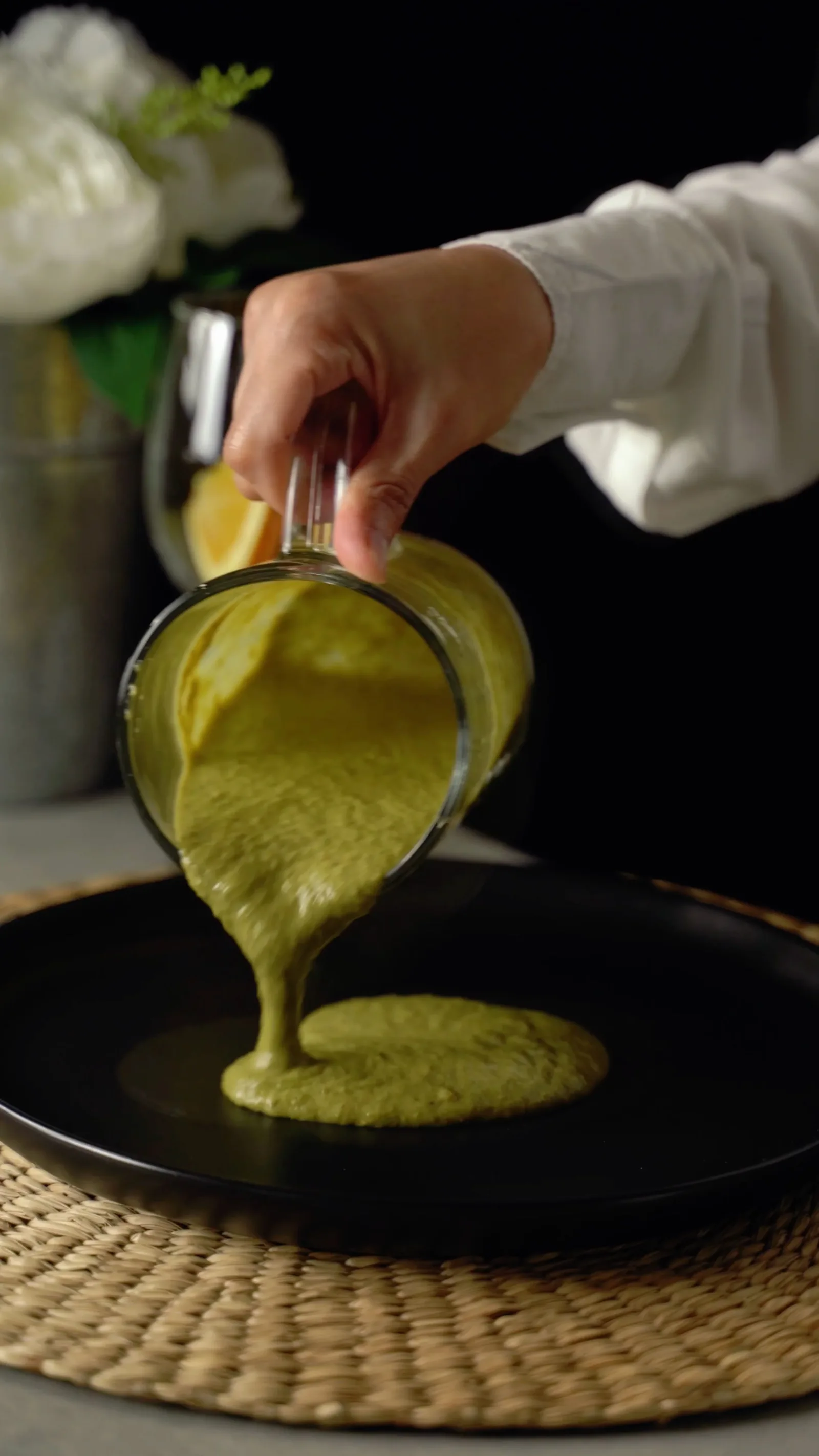 chutney pakistani style
To make green chutney Pakistani style, blend coriander, mint, green chilies, garlic, cumin, lemon, salt, and minimal water.
Green Chutney Ingredients
- 2 packed cups (60g) fresh coriander leaves and tender stems
- 1 packed cup (25g) fresh mint leaves
- 2 medium green chilies
- 2 garlic cloves
- 1 teaspoon (2g) roasted cumin seeds
- 2 tablespoons (30ml) lemon juice
- 1/2 teaspoon (3g) salt
- 1/4 teaspoon (1g) black salt, optional
- 2–4 tablespoons (30–60ml) cold water
- 1/2 teaspoon (2g) sugar, optional
How to Blend Green Chutney
- Wash the coriander and mint in cold water until no grit remains.
- Remove thick mint stems because tough stems can taste bitter.
- Add coriander, mint, chilies, garlic, cumin, lemon, and salt to a blender.
- Add 2 tablespoons (30ml) cold water and blend for 20 seconds.
- Scrape the jar, then blend again until the texture looks smooth.
- Add extra water 1 tablespoon (15ml) at a time only when needed.
- Taste and adjust salt, lemon, chilies, or sugar before serving.
Cold water and short blending help preserve the green color. Excess blending generates heat and can darken the herbs.
How to Change the Green Chutney
Add 2 tablespoons (20g) roasted chickpeas for a thicker sandwich spread. Add 2 tablespoons (30ml) tamarind water for a sharper Pakistani snack chutney.
Replace lemon with 1/4 cup (40g) chopped raw mango during mango season. Use one chili for mild chutney or 3 chilies for a stronger result.
Serve green chutney beside LaGrub’s Pakistani seekh kebabs. The herbs and acidity cut through the rich grilled meat.
How to Make Mint-Yogurt Chutney
To make mint-yogurt chutney, prepare a concentrated herb paste and whisk the paste into chilled yogurt.
Mint-Yogurt Chutney Ingredients
- 1 cup (25g) fresh mint leaves
- 1/2 cup (15g) fresh coriander
- 1 green chili
- 1 small garlic clove
- 1 teaspoon (2g) roasted cumin powder
- 1 tablespoon (15ml) lemon juice
- 1/2 teaspoon (3g) salt
- 1 cup (245g) plain full-fat yogurt
- 1–2 tablespoons (15–30ml) cold water
How to Keep Yogurt Chutney Creamy
- Blend mint, coriander, chili, garlic, cumin, lemon, and salt into a thick paste.
- Whisk the yogurt in a separate bowl until completely smooth.
- Stir 3 tablespoons (45g) herb paste into the yogurt.
- Add cold water only when the chutney needs a thinner consistency.
- Chill the chutney for 20 minutes before serving.
Do not blend all the yogurt for a long time. Prolonged blending can make yogurt watery. Whisking the herb paste into yogurt gives better control.
How to Adjust Mint-Yogurt Chutney
Add another spoonful of herb paste for stronger color and flavor. Add 2 tablespoons (30g) yogurt when the chutney tastes too spicy or salty.
Use thick Greek-style yogurt for kebabs and rolls. Use ordinary plain yogurt for biryani, pulao, and barbecue platters.
How to Make Sweet Tamarind Chutney
To make sweet tamarind chutney, simmer tamarind, dates, sugar, cumin, ginger, chili, salt, and water until glossy.
Tamarind Chutney Ingredients
- 1/2 cup (100g) seedless tamarind pulp
- 1 cup (240ml) hot water for soaking
- 8 soft dates, pitted
- 1/3 cup (65g) brown sugar or jaggery
- 1 teaspoon (2g) roasted cumin powder
- 1/2 teaspoon (1g) ground ginger
- 1/4 teaspoon (0.5g) red chili powder
- 1/2 teaspoon (3g) salt
- 1/4 teaspoon (1g) black salt
- 1–2 cups (240–475ml) water for cooking
How to Cook Tamarind Chutney
- Soak the tamarind in 1 cup (240ml) hot water for 20 minutes.
- Mash the softened pulp, then strain away fibers and seeds.
- Add tamarind liquid, dates, sugar, spices, and 1 cup (240ml) water to a saucepan.
- Simmer over low heat for 20 minutes until the dates soften.
- Blend the mixture carefully until smooth.
- Return the chutney to the pan and simmer for 5 minutes.
- Cool the chutney before checking the final thickness.
The chutney should coat a spoon but still pour in a thin ribbon. Tamarind chutney thickens after refrigeration.
How to Use Tamarind Chutney
Drizzle sweet tamarind chutney over LaGrub’s dahi bhalla chaat with green chutney and yogurt. Use 1–2 tablespoons (15–30ml) per serving.
Tamarind chutney also suits samosas, pakoras, aloo tikki, fruit chaat, and chickpea chaat. Dilute thick chutney with warm water before drizzling.
How to Make Tomato-Garlic Chutney
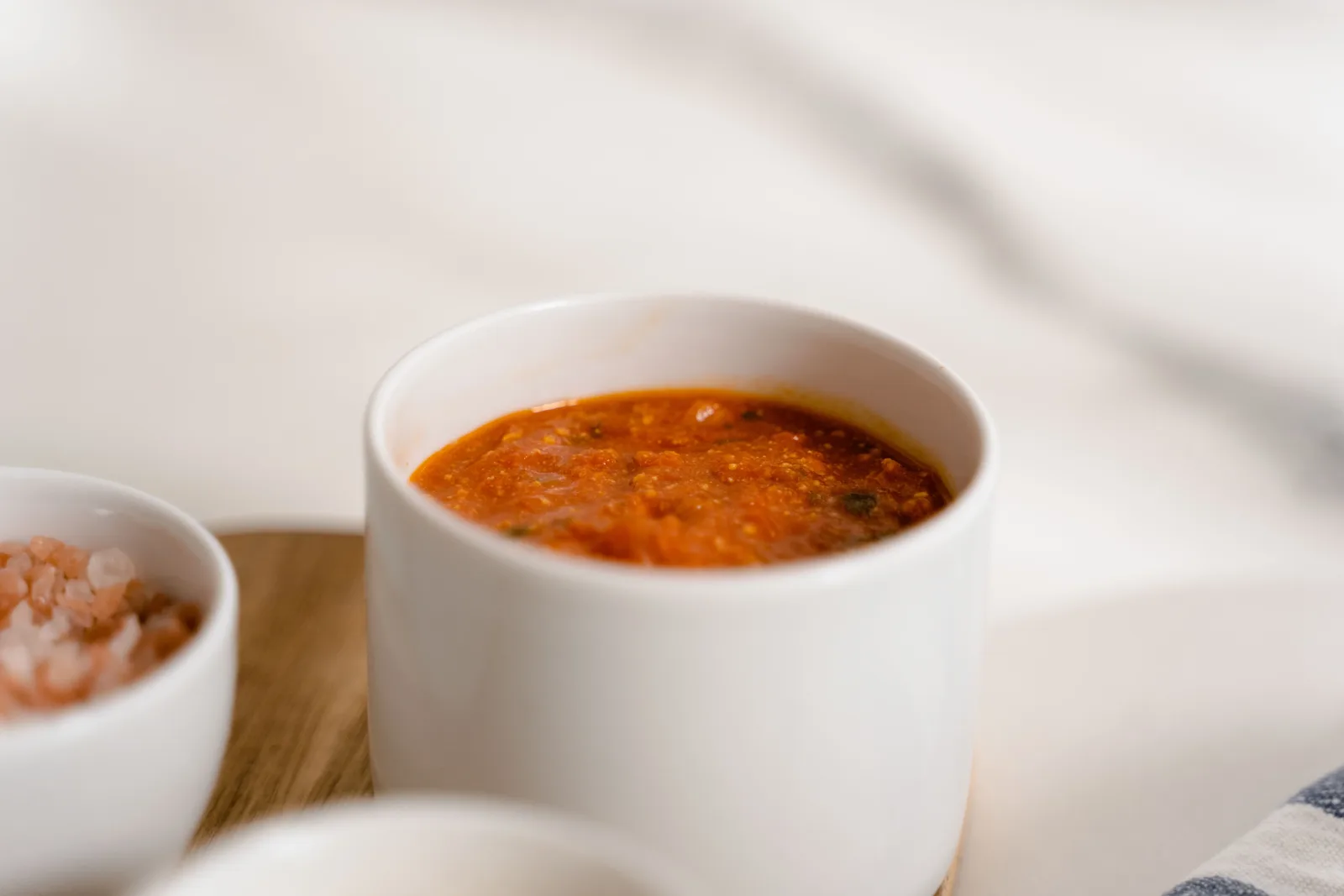 tomato chutney
To make tomato-garlic chutney, cook onions, garlic, chilies, tomatoes, cumin, and salt until the moisture evaporates.
Tomato Chutney Ingredients
- 1 tablespoon (15ml) cooking oil
- 1 teaspoon (2g) cumin seeds
- 1 small onion, about 4 ounces (115g), chopped
- 4 garlic cloves, sliced
- 2 dried red chilies or 1/2 teaspoon chili flakes
- 4 medium tomatoes, about 1 pound (450g), chopped
- 1/2 teaspoon (3g) salt
- 1/2 teaspoon (2g) sugar, optional
- 1 tablespoon (15ml) lemon juice or vinegar
How to Cook Tomato Chutney
- Heat the oil in a frying pan over medium heat.
- Add cumin and cook for 20 seconds.
- Add onion and cook for 5 minutes until soft.
- Add garlic and dried chilies, then cook for 1 minute.
- Add tomatoes and salt, then cook uncovered for 12–15 minutes.
- Stir until the tomatoes become pulpy and most water evaporates.
- Blend for a smooth chutney or mash for a rustic texture.
- Add lemon or vinegar after cooking, then taste for balance.
How to Add a Tempering
Heat 1 teaspoon (5ml) oil in a small pan. Add 1/2 teaspoon mustard seeds and 6 curry leaves.
Pour the sizzling tempering over the tomato chutney. The tempering gives a South Indian direction, while cumin and garlic keep the base useful with Pakistani meals.
Serve tomato chutney with daal chawal, khichri, paratha, eggs, or grilled vegetables. The cooked sauce also works when fresh mint remains unavailable.
How to Fix Common Chutney Problems
Fix chutney by identifying whether the problem comes from water, bitterness, heat, acidity, salt, or oxidation.
| Problem | Likely cause | Practical fix |
|---|---|---|
| Green chutney looks watery | Too much water or wet herbs | Add coriander, roasted chickpeas, or thick yogurt |
| Green chutney tastes bitter | Thick mint stems or excessive blending | Add coriander, lemon, salt, and a small pinch of sugar |
| Chutney tastes too spicy | Too many chilies | Add yogurt, herbs, tomato, dates, or fruit |
| Chutney tastes too sour | Excess lemon or tamarind | Add sugar, dates, yogurt, or more base ingredients |
| Chutney tastes flat | Low salt or acidity | Add salt and lemon in small measured amounts |
| Green chutney turns dark | Warm blending or air exposure | Use cold ingredients and cover the surface tightly |
| Tamarind chutney becomes thick | Cooling and sugar concentration | Whisk in warm water 1 tablespoon (15ml) at a time |
| Tomato chutney remains runny | Insufficient evaporation | Cook uncovered for another 5–10 minutes |
Which Equipment Makes Chutney Easier?
A small blender, food processor, mortar and pestle, strainer, and heavy saucepan cover most chutney methods.
A narrow blender jar works better than a large jug for small herb quantities. A food processor creates a coarser texture. A mortar and pestle gives controlled crushing without heating fresh herbs.
Use a fine strainer for tamarind pulp and a heavy saucepan for cooked chutneys. Avoid reactive aluminum pans when cooking acidic tomato, vinegar, or tamarind mixtures.
How to Store and Freeze Chutney
Store fresh chutney in a clean airtight container at 40°F (4°C) or colder. Use a clean spoon each time.
Green chutney keeps its best color for 3–4 days. Mint-yogurt chutney stays fresh for about 2 days. Cooked tomato chutney lasts about 5 days. Sweet tamarind chutney lasts about 2 weeks.
Freeze green chutney in 1-tablespoon (15ml) ice-cube portions for up to 2 months. Transfer frozen cubes into a sealed freezer bag after solidification.
Freeze tamarind chutney for up to 3 months. Avoid freezing yogurt chutney because thawed yogurt can separate and become grainy.
These storage periods assume clean preparation and continuous refrigeration. Discard chutney that develops mold, gas, unusual odors, or visible fermentation.
What Foods Go with Homemade Chutney?
Fresh green chutney suits fried snacks, grilled meats, breads, rice dishes, and sandwiches. Sweet tamarind chutney works best with chaat and fried snacks.
- Serve green chutney with samosas, pakoras, seekh kebabs, chapli kebabs, and paratha rolls.
- Serve yogurt chutney with biryani, pulao, chicken tikka, barbecue, and spicy sandwiches.
- Serve tamarind chutney with dahi bhalla, fruit chaat, aloo tikki, chickpeas, and gol gappay.
- Serve tomato chutney with daal chawal, khichri, eggs, paratha, and roasted vegetables.
Use both green and tamarind chutneys in LaGrub’s samosa channa chaat. The spicy and sweet sauces create the expected street-food contrast.
Pakistani Chutney Variations Worth Trying
Pakistani chutney traditions extend beyond the 4 common recipes. Regional ingredients create sharper, fruitier, smokier, and more savory condiments.
Raw mango chutney combines keri, mint, coriander, green chilies, cumin, and salt. Falsa chutney uses the tart purple fruit with sugar, salt, and spices.
Garlic chutney can use fresh garlic, onion, red chili, and lemon. Karachi and Memon households also prepare spicy pepper condiments for khousay and rice dishes.
Dry shrimp chutney, called jhinga chutney in some families, pairs powdered or crushed shrimp with chilies and aromatics. The savory condiment suits daal chawal and reflects coastal food traditions.
South Indian chutneys add coconut, peanuts, roasted lentils, curry leaves, mustard seeds, onions, eggplant, or bell peppers. Each recipe uses a different technique, so chutney cannot follow one universal formula.
Frequently Asked Questions
Can I make chutney without a blender?
Yes. Finely chop herbs and pound them with salt, chilies, garlic, and cumin in a mortar. Add lemon gradually.
Why does mint chutney become bitter?
Thick mint stems, old leaves, and long blending cause bitterness. Use leaves, tender tips, cold water, and short blending pulses.
Can I make green chutney without coriander?
Yes. Use mint as the main herb, then add yogurt, roasted peanuts, or coconut for body.
Can I make chutney without chilies?
Yes. Omit chilies and increase cumin, ginger, lemon, garlic, or black pepper for flavor without strong heat.
How do I make restaurant-style green chutney?
Blend coriander, mint, green chili, garlic, cumin, lemon, salt, and minimal water. Mix the concentrated paste with yogurt for a creamy restaurant-style sauce.
Is chutney the same as raita?
No. Chutney uses concentrated herbs, fruit, vegetables, or spices. Raita uses yogurt as the main ingredient with vegetables, herbs, or seasoning.
Make the Right Chutney for the Meal
Learning how to make chutney starts with choosing the correct style. Make fresh green chutney for kebabs, yogurt chutney for barbecue, tamarind chutney for chaat, and tomato chutney for everyday meals.
Measure water carefully, taste after every adjustment, and store each type according to its ingredients. Explore LaGrub’s recipes to match each homemade chutney with a complete Pakistani meal.

Sahar Syed
Sahar Syed writes practical recipes, approachable food guides, and culturally grounded home-cooking stories for LaGrub.
Get a desi recipe worth cooking, every week
One tested recipe a week. Nothing else, and unsubscribe any time.


