

Wondering how to meal prep for a week on a budget without eating boring or repetitive meals? Start with affordable ingredients, plan meals that share the same groceries, reduce food waste, and freeze later-week portions when needed. With a simple strategy, you can save money while enjoying varied, satisfying homemade meals all week.
Wondering how to meal prep for a week on a budget without eating boring food every day? The secret is to plan around affordable ingredients, reuse them across different meals, reduce waste, and freeze food when needed. A simple weekly system can save money, reduce cooking time, and still give you satisfying homemade meals.
Why Does Budget Meal Prep Actually Save Money?
Meal prep can save money because it gives every grocery item a purpose before you buy it.
Without a plan, it is easy to buy vegetables for one recipe, a special sauce for another, and a different protein for a third. By the end of the week, half-used ingredients may still be sitting in the fridge.
Budget meal prep takes a different approach.
You choose a small group of useful ingredients and find several ways to use them. Rice might accompany chicken one day and lentils the next. Potatoes can become a side dish, curry ingredient, or filling for another meal.
You also have food ready when you are hungry. That can make expensive takeaway lunches and last-minute food orders less tempting.
Start by Setting a Realistic Weekly Food Budget
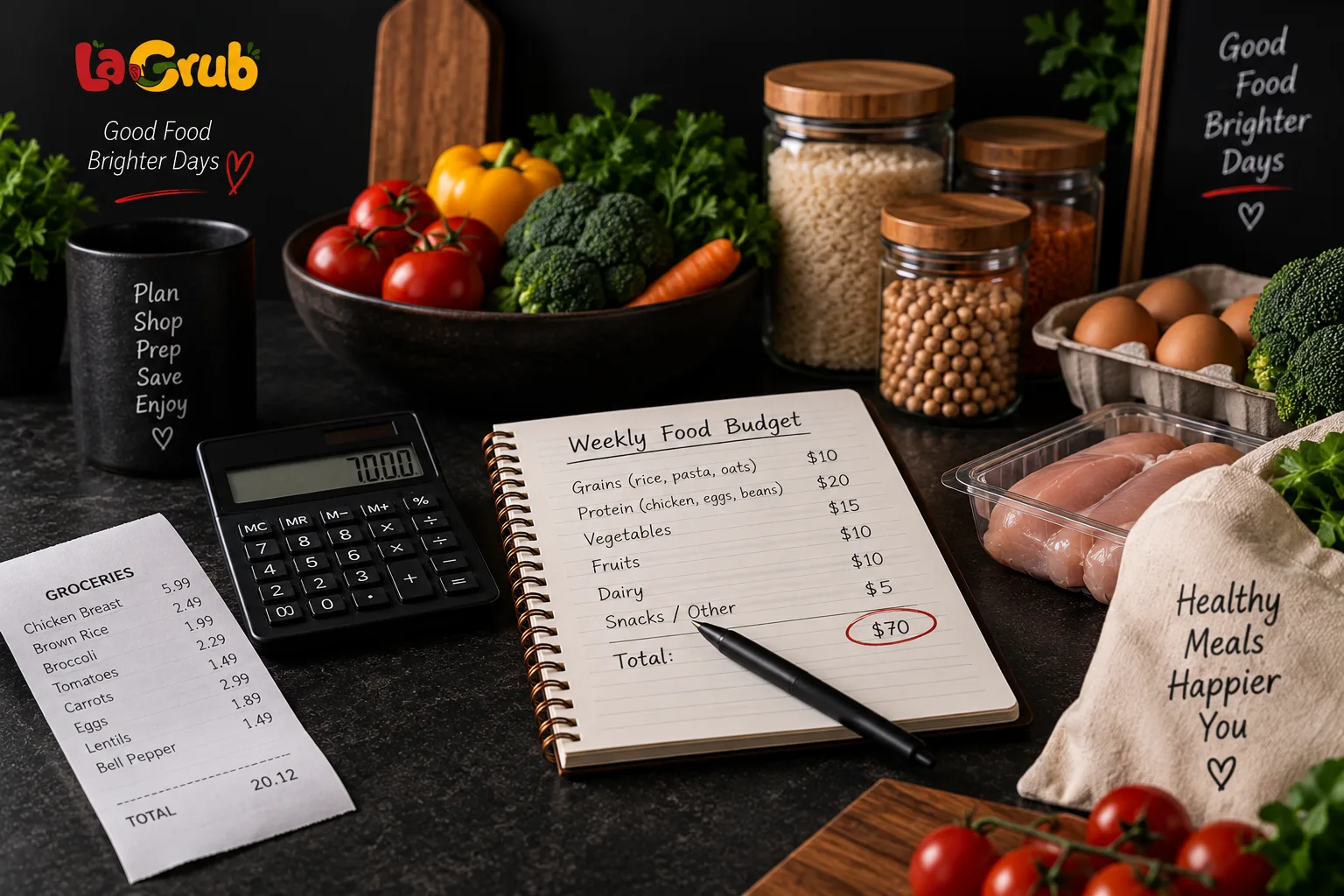
Before deciding what to cook, decide what you can comfortably spend.
There is no perfect weekly grocery amount because food prices, family sizes, locations, and eating habits vary.
Instead of copying someone else's exact budget, look at what you normally spend.
Then identify where money disappears.
Are you buying lunch at work? Do fresh vegetables regularly spoil? Are you buying ingredients for recipes that you never make? Are snacks and drinks taking up a large part of the grocery bill?
Your first weekly meal prep on a budget does not need to cut your spending in half.
A realistic goal is simply to make your food spending more predictable.
Check Your Kitchen Before Making a Meal Plan
The cheapest ingredient is often the one you already own.
Before making a grocery list, check your refrigerator, freezer, and cupboards.
You may already have rice, pasta, lentils, beans, frozen vegetables, oats, spices, sauces, or meat that can become the starting point for your meals.
Build your plan around these ingredients first.
For example, if you already have rice and lentils, you may only need vegetables, yoghurt, eggs, or another protein to create several meals.
This simple habit prevents duplicate purchases and helps older food get used before it goes to waste.
It also makes your shopping list much shorter.
Plan Meals Before You Go Grocery Shopping
Shopping first and deciding what to cook later usually makes cheap weekly meal prep harder.
Choose your meals before entering the shop.
You do not need seven completely different breakfasts, seven lunches, and seven dinners.
Instead, choose a few meals that share ingredients.
For example, chicken can appear in a rice bowl, wrap, salad, or curry. Chickpeas can become a curry, salad addition, or bowl topping.
Think about your actual schedule too.
If Wednesday is always busy, plan something that only needs reheating. If you have more time on Friday, you may prefer cooking something fresh.
A useful meal plan should fit your life rather than looking impressive on paper.
Choose Ingredients You Can Use More Than Once
This is one of the most effective ways to learn how to meal prep for a week on a budget.
Avoid buying ten speciality ingredients that each belong to one recipe.
Instead, choose versatile foods.
Rice, potatoes, pasta, oats, eggs, lentils, chickpeas, beans, chicken, seasonal vegetables, onions, tomatoes, yoghurt, and frozen vegetables can all work across multiple meals.
Suppose you buy chicken, rice, peppers, onions, yoghurt, potatoes, lentils, and a few basic vegetables.
Those ingredients might become chicken rice bowls, lentil curry, chicken wraps, roasted chicken and potatoes, or a vegetable rice dish.
The ingredients overlap, but the finished meals do not have to taste identical.
What Are the Cheapest Foods for Meal Prep?
Affordable foods do not need to be bland or nutritionally empty.
The best choices are usually foods that are inexpensive per useful portion, easy to store, and flexible enough for several recipes.
Some practical budget meal prep foods include:
Rice, oats, pasta, potatoes and bread or flatbread
Lentils, chickpeas, beans, eggs and yoghurt
Seasonal vegetables, onions, carrots and frozen vegetables
Chicken or other proteins when they fit your local budget
Pantry basics such as spices, tomato products and cooking oil
Prices vary, so stay flexible.
If one vegetable is unusually expensive this week, choose another. If chicken is on offer and you know you will use or freeze it, it may be worth buying.
The goal is value, not blindly purchasing the same "cheap foods" every week.
Use Affordable Proteins Instead of Building Every Meal Around Meat
Protein can become one of the more expensive parts of a grocery bill, especially if every lunch and dinner contains a large serving of meat.
Fortunately, healthy meal prep on a budget can include many different protein sources.
Lentils are especially useful because they are inexpensive, filling, easy to store, and work beautifully in soups, curries, daal, and rice dishes.
Beans and chickpeas are equally versatile.
Eggs can work at breakfast, in sandwiches, alongside rice, or as part of another meal.
Yoghurt can also complement many meals.
Chicken can still be part of your plan. Simply use it thoughtfully rather than assuming every meal needs to centre around it.
Combining meat-based and plant-based meals can create variety while helping control grocery costs.
Are Frozen Vegetables Good for Budget Meal Prep?
Absolutely. Fresh is not automatically the best option for every meal-prep situation.
Frozen vegetables can be particularly useful when you are cooking for one person or know that you struggle to finish fresh produce.
You can take out the amount you need and leave the rest frozen.
They also save preparation time because many options are already washed and chopped.
That makes them useful for low-effort meal prep when you are tired after work or university.
Fresh vegetables still have an important place. Seasonal produce can offer excellent value and texture.
The smartest option is often a mixture of both.
Use fresh produce where freshness matters and frozen vegetables where convenience and reduced waste matter more.
Reduce Food Waste to Reduce Your Grocery Bill
Food waste is easy to overlook when calculating a budget.
A bag of vegetables is not cheap if half of it ends up in the bin.
When planning meals, look for ways to use the full ingredient.
If you buy coriander for one curry, use the remaining coriander in rice, a chutney, or another dish. If you buy yoghurt, plan it for breakfast, marinades, sauces, or raita.
Use highly perishable ingredients earlier in the week.
Longer-lasting or frozen foods can be saved for later.
Proper storage matters too.
Label containers when necessary and keep track of what is already in your refrigerator and freezer.
For more ideas on controlling home-food costs, LaGrub's guide to making desi food at home on a budget explores practical ways to make homemade meals more economical.
Make a Budget Meal Prep Grocery List
Once your meals are planned, write one clear shopping list.
Group items into simple categories such as protein, carbohydrates, vegetables, fruit, dairy, and pantry essentials.
Then check the list against what you already own.
A useful grocery list should contain mostly ingredients connected to planned meals.
This does not mean you can never buy snacks or something fun. It simply means those purchases are intentional rather than accidental.
Be careful with promotions too.
A discount only saves money if you actually use the product.
Buying three packs because they are reduced is not a bargain if two eventually get thrown away.
For non-perishable staples you regularly use, larger packs can sometimes offer better value. Compare the unit price rather than assuming the biggest package is automatically cheapest.
Think About Cost Per Portion
The cheapest-looking recipe is not always the best value.
A dish that costs slightly more but produces six meals you genuinely enjoy may offer better value than a cheaper dish you stop eating after the second day.
Think about how many useful portions you get from the ingredients.
Rice, lentils, beans, curries, soups, pasta dishes, and one-pot meals can often stretch ingredients across several servings.
But avoid making enormous batches simply because something is inexpensive.
If you prepare ten portions and throw away four, you have not saved money.
Meal prepping on a budget works best when you prepare realistic quantities that you are likely to finish.
Cook Once and Use the Food in Different Ways
Batch cooking does not have to mean seven identical plastic containers.
Instead, prepare components that can change throughout the week.
Suppose you cook chicken, rice, roasted vegetables, and lentils.
On Monday, chicken and rice can become a simple bowl.
On Tuesday, the chicken could go into a wrap with vegetables and sauce.
On Wednesday, serve lentils with rice.
On Thursday, combine vegetables, rice, and another protein.
This method gives you the efficiency of batch cooking without making every meal feel like a repeat.
It also lets you change portions according to your appetite.
Use One-Pot Meals When Time and Money Are Tight
Complicated meal prep can require several pans, lots of ingredients, and a long Sunday afternoon.
It does not have to.
One-pot meals can combine affordable ingredients such as rice, lentils, chickpeas, vegetables, or chicken in a single dish.
They are particularly useful when you want fewer dishes and less active preparation.
Khichdi, lentil dishes, pulao, soups, stews, and simple rice-based meals can all work well.
LaGrub's collection of one-pot desi meals for busy weeknights offers more ideas for turning familiar pantry ingredients into practical meals with less cleanup.
How to Meal Prep When You Have Very Little Time
A budget plan will not last if it requires hours of work every weekend and you hate doing it.
Make the process easier.
You can cook one grain, prepare one or two proteins, chop a few vegetables, and make a simple sauce.
Or prepare two complete dishes and divide them into portions.
Convenience ingredients can sometimes be worth using too. Frozen vegetables, canned beans or chickpeas, pre-prepared ingredients, and simple pantry foods may reduce effort.
The cheapest possible option is not always the most practical.
If a slightly more convenient ingredient stops you buying an expensive takeaway after a tiring day, it may still make sense within your overall budget.
How to Avoid Eating the Same Meal Every Day
Meal-prep boredom is one reason people abandon a plan halfway through the week.
The solution is not necessarily cooking more recipes.
Change the flavours.
A plain batch of rice can work with a desi curry, spiced chicken, chickpeas, vegetables, or another sauce.
Chicken can taste completely different with lemon and herbs than it does with a spicy yoghurt marinade.
You can also change the format.
Turn ingredients into bowls, wraps, salads, sandwiches, curries, or plated dinners.
Preparing flexible components gives you room to choose what sounds appealing on the day.
This is particularly useful for families where different people have different preferences.
How to Meal Prep Cheap Lunches for Work
Buying lunch every working day can become a major weekly expense.
A homemade lunch does not need to be complicated.
Choose food that transports well, stores safely, and is easy to eat or reheat.
Rice bowls, pasta dishes, wraps, curries, lentil dishes, soups, and one-pot meals can all be practical depending on your workplace facilities.
Prepare containers the night before so you can grab one in the morning.
If refrigeration is available at work, place perishable food in the fridge when you arrive. Where refrigeration is not available, use suitable insulated storage and cold packs for foods that need to remain chilled.
The easier your lunch is to grab, the less tempting an expensive last-minute alternative becomes.
Don't Forget Budget Breakfasts and Snacks
Lunch and dinner often get all the attention, but breakfast and snacks can quietly increase food spending.
Oats, eggs, yoghurt, fruit, homemade sandwiches, and other simple foods can make useful breakfasts.
You do not necessarily need to prepare everything on Sunday.
For example, portion oats or other dry breakfast ingredients ahead and finish them when needed.
Snacks can also be planned rather than bought individually during the week.
Fruit, yoghurt, homemade snacks, or other foods you already enjoy can be portioned as part of your routine.
Planning these smaller meals makes your weekly food budget more realistic.
Can You Meal Prep Everything for the Whole Week?
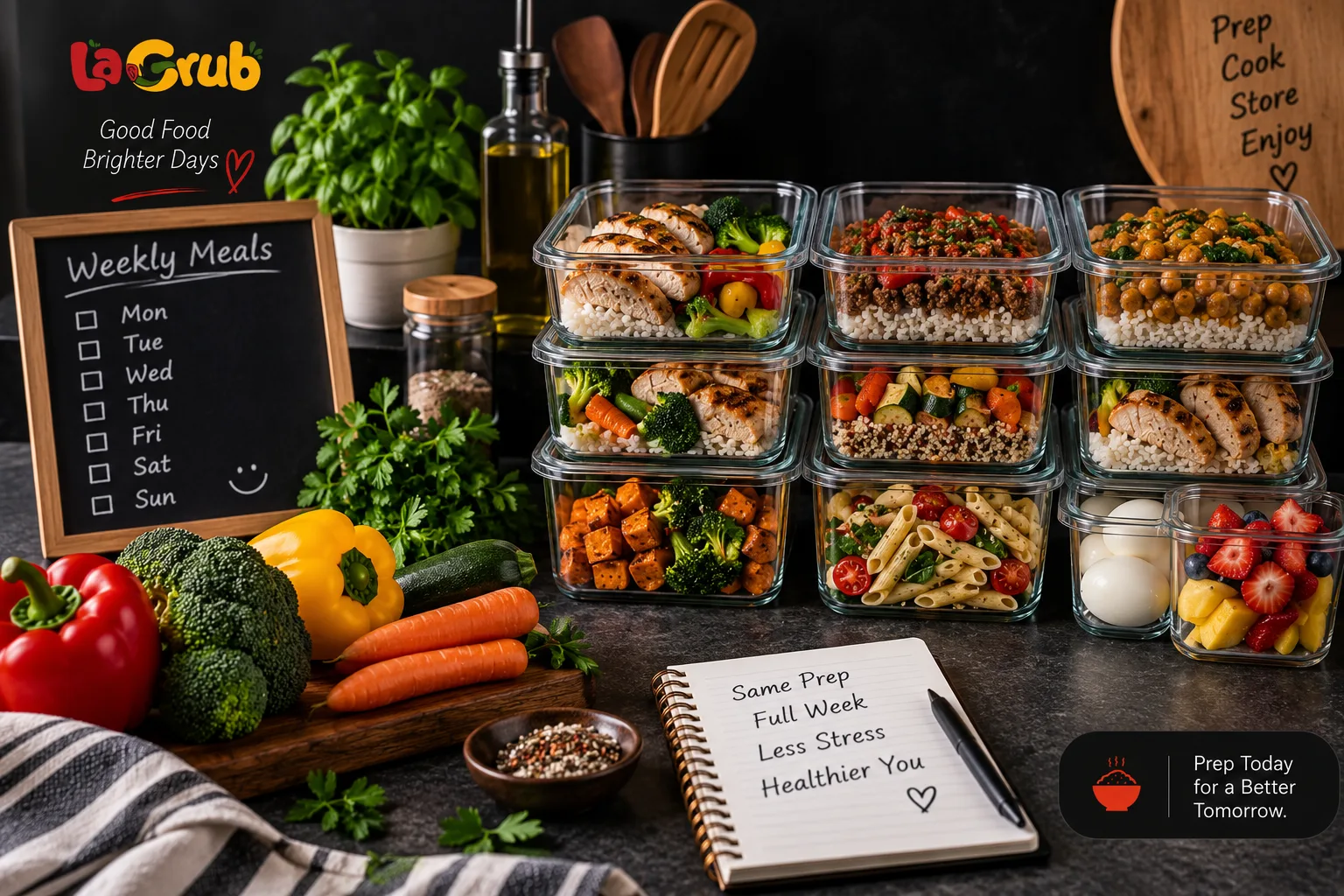
You can prepare a large amount of food in one session, but storage needs to be part of the plan.
Not every cooked meal should automatically sit in the refrigerator for seven days.
Different foods have different storage limits.
A better weekly meal prep strategy is to refrigerate suitable meals intended for the earlier part of the week and freeze freezer-friendly portions for later.
This works particularly well with curries, soups, stews, rice dishes, cooked proteins, and other foods that freeze successfully.
Some fresh foods are better prepared closer to the day you plan to eat them.
Planning around both the refrigerator and freezer lets you enjoy the convenience of a large prep session without expecting every food to maintain its safety and quality for an entire week in the fridge.
Build Variety With Different Cuisines
Budget cooking becomes easier when you know several ways to use simple ingredients.
Rice, lentils, chickpeas, chicken, potatoes, vegetables, and spices appear in cuisines around the world.
Instead of buying expensive speciality ingredients for every meal, learn different flavour combinations for foods you already use.
A rice bowl can take on desi, Middle Eastern, Chinese, Thai, Korean, or other influences depending on the seasonings and ingredients you pair with it.
If you want to expand your home-cooking rotation, explore LaGrub's cookbook collection for recipe inspiration across several cuisines. Choose dishes that share ingredients with your weekly shopping list to keep your meal prep practical.
Create a Weekly Routine You Can Maintain
Your budget-friendly meal prep system should become easier with practice.
Choose one day for planning and shopping.
Check your kitchen first. Decide which meals you need. Write your grocery list and buy only realistic quantities.
Then choose what needs to be fully cooked and what can simply be prepared.
You may cook rice and lentils, marinate chicken, chop vegetables, portion snacks, and freeze later-week meals.
Next week, review what happened.
Did you prepare too much rice? Did everyone avoid one particular lunch? Did vegetables spoil? Did you still buy takeaway on Friday?
Adjust your next plan based on what you actually ate.
That is how meal prep becomes personal rather than another rigid internet routine.
FAQs About Budget Meal Prep
How Do I Meal Prep for a Week on a Budget?
Start by checking the food you already own. Plan a few meals that share ingredients, make a shopping list, choose affordable proteins and carbohydrates, and prepare realistic portions. Refrigerate early-week meals and freeze suitable food for later when needed.
What Are the Cheapest Foods for Meal Prep?
Rice, oats, potatoes, pasta, lentils, beans, chickpeas, eggs, seasonal vegetables, and frozen vegetables can offer good value. The cheapest choices will vary according to local prices, so compare what is affordable where you shop.
How Can I Meal Prep Healthy Food Cheaply?
Build meals from simple foods rather than expensive speciality products. Combine affordable protein sources such as lentils, beans, chickpeas, eggs, or chicken with grains, vegetables, and flavourful seasonings. Frozen vegetables can also help reduce waste.
How Do I Meal Prep Without Eating the Same Thing Every Day?
Prepare versatile components rather than seven identical meals. Use the same rice, chicken, lentils, or vegetables with different sauces, spices, sides, and serving styles. A few core ingredients can create several different meals.
Can I Meal Prep All My Food for the Entire Week?
You can prepare many foods ahead, but storage matters. Keep suitable early-week portions refrigerated and freeze appropriate later-week meals. Fresh or delicate foods may be better prepared closer to when you plan to eat them.
Conclusion
Learning how to meal prep for a week on a budget is not about surviving on the cheapest food you can find or eating the same container every day.
The real goal is to make every grocery purchase work harder.
Check what you already have, plan meals before shopping, choose ingredients that can appear in several dishes, use affordable proteins, reduce food waste, and take advantage of frozen foods when they make sense.
Most importantly, prepare food you actually enjoy.
A cheap meal that ends up in the bin saves nothing. A simple homemade meal that you look forward to eating can help reduce takeaway spending, waste, and stressful last-minute cooking.
Start with a small weekly plan and improve it as you learn what works for your household. With flexible ingredients, smart storage, and a little preparation, budget meal prep for a week can be affordable, varied, practical, and full of flavour.
Keep exploring LaGrub for approachable recipes, budget-friendly cooking ideas, and cookbook inspiration that can help make homemade food an easier part of your week.

Maimoona Ehtisham
Maimoona Ehtisham writes for LaGrub on cooking, recipes, and mindful culinary living.
Get a desi recipe worth cooking, every week
One tested recipe a week. Nothing else, and unsubscribe any time.


