

Wondering how to meal prep for weight loss without eating tiny portions or the same meal every day? A good meal-prep routine can make balanced eating easier by helping you plan portions, protein, fibre-rich foods and snacks ahead of time. This guide shows beginners how to build a simple, satisfying routine.
Learning how to meal prep for weight loss can make healthy eating easier during a busy week. Instead of deciding what to eat when you are already hungry, you can prepare balanced meals and sensible portions ahead of time. The goal is not tiny meals or strict diets. It is creating a routine that supports your goals and fits your lifestyle.
Can Meal Prepping Help With Weight Loss?
Meal prep for weight loss can help because it gives your eating routine more structure. When breakfast, lunch, or dinner is already prepared, there is less pressure to make a last-minute food decision.
Meal prepping does not automatically cause weight loss. What matters is your overall eating pattern, portions, activity, and individual energy needs.
However, preparing food in advance can make those factors easier to manage.
You know what ingredients went into your meals. You can decide on portions before you become very hungry. You can include foods that help you feel satisfied and keep convenient snacks ready for busy days.
Meal prep can also reduce the temptation to rely on takeaway meals simply because nothing is ready at home.
The aim should be to make balanced eating easier, not more restrictive.
How to Meal Prep for Weight Loss as a Beginner
If you are learning how to meal prep for weight loss, avoid preparing 21 different meals on your first Sunday.
Start with the part of your day that causes the most difficulty.
Perhaps you regularly buy lunch because you have nothing ready for work. Maybe you arrive home tired and order dinner. Or perhaps you become very hungry in the afternoon and reach for whatever snack is easiest.
Choose one of these problems first.
For example, prepare three lunches.
Once that becomes part of your routine, you can add breakfasts, dinners, or snacks.
A simple beginner routine is:
Choose two or three meals.
Check the food you already have.
Make a grocery list.
Prepare your main ingredients.
Cook your meals.
Divide them into suitable portions.
Refrigerate what you will eat soon.
Freeze suitable portions for later.
You can gradually expand your routine once you know what works.
What Foods Should You Meal Prep for Weight Loss?
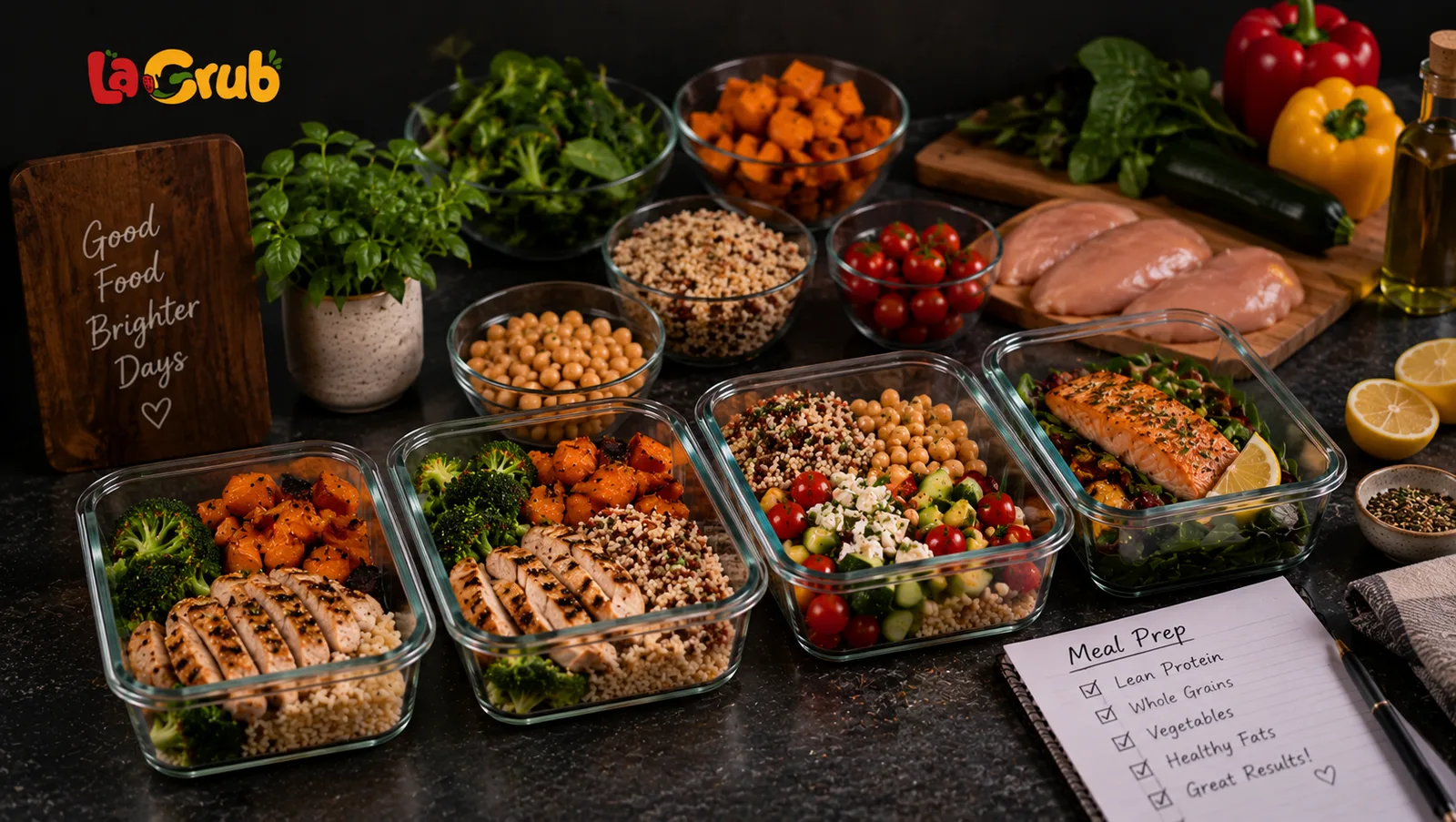
There is no single food that automatically causes weight loss.
A useful weight-loss meal prep should focus on balanced, satisfying meals that fit your individual needs.
Try building meals around a suitable protein source, vegetables or fruit, carbohydrates, and some dietary fat.
Protein options may include chicken, fish, eggs, yoghurt, cottage cheese, tofu, beans, and lentils.
For carbohydrates, you might use rice, oats, potatoes, pasta, bread, beans, or whole grains.
Then add vegetables, fruit, herbs, spices, sauces, and other ingredients that make the food enjoyable.
If you need inspiration, browse the LaGrub recipe collection for dishes you can adapt to your meal-prep routine.
Most importantly, choose meals you genuinely like.
Five containers of food you dislike are not useful just because they look like traditional "healthy meal prep".
How to Build a Balanced Weight-Loss Meal Prep
One of the most common questions about how to meal prep for weight loss is how much food should go into each container.
There is no universal portion size.
Your nutritional needs can depend on your age, body size, activity, goals, health, and many other individual factors.
Instead of copying another person's meal-prep containers, concentrate on creating balanced meals.
Include a Protein Source
Protein can help make a meal more satisfying and plays important roles throughout the body.
You could use chicken, eggs, fish, lentils, beans, tofu, yoghurt, cottage cheese, or another suitable source.
You also do not need the same protein every day.
Changing protein sources throughout the week can make your meals more interesting.
Add Vegetables and Fruit
Vegetables can add colour, volume, fibre, flavour, and nutrients to a meal.
Roast vegetables with herbs, add them to curry, stir-fry them, use them in soups, or serve them alongside your main dish.
Fruit can also work well with breakfast or as a convenient snack.
Add Carbohydrates
Carbohydrates do not automatically need to disappear from a weight-loss meal plan.
Rice, potatoes, oats, pasta, beans, bread, and whole grains can all be included depending on your needs and preferences.
Focus on how the entire meal fits together rather than labelling one ingredient as good or bad.
Don't Forget Flavour
Healthy meals should still taste good.
Spices, herbs, chilli, garlic, ginger, lemon, marinades, yoghurt-based sauces, and other flavourings can turn simple ingredients into food you actually look forward to eating.
How to Make Weight-Loss Meal Prep More Filling
A common meal-prep mistake is making portions too small.
If your lunch leaves you extremely hungry soon afterwards, your routine may become difficult to maintain.
Instead, think about satisfaction as well as calories.
Meals containing suitable amounts of protein, vegetables, legumes, whole grains, fruit, and other fibre-rich ingredients can be more substantial.
Adding vegetables is also a simple way to increase the volume of many meals.
For example, a rice bowl does not need to consist mainly of rice and a few pieces of chicken. You could add peppers, broccoli, carrots, spinach, beans, or other vegetables.
The purpose of healthy meal prep for weight loss is not to eat as little as possible.
It is to create meals that fit your needs while still feeling like proper food.
Add More Fibre to Your Meal Prep
Fibre-rich ingredients can be useful when building balanced, satisfying meals.
Vegetables, fruit, beans, lentils, oats, whole grains, nuts, and seeds can all contribute fibre to your diet.
Rather than completely changing your meals, look for simple additions.
Add lentils or beans to a soup. Include vegetables in a rice bowl. Prepare oats for breakfast. Add fruit alongside yoghurt. Use whole grains where they suit the recipe.
For more inspiration around fibre-rich cooking, explore LaGrub's High-Fiber & Gut Health Cookbook collection. It is especially relevant when you want ideas for incorporating more fibre-rich ingredients into everyday meals without making your weekly food routine feel repetitive.
High-Protein Meal Prep for Weight Loss
High-protein meal prep is popular because protein can make balanced meals more satisfying and helps support muscle maintenance.
However, you do not need to turn every meal into an enormous serving of protein.
Instead, include an appropriate protein source throughout your day.
Breakfast could include eggs or yoghurt. Lunch might contain chicken, fish, beans, tofu, or lentils. Dinner could use another protein source depending on your recipe.
Rotating these foods can also prevent meal-prep boredom.
One week might include chicken bowls and lentil curry. Another could use fish, eggs, beans, or tofu.
There is no universal protein target that suits everyone. People with specific nutritional or medical needs should seek personalised guidance from an appropriately qualified professional.
Do You Need to Count Calories When Meal Prepping?
You do not have to count every calorie to prepare balanced food.
However, some people find calorie awareness helpful when managing their weight because portions can affect the overall energy content of meals.
One benefit of meal prepping for weight loss is that portions are decided before you are hungry.
If you choose to track calories, homemade meal prep may also make it easier to understand what ingredients went into your food.
If you prefer not to track calories, you can still focus on balanced portions, regular meals, filling ingredients, and an eating pattern that supports your goals.
The lowest possible calorie number should not be the goal.
Your body still needs enough food and nutrients.
Do You Have to Eat the Same Food Every Day?
No. Eating the same meal every day is not a requirement for weight loss.
Some people enjoy repetition because it makes shopping, cooking, and portioning easier.
Others become tired of the same food after only two or three days.
Both approaches are fine.
If repetition bothers you, use a mix-and-match system.
Prepare two proteins, two or three vegetables, a couple of carbohydrate options, and different sauces.
Chicken, rice, and roasted vegetables could become a bowl one day. The chicken could go into a wrap the next day. Another portion could be combined with salad.
You are using similar ingredients without eating exactly the same meal.
How to Avoid Weight-Loss Meal Prep Boredom
Boredom is one of the easiest ways for weekly meal prep to fail.
Five identical containers may look organised on Sunday, but that does not matter if you do not want to eat the fifth one on Friday.
Use flavour to create variety.
Change your spices. Rotate vegetables. Try different sauces. Prepare two main meals instead of one.
You can also freeze suitable extra portions.
Instead of eating the same curry four days in a row, eat two portions and freeze the rest. A few weeks later, you can bring it back into your meal rotation.
Over time, your freezer can become a small collection of different homemade meals.
How to Meal Prep for Weight Loss on a Budget
Meal prep for weight loss does not require expensive ingredients or products labelled as diet foods.
Everyday staples can form the base of many useful meals.
Oats, lentils, beans, eggs, rice, potatoes, seasonal vegetables, frozen vegetables, and suitable affordable proteins can all be useful.
The key is planning.
Choose recipes with overlapping ingredients.
If several dishes use carrots, onions, peppers, chicken, or lentils, you can buy and prepare those ingredients efficiently.
Before shopping, check your kitchen. Use ingredients that need to be eaten soon instead of buying an entirely new set of groceries.
Batch cooking can also reduce waste.
LaGrub's guide to making budget-friendly food at home has more ideas around meal planning, bulk cooking, reducing waste, and making everyday home cooking more economical.
Make a Weight-Loss Meal Prep Grocery List
Your grocery list should start with your schedule.
How many breakfasts, lunches, and dinners will you actually eat at home?
If you already have plans to eat elsewhere, do not prepare food for those meals.
Next, check your fridge, freezer, and cupboards.
Then select a few recipes.
Try to use overlapping ingredients so you do not end up buying a long list of items for one recipe each.
Your meal prep grocery list might include protein sources, vegetables, fruit, carbohydrates, snacks, herbs, spices, and sauces.
Shopping with a clear purpose can help reduce impulse purchases and food waste.
Meal Prep Snacks for Weight Loss
Breakfast, lunch, and dinner are not the only foods worth planning.
If you regularly become hungry between meals, preparing snacks can be useful.
Depending on your preferences, you might choose fruit, yoghurt, boiled eggs, vegetables with a suitable dip, or measured portions of nuts and seeds.
Planning portions can be particularly useful for foods that are easy to eat directly from a large packet.
For example, portioning nuts into a smaller container gives you a clear serving rather than relying on guesswork.
Snacks should not automatically be viewed as a mistake.
If they fit your needs and help you maintain a balanced routine, they can be part of your meal plan.
A Simple 7-Day Weight-Loss Meal Prep Structure
You do not need 21 different recipes to plan one week.
Create a flexible structure instead.
Breakfast
Choose two breakfast options.
For example, alternate overnight oats with eggs and vegetables.
You could also include fruit or yoghurt depending on the meal.
Lunch
Prepare two main lunches.
One might be chicken, rice, and vegetables. Another could be a lentil or bean-based dish.
Alternate them rather than eating the same lunch for five consecutive days.
Dinner
Choose meals that are easy to portion or partially prepare in advance.
Curries, soups, stir-fries, grain bowls, roasted proteins, and vegetable-based dishes can all work depending on your preferences.
Snacks
Choose one or two snack options.
Prepare them in sensible portions so they are easy to grab during a busy day.
This structure provides organisation without turning your week into a rigid diet.
How Many Days Should You Meal Prep for Weight Loss?
Beginners can start with two or three days.
You do not need to fill your refrigerator with seven days of meals on your first attempt.
A shorter meal prep allows you to learn which recipes you enjoy after storage and reheating.
Once you become more comfortable, you can prepare further ahead.
For longer periods, consider combining refrigeration with freezing where appropriate rather than assuming every cooked dish should remain refrigerated all week.
How to Store Weight-Loss Meal Prep
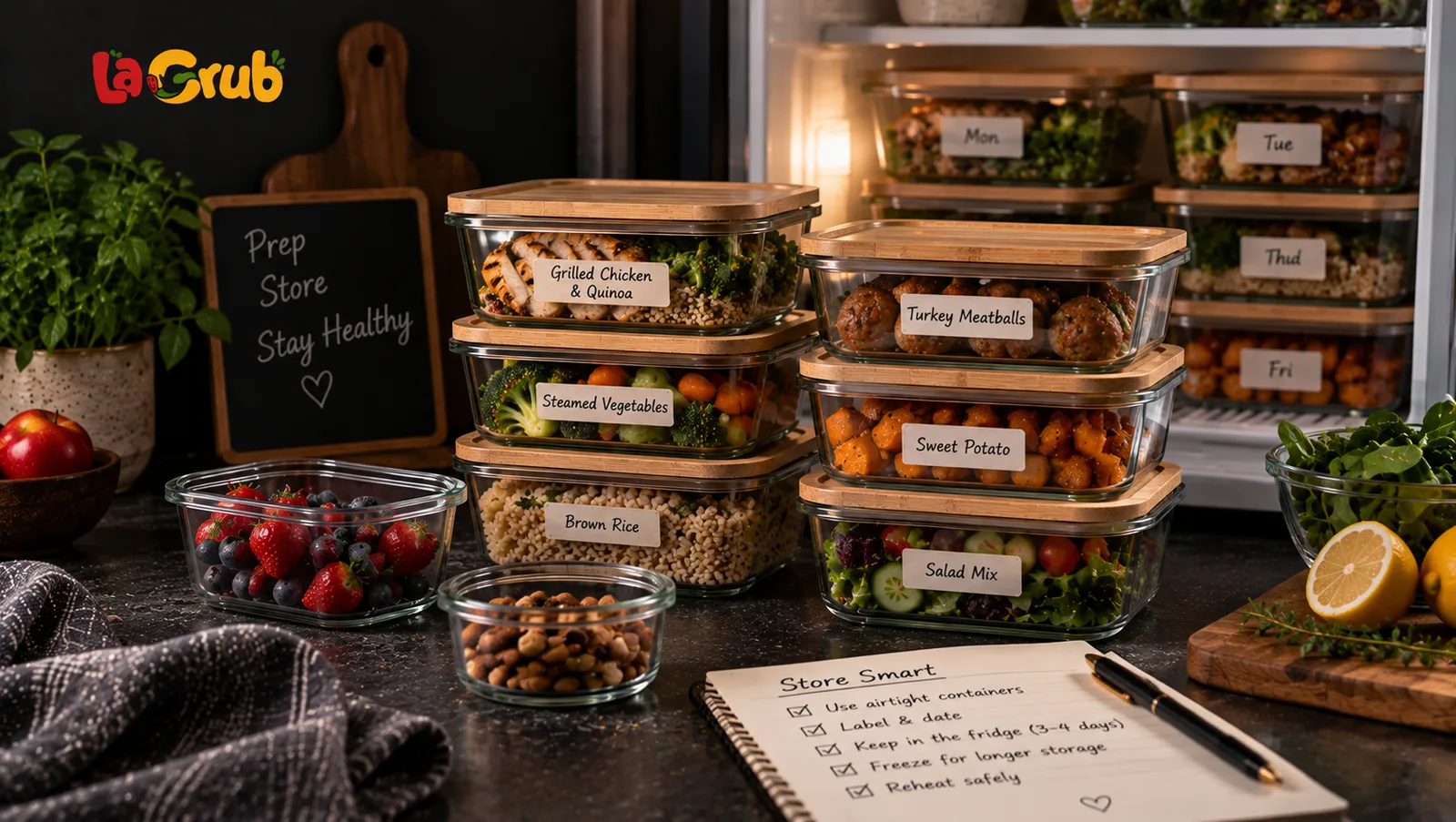
Good meal prep storage helps maintain quality and makes your prepared meals easier to use.
Choose clean containers that close securely and are suitable for the food you are storing.
Certain components are better kept separate.
Salad dressing can make leafy vegetables soggy. Crunchy toppings may lose their texture when stored with moist ingredients. Some sauces are better added shortly before eating.
If you freeze suitable meals, label the containers when useful so you can easily identify what is inside.
Always follow appropriate food-safety guidance for cooling, refrigeration, freezing, thawing, and reheating.
How to Reheat Meal-Prepped Food
The best reheating method depends on the dish.
Microwaves are convenient for many prepared meals, while ovens and stovetops can be useful when texture matters.
Before reheating, remove components that should remain cold, such as salad leaves or certain fresh toppings.
Add garnishes, crunchy ingredients, or cold sauces afterwards when appropriate.
Most importantly, use suitable food-safety practices and ensure foods that require reheating are heated properly.
Common Weight-Loss Meal Prep Mistakes
One of the biggest mistakes is making portions far too small.
Feeling constantly hungry can make any eating routine difficult to maintain.
Another mistake is removing every food you enjoy because you believe weight-loss meals must be plain.
They do not.
You should also pay attention to sauces, oils, dressings, toppings, and drinks. Small amounts of energy-dense ingredients can contribute significantly to the overall energy content of a meal.
Preparing too much food is another common beginner problem.
Start small and increase your meal prep as you become more confident.
Finally, avoid copying another person's exact meal plan. Their body, lifestyle, activity, and nutritional requirements may be very different from yours.
How to Make Weight-Loss Meal Prep Sustainable
The best meal prep for weight loss is not the strictest routine.
It is the one you can realistically continue.
Choose food you enjoy. Keep recipes manageable. Prepare enough variety. Leave room for meals with friends, family occasions, and unexpected changes to your week.
You also do not need to meal prep everything.
If weekday lunches are your main problem, preparing lunches alone may be enough.
As you discover recipes you enjoy, save them and create your own rotation.
Eventually, meal prep becomes less about following a temporary weight-loss plan and more about making everyday food easier to manage.
FAQs
How Do I Start Meal Prepping for Weight Loss?
Start by preparing one meal for two or three days. Choose balanced foods you enjoy, include a suitable protein source and vegetables, consider your portions, and store everything correctly. Once the routine becomes easy, gradually add more meals.
What Foods Are Best to Meal Prep for Weight Loss?
There is no single best weight-loss food. Vegetables, fruit, chicken, fish, eggs, beans, lentils, tofu, yoghurt, oats, rice, potatoes, and whole grains can all be useful depending on your overall eating pattern and individual nutritional needs.
Can You Lose Weight by Meal Prepping?
Meal prepping can support weight management by making food choices and portions easier to plan. However, preparing food ahead does not automatically cause weight loss. Your overall energy intake, activity, individual needs, and long-term habits still matter.
Can I Eat the Same Food Every Day to Lose Weight?
You can repeat meals if you enjoy them, but you do not have to. A small rotation of meals can provide more variety while keeping preparation simple. Try changing proteins, vegetables, sauces, seasonings, and sides throughout the week.
How Many Days Should I Meal Prep for Weight Loss?
Beginners can start with two or three days. Once you are comfortable with cooking, portioning, and storage, you can prepare further ahead. Use suitable refrigeration or freezing methods depending on the dishes you make.
Conclusion
Learning how to meal prep for weight loss is not about filling seven containers with tiny portions of plain chicken and vegetables. A better approach is to create balanced, satisfying meals that make your everyday eating habits easier to manage.
Start with two or three days. Choose foods you genuinely enjoy, include protein and fibre-rich ingredients, add plenty of variety, plan useful snacks, and pay attention to portions without making your meals unnecessarily restrictive.
Most importantly, create a routine you can maintain. Sustainable weight management comes from long-term habits rather than one perfect Sunday meal-prep session.
Explore LaGrub's recipes and the cookbooks for more inspiration, then start building a meal-prep routine that suits your tastes, schedule, and personal goals.

Maimoona Ehtisham
Maimoona Ehtisham writes for LaGrub on cooking, recipes, and mindful culinary living.
Get a desi recipe worth cooking, every week
One tested recipe a week. Nothing else, and unsubscribe any time.


