

Wondering is butter chicken Indian food? Butter chicken is widely known as a North Indian dish, famous for its creamy tomato gravy, tender chicken and rich spices. However, its story goes deeper, with strong links to the shared food culture of pre-Partition Punjab and Peshawar, making its history fascinating.
Wondering is butter chicken Indian food? Yes, butter chicken is widely recognised as an Indian dish, especially linked with North Indian cuisine and Delhi. However, its story is more interesting than a simple label. Its roots are connected with pre-Partition Punjab and Peshawar, which is why its history is often discussed across both Indian and Pakistani food traditions.
Is Butter Chicken Indian Food?
Yes, butter chicken is Indian food. Today, it is one of the best-known Indian dishes around the world and is strongly associated with North Indian restaurant cooking.
In Pakistan, however, the story feels a little more complicated. Before the Partition of British India, the food cultures of Punjab and the North-West were not separated by the borders we know today. Families, cooks and restaurants moved between places, taking their recipes and cooking traditions with them.
That history is important when talking about butter chicken.
The dish is commonly known as murgh makhani, meaning chicken cooked in a rich, buttery style. It is known for tender chicken served in a smooth tomato-based gravy with butter, cream and aromatic spices.
For many people in Pakistan, butter chicken also feels familiar because Punjabi cooking traditions have influenced food on both sides of the border. So, while butter chicken is recognised internationally as an Indian dish, its culinary history has connections to the wider Punjabi and pre-Partition food culture.
That is what makes the answer more interesting than simply saying it belongs to one modern country.
Where Did Butter Chicken Originate?
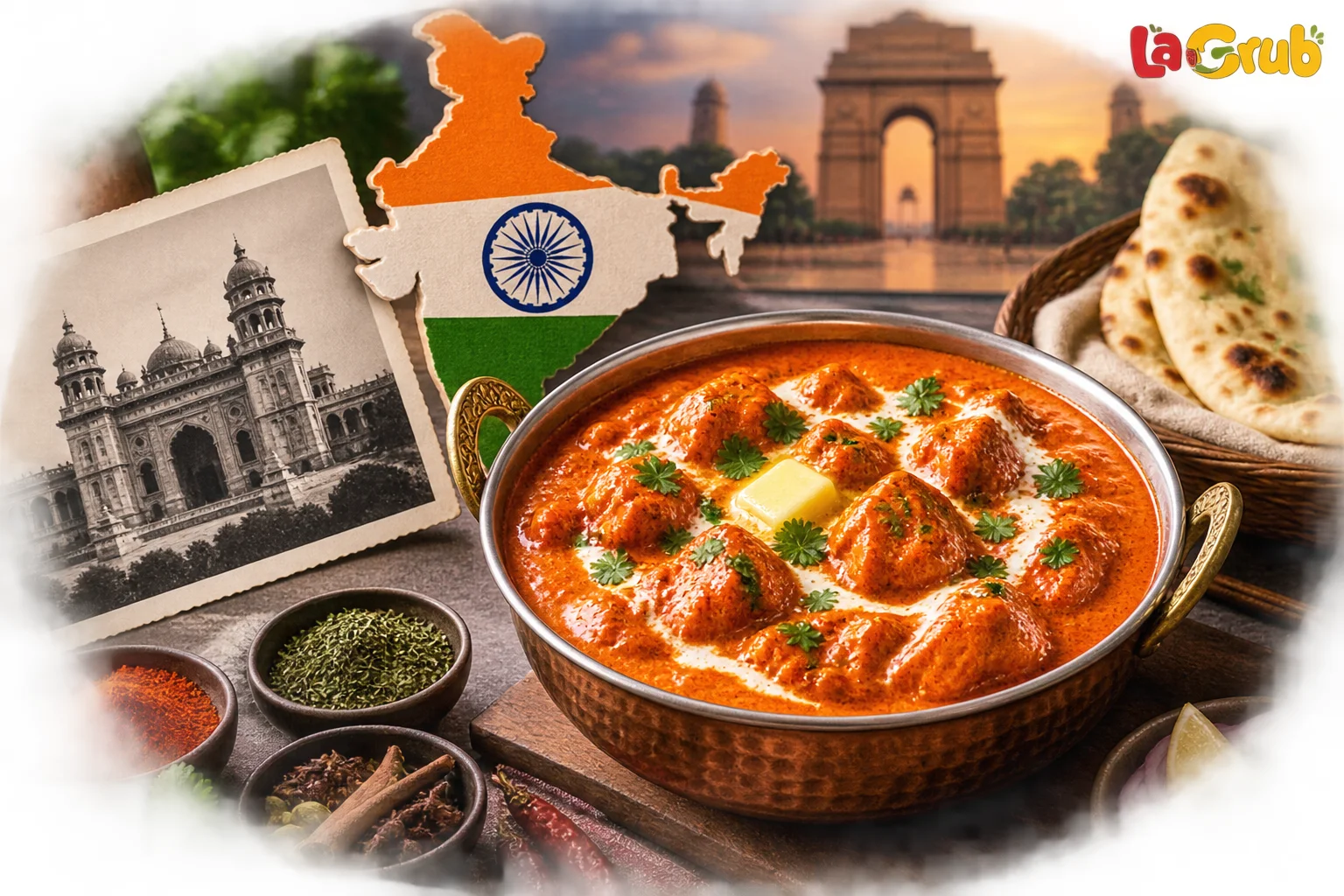
The history of butter chicken is closely connected with the food culture of the Indian subcontinent before Partition.
The dish is strongly associated with Delhi and the famous Moti Mahal restaurant tradition. At the same time, the people behind that culinary tradition had roots in Peshawar, which was part of British India before 1947.
This is why you may hear different versions of the origin story.
The commonly told story is that restaurant cooks used leftover tandoori chicken and combined it with a rich tomato-based gravy, butter and other ingredients. Instead of allowing cooked chicken to go to waste, the meat could be transformed into a soft, saucy dish.
Over time, this preparation became the butter chicken that people know today.
The important point is that modern national borders did not exist in the same form when these food traditions were developing. Food travelled with people, and recipes changed as cooks moved from one city to another.
The Peshawar and Delhi Connection
When discussing butter chicken origin, Peshawar and Delhi often come up together.
The culinary story is linked with Kundan Lal Gujral and the Moti Mahal restaurant tradition. Gujral had connections to Peshawar before Partition and later became associated with the restaurant in Delhi.
This movement matters because it shows how food history can cross modern borders.
After Partition, many families and food businesses moved from areas that became Pakistan to cities in India. They brought their cooking methods, restaurant skills and recipes with them.
Delhi then became an important home for this style of restaurant food.
As a result, butter chicken developed a strong association with Delhi and North Indian food. It became a restaurant favourite and eventually spread far beyond India.
So, if someone asks, “Is butter chicken Indian food?” the modern answer is yes. But if they ask about its deeper culinary roots, the answer needs more context.
Who Invented Butter Chicken?
The person most commonly associated with the creation of murgh makhani is Kundan Lal Gujral, who was part of the Moti Mahal restaurant story.
However, food history is rarely as simple as one person waking up one morning and inventing a dish from nothing.
Recipes develop through experimentation, existing cooking traditions and practical kitchen decisions. The idea of combining tandoori chicken with a rich tomato and butter gravy fits naturally into that process.
The Moti Mahal tradition helped turn the dish into a recognisable restaurant classic.
That is why Kundan Lal Gujral is so closely linked with butter chicken, while the wider story also includes the Punjabi and Peshawari food traditions that existed before Partition.
For LaGrub readers, this is an important distinction. Saying that one person is associated with a dish does not mean the entire culinary history started from scratch with that person.
Is Butter Chicken Pakistani Food Too?
This question comes up often, especially among people familiar with Pakistani Punjabi food.
The best way to answer it is to separate modern national identity from older food traditions.
Butter chicken is generally recognised internationally as an Indian dish, particularly a North Indian one. At the same time, its history is connected to the pre-Partition Punjabi and Peshawari culinary world, which is now divided between India and Pakistan.
That means it is understandable that Pakistani food lovers may feel a connection to the dish and its history.
Pakistan also has a rich tradition of tandoori cooking, grilled chicken, tomato-based curries, butter, cream and aromatic spice blends. These flavours are not restricted neatly by a modern border.
However, calling butter chicken simply a traditional Pakistani dish would not accurately reflect how the dish is generally identified today.
A better description is that butter chicken is a modern North Indian restaurant classic with culinary roots connected to the wider pre-Partition food culture of the region.
Why Is Butter Chicken Considered Indian?
There are several reasons Indian butter chicken has become so strongly established.
First, the modern dish became closely associated with Delhi's restaurant culture.
Second, it developed as part of North Indian cuisine and was promoted widely through Indian restaurants.
Third, butter chicken became one of the dishes most commonly introduced to international diners who were trying Indian food for the first time.
Its creamy texture and balanced flavour made it easier for people who were not used to very spicy food.
Today, you can find butter chicken on Indian restaurant menus around the world. It is often served with naan, roti or rice and is recognised as one of the classic dishes of Indian restaurant cuisine.
This strong modern identity is why the straightforward answer to is butter chicken Indian is yes.
What Makes Butter Chicken Different From Other Indian Curries?
Butter chicken is not just chicken cooked in a tomato sauce. Its appeal comes from the combination of grilled chicken and a rich, smooth gravy.
Tandoori Chicken
Chicken is traditionally connected with tandoori cooking. The meat is marinated with ingredients such as yoghurt and spices before being cooked at high heat.
This gives the chicken a smoky, roasted character.
The cooked chicken is then combined with the gravy.
Tomato-Based Gravy
The gravy is usually based around tomatoes. The tomatoes provide acidity and sweetness, which help balance the richness of butter and cream.
A well-made gravy should taste rich without becoming overwhelmingly heavy.
Butter
Butter is a defining ingredient. It gives the sauce its smooth texture and rich flavour.
This is where the name butter chicken comes from.
Cream
Cream is commonly used to make the gravy softer and more luxurious. It can also balance the acidity of tomatoes and reduce the sharpness of chilli.
Aromatic Spices
Spices are important, but butter chicken is not supposed to be simply a very hot curry.
Depending on the recipe, you may find garam masala, cumin, coriander, chilli and other aromatic ingredients.
The goal is a balanced gravy where the chicken, tomato, butter and spices work together.
Is Butter Chicken Authentic Indian Food?
Yes, butter chicken is authentic Indian food, but the word “authentic” needs some context.
It is not an ancient dish that has been cooked in exactly the same way for hundreds or thousands of years. It is a relatively modern dish connected to the restaurant culture of North India.
That does not make it less authentic.
Food continues to evolve. New dishes are created from older techniques and ingredients. Over time, those dishes become part of a country's culinary identity.
Butter chicken is a good example.
Its use of tandoori chicken, tomato, butter, cream and spices reflects several established cooking traditions. The combination became its own recognisable dish.
So, authenticity does not always mean “ancient”. A dish can be relatively modern and still become a genuine part of a cuisine.
Do Indians Eat Butter Chicken?
Yes. Butter chicken is popular in India, particularly in restaurants serving North Indian food.
Of course, not every Indian person eats it regularly. India has an enormous range of regional cuisines, and people naturally have different food preferences.
But the idea that butter chicken is only made for foreigners is not accurate.
It is enjoyed by many Indian diners and remains a popular restaurant choice.
At the same time, its worldwide popularity has influenced how the dish is prepared outside India. Some restaurants make it much sweeter, creamier or milder to suit local tastes.
This is common with popular dishes. As food travels, recipes are adjusted.
Is Butter Chicken North Indian Food?
Yes, butter chicken is strongly associated with North Indian cuisine.
Its connection to Delhi, Punjabi cooking traditions and tandoori preparation places it firmly within the North Indian restaurant food tradition.
North Indian cuisine is known for dishes that use rich gravies, yoghurt marinades, tandoori cooking, breads, aromatic spices and slow-cooked meats.
Butter chicken fits naturally into that style.
However, North Indian cuisine itself is very diverse. Butter chicken is only one dish among many, and it should not be treated as a representation of every Indian regional cuisine.
If you want to explore a wider range of Desi dishes, LaGrub's recipe collection brings together recipes across different categories, including mains, starters, desserts and traditional favourites.
Butter Chicken vs Chicken Tikka Masala
Butter chicken and chicken tikka masala are often confused because both feature pieces of chicken in a rich, tomato-based sauce.
However, they are not exactly the same.
Butter chicken is associated with North Indian restaurant cuisine and traditionally uses tandoori-style chicken with a rich makhani gravy. Butter and cream play an important role in creating its smooth texture.
Chicken tikka masala is a different dish with its own history and development. It is particularly associated with British curry-house culture.
The two dishes can look similar, but the flavour, preparation and culinary history are different.
Butter chicken usually has a richer, smoother and more buttery character, while chicken tikka masala can have a more pronounced spiced tomato flavour.
Because recipes vary from one restaurant to another, the exact difference is not always obvious.
Is Butter Chicken Spicy?
Usually, butter chicken is not meant to be extremely spicy.
It can contain chilli, but the overall flavour is generally rich, creamy, mildly spiced and aromatic.
This makes it a popular choice for people who enjoy Indian food but do not want a very hot curry.
The butter, cream and tomato gravy help balance chilli and spices.
Of course, Pakistani and Indian home cooks may adjust the recipe according to their taste. Some families prefer more green chilli or red chilli, while others keep it mild.
That flexibility is one of the reasons butter chicken works so well as a home-cooked meal.
Why Is Butter Chicken So Popular Around the World?
There is a simple reason why butter chicken has become a global favourite: it is comforting and easy to enjoy.
The smoky chicken provides a roasted flavour. Tomatoes adds sweetness and acidity. Butter and cream make the sauce rich. Spices add warmth without necessarily making the dish extremely hot.
The result is a curry that feels indulgent but familiar.
It also pairs beautifully with naan, paratha, roti and rice.
For someone trying Indian food for the first time, butter chicken can be an easy starting point because its flavour is usually less aggressive than very hot curries.
For experienced Desi food lovers, it offers something else: the combination of tandoori chicken and makhani gravy is simply satisfying.
How Butter Chicken Became a Global Favourite
Indian restaurants played a huge role in taking butter chicken beyond South Asia.
As Indian food became popular internationally, restaurant menus often included butter chicken because it was approachable and visually appealing.
The creamy orange-red gravy became almost instantly recognisable.
However, international versions are not always the same as versions served in India or prepared in Desi homes.
Some restaurants add extra cream or sugar. Others use more tomatoes. Some make it very mild.
This is not unusual.
Many famous dishes change when they travel. Local ingredients, customer preferences and restaurant styles influence the final recipe.
The core idea, however, remains recognisable: tender chicken in a rich, aromatic makhani-style gravy.
How Is Traditional Butter Chicken Served?
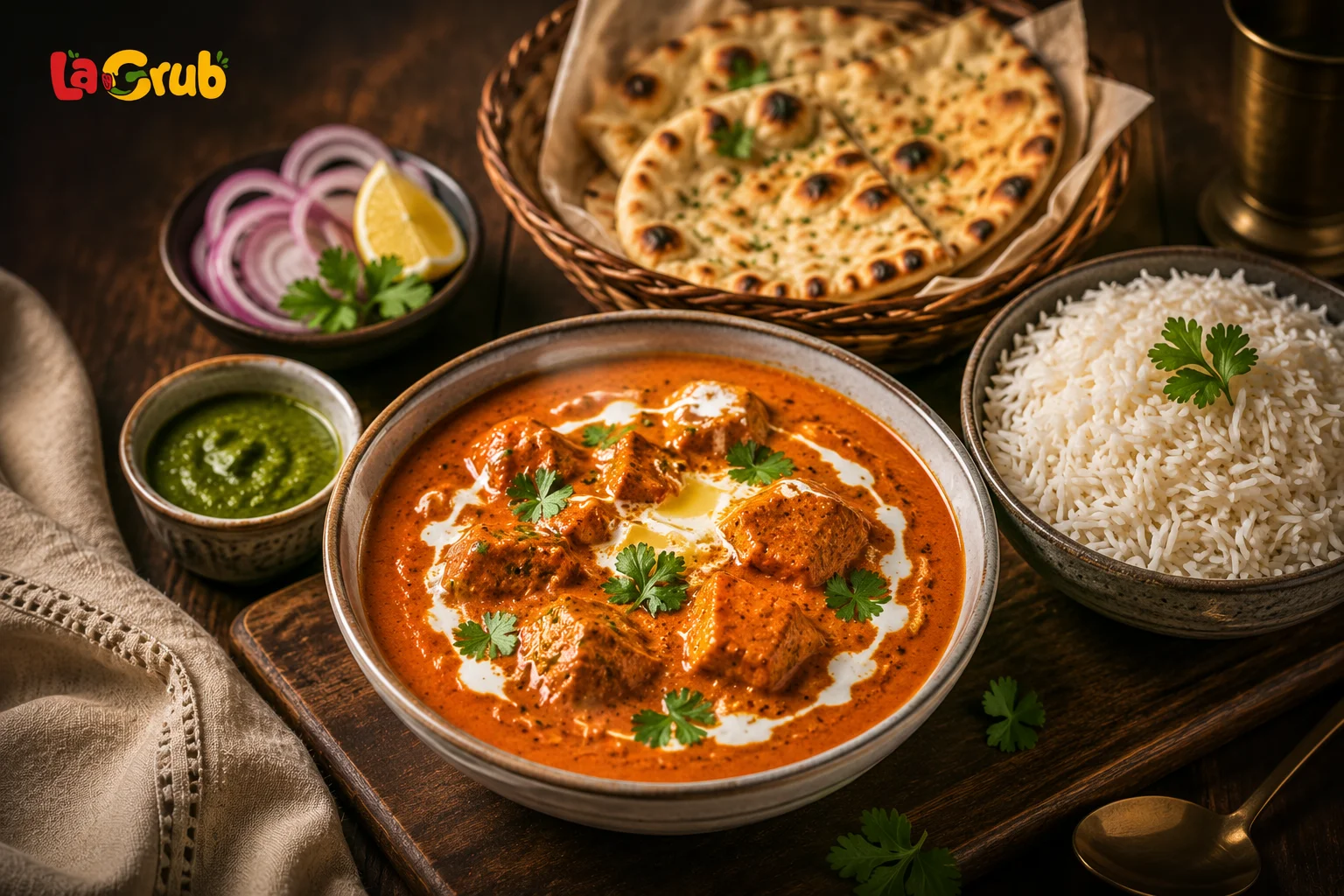
In a Pakistani or Indian home, butter chicken can easily become the centre of a proper family meal.
It pairs especially well with naan because the bread can scoop up the thick gravy.
Basmati rice is another good option, particularly if you prefer a lighter accompaniment.
For a fuller meal, you can serve it with a simple salad, raita or fresh chutney.
The contrast is lovely. The rich curry provides warmth and creaminess, while fresh sides bring crunch and brightness.
If you are planning a Desi dinner, you can also explore LaGrub's Desi recipe collection for more inspiration and traditional dishes to serve alongside your main course.
Can You Make Butter Chicken at Home?
Absolutely. You do not need a restaurant kitchen to make good butter chicken.
The biggest difference between an average homemade version and a great one is usually the way the chicken and gravy are handled.
Marinating the chicken helps develop flavour. Cooking it properly gives it a roasted character.
For the gravy, onions, tomatoes, butter and spices need time to come together. The sauce should be smooth and balanced rather than tasting strongly of one ingredient.
Finally, adding cream at the right stage can give the curry its signature richness.
Do not rush the process.
Even though butter chicken looks like a restaurant-style dish, its basic ingredients are familiar in many Desi kitchens.
What Makes Butter Chicken Special?
At its heart, butter chicken is about balance.
The chicken brings smoky depth. Tomatoes provide acidity. Butter adds richness. Cream softens the sauce. Spices add warmth and aroma.
No single ingredient should completely overpower the others.
That balance is also what makes the dish so adaptable.
You can make it milder for children, add more chilli for people who like heat, or adjust the cream according to your preference.
The dish can feel celebratory enough for a dawat but simple enough for a family dinner.
That versatility has helped it stay popular for generations.
Frequently Asked Questions
Is butter chicken Indian food?
Yes. Butter chicken is widely recognised as an Indian dish, especially as a North Indian and Delhi-associated restaurant classic. Its history also has links to the wider Punjabi and pre-Partition culinary culture of the region.
Was butter chicken invented in India or Pakistan?
The modern dish is generally associated with Delhi and the Moti Mahal restaurant tradition. However, the people and culinary traditions connected with its story had roots in pre-Partition Peshawar. Because those historical borders were different, its origins are better understood as part of a shared regional food history.
Is butter chicken North Indian?
Yes. Butter chicken is strongly associated with North Indian cuisine, particularly Delhi and Punjabi-style restaurant cooking.
Is butter chicken an authentic Indian dish?
Yes. It is an authentic modern Indian dish. It is not an ancient recipe, but it became a genuine part of North Indian restaurant cuisine through its development and popularity.
What is the difference between butter chicken and chicken tikka masala?
Butter chicken is associated with North Indian cuisine and makhani gravy, usually made with butter, tomato and cream. Chicken tikka masala has a different culinary history and is strongly associated with British curry-house culture. The two dishes can look similar but are not the same.
Conclusion
So, is butter chicken Indian food? Yes. Butter chicken is widely recognised as an Indian dish and is particularly associated with North Indian and Delhi restaurant cuisine.
At the same time, its history shows how complicated food origins can be. The story connects with Peshawar, Punjab, Delhi and the wider culinary culture of the subcontinent before Partition. Food travelled with people, and recipes evolved along the way.
That is why it is better to appreciate butter chicken as part of a shared regional food history while recognising its modern identity as a classic Indian dish.
Whether you enjoy it with naan, roti or rice, the appeal is easy to understand. Smoky chicken, buttery tomato gravy, cream and aromatic spices come together in one comforting meal.
If you love exploring Desi food and the stories behind it, keep discovering new recipes and food traditions with LaGrub. Explore the recipes, try something new in your kitchen, and bring a little more soul back to your table.

Maimoona Ehtisham
Maimoona Ehtisham writes for LaGrub on cooking, recipes, and mindful culinary living.
Get a desi recipe worth cooking, every week
One tested recipe a week. Nothing else, and unsubscribe any time.


