


Thai food can be wonderfully gluten-free, but rice noodles alone do not guarantee a safe meal. Soy sauce, oyster sauce, seasoning blends and kitchen cross-contact are where the real questions begin.
Thai food is not automatically gluten-free, although many of its foundational ingredients naturally contain no gluten. Rice, rice noodles, coconut milk, vegetables, fruit, fresh herbs, meat, fish and seafood can all fit into a gluten-free diet when prepared without gluten-containing sauces, coatings or cross-contact.
The difficulty is that a dish may look naturally safe while containing regular soy sauce, oyster sauce, seasoning powder or another prepared ingredient made with wheat. A plate of rice noodles, for example, can still contain gluten if its sauce includes wheat-based soy sauce.
For people who avoid gluten by preference, this may mean checking a few ingredients. For someone with celiac disease or another medically required gluten-free diet, the preparation process matters just as much as the recipe. Shared woks, utensils, fryers, noodle water and sauce containers can transfer gluten to otherwise gluten-free food.
What Does Gluten-Free Mean?
Gluten is a group of proteins found in wheat, barley, rye and related grains. People with celiac disease must avoid gluten because consuming it triggers an autoimmune reaction that damages the small intestine. Others may avoid gluten because of non-celiac gluten sensitivity, a wheat allergy or medical advice.
In the United States, packaged food carrying a “gluten-free” label must meet federal requirements, including containing less than 20 parts per million of gluten. Naturally gluten-free ingredients can still become unsafe through processing or contact with gluten-containing food.
This distinction is important when discussing Thai food. A rice noodle may be naturally gluten-free, but the finished noodle dish is only gluten-free when every sauce, seasoning and preparation surface is also suitable.
Is Traditional Thai Food Naturally Gluten Free?
Parts of traditional Thai cuisine are naturally compatible with gluten-free eating. Rice is the central starch in much of Thailand, and many meals are built around steamed jasmine rice, sticky rice or rice noodles rather than wheat bread.
Fresh ingredients such as lemongrass, galangal, makrut lime leaves, Thai basil, chilies, garlic, shallots and lime juice contain no gluten in their natural form. Plain coconut milk, eggs, unseasoned meat, seafood and vegetables are naturally gluten-free as well.
However, modern restaurant recipes and packaged Thai ingredients vary. Wheat-containing sauces can be added to stir-fries, marinades, curries, soups and noodle dishes. Imported products may also follow labeling rules different from those in your country.
The most accurate answer is therefore: many Thai dishes can be gluten-free, but you must confirm the ingredients and preparation rather than relying only on the dish's name.
Why Thai Food Can Look Safer Than It Is
Thai menus contain many dishes based on rice or rice noodles, so it is easy to assume that wheat will not be present. The visible starch may be gluten-free while the sauce is not.
Restaurants may use one premixed stir-fry sauce in several dishes. A curry that traditionally would not require soy sauce may be adjusted with a commercial seasoning blend. Meat may be marinated before service, and staff may not immediately know every ingredient in the marinade.
Even a restaurant that can remove regular soy sauce from a dish may use the same wok, ladle or preparation surface for other orders. This is why “no soy sauce” and “celiac-safe” are not equivalent requests.
Thai Ingredients That Are Usually Naturally Gluten Free
The following ingredients do not naturally contain gluten, provided they are plain and have not been contaminated or combined with additives:
Jasmine rice
Thai sticky rice
Pure rice noodles
Mung bean glass noodles
Plain coconut milk and coconut cream
Fresh vegetables and fruit
Unseasoned meat, poultry, fish and seafood
Eggs
Tofu that has not been marinated or coated
Lemongrass, galangal and ginger
Thai basil, coriander and mint
Fresh chilies, garlic and shallots
Lime juice and tamarind pulp
Plain sugar
Pure fish sauce made without wheat-containing additives
“Usually” remains an important word. Packaged coconut milk, curry paste, fish sauce, stock and tamarind concentrate should still be checked because formulas and manufacturing practices vary.
Hidden Sources of Gluten in Thai Food
is thai food gluten free
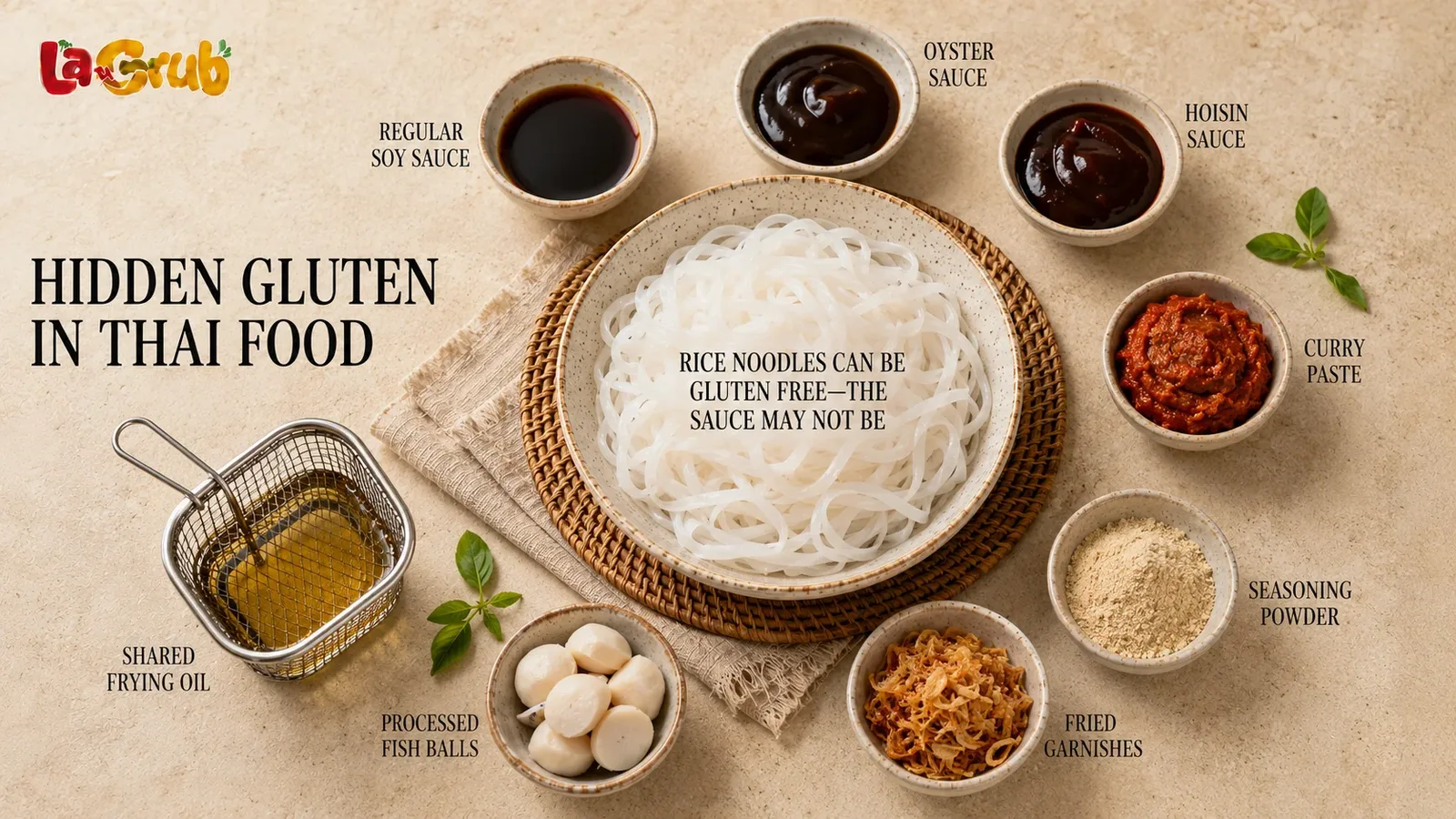
Regular Soy Sauce
Many standard soy sauces are brewed with wheat and are not gluten-free. Soy itself does not contain gluten, but the presence of wheat in the brewing process creates the problem.
Gluten-free tamari or a soy sauce specifically labeled gluten-free may be used as an alternative. Tamari should still be checked rather than assumed safe because formulations differ.
Oyster Sauce
Oyster sauce can contain wheat as a thickener or as part of the soy sauce used in its formulation. Gluten-free versions exist, but a restaurant must confirm which product it uses.
Hoisin Sauce
Hoisin sauce frequently contains wheat or wheat-based soy sauce. It may appear in dipping sauces, marinades or restaurant adaptations even when it is not the most obvious ingredient on the plate.
Seasoning Sauces and Flavoring Powders
Thai kitchens may use bottled seasoning sauce, stock powder, soup base, gravy mix or prepared stir-fry sauce. These products can contain wheat, hydrolyzed wheat ingredients or soy sauce. The label must be checked product by product.
Curry Paste
Traditional curry paste is generally made from chilies, aromatics, spices and shrimp paste, none of which inherently requires gluten. Commercial curry pastes can contain additional seasonings, stabilizers or flavorings, however, so a gluten-free label or verified ingredient list is preferable.
Fried Onions and Other Garnishes
Crispy onions, fried garlic, coated peanuts and crunchy toppings may contain wheat flour or become contaminated during processing. A garnish added at the last moment can change the safety of the entire dish.
Imitation Seafood and Processed Meat
Fish balls, imitation crab, sausages and other processed proteins may contain wheat-based binders or seasonings. Plain shrimp, fish, chicken or tofu is generally easier to verify.
Shared Frying Oil
A naturally gluten-free item is not celiac-safe when fried in oil also used for wheat-battered spring rolls, wontons or other breaded foods. Removing the visible coating afterward does not remove the contamination.
Because prepared condiments create so many hidden risks, learning to read labels is essential. LaGrub's sauces and condiments collection can also help home cooks understand how strongly a finished dish depends on the ingredients inside its sauce.
Are Thai Rice Noodles Gluten Free?
Traditional rice noodles made only from rice and water are naturally gluten-free. Some manufacturers add tapioca or another gluten-free starch to adjust their texture. These additions are generally suitable, but the complete ingredient list should still be checked.
The noodles themselves do not make the complete dish gluten-free. Pad Thai, pad see ew and pad kee mao all use noodles, but their sauces may contain regular soy sauce, oyster sauce or another wheat-containing seasoning.
Noodle water can also create cross-contact if wheat noodles and rice noodles are cooked in the same pot. Shared strainers, baskets and utensils introduce another potential risk.
What About Glass Noodles?
Glass noodles made from mung bean starch are naturally gluten-free. Some products are made from different starch blends, so check the package rather than relying only on their transparent appearance.
What About Egg Noodles?
Thai-style yellow egg noodles are normally made with wheat and are not gluten-free. They appear in several noodle soups and stir-fried dishes.
Is Pad Thai Gluten Free?
Pad Thai can be gluten-free, but it is not automatically safe. Its rice noodles, eggs, bean sprouts, peanuts, lime and plain protein are naturally gluten-free. The uncertainty lies primarily in the sauce and preparation.
A traditional-style sauce may use tamarind, fish sauce and sugar, which can all be gluten-free when verified. Restaurants may add regular soy sauce, oyster sauce or a premixed sauce containing wheat.
For a safer order, ask whether the restaurant uses regular soy sauce in its Pad Thai, whether its fish sauce and other prepared ingredients have been checked, and whether it can use clean cookware and utensils. For celiac disease, also ask about shared noodle water and wok surfaces.
Are Thai Curries Gluten Free?
Thai curries are often among the easier dishes to adapt because their basic structure may include curry paste, coconut milk, vegetables, protein, herbs and rice. None of these ingredients must contain gluten.
Green curry, red curry, yellow curry, Panang curry and Massaman curry can all be gluten-free when made with verified curry paste, stock, fish sauce and seasonings. However, restaurant versions may include regular soy sauce, oyster sauce or a wheat-containing stock base.
Massaman curry deserves particular attention because recipes vary widely and may include packaged sauces or seasonings. Never assume safety from the curry's name or color alone.
When cooking at home, verify every packaged component before beginning. Readers who want to explore Thai curries, rice dishes, noodles and desserts can visit Krua Thai Tae: Authentic Thai Kitchen. The cookbook contains 99 Thai recipes, but anyone following a medically required gluten-free diet should still check each recipe and ingredient individually and make appropriate substitutions.
Thai Dishes That May Be Gluten Free
is thai food gluten free
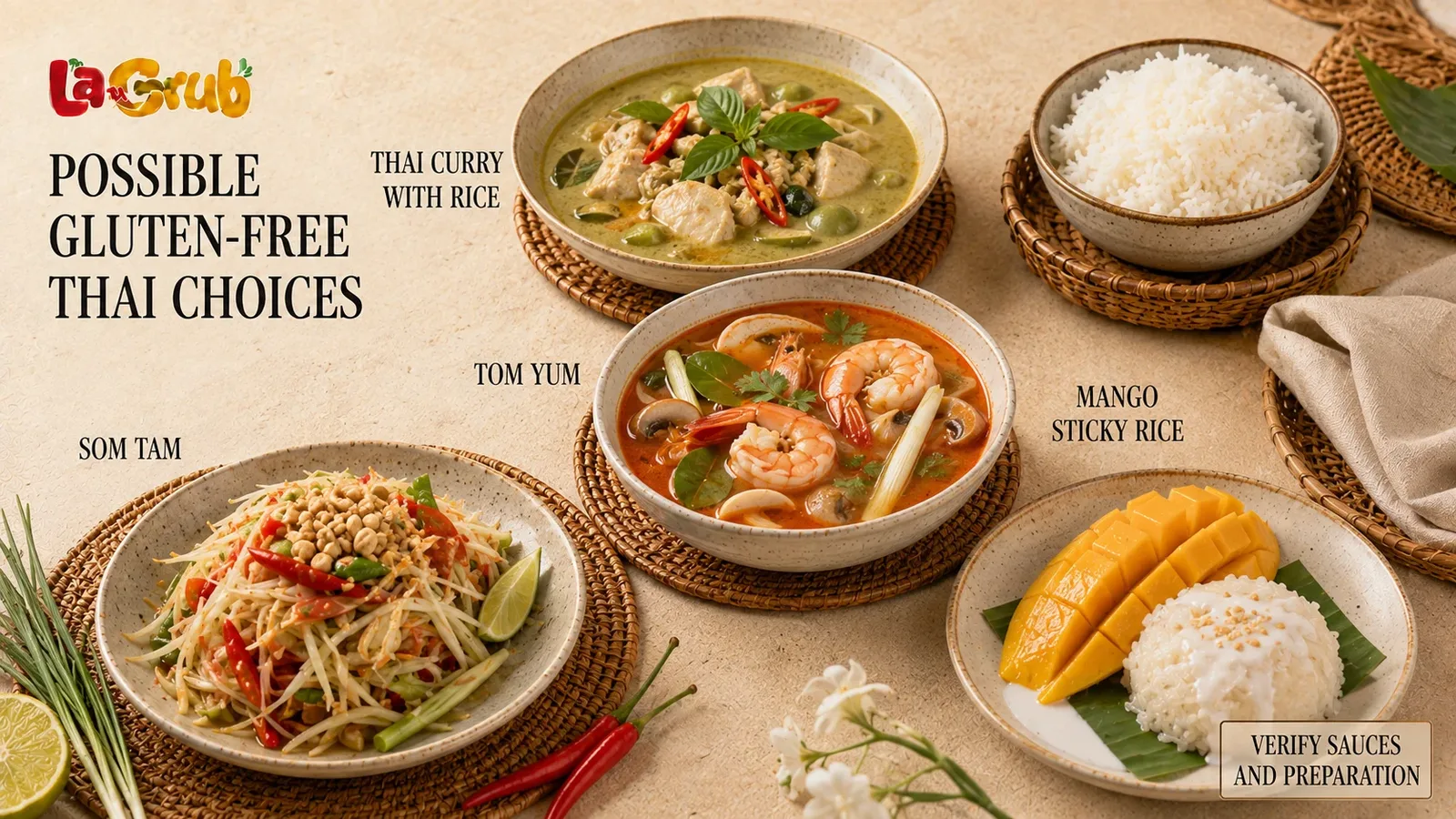
These dishes are useful starting points, but no restaurant dish should be considered guaranteed without confirmation:
Thai Curries With Rice
Green, red, yellow or Panang curry may be suitable when the curry paste, fish sauce, stock and other seasonings are verified as gluten-free.
Tom Yum
This hot-and-sour soup may be made from stock, lemongrass, galangal, lime leaves, chilies, mushrooms and seafood or chicken. Check the stock, fish sauce, chili paste and any seasoning powder.
Tom Kha
Tom kha is a coconut milk soup flavored with aromatic herbs. Its main ingredients may be gluten-free, but the stock, fish sauce and prepared chili products still require confirmation.
Som Tam
Green papaya salad contains shredded papaya, lime, chilies, tomatoes, peanuts and a savory dressing. Ask whether regular soy sauce is used and verify the fish sauce. Shared mortars and utensils may also matter for people with celiac disease.
Laab or Larb
Laab is a seasoned minced-meat salad containing herbs, lime, chilies and toasted rice powder. It can be naturally gluten-free, but verify the fish sauce, seasoning and toasted rice powder.
Mango Sticky Rice
Sticky rice, mango, coconut milk and sugar are naturally gluten-free. Check any packaged coconut sauce, thickener or topping and ask about shared preparation equipment.
Plain Jasmine Rice With Grilled Protein
This can be one of the simplest options when the meat or seafood is cooked without a wheat-containing marinade and on a clean surface. Ask for a verified sauce or no sauce rather than assuming the original marinade is safe.
Thai Foods That Commonly Contain Gluten
The following foods require particular caution:
Pad see ew made with regular soy sauce
Pad kee mao made with regular soy or oyster sauce
Stir-fries prepared with bottled seasoning sauce
Wheat-based egg noodles
Spring rolls wrapped in wheat pastry
Wontons and dumplings
Thai roti and other wheat flatbreads
Battered or breaded fried foods
Satay made with a wheat-containing marinade or dipping sauce
Fried rice seasoned with regular soy sauce
Processed fish balls, meatballs or imitation seafood containing wheat
Any dish cooked in a shared fryer when cross-contact must be avoided
Gluten-Free Does Not Always Mean Celiac-Safe
A restaurant may describe a dish as gluten-free because wheat is not intentionally added to the recipe. That does not necessarily mean the kitchen prevents cross-contact.
Cross-contact can occur when gluten-free food touches gluten-containing ingredients, equipment or surfaces. In a busy Thai kitchen, possible sources include:
A wok previously used with regular soy sauce
A shared fryer used for wheat-wrapped spring rolls
Noodle water shared with wheat noodles
The same strainer used for rice and egg noodles
Ladles moved between different sauces
Cutting boards or knives carrying sauce residue
Shared containers of sugar, spices or garnishes
Marinated protein prepared before the order is placed
Someone avoiding gluten by personal preference may make a different decision from someone with celiac disease. If strict avoidance is medically necessary, tell the restaurant clearly and ask whether it can control these risks.
How to Order Gluten-Free Thai Food at a Restaurant
Call Ahead When Possible
Contact the restaurant outside its busiest hours. Ask whether it has a gluten-free menu, gluten-free soy sauce and procedures for preventing cross-contact. A thoughtful answer before arrival is more useful than trying to explain everything while the kitchen is overwhelmed.
Say Why You Need Gluten-Free Food
If you have celiac disease, say so directly. The phrase “gluten allergy” is sometimes used in restaurants to communicate urgency, but it does not medically describe celiac disease. Clear wording such as “I have celiac disease and cannot eat wheat, barley, rye or food contaminated with them” is more precise.
Ask Specific Questions
Does this dish contain regular soy sauce?
Does the oyster sauce contain wheat?
Is the fish sauce verified gluten-free?
Is the curry paste or stock made with wheat-containing seasoning?
Was the meat marinated beforehand?
Can the dish be prepared in a clean wok with clean utensils?
Are rice noodles cooked separately from wheat noodles?
Is the fryer shared with battered foods or spring rolls?
Choose Simple Dishes
A short ingredient list is often easier to verify. Plain rice with freshly cooked protein and vegetables may be safer than a complicated stir-fry containing several bottled sauces.
Do Not Rely Only on the Menu Symbol
A gluten-free mark is helpful, but it does not answer every question about cross-contact. Ask what the symbol means in that particular restaurant.
Leave If the Answers Are Unclear
If staff cannot identify the sauces or do not understand the need to prevent cross-contact, choosing another restaurant may be the safest decision. A plain bowl of rice is not automatically safe if the kitchen cannot explain how it was handled.
How to Make Thai Food Gluten Free at Home
Home cooking provides greater control over ingredients and equipment. Begin with naturally gluten-free rice or noodles, fresh aromatics, vegetables and an unseasoned protein.
Replace regular soy sauce with certified gluten-free tamari or gluten-free soy sauce. Buy oyster sauce, fish sauce, curry paste, stock and seasoning products that are clearly labeled for your needs. Check the label every time you purchase them because manufacturers can change formulas.
Use clean pans, knives, boards, strainers and storage containers. In a shared household, avoid dipping a utensil that has touched wheat food into a gluten-free sauce bottle. A separate colander can be useful because residue can remain in small openings.
Do not assume every product from a familiar brand is safe. One sauce may be labeled gluten-free while another from the same company contains wheat.
A Simple Gluten-Free Thai Pantry
A practical home pantry might include:
Jasmine rice and Thai sticky rice
Rice noodles labeled gluten-free
Gluten-free tamari or soy sauce
Gluten-free oyster sauce
Verified fish sauce
Gluten-free curry paste
Plain coconut milk
Tamarind paste or concentrate with a verified label
Rice vinegar
Fresh or dried chilies
Lemongrass, galangal and lime leaves
Thai basil and coriander
Peanuts or cashews labeled for your required level of safety
Once these basics are available, curries, soups, salads and noodle dishes become much easier to prepare safely.
Is a Gluten-Free Diet Healthier for Everyone?
No. A gluten-free diet is essential for people with celiac disease and may be medically recommended for certain other conditions. It is not automatically healthier for people who tolerate gluten.
Removing wheat without planning suitable replacements can reduce dietary fiber, iron and other nutrients. Some packaged gluten-free products also contain more sugar or fat than comparable wheat-based foods.
If you suspect celiac disease, speak with a qualified medical professional before starting a gluten-free diet. Beginning the diet before diagnostic testing can affect the accuracy of test results.
For a carefully tested gluten-free treat outside Thai cuisine, LaGrub's gluten-free banana bread recipe includes ingredient-checking and cross-contact guidance alongside the complete method.
Frequently Asked Questions About Gluten-Free Thai Food
Is most Thai food gluten free?
No. Many Thai ingredients are naturally gluten-free, but regular soy sauce, oyster sauce, seasoning blends, marinades and cross-contact can introduce gluten.
Is Thai curry gluten free?
Thai curry can be gluten-free when its curry paste, coconut milk, fish sauce, stock and other seasonings contain no gluten. Restaurant and packaged versions must be checked individually.
Is Pad Thai naturally gluten free?
The rice noodles used in Pad Thai may be naturally gluten-free, but the complete dish may contain regular soy sauce or another wheat-containing sauce. Preparation surfaces and utensils can also cause cross-contact.
Does Thai soy sauce contain gluten?
Many regular soy sauces contain wheat and are not gluten-free. Use a soy sauce or tamari specifically labeled gluten-free when strict avoidance is required.
Is Thai fish sauce gluten free?
Traditional fish sauce may contain only fish and salt, but brands and formulations vary. Some products include additives or are made in shared facilities, so check the label.
Is oyster sauce gluten free?
Not always. Many oyster sauces contain wheat-based soy sauce or wheat as a thickener. Gluten-free versions are available and should be verified from the label.
Is Thai coconut milk gluten free?
Plain coconut milk is naturally gluten-free, but packaged products can contain stabilizers, flavorings or manufacturing warnings. Check the label when gluten avoidance is medically necessary.
Is Thai sticky rice gluten free?
Yes. Thai sticky rice is a type of rice and does not contain gluten despite the word “sticky.” It must still be protected from cross-contact during cooking and serving.
Can someone with celiac disease eat at a Thai restaurant?
Possibly, but only when the restaurant can verify ingredients and prevent cross-contact. Ask about sauces, marinades, shared woks, fryers, noodle water, strainers and utensils before ordering.
What is the safest Thai dish for a gluten-free beginner?
A simple curry with rice or freshly cooked protein with plain rice may be easier to verify than a complex stir-fry. No dish is guaranteed by name alone, so confirm all sauces and preparation practices.
The Final Answer
Thai food can be highly adaptable to a gluten-free diet because rice, rice noodles, coconut milk, vegetables, herbs and many fresh proteins naturally contain no gluten. The cuisine itself, however, is not universally gluten-free.
Regular soy sauce, oyster sauce, bottled seasonings, marinades, processed proteins and shared cooking equipment are the main concerns. A rice-based dish can still contain gluten, and a gluten-free recipe can become unsafe through cross-contact.
At home, careful label reading and a few reliable substitutes make gluten-free Thai cooking relatively straightforward. At restaurants, ask specific questions and communicate clearly especially when celiac disease makes even small amounts of gluten a medical risk.

Sahar Syed
Sahar Syed writes about practical home cooking, global food culture, and approachable culinary guides for readers who want clearer kitchen inspiration.
Get a desi recipe worth cooking, every week
One tested recipe a week. Nothing else, and unsubscribe any time.


