

Thai food can be healthy, but every dish depends on ingredients, cooking method, sauce, and portion size. The best choices use vegetables, herbs, lean protein, broth, and moderate rice or noodles, while heavier choices often add more sugar, sodium, oil, frying, or coconut milk.
Thai food can be healthy when you choose dishes with vegetables, herbs, lean protein, broth, and moderate rice or noodles. Thai food becomes less healthy when a meal depends heavily on added sugar, sodium-rich sauces, deep frying, large noodle portions, or rich coconut milk.
Many readers ask is Thai food healthy because Thai meals look fresh, bright, and balanced. The answer depends on the dish, the cook, and the portion you choose.
Is Thai Food Healthy in Simple Words?
Yes, Thai food can be healthy, but Thai food is not automatically healthy. A balanced Thai meal uses fresh herbs, vegetables, protein, and a sensible serving of rice or noodles.
Thai food often builds flavor with lemongrass, galangal, kaffir lime, garlic, chilies, lime juice, and Thai basil. These ingredients add aroma without needing heavy cream or cheese.
The same cuisine also includes fried spring rolls, sweet drinks, large noodle plates, and coconut-rich curries. These meals fit occasional enjoyment better than daily default eating.
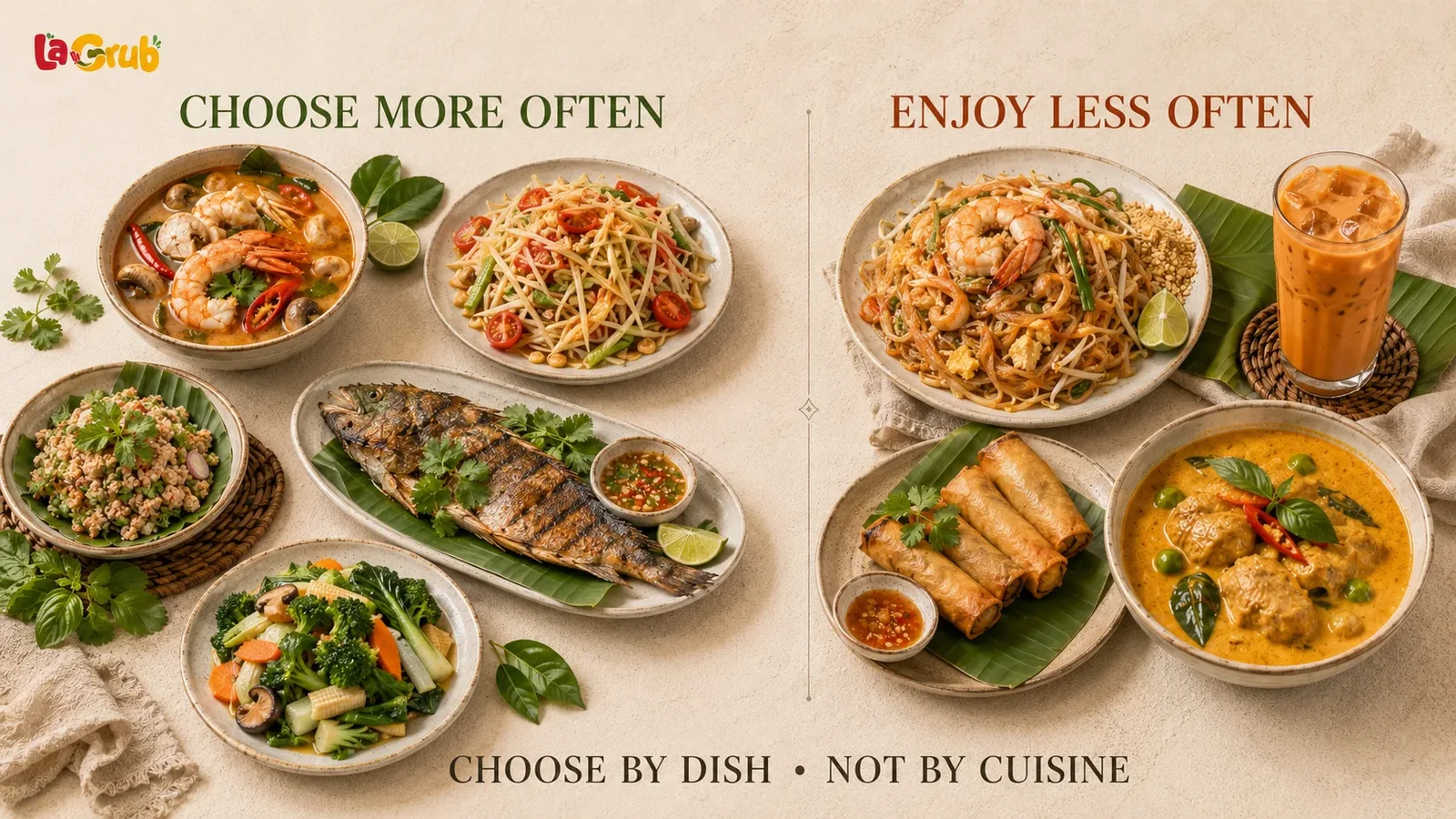
A helpful answer to is Thai food healthy must compare dishes, not judge one whole cuisine. Tom yum, larb, and grilled fish differ greatly from fried rice, sweet Thai tea, and deep-fried snacks.
What Makes Thai Food Healthy?
Vegetables, herbs, lean protein, broth, and balanced portions make Thai food healthier. These features appear in dishes like tom yum, som tam, larb, grilled fish, and vegetable stir-fries.
Fresh Herbs and Aromatics Add Flavor
Lemongrass, galangal, garlic, kaffir lime, and Thai basil create strong flavor without relying only on fat. These aromatics make soups, salads, and curries taste bright and satisfying.
Fresh herbs also help home cooks reduce heavy sauces. You can build strong taste with lime, chili, garlic, cilantro, mint, and basil.
Vegetables Add Volume and Fiber
Vegetables make Thai meals more filling and balanced. Common choices include cabbage, green beans, eggplant, cucumber, carrots, mushrooms, and Chinese broccoli.
Add extra vegetables to stir-fries, curries, noodle bowls, and soups. This simple change improves the plate without changing the dish completely.
Protein Makes the Meal More Complete
Chicken, fish, shrimp, tofu, eggs, and lean beef help Thai meals feel satisfying. These proteins work well in soups, salads, curries, and grilled dishes.
Choose grilled, steamed, poached, or stir-fried proteins more often than deep-fried proteins. This choice lowers the heaviness of the meal.
What Makes Thai Food Less Healthy?
Added sugar, sodium, frying oil, large noodle servings, and heavy coconut milk make Thai meals less healthy. These factors appear more often in restaurant, delivery, and street-food meals.
Sugar Can Hide in Sauces and Drinks
Palm sugar, sweet chili sauce, Thai tea, and sweetened drinks can raise sugar quickly. Pad Thai, som tam, dipping sauces, and iced beverages can taste balanced while still carrying added sugar.
Ask for less sugar when you order salads, stir-fries, and drinks. This request keeps the sour, salty, spicy, and savory flavors clearer.
Sodium Often Comes From Sauces
Fish sauce, soy sauce, oyster sauce, curry paste, and soup bases add sodium. These ingredients create the savory taste people love in Thai cooking.
Use smaller sauce portions at home. Ask restaurants for sauce on the side when the dish allows that change.
Fried Dishes Add More Oil
Deep-fried appetizers and fried noodle dishes add more oil than soups or grilled dishes. Examples include fried spring rolls, fried wontons, fried chicken, and crispy pork.
Enjoy fried dishes with a fresh salad or broth soup. This pairing keeps the meal from feeling too heavy.
Which Thai Dishes Are Usually Healthier?
is thai food healthy
Broth soups, salads, grilled proteins, and vegetable-heavy stir-fries usually make healthier Thai choices. These dishes deliver flavor without relying on large portions of oil, sugar, or coconut milk.
| Dish or Choice | Main Benefit | Watch For | Best Order Style |
|---|---|---|---|
| Tom yum soup | Broth, herbs, lean protein | Sodium in broth | Ask for extra mushrooms or vegetables |
| Larb | Lean protein, herbs, lime | Salt and sugar balance | Choose chicken, tofu, or fish |
| Som tam | Papaya, lime, chili | Sugar and fish sauce | Ask for less sugar and moderate chili |
| Grilled fish | Protein and herbs | Sweet dipping sauce | Pair with vegetables and plain rice |
| Vegetable stir-fry | More vegetables | Oil and sauce | Ask for less oil and extra greens |
Tom yum soup works well because the broth carries lemongrass, lime, galangal, and chili. Add shrimp, chicken, tofu, mushrooms, or vegetables for a fuller meal.
Larb works well because herbs, lime, and protein make the dish bright and filling. Choose chicken, tofu, fish, or lean beef.
Som tam can be a light choice when the cook controls sugar and fish sauce. Ask for less sugar if the restaurant makes very sweet papaya salad.
If you want to cook these dishes at home, LaGrub’s Thai recipe cookbook gives you a focused place to explore Thai-style soups, salads, mains, snacks, desserts, and drinks.
Which Thai Dishes Should You Eat Less Often?
Sweet drinks, deep-fried appetizers, large noodle plates, and very rich curries fit occasional meals better. These dishes can still belong in your eating pattern when you balance portions.
Pad Thai and Fried Rice Need Portion Control
Pad Thai and fried rice can be tasty but calorie-dense. Rice noodles, oil, egg, peanuts, sugar, and sauce can turn one plate into a heavier meal.
Order Pad Thai with extra vegetables and protein. Share a large portion if the restaurant serves oversized plates.
Creamy Curries Need Balance
Green curry, red curry, and massaman curry often use coconut milk. Coconut milk gives richness, but large servings add more saturated fat and calories.
Balance a coconut curry with vegetables, lean protein, and a moderate rice portion. Avoid drinking the sauce like soup.
Thai Desserts and Drinks Need Moderation
Thai iced tea, mango sticky rice, and coconut desserts often contain added sugar. These foods work better as treats than daily drinks or snacks.
Choose unsweetened tea, water, or a less-sweet drink with a heavier meal. Save dessert for shared portions.
Is Thai Street Food Healthy?
Thai street food can be healthy, moderate, or heavy depending on the vendor and dish. Street food includes soup carts, grilled seafood, fresh fruit, fried snacks, noodle stalls, and sweet drink stands.
Street food often gives you fast, affordable meals. The health side changes with oil use, sauce amount, sugar, sodium, and portion size.
Choose broth soups, grilled skewers, steamed fish, papaya salad with less sugar, fresh fruit, and vegetable-forward stir-fries more often.
Limit deep-fried snacks, sugary drinks, large noodle plates, and rich coconut sweets when you eat street food daily.
Food safety also matters. Choose busy vendors, hot freshly cooked food, clean serving areas, and bottled or safe drinking water when you travel.
How to Order Healthier Thai Food at Restaurants
To order healthier Thai food at restaurants, ask for less sugar, less oil, extra vegetables, and sauce on the side. These small requests protect flavor while improving balance.
Ask for less sugar in papaya salad, stir-fries, and drinks.
Ask for less oil in fried rice, noodle dishes, and stir-fries.
Ask for extra vegetables in curries, soups, and noodle bowls.
Choose grilled, steamed, or broth-based dishes before deep-fried dishes.
Choose plain rice instead of fried rice when the main dish already has rich sauce.
Share sweet drinks, desserts, and large noodle plates when portions look oversized.
Use simple restaurant wording. Say, “less sweet, please,” “less oil, please,” “extra vegetables, please,” or “sauce on the side, please.”
Browse LaGrub’s full recipe collection when you want home-cooked ideas that let you control oil, sauce, spice, and portion size.
Is Thai Food Good for Weight Loss?
Thai food can support weight-conscious eating when you control portions and choose lighter dishes. Broth soups, salads, grilled proteins, and vegetables work better than fried foods and sweet drinks.
Weight change depends on total intake, activity, sleep, health, and consistency. One Thai dish does not decide the result.
Choose tom yum with shrimp, larb with lettuce, grilled fish, tofu vegetable stir-fry, or chicken basil with extra greens.
Limit oversized rice, noodle, curry, and dessert portions. Ask for a half portion of rice when the meal already feels filling.
People with diabetes, kidney disease, high blood pressure, heart disease, or digestive conditions should follow personal medical guidance.
How to Build a Balanced Thai Meal at Home
is thai food healthy
To build a balanced Thai meal at home, combine protein, vegetables, herbs, sauce, and a controlled starch portion. This method works for soups, curries, stir-fries, salads, and rice bowls.
Start With Protein
Use 3 to 5 oz (85 to 142 g) cooked protein per adult serving. Good examples include chicken breast, shrimp, white fish, tofu, egg, and lean beef.
Add Vegetables and Herbs
Add at least 1 to 2 cups (150 to 300 g) vegetables per serving. Use broccoli, eggplant, mushrooms, cabbage, carrots, green beans, cucumber, or spinach.
Finish with herbs like basil, mint, cilantro, and scallions. Add lime juice at the end for brightness.
Control Rice, Noodles, and Sauce
Use 1/2 to 1 cup (90 to 180 g) cooked rice or noodles per serving. Add more vegetables if you want a larger plate.
Measure sauce ingredients at home. Fish sauce, soy sauce, curry paste, sugar, and coconut milk work best in controlled amounts.
What Is the Best Thai Food for Beginners Who Want Healthy Choices?
The best beginner-friendly choices are tom yum, larb, som tam, grilled chicken, grilled fish, tofu vegetable stir-fry, and clear noodle soup. These dishes teach Thai flavor without relying only on richness.
Tom yum shows sour, spicy, and herbal flavor. Larb shows lime, herbs, and protein. Som tam shows sweet, sour, salty, and spicy balance.
Thai curry teaches coconut richness and curry paste depth. Eat curry with vegetables and moderate rice to keep the plate balanced.
If you enjoy comparing food cultures, LaGrub’s Mediterranean food guide also explains how fresh ingredients shape another major cuisine.
How Healthy Is Thai Food Compared With Other Takeout?
Thai food can be lighter than many takeout meals when you choose broth, vegetables, herbs, and grilled protein. Thai food can also become just as heavy as any takeout when the order centers on fried noodles, sweet drinks, and large portions.
This question matters because many people compare Thai food with pizza, burgers, fried chicken, Chinese takeout, or creamy pasta. The healthier choice depends on the dish you order, not the restaurant category.
A bowl of tom yum with shrimp, vegetables, and plain rice feels very different from a large Pad Thai with fried spring rolls and Thai iced tea. The first meal gives broth, herbs, protein, and controlled starch. The second meal gives more noodles, oil, sugar, and fried food.
Ask is Thai food healthy by looking at the plate. Count vegetables, protein, starch, sauce, frying, and sugar before you decide.
What Does a Balanced Thai Plate Look Like?
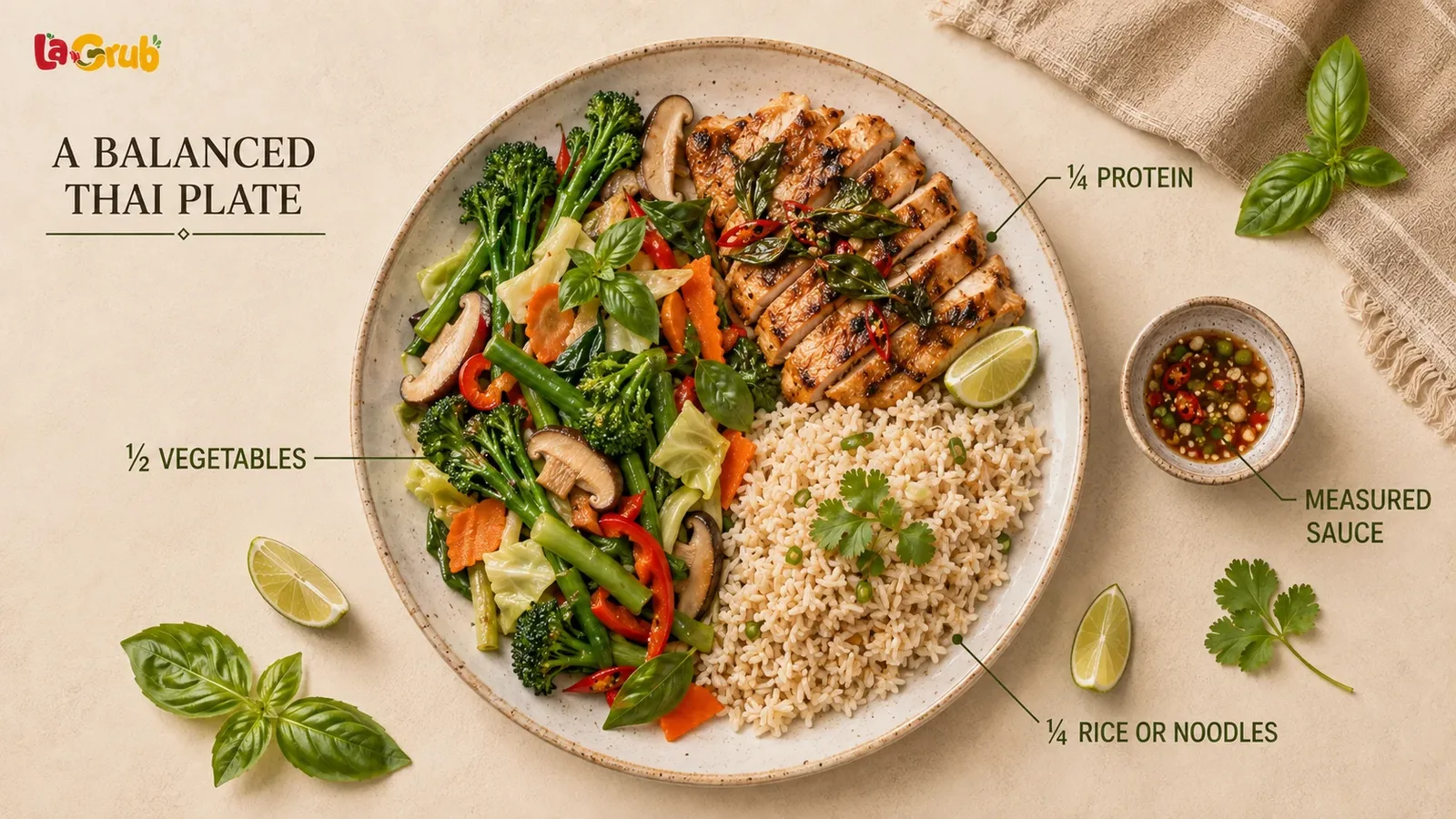
A balanced Thai plate has 1 protein, 2 vegetable portions, 1 starch portion, and 1 flavorful sauce in a controlled amount. This structure keeps Thai flavor strong without making the meal too heavy.
Use 1/4 of the plate for protein, such as shrimp, chicken, tofu, fish, egg, or lean beef. Use 1/2 of the plate for vegetables, such as green beans, cabbage, eggplant, mushrooms, carrots, cucumbers, or leafy greens.
Use 1/4 of the plate for rice or noodles. Choose jasmine rice, brown rice, rice noodles, glass noodles, or sticky rice in a portion that matches your hunger.
Keep sauces flavorful but measured. Fish sauce, soy sauce, oyster sauce, curry paste, coconut milk, peanuts, and palm sugar work best when the cook balances them with lime, herbs, and vegetables.
At home, this approach makes Thai meals easier to repeat. At restaurants, this approach helps you build a better order from the menu.
What Should You Watch in Thai Drinks and Desserts?
Thai drinks and desserts often add more sugar than the main dish. Thai iced tea, Thai pink milk, sweet fruit drinks, coconut desserts, and mango sticky rice can turn a light meal into a heavy one.
You do not need to avoid desserts to enjoy Thai food. Share mango sticky rice, choose a small Thai iced tea, or order unsweetened tea with a sweet dessert.
Fresh fruit can also finish a Thai meal well. Pineapple, mango, watermelon, papaya, and dragon fruit add sweetness without a thick syrup or condensed milk base.
The smarter question is not only is Thai food healthy. The smarter question is which drink, dessert, and portion complete the meal without crowding the plate.
FAQs About Thai Food and Health
Is Thai food healthy for everyday eating?
Yes, Thai food can fit everyday eating when you choose vegetables, lean protein, broth, and moderate starch portions. Limit deep-fried dishes, sweet drinks, and heavy sauces.
Is Pad Thai healthy?
Pad Thai can be moderate, but restaurant Pad Thai often has more oil, sugar, noodles, and sauce. Ask for extra vegetables and share large portions.
Is Thai curry healthy?
Thai curry can be balanced when you control coconut milk, rice, and portion size. Add vegetables and lean protein for a fuller meal.
Is Thai food high in sodium?
Yes, some Thai food can be high in sodium because fish sauce, soy sauce, and curry paste add salt. Ask for less sauce or choose broth carefully.
What is the healthiest Thai food to order?
Tom yum, larb, som tam with less sugar, grilled fish, and vegetable stir-fries are usually lighter choices. Add plain rice in a moderate portion.
Final Takeaway on Is Thai Food Healthy
Thai food is healthy when the meal centers on vegetables, herbs, lean protein, broth, and balanced portions. Thai food becomes heavier when sugar, sodium, frying oil, coconut milk, and oversized rice or noodle portions dominate the plate.
Start with one lighter Thai dish, adjust sugar and oil, and cook more Thai meals at home when you want control. Explore LaGrub’s Thai recipe cookbook for soups, salads, mains, snacks, desserts, and drinks you can make with clearer choices.

Sahar Syed
Sahar Syed writes about home cooking, food culture, and practical kitchen guides for readers who want confident, flavorful everyday meals.
Get a desi recipe worth cooking, every week
One tested recipe a week. Nothing else, and unsubscribe any time.


