

Learn how prop styling can transform desi food photography with rustic backgrounds, traditional cookware, natural lighting, and layered compositions. Discover the best props, styling techniques, and creative ideas to capture authentic, visually appealing images of biryani, curries, chai, and other traditional South Asian dishes while telling a compelling culinary story.
Why Prop Styling Matters in Desi Food Photography
Food styling helps tell a story. In desi food photography, props create warmth, tradition, and emotion. A simple curry bowl can look ordinary without styling, but with rustic props and layered composition, the same dish feels cinematic and inviting.
Good styling:
- Creates visual balance
- Adds cultural identity
- Improves storytelling
- Enhances texture contrast
- Makes food look authentic
- Builds emotional connection
Desi food naturally contains bold colors and strong textures. Proper styling helps those details stand out beautifully.
Understanding the Desi Food Aesthetic
The desi food aesthetic is warm, rustic, vibrant, and nostalgic. Unlike modern minimalist food photography, desi styling often celebrates richness and abundance.
Important elements include:
- Traditional cookware
- Handmade pottery
- Rustic backgrounds
- Natural textures
- Vintage utensils
- Earthy tones
- Cultural props
The goal is not perfection. Instead, the focus is authenticity and comfort.
For example:
- A slightly messy biryani spread feels more natural
- A ghee drizzle adds realism
- Scattered spices create movement
- Folded linen napkins add softness
These small details make food scenes feel alive.
Best Props for Styling Desi Food
Brass and Copper Utensils
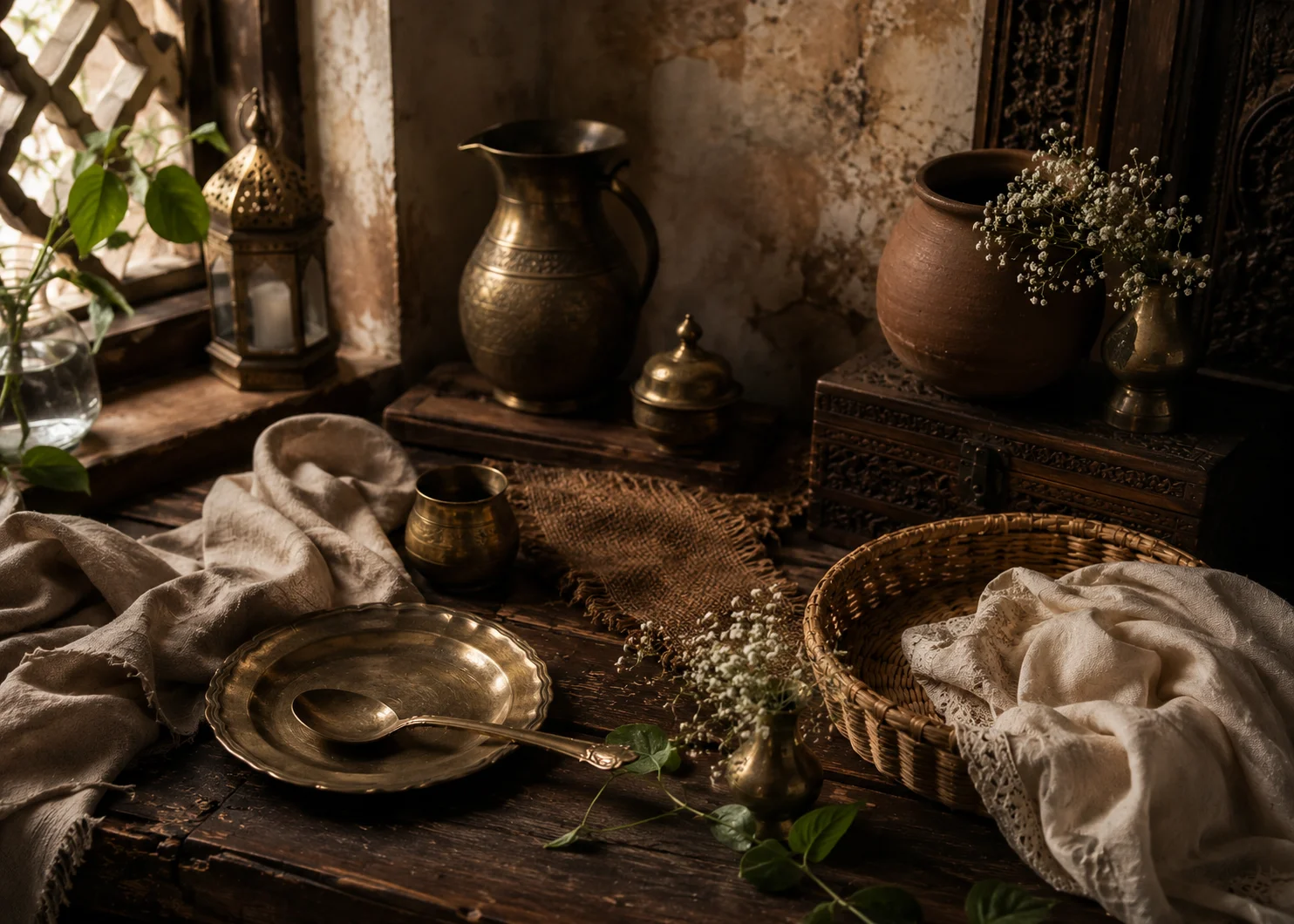
Traditional brass bowls and copper utensils instantly create a desi look. These props add warmth and richness to food scenes.
Best used for:
- Biryani
- Nihari
- Karahi
- Pulao
- Korma
The reflective surfaces also help enhance lighting naturally.
Clay Pots and Earthenware
Clay pots create an earthy and homemade feel. They work beautifully for:
- Dal
- Haleem
- Chai
- Traditional curries
Earthenware adds texture and cultural depth to photographs.
Wooden Boards and Rustic Trays
Wooden textures are essential in rustic food styling. Dark wooden boards create contrast with colorful desi dishes.
Benefits include:
- Adds warmth
- Creates depth
- Enhances food colors
- Supports visual storytelling
Aged wooden surfaces work best because they look natural and authentic.
Linen Napkins and Jute Mats
Soft fabrics help balance heavy food textures.
Neutral linen cloth:
- Adds softness
- Creates layering
- Improves composition
Jute mats add organic texture and enhance the rustic food aesthetic.
Traditional Spoons and Vintage Props
Vintage spoons, spice bowls, and handcrafted trays create character in food photography.
These props help:
- Fill empty spaces
- Create movement
- Add authenticity
- Improve cultural storytelling
Avoid using too many shiny modern props because they can reduce the traditional feel.
Choosing the Right Backgrounds for Desi Food Photography
Dark Rustic Backgrounds
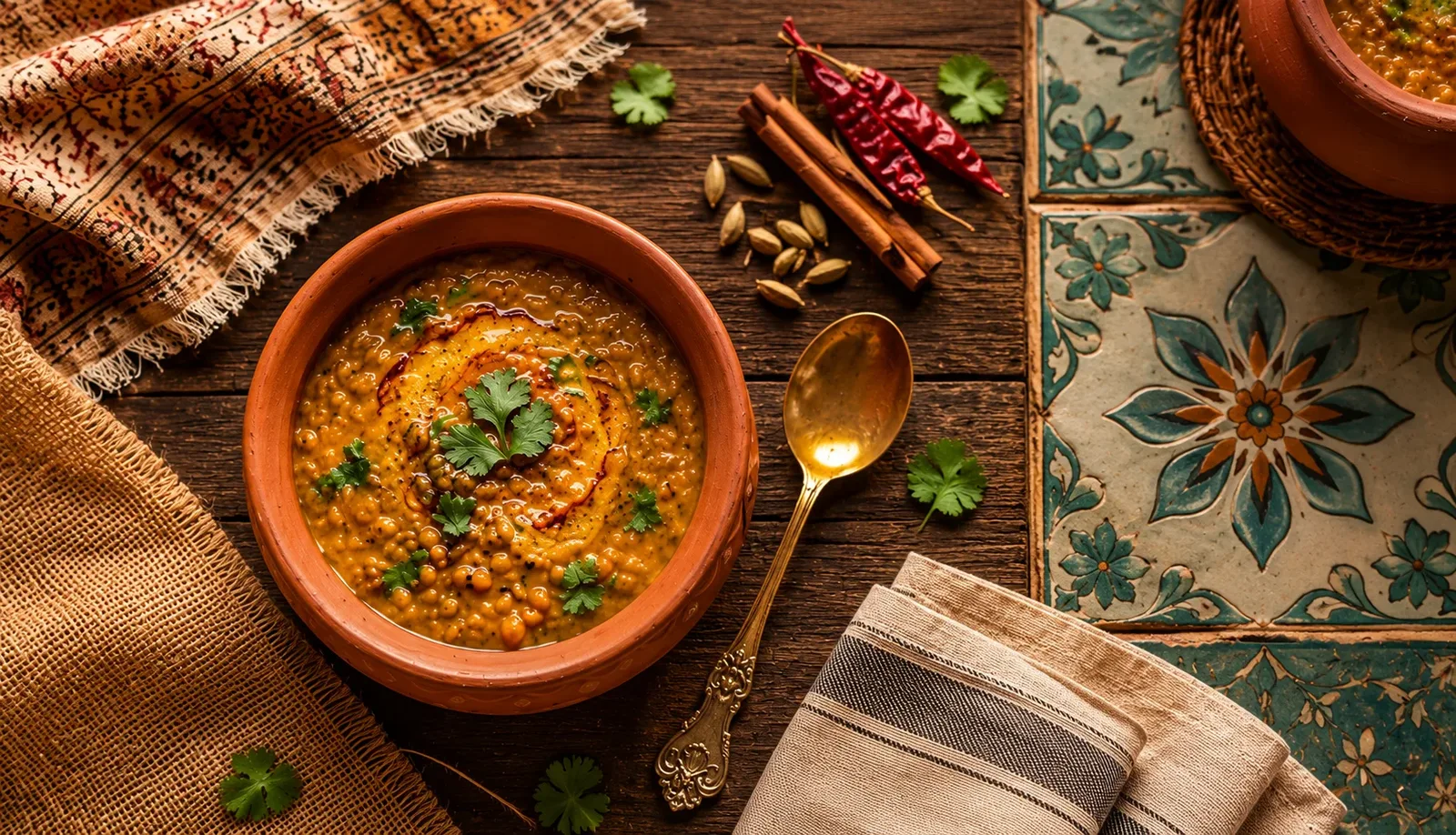
Dark backgrounds create dramatic and moody food photography.
Perfect for:
- Rich curries
- BBQ dishes
- Fried snacks
- Smoky food
Dark surfaces help spices and garnishes pop visually.
Stone and Concrete Textures
Concrete textures work well with modern rustic styling.
Benefits:
- Neutral appearance
- Good texture contrast
- Enhances colorful dishes
- Works with natural shadows
These surfaces help create editorial food photography looks.
Wooden Backgrounds
Wooden textures remain one of the best choices for desi food scenes.
Best colors:
- Walnut brown
- Dark oak
- Burnt wood
- Weathered wood
These shades complement Indian spices and earthy food tones naturally.
The Importance of Natural Lighting
Lighting is one of the biggest factors in food photography.
Natural lighting helps:
- Preserve food colors
- Create soft shadows
- Improve texture visibility
- Maintain authenticity
For desi dishes, side lighting works especially well because it highlights texture and steam.
Best Lighting Techniques
Side Lighting
Side lighting creates depth and texture contrast.
Works best for:
- Curry dishes
- Rice dishes
- Fried foods
Backlighting
Backlighting enhances steam and creates cinematic food photography.
Ideal for:
- Chai
- Soup
- Haleem
- Fresh naan
Diffused Light
Soft diffused light reduces harsh shadows and creates a balanced food scene.
Use:
- White curtains
- Diffusers
- Thin fabric
This creates natural and soft food aesthetics.
How to Create Layered Food Composition
Layered composition makes food scenes feel rich and realistic.
Instead of placing one bowl alone, add supporting elements like:
- Ingredients
- Spices
- Napkins
- Spoons
- Herbs
- Bread
- Sauces
This creates visual depth.
Example
For a dal setup:
- Main bowl of dal
- Small bowl of spices
- Rustic spoon
- Folded cloth
- Garlic cloves
- Green chilies
This arrangement tells a complete food story.
Color Balance in Desi Food Styling
Desi food already contains strong colors. Styling should support the food instead of overpowering it.
Warm Color Palette
Warm earthy colors work best:
- Brown
- Beige
- Rust
- Olive green
- Dark red
Avoid extremely bright artificial colors because they distract from the dish.
Contrast and Harmony
Use contrast carefully.
Examples:
- Yellow curry on dark wood
- Green chutney on beige plates
- White rice against black backgrounds
Balanced contrast improves visual appeal.
Styling Popular Desi Dishes
How to Style Biryani
Biryani looks best with rich and layered styling.
Best props:
- Brass handi
- Wooden tray
- Vintage spoon
- Raita bowl
- Lemon slices
Important styling tips:
- Show rice texture clearly
- Add visible herbs
- Include steam if possible
- Scatter spices naturally
This creates authentic food presentation.
How to Style Curry Dishes
Curries look more appealing when texture is highlighted.
Use:
- Dark bowls
- Rustic cloth
- Side lighting
- Visible oil shine
Add garnishes carefully:
- Cilantro
- Cream swirl
- Ginger slices
- Green chilies
These elements increase freshness.
How to Style Roti and Naan
Bread styling should feel warm and homemade.
Best methods:
- Stack naan casually
- Show burnt edges
- Add flour dust
- Include butter brush
These details create emotional warmth.
Food Garnishing Techniques That Work
Garnishing improves food aesthetics and presentation.
Popular desi garnishes:
- Cilantro
- Mint leaves
- Fried onions
- Lemon wedges
- Red chili flakes
- Ghee drizzle
Do not over-garnish. Simple garnishing often looks more professional.
Flat Lay Styling for Desi Food
Flat lay photography is very popular for social media and blogs.
Best Flat Lay Tips
- Keep spacing balanced
- Use multiple small bowls
- Add textures carefully
- Include supporting ingredients
- Avoid overcrowding
Flat lays work especially well for:
- Thali setups
- Iftar spreads
- Breakfast scenes
- Spice arrangements
Creating Visual Storytelling Through Props
Storytelling is a major part of food styling. Instead of showing only food, create a scene.
Examples:
- Fresh naan beside curry
- Chai with newspapers
- Spice bowls near cooking pots
- Ingredients partially visible
These details create emotional connection and authenticity.
Common Prop Styling Mistakes to Avoid
Using Too Many Props
Too many items create clutter and distract from the hero dish.
Always keep focus on the food.
Using Bright Artificial Colors
Neon props or colorful plastic items reduce authenticity.
Stick to earthy and traditional tones.
Ignoring Texture Contrast
Smooth surfaces everywhere make images look flat.
Mix:
- Fabric
- Wood
- Metal
- Stone
- Ceramic
Texture variation improves visual depth.
Overediting Photos
Heavy editing removes the natural feel of desi food.
Keep:
- Real textures
- Natural shadows
- Organic food tones
Authenticity always performs better.
Why Rustic Styling Works Best for Desi Food
Rustic styling matches the emotional nature of desi cuisine.
It feels:
- Homemade
- Traditional
- Warm
- Cultural
- Nostalgic
Rustic elements strengthen storytelling and make food feel comforting.
That is why rustic food styling dominates desi food photography trends.
How to Build a Simple Home Food Styling Setup
You do not need an expensive studio.
Basic setup:
- Window light
- Wooden board
- Linen cloth
- Clay bowl
- Vintage spoon
This simple arrangement can create professional food photos.
Best Camera Angles for Desi Food
Different angles highlight different textures.
Top View
Best for:
- Thalis
- Flat lays
- Table spreads
45-Degree Angle
Best for:
- Curry bowls
- Rice dishes
- Chai setups
Close-Up Shots
Best for:
- Texture
- Steam
- Garnishes
- Oil shine
Close-up photography creates emotional impact.
Importance of Handmade Pottery in Food Styling
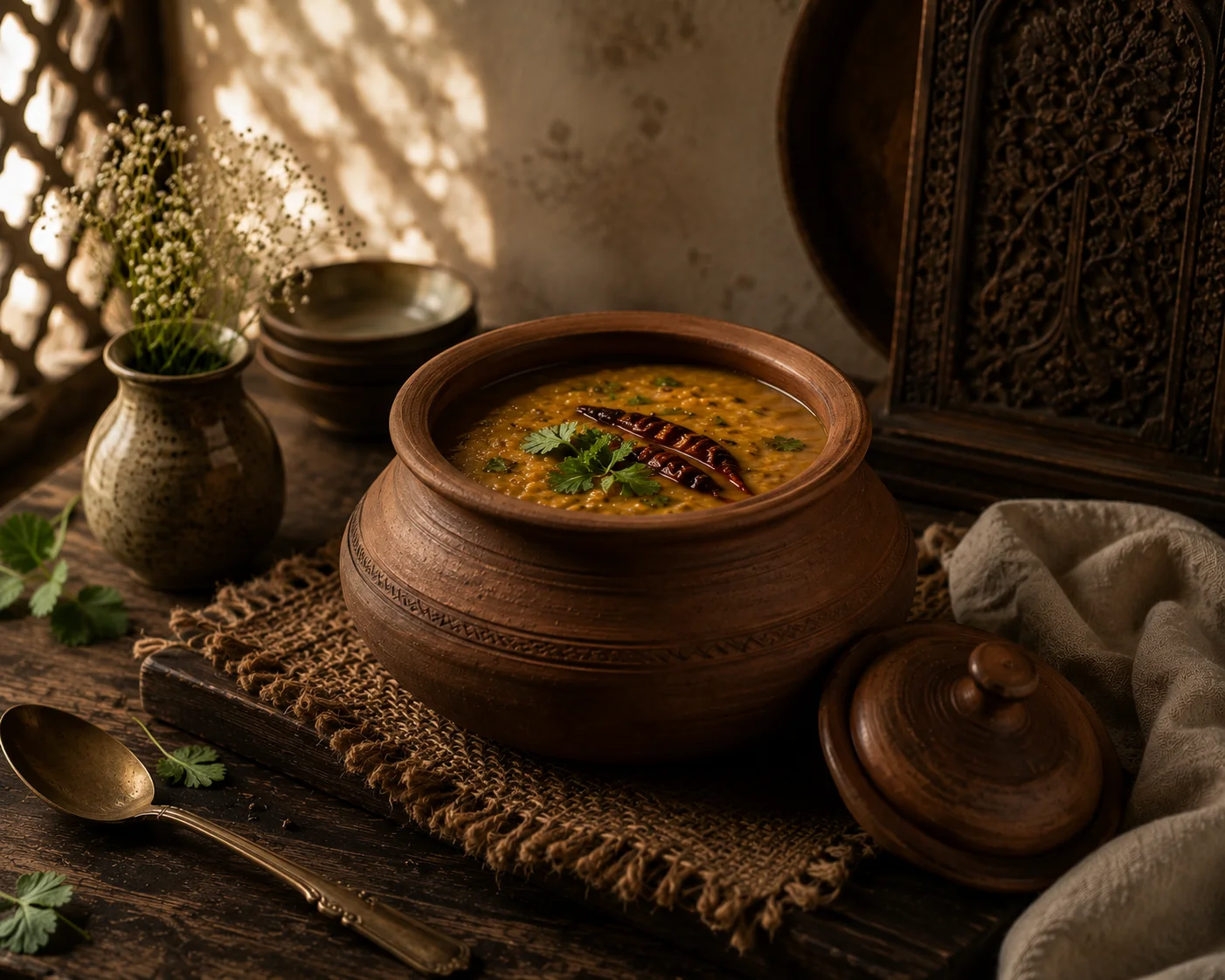
Handmade pottery adds uniqueness and warmth.
Benefits:
- Organic texture
- Traditional feel
- Cultural authenticity
- Rustic aesthetics
Every handcrafted piece adds personality to food scenes.
How to Use Spices as Styling Elements
Indian spices are visually powerful.
Use:
- Turmeric
- Chili powder
- Cardamom
- Cinnamon sticks
- Cloves
Scatter them naturally around the frame for added storytelling.
Do not overuse them because too many spices can look messy.
Creating Moody Food Photography
Moody food photography is highly effective for desi cuisine.
Key elements:
- Dark backgrounds
- Side lighting
- Deep shadows
- Rustic props
- Warm editing
This style creates dramatic and cinematic visuals.
Minimal Styling vs Rich Styling
Both approaches work depending on the dish.
Minimal Styling
Best for:
- Chai
- Desserts
- Snacks
Focus stays on simplicity.
Rich Styling
Best for:
- Biryani
- Festive spreads
- Eid dishes
- BBQ platters
Layered props create abundance and celebration.
Why Authenticity Matters in Desi Food Photography
People connect emotionally with authentic food scenes.
Authenticity builds:
- Trust
- Relatability
- Warmth
- Nostalgia
A realistic homemade setup often performs better than an overly polished scene.
That is why cultural food styling remains important.
Tips for Better Food Composition
Strong composition improves readability and viewer attention.
Rule of Thirds
Place the hero dish slightly off-center for better balance.
Negative Space
Leave some empty space to avoid clutter.
Leading Lines
Use spoons, cloth folds, or bread placement to guide the eye.
Texture Balance
Combine smooth and rough surfaces for natural contrast.
Seasonal Styling Ideas for Desi Food
Winter Styling
Use:
- Dark wood
- Steam
- Warm tones
- Heavy fabrics
Perfect for:
- Nihari
- Haleem
- Chai
Summer Styling
Use:
- Bright natural light
- Fresh herbs
- Light fabrics
- Fresh fruits
Perfect for:
- Lassi
- Salads
- BBQ dishes
Advanced Food Styling Techniques for Desi Food Photography
Once you understand the basics of Prop Styling for Desi Food: What Works, the next step is learning advanced styling techniques that make your food photography look premium and editorial.
Professional food stylists focus on atmosphere, emotion, and storytelling instead of simply placing food on a table. Every prop, texture, shadow, and garnish has a purpose.
Creating a Realistic Dining Experience
One of the best ways to improve desi food photography is to make the scene feel natural and lived-in.
A perfectly clean table sometimes looks artificial. Small imperfections make food scenes feel more authentic.
You can add realism by:
- Crumbling small pieces of naan
- Adding slight curry spills
- Leaving spoon marks in dal
- Showing steam from fresh food
- Placing casually folded napkins
- Adding partially visible ingredients
For example:
A biryani setup looks more realistic when rice grains are scattered naturally around the serving dish instead of perfectly arranged.
Importance of Texture in Food Styling
Texture is one of the strongest elements in desi food photography.
Important textures include:
- Crispy fried onions
- Creamy curry surfaces
- Fluffy rice grains
- Smoky kebab edges
- Butter glaze on naan
- Thick lentil consistency
How to Enhance Texture Naturally
You can improve food textures using:
- Side lighting
- Close-up shots
- Rustic backgrounds
- Matte serving bowls
- Natural garnishing
Avoid excessive editing because it removes realistic texture details.
Using Steam for More Appetizing Photos
Steam instantly makes food look fresh and warm.
This technique works especially well for:
- Karahi
- Chai
- Nihari
- Haleem
- Fresh naan
- Soup dishes
Tips for Capturing Steam
- Shoot immediately after serving
- Use dark backgrounds for contrast
- Position light behind the steam
- Keep the room slightly darker
Backlighting helps steam stand out beautifully.
How to Style Desi Breakfast Scenes
Breakfast food styling should feel soft, cozy, and welcoming.
Popular desi breakfast items include:
- Paratha
- Omelet
- Chai
- Halwa puri
- Fried eggs
- Yogurt
Best Props for Breakfast Styling
Use:
- Wooden trays
- Ceramic cups
- Soft linen cloth
- Traditional kettles
- Rustic plates
Warm morning light works best for breakfast photography because it creates softness and comfort.
You can also add:
- Open newspapers
- Tea strainers
- Fresh herbs
- Honey jars
These elements strengthen storytelling naturally.
Styling Festive Food Spreads
Festive desi food setups require richer styling and layered compositions.
This includes:
- Eid spreads
- Dawat tables
- Ramadan iftar setups
- Wedding food arrangements
Important Elements for Festive Styling
- Multiple serving bowls
- Layered dishes
- Traditional trays
- Decorative fabrics
- Brass servingware
- Candlelight accents
Rich styling works well because festive meals are naturally grand and vibrant.
However, balance remains important. The hero dish should still stand out clearly.
Using Negative Space Correctly
Many beginners overcrowd food scenes with props.
Negative space improves:
- Composition
- Readability
- Focus
- Professional appearance
Empty space gives the viewer’s eyes room to rest.
For example:
If photographing curry and naan, leave one side of the frame slightly empty instead of filling every corner with props.
This technique creates cleaner and more elegant food photography.
How Fabric Styling Improves Food Photography
Fabric is often overlooked, but it strongly affects mood and depth.
Best fabrics for desi food styling:
- Linen
- Cotton
- Jute
- Soft textured cloth
Avoid shiny synthetic fabrics because they look artificial on camera.
Fabric Styling Tips
- Create natural folds
- Avoid perfectly flat cloth
- Use neutral earthy tones
- Layer fabrics subtly
Soft fabric movement creates organic visual flow.
This helps scenes feel realistic instead of staged.
Importance of Color Psychology in Food Styling
Colors influence emotions and appetite.
Warm colors make food feel comforting and rich.
Best Colors for Desi Food Styling
- Brown
- Deep orange
- Olive green
- Beige
- Rust
- Dark red
These colors support traditional food aesthetics naturally.
Colors to Avoid
Avoid overly bright neon colors because they distract from the food and reduce authenticity.
Muted earthy palettes work far better for rustic food photography.
Using Fresh Ingredients as Props
Fresh ingredients help create authentic kitchen storytelling.
Examples:
- Fresh coriander
- Whole spices
- Garlic cloves
- Onions
- Tomatoes
- Flour dust
- Lemon wedges
These supporting elements make food scenes feel active and natural.
They also strengthen cultural identity in food photography.
How to Create Editorial Food Photography
Editorial food photography feels polished but natural.
This style is commonly used in:
- Magazines
- Premium blogs
- Restaurant branding
- Food advertisements
Characteristics of Editorial Styling
- Controlled lighting
- Balanced composition
- Strong storytelling
- Detailed textures
- Elegant prop placement
Editorial styling often uses fewer props but focuses heavily on detail and atmosphere.
Best Lens and Framing Ideas for Food Photography
Camera framing affects how food appears visually.
Wide Composition
Best for:
- Large spreads
- Dining tables
- Iftar setups
Wide shots create context and storytelling.
Tight Framing
Best for:
- Curry textures
- Garnishes
- Dessert close-ups
Close framing creates emotional connection and appetite appeal.
Why Handmade and Imperfect Props Work Better
Perfect factory-made props sometimes look cold and artificial.
Handmade props add:
- Character
- Warmth
- Organic texture
- Cultural realism
Slight imperfections often improve authenticity.
This is especially important in desi food photography because traditional meals are emotional and heritage-based.
Building a Consistent Food Photography Style
Consistency helps create a strong visual identity.
Choose a style direction such as:
- Rustic and moody
- Bright and minimal
- Traditional cultural styling
- Cinematic storytelling
Once you choose a direction, maintain consistency in:
- Colors
- Lighting
- Props
- Editing
- Composition
This makes your food photography look more professional and recognizable.
Styling Street Food the Right Way
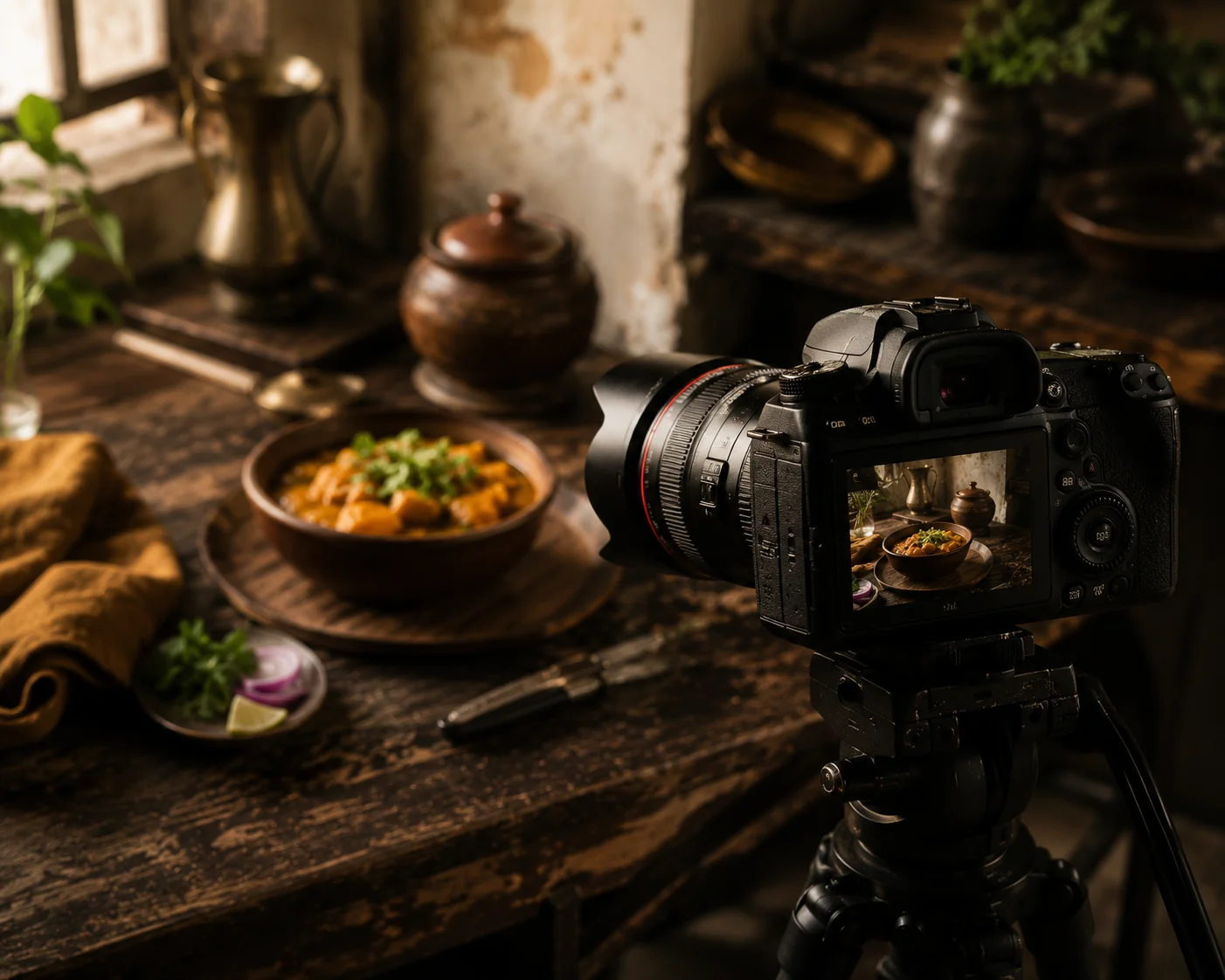
Street food photography should feel energetic and flavorful.
Popular street foods:
- Chaat
- Samosa
- Bun Kebab
- Gol Gappay
- Pakoras
Best Styling Ideas for Street Food
Use:
- Newspaper wraps
- Wooden tables
- Rustic metal plates
- Vibrant chutneys
- Casual composition
Street food styling should feel lively instead of overly polished.
Natural messiness works well here.
How to Use Shadows Creatively
Shadows add mood and dimension.
Soft shadows create:
- Warmth
- Realism
- Depth
- Cinematic quality
Hard shadows can work for dramatic setups but should be controlled carefully.
Natural window shadows often create the best results.
Why Simplicity Often Wins
Many beginners think more props automatically create better photos.
In reality, strong styling is about balance.
Sometimes:
- One clay bowl
- One spoon
- One cloth
- Natural light
is enough to create stunning desi food photography.
The food should always remain the hero.
Props should support the story, not overpower it.
FAQs
What are the best props for desi food photography?
Brass bowls, clay pots, wooden boards, linen cloth, and vintage utensils are excellent choices for authentic desi food styling.
Why does rustic styling work well for Indian food photography?
Rustic styling matches the warmth, richness, and cultural depth of desi cuisine, making food scenes feel natural and emotional.
What lighting is best for food photography?
Natural side lighting works best because it highlights texture, depth, and food details beautifully.
How can I make homemade food look professional?
Use layered composition, natural lighting, rustic props, and simple garnishing techniques to improve presentation.
What backgrounds work best for desi dishes?
Dark wooden surfaces, stone textures, and rustic backdrops create strong contrast and enhance food colors.
How many props should I use in one scene?
Use only enough props to support the story. Too many props create clutter and distract from the food.
Conclusion
Understanding Prop Styling for Desi Food: What Works can completely transform your food photography. The right combination of rustic props, traditional cookware, natural lighting, layered composition, and authentic storytelling helps create visually rich and emotional food scenes.
Focus on authenticity instead of perfection. Handmade pottery, earthy textures, vintage utensils, and natural shadows allow every dish to feel warm, inviting, and culturally rich. Whether you are styling biryani, dal, chai, curries, or festive spreads, thoughtful food presentation always enhances the final image.
For more expert food photography tips, authentic recipes, and creative culinary inspiration, visit LaGrub. At LaGrub, you'll discover practical food styling guides, traditional South Asian recipes, and photography techniques designed to help home cooks, food bloggers, and content creators produce stunning, story-driven food images that celebrate the rich flavors and heritage of desi cuisine.

Maimoona Ehtisham
Maimoona Ehtisham writes for LaGrub on cooking, recipes, and mindful culinary living.
Get a desi recipe worth cooking, every week
One tested recipe a week. Nothing else, and unsubscribe any time.


