

Food styling is more than making a dish look beautiful. It is the careful art of presenting food in a way that feels fresh, appetizing, honest, and ready for the camera. For restaurants, cafés, bakeries, packaged food brands, and recipe websites, strong food styling can help customers trust the brand, feel tempted by the food, and take action before they even taste the first bite.
What is Food Styling? And Why Your Brand Needs It
What is food styling? It is the art and strategy of making food look fresh, appetizing, and camera-ready for photos, videos, menus, packaging, websites, and social media. For food brands, food styling helps turn a simple dish or product into a visual story that customers want to taste.
Before people taste your food, they see it. They see it on Instagram, TikTok, delivery apps, menus, websites, recipe pages, ads, and packaging. In that first moment, the customer decides if the food looks fresh, trustworthy, premium, and worth trying.
That is why food styling for brands matters so much. Good styling does not only make food look pretty. It helps a food brand show texture, freshness, quality, care, and appetite appeal before the first bite.
For restaurants, cafés, bakeries, cloud kitchens, packaged food brands, delivery brands, recipe websites, and food product companies, strong visuals can change how customers feel. A well-styled dish can make someone click, order, book a table, save a recipe, or trust a new product.
At Lagrub, food is not only content. It is memory, craft, and experience. So professional food styling should never feel fake or forced. It should make real food look its best, while keeping the brand honest and inviting.
What is Food Styling?
Food styling is the process of preparing, arranging, and presenting food so it looks good for the camera. It is used in food photography, food videos, ads, menus, packaging, recipe websites, cookbooks, delivery apps, and social media content.
In simple words, food styling helps food look as delicious in a photo as it tastes in real life.
A dish may smell amazing on the table, but the camera does not capture smell. It also does not capture taste. So the food must show freshness, texture, and flavor through visual details.
A food stylist may adjust the sauce, add garnish, clean the plate, arrange the ingredients, choose the right bowl, create steam, add shine, or place crumbs in a natural way. These details help the image feel alive.
Good food photography styling can make a dish look:
- Fresh
- Warm
- Crisp
- Juicy
- Creamy
- Rich
- Light
- Homemade
- Premium
- Comforting
- Worth ordering
This is why what is food styling is more than a creative question. For a brand, it is a business question too.
What Does a Food Stylist Do?
A food stylist prepares food for photography or video. Their job is to make sure the food looks clear, fresh, and attractive on camera.
The work may look simple from the outside, but it requires food knowledge, visual sense, patience, and brand understanding. A professional food stylist knows how food changes under lights, how sauces move, how herbs wilt, how ice melts, and how steam fades.
A food stylist may handle:
- Plating
- Garnishing
- Sauce placement
- Texture building
- Prop selection
- Backdrop choice
- Portion control
- Ingredient placement
- Freshness control
- Colour balance
- Camera-ready food setup
- Food styling props
- Recipe photography setup
- Product photography details
For example, if a restaurant wants a burger photo, the stylist may place the lettuce carefully, add shine to the bun, position the cheese, control the sauce drip, and arrange fries in a natural but clean way.
If a brand sells pasta sauce, the stylist may show the sauce coating the pasta, add herbs, choose the right plate, and make the product feel rich and ready to eat.
If a bakery sells cakes, the stylist may focus on clean slices, soft crumbs, fresh fruit, smooth cream, and a beautiful serving mood.
This is how food styling for brands turns food into a clear visual message.
Food Styling vs Food Photography
Many people confuse food styling with food photography. They work together, but they are not the same.
Food styling is about preparing and arranging the food.
Food photography is about capturing the food with a camera.
The food stylist makes the dish camera-ready. The photographer manages camera angle, lighting, lens, frame, and editing. In a professional shoot, both roles work closely together.
Think of it this way:
- The chef cooks the food.
- The food stylist prepares the food for the camera.
- The photographer captures the image.
- The brand uses the image to sell, inform, or inspire.
For small brands, one person may do more than one role. A restaurant owner, content creator, or chef may handle simple styling and photography together. But for major campaigns, menus, packaging, and ads, professional food styling can make a big difference.
The key point is simple: food can taste wonderful and still photograph poorly. That is why food styling and photography must work together.
Why Food Styling Matters for Food Brands
Food styling for brands matters because customers judge food with their eyes first.
When someone sees your food online, they cannot smell it. They cannot taste it. They cannot feel the warmth of the bread or the crunch of fried chicken. They only have the image.
That image must do the work.
Strong food brand photography can help your brand:
- Look more professional
- Build customer trust
- Increase appetite appeal
- Improve menu clicks
- Improve delivery app orders
- Support social media growth
- Make packaging more attractive
- Help ads perform better
- Show product quality
- Create a stronger brand identity
Food styling is not only about beauty. It is about clarity. A customer should understand what the food is, what it tastes like, what texture it has, and why they should care.
A messy photo can make good food look careless. A flat image can make fresh food look old. Poor lighting can make a premium product look cheap.
On the other hand, professional food styling can make the same product feel fresh, premium, and desirable.
This is why why food styling matters should be clear for every food business. Better visuals help people trust the food before they buy it.
How Food Styling Builds Brand Trust
Trust is one of the biggest reasons food brands need food styling.
People are careful about food. They want to know if it is clean, fresh, tasty, and worth the money. A strong image helps answer these questions before they ask.
Good food presentation tells customers:
- This brand cares about quality.
- This food is fresh.
- This product is worth trying.
- This restaurant pays attention.
- This menu is professional.
- This recipe is reliable.
- This package contains something appetizing.
For example, a cloud kitchen with poor delivery app photos may lose orders even if the food tastes good. A sauce brand with dull product images may look less exciting than a competitor. A bakery with dark cake photos may fail to show softness, layers, and freshness.
Good food visual identity fixes this. It creates a consistent look across all brand spaces.
Your food photos should feel connected on:
- Website pages
- Social media posts
- Delivery apps
- Printed menus
- Product packaging
- Restaurant posters
- Email campaigns
- Ads
- Recipe blogs
- Influencer content
When visuals are consistent, the brand feels stronger. Customers start to remember it.
Why Restaurants Need Food Styling
Restaurant food styling is important because menus and online platforms now work like digital storefronts.
Many people choose a restaurant by looking at photos first. They check Instagram, Google, TikTok, delivery apps, menu images, and reviews. If the food does not look good, they may scroll past it.
For restaurants, food styling for restaurants can help with:
- Menu photography
- Delivery app photos
- Social media content
- New dish launches
- Seasonal menus
- Restaurant ads
- Influencer visits
- Website images
- Table cards
- Posters and banners
A restaurant dish must look clear and inviting. The customer should know what they are getting. If a dish is spicy, rich, cheesy, crispy, grilled, or creamy, the image should show that.
For example:
- A karahi should show fresh ginger, green chili, oil shine, and thick masala.
- A burger should show layers, sauce, cheese, and texture.
- A pizza should show melted cheese, toppings, crust, and warmth.
- A salad should show freshness, colour, and crunch.
- A dessert should show softness, cream, fruit, or chocolate detail.
Good restaurant menu photography is not only for looks. It helps people decide what to order.
Food Styling for Social Media
Food styling for social media is now a major need for food brands.
Instagram, TikTok, YouTube Shorts, Pinterest, and Facebook all depend on fast visual attention. People scroll quickly. Your food has only a few seconds to make them stop.
Social media food content should feel fresh, real, and easy to understand. It does not always need to look like a luxury magazine shoot. But it must look appetizing.
Good social media food content may include:
- Close-up texture shots
- Sauce pours
- Cheese pulls
- Steam rising
- Crispy bites
- Fresh garnish
- Mixing shots
- Before-and-after plating
- Hands serving food
- Recipe steps
- Behind-the-scenes cooking
- Product use in real life
This is where food styling and photography work with storytelling. The food should not sit lifeless on a plate. It should feel like something is happening.
For example, a pasta brand can show sauce being stirred into pasta. A chai brand can show tea being poured. A bakery can show cake being sliced. A burger brand can show the first bite. A spice brand can show masala blooming in oil.
Movement makes food feel alive.
Food Styling for Menus, Websites, and Delivery Apps
Food photos on menus, websites, and delivery platforms must be clear, honest, and useful.
A customer on a delivery app is often making a fast decision. They compare your food with many other options. If your dish looks dull, unclear, or poorly lit, the customer may choose another brand.
Food styling for menus helps each dish look its best while still looking real.
For delivery apps, the image should show:
- The main dish clearly
- Fresh garnish
- Correct portion size
- Good lighting
- Clean background
- True colour
- Texture
- Sauce or toppings
- Packaging if relevant
For websites, food brand photography should support the brand mood. A premium food brand may use clean surfaces, soft lighting, and elegant props. A street food brand may use bold colour, movement, and energy. A family restaurant may use warm table settings and shared plates.
The goal is not to copy every other brand. The goal is to make your food look true to your brand.
Food Styling for Packaging and Product Photography
Food styling for packaging is very important for packaged food brands.
When a customer sees a box, jar, pouch, bottle, or packet, the image on the package helps them imagine the taste. Good styling can make the product look fresh, useful, and worth buying.
This matters for:
- Sauces
- Spices
- Snacks
- Frozen food
- Beverages
- Desserts
- Ready meals
- Meal kits
- Pasta
- Rice
- Baking products
- Dairy products
- Pickles and chutneys
Food product photography should show how the product fits into life. A sauce should not only sit in a jar. It should appear on a meal. A spice mix should not only show powder. It should show a finished dish. A snack should show crunch, portion, and serving mood.
For packaged food brands, professional food styling can support:
- Product packaging
- E-commerce pages
- Retail listings
- Ads
- Social media
- Recipe cards
- Launch campaigns
- Seasonal promotions
A well-styled product makes the customer feel, “I know how to use this. I want to try it.”
That is powerful.
Elements of Good Food Styling
Good food styling is built from many small details. Each detail helps the food look more appetizing and brand-ready.
Colour
Colour is one of the first things customers notice.
Fresh herbs, red sauce, golden crust, white cream, green salad, brown grilled meat, and bright fruit can all create appetite. The colours should look natural, not dull or fake.
Good colour balance helps the food stand out. For example, green coriander on a rich curry adds freshness. A lemon wedge beside grilled fish adds brightness. A white plate can make colourful food look clean.
Texture
Texture makes food feel real.
Customers want to see crunch, creaminess, softness, crisp edges, layers, grains, bubbles, glaze, crumbs, or sauce. A flat image feels less appetizing.
Food styling techniques can help show texture clearly. This may include cutting food open, adding sauce at the right point, showing layers, or using close-up angles.
Freshness
Freshness is essential in food visuals.
Wilted herbs, dry meat, dull sauce, or tired salad can damage trust. A food stylist may refresh herbs, replace garnish, adjust shine, and make sure the hero dish looks alive.
Freshness tells the customer that the brand cares.
Props
Food styling props include plates, bowls, spoons, napkins, boards, glasses, pans, jars, trays, and background items.
Props should support the food, not distract from it. A rustic bread may look good on a wooden board. A premium dessert may need a clean plate and soft linen. A Pakistani dish may look beautiful with copper bowls, naan baskets, chutney cups, and warm surfaces.
Props tell the brand story.
Lighting
Lighting can make or break food images.
Good lighting shows texture, shine, steam, and colour. Poor lighting can make food look heavy, grey, or old.
Natural light often works well for simple food photography. For commercial shoots, controlled lighting gives more consistent results.
Composition
Composition means how everything is arranged in the frame.
A good composition guides the eye. The main dish should be clear. The props should support it. There should be enough space to let the food breathe.
Good composition also helps when images need text for ads, blogs, or social media.
Movement
Movement makes food feel alive.
A sauce pour, hand reaching for naan, spoon dipping into curry, steam rising from soup, or crumbs falling from a cookie can create life in an image.
For video, movement is even more important. It keeps people watching.
Is Food Styling Honest or Fake?
 Food styling Honest or fake
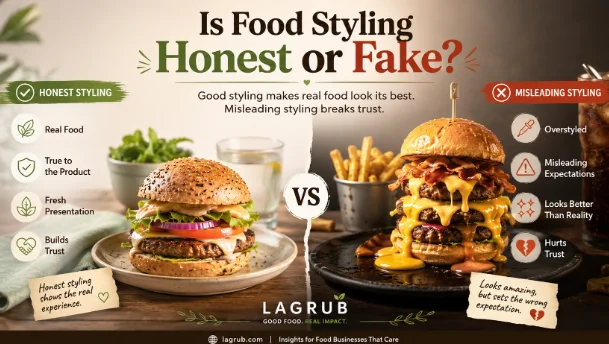
Many people ask if food styling is fake. The answer depends on how it is done.
Modern food styling for brands should be honest. It should enhance real food, not mislead customers. The goal is to make food look fresh, clear, and camera-ready. It should not create a false promise.
Honest food styling means:
- The food still represents the real product.
- The portion size is not misleading.
- The ingredients are accurate.
- The final dish looks possible.
- The image supports trust.
- The brand does not hide important details.
For editorial shoots, some styling tricks may be used to keep food stable under lights. But for menus, packaging, delivery apps, and product pages, brands should be careful. Customers should receive food that feels close to what they saw.
Trust is more valuable than a perfect fake image.
At Lagrub, the better approach is simple: make real food look its best.
Common Food Styling Mistakes Brands Make
Many food brands make small visual mistakes that weaken their image. These mistakes can affect clicks, orders, and trust.
Common mistakes include:
- Using dark, unclear photos
- Showing messy plates
- Ignoring garnish
- Using props that do not match the brand
- Overloading the frame
- Making food look dry
- Using poor lighting
- Showing wrong portion sizes
- Using too many filters
- Making colours look unnatural
- Copying competitors too closely
- Using old photos across all platforms
- Ignoring delivery app images
- Not styling food for video
- Forgetting the brand mood
Another mistake is treating food styling as something only big brands need. Small brands need it too. A small café, cloud kitchen, bakery, or local food product can look more professional with better styling.
You do not always need a large budget. But you do need care, planning, and visual consistency.
Simple Food Styling Tips for Brands
Here are practical food styling tips that brands can use.
- Start with fresh food.
- Choose one hero dish.
- Keep the plate clean.
- Use garnish with purpose.
- Show texture clearly.
- Use natural light when possible.
- Avoid too many props.
- Choose plates that match the brand.
- Add colour contrast.
- Show sauce, steam, or shine.
- Use real ingredients in the frame.
- Keep backgrounds simple.
- Style for the platform.
- Shoot both wide and close-up images.
- Take photos before food loses freshness.
- Do not over-edit the image.
- For social media, focus on movement and texture.
- For menus, focus on clarity.
- For packaging, focus on product use.
- For websites, focus on brand story.
- For ads, focus on desire and action.
These small steps can make food presentation much stronger.
When Should a Brand Hire a Food Stylist?
A brand should consider hiring a food stylist when visuals are important for sales, launch, or brand trust.
You may need professional food styling if you are creating:
- New menu photos
- Delivery app images
- Website banners
- Product packaging
- Social media campaigns
- Restaurant ads
- Recipe videos
- Cookbook images
- Influencer campaign assets
- Food product photography
- Seasonal promotions
- Billboards or print ads
A food stylist is especially helpful when the shoot has many dishes, tight timing, or high business value.
For example, if a packaged food brand is launching a sauce range, the images may be used for packaging, ads, website, social media, retail listings, and recipe cards. In that case, professional styling is worth it.
If a restaurant is updating its full menu, good styling can help every dish look more clear and appealing.
If a cloud kitchen depends on delivery app photos, better styling can support more clicks and orders.
How Food Styling Supports Brand Identity
Food visual identity is the way your food brand looks across all platforms. It includes colour, mood, props, lighting, plate style, background, and overall feeling.
A brand should ask:
- Are we rustic or modern?
- Are we premium or casual?
- Are we family-friendly or bold?
- Are we healthy or indulgent?
- Are we traditional or fusion?
- Are we clean and minimal or warm and rich?
Food styling for brands helps answer these questions visually.
For example:
- A premium chocolate brand may use dark tones, clean props, and smooth textures.
- A family recipe website may use warm light, wooden surfaces, and homely dishes.
- A Pakistani restaurant may use copper bowls, naan baskets, chutneys, and rich colours.
- A healthy salad brand may use bright greens, clean plates, and natural light.
- A bakery may use soft cloth, crumbs, cream, and fresh fruit.
Every visual choice tells the customer what kind of brand they are seeing.
This is why food styling is brand strategy, not just decoration.
How Food Styling Can Help Sales
Food styling for sales works because it improves the customer’s first impression.
A customer is more likely to buy when the food looks:
- Fresh
- Clear
- Tasty
- Trustworthy
- Well-made
- Worth the price
- Easy to understand
- Better than competitors
For restaurants, better photos can support more menu clicks and delivery orders. For packaged food brands, better product images can improve trust and shelf appeal. For recipe websites, better images can increase saves, shares, and time on page.
Good food marketing visuals can also reduce doubt. A clear image tells the customer what they are getting.
When customers feel confident, they are more likely to act.
That action may be:
- Ordering food
- Booking a table
- Buying a product
- Saving a recipe
- Sharing a post
- Visiting a website
- Trying a new menu item
- Choosing your brand over another
This is why why food styling matters should be part of every food brand’s marketing plan.
Food Styling for Recipe Websites and Blogs
 Food styling
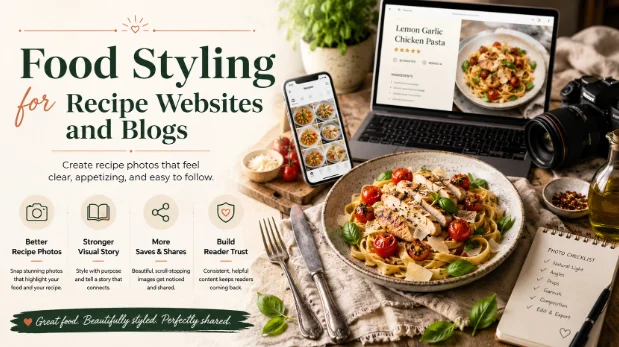
Recipe websites also need strong food photography styling.
People often choose recipes based on images. If the dish looks fresh, simple, and achievable, they are more likely to read the recipe and cook it.
For recipe content, styling should show:
- Final dish clearly
- Main ingredients
- Step-by-step process
- Texture
- Serving ideas
- Realistic portions
- Clean layout
- Natural mood
A recipe photo should not feel impossible. It should feel inviting. The reader should think, “I can make this.”
For Lagrub-style recipe content, styling should balance beauty and practicality. The food should look rich and soulful, but still real for home cooks.
FAQs About Food Styling
What is food styling?
What is food styling? It is the process of preparing and arranging food so it looks fresh, appetizing, and camera-ready for photos, videos, menus, websites, packaging, ads, and social media.
What does a food stylist do?
A food stylist prepares food for the camera. They handle plating, garnish, props, freshness, sauce placement, texture, colour, and composition so the food looks its best in photos or videos.
Why is food styling important for brands?
Food styling for brands is important because customers see food before they taste it. Good styling helps build trust, improve appetite appeal, support brand identity, and increase clicks, orders, bookings, or sales.
Is food styling the same as food photography?
No. Food styling prepares the food for the camera. Food photography captures the image. Both work together to create strong food visuals.
Do restaurants need food styling?
Yes. Food styling for restaurants helps menu photos, delivery app images, social media posts, ads, and website visuals look more professional and appetizing.
Why do food photos affect sales?
Food photos affect sales because they shape customer perception. If food looks fresh and tasty, people are more likely to order, book, click, or buy.
Is food styling fake?
Food styling is not fake when it is done honestly. It should make real food look its best without misleading customers about the product, portion, or ingredients.
What are common food styling props?
Common food styling props include plates, bowls, spoons, napkins, trays, boards, glasses, jars, pans, table linens, surfaces, and ingredient details.
What is food styling for packaging?
Food styling for packaging means arranging food or product-use images for boxes, jars, bottles, pouches, labels, and retail displays so the product looks useful, fresh, and appealing.
Can small food brands use food styling?
Yes. Small brands can use simple food styling tips like better lighting, fresh garnish, clean plates, texture shots, and consistent props to make their food look more professional.
When should I hire a professional food stylist?
Hire a professional food stylist for packaging shoots, menu photography, product launches, ad campaigns, delivery app images, website banners, and high-value brand content.
How does food styling help social media?
Food styling for social media helps food look scroll-stopping, fresh, and shareable. It can improve engagement, saves, clicks, and customer interest.
Conclusion
What is food styling? It is the visual craft that helps food look fresh, clear, appetizing, and brand-ready for the camera. But for food businesses, it is also much more than that. It is a way to build trust, show quality, support brand identity, and help customers feel confident enough to click, order, book, or buy.
Good food styling does not make food fake. It makes real food easier to understand and desire. It shows texture, colour, warmth, freshness, and care in a single image or video.
For restaurants, cafés, bakeries, cloud kitchens, packaged food brands, recipe websites, and delivery brands, food styling for brands can change how people see your food. It can make your product look more professional. It can help your menu perform better. It can make your social media stronger. It can make your packaging more attractive. Most of all, it can help your brand feel trustworthy.
At Lagrub, we believe food should be seen with the same care it is made with. If your food has flavor, story, and soul, your visuals should show that too. Explore more Lagrub guides to build better food content, stronger recipes, and a brand that customers remember.

Sahar Syed
Sahar Syed writes for LaGrub on cooking, recipes, and mindful culinary living.
Get a desi recipe worth cooking, every week
One tested recipe a week. Nothing else, and unsubscribe any time.


