


Japanese food is not one fixed collection of ancient recipes. It is a living cuisine where rice, seasonality, umami, careful technique and centuries of cultural exchange meet at the table.
Japanese food is the broad culinary tradition of Japan, encompassing home-cooked meals, regional specialties, street food, restaurant dishes, Buddhist temple cooking, celebratory foods and recipes adapted from abroad.
Sushi, ramen and tempura may be its most recognizable international ambassadors, but they represent only a fraction of what people eat in Japan. An everyday meal is just as likely to include steamed rice, miso soup, grilled fish, pickled vegetables, curry, noodles, a rice bowl or a simple simmered dish.
Japanese cuisine is often praised for precision and visual beauty, yet its deepest appeal may be its attention to balance. Rich food is paired with something sharp or refreshing. A delicately flavored ingredient may be seasoned lightly, while a humble bowl of noodles can receive carefully developed broth and several contrasting toppings.
What Exactly Is Japanese Food?
Japanese food includes both washoku, the traditional dietary culture of Japan, and the many modern dishes that have become part of Japanese life. It cannot be defined only by where a dish first originated.
Some foods regarded as distinctly Japanese developed through contact with other cultures. Ramen has Chinese roots, Japanese curry evolved from a foreign introduction, and tempura is associated with European influence. These foods were adapted over generations until they acquired ingredients, techniques and meanings particular to Japan.
Japanese food is therefore better understood as the way food is selected, seasoned, prepared, combined and enjoyed in Japan. It includes inherited traditions as well as creative adaptations that have become culturally Japanese.
What Is Washoku?
Washoku literally refers to Japanese food or Japanese-style cuisine, but the term represents more than a list of recipes. It describes a dietary culture shaped by respect for nature, seasonal ingredients, regional identity, presentation and shared customs.
In 2013, washoku was added to UNESCO's Representative List of the Intangible Cultural Heritage of Humanity. The recognition focused particularly on the social practices, knowledge and traditions associated with Japanese food, including New Year celebrations.
Washoku commonly emphasizes rice, fish, vegetables, edible wild plants, sea vegetables and fermented seasonings. It also values the use of ingredients at the point in the season when their taste, appearance and cultural meaning feel most appropriate.
Readers who want to experience these principles through practical home cooking can explore Washoku: Authentic Japanese Cuisine, LaGrub's collection of 114 recipes spanning rice dishes, soups, noodles, grilled foods, snacks and desserts.
What Does Japanese Food Taste Like?
Japanese food is often savory, clean, subtly sweet and rich in umami. Not every dish is delicate: Japanese curry can be thick and comforting, karaage can be crisp and strongly seasoned, and miso ramen can be intensely savory. However, many recipes aim to preserve the natural character of their main ingredients.
Common taste elements include:
Umami: A deep savory taste found in kombu, dried mushrooms, bonito flakes, miso, soy sauce and fermented foods.
Saltiness: Supplied by soy sauce, miso, salt, pickles and other preserved ingredients.
Gentle sweetness: Sugar and mirin often round out sauces, glazes and simmered dishes.
Acidity: Rice vinegar, citrus and pickled vegetables add brightness.
Bitterness and freshness: Green tea, mountain vegetables, grated daikon and seasonal greens create contrast.
Heat: Wasabi, mustard, chili oil and shichimi provide focused heat, although Japanese cuisine is not generally defined by extreme spiciness.
Umami and the Importance of Dashi
what is japanese food
Umami is fundamental to Japanese cooking. It gives food savory depth without requiring excessive fat, salt or heavy seasoning.
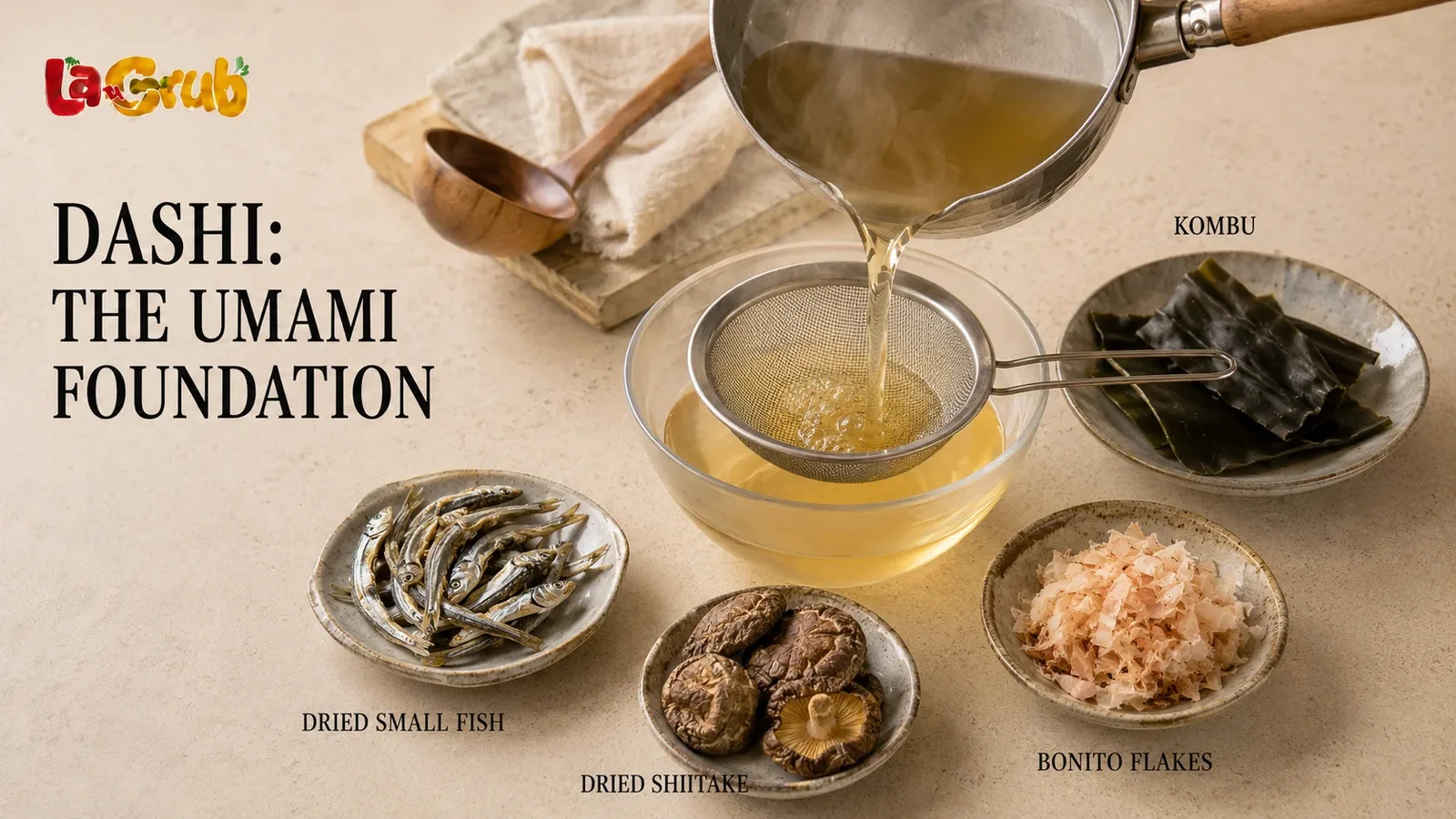
Dashi is one of the clearest expressions of umami. This stock may be prepared with kombu seaweed, dried bonito flakes, dried shiitake mushrooms, dried small fish or a combination of ingredients. It forms the foundation of miso soup, clear soups, noodle broths, simmered dishes and dipping sauces.
Dashi is usually lighter than a long-cooked meat stock. Its purpose is not to dominate the finished dish but to connect and amplify the ingredients around it.
Different dashi preparations suit different diets. Kombu and dried mushroom dashi can provide plant-based depth, while bonito-based dashi carries a smoky seafood quality.
The Traditional Structure of a Japanese Meal
A traditional Japanese meal may follow the idea of ichiju sansai: one soup and three dishes, accompanied by rice and pickles. The three dishes usually include one main item and two smaller sides prepared using varied ingredients or cooking techniques.
A meal might contain steamed rice, miso soup, grilled fish, a simmered vegetable dish, dressed greens and pickles. The goal is not to make every plate elaborate. It is to create variety in color, flavor, texture and method.
Modern households do not necessarily follow this complete arrangement at every meal. A busy weekday dinner may be a single rice bowl, noodles, curry or leftovers. Nevertheless, the idea of balancing a staple, soup, protein and vegetables still influences Japanese home cooking.
Essential Ingredients in Japanese Cooking
Rice
Short-grain Japanese rice is central to the cuisine. It is eaten plain, shaped into onigiri, seasoned for sushi, cooked with ingredients, topped to make donburi or transformed into rice cakes, crackers and sweets.
Soy Sauce
Soy sauce brings salt, aroma, color and umami to dipping sauces, marinades, soups and simmered dishes. Different styles vary in intensity, sweetness and color.
Miso
Miso is a fermented paste commonly made from soybeans, salt and koji. White, yellow and red miso have different strengths and uses. Beyond soup, miso can flavor marinades, glazes, sauces and vegetable dishes.
Mirin and Sake
Mirin contributes sweetness and gloss, while sake can add aroma and help balance stronger flavors. Both frequently appear in sauces and simmered dishes.
Rice Vinegar
Rice vinegar seasons sushi rice and appears in dressings, pickles and sunomono salads. Its acidity is generally softer than that of many stronger vinegars.
Sea Vegetables
Kombu, wakame and nori are used in broths, soups, salads, rice balls and sushi. Each has a different texture and culinary role.
Tofu and Soy Products
Tofu, fried tofu, soy milk, miso, soy sauce and natto demonstrate the versatility of soybeans in Japanese food. These ingredients can provide protein, texture and fermented flavor.
Seasonal Produce
Daikon, mushrooms, bamboo shoots, burdock root, sweet potatoes, cabbage, eggplant and numerous leafy greens appear throughout Japanese cooking. The selection changes by region and season.
Popular Japanese Foods to Know
Sushi
Sushi is seasoned vinegared rice served with or wrapped around ingredients such as seafood, vegetables, egg or tofu. Raw fish may be included, but it is not what defines sushi. The essential component is the seasoned rice.
Nigiri consists of shaped rice topped with another ingredient. Maki is rolled sushi, while chirashizushi presents toppings over a bowl or box of sushi rice. Inari sushi uses sweet-savory fried tofu pockets filled with rice.
Sashimi
Sashimi is sliced raw seafood or, less commonly, another carefully prepared ingredient served without sushi rice. Because it is eaten raw, sourcing, temperature control and knife technique are especially important.
Ramen
Ramen consists of wheat noodles in broth, generally finished with toppings such as sliced meat, egg, seaweed, bamboo shoots or green onions. Broths and seasoning styles vary widely, including shoyu, miso, shio and tonkotsu.
Although ramen developed from Chinese noodle traditions, its regional styles and cultural place in Japan make it an unmistakable part of modern Japanese food.
Udon
Udon are thick, chewy wheat noodles served hot in broth, chilled with dipping sauce or incorporated into stir-fried dishes. Their flavor is mild, so broth and toppings strongly shape the final experience.
Soba
Soba noodles are made with buckwheat, often blended with wheat flour for structure. They may be served cold with a dipping sauce or hot in broth. Their earthy flavor is particularly satisfying with simple garnishes.
Tempura
Tempura consists of seafood, vegetables or other ingredients coated in a light batter and fried. Well-made tempura should feel crisp and delicate rather than heavy or oily.
Yakitori
Yakitori is skewered chicken grilled over heat and seasoned with salt or a sweet-savory tare sauce. Different cuts and parts of the chicken create varied textures and flavors.
Tonkatsu
Tonkatsu is a breaded and fried pork cutlet commonly served with shredded cabbage, rice, soup and a thick sauce. Chicken katsu follows the same basic method with chicken.
Sukiyaki
Sukiyaki is a communal hot-pot dish of thinly sliced beef, tofu, vegetables, mushrooms and noodles cooked in a sweet-savory liquid. The characteristic seasoning is called warishita. LaGrub's Japanese sukiyaki sauce recipe shows how soy sauce, mirin, sake and sugar create its distinctive balance.
Shabu-Shabu
Shabu-shabu is another communal hot pot, but its thinly sliced meat and vegetables are briefly swished through a lighter broth and served with dipping sauces. The name imitates the sound or motion of moving the ingredients through the liquid.
Okonomiyaki
Okonomiyaki is a savory pancake associated especially with Osaka and Hiroshima. Cabbage is central, while meat, seafood, noodles and other additions vary by style. It is finished with sauce and several optional toppings.
What Do People in Japan Eat at Home?
what is japanese food
Everyday Japanese food is usually more practical than the carefully arranged restaurant meals photographed for travel guides. Home cooks prepare dishes that are affordable, familiar, adaptable and easy to pair with rice.
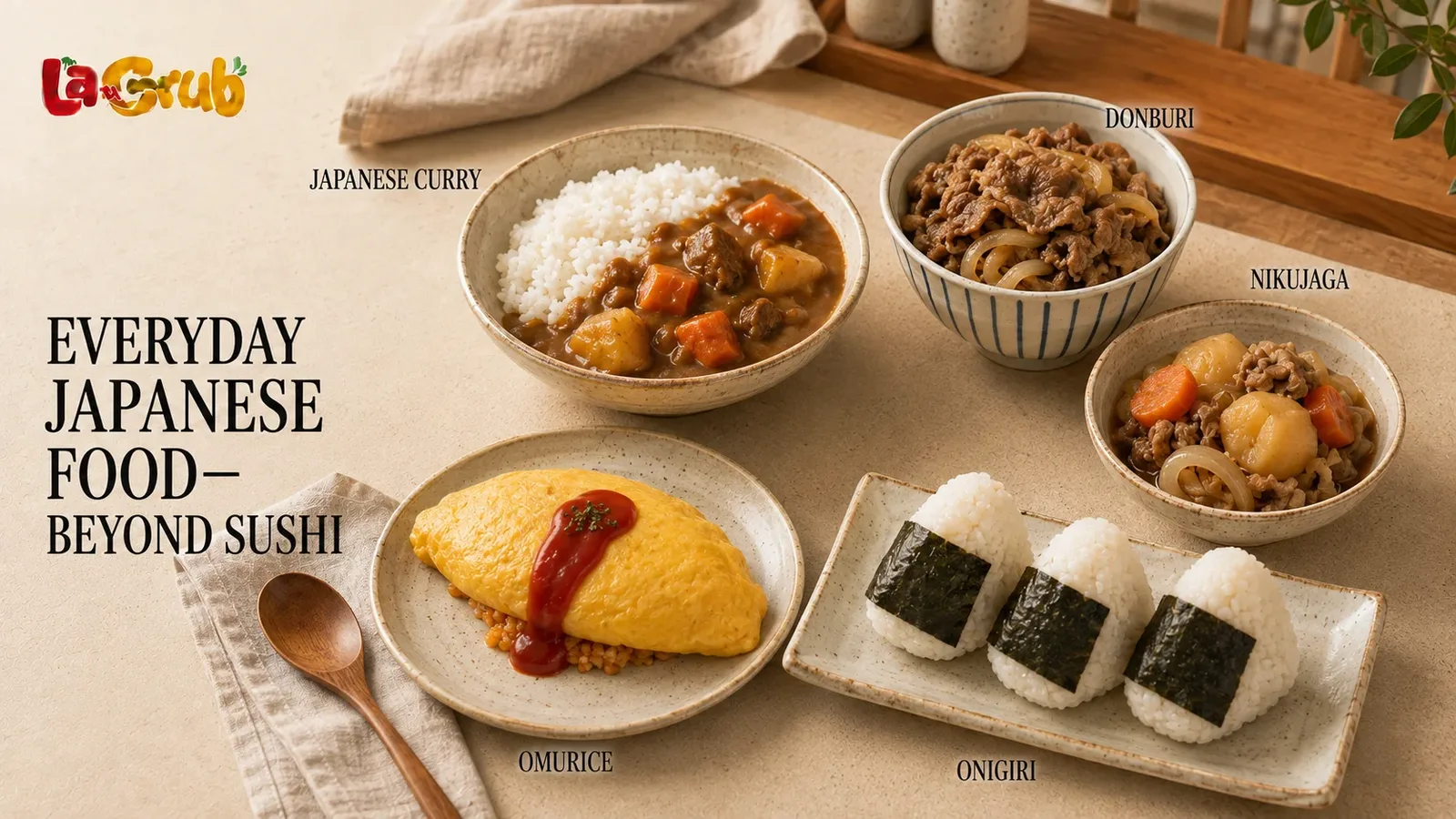
Common meals include Japanese curry, grilled fish, miso soup, stir-fried vegetables, gyoza, noodle dishes, rice bowls, omelet rice, hot pots and simmered meat with potatoes. Convenience-store food, supermarket prepared dishes and frozen items are also part of contemporary life.
Japanese Curry
Japanese curry is thick, mildly spiced and usually served with rice. Beef, pork or chicken may be simmered with onions, potatoes and carrots. Curry roux blocks make it a particularly convenient home meal.
Donburi
Donburi refers to rice-bowl meals. Gyudon tops rice with thinly sliced beef and onions, katsudon adds a breaded cutlet with egg, and oyakodon combines chicken and egg in a softly set savory mixture.
Nikujaga
Nikujaga is a home-style dish of meat, potatoes and onions simmered in a sweet-savory broth. It is comforting, economical and strongly associated with everyday family cooking.
Omurice
Omurice combines seasoned fried rice with an omelet. It belongs to yoshoku, a category of Western-influenced Japanese food adapted to local tastes.
Nabe
Nabe refers broadly to hot-pot dishes cooked and shared at the table. Vegetables, tofu, mushrooms, noodles, meat or seafood simmer together, making nabe especially popular in colder weather.
Onigiri
Onigiri are shaped rice portions that may contain salmon, pickled plum, tuna mayonnaise or other fillings. Often wrapped partly in nori, they are a familiar lunch, snack and convenience-store staple.
Japanese Breakfast Is Usually Savory
A traditional Japanese breakfast may include steamed rice, miso soup, grilled fish, pickles, nori, tofu, egg or natto. It follows many of the same balancing principles as lunch and dinner.
Not everyone eats this complete breakfast each day. Toast, coffee, eggs, yogurt, cereal and convenience foods are also common in modern households. The coexistence of traditional and Western-style breakfasts reflects the broader flexibility of contemporary Japanese food.
Lesser-Known Japanese Foods Worth Trying
Ochazuke
Ochazuke is rice served with tea, dashi or hot water poured over it, then topped with ingredients such as nori, pickles, salmon, sesame or wasabi. It is light, comforting and useful for transforming leftover rice.
Chawanmushi
Chawanmushi is a savory steamed egg custard containing dashi and small pieces of chicken, seafood, mushrooms or ginkgo nut. Its delicate texture resembles a soft custard rather than a firm omelet.
Oden
Oden is a collection of ingredients slowly simmered in a light, seasoned broth. Daikon, eggs, tofu products, konjac and fish cakes are common additions. It is particularly comforting in winter.
Takikomi Gohan
Takikomi gohan is rice cooked together with vegetables, mushrooms, meat or seafood and seasonings. The ingredients flavor every grain as the rice cooks.
Nasu Dengaku
Nasu dengaku is eggplant topped with a sweet-savory miso glaze and grilled or broiled. The soft vegetable and caramelized glaze create a rich result from a relatively short ingredient list.
Hiyashi Chuka
Hiyashi chuka is a chilled noodle dish topped with colorful ingredients such as cucumber, egg, meat and tomatoes. It is strongly associated with warm weather.
Hambagu
Hambagu is a Japanese-style hamburger steak commonly served with rice and a savory sauce. It is another example of foreign influence being reshaped into familiar Japanese home food.
Hamachi Kama
Hamachi kama is the collar of yellowtail, grilled or broiled until the skin is browned and the rich meat near the bone becomes tender. It is often served with grated daikon, citrus or ponzu. LaGrub's hamachi kama recipe provides a complete method for preparing this less familiar cut at home.
Japanese Foods That Some First-Time Diners Find Unusual
Natto
Natto is fermented soybean with a sticky texture, strong aroma and pronounced flavor. It is commonly eaten over rice with mustard, soy sauce or green onions. Many people either love it immediately or need time to appreciate it.
Umeboshi
Umeboshi are intensely salty and sour preserved Japanese plums. A small amount can flavor rice, onigiri or ochazuke.
Uni
Uni is the edible gonad of sea urchin. Fresh uni has a creamy texture and sweet, oceanic taste, but quality and freshness greatly influence the experience.
Konnyaku
Konnyaku is made from konjac and has a firm, springy texture with little flavor of its own. It absorbs broth and seasonings in dishes such as oden and simmered vegetables.
Raw Egg
Raw or lightly cooked egg appears in dishes such as tamago kake gohan and as a dipping accompaniment for sukiyaki. Food-safety practices and egg standards differ between countries, so equivalent preparations should use eggs suitable for raw consumption where available.
Japanese Food Has Strong Regional Identities
Japan stretches across different climates, coastlines and landscapes, producing considerable regional variation. Local agriculture, seafood, weather and history all influence what people cook.
Hokkaido
Hokkaido is known for dairy products, potatoes, corn, seafood and rich miso ramen. Crab, scallops and salmon feature prominently.
Tokyo and the Kanto Region
Tokyo is associated with Edomae sushi, soba, monjayaki and soy-forward seasoning. As a vast modern city, it also contains foods from every part of Japan and much of the world.
Kyoto
Kyoto is celebrated for refined seasonal cooking, tofu, vegetables, delicate sweets and kaiseki traditions. Its cuisine often emphasizes careful presentation and subtle flavor.
Osaka
Osaka is famous for energetic street and casual food, including takoyaki and okonomiyaki. The city has a longstanding reputation for enthusiastic eating.
Hiroshima
Hiroshima-style okonomiyaki is layered rather than mixed and commonly includes noodles. The region is also known for oysters.
Okinawa
Okinawan cuisine reflects the islands' climate and distinct history. Bitter melon, pork, tofu, sea vegetables and tropical produce appear frequently.
Is All Japanese Food Traditional?
No. Japanese cuisine contains dishes with ancient histories, foods developed during the early modern period and recipes adopted much more recently.
Yoshoku describes Western-influenced dishes adapted in Japan. Examples include omurice, hambagu, korokke, curry rice and Japanese-style pasta. These foods may not fit a narrow image of traditional washoku, but they are thoroughly established within Japanese life.
Ramen similarly demonstrates why origin alone cannot determine whether something counts as Japanese food. Its ancestry lies outside Japan, yet generations of Japanese cooks developed distinctive broths, noodles, toppings and regional forms.
A cuisine remains alive by absorbing ideas and making them meaningful in its own social and culinary context.
Is Japanese Food Healthy?
Traditional Japanese eating patterns can include vegetables, fish, soy foods, sea vegetables, rice and varied cooking methods. Meals arranged around modest portions of several dishes may provide diversity without relying on one oversized centerpiece.
However, not every Japanese dish is automatically healthy. Ramen broth, pickles, soy sauce and prepared sauces can be high in sodium. Tempura, tonkatsu and karaage are fried, while sweet drinks, desserts and large portions of refined rice can add considerable energy.
A balanced Japanese-inspired meal might combine rice, grilled fish or tofu, vegetables and soup while using salty condiments thoughtfully. The complete eating pattern matters more than whether an individual dish carries a Japanese label.
Is Japanese Food Vegetarian-Friendly?
Japanese cuisine offers tofu, vegetables, mushrooms, rice, noodles, sea vegetables and soybean dishes, but identifying vegetarian food can be complicated. Dashi commonly contains dried fish, and apparently meatless sauces or soups may include fish stock.
Shojin ryori, the cooking associated with Buddhist temple traditions, is a valuable source of plant-based Japanese meals. It emphasizes vegetables, tofu, grains, sea vegetables and careful use of seasonal ingredients.
Vegetarian and vegan diners should ask specifically about dashi, bonito flakes, fish sauce and meat-based stock instead of judging only the visible ingredients.
What Japanese Food Should You Try First?
For a broad introduction, choose several dishes with different textures and cooking methods rather than ordering only sushi.
Begin with miso soup or edamame, then try sushi or grilled fish for clean flavors. Add tempura or karaage for crispness and choose a comforting dish such as curry rice, ramen or udon. Finish with matcha dessert, mochi or seasonal fruit.
More cautious diners may find chicken katsu, curry rice, yakitori, gyoza and teriyaki flavors familiar. Adventurous eaters can move toward natto, uni, fermented vegetables, raw egg dishes and lesser-known seafood cuts.
Basic Japanese Dining Etiquette
Dining customs vary with the setting, and visitors are not expected to perform every detail perfectly. A few habits are nevertheless useful:
Say “itadakimasu” before eating when appropriate and “gochisousama deshita” after the meal.
Do not stick chopsticks upright into rice.
Do not pass food directly from one pair of chopsticks to another.
Use the opposite ends of shared chopsticks or serving utensils where provided.
Lift small rice and soup bowls closer to the mouth when comfortable.
Slurping noodles is generally acceptable in casual settings.
Avoid drowning carefully prepared sushi in soy sauce.
Follow the atmosphere of the restaurant and the example of your host.
Frequently Asked Questions About Japanese Food
What is Japanese food in simple terms?
Japanese food is the cuisine and food culture of Japan. It includes traditional washoku, regional cooking, everyday home meals, restaurant specialties, street food and foreign-influenced dishes adapted to Japanese tastes.
What is Japan's most famous food?
Sushi is probably the most internationally recognizable Japanese food. Ramen, tempura, teriyaki, curry, udon and yakitori are also widely known.
What is the staple food of Japan?
Rice is the traditional staple and remains central to Japanese cooking. Noodles and bread are also common in contemporary diets.
What do Japanese people eat every day?
Everyday meals vary but may include rice, soup, grilled fish, curry, noodles, rice bowls, stir-fries, pickles, eggs, tofu and prepared convenience foods. Most people do not eat sushi or elaborate traditional meals every day.
Is all Japanese food raw?
No. Raw seafood appears in sushi and sashimi, but Japanese cuisine also includes grilled, simmered, steamed, fried, pickled and baked foods.
Is Japanese food spicy?
Japanese food is not generally very hot. Wasabi, Japanese mustard, chili oil and shichimi can provide heat, but many dishes emphasize savory, sweet and fermented flavors instead.
What is the difference between sushi and sashimi?
Sushi is based on seasoned vinegared rice and may contain raw or cooked ingredients. Sashimi consists of sliced raw seafood or another ingredient served without sushi rice.
Is ramen originally Japanese?
Ramen developed from Chinese noodle traditions but was extensively adapted in Japan. Its modern broths, toppings and regional styles make it an established part of Japanese cuisine.
What is the difference between washoku and Japanese food?
Japanese food is the broadest category and includes traditional and modern dishes. Washoku refers more specifically to Japanese dietary traditions, practices and values centered on seasonality, balance, nature and cultural continuity.
Why does Japanese food use so much soy sauce?
Soy sauce provides saltiness, aroma, color and umami. It is versatile enough for dipping, simmering, grilling, marinating and building sauces, although it is only one of many important Japanese seasonings.
A Living Cuisine Built on Balance
Japanese food is much larger than the familiar trio of sushi, ramen and tempura. It includes quiet bowls of rice and soup, family curries, carefully grilled fish, convenience-store onigiri, festive New Year foods, regional street snacks and recipes transformed through contact with the wider world.
What connects these foods is not a demand that every recipe be ancient or uniquely native to Japan. It is a culinary approach that values balance, seasonality, presentation, umami and respect for ingredients.
The best way to understand Japanese cuisine is to explore both its celebrated specialties and its ordinary meals. The restaurant counter reveals one side of it; the breakfast table, lunchbox and weeknight kitchen reveal the rest.

Sahar Syed
Sahar Syed writes about practical home cooking, global food culture, and approachable culinary guides for readers who want clearer kitchen inspiration.
Get a desi recipe worth cooking, every week
One tested recipe a week. Nothing else, and unsubscribe any time.


