

Lebanese food is more than hummus and grilled meat. It is a vibrant cuisine built around fresh herbs, seasonal vegetables, olive oil, grains, legumes, warm spices and the pleasure of sharing a table.
Ask someone to picture Lebanese food and they may immediately think of hummus, falafel or a platter of grilled meat. These dishes belong at the table, but they reveal only a small part of one of the Mediterranean's most varied and welcoming cuisines.
Lebanese food combines fresh vegetables, fragrant herbs, grains, legumes, cultured dairy, olive oil, fruit, nuts and carefully seasoned meat. It can be crisp and refreshing, as in a bowl of tabbouleh, or deeply comforting, as in lentils and rice topped with sweet caramelized onions.
It is also a cuisine shaped by hospitality. Meals are frequently served as several dishes placed in the center of the table, allowing everyone to taste, pass, scoop and share. Understanding Lebanese food therefore means looking beyond individual recipes and discovering how flavors, textures and people come together.
What Exactly Is Lebanese Food?
Lebanese food is the traditional cuisine of Lebanon, a country on the eastern coast of the Mediterranean. Its cooking belongs to the broader Levantine food tradition shared across Lebanon and neighboring parts of the region. That shared heritage explains why dishes such as hummus, kibbeh, stuffed vegetables and flatbreads appear in several cuisines, often with local names, techniques and variations.
Lebanon's landscape has helped shape its food. The Mediterranean coast, fertile valleys and mountainous areas support an abundance of vegetables, herbs, olives, grapes, citrus fruit and grains. Seasonal produce remains central to the way many Lebanese dishes are prepared.
The cuisine is not defined by one dominant taste. Instead, it creates balance through acidity, freshness, earthiness, richness and gentle warmth. Lemon may brighten a lentil soup, parsley may bring freshness to a grain salad, and toasted nuts may add richness and crunch to a rice dish.
What Does Lebanese Food Taste Like?
what is lebanese food
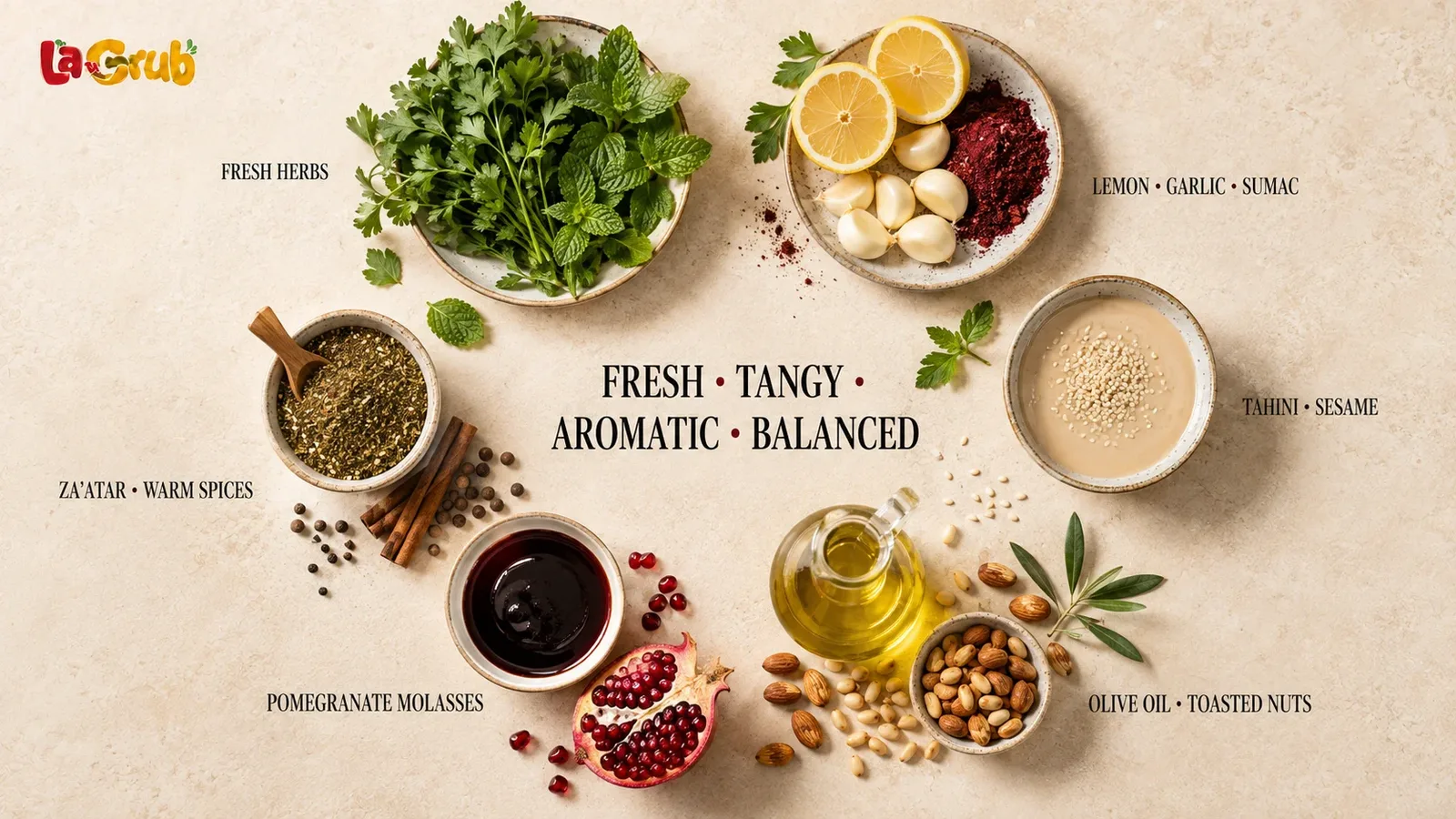
Lebanese food generally tastes fresh, savory, aromatic and pleasantly tangy rather than intensely hot. Chili can be used, but fiery heat is not the cuisine's defining feature. Flavor usually comes from layering herbs, spices, garlic, lemon juice, olive oil and slow-cooked ingredients.
Some of its most recognizable flavors and seasonings include:
Lemon and garlic: Used in dressings, marinades, soups, dips and sauces.
Parsley and mint: Fresh herbs that bring color and fragrance to salads, fillings and cold dishes.
Olive oil: Used for cooking, dressing vegetables and finishing dips.
Tahini: A sesame paste that gives sauces and dips a creamy, nutty character.
Sumac: A deep red spice with a bright, tart flavor, often sprinkled over salads and savory dishes.
Za'atar: A fragrant blend commonly made with dried herbs, sumac, sesame seeds and salt.
Warm spices: Cinnamon, allspice, cumin and black pepper are used thoughtfully in meat, rice and vegetable recipes.
Pomegranate molasses: A concentrated sweet-and-sour ingredient used to add depth to salads, sauces and fillings.
The result is food with contrast. Creamy hummus may arrive beside crunchy vegetables, smoky grilled meat beside a sharp parsley salad, or rich kibbeh beside cool yogurt.
Mezze: The Heart of the Lebanese Table
Mezze is one of the best-known elements of Lebanese dining. It is not a single dish but a collection of small plates served for sharing. A mezze spread can be modest, with bread, olives and two or three dips, or expansive enough to become an entire meal.
Cold mezze may include hummus, moutabal, labneh, stuffed vine leaves, tabbouleh, fattoush and pickled vegetables. Hot selections can include falafel, sambousek, grilled cheese, fried kibbeh or spiced potatoes. Home cooks looking for more serving inspiration can explore LaGrub's starter recipes.
The point of mezze is not simply to present many appetizers. It creates a leisurely and social style of eating. People assemble different bites, tear pieces of bread, revisit favorite plates and continue talking as the meal unfolds.
Popular Lebanese Foods to Know
Hummus
Lebanese hummus is a smooth dip made from cooked chickpeas, tahini, lemon juice and garlic. It is commonly finished with olive oil and served with flatbread, vegetables or meat. Good hummus depends on balance: the sesame should be noticeable, the lemon lively and the texture exceptionally creamy.
Tabbouleh
Tabbouleh is a parsley-forward salad rather than a bowl of grain with a little greenery. Finely chopped parsley and mint are combined with tomatoes, onion, a modest amount of bulgur, lemon juice and olive oil. It tastes fresh, grassy and bright.
Fattoush
Fattoush is a colorful salad of fresh vegetables, herbs and pieces of toasted or fried flatbread. Sumac and a sharp dressing give it its characteristic tang. The bread absorbs some of the dressing while retaining enough texture to make every bite interesting.
Kibbeh
Kibbeh is one of Lebanon's most celebrated foods. Its foundation is usually finely ground meat combined with bulgur and spices. It may be shaped into stuffed shells and fried, baked in a tray, grilled, served in yogurt or prepared in other regional and family-specific forms. The variations demonstrate how one basic preparation can become an entire category of dishes.
Man'ousheh
Man'ousheh is a beloved Lebanese flatbread and a familiar breakfast food. The dough may be topped with za'atar and olive oil, cheese or other ingredients before being baked. It is sold by neighborhood bakeries and also prepared at home. In 2023, the knowledge, skills and traditions associated with al-man'ouché were added to UNESCO's Representative List of the Intangible Cultural Heritage of Humanity.
Falafel
Falafel consists of crisp, deeply seasoned fritters made from legumes and herbs. They may be tucked into bread with tomatoes, parsley, pickles and tahini sauce or served as part of a mezze selection. A well-made falafel has a crunchy exterior and a moist, herb-flecked center.
Shawarma
Shawarma is made by roasting seasoned meat on a vertical spit and slicing it thinly. Chicken shawarma is often paired with a powerful garlic sauce, while meat versions may be served with tahini, parsley, onions and pickles. Although it is a famous street food, it is only one part of Lebanese cuisine.
Warak Enab
Warak enab are vine leaves wrapped around a filling. Meatless versions commonly contain rice, tomatoes, herbs and olive oil, while other preparations include meat. Their small size makes them ideal for a mezze spread, although rolling a large batch requires patience.
Kafta
Kafta is prepared from minced meat mixed with parsley, onion and seasonings. It can be formed around skewers, grilled as patties or baked with potatoes and tomatoes. Its straightforward ingredients make it especially popular for family meals.
Batata Harra
Batata harra translates to spicy potatoes. Crisp potato pieces are tossed with garlic, coriander, chili and often lemon. The dish is aromatic, lively and particularly good when served hot beside cooler dips and salads. For more dishes suited to shared meals, browse LaGrub's complete recipe collection.
What Do Lebanese Families Eat at Home?
what is lebanese food
Restaurant menus and elaborate mezze spreads do not represent every everyday meal in Lebanon. Home cooking is often practical, seasonal and deeply comforting. It includes soups, stews, rice dishes, cooked vegetables, yogurt-based dishes and meals built around lentils or beans.
Common home-style foods can include lentil soup, peas and carrots cooked with meat, green beans braised in tomato, stuffed zucchini, rice with vermicelli, fish, roasted chicken and vegetable stews. Recipes and names vary between families and regions, and many cooks rely on methods learned by watching parents and grandparents.
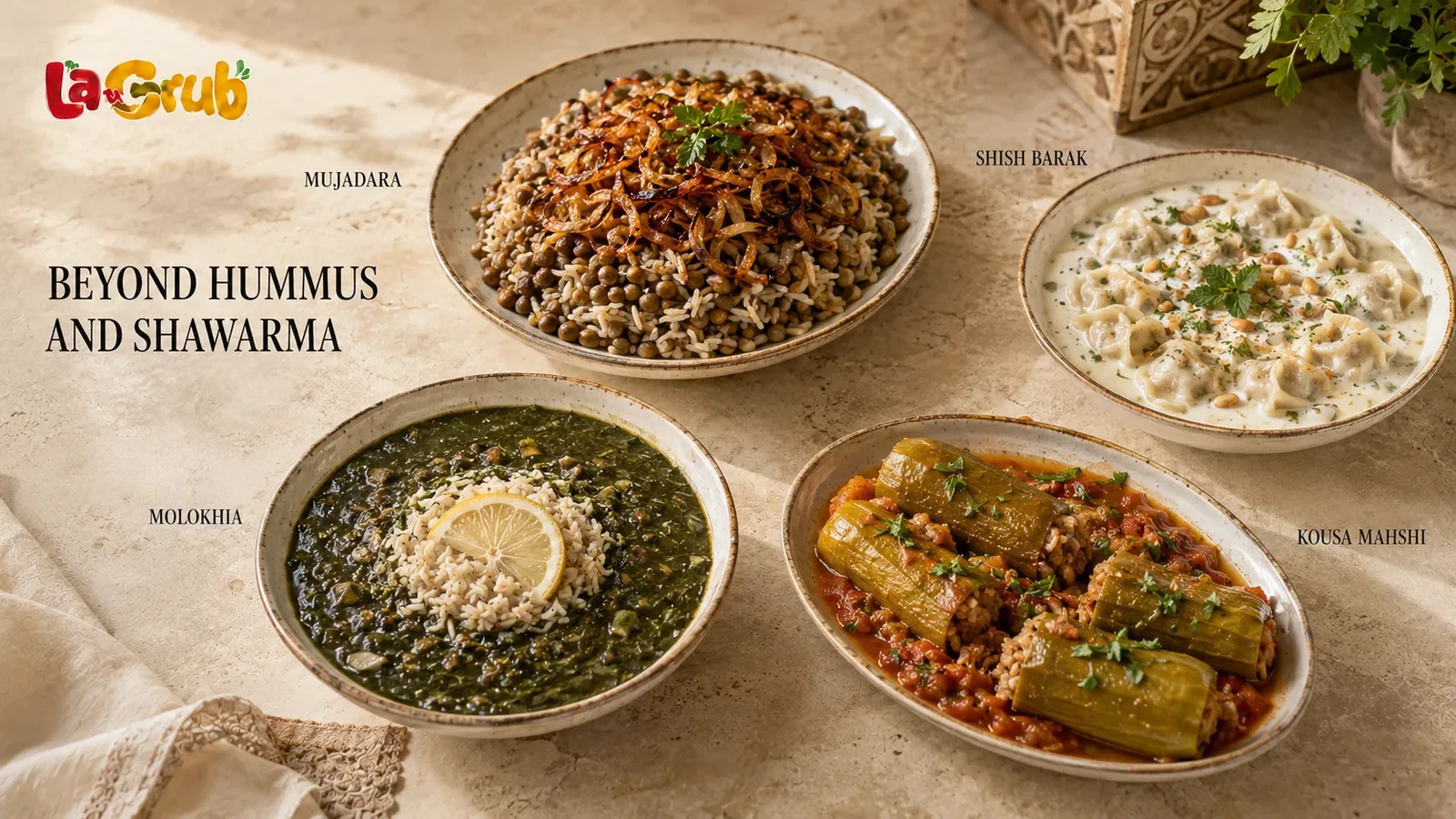
Some dishes rarely receive the international attention given to hummus or shawarma, yet they are the foods people may associate most strongly with home.
Mujadara
Mujadara combines lentils with rice or bulgur and plenty of caramelized onions. Its ingredients are humble, but slow browning gives the onions a remarkable sweetness and depth. Served with yogurt, salad or pickles, it is one of the clearest examples of satisfying Lebanese comfort food.
Shish Barak
Shish barak consists of small meat-filled dumplings cooked in a warm yogurt sauce, often flavored with garlic and coriander. It takes more effort than a simple weekday stew, so it may carry a sense of celebration, family care or nostalgia.
Molokhia
Molokhia is a green leafy dish prepared in different ways across the region. Lebanese versions may be served with chicken, rice, toasted bread, onion and a sharp vinegar dressing. Its distinctive texture and layered accompaniments make it unlike the foods most visitors first associate with Lebanon.
Kousa Mahshi
Kousa mahshi is zucchini hollowed out, filled with rice and sometimes meat, then gently cooked in a tomato-based or yogurt sauce. It is a labor-intensive dish that turns an everyday vegetable into a memorable family meal.
Lebanese Breakfast Is Usually Savory
Breakfast in Lebanon can be simple or substantial, but it is often savory. Labneh drizzled with olive oil, olives, tomatoes, cucumbers, cheese, eggs and flatbread can all appear on the morning table.
Man'ousheh is a particularly recognizable breakfast, especially when spread with za'atar or topped with cheese. Ful, a seasoned dish of cooked fava beans, may be eaten with vegetables and bread. On relaxed mornings, several of these foods can be arranged together and shared.
Fresh flatbread plays an important role. It is not merely a side but also a practical way to scoop dips, wrap cheese and herbs or gather a complete bite from several plates.
Is All Lebanese Food the Same?
No. The repetition some diners notice on restaurant menus often reflects the limited selection marketed internationally rather than the full range of Lebanese cooking. A menu centered on hummus, grilled meat, tabbouleh and shawarma can make the cuisine appear narrower than it is.
In reality, Lebanese cooking includes raw and cooked kibbeh, grain dishes, seafood, preserved foods, filled pastries, regional flatbreads, vegetable stews, dumplings, yogurt sauces and numerous meatless recipes. Coastal areas, mountain communities, cities, villages, religious traditions and individual households all contribute variations.
Even familiar dishes differ. One family's tabbouleh may be sharper with lemon, while another's may be greener with parsley. Kibbeh may be baked, fried, grilled or cooked in sauce. Stuffed vegetables may contain meat in one home and an herb-filled rice mixture in another.
Is Lebanese Food Vegetarian-Friendly?
Lebanese cuisine offers an unusually generous selection of naturally vegetarian and vegan dishes. Chickpeas, lentils, beans, bulgur, vegetables and herbs are foundational ingredients, not substitutes added as an afterthought.
Hummus, falafel, mujadara, tabbouleh, fattoush, many stuffed vine leaves and several vegetable stews can be meat-free. Labneh and cheese provide additional choices for vegetarians who consume dairy.
However, diners should still ask how a dish is made. Rice, beans, stuffed vegetables or sauces may occasionally contain meat or meat stock, even when the main ingredient appears plant-based.
Is Lebanese Food Healthy?
Lebanese cooking can support a varied, nutrient-dense eating pattern because many traditional meals include vegetables, herbs, legumes, whole or minimally processed grains, cultured dairy and olive oil. These ingredients also appear in traditional Mediterranean food patterns.
That does not mean every Lebanese dish is automatically light or that portion size does not matter. Fried foods, rich pastries, salty pickles, large quantities of bread and generous servings of sweets can add considerable sodium, refined carbohydrates, fat or sugar.
A balanced Lebanese meal might pair grilled fish or chicken with tabbouleh, hummus, vegetables and a sensible amount of bread. Someone seeking more plant-based food could choose lentil soup, mujadara and salad. The overall combination matters more than attaching a health label to the entire cuisine.
Lebanese Bread, Pickles and Sauces Matter
The accompaniments on a Lebanese table are essential to the meal's balance. Flatbread provides softness and warmth. Pickled turnips, cucumbers and other vegetables bring acidity and crunch. Sauces connect the grilled, fried and fresh elements.
Toum is a bold, fluffy garlic sauce traditionally made by emulsifying garlic with oil and lemon juice. Tarator is a tahini-based sauce commonly served with fish, falafel or vegetables. Labneh can act as breakfast, dip, cooling accompaniment or filling.
These additions explain why two seemingly similar plates can taste very different. The quality of the bread, intensity of the garlic sauce, freshness of the herbs and sharpness of the pickles can transform the complete experience.
Lebanese Desserts and Sweets
Lebanese desserts frequently use nuts, floral waters, syrup, cream and delicate pastry. Baklava is internationally familiar, but the sweet tradition extends much further.
Knafeh combines cheese or cream with a crisp semolina or shredded-pastry layer and fragrant syrup. Ma'amoul are molded cookies filled with dates, pistachios or walnuts and are strongly associated with festive occasions. Meghli is a spiced rice pudding traditionally prepared to celebrate a birth and may be topped with coconut and nuts.
Orange blossom water and rose water are used carefully to create aroma rather than overwhelming sweetness. Fresh fruit, coffee or tea may offer a simpler ending to a generous meal.
How to Experience Lebanese Food for the First Time
A shared selection is the best introduction because it allows you to experience the cuisine's contrasts. Begin with hummus, labneh or moutabal, then add tabbouleh or fattoush for freshness. Include kibbeh, falafel or batata harra as a hot mezze and choose kafta, grilled chicken or fish for a main dish. To prepare these flavors at home, explore Saffron Majlis: Treasures of the Arabic Table, LaGrub's collection of 104 Arabic recipes covering mezze, breads, grills, stews, drinks and traditional desserts.
Fresh bread, pickles, olives and garlic or tahini sauce complete the table. If you have room for dessert, try ma'amoul, baklava or knafeh with Lebanese coffee.
A good first meal should not be dominated by one heavy platter. The pleasure comes from moving between creamy, crisp, smoky, herbal, tart and savory bites.
Frequently Asked Questions About Lebanese Food
What is Lebanese food best known for?
Lebanese food is best known internationally for mezze, hummus, tabbouleh, kibbeh, falafel, shawarma, man'ousheh and grilled meats. Its wider home-cooking tradition also includes lentil dishes, vegetable stews, stuffed vegetables, rice and yogurt-based meals.
Is Lebanese food the same as Mediterranean food?
Lebanese cuisine is one of the cuisines of the Mediterranean region, but Mediterranean food is a broad category that also includes many Southern European, North African and Eastern Mediterranean traditions. Lebanese food has its own dishes, combinations and social customs within that larger landscape.
Is Lebanese food spicy?
Lebanese food is highly seasoned but usually not extremely hot. Garlic, lemon, sumac, herbs, allspice, cinnamon and black pepper are more characteristic than intense chili heat. Some dishes and condiments can still be spicy.
What is the national dish of Lebanon?
Kibbeh is frequently described as Lebanon's national dish. It exists in numerous forms, including fried, baked, grilled and raw preparations, with recipes varying by region and household.
What is a typical Lebanese meal?
A typical meal may include bread, salad, a vegetable or legume dish and rice, meat, chicken or fish. A larger gathering might begin with mezze before grilled foods or another main course is served.
Does Lebanese food always contain meat?
No. Lebanese cuisine includes many meatless dishes based on lentils, chickpeas, beans, bulgur, vegetables and herbs. Mujadara, hummus, falafel and numerous salads and vegetable preparations are popular examples.
What makes Lebanese food different from other cuisines?
Its identity comes from the balance of fresh herbs, tart flavors, olive oil, grains, legumes, cultured dairy, warm spices and shared dining traditions. It can feel abundant without relying on a single heavy centerpiece.
A Cuisine Built for Sharing
Lebanese food is fresh and comforting, humble and celebratory. It includes the brightness of parsley and lemon, the richness of tahini and olive oil, the fragrance of warm bread and the patience required for dumplings, stuffed vegetables and layered family recipes.
Its famous dishes provide an inviting starting point, but the cuisine becomes far more interesting when you explore breakfast bakeries, home-cooked stews, lentil meals, seasonal vegetables and regional variations.
Above all, Lebanese food is designed to bring people together. A crowded table is not a problem to solve; it is part of the experience.

Sahar Syed
Sahar Syed writes about practical home cooking, global food culture, and approachable culinary guides for readers who want clearer kitchen inspiration.
Get a desi recipe worth cooking, every week
One tested recipe a week. Nothing else, and unsubscribe any time.


