

Pho brings together warm broth, soft rice noodles, fresh herbs, lime, chilies, and tender meat in one bowl. New diners can enjoy pho more when they understand the broth, toppings, sauces, and regional styles before ordering.
Pho is a Vietnamese noodle soup made with clear aromatic broth, flat rice noodles, herbs, and meat such as beef or chicken. The answer to what is pho food starts with broth, noodles, toppings, and table seasoning. A bowl of pho usually tastes warm, savory, fragrant, fresh, and comforting, with lime, herbs, chilies, and sauces added at the table.
Many new diners ask what is pho food because pho looks simple but tastes layered. The broth carries toasted spices, charred aromatics, bones, fish sauce, and slow cooking. The noodles give the bowl softness. The herbs, lime, bean sprouts, and chili add freshness after serving.
What Is Pho Food in Simple Words?
Pho is a full Vietnamese noodle soup bowl, not only broth and not only noodles. The phrase what is pho food usually points to the complete dish: broth, bánh phở rice noodles, meat, herbs, and garnishes. Restaurants usually serve pho hot in a large bowl with extra toppings on the side.
The word pho usually names the whole dish in English menus. Bánh phở names the flat rice noodles inside the bowl. This detail helps you understand the soup-versus-noodle debate without turning the answer into a language lesson.
Vietnamese cooks build pho around balance. The broth should taste clean and savory. The noodles should stay tender. The meat should suit the broth. The garnish plate should brighten the bowl without hiding the broth.
Is Pho a Soup or a Noodle Dish?
Pho works as both a soup and a noodle dish because broth and rice noodles define the bowl together. A bowl without broth loses the heart of pho. A bowl without bánh phở noodles loses the structure that makes pho recognizable.
This is why diners argue about what is pho food. Soup lovers focus on the broth. Noodle lovers focus on the rice noodles. Vietnamese menus solve the issue by treating pho as a noodle soup category.
Why Broth Matters Most
Pho broth carries the main flavor. Beef pho broth often uses beef bones, marrow bones, onion, ginger, fish sauce, and spices. Chicken pho broth usually uses chicken bones, chicken meat, onion, ginger, and lighter seasoning.
Good broth tastes clear, deep, and aromatic. Strong broth does not need heavy sauce. You should taste broth first before adding lime, hoisin, sriracha, or chili oil.
Why Noodles Still Matter
Bánh phở noodles should feel soft, smooth, and slippery. Wide noodles give a fuller bite. Narrow noodles feel lighter. Dried noodles work well at home, while many restaurants use fresh rice noodles for softer texture.
What Is Pho Food Made Of?
what is pho food
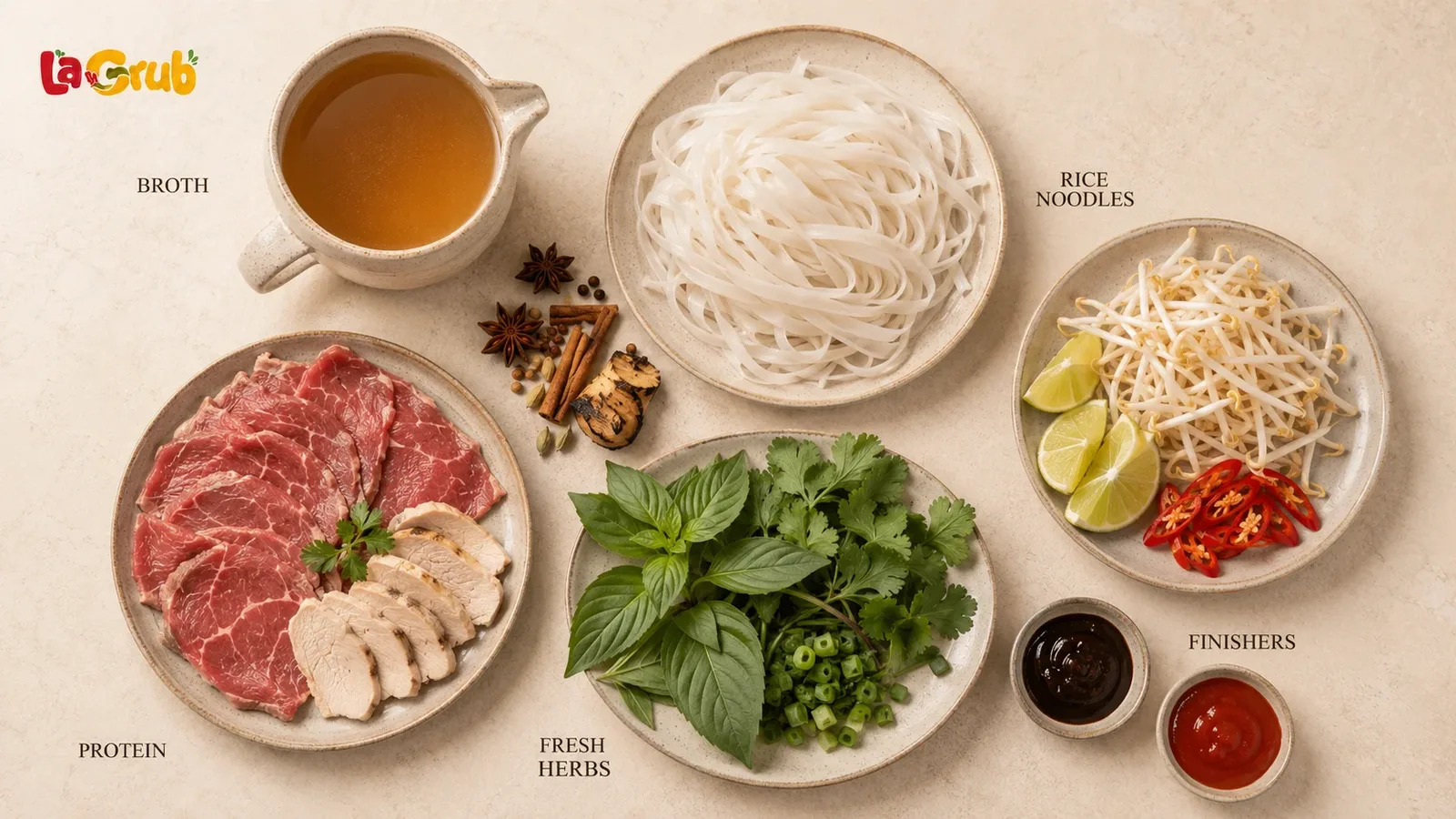
Pho is made from broth, flat rice noodles, protein, herbs, and table toppings. The most common proteins are beef and chicken. Vegetarian pho uses mushroom broth, vegetable broth, tofu, mushrooms, and fresh herbs.
If you wonder what is pho food made of, start with 5 building blocks. Each building block changes the final taste, texture, and comfort level.
Choose broth: beef broth, chicken broth, mushroom broth, or vegetable broth.
Choose noodles: fresh bánh phở, dried rice sticks, or wide flat rice noodles.
Choose protein: rare beef, brisket, flank, meatballs, chicken, tofu, or mushrooms.
Choose herbs: Thai basil, cilantro, green onion, sawtooth coriander, and mint.
Choose finishers: lime, bean sprouts, chilies, hoisin sauce, sriracha, and fish sauce.
For home cooks, the LaGrub recipe collection can help you compare noodle soups, broths, and comfort meals while building confidence with aromatic cooking.
What Does Pho Taste Like?
Pho tastes savory, aromatic, fresh, lightly sweet, and deeply comforting. Beef pho often tastes richer, while chicken pho tastes lighter. Southern pho can taste slightly sweeter. Northern pho often tastes cleaner and more broth-focused.
The taste depends on 4 flavor layers. The broth gives savory depth. The spices give warmth. The herbs give freshness. The lime, chilies, and sauces let you adjust the bowl at the table.
Aromatic Flavor
Star anise, cinnamon, cloves, cardamom, coriander seed, onion, and ginger create pho aroma. These ingredients should support the broth. Strong spice should not cover beef, chicken, or mushroom flavor.
Fresh Flavor
Herbs, bean sprouts, lime, and chilies add lift. Add small amounts first. Too much lime can flatten the broth. Too much sauce can hide the careful simmered flavor.
Savory Flavor
Fish sauce, bones, meat, mushrooms, and slow simmering create umami. A good bowl tastes full without feeling muddy. That balance makes pho comforting instead of heavy.
What Are the Main Types of Pho?
The 4 main types beginners should know are beef pho, chicken pho, vegetarian pho, and regional pho styles. These categories help you order without guessing. Most restaurants list the protein first, then the cut or style.
| Pho Type | Main Ingredients | Taste | Best For |
|---|---|---|---|
| Phở bò | Beef broth, rice noodles, brisket, flank, rare beef, or meatballs | Rich, savory, aromatic | First-time diners who want the classic beef bowl |
| Phở gà | Chicken broth, rice noodles, shredded chicken, herbs | Light, clean, soothing | Diners who want a gentler bowl |
| Phở chay | Vegetable or mushroom broth, tofu, mushrooms, herbs | Fresh, earthy, lighter | Vegetarian meals and meat-free comfort food |
| Southern pho | Broth, rice noodles, herbs, bean sprouts, sauces | Slightly sweeter and garnish-rich | Diners who enjoy toppings and table seasoning |
| Northern pho | Broth, noodles, meat, green onion, fewer extras | Clean, simple, broth-forward | Diners who want broth clarity |
This quick table also answers what is pho food for diners reading a menu. The bowl changes with broth, protein, region, and garnish style.
How to Eat Pho the Right Way
To eat pho the right way, taste the broth first, add herbs and lime slowly, then season the bowl to your preference. Pho does not need every topping at once. A careful first taste helps you protect the broth.
Taste the broth before adding sauce or lime.
Add a small handful of herbs, bean sprouts, and green onion.
Squeeze 1 lime wedge, then taste again.
Add sliced chili or chili sauce for heat.
Use chopsticks for noodles and meat, then use a spoon for broth.
Dip meat in hoisin or sriracha on a side plate when you want stronger sauce.
Many beginners ask what is pho food because the garnish plate feels confusing. The garnish plate gives control. The garnish plate does not mean every item must enter the bowl.
For more Southeast Asian cooking inspiration, the Thai cookbook guide shows how herbs, aromatics, rice, noodles, and broths shape nearby food traditions.
Is Pho Healthy?
Pho can fit a balanced meal when the bowl includes broth, protein, rice noodles, herbs, and controlled sauce. Pho can also become high in sodium when restaurants use salty broth, fish sauce, hoisin sauce, sriracha, and large portions.
A typical pho bowl gives carbohydrates from rice noodles, protein from beef, chicken, tofu, or meatballs, and freshness from herbs. Vegetables vary by restaurant. Bean sprouts, onions, herbs, and chilies add crunch and flavor but do not replace a vegetable-heavy meal.
Choose chicken pho, lean beef pho, tofu pho, or extra herbs when you want a lighter bowl. Ask for sauce on the side when sodium or sugar concerns matter. Add less hoisin when you want the broth flavor to stay clean.
A Lighter Pho Order
Order phở gà, extra herbs, extra bean sprouts, and sauce on the side. This order gives a lighter broth, lean protein, fresh texture, and better control over sweetness and saltiness.
A Richer Pho Order
Order phở bò with brisket, flank, tendon, or meatballs. This order gives a deeper beef flavor and a fuller bowl. Choose this option when comfort matters more than lightness.
Is Pho Spicy?
Pho is usually not spicy by default. Heat usually comes from fresh chilies, chili oil, sriracha, or hot sauce added at the table. Restaurants can serve mild broth and still offer spicy condiments.
This matters when someone asks what is pho food before ordering. Pho usually arrives fragrant and savory, not fiery. You control the heat by adding chili in small amounts.
If you dislike spice, skip fresh chilies and sriracha. Add lime, herbs, and bean sprouts instead. If you love heat, add chili slices first, then add sriracha after tasting the broth.
How Is Northern Pho Different From Southern Pho?
what is pho food
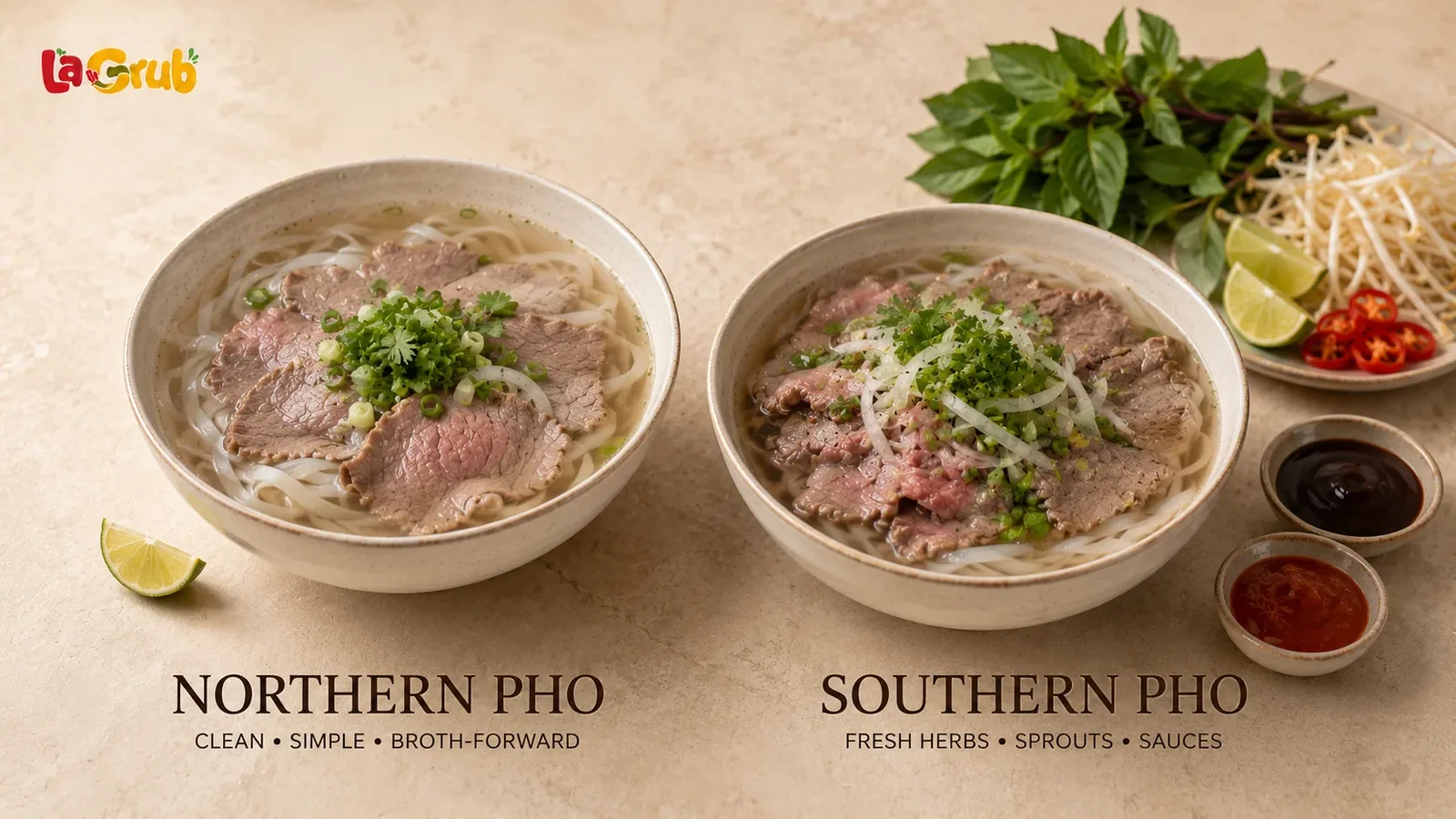
Northern pho often tastes cleaner and simpler, while southern pho often includes more herbs, sprouts, sauces, and sweetness. Both styles belong to Vietnamese food culture. Neither style needs to copy the other.
Northern pho often focuses on broth clarity, rice noodles, beef or chicken, green onion, and fewer table extras. Southern pho often welcomes basil, bean sprouts, lime, hoisin sauce, sriracha, and a more generous garnish plate.
Restaurants outside Vietnam often serve a southern-style garnish plate because diners enjoy customizing each bowl. This habit helps beginners understand pho through tasting, not memorizing rules.
Can You Make Pho at Home?
You can make pho at home, but full broth needs time. Restaurant-style beef pho often needs several hours because bones, aromatics, and spices release flavor slowly. Chicken pho cooks faster and works better for a first attempt.
To make a beginner pho, char onion and ginger, toast spices, simmer bones or chicken, season with fish sauce, cook rice noodles separately, then assemble each bowl. This method protects noodle texture and keeps the broth clearer.
Beginner Beef Pho Method
To make beef pho, simmer beef bones, onion, ginger, star anise, cinnamon, cloves, and fish sauce until the broth tastes deep. Cook noodles separately. Add raw thin beef slices to the hot bowl when serving.
Beginner Chicken Pho Method
To make chicken pho, simmer chicken, onion, ginger, spices, and fish sauce until the broth tastes clear and savory. Shred the chicken, cook noodles separately, and garnish with herbs.
Shortcut Pho Method
To make shortcut pho, use good boxed broth, toasted spices, charred onion, ginger, fish sauce, and rice noodles. The shortcut bowl will taste simpler, but careful aromatics still improve the result.
What Common Pho Mistakes Should Beginners Avoid?
The most common pho mistakes are overloading sauces, skipping the broth taste, overcooking noodles, and using weak aromatics. These mistakes change the answer to what is pho food from a clean noodle soup into a salty, muddy, or flat bowl.
Taste the broth before adding hoisin, sriracha, lime, or chili. Sauce should support the broth. Sauce should not replace the broth. Add 1 teaspoon (5 ml) sauce first when you need a stronger flavor.
Cook rice noodles separately because noodles release starch into broth. Starchy broth loses the clear texture that makes pho feel light. Rinse cooked noodles briefly when package directions suggest that step.
Char a 3-inch (8 cm) piece of ginger and 1 medium onion for better aroma. Toast spices for 1–2 minutes before simmering. These small steps help a home bowl answer what is pho food with real fragrance instead of plain soup.
How to Order Pho for the First Time
Order phở bò for classic beef pho or phở gà for lighter chicken pho. Ask for sauces on the side if you want to taste the broth first. Choose lean cuts when you want a simpler bowl.
A beginner can order rare beef pho, brisket pho, chicken pho, or vegetarian pho. Rare beef cooks in the hot broth. Brisket tastes richer. Chicken feels lighter. Vegetarian pho depends heavily on mushroom broth and herbs.
If the menu feels long, start with house special pho only when you enjoy mixed meats. House special bowls can include brisket, flank, tendon, tripe, meatballs, and rare beef. Simple beef or chicken pho works better for a first bowl.
Readers who enjoy food culture guides can also explore the Mediterranean food guide for another clear look at regional ingredients, shared meals, and classic dishes.
What Should You Serve With Pho?
Pho works best with fresh herbs, lime, bean sprouts, chilies, and light sides. Many restaurants serve pho alone because the bowl already includes broth, noodles, protein, and toppings.
Good sides include fresh spring rolls, green papaya salad, cucumber salad, pickled vegetables, or a small plate of herbs. Heavy fried sides can overpower the clean broth.
For drinks, choose water, iced tea, lime soda, jasmine tea, or Vietnamese iced coffee. Sweet drinks pair well with spicy pho, but plain water keeps the broth flavor clear.
FAQs About What Is Pho Food
Is pho Vietnamese or Thai?
Pho is Vietnamese. Thai cuisine has noodle soups, but pho belongs to Vietnamese cuisine.
Is pho pronounced foe?
No. Pho is commonly pronounced closer to “fuh” in English-language food settings.
Is pho gluten-free?
Pho can be gluten-free when the broth, sauces, noodles, and toppings contain no gluten. Rice noodles usually contain rice, but soy sauce, hoisin sauce, or shared kitchens can add gluten risk.
Is pho good for beginners?
Yes. Pho works well for beginners because the broth tastes comforting and the toppings let you adjust freshness, heat, and sauce.
Can pho be vegetarian?
Yes. Vegetarian pho uses vegetable or mushroom broth, rice noodles, tofu, mushrooms, herbs, and lime.
Final Thoughts on What Is Pho Food
The answer to what is pho food becomes clear after one thoughtful bowl. Pho combines broth, rice noodles, meat or tofu, herbs, lime, and table seasoning into a warm Vietnamese noodle soup. Start with beef pho or chicken pho, taste the broth first, then adjust with herbs, lime, and chili. For more practical bowls and home-cooking ideas, browse the LaGrub recipe collection and keep exploring food one bowl at a time.

Sahar Syed
Sahar Syed writes about practical home cooking, food culture, and approachable recipes for readers who want clearer kitchen guidance.
Get a desi recipe worth cooking, every week
One tested recipe a week. Nothing else, and unsubscribe any time.


