

Raita is used to cool spicy food, add creamy freshness, and balance rich Desi meals. You can serve raita with biryani, karahi, kebabs, pulao, paratha, chaat, and grilled dishes.
What Is Raita Used For? Complete Serving Guide 2026
Raita is used for cooling spicy South Asian food, adding creamy texture, and balancing rice, curry, kebabs, chaat, and naan. If you ask what is raita used for, the direct answer is cooling heat, adding freshness, and completing a Desi meal.
Raita combines yogurt, salt, herbs, spices, and vegetables into a chilled side dish. You can spoon raita beside hot food, dip bread into raita, or drizzle raita over chaat.
What Is Raita Used For in Simple Words?
Raita works as a cooling side, yogurt dip, and creamy condiment. The simple answer to what is raita used for starts with balance.
South Asian meals often carry heat, spice, fried textures, and rich masala. Raita softens those strong flavors without hiding them.
You can use raita with biryani, pulao, karahi, nihari, seekh kebab, pakora, samosa, and dahi bhalla chaat.
How raita cools spicy food
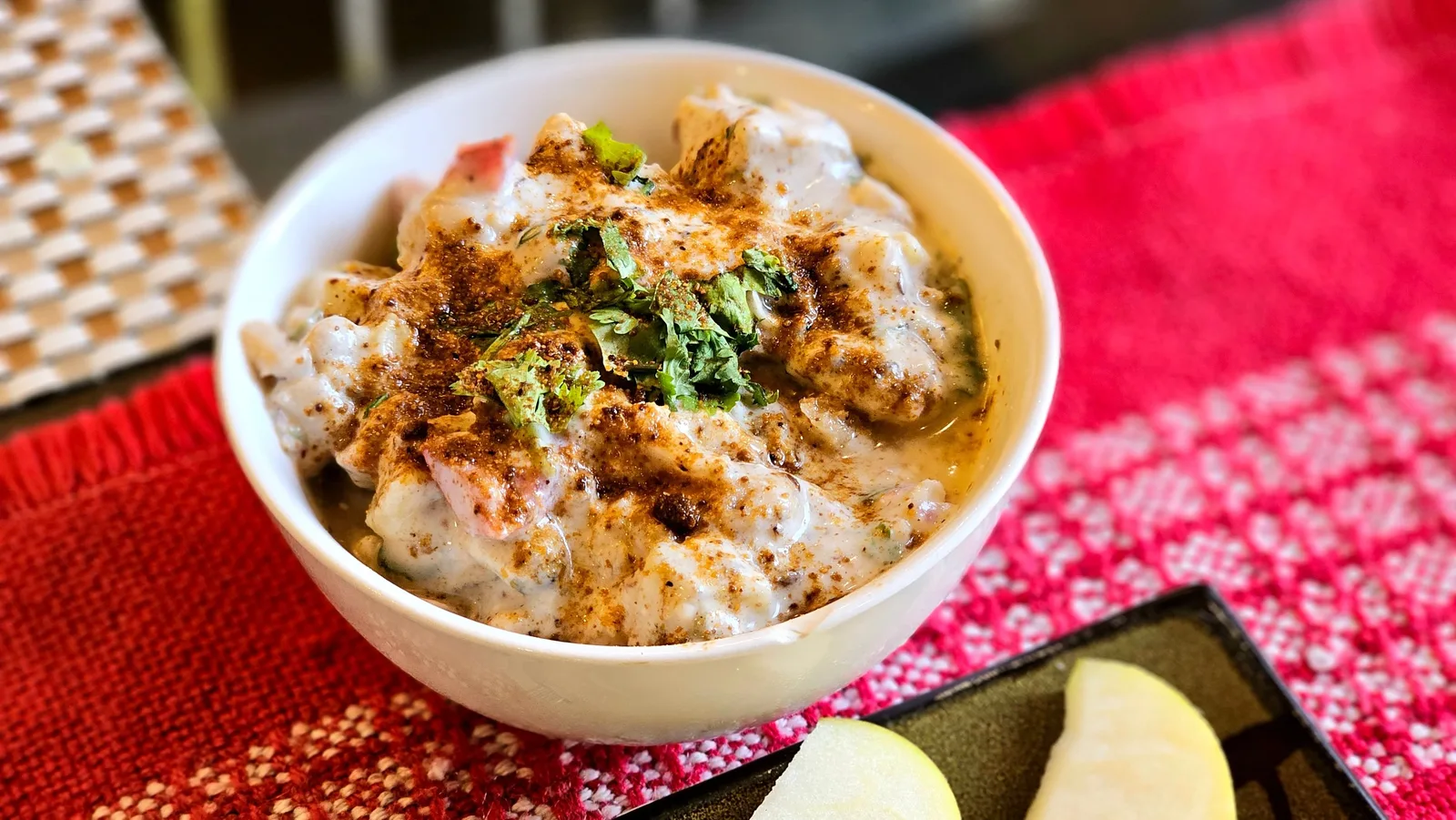 what is raita used for
Raita cools spicy food because yogurt brings fat, protein, moisture, and a chilled temperature. That mix softens chili heat fast.
Use 0.5 cup (120 ml) raita with 1 plate of biryani. Use 0.25 cup (60 ml) raita with 2 kebabs.
How raita adds moisture to dry bites
Raita adds moisture to grilled meats, dry rice, toasted naan, and fried snacks. Seekh kebab, chicken tikka, and chapli kebab taste better with raita.
A spoonful of raita prevents dry bites and gives every plate a cleaner finish. Fresh cucumber and mint add crispness.
How raita completes a South Asian plate
Raita completes a South Asian plate by adding dairy, freshness, and a mild sour note. A balanced plate needs heat and cooling.
LaGrub explains that a Desi table often includes curry, rice, roti, salad, yogurt, and chutneys in one meal. That Desi meal structure shows why raita belongs beside spicy dishes.
What Is Raita Used For With Biryani?
Raita is used with biryani to cool chili heat, moisten rice, and brighten heavy masala. The biryani answer to what is raita used for matters most for beginners.
Biryani contains rice, meat, oil, fried onions, chilies, and whole spices. Raita gives the plate a cooler texture and cleaner finish.
How raita balances biryani heat
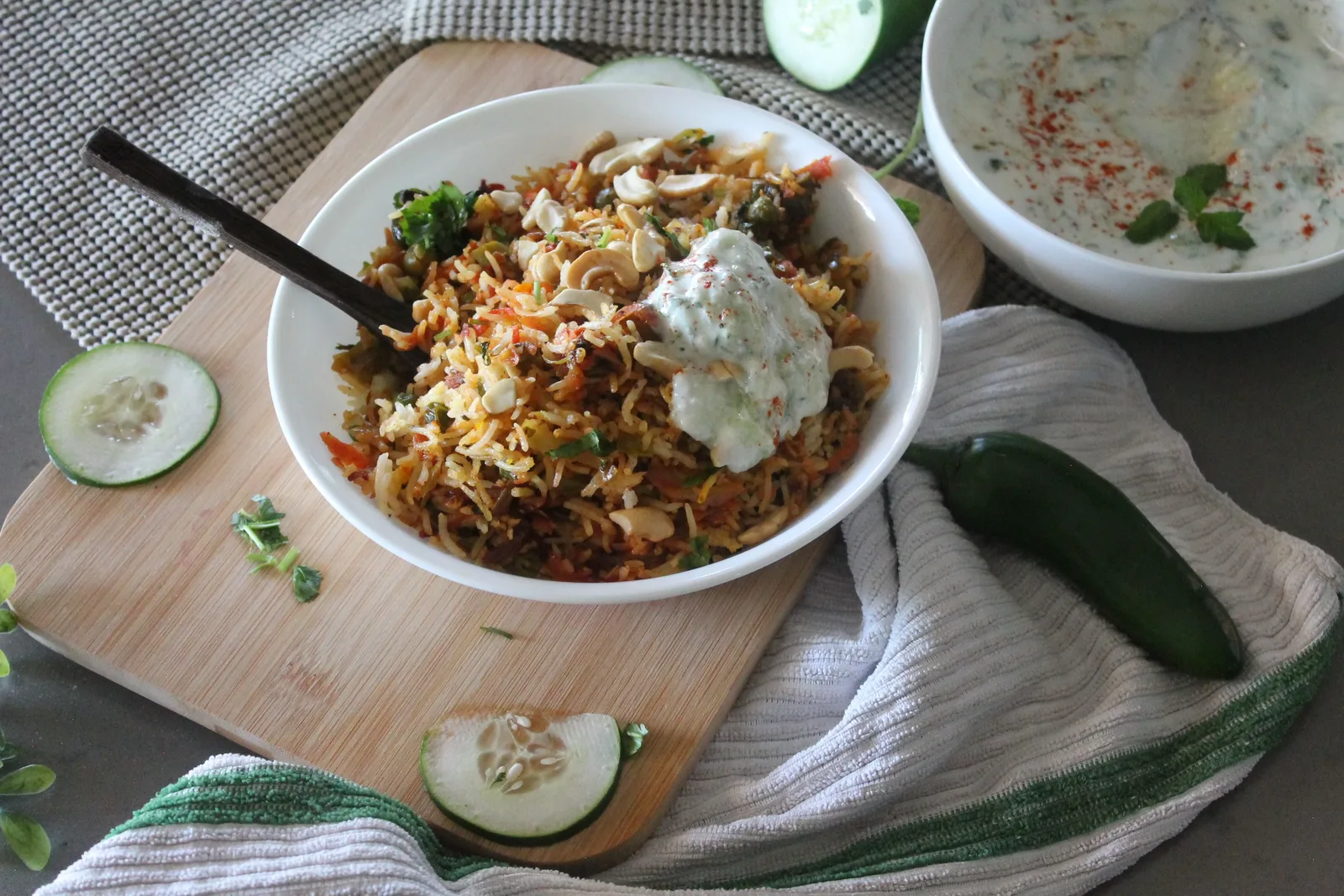 How raita balances biryani heat
Raita balances biryani heat through chilled yogurt and mild seasoning. Cucumber raita works best with chicken biryani, beef biryani, and mutton biryani.
Add roasted cumin, salt, black salt, and chopped mint. Keep green chili light for hot biryani.
How raita keeps rice moist
Raita keeps biryani rice moist without turning biryani into curry. Spoon raita beside rice instead of flooding the plate.
Use 2 tablespoons (30 ml) raita for the first bite. Add more after tasting the spice level.
How much raita to serve with biryani
Serve 0.5 cup (120 ml) raita per adult with biryani. Serve 0.25 cup (60 ml) raita per child.
For 4 adults, make 2 cups (480 ml) raita. For 6 adults, make 3 cups (720 ml) raita.
What Is Raita Used For With Curry, Kebabs, and Bread?
Raita is used with curry, kebabs, and bread to add freshness, dip texture, and spice control. This use answers what is raita used for beyond biryani.
Pakistani and Indian meals need contrast. Raita gives contrast without strong sweetness or acidity.
How raita works with curry
Raita works with curry by cooling hot gravy and adding a clean dairy layer. Chicken karahi, beef nihari, and palak paneer suit raita well.
Place raita in a small bowl beside curry. Keep raita separate, so the curry keeps a thick texture.
How raita works with kebabs
Raita works with kebabs as a dip for smoky meat. Seekh kebab, chapli kebab, chicken tikka, and boti kebab need moisture.
Mint raita suits grilled food because mint, coriander, and lemon lift the smoky flavor. Use 0.25 cup (60 ml) raita per 2 kebabs.
How raita works with naan and paratha
Raita works with naan and paratha as a dip. Tear bread into 3 inch (7.6 cm) pieces and scoop small amounts.
Garlic naan, plain naan, aloo paratha, and lachha paratha taste fresher with raita. Thick raita works better than watery raita.
What Ingredients Give Raita Its Cooling Flavor?
Raita gets its cooling flavor from yogurt, salt, herbs, vegetables, and roasted spices. The ingredient answer to what is raita used for helps you build the right bowl.
You do not need many ingredients. A strong raita needs chilled yogurt, measured salt, and 1 clear flavor direction.
Yogurt gives raita its base
Yogurt gives raita creaminess, mild sourness, and cooling texture. Use plain yogurt or dahi for the most natural taste.
For a basic bowl, use 1 cup (240 ml) yogurt, 0.25 tsp (1.25 ml) salt, and 0.25 tsp (1.25 ml) roasted cumin.
Vegetables and herbs add freshness
Vegetables and herbs add crunch, water, aroma, and color. Use cucumber, onion, tomato, carrot, beetroot, mint, and coriander.
Remove extra cucumber water before mixing. Grated cucumber can release 2 tablespoons (30 ml) water from 1 cup (150 g).
Spices make raita taste Desi
Spices make raita taste savory, not sweet. Use roasted cumin, chaat masala, black salt, red chili, and black pepper.
Add spices lightly. Raita should cool the meal, not compete with biryani or curry.
How to Serve Raita Correctly
To serve raita correctly, chill raita, keep raita thick, and place raita beside the main dish. A neat serving answers what is raita used for at the table.
Use a small bowl for family plates and a wider bowl for buffet tables. Add garnish only before serving.
How to serve raita chilled
To serve raita chilled, refrigerate raita for 20 minutes before the meal. Chilled yogurt gives the strongest cooling effect.
Keep raita below 40°F (4°C) before service. Do not leave raita at room temperature for more than 2 hours.
How to serve raita beside the main dish
To serve raita beside the main dish, place raita in a separate bowl near rice, bread, or grilled meat.
Give each person 1 small spoon. A shared spoon keeps the raita bowl cleaner during family meals.
How to serve raita for guests
To serve raita for guests, make 2 versions: cucumber raita and mint raita. Cucumber suits rice, and mint suits kebabs.
Serve 4 cups (960 ml) raita for 8 guests. Use a 1-quart (950 ml) bowl with space for garnish.
How Much Raita Should You Make per Person?
Make 0.5 cup (120 ml) raita per adult for rice meals and 0.25 cup (60 ml) per adult for snacks. Amounts answer what is raita used for during planning.
The table below helps you plan raita for biryani, kebabs, chaat, and curry nights.
| Task | Timing | Method | Difficulty |
|---|---|---|---|
| Raita for 2 people | 10 minutes | Mix 1 cup (240 ml) yogurt with cucumber, mint, salt, and cumin | Easy |
| Raita for 4 people | 12 minutes | Mix 2 cups (480 ml) yogurt with 1 cup (150 g) grated cucumber | Easy |
| Raita for 6 people | 15 minutes | Mix 3 cups (720 ml) yogurt with herbs, cumin, and black salt | Easy |
| Party raita bowl | 20 minutes | Mix 6 cups (1.4 L) yogurt and garnish in a 2-quart (1.9 L) bowl | Medium |
| Thick dip raita | 8 minutes | Use Greek yogurt and 2 tablespoons (30 ml) water only if needed | Easy |
Thicker raita works for dipping. Looser raita works for rice. Keep chaat raita pourable, so raita spreads evenly.
What Types of Raita Work Best for Different Meals?
Different raita types work for different meals because each raita changes texture, heat, and freshness. This variety answer expands what is raita used for across a menu.
Use 3 beginner types first: cucumber raita, mint raita, and boondi raita. These types cover rice, grilled food, and snacks.
Cucumber raita for spicy rice
Cucumber raita works best with biryani, pulao, tahari, and kabuli rice. Cucumber adds water and crunch to rich rice.
Use grated cucumber for a softer texture. Use diced cucumber for crunch. Add mint and roasted cumin for a classic bowl.
Mint raita for grilled food
Mint raita works best with tandoori chicken, seekh kebab, chapli kebab, and roasted vegetables. Mint brings a cleaner finish.
Blend 1 cup (240 ml) yogurt with 0.5 cup (15 g) mint, 0.25 cup (8 g) coriander, and 1 green chili.
Boondi raita for chaat and snacks
Boondi raita works best with chaat, samosa, pakora, and papri. Boondi adds small crunchy gram flour pearls.
Soak boondi for 5 minutes when you want softness. Add dry boondi just before serving when you want crunch.
How to Use Raita for Chaat and Fried Snacks
Use raita for chaat and fried snacks when you need creaminess, tang, and softer heat. This snack answer shows what is raita used for outside dinner plates.
Chaat and fried snacks often include tamarind chutney, green chutney, fried dough, potatoes, chickpeas, and crunchy toppings. Raita rounds those sharp flavors.
How raita works with chaat
To use raita with chaat, whisk raita until raita pours slowly from a spoon. Pour 0.25 cup (60 ml) over 1 bowl of chaat.
Dahi bhalla, papri chaat, samosa chaat, and chana chaat need a soft yogurt layer. Add roasted cumin and chaat masala last.
How raita works with fried snacks
To use raita with fried snacks, keep raita thicker than chaat raita. Pakora, samosa, kachori, and chicken rolls need a dip texture.
Serve 0.5 cup (120 ml) raita for every 12 small pakoras. Add mint when fried snacks taste oily.
How raita works with lunch boxes
To pack raita for lunch, use a leakproof 8 oz (240 ml) container and keep vegetables separate until eating.
Pack plain cumin raita with rice, paratha rolls, kebab wraps, and vegetable pulao. Add cucumber only when you can keep lunch cold.
How to Build a Basic Raita Bowl
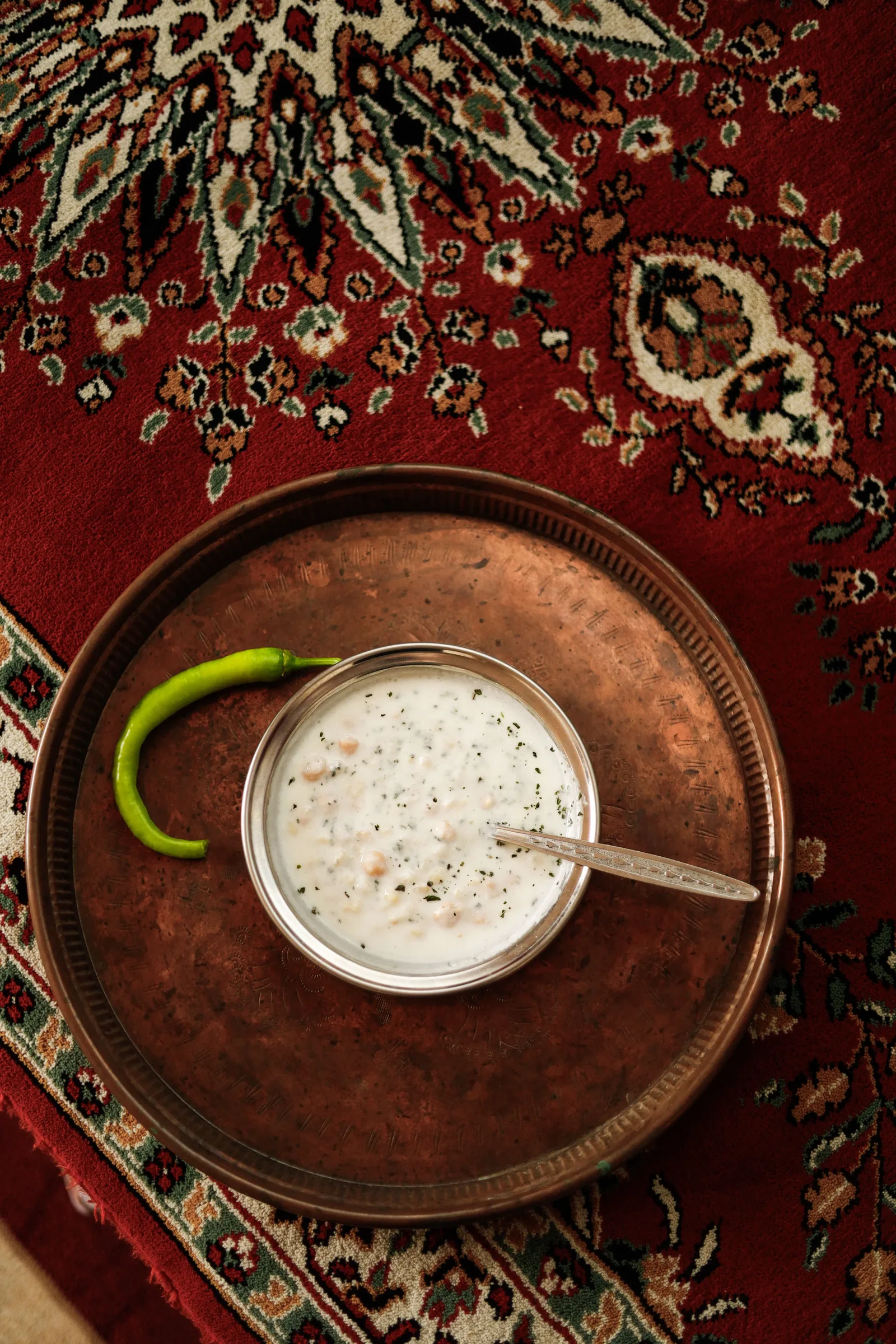 raita bowl
To build a basic raita bowl, start with chilled yogurt, choose 1 fresh ingredient, and add 2 dry seasonings. This method answers what is raita used for in beginner cooking.
A simple raita bowl takes 10 minutes and uses pantry staples. You can make a clean side without buying special sauces.
How to mix the yogurt base
To mix the yogurt base, whisk 1 cup (240 ml) yogurt until smooth. Add 1 tablespoon (15 ml) cold water for a looser texture.
Add 0.25 tsp (1.25 ml) salt and 0.25 tsp (1.25 ml) roasted cumin. Taste before adding chili.
How to choose the fresh ingredient
To choose the fresh ingredient, match raita texture to the main dish. Cucumber suits biryani, mint suits kebabs, and onion suits pulao.
Use 0.5 cup (75 g) grated cucumber, 0.25 cup (8 g) chopped mint, or 0.25 cup (40 g) diced onion.
How to finish the bowl
To finish the bowl, garnish raita with cumin, mint, coriander, or a light pinch of red chili.
Serve raita in a 5 inch (13 cm) bowl for family dinner. Use a 9 inch (23 cm) bowl for a buffet table.
How to Compare Raita With Chutney, Lassi, and Plain Yogurt
Raita differs from chutney, lassi, and plain yogurt because raita serves as a savory side with texture. This comparison clarifies what is raita used for in real meals.
Chutney brings sharp flavor. Lassi brings a drinkable dairy texture. Plain yogurt cools food but lacks herbs, vegetables, and spices.
- Choose raita for biryani, kebabs, curry, chaat, and stuffed paratha.
- Choose chutney for samosa, pakora, bun kebab, tikka, and rolls.
- Choose lassi for hot afternoons, spicy lunches, and sweet drink cravings.
- Choose plain yogurt for simple daal chawal, khichdi, and quick meals.
For a sweet cooling drink, LaGrub shares a Mango Lassi recipe with yogurt, milk, mango, and cardamom. Raita stays savory, while lassi stays drinkable.
How to Store Raita Safely
To store raita safely, keep raita cold, cover raita tightly, and use raita within 2 days. Storage also answers what is raita used for in meal prep.
Dairy needs careful handling. Yogurt can sour faster when cucumber, onion, tomato, and herbs release water into the bowl.
How to chill raita before serving
To chill raita before serving, cover the bowl and refrigerate raita for 20 to 30 minutes. Add fried boondi after chilling.
Use a clean spoon for tasting. Do not dip used spoons back into the serving bowl.
How to store leftover raita
To store leftover raita, transfer raita into an airtight container within 2 hours. Keep the container below 40°F (4°C).
Discard raita after 2 days. Discard raita sooner when raita smells sour, looks watery, or tastes fizzy.
What Mistakes Should You Avoid With Raita?
Avoid watery yogurt, excess salt, too much chili, warm serving, and early boondi mixing. Mistakes weaken the answer to what is raita used for because raita must cool food.
Fix watery raita by straining yogurt for 15 minutes through a fine sieve. Fix thick raita with 1 tablespoon (15 ml) cold water.
Salt raita just before serving when you use cucumber, onion, or tomato. Salt pulls water from vegetables and thins the bowl.
Keep chili low for raita served with spicy biryani or karahi. Add green chili only for mild rice, mild kebabs, or snack plates.
Use fresh herbs within 24 hours. Old mint and coriander turn dark and give raita a dull flavor.
FAQs About Raita
Is raita used as a dip?
Yes. Raita works as a dip for naan, paratha, kebabs, pakora, samosa, and grilled vegetables.
Is raita used for biryani?
Yes. Raita cools biryani heat, moistens rice, and balances heavy masala in chicken, beef, and mutton biryani.
Is raita the same as tzatziki?
No. Raita and tzatziki both use yogurt, but raita uses South Asian spices like cumin and chaat masala.
Can raita be made without cucumber?
Yes. You can make mint raita, boondi raita, onion raita, tomato raita, beetroot raita, or plain cumin raita.
Can raita be eaten alone?
Yes. You can eat raita alone as a savory yogurt snack, but raita tastes best with spicy meals.
Final Answer: What Is Raita Used For?
Raita is used for cooling spicy food, adding creamy moisture, and completing South Asian meals with freshness. The final answer to what is raita used for stays simple: raita balances biryani, curry, kebabs, chaat, naan, and rice.
Start with cucumber raita when you serve biryani. Choose mint raita when you serve grilled meat. Choose boondi raita when you serve chaat.
Explore the LaGrub recipe collection to pair raita with biryani, kebabs, chaat, curry, and homemade Desi meals.

Sahar Syed
Sahar Syed writes for LaGrub on cooking, recipes, and mindful culinary living.
Get a desi recipe worth cooking, every week
One tested recipe a week. Nothing else, and unsubscribe any time.


