

Wondering about cooking oil vs ghee and which one is better for everyday cooking? Both have an important place in the kitchen, but they differ in flavour, texture, cooking performance and fat content. From Pakistani curries and daal to parathas, biryani and fried foods, this guide explains when to use ghee, when to choose cooking oil, and how to get the best results from both.
Wondering about cooking oil vs ghee and which one is better for everyday meals? Both fats have a place in the kitchen, but they behave differently when heated and add different flavours to food. This guide compares ghee and cooking oil for Pakistani dishes, frying, curries, parathas, flavour, cooking methods and everyday use.
Cooking Oil vs Ghee: What Is the Difference?
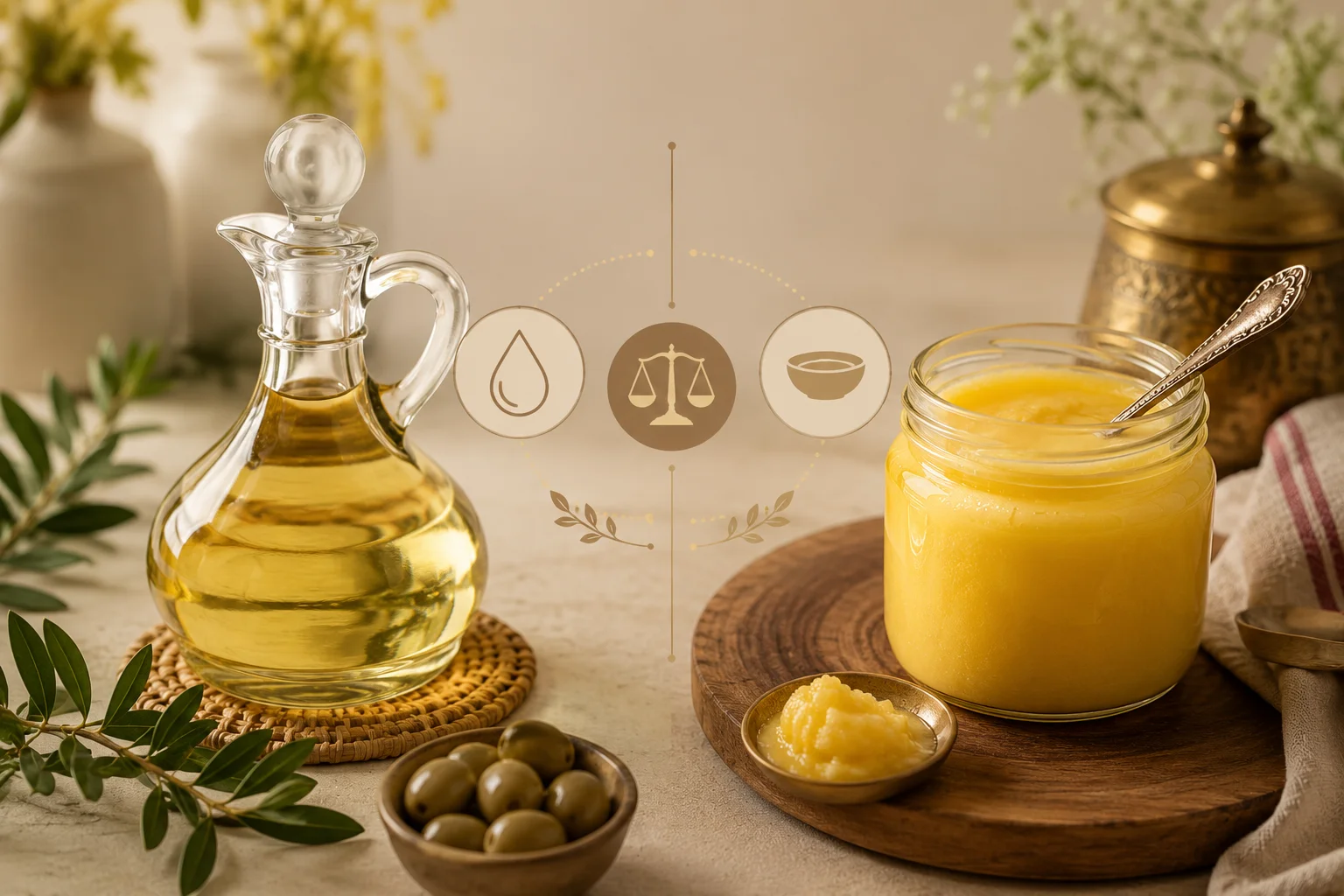
The choice between cooking oil vs ghee often comes down to flavour, cooking method and personal preference. Both are fats used to cook food, but they are not the same.
Ghee is a form of clarified butter. It is made by heating butter and removing its water and milk solids. The result is a golden fat with a rich, buttery and slightly nutty aroma.
Cooking oil, on the other hand, usually refers to oils made from plants. Common examples include sunflower oil, canola oil, soybean oil, mustard oil, olive oil and groundnut oil. Each type has its own flavour, fat profile and cooking properties.
So, there is no simple rule that says one is always better. Instead, the best choice depends on what you are cooking and the flavour you want.
For example, ghee can make a simple daal or paratha taste richer. A neutral cooking oil may be more suitable when you want the spices and main ingredients to remain the focus.
What Is Ghee?
Ghee has been used in South Asian kitchens for generations. It is especially important in Pakistani and Indian cooking, where it is used for frying, roasting, tempering, baking and finishing dishes.
Unlike ordinary butter, ghee contains very little water. This gives it a different texture and makes it useful for cooking at relatively high temperatures.
Ghee also has a strong character. Even a small amount can change the aroma of a dish.
This is why ghee is often used in traditional foods such as halwa, paratha, pulao, biryani and rich curries.
For many home cooks, ghee is not simply a cooking fat. It is part of the flavour of the dish.
What Is Cooking Oil?
Cooking oil is a broad term rather than one specific ingredient. Different oils can have very different properties.
Sunflower and soybean oils are common neutral choices. Mustard oil has a stronger flavour and is popular in some South Asian cooking traditions. Olive oil has its own distinct taste, while groundnut oil can work well for frying and everyday cooking.
Because of this variety, comparing ghee vs cooking oil without identifying the type of oil can be misleading.
A refined neutral oil and strongly flavoured mustard oil, for example, will not behave or taste the same.
When choosing an oil, consider the dish, cooking temperature and flavour you want.
Cooking Oil vs Ghee for Pakistani Cooking
Pakistani cooking uses fat in many different ways. Oil and ghee can both be found in traditional kitchens, and the choice often depends on the dish.
Rich meat curries may benefit from the aroma of ghee, while everyday vegetable dishes can be cooked easily with oil.
Daal is another good example. A simple daal can be cooked with oil, but finishing it with a hot ghee tadka can give it a deeper aroma.
Similarly, ghee can be used to make festive rice dishes more fragrant. For everyday cooking, however, many people prefer oil because it is versatile and easy to use.
This flexibility is one of the most useful things to understand about cooking oil vs ghee. You do not have to choose one and stop using the other.
Ghee vs Oil for Paratha
Paratha is one of the clearest examples of how the choice of cooking fat changes a dish.
Ghee gives paratha a rich aroma and slightly deeper flavour. It also works beautifully when layered into the dough or brushed over the cooked bread.
Oil can also be used to cook paratha. It gives a lighter taste and is a practical option for everyday meals.
You can even combine the two. A small amount of ghee with cooking oil can give you some of the aroma of ghee without using as much.
For stuffed parathas, such as aloo paratha, the choice is mainly about the flavour and texture you prefer.
If you enjoy a richer, traditional taste, ghee is a great option. If you want something lighter in flavour, oil works well.
Ghee vs Cooking Oil for Curry
Both fats work well in curry, but they create different results.
Cooking oil is a versatile choice for building an onion, tomato and spice base. It has a relatively neutral flavour, so the spices can remain prominent.
Ghee adds its own aroma. It can make rich curries taste more rounded and fragrant.
For example, a small spoon of ghee can be added towards the end of cooking a curry. This creates a finishing aroma without requiring the entire dish to be cooked in ghee.
Ghee can work especially well with rich dishes such as korma, nihari and certain meat curries.
Oil is often more practical for everyday chicken, vegetable and lentil dishes.
The important point is that the fat should support the dish rather than overpower it.
Ghee for Biryani and Rice Dishes
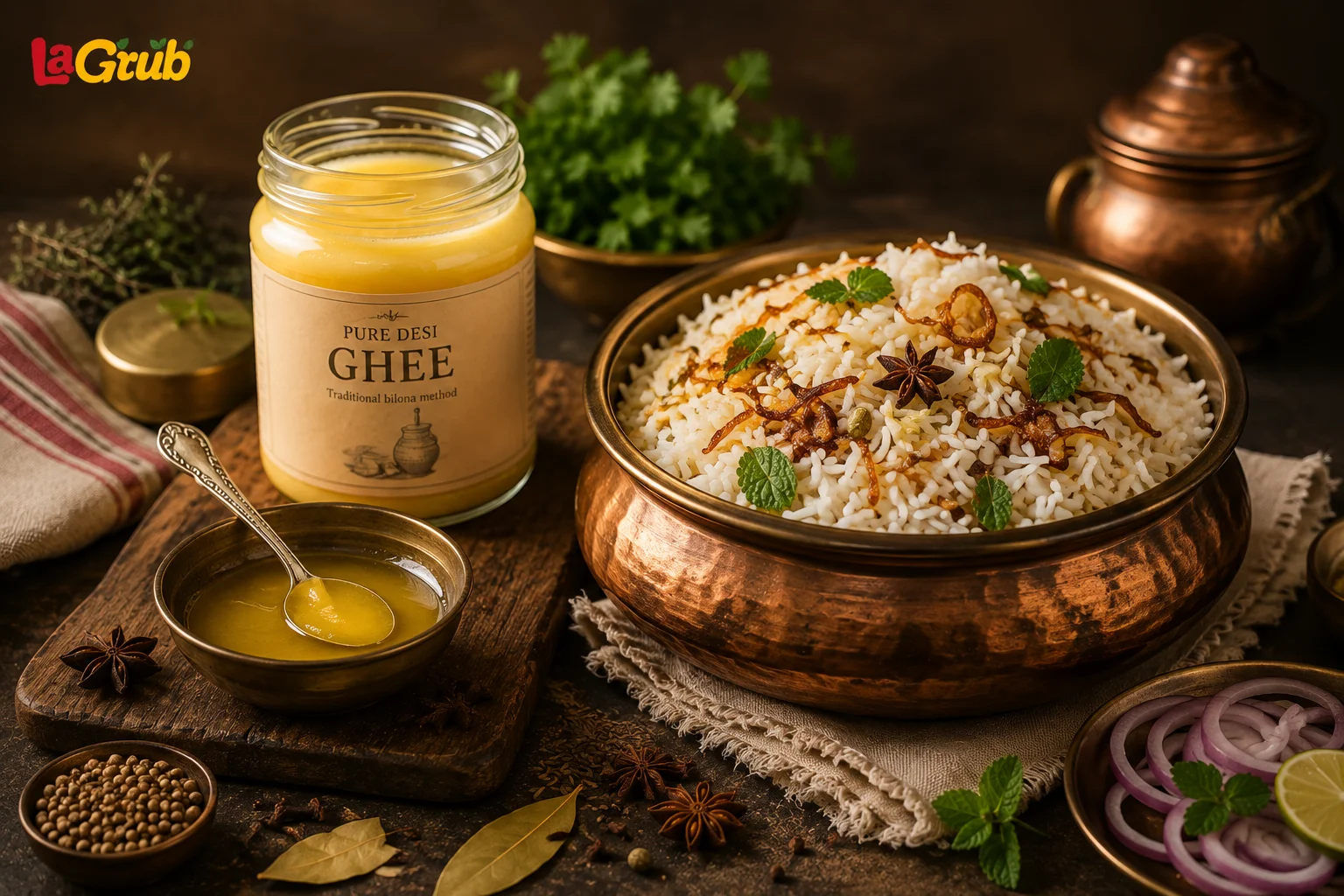
Rice dishes are another area where ghee can make a noticeable difference.
A small amount of ghee can help carry the aroma of whole spices, fried onions and herbs through the rice. It can also add richness to pulao and biryani.
However, you do not necessarily need a large quantity.
Using a mixture of oil and ghee is a practical option. The oil helps keep the flavour balanced, while the ghee contributes its distinctive aroma.
For special occasions, ghee can be particularly appealing because it gives the rice a more luxurious character.
If you enjoy exploring traditional dishes, you can also browse LaGrub's full recipe collection for more ideas.
Cooking Oil vs Ghee for Frying
Frying requires a cooking fat that can handle the required heat without smoking excessively.
Ghee can be used for frying and shallow frying. It adds a noticeable buttery flavour, which can be excellent for some foods.
However, ghee can also be expensive, so using a large amount for deep frying may not be practical for many households.
A suitable cooking oil is often the more economical choice for deep frying foods such as samosas, pakoras and other snacks.
There is also a flavour difference. If you fry a food in ghee, the fat can become part of the finished flavour. A neutral oil lets the food and spices remain more prominent.
The best choice therefore depends on whether you are prioritising flavour, cost or the specific character of the dish.
Which Has More Flavour: Ghee or Cooking Oil?
If flavour is your main concern, ghee usually has the stronger personality.
It has a rich, buttery and slightly nutty aroma. This means a small quantity can make a noticeable difference.
Many neutral cooking oils have very little flavour. That can be useful when you are making food where you want ingredients such as chilli, garlic, ginger, cumin or coriander to stand out.
However, not every oil is neutral. Mustard oil, for example, has a strong flavour that can become an important part of a dish.
Therefore, when considering ghee vs cooking oil, ask yourself what you want the fat to contribute.
If you want aroma and richness, ghee can be ideal. If you want the cooking fat to stay in the background, a neutral oil may be better.
Is Ghee Healthier Than Cooking Oil?
This is one of the most common questions about cooking oil vs ghee, but there is no universal answer.
Ghee is high in fat, including saturated fat. Plant-based cooking oils vary greatly in their fat composition. Some contain more unsaturated fats than ghee.
That does not mean that every plant oil is automatically a better choice for every situation. The type of oil, how much you use, how the food is cooked and the rest of your diet all matter.
It is also important to remember that both ghee and cooking oils are calorie-dense. Using a large amount of either can increase the calorie content of a meal.
Rather than treating one ingredient as a miracle food, focus on balance and portion size.
For everyday cooking, many people can use a suitable plant oil while keeping ghee for dishes where its flavour adds something special.
Which Is Better for Everyday Cooking?
For everyday cooking, cooking oil is often the more practical choice because it is versatile and widely available.
It can be used for:
Sauteing onions
Cooking vegetables
Making curries
Preparing lentils
Frying snacks
Cooking rice dishes
Ghee can still have a place in the everyday kitchen. You might use a small amount for tadka, paratha, finishing a curry or adding aroma to rice.
So, instead of asking which is better overall, ask which one suits the meal.
A neutral oil may be ideal for a simple weekday sabzi. Ghee may be worth choosing when you want a rich aroma for a special dinner.
Can You Mix Ghee and Cooking Oil?
Yes, ghee and cooking oil can be used together.
This is a useful approach when you want some of the flavour of ghee without using ghee alone.
For example, you can use a little ghee with oil when cooking paratha or preparing a curry. The oil provides the main cooking fat, while the ghee adds aroma.
The exact ratio is flexible. Start with a small amount of ghee and adjust according to taste.
This combination can also be useful when cooking for a family with different preferences. You can enjoy the richness of ghee without making the entire dish taste heavily buttery.
Desi Ghee vs Vegetable Ghee
It is important not to confuse traditional dairy ghee with vegetable ghee.
Desi ghee is traditionally made from dairy butter. Vegetable ghee, often associated with vanaspati, is made from vegetable fats and is a different product.
The names may sound similar, but their ingredients and characteristics are not identical.
When buying ghee, check the label so you know what product you are purchasing.
For traditional Pakistani recipes where the distinctive aroma of dairy ghee is part of the dish, genuine dairy ghee is the relevant ingredient.
Ghee vs Oil for Daal Tadka
Daal is simple food, but the finishing fat can change its character.
A hot tadka made with oil can give daal a fresh, savoury finish. Ghee can make the same tadka more aromatic and rich.
Whole cumin seeds, dried chillies, garlic and other spices can be heated in the fat before being poured over the cooked daal.
If you want a traditional, rich aroma, ghee is an excellent choice.
If you are preparing everyday daal and prefer a lighter flavour, cooking oil works perfectly well.
The important thing is to avoid burning the spices. Tadka should be fragrant and toasted, not bitter.
Ghee vs Oil for Traditional Desserts
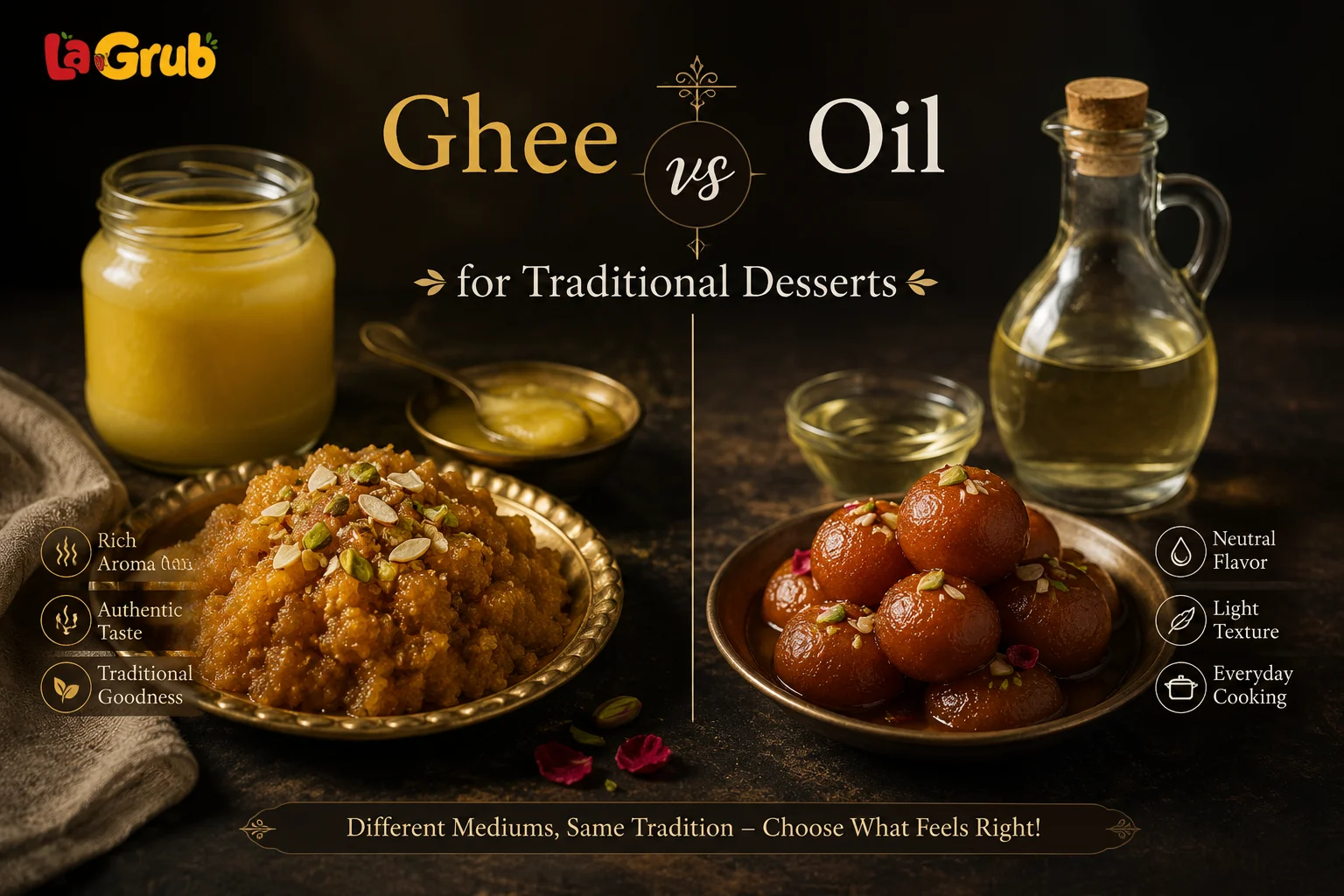
Ghee is especially popular in South Asian desserts because of its rich aroma.
Halwa is a classic example. Ghee helps toast ingredients such as semolina, flour or carrots while adding a deep flavour.
It is also commonly used in sweets and festive dishes.
If you are making a traditional dessert where ghee is part of the expected flavour, replacing all of it with a neutral oil may change the final result.
For example, the aroma of ghee is an important part of the experience of many halwa recipes.
For dessert inspiration, explore LaGrub's traditional Carrot Halwa recipe.
Common Mistakes When Using Ghee or Cooking Oil
Using Too Much
More fat does not always mean better flavour. Too much can make a dish feel heavy and hide the taste of other ingredients.
Choosing a Strong-Flavoured Fat Without Considering the Dish
A strongly flavoured oil or ghee can change the entire character of a recipe. Think about whether you want the cooking fat to be noticeable.
Heating Fat Until It Smokes
Avoid unnecessarily overheating your cooking fat. Use the temperature needed for the cooking method and keep an eye on the pan.
Assuming All Cooking Oils Are the Same
They are not. Different oils have different flavours and cooking properties.
Treating Ghee as Automatically Healthier
Ghee can be delicious, but it is still a concentrated source of fat. Use it for flavour rather than assuming that more is better.
How to Choose Between Cooking Oil and Ghee
A simple way to decide is to ask four questions:
What am I cooking?
A rich curry or traditional sweet may benefit from ghee, while everyday vegetables can work well with oil.
Do I want a strong flavour?
Choose ghee when you want a buttery, nutty aroma.
Am I deep frying?
A suitable cooking oil is often more practical for larger quantities.
How much fat does the recipe need?
Use enough to cook the food properly without adding unnecessary amounts.
This makes the choice much easier than trying to find one universal winner.
Frequently Asked Questions
Is ghee better than cooking oil?
Neither is automatically better for every situation. Ghee offers a rich flavour and works beautifully in traditional dishes, while suitable cooking oils are versatile and often practical for everyday cooking. The best choice depends on the recipe, cooking method and amount used.
Can I replace cooking oil with ghee?
In many recipes, yes. Ghee can replace oil for sautéing, shallow frying, parathas, rice dishes and many curries. However, it will add a richer flavour, so the final dish may taste different from the original recipe.
Is ghee better for frying?
Ghee can be used for frying and gives food a rich flavour. However, suitable cooking oil is often more practical for deep frying because large quantities of ghee can be costly. Always choose a fat appropriate for the cooking temperature.
Can you mix ghee and cooking oil?
Yes. Combining ghee and oil is a useful way to add ghee's aroma while keeping the overall flavour more balanced. It can work particularly well for parathas, curries and rice dishes.
Which is better for Pakistani cooking, ghee or oil?
Both have an important place in Pakistani cooking. Oil is practical for everyday curries, vegetables and frying, while ghee is especially useful when you want richer flavour in parathas, daal tadka, biryani, halwa and other traditional dishes.
Conclusion
When comparing cooking oil vs ghee, there is no need to choose one as the winner for every meal. Both can be useful, and the best option depends on the dish, cooking method, flavour and amount you want to use.
Cooking oil is versatile and practical for everyday meals, while ghee brings a rich, distinctive aroma that can transform traditional dishes. In many Pakistani kitchens, using both makes more sense than relying on only one.
Use oil when you want a neutral cooking base, and reach for ghee when its flavour can make the dish more special. You can even combine them when you want a balance of both.
The real secret is not choosing the “perfect” fat. It is learning when to use each one.
For more Pakistani recipes, cooking inspiration and food stories, discover more from LaGrub.

Maimoona Ehtisham
Maimoona Ehtisham writes for LaGrub on cooking, recipes, and mindful culinary living.
Get a desi recipe worth cooking, every week
One tested recipe a week. Nothing else, and unsubscribe any time.


