

Wondering how long does meal prep last in the fridge? Most cooked meal-prep foods can generally stay refrigerated for 3 to 4 days when stored properly. However, chicken, rice, pasta, vegetables and other ingredients may have different storage needs. Knowing when to refrigerate, freeze or discard meals can help keep your weekly meal prep safe and fresh.
Wondering how long does meal prep last in fridge? Most cooked meal-prep foods are best treated as refrigerated leftovers and generally kept for around 3 to 4 days when stored properly at 4°C/40°F or below. If you prepare meals for a full week, freezing the later portions is usually a better approach.
How Long Does Meal Prep Last in the Fridge?
For most cooked meals, a useful general rule is 3 to 4 days in the refrigerator when the food has been cooked, cooled, handled, and stored correctly.
However, how long meal prep lasts in the fridge depends on what you have prepared.
A container of cooked chicken and rice is different from overnight oats, a fresh salad, or a bowl containing raw vegetables. Ingredients, cooking methods, storage conditions, and handling all affect how well food keeps.
This is why it is better to think about the individual foods in your meal rather than assuming every meal-prep container lasts exactly the same amount of time.
For cooked leftovers, the 3-to-4-day range is a useful starting point.
If you prepare food on Sunday, consider refrigerating the meals you will eat during the next few days and freezing suitable portions intended for later in the week.
That approach gives you the convenience of weekly meal prep without relying on cooked food sitting in the refrigerator for seven days.
Can Meal Prep Last 7 Days in the Fridge?
This is one of the biggest questions people have when starting weekly meal prep.
Preparing seven days of meals at once sounds convenient. You cook on Sunday, fill seven containers, and do not need to cook again until the following weekend.
The problem is storage.
For many cooked leftovers, keeping all seven days of food refrigerated is not the safest general meal-prep strategy.
Instead, divide your weekly meals between the fridge and freezer.
For example, if you prepare meals on Sunday, keep the first few portions refrigerated. Freeze suitable meals that you plan to eat later.
Then thaw frozen portions safely when you need them.
This system can also improve quality. Some foods become dry, soggy, or less enjoyable after several days in the refrigerator even before obvious spoilage appears.
Freezing suitable meals can help you avoid both unnecessary risk and disappointing Friday lunches.
How to Meal Prep Safely for a Whole Week
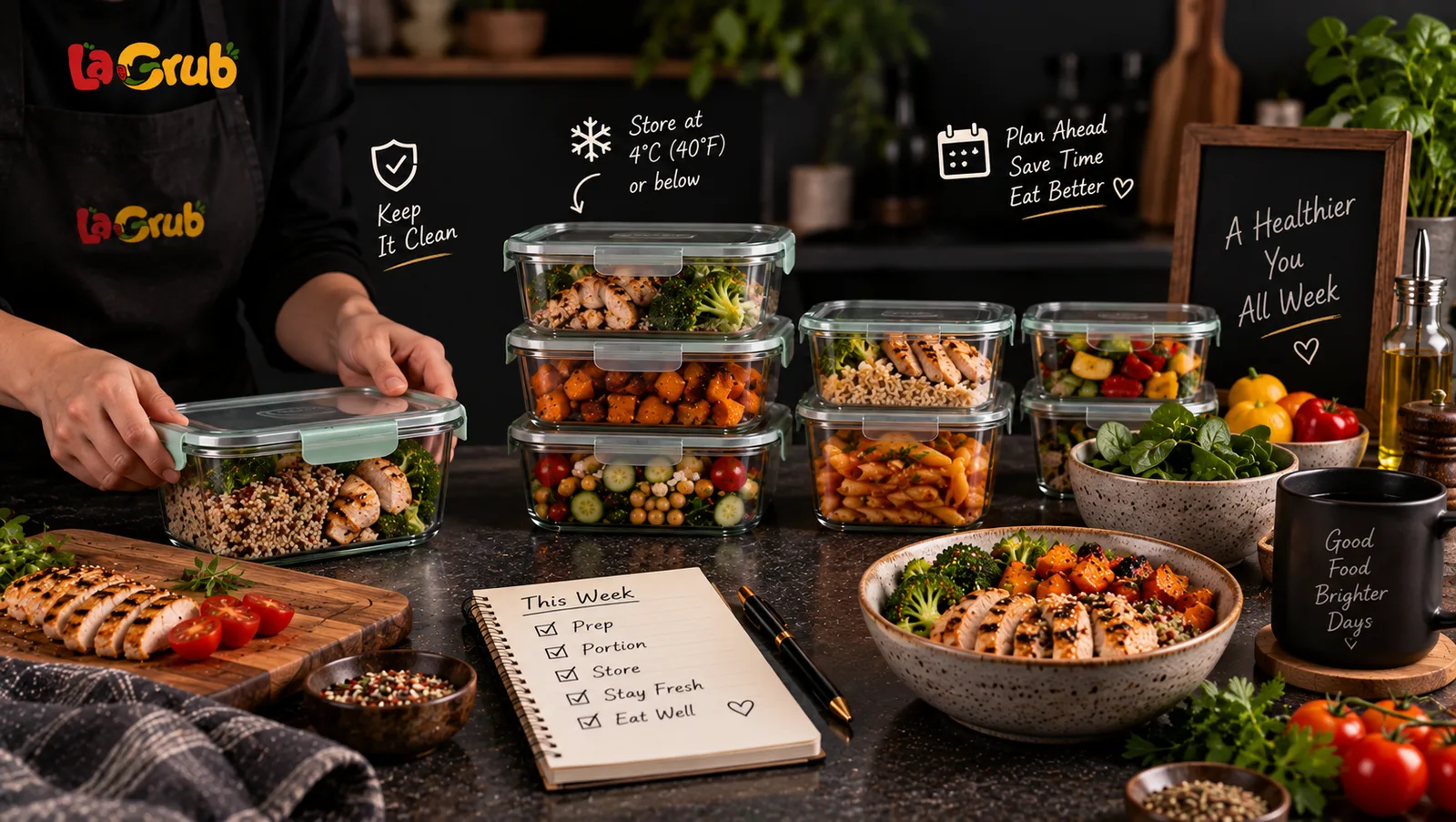
If you want to prepare seven days of food, you do not need seven refrigerated containers.
Think of your freezer as part of your meal prep storage system.
A simple approach is:
Refrigerate meals you will eat within the next 3 to 4 days.
Freeze suitable later-week meals.
Label containers so you know when they were prepared.
Thaw frozen meals safely before eating.
Reheat cooked meals properly when required.
Not every dish freezes equally well.
Soups, curries, stews, cooked beans, sauces, and many cooked dishes often freeze more successfully than delicate salads or meals containing ingredients that lose their texture after freezing.
This is where choosing the right recipes becomes important.
If you are planning your next prep day, explore LaGrub's recipe collection for dishes you can adapt for batch cooking, refrigeration, and freezing.
How Long Does Chicken Meal Prep Last in the Fridge?
Cooked chicken is one of the most common ingredients in meal prep for beginners.
Properly refrigerated cooked chicken should generally be used within 3 to 4 days.
This applies whether you have prepared grilled chicken breasts, roasted chicken, shredded chicken, or chicken as part of another cooked dish.
Do not assume that adding chicken to a sealed meal-prep container makes it suitable for an entire week in the fridge.
If you prepare several chicken meals on Sunday and want some for Friday or Saturday, consider freezing the later portions if the complete dish freezes well.
This allows you to batch cook without depending on extended refrigerator storage.
How Long Does Cooked Meat Last in the Fridge?
Cooked meat leftovers generally follow a similar 3-to-4-day refrigerated storage window.
That can include cooked beef, lamb, and other meat dishes when they have been handled and refrigerated properly.
Again, consider every component in your meal.
If cooked meat is mixed with rice, sauce, vegetables, or another ingredient, the whole meal should be handled according to the ingredient or condition that creates the shortest safe storage window.
For longer meal prep, freezing suitable portions is a better strategy than simply leaving cooked meat in the fridge for additional days.
How Long Does Rice Meal Prep Last in the Fridge?
Cooked rice also requires careful handling.
A useful general guideline for properly handled refrigerated cooked rice is around 3 to 4 days.
The way rice is handled after cooking is particularly important.
Do not leave cooked rice sitting at room temperature for long periods while completing the rest of your meal prep.
Divide large quantities where appropriate and refrigerate them promptly.
If you are preparing rice bowls for the week, consider keeping early-week servings refrigerated and freezing later portions if the recipe is suitable.
When reheating, make sure the meal is heated properly.
How Long Does Pasta Meal Prep Last?
Cooked pasta is another popular option for weekly meal prep because it is affordable, versatile, and easy to portion.
A general refrigerated window of around 3 to 4 days is appropriate for many cooked pasta leftovers.
However, quality may change sooner depending on the dish.
Pasta stored in sauce may soften as it sits. Certain creamy sauces can also change texture after refrigeration or freezing.
If you are preparing pasta ahead, slightly adjusting how you cook and store individual components may improve the final meal.
For example, storing some sauces separately can help protect texture.
How Long Do Meal-Prepped Vegetables Last?
Vegetables vary much more than people sometimes realise.
Cooked roasted vegetables may work well for several days, while fresh leafy greens can lose their crisp texture much sooner.
Storage also depends on moisture.
A salad already covered in dressing will usually become soggy faster than vegetables stored separately from the dressing.
When preparing vegetables:
Keep wet sauces separate when useful.
Store delicate ingredients separately.
Use clean, sealed containers.
Keep refrigerated foods properly chilled.
Check each ingredient's storage needs.
For healthy meal prep, preparing components separately can be more useful than putting every ingredient into one container on Sunday.
How Long Do Soups and Stews Last in the Fridge?
Soups, curries, and stews are excellent options for batch cooking because they are easy to divide into portions.
For many cooked soups and stews, 3 to 4 days in the refrigerator is a useful general guideline.
They are also often convenient candidates for freezing.
Instead of refrigerating a large pot of curry for an entire week, divide it into individual servings.
Keep a few portions in the fridge and freeze the rest.
This gives you ready-to-use meals without requiring the whole batch to remain refrigerated.
It also helps with variety because frozen portions can be saved for another week.
Should You Refrigerate or Freeze Meal Prep?
The answer depends mainly on when you plan to eat it and whether the particular dish freezes well.
The refrigerator is best for short-term meal prep.
The freezer is useful for extending storage beyond the normal refrigerated leftover window.
If you prepare food twice a week, you may rarely need to freeze anything.
For example, you could prepare meals on Sunday and again on Wednesday.
However, if you prefer one large weekly meal prep session, freezing becomes much more useful.
A good system is to decide which meals you will eat first before filling your containers.
Refrigerate those portions.
Freeze appropriate meals scheduled for later.
This small step makes weekly meal prep much easier to manage.
How Soon Should Meal Prep Go Into the Fridge?
Prepared perishable food should not sit on the kitchen counter for hours while you clean the kitchen or finish other tasks.
As a general food-safety rule, cooked perishable food should be refrigerated within 2 hours. If the surrounding temperature is above 32°C/90°F, that window becomes 1 hour.
Large amounts of food can be divided into smaller, shallow containers to help them cool more efficiently.
You also do not need to wait until cooked food becomes completely cold before placing it in the refrigerator.
The important point is to move food through cooling and into safe refrigeration promptly rather than leaving it at room temperature for an extended period.
What Temperature Should Your Fridge Be for Meal Prep?
Your refrigerator should be kept at 4°C/40°F or below.
A refrigerator thermometer can be useful because the temperature shown on a control dial may not always tell you the exact temperature inside every part of the fridge.
Also avoid overloading the refrigerator.
Cold air needs room to circulate around stored food.
The refrigerator door can experience more temperature changes than the main shelves, so avoid storing highly perishable prepared meals there when a more consistently cold shelf is available.
Good meal prep storage starts with a properly functioning refrigerator.
Do Airtight Containers Make Meal Prep Last Longer?
Good containers are important, but they do not make cooked food safe indefinitely.
A clean container with a secure lid can help protect food from contamination, prevent spills, reduce odours, and maintain quality.
However, an airtight container does not turn a meal that should be eaten within a few days into a meal that can automatically stay refrigerated for a week.
Think of containers as one part of safe storage.
Temperature, time, cooling, handling, and the ingredients in the dish still matter.
You also do not need expensive containers.
Choose practical containers that close securely and are appropriate for refrigeration, freezing, and reheating when required.
Should You Let Meal Prep Cool Completely Before Refrigerating?
No. You do not need to leave cooked food on the counter until it becomes completely cold.
In fact, leaving perishable food at room temperature for too long creates a food-safety problem.
Large batches can be divided into smaller or shallow containers to help them cool more quickly.
For example, rather than leaving a huge pot of curry on the counter for several hours, divide it into smaller portions and refrigerate them promptly.
Planning this step before you start cooking can make your weekly meal prep much easier.
Have clean containers ready before your food finishes cooking.
How Can You Tell If Meal Prep Has Gone Bad?
Visible mould, unpleasant odours, unusual textures, or other clear signs of spoilage mean food should be discarded.
However, there is an important catch.
Food does not have to look or smell bad to contain harmful bacteria.
That means the smell test should never be your only food-safety system.
A meal that smells normal after sitting in the fridge for a long time should not automatically be considered safe.
Instead, keep track of when meals were prepared and how they were stored.
Labelling containers can help.
Write the preparation date on the container, especially when freezing several different batches.
If you are uncertain about whether a perishable meal has been stored safely, it is better to be cautious.
Can You Freeze Meal Prep After 3 Days?
You can freeze suitable leftovers within their safe refrigerated storage period, but planning ahead is better.
If you already know on Sunday that you will not eat a portion until Friday, freezing it earlier makes more sense than allowing it to sit in the refrigerator for several days first.
Early freezing can also help preserve quality.
Label frozen meals with the dish and date so you know what is available.
Then use safe thawing methods when you are ready to eat them.
A simple meal prep routine can therefore include two groups from the beginning: "fridge" and "freezer."
How Should You Thaw Frozen Meal Prep?
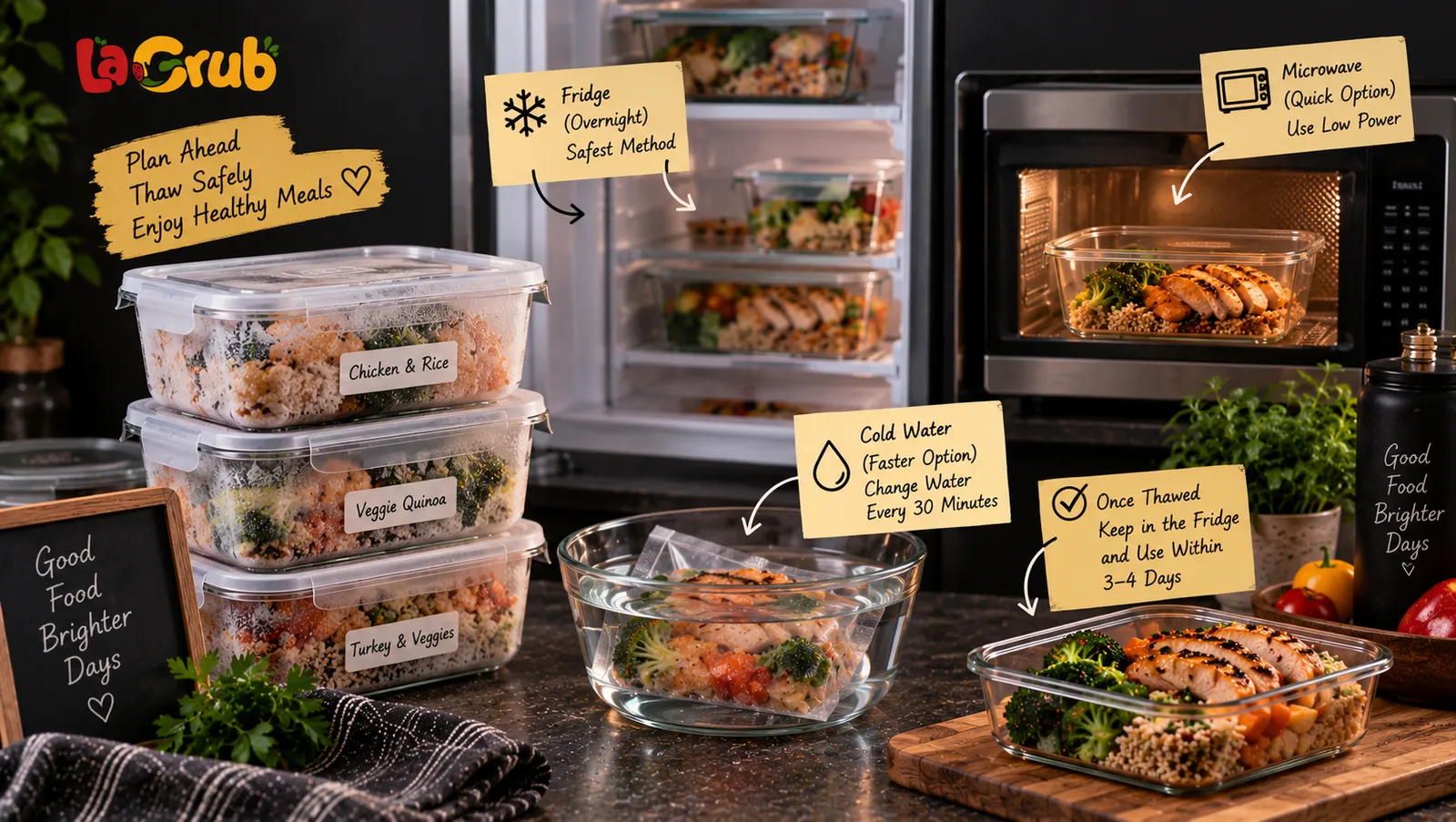
One convenient method is to move a frozen meal from the freezer into the refrigerator ahead of time and allow it to thaw while staying cold.
Depending on the food and container, other safe methods may also be appropriate.
Avoid leaving frozen perishable meals on the kitchen counter for hours to thaw.
Planning helps here too.
If you know tomorrow's lunch is frozen, move it to the refrigerator the night before when appropriate.
This keeps your meal-prep system organised without requiring last-minute decisions.
How to Reheat Meal-Prepped Food Safely
Cooked leftovers that require reheating should be heated thoroughly. A commonly recommended target for reheated leftovers is 74°C/165°F.
Different foods respond better to different reheating methods.
Rice bowls and curries may be convenient in a microwave, while pizza, roasted foods, and other dishes may regain better texture in an oven.
If you prefer oven reheating, LaGrub's guide to reheating food in the oven explains practical ways to warm different leftovers while protecting their texture and moisture.
Remove cold components such as salad leaves or fresh toppings before reheating when appropriate.
How to Keep Meal Prep Fresh for the Week
If you want convenient meals from Monday through Sunday, use a combination of preparation methods.
You could refrigerate early-week meals, freeze later portions, and keep some ingredients separate until serving.
You can also prepare food twice each week rather than once.
For example, cook on Sunday and Wednesday.
This gives you fresher food while keeping daily cooking to a minimum.
Choose recipes that store and reheat well. Soups, curries, stews, grain bowls, and many batch-cooked dishes can work well when handled correctly.
For even more batch-cooking ideas, browse LaGrub's cookbook collection and build a meal-prep rotation around recipes that suit both refrigeration and freezing.
FAQs
How Long Does Meal Prep Last in the Fridge?
Most cooked meal-prep leftovers should generally be used within 3 to 4 days when stored correctly at 4°C/40°F or below. Exact storage needs can vary by ingredient and dish.
Can Meal Prep Last 7 Days in the Fridge?
Keeping many cooked meals refrigerated for seven days goes beyond the general 3-to-4-day guideline for cooked leftovers. If preparing a full week, refrigerate early-week meals and freeze suitable later portions instead.
How Long Does Chicken Meal Prep Last in the Fridge?
Properly refrigerated cooked chicken generally has a 3-to-4-day refrigerator storage window. If preparing chicken meals further ahead, freeze suitable later portions.
Should I Freeze Meal Prep After 3 Days?
If you know you will not eat a suitable meal within its recommended refrigerated storage period, freezing it earlier is usually a better plan. There is little benefit in deliberately waiting until the final refrigerator day before freezing a meal you already know is for later.
How Can You Tell If Meal-Prepped Food Has Gone Bad?
Mould, unpleasant smells, or unusual textures can indicate spoilage, but food can contain harmful bacteria without obvious changes. Do not rely on smell alone. Consider preparation date, refrigeration temperature, handling, and recommended storage time.
Conclusion
So, how long does meal prep last in the fridge? For many cooked meals and leftovers, 3 to 4 days is the general refrigerated storage window when food is properly handled and kept at 4°C/40°F or below.
That does not mean you have to stop preparing food for an entire week.
Instead, use your fridge and freezer together. Refrigerate the portions you will eat first, freeze suitable meals for later, label your containers, cool food promptly, and reheat cooked leftovers properly.
A smart weekly meal prep routine should make your life easier without compromising food safety.
Explore LaGrub for meal-prep recipes, cooking guides, and cookbook inspiration, and start building a weekly meal-prep system that keeps your food convenient, enjoyable, and properly stored

Maimoona Ehtisham
Maimoona Ehtisham writes for LaGrub on cooking, recipes, and mindful culinary living.
Get a desi recipe worth cooking, every week
One tested recipe a week. Nothing else, and unsubscribe any time.


