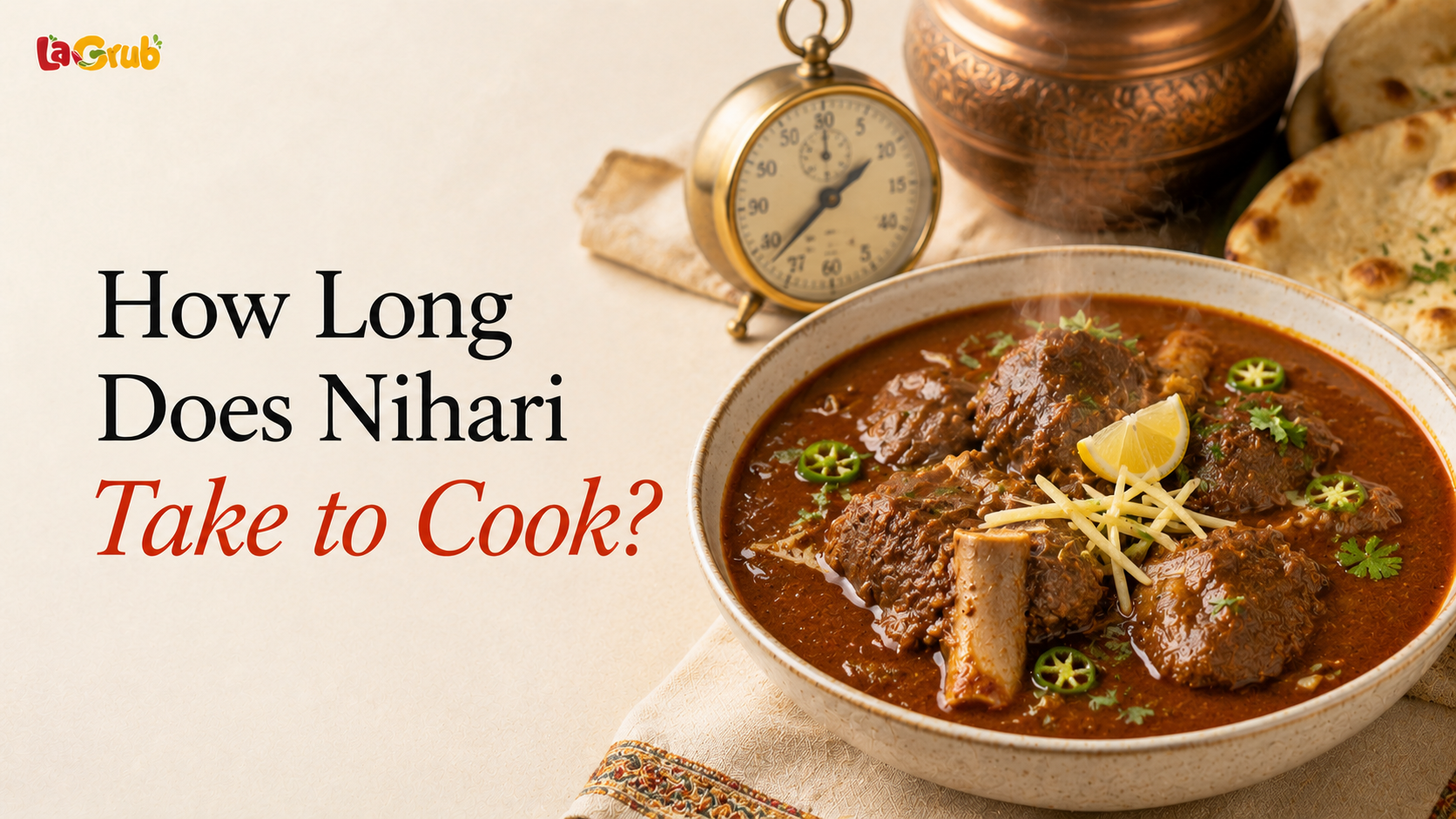
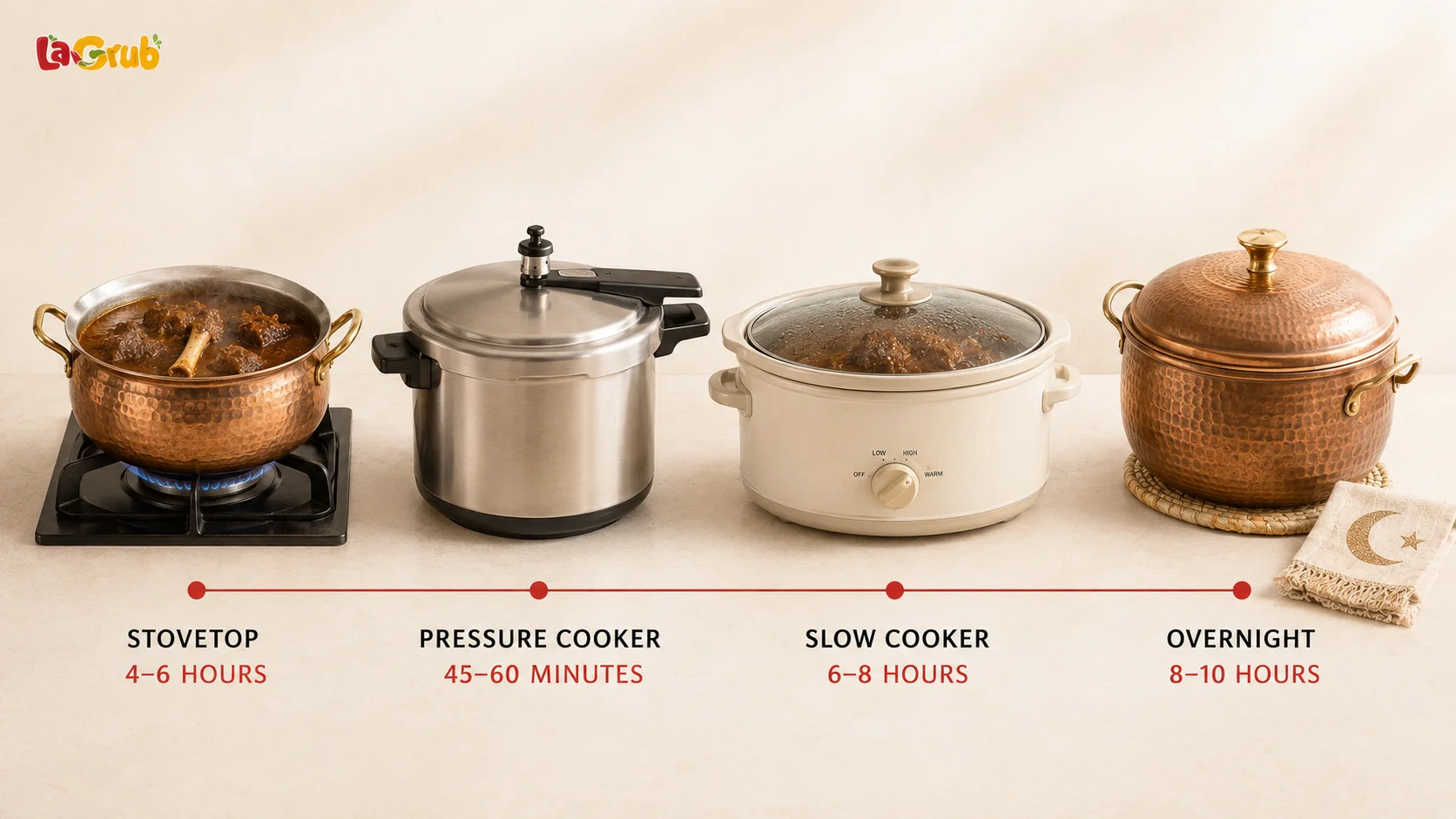
Nihari usually takes 4 to 6 hours on the stove, 6 to 8 hours in a slow cooker, or 45 to 60 minutes in a pressure cooker. The right time depends on beef shank, nalli, pot size, heat level, and how soft you want the meat.
Nihari usually takes 4 to 6 hours on the stove, or 45 to 60 minutes under pressure. Slow cooker nihari takes 6 to 8 hours, and overnight nihari takes 8 to 10 hours. How long does nihari take to cook depends on the meat cut, pot, heat level, and gravy thickness.
Beef shank and nalli nihari take the longest because tough meat needs steady heat. Chicken nihari cooks faster, while pressure cooker nihari gives tender meat in less time.
How Long Does Nihari Take to Cook in Simple Words?
how long does nihari take to cook
Most beef nihari needs 4 to 6 hours from raw meat to tender gravy. This timing answers how long does nihari take to cook from searing to resting.
A quick answer helps beginners plan dinner without guessing. Prep takes 20 to 30 minutes. Beef simmering takes 4 to 6 hours. Thickening takes 15 to 25 minutes. Resting takes 20 minutes.
Pressure cooker nihari shortens the main cooking stage to 45 to 60 minutes. Slow cooker nihari stretches the main cooking stage to 6 to 8 hours.
Restaurant-style nihari often cooks longer than home nihari. Long heat pulls gelatin from bones, softens connective tissue, and gives shorba a rich body.
The best first rule stays simple. Cook nihari until the meat presses apart with a spoon, not until a clock says finished.
| Task | Timing | Method | Difficulty |
|---|---|---|---|
| Prep meat and aromatics | 20 to 30 minutes | Cut 2 in (5 cm) beef chunks, slice onions, and measure spices | Easy |
| Sear meat | 8 to 10 minutes | Brown meat in a 6-quart (5.7 L) heavy pot with ghee | Easy |
| Stovetop beef nihari | 4 to 6 hours | Simmer beef shank on low heat until fork-tender | Medium |
| Pressure cooker nihari | 45 to 60 minutes | Cook under pressure, then finish gravy uncovered | Medium |
| Slow cooker nihari | 6 to 8 hours | Cook on low after building the masala base | Easy |
| Thicken gravy | 15 to 25 minutes | Whisk 1/4 cup (30 g) atta into cooled stock | Medium |
How Long Does Nihari Take to Cook on the Stove?
Stovetop nihari takes 4 to 6 hours for beef shank and 3 to 4 hours for mutton. How long does nihari take to cook on the stove depends on heat control.
A low flame gives the cleanest texture. How long does nihari take to cook also depends on water level. A fast boil breaks meat, clouds gravy, and dries the surface before the center softens.
Use a heavy pot, such as a Dutch oven, handi, or thick-bottomed stockpot. That pot helps when you ask how long does nihari take to cook evenly. Thin pots create hot spots and scorched masala.
Stovetop Timing for Beef Shank
Beef shank usually needs 4 to 6 hours on low heat. Shank contains collagen, marrow bones, and firm muscle fibers.
Cut beef into 2 in (5 cm) pieces for even cooking. Larger pieces stay juicy and hold shape during long simmering.
Add enough water to cover the meat by 1 in (2.5 cm). Cover the pot and keep the surface at a gentle simmer.
Stovetop Timing for Mutton and Chicken
Mutton nihari usually takes 3 to 4 hours, while chicken nihari takes 45 to 60 minutes. Meat type controls the clock.
Mutton shank and lamb shank need low heat because bones and connective tissue need time. Chicken pieces soften fast and need less simmering.
Use bone-in chicken thighs, chicken legs, or chicken quarters for better flavor. Boneless chicken breast dries before gravy develops.
How Long Does Nihari Take to Cook in a Pressure Cooker?
Pressure cooker nihari takes 45 to 60 minutes under pressure for beef. How long does nihari take to cook changes sharply with pressure.
Pressure pushes heat deep into the meat. This method softens beef shank faster than a regular pot.
Pressure cooking saves time when how long does nihari take to cook becomes your main worry. Simmer the gravy uncovered after pressure cooking for better thickness and aroma.
Pressure Cooker Timing for Beef
Cook beef shank for 50 minutes under pressure, then rest pressure naturally for 10 minutes. Natural release protects meat shape.
Use 2 lb (900 g) beef shank with 4 cups (950 ml) water for a family pot. Add more water after pressure cooking, if gravy looks too thick.
Open the cooker only after pressure drops. Stir gently because tender shank breaks with rough mixing.
Instant Pot Timing for Tender Meat
Instant Pot nihari needs 55 minutes on high pressure for beef shank. Add 15 minutes for pressure buildup and 10 minutes for release.
Use the saute setting for onions, ginger, garlic, and spices. Pressure cook after the masala base smells cooked.
Switch back to saute after pressure cooking. Add atta slurry and simmer until gravy coats the spoon.
How Long Does Nihari Take to Cook in a Slow Cooker?
Slow cooker nihari takes 6 to 8 hours on low for beef and 4 to 5 hours for mutton. Slow heat builds deep flavor, so how long does nihari take to cook has no single answer.
Use the slow cooker after frying onions, searing meat, and cooking spices in a pan. How long does nihari take to cook changes with slow cooker strength. Raw spices taste flat inside a slow cooker.
For global readers learning Pakistani food culture, slow nihari explains why one dish can carry so much memory.
Slow Cooker Timing for Shank and Stew Meat
Beef shank needs 8 hours on low, while boneless stew meat needs 6 hours on low. Bones and collagen need extra time.
Use 2 cups (480 ml) water for every 1 lb (450 g) meat. Slow cookers trap moisture, so extra water thins the final gravy.
Add flour slurry during the last 30 minutes. Stir gently, then let the gravy thicken with the lid slightly open.
Overnight Nihari Timing for Deeper Flavor
Overnight nihari usually cooks 8 to 10 hours on very low heat. This method suits beef shank and marrow bones.
Use a heavy covered pot or slow cooker for overnight cooking. Keep heat low enough for gentle bubbling, not hard boiling.
Cool leftovers within 2 hours after serving. Store portions in shallow containers, not one deep pot.
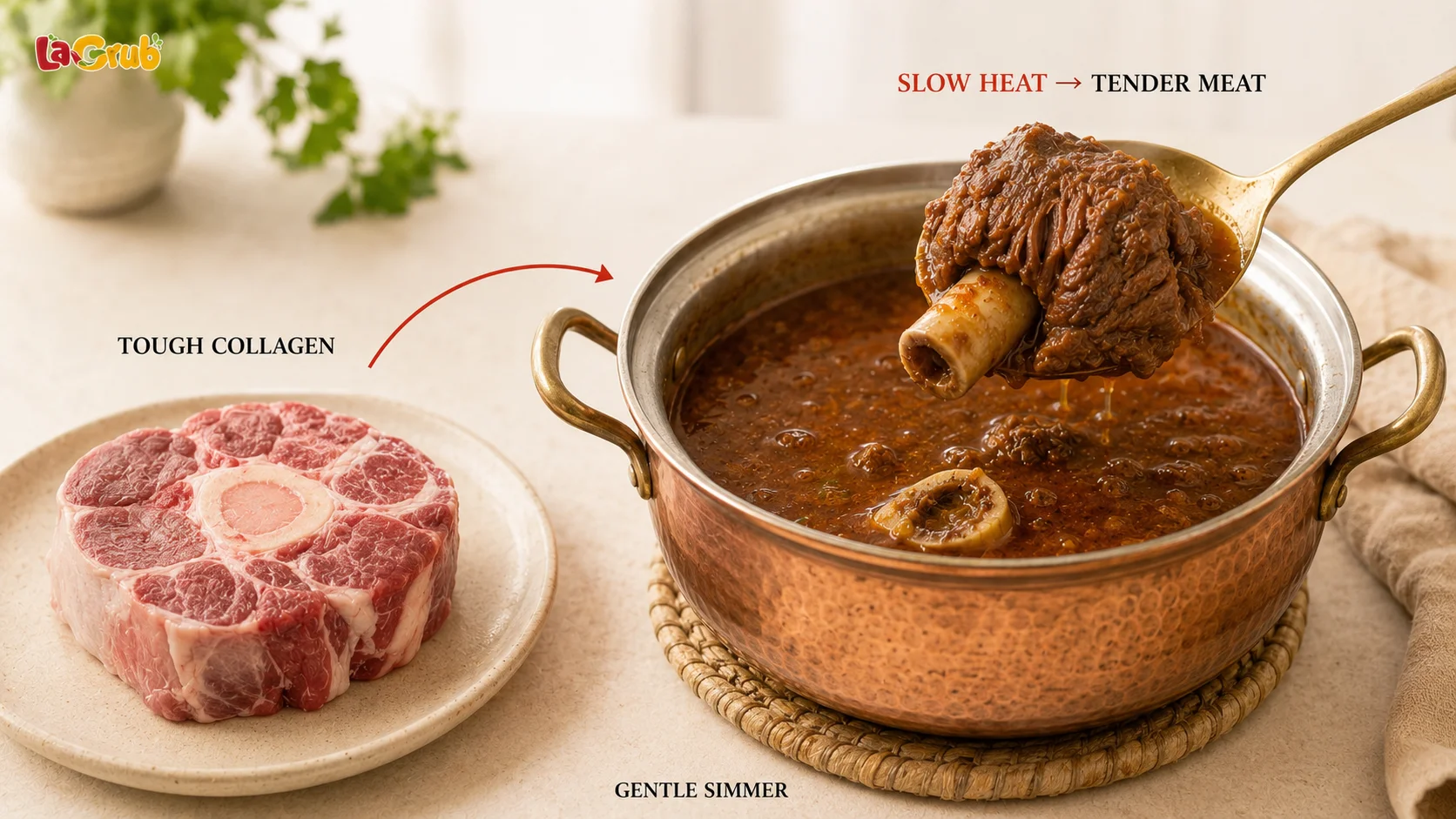
Why Does Nihari Need Slow Heat?
how long does nihari take to cook
Nihari needs slow heat because beef shank contains collagen and connective tissue. Long cooking changes tough meat into soft meat.
Fast cooking tightens muscle fibers before collagen melts. Slow simmering keeps meat moist while bones enrich the gravy.
Nihari also needs time for spices to settle into the shorba. Fennel, cinnamon, cloves, black cardamom, mace, and cumin taste smoother after simmering.
Thick gravy also needs careful timing. Atta slurry thickens the broth near the end because early flour can stick to the pot.
LaGrub explains similar layering in Desi cooking methods, where flavor often builds through heat, fat, and time.
What Meat Changes Nihari Cooking Time?
Beef shank takes longest, mutton takes less time, and chicken cooks fastest. Meat choice decides how long does nihari take to cook.
Choose meat by your available time when how long does nihari take to cook guides your menu. Beef gives the classic deep taste. Mutton gives a rich but faster stew. Chicken gives a lighter weekday version.
Beef Shank and Nalli
Beef shank and nalli need 4 to 6 hours on the stove. This cut gives classic nihari texture.
Nalli adds marrow, body, and shine to the gravy. Beef shank pieces should measure about 2 in (5 cm) across.
Ask the butcher for bone-in shank, marrow bones, or bong meat. These cuts work better than small boneless cubes.
Mutton, Lamb, Chicken, and Boneless Beef
Mutton needs 3 to 4 hours, lamb needs 3 to 4 hours, and chicken needs 45 to 60 minutes. Boneless beef varies by cut.
Boneless chuck, brisket, and short rib need 3 to 4 hours. Lean stew cubes dry faster and shred easily.
Use chicken only when you want a quick nihari. Chicken cannot give the same marrow flavor as beef shank.
How to Tell Nihari Is Fully Cooked
how long does nihari take to cook
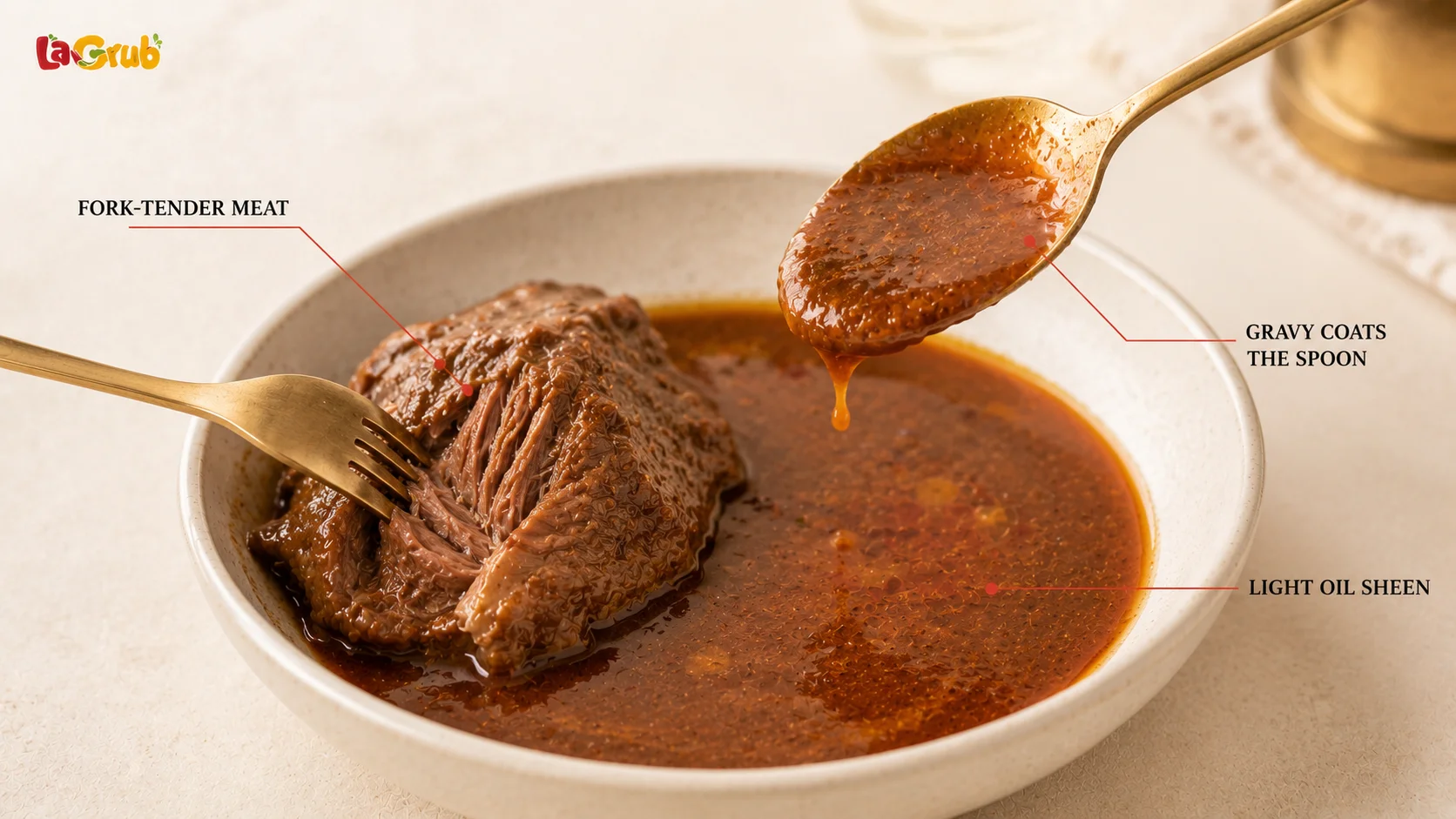
To tell nihari is fully cooked, press the meat with a spoon and check the gravy body. Finished nihari has fork-tender meat and thick soup-like gravy, so how long does nihari take to cook ends with texture.
The meat should pull apart without force. The gravy should coat the spoon, but the gravy should still pour.
Look for oil rising at the surface. That surface shine shows the masala, fat, and broth have cooked together.
Taste the gravy before serving. Salt, chili, ginger, and lemon need balance because nihari tastes rich.
Serve with naan, sheermal, lemon wedges, ginger, green chilies, and fried onions. These toppings cut richness and add freshness.
How to Fix Nihari Meat That Stays Tough
To fix nihari meat that stays tough, add hot water, cover the pot, and keep simmering on low heat. Tough meat needs more time, not stronger heat, because how long does nihari take to cook depends on tenderness.
Check the liquid level every 30 minutes. Add 1/2 cup (120 ml) hot water when gravy falls below the meat.
Do not add cold water to a hot pot. Cold water slows simmering and can tighten meat fibers.
Use pressure only when time runs short. Transfer tough nihari to a pressure cooker and cook for 15 to 20 minutes.
Do not stir aggressively after meat softens. Rough stirring turns large pieces into shredded beef.
How to Thicken Nihari Without Breaking the Meat
To thicken nihari without breaking the meat, whisk flour into cooled gravy first. Atta slurry prevents lumps and protects tender pieces.
Remove 1 cup (240 ml) hot gravy and cool for 5 minutes. Whisk in 1/4 cup (30 g) atta until smooth.
Pour the slurry back slowly while stirring the edge of the pot. Do not stir through the center where meat pieces sit.
Simmer the nihari for 15 to 25 minutes after adding slurry. The gravy should thicken into shorba, not paste.
Add hot water in 1/4 cup (60 ml) amounts when the gravy becomes too thick. Thick nihari should still move in the bowl.
What Should You Serve With Nihari?
Nihari tastes best with warm bread, fresh garnish, and sharp sides. The meal needs texture because the gravy tastes rich.
Serve breads, such as naan, tandoori roti, sheermal, and khameeri roti. Warm bread helps you scoop gravy without losing texture.
Add garnishes, such as ginger matchsticks, green chilies, coriander, lemon wedges, and fried onions. These toppings brighten the bowl.
Add sides, such as cucumber salad, sliced onions, mint chutney, and raita. These sides cool the spice and balance the fat.
You can build the full table with light rice, salad, and cooling drinks. Pair nihari with light sides when the main dish already feels rich.
How Long Does Nihari Take to Cook With Packet Masala?
Packet masala nihari still takes 3 to 6 hours because the meat controls tenderness. How long does nihari take to cook does not change because a masala box saves only seasoning time.
Packet mixes, such as Shan, National, and Mehran, help beginners avoid spice-measuring mistakes. These mixes do not soften beef shank faster.
Use packet masala when you want reliable flavor on your first try. Control salt because boxed mixes often carry enough salt for the whole pot.
For 2 lb (900 g) beef, start with 3/4 packet or the listed amount on the box. Add more only after simmering and tasting.
Packet Masala Timing for Beginners
A beginner packet masala pot needs 20 minutes prep, 4 hours simmering, and 20 minutes thickening. How long does nihari take to cook still depends on beef size.
Cut meat into 2 in (5 cm) chunks and keep bones large. Small pieces shred before the gravy develops body.
Use a 6-quart (5.7 L) pot for 2 lb (900 g) beef. This pot size gives enough room for simmering without overflow.
Packet Masala Mistakes That Add Time
Scorched masala, dry gravy, and small meat pieces add extra time. Prevent these mistakes with low heat and enough hot water.
Add 1/2 cup (120 ml) hot water whenever gravy drops below the meat. Keep the lid slightly loose after thickening.
Do not add dry flour directly to the pot. Dry flour creates lumps and forces extra simmering.
How Long Does Nihari Take to Cook for Guests?
For 6 guests, cook 3 lb (1.4 kg) beef nihari for 5 to 6 hours on the stove. How long does nihari take to cook for guests depends on pot volume and meat size.
A larger pot heats slowly because more meat, bones, and water hold more temperature.
Use an 8-quart (7.6 L) pot for 3 lb (1.4 kg) beef shank. This space prevents overflow during simmering and thickening.
Active Time Versus Hands-Off Time
Nihari needs about 60 minutes active work and 4 to 6 hours hands-off simmering. Plan your kitchen day around that split.
Active work includes slicing onions, searing meat, cooking spices, whisking slurry, and preparing garnish. Hands-off time covers gentle simmering.
Prepare garnishes 30 minutes before serving. Cut ginger into 2 in (5 cm) matchsticks and slice lemons into 6 wedges.
Make-Ahead Schedule for a Dawat
Cook nihari 1 day ahead for easier hosting and deeper flavor. The gravy tastes richer after resting overnight.
Cook the meat until tender, cool the pot quickly, and refrigerate shallow portions. Reheat gently and add garnish before serving.
Reheat nihari until the center reaches 165°F (74°C). Stir from the edge so tender meat stays whole.
FAQs About Nihari Cooking Time
Does nihari really need 6 hours?
Yes. Beef shank nihari often needs 4 to 6 hours because shank meat needs slow heat for tenderness.
Can I make nihari in 1 hour?
Yes. A pressure cooker can finish beef nihari in about 1 hour, plus 15 to 25 minutes for thickening.
Why is my nihari meat still hard?
The meat needs more cooking time. Add hot water, cover the pot, and simmer until the meat presses apart.
Can I cook nihari overnight?
Yes. Overnight nihari works well on very low heat with beef shank, nalli, and enough liquid.
Does chicken nihari take less time?
Yes. Chicken nihari takes 45 to 60 minutes because chicken softens faster than beef or mutton.
Final Takeaway on Nihari Cooking Time
Nihari rewards time, and your cooking method decides the schedule when you ask how long does nihari take to cook. How long does nihari take to cook has 3 clear answers. Stovetop beef needs 4 to 6 hours. Slow cooker beef needs 6 to 8 hours. Pressure cooker beef needs 45 to 60 minutes.
Choose the method that fits your day, then judge the pot by tenderness and gravy. Start with beef shank, keep the heat low, thicken gently, and serve with warm naan. For more Desi cooking help, visit the LaGrub recipe collection and build a full Pakistani meal around your nihari.

Sahar Syed
Sahar Syed writes practical Desi food guides for home cooks who want clear steps, real flavor, and reliable results.
Join the Conversation
Log in to read and share comments, recipes tips, and connect with other food lovers.