

Wondering how to meal prep chicken without making it dry, rubbery, or boring? The key is to cook it carefully, season it well, store portions properly, and reheat without overcooking. With the right method, you can prepare juicy, flavourful chicken ahead and use it in easy meals throughout the week.
Wondering how to meal prep chicken without ending up with dry, rubbery meat by the middle of the week? The key is choosing the right cut, cooking it carefully, storing portions correctly, and reheating without overcooking. With a simple routine, chicken can become an easy, versatile base for several delicious meals.
Why Is Chicken Good for Meal Prep?
Chicken is one of the most popular ingredients for weekly meal prep because it works with many flavours and side dishes.
You can pair it with rice one day, vegetables the next, add it to a salad, put it inside a wrap, or serve it with potatoes and grains.
It is also a useful source of protein, which makes it popular for people building satisfying meals.
However, chicken meal prep has one common problem: texture.
A chicken breast may taste juicy immediately after cooking but become dry after refrigeration and reheating. Preparing too many refrigerated portions can also create food-storage concerns later in the week.
Good chicken meal prep therefore involves more than cooking several chicken breasts on Sunday. You need to think about cooking, seasoning, storage, freezing, reheating, and variety.
How to Meal Prep Chicken for Beginners
The easiest approach is to start with a simple batch rather than preparing several complicated recipes.
Choose chicken breasts or thighs and decide how many meals you realistically need.
Season the chicken, cook it using your preferred method, allow it to rest, then portion it with suitable sides.
For a simple meal prep chicken bowl, you might use:
Cooked chicken
Rice or another grain
Roasted vegetables
A sauce or dressing
Fresh herbs or another topping
You can also prepare the chicken separately and decide how to use it each day.
This gives you more flexibility than preparing five identical meals.
If you need inspiration for different ways to use chicken and other ingredients, explore the LaGrub recipe collection when planning your next meal-prep session.
Chicken Breast or Chicken Thighs for Meal Prep?

Both can work well, but they offer different benefits.
Chicken Breast
Chicken breast is lean, mild, and easy to season. It is especially popular for high-protein chicken meal prep because it works with many cuisines and sauces.
The main challenge is that breast meat can become dry when overcooked.
That problem becomes more noticeable when you cook the chicken once and heat it again later.
Careful cooking is therefore important.
Chicken Thighs
Chicken thighs contain more fat and usually have a richer flavour. They are also more forgiving during cooking and reheating.
If you often find reheated chicken breast too dry, thighs may give you a texture you prefer.
However, there is no need to declare one cut the universal winner. Choose according to your preferred flavour, texture, recipe, and nutritional goals.
Prepare Chicken Before Cooking
A few minutes of preparation can make a noticeable difference.
If chicken breasts vary greatly in thickness, the thin end may become dry before the thickest part finishes cooking.
You can gently pound thicker chicken breasts to create a more even thickness where appropriate.
Then add your seasoning or marinade.
Simple options include garlic, black pepper, paprika, herbs, lemon, yoghurt-based marinades, or spice blends.
Marinating can add flavour and may improve the eating experience, but you do not need an elaborate marinade for every meal.
Sometimes salt, pepper, herbs, and a few spices are enough.
How to Season Chicken for Meal Prep
The easiest way to avoid boring weekly chicken meal prep is to divide one batch into different flavours.
Instead of seasoning every piece exactly the same way, create two or three combinations.
For example:
Lemon and Herb
Use lemon, garlic, black pepper, and your favourite herbs for a fresh flavour that works with salads, rice, and vegetables.
Garlic and Paprika
Garlic and paprika create a warm, savoury flavour that works well in bowls, wraps, and simple dinners.
Tandoori-Style Chicken
A yoghurt-based mixture with warming spices can create a completely different meal from the same basic chicken.
Chilli and Lime
Chilli, lime, garlic, and herbs can give your chicken a brighter flavour for rice bowls, wraps, and salads.
Changing seasonings requires little extra work but makes several days of meals feel less repetitive.
What Is the Best Way to Cook Chicken for Meal Prep?
There is no single best method.
Your ideal cooking method depends on the equipment you own, the texture you prefer, and how you plan to use the chicken.
Pan-Seared Chicken
A frying pan is one of the easiest options if you do not have an oven or air fryer.
Heat the pan, add a suitable amount of oil, and cook evenly sized chicken pieces until properly cooked through.
Avoid repeatedly cutting into the meat to check it because juices can escape.
A food thermometer gives you a more reliable way to check doneness.
Oven-Baked Chicken
Baking works well when preparing several portions because you can cook multiple pieces at once.
Arrange evenly sized pieces without overcrowding them.
The exact cooking time will depend on the thickness and cut, so use internal temperature rather than relying only on the clock.
Air-Fryer Chicken
An air fryer can be useful for smaller batches.
It cooks quickly and can create a lightly browned outside. However, chicken breast can still become dry if cooked too long.
Poached Chicken
Poaching is useful when you want tender chicken that can be shredded for salads, sandwiches, wraps, soups, or bowls.
Keep the cooking gentle rather than aggressively boiling the meat.
Slow-Cooked Chicken
Slow-cooked shredded chicken can work well for batch preparation.
You can portion it into wraps, rice bowls, salads, soups, and other dishes throughout the week.
What Temperature Should Meal Prep Chicken Reach?
Chicken should reach a safe internal temperature of 74°C/165°F.
A food thermometer is especially useful during meal prep because pieces may differ in size.
Check the thickest part of the chicken without touching bone.
Cooking chicken to a safe temperature is essential. At the same time, continuing to cook it far beyond the required point can contribute to a dry texture.
That balance is one reason a thermometer is so useful.
It removes much of the guesswork.
How to Keep Meal Prep Chicken Juicy
One of the biggest questions about how to meal prep chicken is how to stop it from becoming dry.
Start by avoiding unnecessary overcooking.
If you are cooking chicken breasts, try to make their thickness reasonably even so one section does not dry out while another finishes cooking.
After cooking, let the chicken rest briefly before slicing.
Resting helps the meat retain more of its juices instead of releasing them immediately onto your cutting board.
You can also keep some chicken pieces whole during storage and slice them when needed.
Finally, remember that reheating is another cooking step. Chicken that was already overcooked during preparation is likely to become even drier when heated again.
Should You Slice Chicken Before Storing It?
Both methods can work.
Pre-sliced chicken is convenient because your meal is ready to eat or reheat immediately.
However, keeping chicken in larger pieces may help protect it from drying out as quickly.
Think about how you plan to use it.
If you need chicken for quick rice bowls, slicing it during prep can save time.
If you are preparing versatile chicken that may become a salad topping, wrap filling, or dinner later, storing larger pieces can give you more options.
How Long Does Meal Prep Chicken Last in the Fridge?
Properly refrigerated cooked chicken generally has a 3-to-4-day refrigerator storage window.
That is important if you are preparing chicken for an entire week.
Cooking seven portions on Sunday does not mean all seven portions should automatically remain refrigerated until the following weekend.
Store cooked chicken in clean, sealed containers and keep your refrigerator at 4°C/40°F or below.
Label portions if necessary so you remember when they were prepared.
For a more detailed look at storing prepared meals, LaGrub's guide to how long meal prep lasts in the fridge can help you organise your weekly meals more confidently.
How to Meal Prep Chicken for the Whole Week
You can still prepare a week's worth of chicken even though cooked chicken has a shorter refrigerated storage window.
The solution is simple: use the freezer.
Keep the chicken portions you plan to eat during the first few days in the refrigerator.
Freeze suitable portions intended for later in the week.
For example, if you prepare several meals on Sunday, you might refrigerate your early-week portions and freeze those intended for later.
Move frozen chicken to the refrigerator in advance when you are ready to thaw it safely.
This gives you the convenience of one major cooking session without depending on seven days of refrigerator storage.
Should You Meal Prep Chicken Raw or Cooked?
Meal prep does not always mean fully cooking everything in advance.
There are two useful approaches.
Cooked Chicken Meal Prep
Cook, portion, refrigerate or freeze, then reheat when required.
This option offers maximum convenience during busy days because most of the cooking has already been completed.
Raw Chicken Preparation
Another option is to portion raw chicken, add seasonings or marinades, and safely refrigerate or freeze it according to appropriate raw poultry storage guidance.
You can then cook a portion later.
This requires more cooking during the week but gives you freshly cooked chicken.
Always keep raw poultry separate from ready-to-eat foods and clean surfaces, utensils, and hands thoroughly after handling it.
How to Freeze Chicken Meal Prep
Freezing is particularly useful if you prefer one large meal prep session each week.
Let cooked chicken cool appropriately and portion it into freezer-suitable containers.
Label the container with the dish and preparation date.
You can freeze chicken by itself or as part of a complete meal if the other ingredients also freeze well.
Rice, many cooked vegetables, curries, and sauces can work well in freezer meals.
Fresh salad leaves, however, are generally better kept separate.
Planning your freezer portions while cooking is easier than waiting several days and then deciding what to freeze.
How to Reheat Chicken Without Drying It Out
Reheating can make or break your chicken meal prep.
The aim is to heat the food thoroughly without exposing it to unnecessary heat for too long.
Depending on the dish, adding a little sauce, stock, or other suitable moisture can help.
Covering the food during certain reheating methods may also reduce moisture loss.
Only reheat the portion you plan to eat.
Chicken in curries and saucy dishes often reheats differently from plain grilled chicken, so adjust the method according to the meal.
For oven-based leftovers, explore LaGrub's practical guide on how to reheat food in the oven for more ways to protect texture and moisture.
What to Serve With Meal Prep Chicken
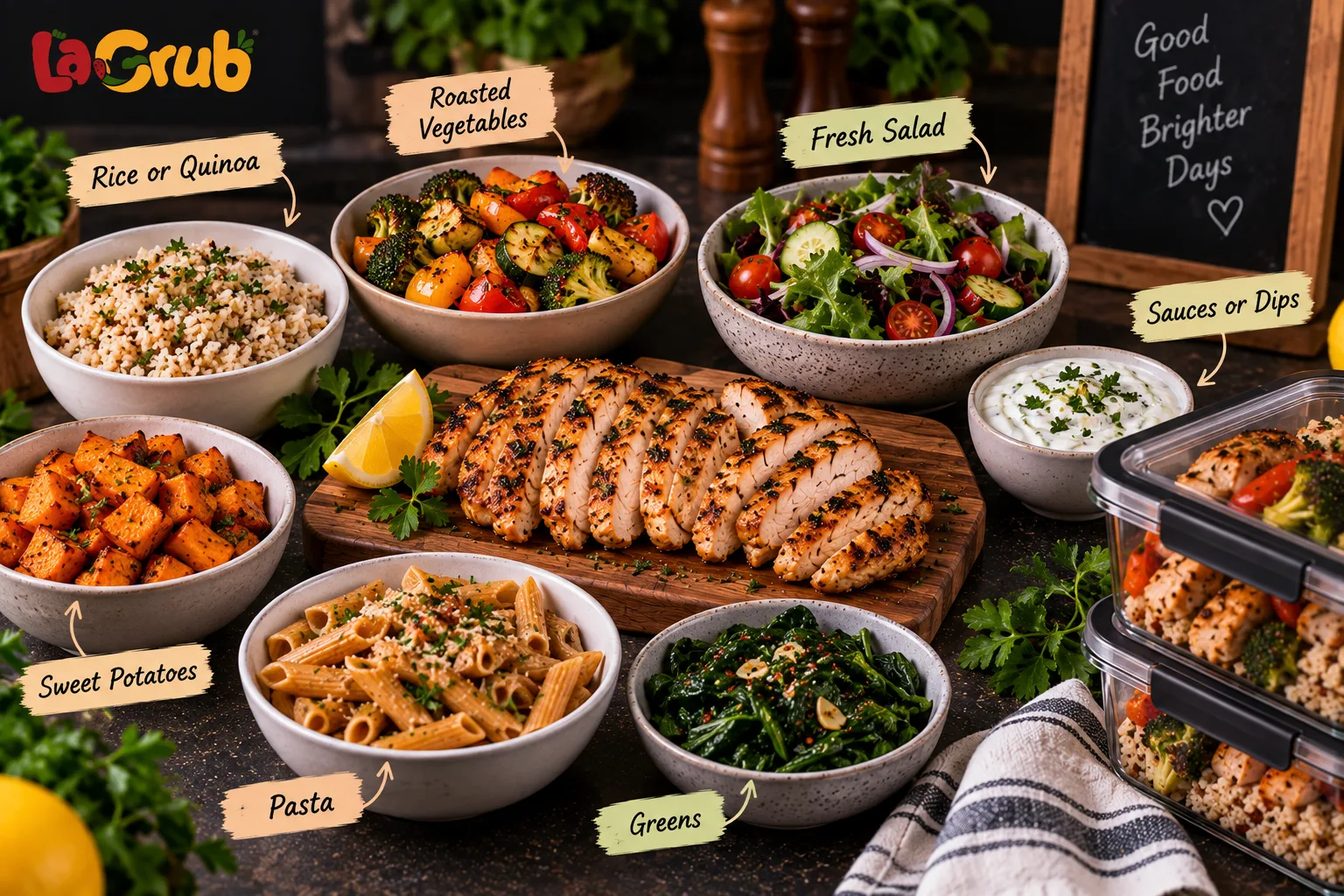
Chicken becomes much more useful when you prepare flexible sides.
Popular options include:
Basmati or brown rice
Potatoes or sweet potatoes
Pasta
Quinoa or other grains
Roasted vegetables
Beans or lentils
Fresh salads
Flatbreads or wraps
You do not have to pair every chicken portion with the same side.
Prepare two side options and alternate them throughout the week.
For example, lemon chicken can become a rice bowl one day and a salad the next.
This creates variety without doubling your cooking workload.
How to Make High-Protein Chicken Meal Prep
Chicken is naturally popular in high-protein meal prep, but a good meal does not need to be built around an oversized serving of meat.
Pair a suitable portion of chicken with vegetables, grains, beans, lentils, or other foods that fit your needs.
You can also add yoghurt-based sauces, chickpeas, or other ingredients to create more satisfying meals.
Rather than chasing one universal portion size, build meals according to your appetite, activity level, personal goals, and overall eating pattern.
Meal prep should make balanced eating easier, not unnecessarily restrictive.
How to Stop Chicken Meal Prep From Getting Boring
Eating identical chicken, rice, and vegetables every day can become repetitive very quickly.
Create variety through sauces, spices, side dishes, and serving styles.
Use chicken in a rice bowl on Monday.
Add it to a salad on Tuesday.
Turn another portion into a wrap.
Serve the next with roasted vegetables or potatoes.
Shredded chicken can also be added to soups, sandwiches, or grain bowls.
You are still preparing one main protein, but the final meals feel different.
This is often more sustainable than trying to cook five completely different recipes during one meal-prep session.
Build a Chicken Meal Prep Routine That Works
A good routine should reduce your workload, not create another complicated weekly task.
Start by choosing how many chicken meals you genuinely need.
Select your chicken cut and two or three flavour combinations.
Prepare the chicken, cook it safely, let it rest, and portion it with your chosen sides.
Decide immediately which portions belong in the refrigerator and which should be frozen.
Then label them.
Over time, you will learn which cooking methods, seasonings, sides, and reheating techniques work best for you.
That is more useful than trying to follow a rigid meal-prep system designed for someone else's schedule.
FAQs
How Do You Meal Prep Chicken for the Week?
Cook and portion your chicken, refrigerate the meals you will eat during the first few days, and freeze suitable portions for later in the week. Pair the chicken with different sides, sauces, and seasonings to create variety.
How Long Does Meal-Prepped Chicken Last in the Fridge?
Cooked chicken generally has a refrigerated storage window of around 3 to 4 days when properly handled and kept at 4°C/40°F or below. Freeze portions you plan to keep longer.
How Do You Keep Chicken Juicy When Meal Prepping?
Avoid overcooking, use reasonably even pieces, check the internal temperature, allow chicken to rest before slicing, and avoid excessive reheating. Sauces or other suitable moisture can also help during reheating.
Should You Freeze Chicken Meal Prep?
Freezing is useful when preparing more chicken than you can eat within the normal refrigerated storage period. It is especially helpful for people who prefer preparing most of their weekly meals in one cooking session.
Is Chicken Breast or Chicken Thigh Better for Meal Prep?
Both work well. Chicken breast is lean and versatile, while chicken thighs have a richer flavour and can be more forgiving during cooking and reheating. Choose according to your recipe, texture preference, and personal goals.
Conclusion
Learning how to meal prep chicken is not simply about cooking several chicken breasts and filling a row of containers.
The best approach combines careful cooking, good seasoning, safe storage, smart freezing, and gentle reheating.
Choose chicken breast or thighs based on the meal you want. Use different marinades and seasonings to create variety. Keep early-week portions refrigerated and freeze suitable meals intended for later.
Most importantly, avoid overcooking your chicken. A juicy, flavourful batch is much easier to enjoy throughout the week than dry chicken you have to force yourself to finish.
With a little planning, chicken meal prep can give you flexible meals for salads, rice bowls, wraps, grains, vegetables, and more.
Keep exploring LaGrub for meal-prep recipes, practical cooking guides, and cookbook inspiration, and build a weekly routine that makes homemade food easier, tastier, and more convenient.

Maimoona Ehtisham
Maimoona Ehtisham writes for LaGrub on cooking, recipes, and mindful culinary living.
Get a desi recipe worth cooking, every week
One tested recipe a week. Nothing else, and unsubscribe any time.


