

Traditional Greek food follows many Mediterranean eating principles, but not every Greek dish is automatically healthy. The balance of vegetables, beans, seafood, olive oil, grains, dairy, meat, and portion size determines how nutritious a Greek meal really is.
Greek food can be very healthy, especially when meals focus on vegetables, beans, lentils, olive oil, whole grains, fish, yogurt, fruit, and moderate portions. These foods form an important part of the traditional Mediterranean eating pattern, which research has associated with better cardiovascular and metabolic health.
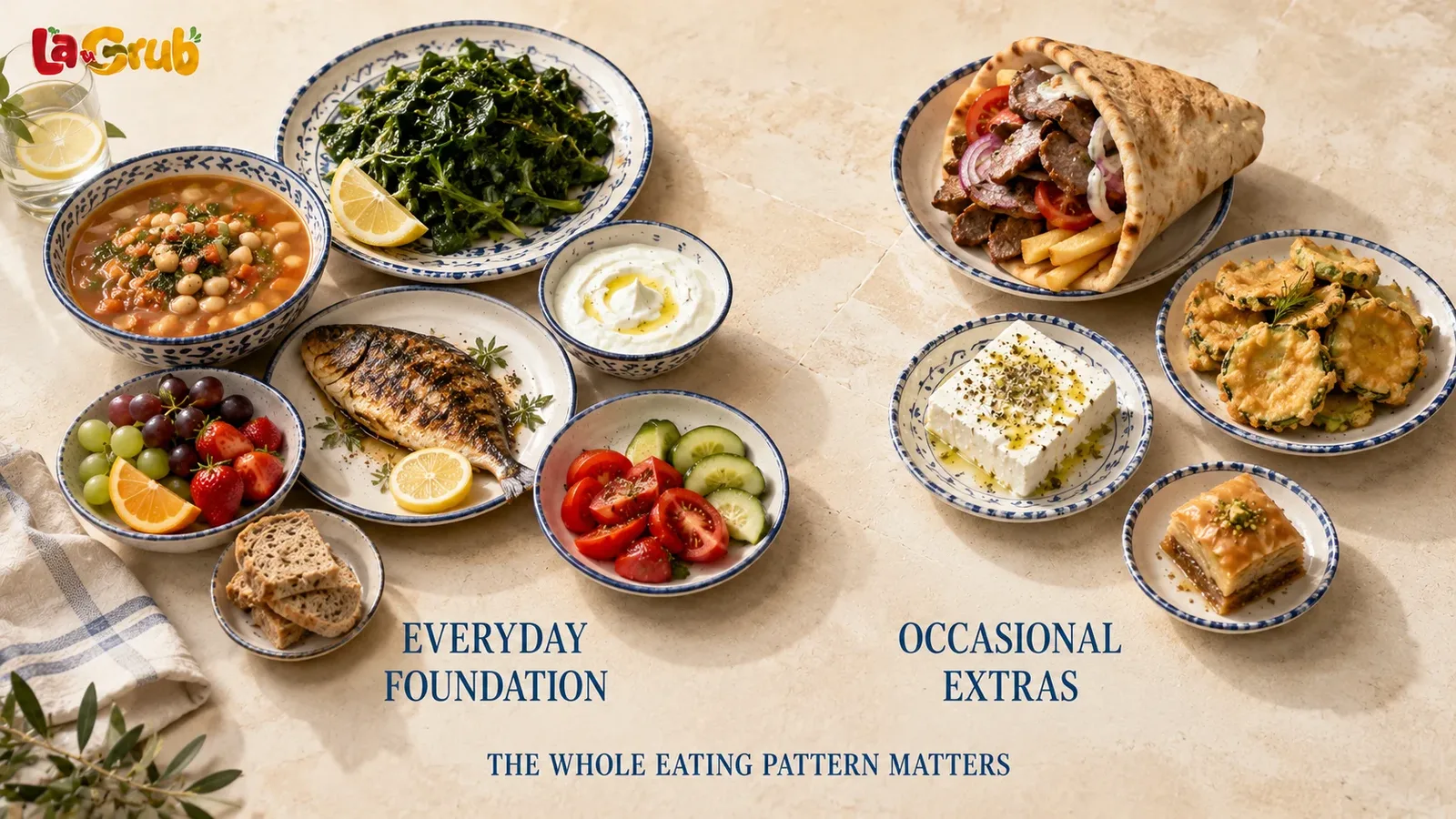
However, not every dish served in a Greek restaurant represents traditional everyday eating. Large gyros, fried appetizers, heavy cheese portions, salty cured foods, creamy sauces, sweets, and oversized servings can turn a balanced meal into one that is high in calories, sodium, saturated fat, or added sugar.
The answer to is Greek food healthy is therefore yes but the dish, ingredients, cooking method, frequency, and portion size all matter.
Is Greek Food Healthy in Simple Words?
Greek food is healthy when it follows the traditional pattern of eating plenty of plant foods, using olive oil as the main fat, choosing seafood and legumes regularly, and keeping meat, cheese, and sweets in moderation.
A balanced Greek meal might include a large salad, lentil soup, grilled fish or chicken, cooked vegetables, a small portion of bread or potatoes, and yogurt or fruit. This combination supplies fibre, protein, unsaturated fats, vitamins, minerals, and satisfying flavour.
The healthiest parts of Greek cooking are not limited to one famous ingredient. Olive oil contributes beneficial unsaturated fat, but vegetables, beans, whole grains, herbs, seafood, moderate portions, and regular home cooking all work together.
A simple way to judge a Greek meal is to ask 5 questions:
Does the meal contain a generous amount of vegetables?
Does it include beans, lentils, fish, chicken, eggs, or another useful protein source?
Is olive oil used in a sensible amount rather than poured without limit?
Are fried foods, processed meat, salty cheese, and rich sauces supporting the meal or dominating it?
Does the portion match your hunger and nutrition goals?
Is Greek Food the Same as the Mediterranean Diet?
is greek food healthy
Greek food and the Mediterranean diet overlap, but they are not exactly the same thing. The Mediterranean diet is a broad eating pattern inspired by traditional food habits in several countries surrounding the Mediterranean Sea. Greek cuisine is one distinct culinary tradition within that wider region.
The traditional Mediterranean pattern generally emphasises vegetables, fruit, legumes, nuts, whole grains, olive oil, fish, and moderate amounts of poultry and dairy. Red meat, processed meat, sweets, and highly refined foods appear less frequently.
Greek cuisine includes many foods that fit this pattern, such as fasolada, lentil soup, grilled fish, horta, vegetable stews, Greek salad, beans, yogurt, fruit, and whole-grain bread. It also includes fried foods, rich pastries, fatty meats, salty cheeses, and desserts that are better enjoyed in smaller portions or less often.
Calling a food Greek does not automatically make it Mediterranean-diet friendly. The whole meal and the wider eating pattern matter more than the nationality written on the menu.
What Makes Traditional Greek Food Healthy?
Traditional Greek food can be healthy because it builds meals from vegetables, pulses, olive oil, seafood, grains, herbs, and simple cooking methods. These ingredients create flavour and satisfaction without requiring every meal to rely on large quantities of meat, butter, cream, or highly processed food.
Vegetables Play a Major Role
Tomatoes, cucumbers, peppers, aubergines, courgettes, onions, leafy greens, cabbage, artichokes, green beans, and wild greens appear throughout Greek cooking. They may be eaten raw, grilled, roasted, stuffed, simmered, or slowly cooked with tomatoes and olive oil.
Vegetables contribute fibre, vitamins, minerals, water, and volume. A vegetable-rich plate can feel generous and satisfying while helping diners build a more balanced meal.
Beans and Lentils Provide Affordable Nutrition
Beans, chickpeas, split peas, and lentils are central to many traditional Greek dishes. They provide plant protein, fibre, complex carbohydrates, iron, folate, potassium, and other nutrients.
Fasolada, revithada, lentil soup, and fava show that Greek food is not built only around lamb, chicken, or gyros. Pulses can form the heart of an economical and filling meal.
Olive Oil Replaces Many Solid Fats
Olive oil is the main culinary fat in much traditional Greek cooking. It supplies mostly monounsaturated fat and works in salads, marinades, vegetable dishes, soups, beans, and seafood.
Olive oil can support a healthy diet, but it remains calorie-dense. One tablespoon contains far more energy than the same volume of vegetables or yogurt. A dish does not become healthier simply because unlimited olive oil has been added.
Fish and Seafood Add Protein
Fish such as sardines, anchovies, sea bass, sea bream, mackerel, and other local catches provide protein and important nutrients. Oily fish also supply omega-3 fatty acids.
Grilled, baked, or stewed seafood usually fits a balanced meal more easily than heavily battered and fried seafood. The cooking method and accompanying sides make a meaningful difference.
Herbs, Lemon and Garlic Build Flavour
Oregano, dill, mint, parsley, rosemary, garlic, onion, lemon, and vinegar bring brightness and aroma to Greek dishes. These ingredients make vegetables, grains, beans, fish, and chicken taste satisfying without depending entirely on sugar, cream, or heavy sauces.
Yogurt Can Add Protein and Calcium
Plain Greek yogurt is thick, tangy, and usually higher in protein than many standard yogurts. It also provides calcium and can be served with fruit, nuts, cucumber, herbs, or a modest drizzle of honey.
Flavoured yogurt products may contain substantial added sugar. Check the label when buying packaged yogurt, and remember that full-fat and low-fat versions can both fit a balanced diet depending on portion size and individual needs.
What Are the Health Benefits of Greek Food?
A traditional Greek-style eating pattern may support cardiovascular health, blood-sugar management, digestive health, and long-term weight control when it is followed consistently. These potential benefits come from the complete dietary pattern rather than one miracle ingredient.
May Support Heart Health
Mediterranean-style diets have been studied extensively for cardiovascular health. Their combination of vegetables, legumes, nuts, whole grains, fish, olive oil, and lower reliance on processed meat can help create a heart-supportive eating pattern.
This does not mean Greek food prevents or treats heart disease by itself. Diet is one part of health alongside medical care, physical activity, sleep, smoking status, genetics, and other factors.
Can Provide Plenty of Fibre
Beans, lentils, vegetables, fruit, nuts, seeds, and whole grains contribute dietary fibre. Fibre supports digestive health, helps meals feel filling, and can contribute to healthier cholesterol and blood-glucose patterns.
A restaurant meal based mainly on white pita, meat, cheese, and fries will contain less fibre than a traditional meal built around beans, vegetables, and whole grains.
May Help With Satisfying Meals
Greek meals can combine protein, fibre, vegetables, and fat in a satisfying way. Lentil soup with salad, grilled fish with vegetables, or yogurt with fruit and nuts may keep a person satisfied longer than a meal based only on refined carbohydrates.
Satiety still varies between individuals. Eating Greek food does not guarantee weight loss, especially when portions of oil, cheese, bread, fries, desserts, or meat are large.
Can Support Better Food Variety
Greek cooking encourages the use of different vegetables, beans, herbs, seafood, grains, and fermented dairy foods. Dietary variety can help people obtain a broader mix of nutrients.
Variety also makes healthy eating less monotonous. Lemon, herbs, garlic, yogurt, tomatoes, and olive oil can create very different flavours without requiring heavily processed ingredients.
Is Greek Food Good for Weight Loss?
Greek food can support weight loss when it helps you maintain a sustainable calorie deficit while eating satisfying, nutrient-rich meals. Greek cuisine is not a shortcut that causes automatic fat loss.
Vegetable-heavy meals, beans, lentils, grilled protein, soups, salads, fruit, and plain yogurt can provide volume and satisfaction. These foods can make portion control easier for some people because the plate still looks and feels generous.
Calories can rise quickly when meals include large amounts of olive oil, feta, pita, fries, fatty meat, nuts, honey, pastries, or creamy dips. All of these foods can fit a balanced diet, but their portions matter when weight loss is the goal.
A Weight-Loss-Friendly Greek Plate
is greek food healthy
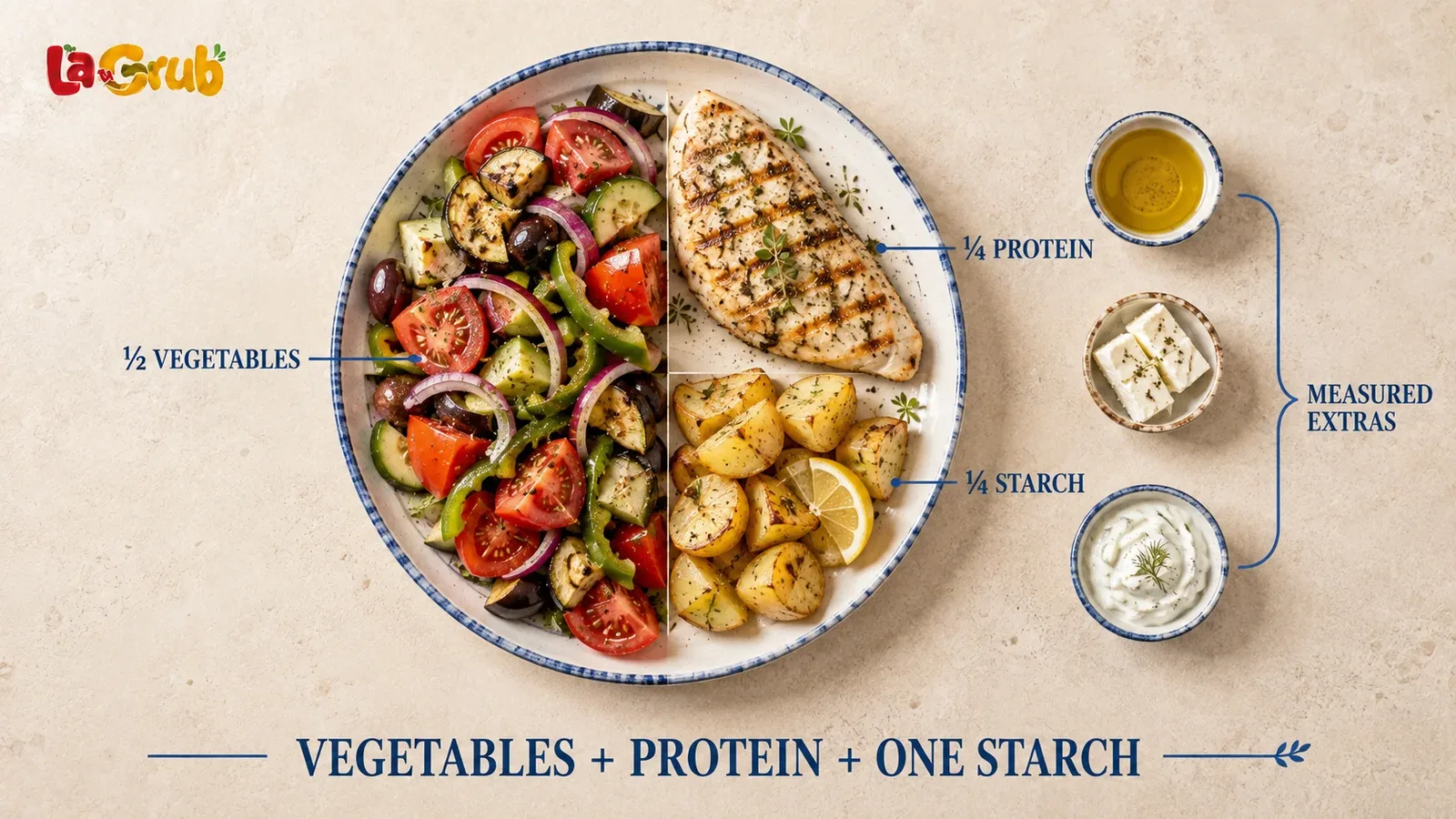
Fill about half the plate with salad or cooked vegetables. Add a moderate serving of grilled fish, chicken, beans, or lentils. Complete the meal with a smaller serving of potatoes, rice, or whole-grain bread. Use olive oil, cheese, dips, and sauces thoughtfully rather than treating them as unlimited extras.
Why Greek Bowls Can Feel Filling
A Greek-inspired bowl may combine tomatoes, cucumber, peppers, greens, chickpeas, chicken, herbs, yogurt, and a measured amount of olive oil. This creates a large meal with protein, fibre, water-rich vegetables, and strong flavour.
The bowl remains healthy because of its balance—not because it carries a Greek label. A bowl overloaded with oil, cheese, pita chips, fries, and sauce can contain much more energy than expected.
Is Greek Food High in Protein?
Greek food can be high in protein when meals include yogurt, fish, chicken, eggs, beans, lentils, seafood, or moderate portions of meat and cheese. Not every Greek dish is protein-rich, so look at the complete meal.
Greek yogurt is a convenient protein source for breakfast or snacks. Lentils, beans, and chickpeas provide plant protein along with fibre. Fish, chicken, prawns, and eggs can add concentrated protein to lunch or dinner.
Feta contributes some protein, but it is usually eaten as a flavourful cheese rather than the main protein source. It can also be high in sodium, so a modest portion is often enough.
For more guidance on building protein-rich meals, explore LaGrub’s guide to foods with protein.
Is Greek Salad Healthy?
Greek salad can be a nutritious choice because it contains tomatoes, cucumber, peppers, onion, olives, herbs, and feta. It provides vegetables, flavour, and satisfying fat without needing a creamy dressing.
The calorie and sodium content depend on the amounts of olive oil, feta, and olives. Restaurant salads may contain several tablespoons of oil and a large block of cheese. These ingredients are not unhealthy, but generous portions can make the salad much richer than expected.
For a balanced Greek salad, use plenty of vegetables, a modest amount of feta and olives, and enough olive oil to dress rather than soak the salad. Add chickpeas, grilled chicken, tuna, eggs, or beans when the salad needs to become a complete meal.
Is Tzatziki Healthy?
Tzatziki can be a healthy dip when it is made from plain yogurt, cucumber, garlic, herbs, lemon, and a modest amount of olive oil. It can provide protein and calcium while tasting lighter than many mayonnaise-based or cream-based sauces.
The nutrition varies by recipe and packaged product. Some versions contain more oil, salt, or lower-protein yogurt. Portion size also matters when tzatziki is eaten with large amounts of pita, chips, or fried food.
Use tzatziki as a dip for vegetables, a sauce for grilled chicken or fish, or a spoonful beside beans and grains. It can add freshness without needing to cover the entire plate.
Are Gyros Healthy?
Gyros can fit a balanced diet, but restaurant versions may be high in calories, sodium, saturated fat, or refined carbohydrates. The final nutrition depends on the meat, portion, pita, fries, sauce, and added oil.
A traditional takeaway gyro may contain seasoned meat, pita, tomato, onion, tzatziki, and fries. It can be filling and enjoyable, but it may also combine a large meat portion with bread, fried potatoes, and salty sauce.
For a lighter gyro meal, choose grilled chicken when available, request extra tomatoes and onions, keep sauce moderate, and order fries on the side instead of inside the pita. A gyro plate with salad can also make portions easier to see and adjust.
Is Souvlaki Healthy?
Souvlaki is often one of the easier Greek restaurant dishes to fit into a balanced meal. It usually consists of grilled pieces of chicken, pork, lamb, or another protein served on skewers, in pita, or as part of a plate.
Choose grilled chicken or leaner meat, add salad or cooked vegetables, and keep fries, pita, and sauce in portions that suit your needs. A souvlaki plate can be lighter than a stuffed pita because you control each component separately.
Pork and lamb souvlaki can also fit a balanced diet. The cut of meat, visible fat, quantity, and frequency matter more than judging the entire dish by its name.
Is Feta Cheese Healthy?
Feta can be part of a healthy diet because it provides protein, calcium, and strong flavour in a small amount. It can also be high in sodium and contains saturated fat, so portion size deserves attention.
A modest crumble of feta can make tomatoes, cucumber, beans, grains, or roasted vegetables more satisfying. A very large block added to a meal already containing olives, cured meat, and salty sauce may push sodium much higher.
People managing high blood pressure or following a sodium-restricted diet may need to use smaller portions and check personalised advice from a qualified healthcare professional.
Are Dolmades Healthy?
Dolmades can be a nutritious appetizer or side, especially when vine leaves are filled with rice, herbs, vegetables, or a moderate amount of meat. Their small size makes portions easy to count.
However, preserved vine leaves and prepared fillings can contain substantial salt. Dolmades may also absorb olive oil during cooking. Enjoy them with salad, yogurt, or vegetables rather than assuming an unlimited serving is automatically light.
Is Moussaka Healthy?
Moussaka contains nutritious ingredients, but it is usually a rich dish rather than a light everyday meal. Aubergine, tomatoes, onions, and meat provide vegetables and protein, while béchamel, cheese, oil, and larger portions can increase calories and saturated fat.
Moussaka can still fit a balanced diet. Serve a moderate square with a large salad or cooked vegetables, and avoid treating the rich main dish as something that also needs several heavy sides.
A home version can use more aubergine and vegetables, a leaner meat filling, and a thinner béchamel layer while keeping the character of the dish.
Which Greek Foods Are the Healthiest?
The healthiest Greek choices usually centre on vegetables, beans, lentils, grilled seafood, simple proteins, yogurt, fruit, and whole grains. No single dish needs to appear at every meal.
Fasolada: Bean and vegetable soup with fibre and plant protein.
Fakes: Greek lentil soup with vegetables, herbs, and olive oil.
Revithada: Slow-cooked chickpeas seasoned with onion, lemon, and herbs.
Horta: Boiled wild or leafy greens served with lemon and olive oil.
Briam: Oven-roasted mixed vegetables with tomato, herbs, and olive oil.
Gemista: Tomatoes or peppers stuffed with rice, herbs, vegetables, and sometimes meat.
Grilled fish: Protein served simply with lemon, herbs, and vegetables.
Greek salad: Fresh vegetables with olives, feta, herbs, and measured olive oil.
Plain Greek yogurt: A protein-rich breakfast, snack, sauce, or dessert base.
Chicken souvlaki: Grilled protein that pairs easily with salad and vegetables.
Which Greek Foods Should You Eat in Moderation?
Fried dishes, fatty processed meats, rich pastries, large cheese portions, and syrup-soaked desserts are better treated as supporting or occasional foods. Moderation does not mean these dishes are forbidden.
Large gyros with fatty meat, fries, pita, and extra sauce
Deep-fried calamari, courgette fritters, or cheese appetizers
Oversized portions of feta, halloumi, or other salty cheese
Rich moussaka or pastitsio served with several heavy sides
Sausages and other processed or cured meats
Baklava, loukoumades, galaktoboureko, and other sweet pastries
Large quantities of white bread, pita, chips, or fries
Restaurant dishes containing more olive oil than expected
The goal is not to remove pleasure from Greek food. A nourishing overall pattern can comfortably include a pastry, fried appetizer, or rich family dish sometimes.
Can Greek Food Be High in Salt?
Some Greek meals can be high in sodium because feta, olives, cured foods, sauces, bread, preserved vine leaves, and restaurant seasoning may all contribute salt.
A Greek salad containing feta and olives may not need much additional salt. Likewise, a meal with cheese, cured meat, bread, and a salty dip can accumulate sodium even when none of the individual portions looks excessive.
Choose more fresh vegetables, plain beans, grilled protein, fruit, and lightly seasoned sides when sodium matters. Ask for sauces and dressings on the side, and use lemon, vinegar, garlic, pepper, and herbs to build flavour.
Is Greek Food Good for People With Diabetes?
A balanced Greek-style meal can suit people with diabetes when carbohydrate portions, added sugars, total energy, and individual medical needs are considered. Vegetables, beans, lentils, fish, chicken, olive oil, nuts, and plain yogurt can all contribute to a nutrient-rich eating pattern.
Bread, pita, rice, potatoes, pastries, honey, and sweet drinks contain carbohydrates that may affect blood glucose. They do not always need to be avoided, but their portion and combination with protein, fibre, and fat matter.
People using insulin or glucose-lowering medication should follow personalised guidance from their healthcare team. A general food article cannot replace individual medical or carbohydrate-counting advice.
How to Order Healthy Greek Food at a Restaurant
Build a healthier Greek restaurant meal around vegetables and grilled protein, then choose the bread, potatoes, rice, cheese, dips, and dessert you genuinely want. Trying to order every famous dish at once can turn a balanced cuisine into an extremely heavy meal.
Start with Greek salad, horta, bean soup, lentil soup, or grilled vegetables.
Choose grilled fish, seafood, chicken souvlaki, beans, or lentils as the main protein.
Ask for dressing, oil, and rich sauces on the side when possible.
Choose either pita, potatoes, rice, or fries instead of automatically ordering all four.
Share fried appetizers, cheese dishes, and rich mains.
Taste the meal before adding more salt.
Choose fruit, yogurt, coffee, or a shared dessert to finish.
A Lighter Greek Restaurant Order
Order grilled fish or chicken souvlaki with Greek salad, horta, or roasted vegetables. Add a small serving of pita, potatoes, or rice. Keep tzatziki or another dip on the side.
A Vegetarian Greek Restaurant Order
Choose lentil soup, fasolada, chickpeas, briam, gemista, horta, or a large salad with beans. Check whether vegetable dishes contain cheese, meat stock, or large amounts of added oil if those details matter to you.
A Balanced Gyro Order
Choose a chicken gyro or souvlaki plate with extra vegetables. Keep fries or pita as one deliberate side rather than combining a large serving of both. Ask for sauce in a moderate amount.
How to Make Greek Food Healthier at Home
Greek food becomes easier to balance at home because you control the oil, salt, vegetables, protein, and portions. You do not need to remove the ingredients that make the food Greek.
Measure olive oil instead of pouring directly from the bottle throughout cooking.
Use vegetables generously in salads, soups, stews, and roasted dishes.
Cook beans or lentils several times each week.
Choose fish, seafood, chicken, eggs, or legumes more often than processed meat.
Use feta, olives, and dips as flavour accents.
Choose whole-grain bread or grains when available and enjoyable.
Season with lemon, garlic, vinegar, pepper, and fresh herbs before adding more salt.
Serve fruit or plain yogurt as an everyday dessert.
Keep rich pastries and fried dishes for occasions when you truly want them.
The aim is balance, not culinary punishment. A smaller amount of real feta or olive oil may feel more satisfying than replacing every traditional ingredient with a highly processed substitute.
What Does a Healthy Greek Day of Eating Look Like?
A healthy Greek-style day can include yogurt or eggs at breakfast, beans or vegetables at lunch, grilled fish or chicken at dinner, and fruit, nuts, or vegetables for snacks.
Breakfast
Choose plain Greek yogurt with berries, walnuts, and cinnamon. Another option is eggs with tomatoes, cucumber, herbs, and a small piece of whole-grain bread.
Lunch
Serve lentil soup or fasolada with salad and a modest portion of bread. Add fruit if you want something sweet afterward.
Dinner
Pair grilled fish, chicken souvlaki, or chickpeas with roasted vegetables, horta, or Greek salad. Add potatoes, rice, or bread according to appetite and nutrition needs.
Snacks
Choose fruit, vegetables with tzatziki, a small handful of nuts, or plain yogurt. Snacks are optional and should respond to hunger rather than a rule that everyone must eat between meals.
Common Myths About Healthy Greek Food
Myth: Olive Oil Has Unlimited Calories Because It Is Healthy
Olive oil provides beneficial unsaturated fat, but it is still energy-dense. A sensible portion supports a balanced meal more effectively than treating the bottle as unlimited.
Myth: Every Greek Restaurant Dish Follows the Mediterranean Diet
Restaurant menus often highlight grilled meat, gyros, fries, cheese, pastries, and oversized portions. Traditional everyday Greek eating includes far more vegetables, beans, greens, grains, and simple home-cooked food.
Myth: Greek Food Is Automatically Good for Weight Loss
Weight change depends on overall energy intake and many personal factors. Greek food can make balanced eating satisfying, but large portions of oil, bread, cheese, fried food, and desserts can still exceed a person’s needs.
Myth: Greek People Eat Gyros Every Day
Gyros are a recognisable Greek food, but they do not represent every home meal. Soups, beans, vegetables, greens, grains, fish, yogurt, fruit, and family dishes are also central to Greek food culture.
Myth: Feta Makes Every Salad Unhealthy
Feta can add flavour, protein, and calcium. The amount matters. A modest serving can complement a vegetable-rich salad without becoming the entire meal.
Frequently Asked Questions
Is Greek food considered healthy?
Yes, traditional Greek food can be very healthy. It often emphasises vegetables, legumes, olive oil, fish, herbs, grains, yogurt, and fruit. Restaurant choices and portion sizes still matter.
What is the healthiest Greek food?
Fasolada, lentil soup, chickpeas, horta, briam, grilled fish, Greek salad, plain yogurt, and vegetable-filled dishes are among the healthiest traditional choices.
Is Greek food good for weight loss?
Greek food can support weight loss when meals create a sustainable calorie deficit and emphasise vegetables, protein, fibre, and controlled portions of oil, cheese, bread, and sweets.
Is Greek food high in calories?
Some Greek dishes are light and vegetable-rich, while others contain substantial oil, cheese, meat, pastry, or fried food. The dish and portion determine the calorie content.
Is Greek food high in fat?
Traditional Greek meals may contain significant fat from olive oil, nuts, fish, olives, yogurt, and cheese. Much of the fat can be unsaturated, but total quantity and saturated fat still matter.
Is Greek food high in salt?
Some Greek meals can be high in sodium because of feta, olives, cured meat, preserved vine leaves, bread, sauces, and restaurant seasoning.
Are gyros unhealthy?
Gyros are not automatically unhealthy, but large versions with fatty meat, fries, pita, and extra sauce can be high in calories, sodium, and saturated fat. Portion and sides matter.
Is Greek yogurt healthy?
Plain Greek yogurt can provide protein and calcium. Flavoured versions may contain added sugar, so check the label and choose the type that suits your needs.
Can vegetarians eat healthy Greek food?
Yes. Greek cuisine offers beans, lentils, chickpeas, vegetable stews, salads, stuffed vegetables, greens, grains, yogurt, cheese, nuts, and fruit.
Is Greek food healthier than fast food?
A vegetable-rich Greek meal with beans, fish, or grilled protein will usually offer a stronger nutritional balance than a typical fried fast-food meal. However, a large gyro with fries and rich sauces can resemble fast food nutritionally.
Final Thoughts: Is Greek Food Healthy?
Greek food can be exceptionally healthy when it reflects traditional everyday eating rather than only the richest restaurant dishes. Vegetables, beans, lentils, olive oil, seafood, grains, herbs, yogurt, fruit, and moderate portions create the strongest foundation.
Gyros, moussaka, fried appetizers, feta, pita, and baklava can still belong at the Greek table. Health does not require removing every rich or celebratory food. It requires understanding frequency, portions, cooking methods, and the balance of the complete meal.
If you are ordering Greek food, begin with vegetables, choose a useful protein source, add one satisfying starch, and enjoy richer extras deliberately. If you are cooking at home, let vegetables and legumes do more of the work while using olive oil, cheese, and meat for flavour and satisfaction.
Explore more LaGrub food stories and practical guides, browse recipes for everyday cooking, and keep discovering how nourishing food can remain generous, comforting, and full of character.

Sahar Syed
Sahar Syed writes about practical home cooking, global food culture, and approachable culinary guides for readers who want clearer kitchen inspiration.
Get a desi recipe worth cooking, every week
One tested recipe a week. Nothing else, and unsubscribe any time.


