

What food has protein? Start with eggs, poultry, seafood, dairy, soy foods, lentils, beans, chickpeas, nuts, seeds, and milk. These foods help you build filling breakfasts, lunches, dinners, and snacks without relying only on protein powder.
Many everyday foods have protein, including eggs, chicken, fish, Greek yogurt, lentils, beans, tofu, nuts, seeds, and milk. If you ask what food has protein, start with lean meats, seafood, eggs, dairy, and soy foods. Add beans, peas, lentils, nuts, and seeds for variety.
The best protein foods for home cooking answer what food has protein. Good choices feel easy to buy, affordable, filling, and simple to repeat. A strong protein list helps you build breakfast, lunch, dinner, and snacks without depending only on protein powder.
What Food Has Protein in Simple Words?
The simplest answer is animal foods, soy foods, beans, lentils, nuts, seeds, and dairy foods. These foods give your meals structure and help meals feel more filling.
What food has protein? Chicken, eggs, tuna, Greek yogurt, lentils, tofu, chickpeas, almonds, pumpkin seeds, and milk all qualify. Each food gives different amounts, so serving size matters.
The fastest answer for everyday meals
Choose 1 main protein food before you choose rice, bread, pasta, or salad. That one decision makes meal planning easier.
Use eggs for breakfast, canned tuna for lunch, lentils for dinner, and Greek yogurt for snacks. These choices need little cooking skill and short prep time.
If you want a basic starter list, keep eggs, yogurt, lentils, beans, tofu, chicken, tuna, and nuts at home. These 8 foods cover many meals.
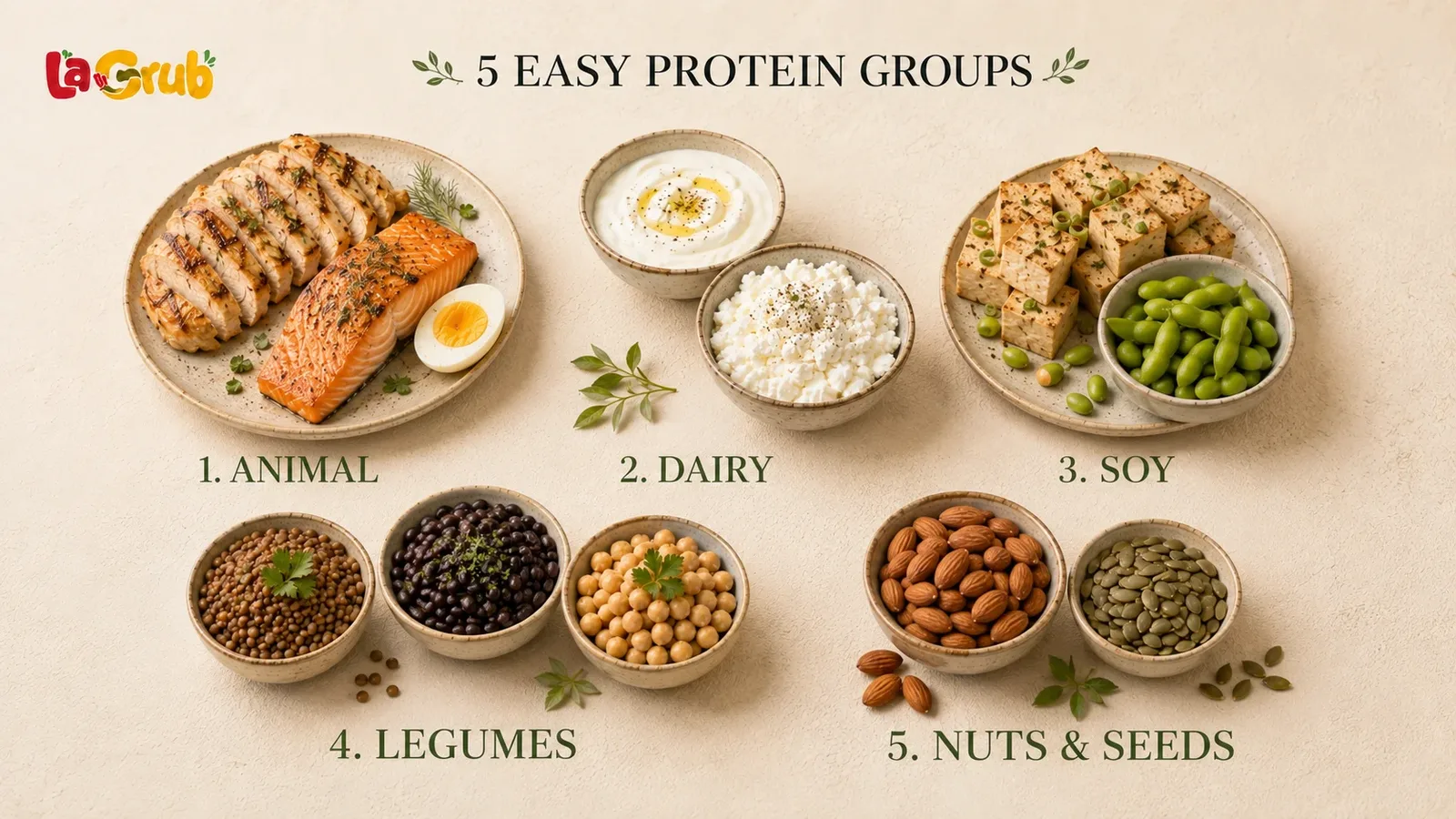
The easiest protein groups to remember
what food has protein
Remember 5 protein groups: animal protein, dairy protein, soy protein, legume protein, and nut or seed protein. Named examples include chicken, yogurt, tofu, lentils, and almonds.
What food has protein in both meals and snacks? Dairy, eggs, beans, soy foods, nuts, and seafood work in both roles. That flexibility helps busy cooks.
Which Animal Foods Have the Most Protein?
Animal foods often give more protein in smaller portions. Lean poultry, fish, seafood, eggs, yogurt, cottage cheese, and lean meat make strong choices.
Lean poultry and meat
Chicken breast, turkey breast, lean beef, and lean lamb give concentrated protein. A 3 oz (85g) cooked chicken portion gives a useful main-meal serving.
Choose grilled, roasted, baked, or pan-seared methods before deep-fried methods. These methods keep the meal simpler and easier to balance.
For weeknight meals, pair chicken with rice, potatoes, salad, cooked vegetables, or beans. For recipe ideas, browse the easy recipe collection when planning weekly meals.
Fish and seafood
Fish and seafood provide protein with many cooking options. Use salmon, tuna, sardines, cod, shrimp, and prawns for quick meals.
Canned tuna and sardines help when you need protein without long cooking. Add tuna to wraps, rice bowls, salads, pasta, and toast.
Fresh fish cooks fast, often in 8-12 minutes. Serve fish with lemon, herbs, steamed vegetables, and a grain.
Eggs and dairy
Eggs, Greek yogurt, cottage cheese, milk, and cheese all contain protein. One large egg weighs about 2 oz (50g) and gives a simple breakfast base.
Greek yogurt and cottage cheese work well when you need cold protein. Add fruit, nuts, seeds, oats, or honey for a fuller snack.
Milk adds protein to oats, smoothies, tea drinks, sauces, and desserts. Choose the milk style that fits your taste and budget.
Which Plant Foods Have the Most Protein?
Plant foods with protein include lentils, beans, chickpeas, tofu, tempeh, edamame, nuts, seeds, and quinoa. These foods also add fiber, texture, and minerals.
What food has protein without meat? Lentils, beans, chickpeas, tofu, tempeh, edamame, seitan, peanuts, and pumpkin seeds work well.
Beans, peas, and lentils
Lentils, black beans, kidney beans, navy beans, chickpeas, and split peas make affordable protein meals. Use 1/2 cup (100g) cooked portions in bowls, soups, wraps, and salads.
Lentils cook faster than many dried beans. Red lentils soften quickly, while green lentils hold shape in salads.
Beans and lentils also support high-fiber meals. Use the fiber food guide when you want protein and fiber together.
Soy foods and meat-free mains
Tofu, tempeh, edamame, and soy milk give useful meat-free protein. Tofu absorbs sauces, while tempeh gives a firmer bite.
Edamame works as a snack, salad topping, rice bowl ingredient, or lunch-box side. A 1/2 cup (75g) portion gives a practical start.
Seitan gives high protein because wheat gluten forms the base. Avoid seitan when you need gluten-free meals.
Nuts, seeds, and grains
Nuts and seeds add protein, fat, crunch, and flavor. Use almonds, peanuts, walnuts, pumpkin seeds, chia seeds, hemp seeds, and sunflower seeds.
A 1 oz (28g) nut or seed portion works better than unlimited handfuls. That portion keeps calories easier to manage.
Quinoa, oats, whole wheat pasta, and whole grain bread add some protein. These grains work best beside beans, eggs, yogurt, fish, or tofu.
What Cheap Foods Have Protein?
The cheapest protein foods usually include eggs, lentils, beans, canned fish, milk, yogurt, peanut butter, tofu, and chickpeas. Local prices change, but these foods often beat prepared meals.
What food has protein on a budget? Start with lentils, eggs, canned tuna, beans, chickpeas, tofu, cottage cheese, and peanuts. These foods stretch across many recipes.
| Task | Timing | Method | Difficulty |
|---|---|---|---|
| Build fast breakfast | 5 minutes | Eggs, Greek yogurt, or cottage cheese with fruit | Easy |
| Cook budget dinner | 30 minutes | Lentils, beans, or chickpeas with rice or bread | Easy |
| Pack work lunch | 10 minutes | Tuna wrap, tofu bowl, or chickpea salad | Easy |
| Prep vegetarian protein | 25 minutes | Tofu stir-fry, bean chili, or lentil soup | Medium |
| Make protein snacks | 5 minutes | Boiled eggs, yogurt, hummus, nuts, or edamame | Easy |
Use cheaper protein foods as anchors, then add vegetables, grains, herbs, sauces, and spices. This method creates variety without changing every ingredient.
What Food Has Protein for Breakfast and Snacks?
Breakfast and snacks work best when protein needs almost no effort. Eggs, yogurt, cottage cheese, milk, tofu, nut butter, and beans work well.
Breakfast foods that work fast
Use eggs, Greek yogurt, cottage cheese, milk oats, and tofu scramble. Add beans on toast or peanut butter toast when you need speed. Each option takes little prep.
A balanced breakfast can include 2 eggs, about 4 oz (113g), with toast and fruit. Greek yogurt with oats and seeds also works well.
What food has protein before work or school? Boiled eggs, yogurt bowls, milk smoothies, and cottage cheese need minimal cooking.
Snack foods that travel well
Protein snacks include boiled eggs, cheese sticks, Greek yogurt cups, and roasted chickpeas. Hummus, edamame, nuts, and tuna packs also travel well. Choose portable options for busy days.
Pack 1 oz (28g) nuts, 2 tablespoons (32g) peanut butter, or 1/2 cup (125g) yogurt. Measured snacks control portions and cost.
Pair snacks with fruit or vegetables when you want more volume. Use apples, carrots, cucumbers, berries, grapes, and bell peppers.
What Foods Have Protein Without Meat?
Meat-free protein foods include eggs, dairy, lentils, beans, chickpeas, tofu, tempeh, edamame, nuts, seeds, quinoa, and seitan. Your best choice depends on diet rules.
Vegetarian protein plates
Vegetarian plates can use eggs, milk, yogurt, cheese, lentils, beans, chickpeas, tofu, nuts, seeds, and whole grains. Named meals include omelets, lentil soup, bean tacos, and yogurt bowls.
Use dairy or eggs when you want easy protein without meat. Use lentils and beans when you want protein plus fiber.
Vegan protein plates
Vegan plates can use tofu, tempeh, edamame, seitan, lentils, beans, chickpeas, nuts, seeds, oats, and quinoa. These foods create many meal styles.
Build vegan bowls with 1 cup (198g) cooked lentils, rice, vegetables, and sauce. Build wraps with hummus, roasted chickpeas, salad, and pickles.
Soy foods help vegan meals because tofu, tempeh, and edamame offer strong protein. Beans and lentils support budget-friendly cooking.
How to Build High-Protein Meals at Home
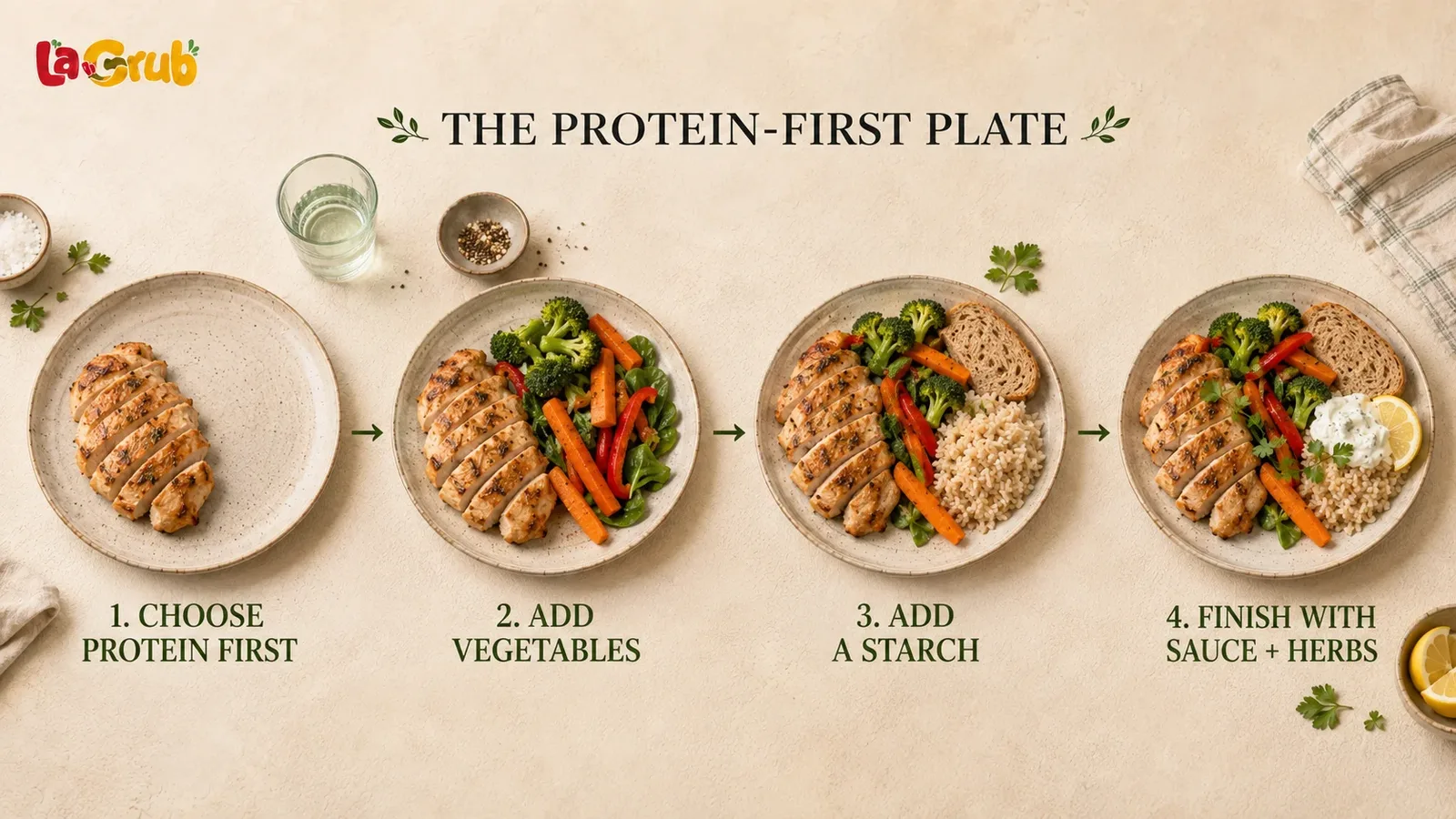
Use the protein-first plate method
what food has protein
To build high-protein meals at home, choose the protein first. Then add vegetables, starch, sauce, and garnish. This order prevents weak meals.
Choose chicken, fish, eggs, yogurt, tofu, lentils, beans, chickpeas, or cottage cheese as the first item. Then add rice, bread, potatoes, pasta, or salad.
What food has protein for dinner? Chicken rice bowls, lentil soup, bean chili, salmon potatoes, tofu stir-fry, and chickpea pasta work well.
Balance protein with fiber and flavor
Protein works better when the plate also includes vegetables, beans, whole grains, herbs, and sauces. Flavor keeps high-protein meals enjoyable.
Use lemon, garlic, yogurt, chili, herbs, tahini, salsa, chutney, pesto, or soy sauce. These ingredients stop simple protein from tasting plain.
Add fiber through lentils, beans, vegetables, fruit, oats, whole grain bread, and brown rice. Protein and fiber together support fullness.
Which Foods Have the Highest Protein per Serving?
The highest-protein everyday foods usually include lean poultry, fish, Greek yogurt, cottage cheese, tofu, tempeh, lentils, and beans. Serving size decides the final number.
A 3 oz (85g) cooked meat or fish portion often gives more protein than a snack-size handful of nuts. A 1 cup (198g) lentil bowl gives protein with fiber.
What food has protein in a small portion? Tuna, chicken, Greek yogurt, cottage cheese, tofu, and eggs work better than grains.
What food has protein with lower effort? Canned fish, boiled eggs, yogurt, tofu, cooked lentils, and hummus need little prep.
Which Protein Foods Also Give Fiber?
Beans, lentils, chickpeas, edamame, nuts, seeds, oats, and quinoa give protein plus fiber. Animal foods give protein without fiber.
Use mixed meals when you want fuller plates. Examples include bean chili, lentil soup, hummus toast, tofu edamame bowls, and chickpea salads.
What food has protein and fiber for lunch? Lentil salad, black bean tacos, chickpea wraps, and edamame rice bowls work well.
Add fiber slowly when your usual diet has little fiber. Drink water and increase beans, lentils, seeds, and bran over several days.
How Much Protein Do You Need Each Day?
Most healthy adults use 0.8g per kg (0.36g per lb) body weight as a common baseline. Needs change with age, activity, pregnancy, illness, and training.
A 150 lb (68kg) adult would use about 54g protein as a baseline. Many active people choose more through regular meals.
Talk with a doctor or registered dietitian when kidney disease, liver disease, pregnancy, recovery, or major training changes apply. Personal medical needs require personal advice.
What food has protein in the easiest daily form? Use one protein food at each meal and one protein snack when needed. That pattern works better than saving protein for dinner.
How to Keep Protein Foods Easy All Week
Protein feels easier when you keep cooked and ready foods in the fridge. Boil eggs, cook lentils, bake chicken, or press tofu once.
Store cooked chicken, lentils, beans, tofu, and fish in covered containers. Use clear labels so meals stay organized.
What food has protein for no-cook days? Use Greek yogurt, cottage cheese, canned tuna, canned chickpeas, hummus, nuts, and milk.
What food has protein when groceries run low? Keep canned beans, tuna, lentils, peanut butter, oats, and shelf-stable milk ready.
How to Choose Protein Foods for Different Goals
Different goals need different protein choices. Budget meals, workout meals, family meals, and vegetarian meals all need practical options.
What food has protein for your goal? Match the food to your schedule, appetite, cooking skill, and budget.
For budget cooking
Use lentils, beans, chickpeas, eggs, canned tuna, milk, yogurt, tofu, peanut butter, and peanuts. These foods usually offer strong value.
Cook a pot of lentils once, then use lentils in soup, rice bowls, wraps, and salads. Repeat the same method with beans.
For workouts
Use chicken, turkey, fish, eggs, Greek yogurt, cottage cheese, tofu, tempeh, lentils, and protein smoothies. Spread protein across meals.
Pair protein with carbohydrates after training when you need a fuller meal. Examples include tuna rice, eggs toast, yogurt oats, and tofu noodles.
For family meals
Family protein meals work best when the protein suits many plates. Use chicken curry, bean chili, lentil stew, fish tacos, tofu bowls, and egg fried rice.
Let each person adjust toppings, sauces, spice, and sides. This approach keeps one protein base flexible.
What food has protein for picky eaters? Eggs, milk, yogurt, cheese, chicken, peanut butter, hummus, and mild beans often work.
FAQs About Protein Foods
Does fruit have protein?
No, most fruit gives only small protein amounts. Use fruit with yogurt, nuts, seeds, milk, or cottage cheese.
Are beans a real protein food?
Yes, beans count as protein foods and also provide fiber. Use black beans, kidney beans, navy beans, chickpeas, and lentils.
What food has protein and fiber together?
Lentils, beans, chickpeas, edamame, nuts, seeds, oats, and quinoa give both protein and fiber. These foods make meals more filling.
What food has protein for quick snacks?
Boiled eggs, Greek yogurt, cottage cheese, hummus, edamame, tuna packs, cheese, nuts, and roasted chickpeas work fast. Keep 2 or 3 options ready.
Do you need protein powder?
No, many people get enough protein from regular food. Protein powder helps convenience, but eggs, dairy, legumes, soy, fish, and poultry work well.
Final Thoughts on Protein Foods
What food has protein? The most useful answer starts with eggs, poultry, seafood, dairy, soy foods, lentils, beans, nuts, and seeds. Choose foods you enjoy, then repeat those choices through simple meals. If someone asks what food has protein, answer with foods people cook often.
Start with one protein food at each meal, then add vegetables, grains, fruit, and flavor. For more protein-focused cooking ideas, explore the high protein cookbook and plan your next easy meal.

Sahar Syed
Sahar Syed writes about practical home cooking, everyday ingredients, and food culture for LaGrub.
Get a desi recipe worth cooking, every week
One tested recipe a week. Nothing else, and unsubscribe any time.


