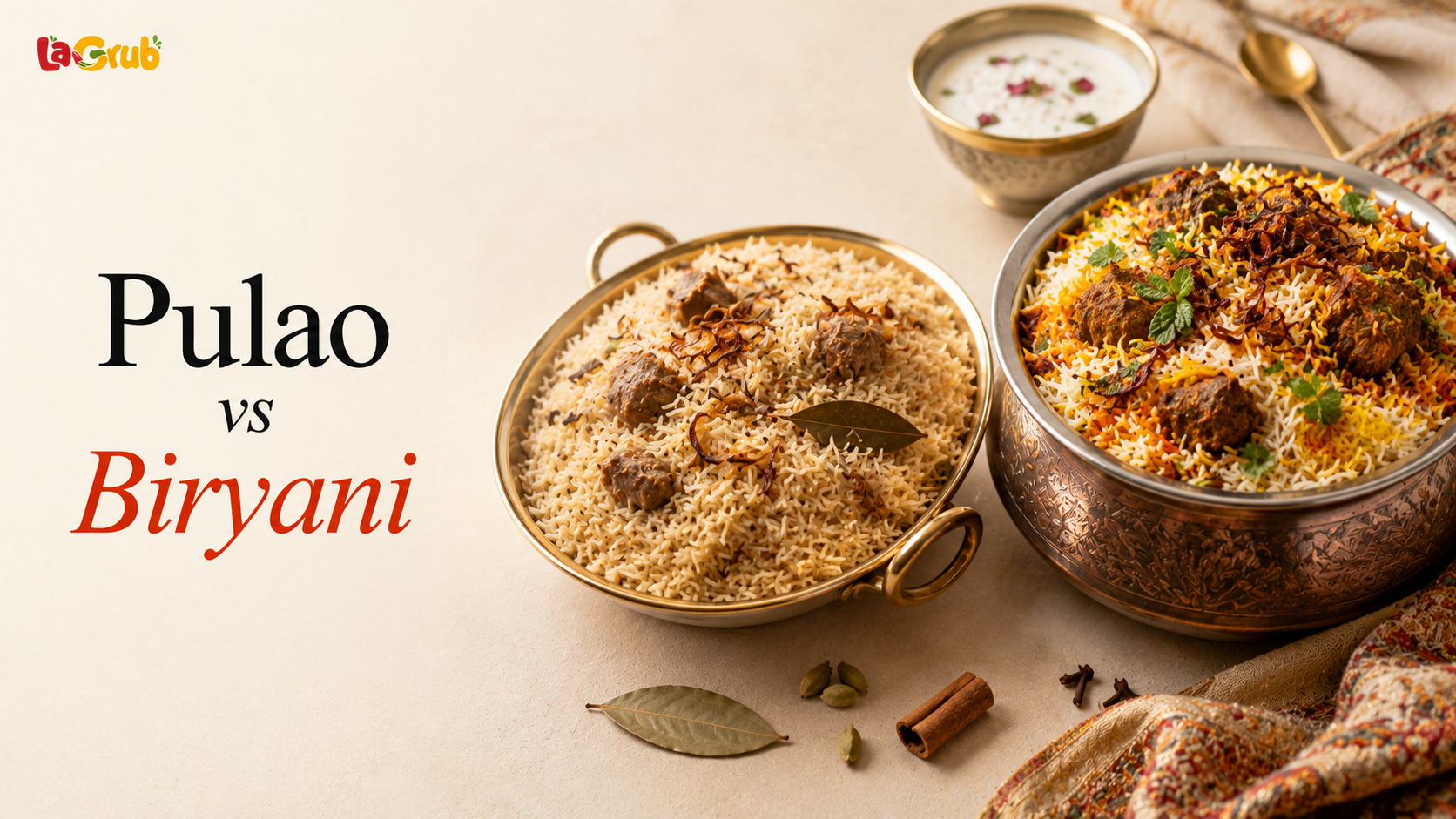
Pulao cooks rice with stock, meat, vegetables, and whole spices in one pot, while biryani layers rice with masala and finishes on steam. Once you know this difference, choosing between pulao and biryani becomes much easier.
Pulao vs biryani comes down to cooking method: pulao cooks rice with stock and ingredients together, while biryani layers rice with masala and finishes on steam. Both dishes use rice, spices, meat, or vegetables, but the final taste, texture, and occasion feel different.
You see the pulao vs biryani confusion because both dishes look similar on a plate. You taste the difference when the rice carries mild broth in pulao or strong masala pockets in biryani.
What Is the Main Difference in Pulao vs Biryani?
The main difference is method: pulao cooks as one pot, while biryani cooks as layers. That answer solves most pulao vs biryani confusion for home cooks and restaurant diners. Pulao vs biryani becomes easier when you focus on process first.
Pulao starts with whole spices, meat, vegetables, rice, and measured liquid. The rice absorbs stock as the pot cooks.
Biryani starts with parboiled rice and cooked or marinated masala. The cook layers rice and masala before a low-heat steam finish.
Pulao vs biryani also changes spoon-by-spoon flavor. Pulao gives every spoon a similar flavor. Biryani gives separate bites of rice, masala, herbs, fried onions, and meat.
For rice texture, LaGrub’s perfect basmati rice guide helps both dishes start correctly.
How to Tell Pulao vs Biryani by Cooking Method
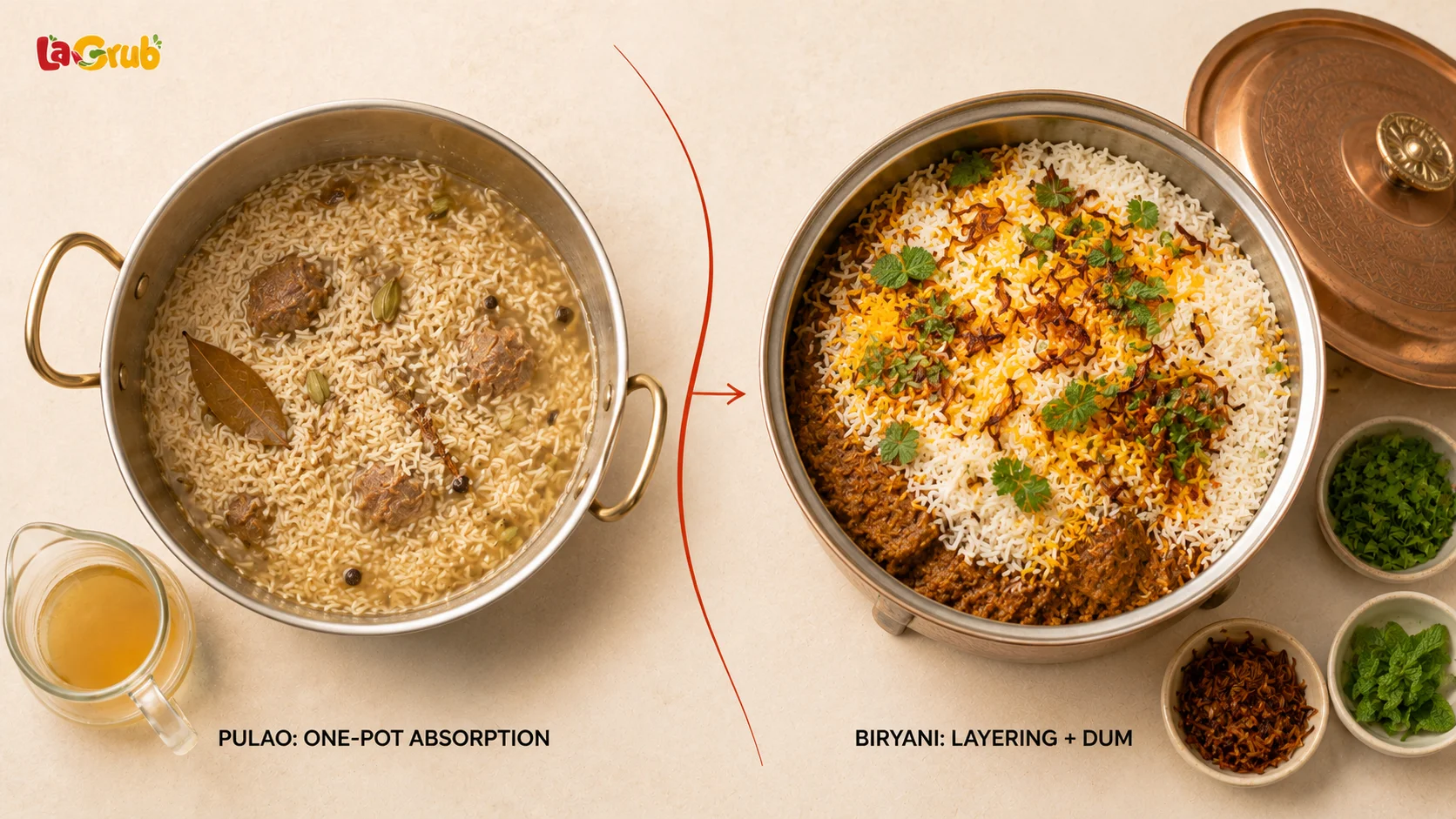
To tell pulao vs biryani by cooking method, follow the rice and liquid. Pulao uses absorption, while biryani uses layering and dum.
Pulao Uses One-Pot Absorption
Pulao cooks rice inside seasoned liquid. The liquid often comes from yakhni, chicken stock, beef stock, vegetable broth, or plain water.
A cook adds washed rice to the pot after the meat or vegetables soften. The rice absorbs flavor while the grains cook.
A 4-serving pulao usually needs 2 cups (400 g) basmati rice and 3 cups (710 ml) stock. That ratio keeps grains separate.
Biryani Uses Layering and Dum
pulao vs biryani
Biryani cooks through layers and trapped steam. The cook parboils rice, prepares masala, stacks layers, and seals the pot.
A 6-quart (5.7 L) heavy pot suits 4 to 6 servings. The sealed pot protects aroma during 20 to 25 minutes of dum.
Dum means slow steaming in a closed pot. The steam joins rice and masala without turning biryani into wet curry rice.
Meat Treatment Changes the Final Dish
Pulao often uses boiled or gently stewed meat. Biryani often uses meat cooked in oil, yogurt, spices, and onions.
Yakhni pulao relies on broth flavor. Chicken biryani, beef biryani, and mutton biryani rely on masala depth.
Why Does Biryani Taste Stronger Than Pulao?
Biryani tastes stronger because masala stays concentrated in layers. Pulao tastes milder because stock spreads flavor through the rice evenly.
This taste difference explains why pulao vs biryani becomes an emotional debate at Pakistani tables.
Pulao uses whole spices like cumin, cardamom, cloves, cinnamon, bay leaf, and black pepper. These spices season the stock gently.
Biryani uses ground spices, whole spices, fried onions, yogurt, tomatoes, mint, coriander, saffron, and lemon. These ingredients create bold pockets.
Karachi biryani often tastes spicy and tangy. Yakhni pulao often tastes savory, aromatic, and lighter.
Is Pulao Lighter Than Biryani?
Yes, pulao usually feels lighter than biryani. Pulao uses fewer spice layers, less masala, and a cleaner broth flavor.
Biryani often feels richer because cooks use fried onions, yogurt masala, oil, ghee, potatoes, meat, and garnish.
Choose pulao when you want comfort rice for lunch, dinner, or family meals. Choose biryani when you want bold flavor for guests.
For nutrition and cost planning, LaGrub’s Pakistani food differences guide explains how rice and meat shape regional meals.
Choose Pulao for Everyday Meals
Pulao suits routine meals. Chicken pulao, beef pulao, matar pulao, chana pulao, and vegetable pulao cook faster than biryani.
Pulao also works well for mild eaters because broth softens the spice. Raita and salad complete the plate.
Choose Biryani for Guests and Celebrations
Biryani suits dawat tables, Eid meals, weddings, and weekend gatherings. The layered method creates a special meal experience.
Biryani also feeds large groups well. A 12-inch (30 cm) serving platter can hold 6 to 8 portions.
What Ingredients Separate Pulao and Biryani?
Pulao needs rice, stock, whole spices, and one main ingredient. Biryani needs rice, masala, herbs, fried onions, and a steam finish.
Pulao ingredients stay simple. Common examples include basmati rice, chicken, beef, peas, chickpeas, potatoes, cumin, cloves, and bay leaf.
Biryani ingredients feel broader. Common examples include basmati rice, chicken, mutton, beef, yogurt, tomatoes, fried onions, mint, coriander, and saffron.
The pulao vs biryani ingredient difference matters because ingredients show the cooking goal. Pulao builds even flavor. Biryani builds contrast.
Is Veg Biryani Actually Pulao?
No, vegetarian biryani is not automatically pulao. The cooking method decides the name, not only the protein.
Vegetable pulao cooks rice, vegetables, spices, and liquid together. Common vegetables include peas, carrots, potatoes, cauliflower, and beans.
Vegetable biryani layers parboiled rice with cooked vegetable masala. Common vegetables include potatoes, carrots, paneer, cauliflower, and mushrooms.
The veg biryani debate becomes simple when you check the pot. One-pot absorption means pulao. Layered dum cooking means biryani.
For restaurant menus, ask how the rice cooks. A clear kitchen answer tells you more than the dish name.
What Pakistani Styles Should You Know?
Pakistani rice cooking has 5 major examples: yakhni pulao, Kabuli pulao, chicken pulao, Karachi biryani, and Sindhi biryani.
Yakhni Pulao
Yakhni pulao uses meat stock as the main flavor. The cook boils meat with spices before rice absorbs the broth.
The final dish tastes savory, aromatic, and gentle. Beef yakhni pulao and mutton yakhni pulao carry deeper broth flavor.
Kabuli Pulao
Kabuli pulao uses rice, meat, carrots, raisins, and nuts. Pakistani versions often appear at family gatherings and restaurant tables.
Kabuli pulao tastes sweet, savory, and fragrant. The dish proves pulao can feel festive without biryani-style masala.
Karachi and Sindhi Biryani
Karachi biryani and Sindhi biryani bring bold masala, potatoes, green chilies, mint, yogurt, and fried onions.
These biryani styles explain why many Pakistani diners choose biryani for stronger spice and visible layers.
Which Dish Should You Order at a Restaurant?
Order pulao for mild comfort and order biryani for bold masala. This choice gives the easiest pulao vs biryani restaurant rule.
Choose chicken pulao when you want lighter rice with tender meat. Choose beef pulao when you want deeper stock flavor.
Choose chicken biryani when you want spice, tang, fried onions, and herbs. Choose mutton biryani when you want richer meat flavor.
For pulao vs biryani ordering, ask for raita, salad, and lemon with both dishes. These sides balance heat, salt, richness, and aroma.
For a larger table, LaGrub’s dawat planning content connects well with rice dishes, kebabs, curries, and sides.
How to Identify Pulao vs Biryani on a Plate
pulao vs biryani
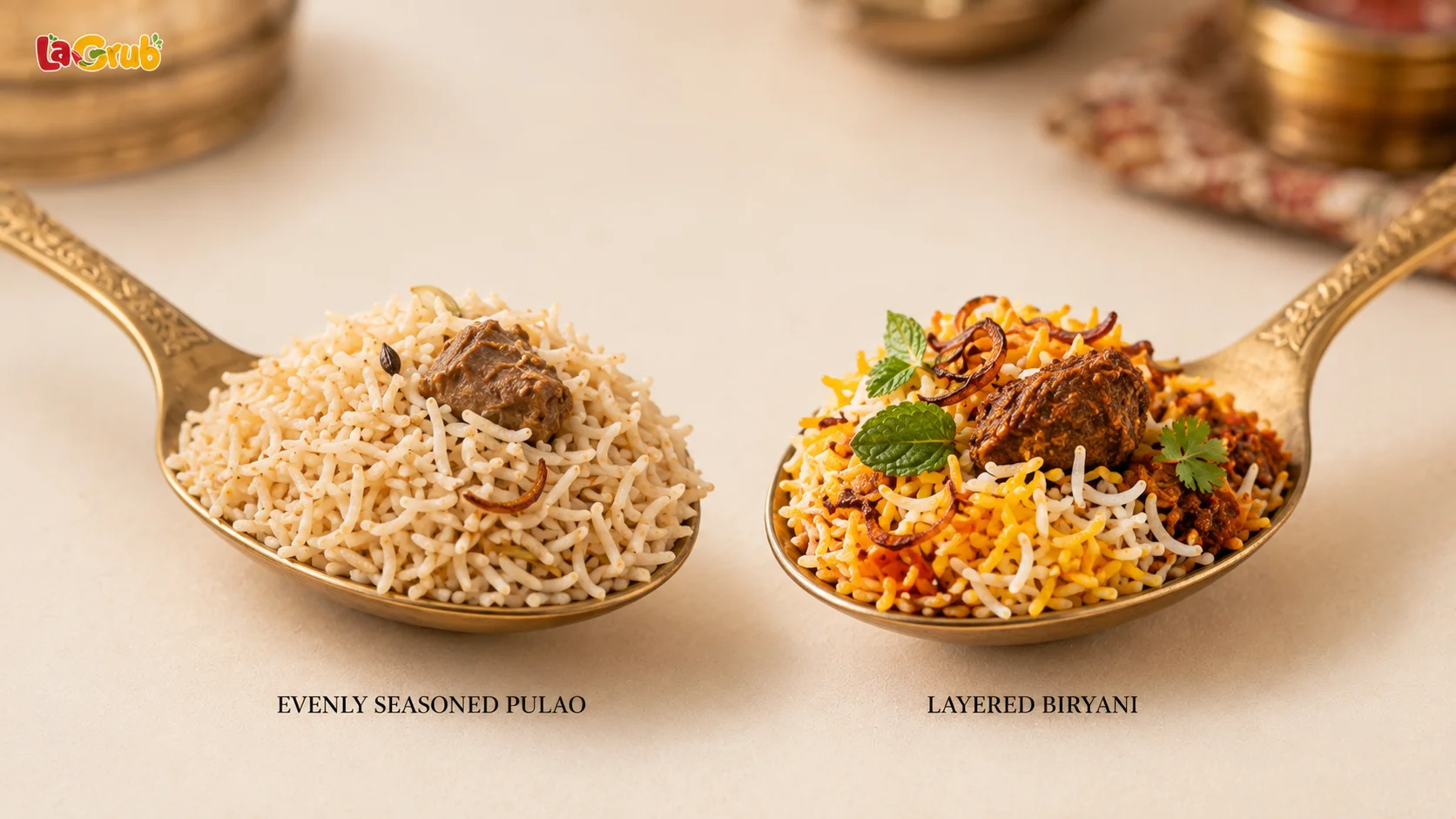
To identify pulao vs biryani on a plate, check color, aroma, rice coating, and masala pockets. These signs reveal the cooking method.
Check the Rice Color
Pulao usually has even color. The grains look pale gold, beige, or lightly brown because stock seasons every grain.
Biryani shows color changes. White rice, yellow rice, orange masala rice, and herb-stained rice appear in one serving.
Check the Masala Distribution
Pulao carries flavor evenly. Biryani shows masala pockets near meat, potatoes, fried onions, and the bottom layer.
A spoonful from the bottom of biryani tastes stronger than a spoonful from the top. Pulao stays more consistent.
Check the Aroma
Pulao smells like stock and whole spices. Biryani smells like masala, fried onions, herbs, saffron, and dum steam.
These signals help you judge delivery orders, buffet trays, and homemade rice dishes without a long explanation.
Why Pulao vs Biryani Confuses So Many Diners
The confusion comes from shared ingredients. Pulao and biryani both use rice, spices, meat, vegetables, herbs, and garnish.
Many restaurant menus also use names loosely. A menu can make pulao vs biryani labels blurry by calling one-pot rice biryani for sales appeal.
Home cooks also change family recipes. One family adds more masala to pulao. Another family cooks biryani with gentler spice.
The safest pulao vs biryani test still checks process. One-pot rice means pulao. Layered rice means biryani.
Shared Ingredients Cause Menu Confusion
Rice dishes share staples like basmati rice, chicken, beef, mutton, onions, cumin, cardamom, and bay leaf.
Shared ingredients do not create the same dish. The pot method changes flavor, aroma, moisture, and texture.
Family Recipes Blur the Line
Family cooks protect taste before labels. A grandmother can make pulao spicy or biryani mild.
Those changes do not cancel the main rule. Pulao cooks through absorption, and biryani cooks through layering.
What Mistakes Turn Pulao or Biryani Into the Wrong Dish?
pulao vs biryani
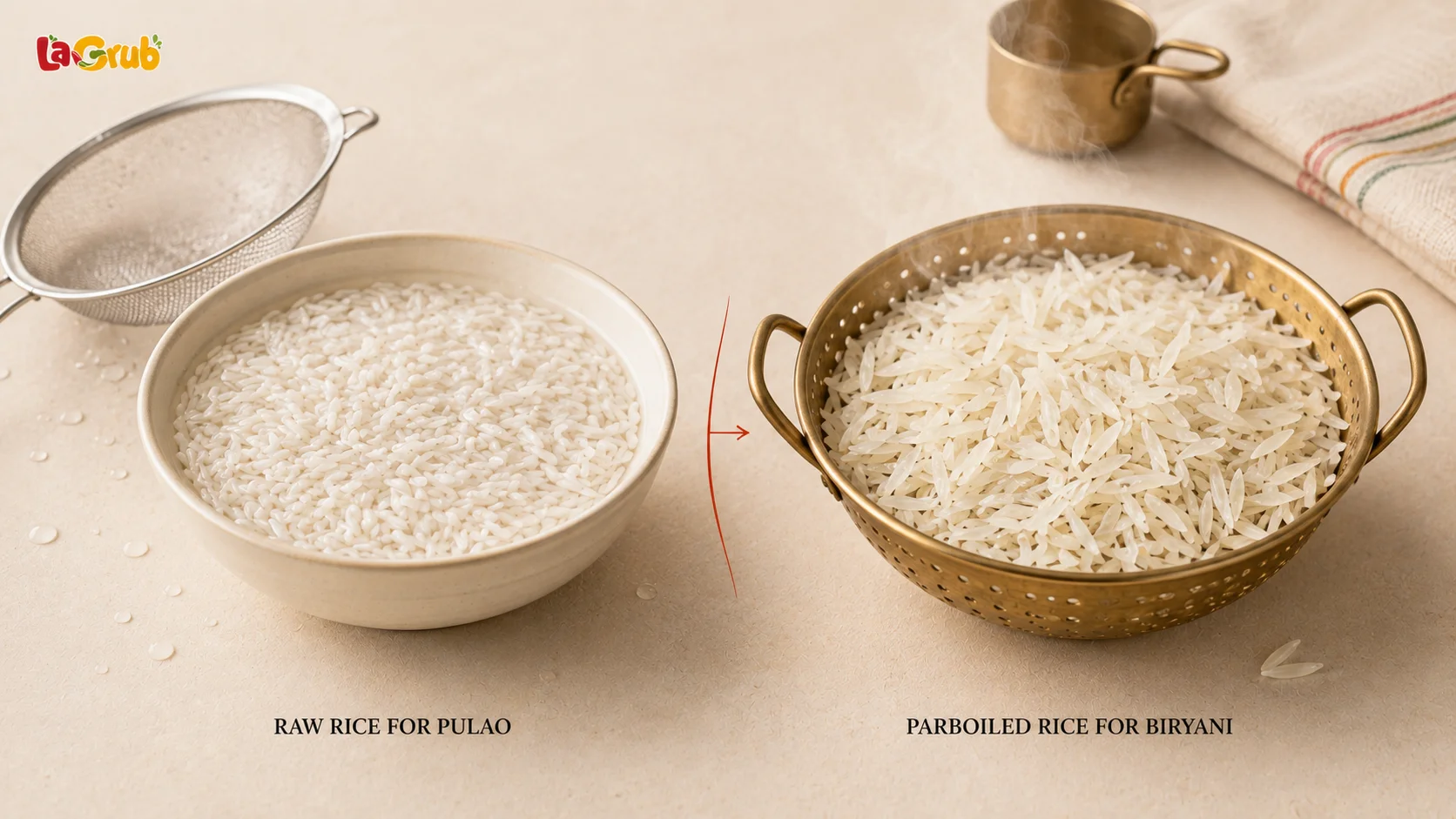
The biggest mistake is using the wrong rice stage. Raw rice belongs in pulao, while parboiled rice belongs in biryani.
A second mistake uses too much gravy. Wet masala turns biryani into curry rice and hides the layers.
A third mistake uses too little stock in pulao. Dry pulao tastes flat because rice needs enough liquid to absorb flavor.
The pulao vs biryani method needs patience. Shortcuts work only when the cook keeps the main method intact.
Avoid Wet Biryani Masala
Cook biryani masala until oil separates and the base looks thick. A spoon should leave a trail across the pan.
Use 1/2 cup (120 ml) yogurt for 2 lb (900 g) chicken. Too much yogurt loosens the masala.
Avoid Dry Pulao Rice
Use enough stock for rice absorption. Two cups (400 g) rice usually need 3 cups (710 ml) stock.
Cover the pot tightly and rest pulao for 10 minutes after cooking. Resting helps steam finish the grains.
What Should You Serve With Pulao and Biryani?
Serve both rice dishes with cooling sides and fresh crunch. Raita, salad, chutney, and lemon balance spice and richness.
Pulao pairs well with yogurt, cucumber raita, mint chutney, kachumber salad, and shami kebab.
Biryani pairs well with raita, onion salad, mirchi ka salan, boiled eggs, and cold drinks.
The pulao vs biryani side choice follows the flavor level. Mild rice needs simple sides, and spicy rice needs cooling sides.
Use Raita for Balance
Raita cools chili, salt, and fried onion richness. Cucumber raita, mint raita, and onion raita work with both dishes.
Use Salad for Freshness
Kachumber salad adds cucumber, tomato, onion, lemon, and coriander. The fresh crunch keeps rice meals lighter.
How Much Pulao or Biryani Should You Cook for Guests?
To cook pulao or biryani for guests, plan portions before shopping. Rice expands and feeds more people than raw quantity suggests.
Use 1/2 cup (100 g) raw rice per adult. Use 1/3 cup (67 g) raw rice per child.
For 6 adults, start with 3 cups (600 g) basmati rice. Add 3 lb (1.4 kg) chicken for a meat-forward pot.
For 10 adults, start with 5 cups (1 kg) basmati rice. Add 5 lb (2.3 kg) chicken or 4 lb (1.8 kg) beef.
Pulao usually stretches further because rice and stock taste even. Biryani portions feel heavier because masala and meat taste richer.
Pulao vs Biryani Quick Reference Table
| Task | Pulao | Biryani | Difficulty |
|---|---|---|---|
| Cooking method | One-pot absorption with stock | Layered rice and dum steam | Medium |
| Rice stage | Raw rice cooks with liquid | Parboiled rice finishes with masala | Medium |
| Flavor profile | Mild, even, savory | Bold, layered, spicy | Easy |
| Typical timing | 35 to 50 minutes | 75 to 120 minutes | Medium |
| Best occasion | Weeknight meals and family lunches | Dawat, Eid, weddings, weekends | Easy |
| Common sides | Raita, salad, chutney | Raita, salad, shorba, chutney | Easy |
How to Cook Each Dish Without Confusion
To cook each dish without confusion, choose one method before you start. Pulao needs absorption, while biryani needs layers.
Cook Pulao With Measured Stock
Use 2 cups (400 g) basmati rice and 3 cups (710 ml) stock for 4 servings. Add 1.5 lb (680 g) chicken or beef.
Cook the meat first, add rice, pour stock, cover the pot, and cook until the liquid disappears.
Cook Biryani With Separate Rice and Masala
Use 2 cups (400 g) basmati rice and 2 lb (900 g) chicken for 4 to 5 servings. Parboil rice before layering.
Cook masala separately, layer rice and masala, seal the pot, and steam on low heat for 20 minutes.
Serve Rice Without Breaking Grains
Use a flat serving spoon. Lift from the side of the pot instead of stirring the full dish.
Stirring breaks rice and hides layers. Gentle serving protects texture in both dishes.
FAQs About Pulao vs Biryani
Is pulao the same as biryani?
No. Pulao cooks rice with stock in one pot. Biryani layers rice with masala and finishes on steam.
Which dish tastes spicier?
Biryani usually tastes spicier. Biryani uses stronger masala, fried onions, herbs, and separate spice layers.
Which dish cooks faster?
Pulao cooks faster. Most pulao recipes finish in 35 to 50 minutes, while biryani often takes 75 to 120 minutes.
Can vegetarian biryani be real biryani?
Yes. Vegetarian biryani becomes real biryani when the cook layers parboiled rice with masala and finishes on dum.
Which dish should beginners cook first?
Beginners should cook pulao first. Pulao has fewer stages, fewer dishes, and a more forgiving method.
Final Takeaway: Which Rice Dish Should You Choose?
Choose pulao for comfort and choose biryani for celebration. Pulao gives mild stock flavor, while biryani gives rich masala layers.
The easiest pulao vs biryani rule stays simple: pulao cooks together, and biryani cooks in layers. That rule works for chicken, beef, mutton, vegetables, and restaurant menus.
Cook your next rice dish with confidence, then browse the LaGrub recipe collection for more Desi meals.

Sahar Syed
Sahar Syed shares practical Desi cooking guides, recipes, and food culture stories for home cooks.
Join the Conversation
Log in to read and share comments, recipes tips, and connect with other food lovers.