

Karahi has a bold Desi taste with spicy tomato masala, juicy chicken or meat, fresh ginger, green chilies, and herbs. People love karahi because the flavor feels fresh, rich, and full of heat without becoming heavy.
What Does Karahi Taste Like? Flavor, Spice & Ordering Guide 2026
Karahi tastes bold, tomato-rich, peppery, fresh, and slightly tangy. The answer to what does karahi taste like starts with concentrated masala, tender meat, ginger, garlic, green chilies, and hot naan.
Karahi does not taste creamy like korma or saucy like regular curry. Karahi tastes brighter, sharper, and fresher because cooks use tomatoes, high heat, crushed spices, and fresh garnish.
What Does Karahi Taste Like in Simple Words?
Karahi tastes spicy, savory, tangy, and fresh. The simple answer to what does karahi taste like helps you order confidently at a Pakistani restaurant.
A good karahi gives you 4 clear flavor signals. Tomatoes give tang. Ginger gives heat. Garlic gives depth. Green chilies give sharp freshness.
The gravy stays thick instead of watery. The masala clings to chicken, mutton, beef, paneer, or vegetables. The meat tastes rich without heavy cream.
Karahi also smells intense. Fresh coriander, julienne ginger, cracked black pepper, and green chilies create the final aroma.
People ask what does karahi taste like because karahi sits between curry, stir-fry, and dry masala. Karahi uses less gravy than curry and more freshness than korma.
For cultural context, LaGrub shares the Pakistani food story behind dishes like karahi, biryani, nihari, and kebabs.
What Flavors Create Karahi Taste?
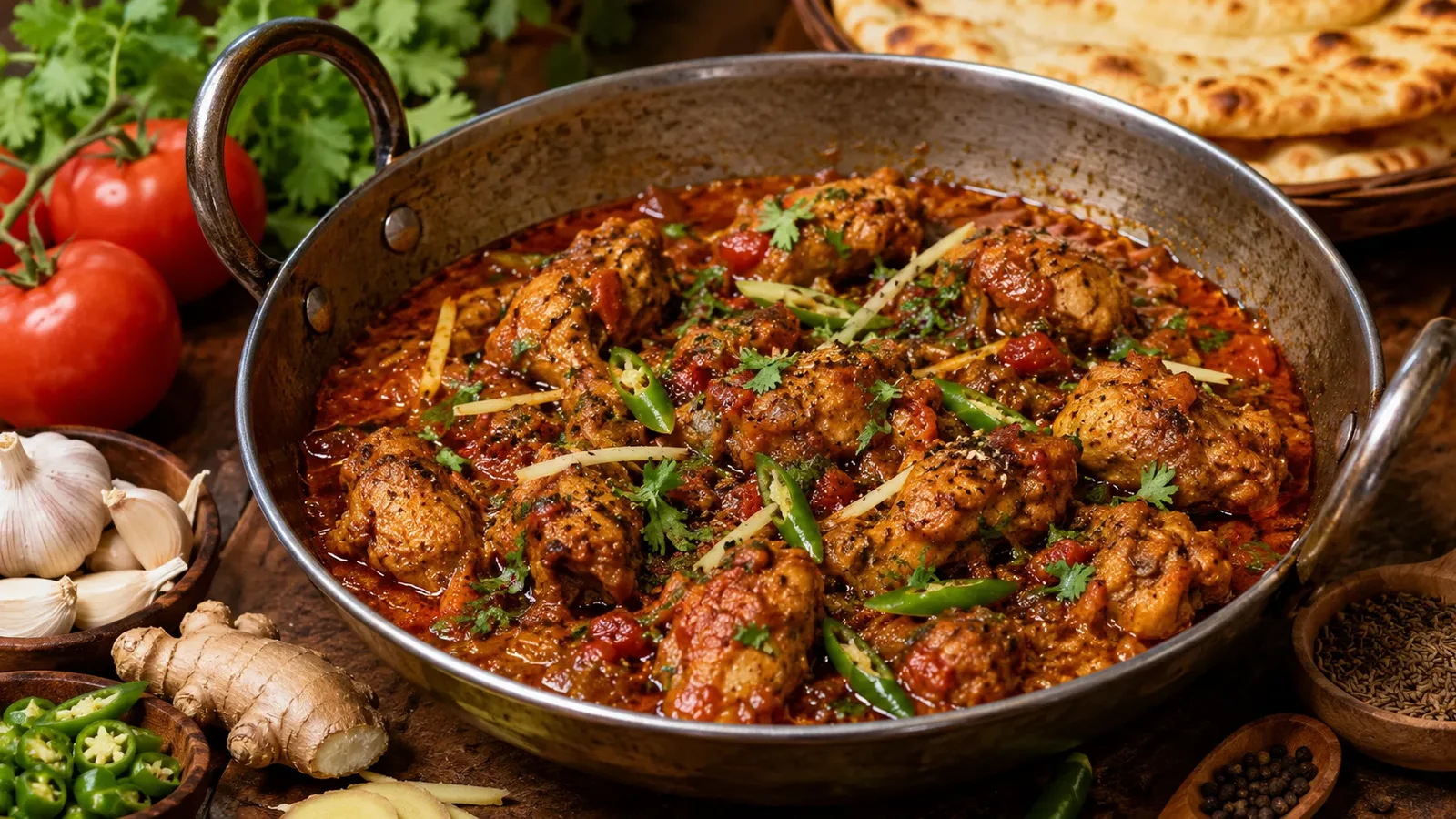 What Flavors Create Karahi Taste?
Tomatoes, ginger, garlic, green chilies, coriander, cumin, and black pepper create karahi taste. The flavor answer to what does karahi taste like starts with fresh ingredients.
Karahi uses fewer ingredients than many South Asian curries. Each ingredient needs proper heat, timing, and balance.
A restaurant karahi usually uses a wide karahi pan, high flame, bone-in meat, chopped tomatoes, and fresh garnish.
Tomato, Ginger, and Garlic Base
Tomatoes give karahi its tangy body. A 4-serving karahi needs 4 medium tomatoes, about 1 lb (450 g), for a thick base.
Ginger gives sharp warmth. Use a 2-inch (5 cm) piece of ginger for cooking and a 1-inch (2.5 cm) piece for garnish.
Garlic adds savory depth. Use 6 cloves, about 1 tablespoon (15 g), for chicken, mutton, or beef karahi.
Green Chili Heat and Fresh Herb Finish
Green chilies create fresh heat. Use 2 chilies for mild karahi, 4 chilies for medium karahi, and 6 chilies for hot karahi.
Fresh coriander gives brightness. Add 0.5 cup (15 g) chopped coriander near the end, not at the start.
Julienne ginger gives a clean finish. Thin 2-inch (5 cm) strips work better than chopped ginger for garnish.
Bhuna Masala and High-Heat Cooking
Bhuna masala gives karahi its concentrated taste. Bhuna means cooking spices and base ingredients until moisture reduces.
High heat thickens tomatoes quickly. A 12-inch (30 cm) karahi or wok gives the masala enough surface area.
The oil should separate lightly at the edges. That sign shows cooked tomatoes, cooked spices, and reduced water.
What Does Karahi Taste Like Compared With Curry?
Karahi tastes fresher, thicker, and sharper than many curries. The comparison answer to what does karahi taste like prevents menu confusion.
Curry often uses more sauce. Karahi uses reduced masala. Curry often tastes rounded. Karahi tastes direct and punchy.
Karahi works best with naan because the masala clings to bread. This point shapes what does karahi taste like for new diners. Rice works, but naan gives a better texture match.
Karahi vs Korma
Korma tastes creamy, sweet, and rich. Karahi tastes tangy, spicy, and fresh.
Korma uses yogurt, onions, nuts, cream, or fried onion paste. Karahi uses tomatoes, ginger, garlic, chilies, and coriander.
Order korma for a mild dinner. Order karahi for a brighter Pakistani food experience.
Karahi vs Salan
Salan tastes saucier and simpler. Karahi tastes thicker and more roasted.
Salan usually has more gravy for rice. Karahi has less gravy for naan, roti, paratha, or tandoori bread.
Chicken salan suits daily home meals. Chicken karahi suits restaurant tables, family sharing, and weekend meals.
Karahi vs Tikka Masala
Tikka masala tastes creamy, smoky, and mild to medium. Karahi tastes tomato-forward, ginger-heavy, and medium to hot.
Tikka masala often uses grilled chicken in sauce. Karahi cooks meat directly inside the masala.
The Desi cooking guide explains why Desi flavor uses layers, spices, heat, and aroma.
What Does Karahi Taste Like by Protein?
Chicken tastes lighter, mutton tastes deeper, beef tastes richer, and paneer tastes softer. The protein answer to what does karahi taste like helps you pick the right order.
The same masala changes with protein. That change explains what does karahi taste like across Pakistani menus. Chicken absorbs tang quickly. Mutton carries fat. Beef holds stronger spice. Paneer keeps a gentle taste.
Chicken Karahi Taste
Chicken karahi tastes bright, juicy, and quick. Bone-in chicken gives more flavor than boneless chicken.
A 2 lb (900 g) chicken karahi feeds 4 people with 4 naan, raita, and salad.
Order chicken karahi first if you want a balanced introduction. Chicken karahi suits mild, medium, and hot spice levels.
Mutton and Beef Karahi Taste
Mutton karahi tastes deeper and fattier. Beef karahi tastes heavier and more intense.
A 2 lb (900 g) mutton karahi needs longer cooking than chicken. Meat collagen needs time to soften.
Order mutton karahi for richer flavor. Order beef karahi when the restaurant specializes in Pakistani meat dishes.
Paneer and Vegetable Karahi Taste
Paneer karahi tastes soft, tangy, and mildly creamy. Vegetable karahi tastes lighter and sweeter.
Common vegetables include capsicum, onions, tomatoes, cauliflower, potatoes, and peas. These vegetables absorb masala differently.
Order paneer karahi for a vegetarian main. Order vegetable karahi with dal, naan, and raita for a lighter meal.
How to Choose Karahi by Spice Level
To choose karahi by spice level, match chilies, black pepper, and garnish to your heat tolerance. The spice answer to what does karahi taste like keeps your order enjoyable.
Pakistani restaurants often serve karahi from medium to hot. Spice level changes what does karahi taste like quickly. Ask for mild heat before cooking starts because karahi masala reduces fast.
Mild Karahi Order
Choose mild chicken karahi with fewer green chilies and extra raita. Mild karahi keeps tomato, ginger, and garlic flavor visible.
Ask for 2 green chilies in a 4-serving karahi. Pair mild karahi with 4 naan, cucumber raita, and kachumber salad.
Medium Karahi Order
Choose medium karahi for a full Pakistani restaurant taste. Medium karahi gives warmth without hiding the meat.
Ask for 4 green chilies in a 4-serving karahi. Add naan, plain rice, mint chutney, and sliced onions.
Hot Karahi Order
Choose hot karahi if you enjoy green chili heat and black pepper bite. Hot karahi tastes sharp and exciting.
Ask for 6 green chilies in a 4-serving karahi. Add raita, salad, lemon wedges, and lassi to balance heat.
What Texture Should Karahi Have?
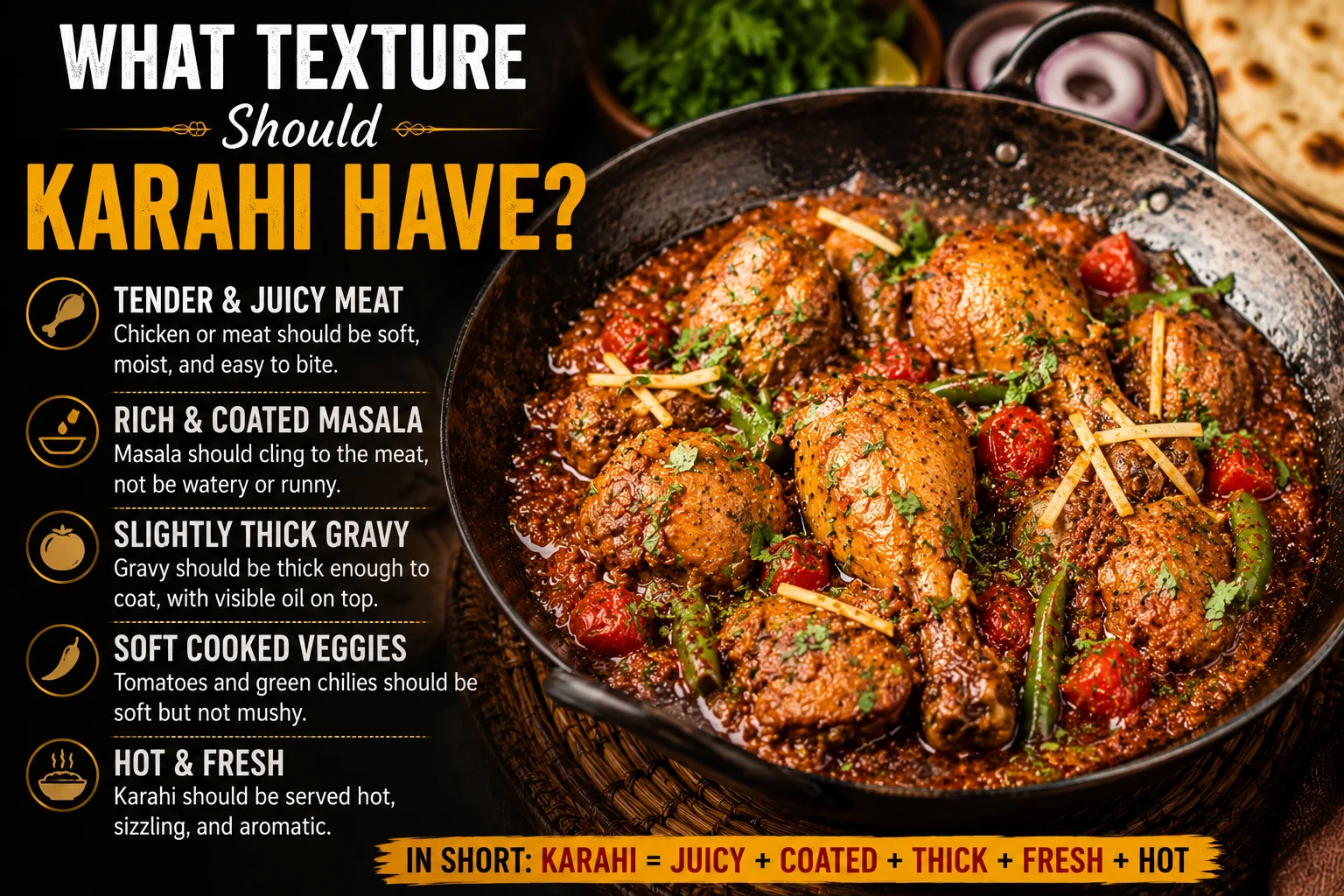 what texture does karahi have
Karahi should feel thick, juicy, and lightly oily, not soupy. The texture answer to what does karahi taste like explains why karahi feels different from curry.
A proper karahi carries a rough masala texture. Crushed tomatoes, ginger strips, coriander leaves, and cracked spices should stay visible.
Restaurant karahi often arrives in a metal karahi pan. The pan keeps the food hot for 10 minutes and protects the thick masala.
Meat Texture
Chicken should stay tender and moist. Mutton should pull apart with light pressure from a spoon.
Beef should feel soft without falling apart. Paneer should stay firm at the edges and soft in the center.
Overcooked meat tastes dry. Undercooked meat tastes chewy and weakens the whole plate.
Masala Texture
Masala should coat each piece. A good masala leaves a glossy layer on meat, paneer, or vegetables.
Watery masala gives a weak answer to what does karahi taste like. Thick masala gives the proper karahi flavor profile.
Fine onion paste makes karahi taste closer to curry. Chopped tomatoes make karahi taste fresher and sharper.
Oil and Moisture Texture
Small oil droplets at the edge show reduced masala. A heavy oil pool signals poor balance.
Moisture should come from tomatoes and meat juices. Extra water thins the taste and weakens the naan bite.
A 4-serving karahi needs about 0.25 cup (60 ml) oil or ghee for proper bhuna cooking.
How to Recognize a Good Karahi Taste
To recognize a good karahi taste, check aroma, gravy thickness, meat texture, and naan pickup. These 4 checks reveal real karahi quality.
Good karahi reaches the table hot. Heat shapes what does karahi taste like from the first spoon. Steam carries tomato, ginger, garlic, green chilies, and coriander.
Aroma Check
Smell the garnish first. Fresh coriander, ginger strips, and green chilies should smell clean and sharp.
Burnt spices smell bitter. Raw tomatoes smell sour. A good karahi smells cooked, fresh, and savory.
Gravy Check
Look for thick masala around the meat. The gravy should not spread across the plate like soup.
A spoon should leave a line through the masala. The masala should cling to chicken, mutton, beef, or paneer.
Naan Check
Tear a 4-inch (10 cm) piece of naan and scoop the masala. Good karahi sticks to naan without dripping.
The bread should pick up meat juices, tomato masala, coriander, and ginger in one bite.
What Should You Order With Karahi?
Order naan, raita, salad, and a simple drink with karahi. The pairing answer to what does karahi taste like helps you build a balanced meal.
Naan handles thick masala better than rice. Rice works with extra gravy, but classic karahi stays better with bread.
| Task | Timing | Method | Difficulty |
|---|---|---|---|
| Choose the main | 2 minutes | Pick chicken, mutton, beef, paneer, or vegetables | Easy |
| Set spice level | 1 minute | Ask for mild, medium, or hot before cooking | Easy |
| Add bread | 1 minute | Order 1 naan per person, about 8 inches (20 cm) each | Easy |
| Add cooling side | 1 minute | Choose raita, salad, chutney, or lassi | Easy |
| Check freshness | 3 minutes | Look for steam, fresh garnish, and thick masala | Medium |
For 2 people, order 1 small chicken karahi, 2 naan, raita, and salad. Add gulab jamun for dessert.
For 4 people, order 1 large chicken karahi, 4 naan, 1 rice portion, raita, salad, and mint chutney.
For 6 people, order 2 karahi dishes, 6 naan, 2 rice portions, 2 raita bowls, salad, and drinks.
What Does Karahi Taste Like for Restaurant Orders?
Restaurant karahi should taste hotter, fresher, and more roasted than a mild home curry. The restaurant answer to what does karahi taste like helps you judge menus.
Order karahi from places that cook karahi fresh. Fresh cooking gives better tomato reduction, meat texture, and garnish aroma.
A menu with chicken karahi, mutton karahi, white karahi, and lamb karahi usually treats karahi as a core dish.
Dine-In Karahi Order
Dine-in karahi gives the best taste because the dish reaches your table hot. Steam keeps ginger and chilies bright.
Ask for a medium spice level first. Add raita and naan before choosing extra chilies.
Dine-in service also lets you check gravy thickness. The masala should bubble gently at the table.
Delivery Karahi Order
Delivery karahi needs careful ordering because steam softens naan and thins garnish aroma. Order naan packed separately.
Ask the restaurant to pack raita, salad, and chutney in separate containers. A 2-cup (480 ml) container holds 1 serving well.
Delivery karahi still answers what does karahi taste like when the masala stays thick and the garnish arrives fresh.
Family Karahi Order
Family karahi works best as a shared main. Order 1 large karahi for 4 people and 2 large karahis for 8 people.
Add mild sides for children, elders, or spice-sensitive guests. Raita, plain rice, naan, and lassi soften heat.
Family meals show what does karahi taste like through shared bites, hot bread, and fresh garnish.
How to Cook Karahi Flavor at Home
To cook karahi flavor at home, use high heat, ripe tomatoes, fresh ginger, fresh garlic, and proper reduction. Home karahi needs control, not complicated ingredients.
You can cook chicken karahi in 40 minutes if you cut chicken into even pieces and reduce the tomato base properly.
Use the Right Pan
Use a 12-inch (30 cm) karahi, wok, or wide skillet. A wide pan reduces tomatoes faster than a deep pot.
Keep the heat medium-high during masala cooking. Lower heat after the meat softens and the masala thickens.
Cook the Tomato Base Properly
Cook tomatoes until the raw smell leaves. The base should look glossy, thick, and slightly separated at the edges.
Add 0.25 cup (60 ml) water only when the masala sticks too early. Extra water weakens karahi taste.
Finish With Fresh Garnish
Add coriander, ginger, and green chilies at the end. Fresh garnish gives karahi the final restaurant-style taste.
Serve karahi in a hot bowl or karahi pan. Rest the dish for 5 minutes before serving.
What Mistakes Make Karahi Taste Wrong?
Watery masala, raw tomatoes, burnt spices, and old garnish make karahi taste wrong. These mistakes explain what does karahi taste like by contrast.
Watery masala tastes weak. Cook the tomatoes longer until the sauce thickens and coats the meat.
Raw tomatoes taste sour and flat. Cook tomatoes until the color deepens and the sharp raw smell disappears.
Burnt spices taste bitter. Add powdered spices after the tomatoes release moisture, not into dry oil for too long.
Old garnish tastes dull. Use fresh coriander, fresh ginger, and fresh green chilies right before serving.
Too much cream hides karahi flavor. Cream turns karahi closer to korma or tikka masala.
Too much onion changes texture. Traditional Pakistani karahi relies more on tomatoes than onion paste.
FAQs About Karahi Taste
Is karahi spicy?
Yes. Karahi usually tastes medium to hot because green chilies, black pepper, and red chili powder create heat.
Is karahi sour?
Yes, karahi has a light tang from tomatoes. Proper cooking balances tomato sourness with fat, salt, and spice.
Does karahi taste like butter chicken?
No. Karahi tastes fresher, sharper, and less creamy than butter chicken.
What meat tastes best in karahi?
Mutton gives the deepest karahi flavor. Chicken gives the easiest and most balanced restaurant order.
Can you eat karahi with rice?
Yes. You can eat karahi with rice, but naan, roti, and paratha suit thick masala better.
Final Takeaway: Choose Karahi With Confidence
Karahi tastes bold, fresh, tangy, peppery, and deeply savory. The final answer to what does karahi taste like points to thick tomato masala, tender meat, green chilies, ginger, coriander, and hot naan.
Start with medium chicken karahi if you want the safest first order. Choose mutton karahi if you want a richer and heavier taste.
Explore the Pakistani recipe collection on LaGrub for more Desi mains, rice dishes, sides, and cooking ideas.

Sahar Syed
Sahar Syed writes for LaGrub on cooking, recipes, and mindful culinary living.
Get a desi recipe worth cooking, every week
One tested recipe a week. Nothing else, and unsubscribe any time.


