

Split peas, lentils, black beans, and chia seeds are among the highest-fiber everyday foods. If you want a simple answer, cooked split peas give about 16 g fiber per 1 cup (196 g), while chia seeds give about 10 g fiber per 1 oz (28 g).
Split peas, lentils, black beans, and chia seeds are among the foods with the most fiber in everyday diets. If you want one simple answer to what food has the most fiber, cooked split peas lead many common food lists with about 16 g fiber per 1 cup (196 g).
Chia seeds give about 10 g fiber in only 1 oz (28 g), so chia seeds win for a small portion. Beans and lentils win for filling meals because 1 cup (170 g to 200 g) gives fiber, protein, minerals, and lasting fullness.
What Food Has the Most Fiber in Simple Words?
The simplest answer to what food has the most fiber is split peas for a normal cooked serving. One cooked cup (196 g) of split peas gives about 16 g fiber, which covers more than half of a 28 g daily target.
The practical answer to what food has the most fiber depends on how you measure fiber. Chia seeds give dense fiber in a small spoonful. Lentils, beans, peas, and chickpeas give more usable fiber inside real meals.
For most home cooks, the best high-fiber foods are not rare powders. Use split peas, lentils, black beans, chickpeas, oats, berries, pears, broccoli, Brussels sprouts, avocado, and popcorn.
Food labels and databases use averages because growing conditions, brands, cooking time, and drained weight change fiber values. Treat fiber numbers as reliable guides, not fixed kitchen chemistry.
Which Foods Have the Most Fiber per Serving?
Legumes have the strongest answer for what food has the most fiber per everyday serving. Split peas, lentils, black beans, navy beans, chickpeas, and kidney beans all deliver large fiber amounts without tiny portions.
A normal serving matters because nobody builds lunch from 1 teaspoon (5 ml) of bran powder. A useful fiber food should fit into soup, salad, rice bowls, tacos, toast, pasta, curry, stew, or breakfast.
Beans, Peas, and Lentils
Cooked legumes rank high because legumes combine soluble fiber, insoluble fiber, resistant starch, and plant protein. Use split peas, lentils, black beans, chickpeas, navy beans, kidney beans, and pinto beans.
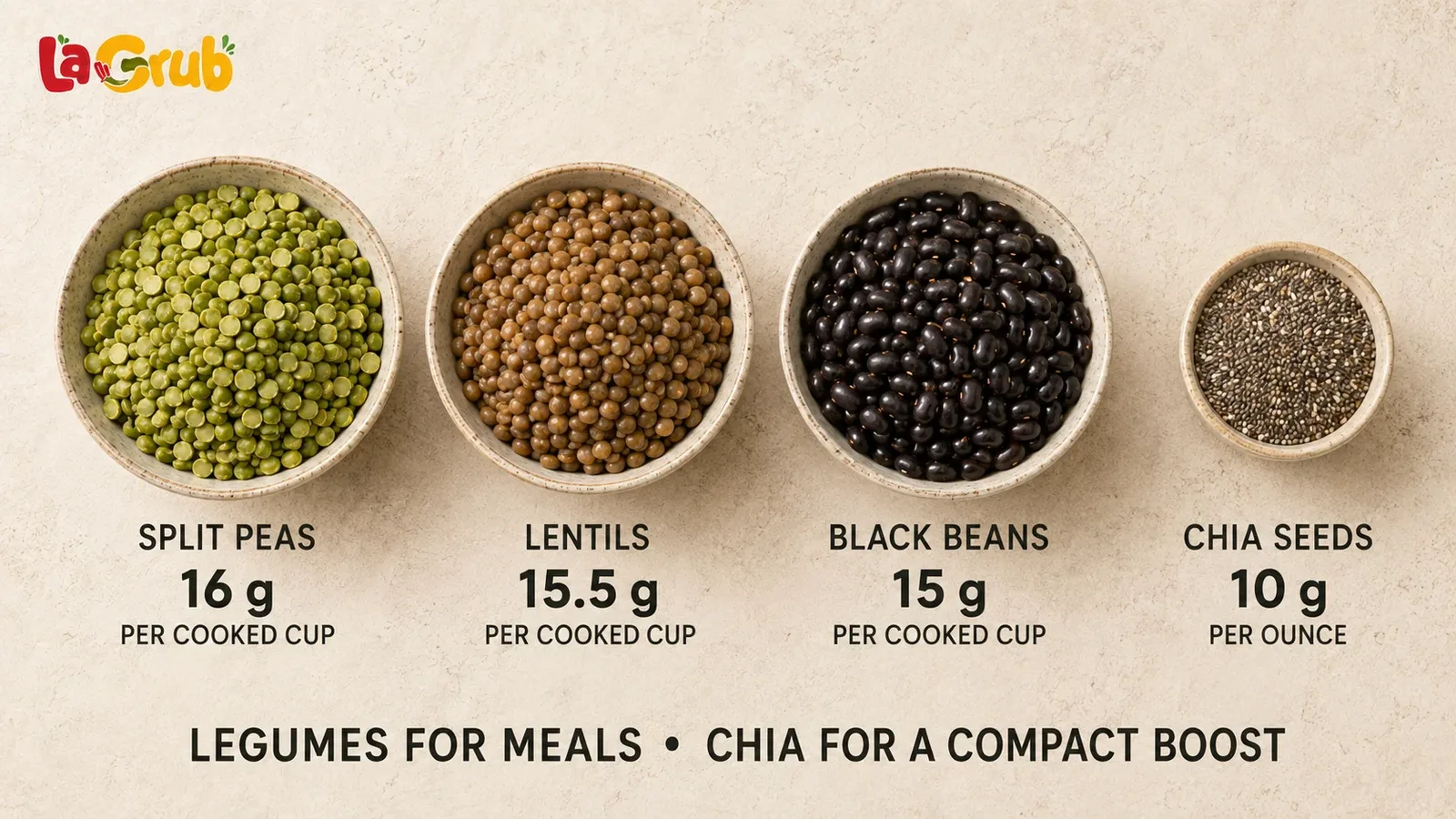
For a simple comparison, use these common cooked portions: split peas give about 16 g per 1 cup (196 g), lentils give about 15.5 g per 1 cup (198 g), and black beans give about 15 g per 1 cup (172 g).
Chickpeas give about 12.5 g per 1 cup (164 g). Add chickpeas to hummus, roasted snacks, grain bowls, curries, soups, and chopped salads.
Seeds and Nuts
what food has the most fiber
Chia seeds answer what food has the most fiber for a small measured portion. One ounce (28 g) chia seeds gives about 10 g fiber, which makes chia useful in oats, yogurt, smoothies, pudding, and baked goods.
Ground flaxseed gives fiber with a nutty taste. Add 1 tablespoon (7 g) to oatmeal, cereal, muffins, pancakes, smoothies, or fruit bowls.
Nuts add moderate fiber and healthy fats. Almonds, pistachios, walnuts, and pecans work best as 1 oz (28 g) toppings, not as the only fiber source.
High-Fiber Fruits and Vegetables
Fruits and vegetables matter because fruits and vegetables bring water, volume, color, and daily variety. Use raspberries, pears, apples, avocado, green peas, broccoli, Brussels sprouts, carrots, sweet potatoes, and artichokes.
Raspberries give about 8 g fiber per 1 cup (123 g). A pear gives about 5.5 g fiber when you eat the skin, and 1 cup (150 g) cooked green peas gives about 9 g fiber.
Vegetables help high-fiber meals feel fresh. Add broccoli, carrots, spinach, peppers, cabbage, cucumber, tomatoes, eggplant, and zucchini to keep high-fiber meals balanced.
What Food Has the Most Fiber per Small Portion?
Chia seeds give the strongest answer to what food has the most fiber per small portion. A 1 oz (28 g) serving adds about 10 g fiber without taking much plate space.
Wheat bran, psyllium, chia seeds, and ground flaxseed provide concentrated fiber, but concentrated fiber needs water and gradual use. Start with 1 teaspoon (5 ml) to 1 tablespoon (15 ml), then increase slowly.
Use small high-fiber additions as boosters, not meal replacements, because what food has the most fiber still needs daily meal context. Sprinkle chia seeds on oatmeal, stir flaxseed into yogurt, mix bran into muffins, and add seeds to salad dressings.
Drink water with fiber-rich foods. A dry fiber increase can make digestion feel uncomfortable for some people, especially when daily fiber intake was low before.
What Food Has the Most Fiber per Calorie?
Vegetables, berries, beans, lentils, and chia seeds give strong fiber for their calories. If you ask what food has the most fiber per calorie, compare portions by both fiber and fullness.
Leafy greens, broccoli, carrots, green peas, raspberries, and air-popped popcorn help when you want volume. These foods let you eat more bites while raising fiber gradually.
Beans and lentils still matter because beans and lentils give protein with fiber. A bowl of lentil soup can replace a low-fiber meal instead of acting like a side only.
Chia seeds look impressive by fiber density, but 1 oz (28 g) chia seeds feels smaller than 1 cup (196 g) split peas. Use both answers when someone asks what food has the most fiber.
For weight-conscious cooking, avoid turning high-fiber foods into heavy desserts or fried snacks every day. Use oats, bean bowls, vegetable soups, lentil salads, fruit bowls, and roasted chickpeas most often.
The best answer to what food has the most fiber per calorie changes by your meal goal. Choose vegetables and berries for volume, legumes for meals, and chia seeds for a compact boost.
What Food Has the Most Fiber for Everyday Meals?
Lentils, beans, oats, and vegetables answer what food has the most fiber for everyday meals. These foods work in breakfast, lunch, dinner, snacks, and meal prep without special equipment.
For breakfast, use oats with berries and chia seeds. For lunch, use lentil soup, black bean tacos, chickpea salad, hummus plates, or vegetable grain bowls.
For dinner, use split pea soup, bean chili, lentil stew, whole wheat pasta with vegetables, barley pilaf, quinoa bowls, or roasted sweet potatoes with beans.
For planned high-fiber cooking, LaGrub's fiber gut health cookbook gives a direct place to build meals around vegetables, fruits, whole grains, legumes, and seeds.
What Is the Difference Between Soluble and Insoluble Fiber?
Soluble fiber dissolves in water and forms a gel during digestion. Oats, barley, beans, lentils, apples, citrus, carrots, and peas provide soluble fiber.
Insoluble fiber does not dissolve the same way. Whole wheat, wheat bran, brown rice, quinoa, nuts, seeds, leafy greens, pears, apples with skin, and many vegetables provide insoluble fiber.
Both types matter. Soluble fiber helps meals feel slower and steadier, while insoluble fiber supports stool bulk and regular movement through the gut.
A mixed plate beats a single perfect ingredient. Combine oats, beans, vegetables, fruit, nuts, and seeds to get both fiber types across the day.
How Much Fiber Should You Eat per Day?
A useful fiber target is 14 g per 1,000 calories. That means a 2,000-calorie eating pattern gives a target of about 28 g fiber per day.
Many adults need more fiber than their usual diet gives. Increase fiber through real foods first because whole foods also bring water, minerals, plant compounds, and texture.
Do not jump from 10 g to 35 g fiber in 1 day. Add 5 g fiber for 1 week, then add another 5 g after your body adjusts.
Choose 3 daily anchors: 1 high-fiber breakfast, 1 bean or lentil meal, and 1 fruit or vegetable snack. This structure makes the answer to what food has the most fiber easier to use.
| Task | Timing | Method | Difficulty |
|---|---|---|---|
| Add breakfast fiber | 5 minutes | Mix oats with 1 tablespoon (15 ml) chia seeds and 1 cup (123 g) berries | Easy |
| Build a bean lunch | 10 minutes | Add 1/2 cup (85 g) black beans to salad, tacos, or rice bowls | Easy |
| Cook lentil soup | 30 minutes | Simmer 1 cup (200 g) lentils with vegetables, stock, and herbs | Medium |
| Make a high-fiber snack | 3 minutes | Serve 1 pear with skin and 1 oz (28 g) almonds | Easy |
| Prep fiber sides | 25 minutes | Roast 2 cups (300 g) broccoli, carrots, or Brussels sprouts | Easy |
| Increase gradually | 7 days | Add 5 g daily fiber for 1 week before adding more | Easy |
How to Add More Fiber Without Bloating
what food has the most fiber
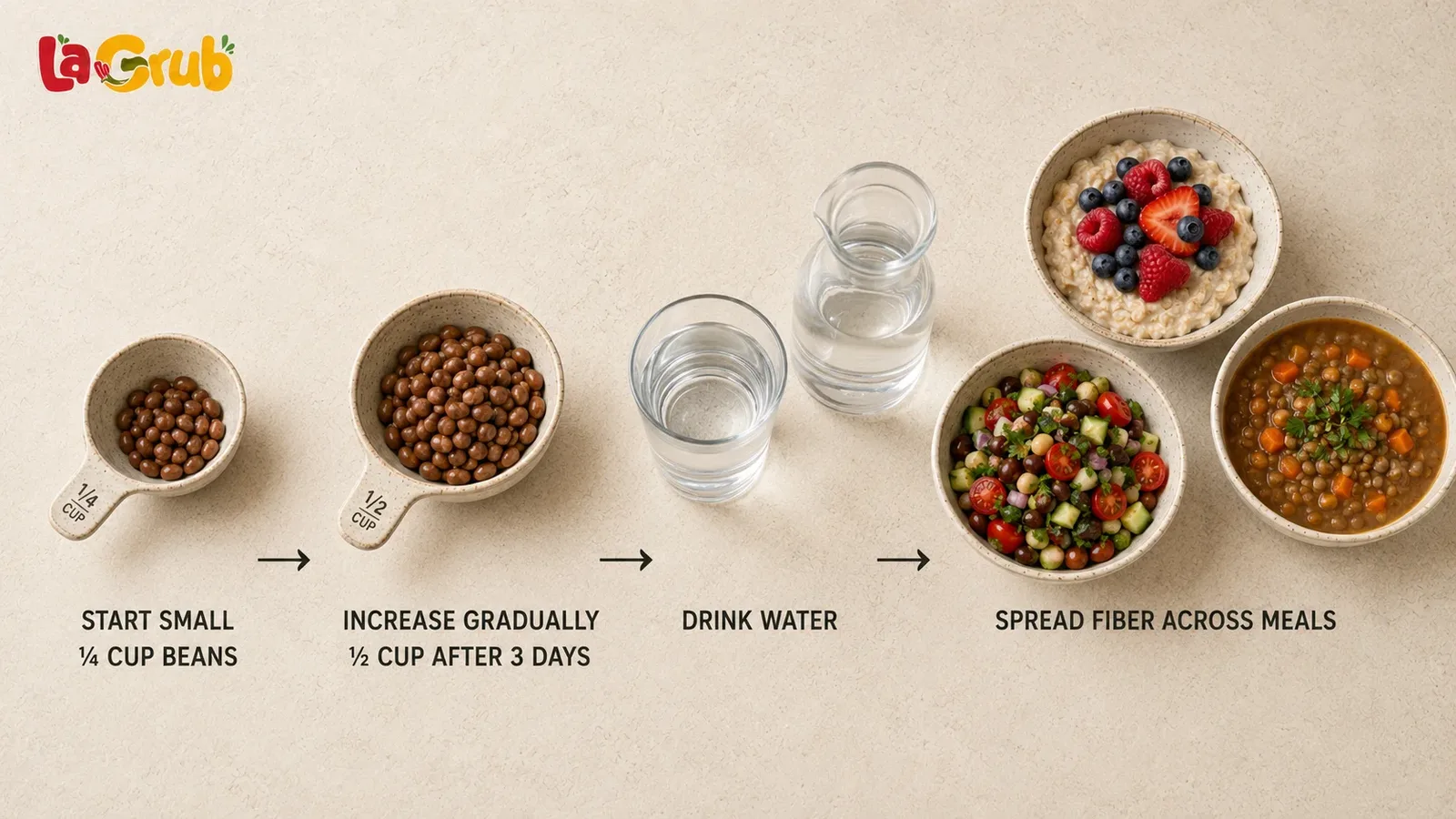
To add more fiber without bloating, increase fiber gradually, drink enough water, cook beans until tender, and spread fiber across meals. Your gut handles fiber better when change comes in steps.
Start with 1 extra serving each day. Choose 1/2 cup (85 g) beans, 1 cup (123 g) raspberries, 1 pear, or 1 tablespoon (15 ml) chia seeds.
Cook dried beans fully. Soak beans for 8 hours, drain soaking water, and simmer beans until soft. Canned beans work faster when you rinse beans under water for 30 seconds.
Use gentle portions if beans feel heavy. Start with 1/4 cup (40 g) beans, then increase to 1/2 cup (85 g) after 3 days.
Persistent pain, bleeding, severe constipation, or sudden bowel changes need medical care. Food guidance cannot replace personal medical advice.
How to Build High-Fiber Meals at Home
To build high-fiber meals at home, start with a plant base, add a protein-rich fiber food, add vegetables, and finish with flavor. This method works for bowls, soups, wraps, salads, and one-pot meals.
Use 1 base from whole grains: oats, barley, brown rice, quinoa, whole wheat pasta, farro, bulgur, rye bread, or corn tortillas. Add 1 legume: lentils, black beans, chickpeas, kidney beans, edamame, or split peas.
Add 2 vegetables, such as broccoli and carrots, peppers and onions, spinach and tomatoes, or zucchini and eggplant. Add herbs, citrus, spices, yogurt, olive oil, salsa, tahini, or chutney for flavor.
A practical pantry makes high-fiber cooking easier. LaGrub's pantry staples guide helps you keep lentils, chickpeas, rice, herbs, and spices ready for frequent cooking.
What High-Fiber Foods Fit Different Diets?
Different eating styles can use high-fiber foods without one fixed menu. Vegetarian meals can rely on lentils, beans, chickpeas, tofu, tempeh, oats, vegetables, fruit, nuts, and seeds.
Meat eaters can add fiber beside protein. Pair chicken, fish, eggs, beef, or lamb with lentils, bean salads, roasted vegetables, barley, quinoa, fruit, or whole grain bread.
Gluten-free meals can use quinoa, brown rice, buckwheat, certified gluten-free oats, beans, lentils, potatoes with skin, corn, fruit, vegetables, nuts, and seeds.
Budget meals can use dried lentils, split peas, oats, cabbage, carrots, apples, popcorn, brown rice, and canned beans. These foods give high fiber without luxury pricing.
For recipe browsing, the LaGrub recipe collection can help you pair fiber-rich foods with real meals, sides, breakfasts, snacks, and desserts.
What Food Has the Most Fiber for Snacks?
Popcorn, fruit, roasted chickpeas, nuts, seeds, and whole grain toast answer what food has the most fiber for snacks. The best snack combines fiber with enough flavor to repeat often.
Use 3 cups (24 g) air-popped popcorn for a crunchy whole grain snack. Add cinnamon, chili powder, nutritional yeast, or a little salt for flavor.
Use 1 apple with skin, 1 pear with skin, 1 cup (123 g) raspberries, or 1 cup (150 g) sliced vegetables with hummus. These snacks add fiber, water, and texture.
Use roasted chickpeas when you want a salty snack. Roast 1 can of chickpeas, about 15 oz (425 g), with olive oil and spices until crisp.
What Mistakes Should You Avoid With High-Fiber Foods?
Avoid 5 mistakes: adding fiber too fast, ignoring water, choosing only supplements, removing fruit skins, and forgetting protein. These mistakes make high-fiber eating harder than needed.
Fiber works best with fluid. Drink water across the day, especially when you add chia seeds, bran, oats, beans, or lentils.
Keep edible skins on apples, pears, potatoes, and cucumbers after washing. Skins add fiber and reduce waste.
Do not treat fiber bars as the main answer to what food has the most fiber. Whole foods bring more texture, flavor, and natural nutrient variety.
Balance plates with protein and fat. Add yogurt, eggs, fish, tofu, beans, lentils, nuts, seeds, avocado, or olive oil to help meals feel complete.
FAQs About High-Fiber Foods
Is one food the highest in fiber?
Yes. For common cooked foods, split peas rank very high with about 16 g fiber per 1 cup (196 g).
Are chia seeds higher in fiber than beans?
Yes. Chia seeds give more fiber in a small portion, with about 10 g per 1 oz (28 g). Beans give fuller meals.
Can high-fiber foods help constipation?
Yes, fiber-rich foods can support regular bowel movements, especially with enough water. Persistent constipation needs medical advice.
Should you use fiber supplements instead of food?
No. Use whole foods first because beans, lentils, grains, fruits, vegetables, nuts, and seeds bring more nutrients.
Can you eat too much fiber too fast?
Yes. A sudden fiber increase can cause gas, bloating, or discomfort. Increase slowly across 1 to 2 weeks.
Final Takeaway: What Food Has the Most Fiber for Real Life?
The best answer to what food has the most fiber depends on your goal. Choose split peas, lentils, and black beans for meals, and choose chia seeds for a small fiber boost.
Use berries, pears, oats, barley, chickpeas, vegetables, nuts, and seeds to build variety. A varied fiber pattern feels easier than forcing one food every day, even when you know what food has the most fiber.
Start with 1 high-fiber food today, then build meals around foods you enjoy. Explore LaGrub's fiber gut health cookbook for meal inspiration that keeps high-fiber cooking practical, flavorful, and repeatable.

Sahar Syed
Sahar Syed writes about practical home cooking, everyday ingredients, and food culture for readers who want clear, usable kitchen guidance.
Get a desi recipe worth cooking, every week
One tested recipe a week. Nothing else, and unsubscribe any time.


