

Biryani is a flavorful rice dish made with layers of rice, spiced meat or vegetables, herbs, and slow steam. People love biryani because every bite gives aroma, spice, and rich Desi flavor in one plate.
What Is Biryani? Meaning, Types, History & Cooking Guide 2026
Biryani is a layered South Asian rice dish made with fragrant rice, spiced protein or vegetables, herbs, and slow steam. The short answer to what is biryani starts with rice, aroma, and layers.
Biryani combines cooked or marinated chicken, mutton, beef, fish, prawns, paneer, potatoes, or mixed vegetables with basmati rice. The cook finishes the pot on low heat, so every grain carries masala, moisture, and fragrance.
What Is Biryani in Simple Words?
Biryani is a complete rice meal with 3 clear parts: rice, masala, and steam. The simple answer to what is biryani helps beginners understand the dish before cooking.
You do not need royal history to understand biryani. You need long rice, a seasoned base, and controlled heat. A biryani dish tastes layered because the cook builds flavor in stages.
The rice brings structure. The masala brings depth. The herbs bring freshness. The steam joins the layers without turning the rice into curry rice.
Readers ask what is biryani because biryani sits between a recipe, a culture, and a celebration. For LaGrub readers, what is biryani means a practical meal you can cook, serve, store, and explain.
In Pakistani homes, biryani often appears at Eid dinners, Ramadan iftar meals, weddings, Sunday lunches, and guest tables. Chicken biryani, beef biryani, mutton biryani, and potato biryani all follow the same idea.
For a practical version, LaGrub already shares a tested Chicken Biryani Recipe. That page shows the rice, masala, and dum method in a home-friendly format.
What Is Biryani Made Of?
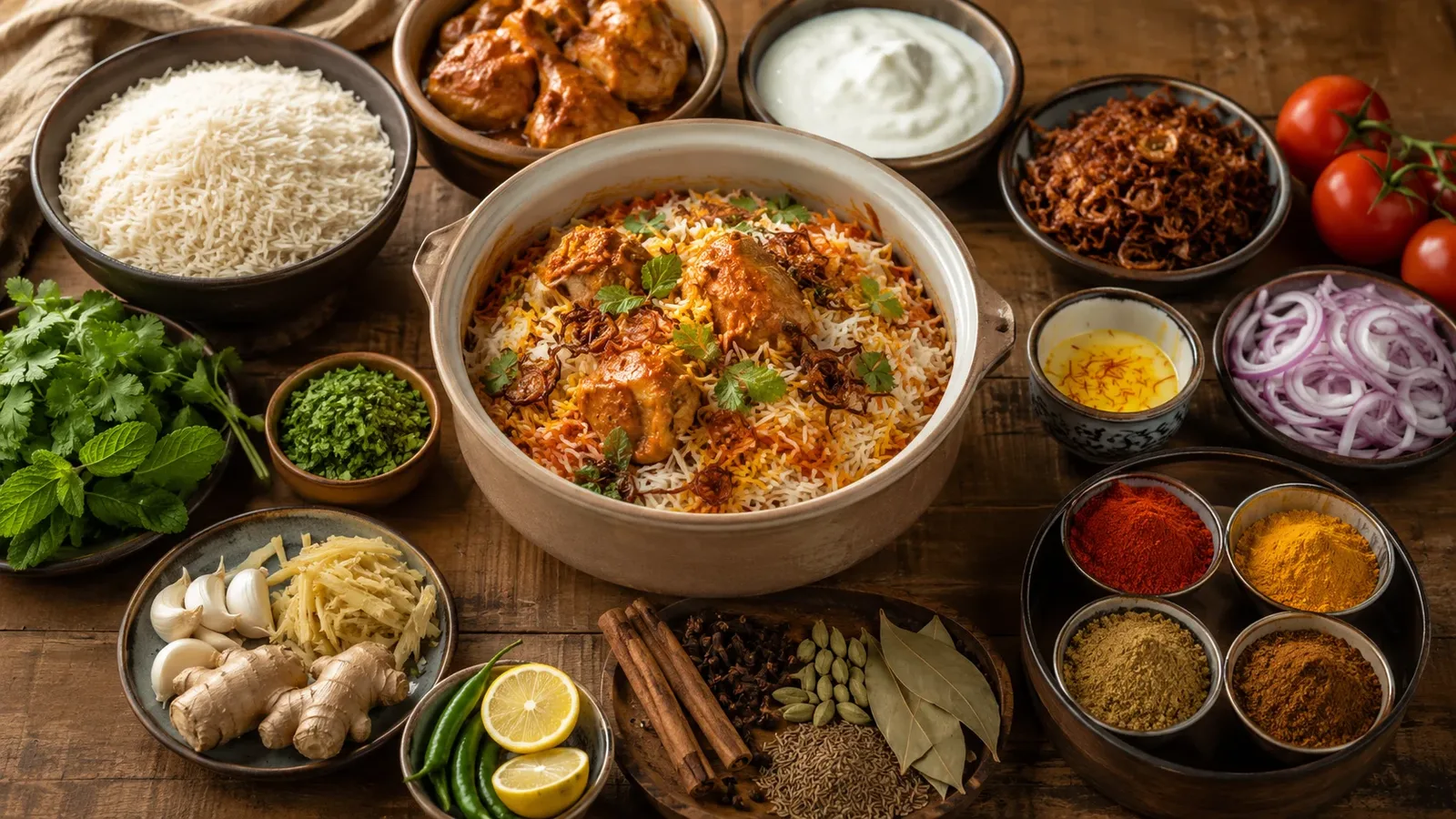 what is Biryani made of
Biryani uses 5 core parts: rice, protein, marinade, spices, and toppings. The ingredient answer to what is biryani gives you a clean map for shopping.
Most biryani ingredients appear in Desi kitchens. Examples include basmati rice, yogurt, ginger garlic paste, onions, tomatoes, green chilies, mint, coriander, and whole spices.
Strong biryani does not need random seasoning. The shopping answer to what is biryani starts with rice quality and ends with steam control.
Basmati Rice and Grain Texture
Basmati rice gives biryani long grains, fragrance, and a light bite. You need 2 cups (400 g) basmati rice for 4 servings.
Rinse the rice 3 times until the water looks clearer. Soak the rice for 30 minutes, so the grains cook evenly during boiling and steaming.
Parboil the rice until each grain reaches 70 percent doneness. A grain should break with slight resistance between your fingers.
Marinated Meat, Seafood, or Vegetables
The protein gives biryani body and richness. Common choices include chicken thighs, mutton shoulder, beef cubes, fish fillets, prawns, paneer, potatoes, and cauliflower.
For 4 servings, use 2 lb (900 g) chicken or 1.5 lb (680 g) mutton. You can also use 1 lb (450 g) paneer.
Yogurt marinade tenderizes meat and carries spice into every bite.
A balanced marinade includes yogurt, salt, red chili, turmeric, coriander, cumin, garam masala, lemon juice, and ginger garlic paste.
Spices, Herbs, and Fried Onions
Biryani spices create the aroma people remember first. Whole spices include cardamom, cloves, cinnamon, bay leaf, black pepper, and cumin seeds.
Ground spices add color and flavor. Use red chili, turmeric, coriander powder, cumin powder, and garam masala with care.
Fried onions add sweetness and depth. Mint leaves, fresh coriander, saffron milk, and lemon juice brighten the final layer.
Where Did Biryani Come From?
Biryani has debated roots, with Persian rice influence and South Asian development at the center. The history answer to what is biryani needs balance, not one claim.
Food historians connect biryani with Persian rice traditions, Mughal court kitchens, Muslim cooking styles, and regional South Asian kitchens.
The dish changed because cooks adapted rice, meat, spices, and local taste. For food culture, what is biryani also means migration, adaptation, and regional pride.
Persian Rice Influence
The word biryani links to Persian language roots connected with rice and frying. Persian pilaf traditions shaped rice cooking, meat pairing, and aromatic garnishing.
Persian-style rice culture valued fragrance, separate grains, and slow cooking. Those ideas still appear in dum biryani and layered biryani today.
South Asian Court and Regional Kitchens
South Asian cooks changed biryani with stronger spices, yogurt marinades, chilies, onions, tomatoes, and regional rice.
Mughal kitchens helped spread richer meat-and-rice dishes.
Regional kitchens then created named styles. Hyderabad, Lucknow, Kolkata, Malabar, Ambur, Sindh, and Karachi each gave biryani a local voice.
Pakistani Biryani Identity
Pakistani biryani stands out through bold spice, visible masala, fried onions, potatoes, and strong meat flavor.
Karachi biryani often tastes sharper than milder Lucknowi biryani.
The global rise of Pakistani food abroad gives Pakistani biryani a stronger identity. Clear naming helps readers see Pakistani cuisine beyond broad South Asian labels.
What Is Biryani Compared With Pulao and Curry?
Biryani differs from pulao and curry because biryani focuses on layers, steam, and separate rice grains. The comparison answer to what is biryani prevents common menu confusion.
Many people confuse biryani with pulao because both dishes use rice and meat. People also confuse biryani with curry because biryani uses masala.
The cooking method separates the dishes. That question, what is biryani, becomes clearer when you compare the cooking stages.
Biryani vs Pulao
Biryani uses layers and stronger seasoning. Pulao cooks rice and meat together in stock or broth, so the flavor spreads more evenly.
Pakistani pulao examples include yakhni pulao, beef pulao, chana pulao, and matar pulao. Biryani examples include Sindhi biryani, chicken biryani, and Bombay-style biryani.
Pulao tastes gentler. Biryani tastes sharper, richer, and more aromatic because masala and rice keep separate identities.
Biryani vs Curry
Biryani is not curry. Curry serves sauce with rice, naan, roti, or paratha. Biryani cooks rice and masala together in one pot.
A curry needs gravy. A biryani needs moist masala, fluffy rice, and steam. Too much gravy makes biryani heavy and wet.
What Is Biryani Supposed to Taste Like?
Biryani should taste aromatic, savory, warm, slightly tangy, and layered. The taste answer to what is biryani depends on rice texture, masala strength, and fresh herbs.
Good biryani gives you different flavors in one spoon. One bite carries rice, chicken, mint, fried onion, yogurt tang, and warm spice.
Another bite carries saffron, lemon, or chili heat. At the table, what is biryani means fragrance before flavor and texture before heat.
Aroma and Spice Balance
Aroma starts before the first bite. Cardamom, cloves, cinnamon, cumin, saffron, mint, and fried onions create the first signal.
Spice balance matters more than heat. A good pot tastes seasoned, not harsh. Salt, chili, yogurt, tomato, and lemon need clear balance.
Rice Texture and Layering
The rice should stay long, fluffy, and separate. Sticky rice signals overboiling, excess water, or rough mixing.
Layering gives biryani contrast. The top rice stays lighter. The lower rice absorbs more masala. The protein stays tender under steam.
Heat Level and Freshness
Biryani heat changes by region. Sindhi biryani, Karachi biryani, and Bombay-style biryani taste spicy. Lucknowi biryani and Malabar biryani taste gentler.
Fresh herbs protect the dish from heaviness. Mint, coriander, green chilies, lemon wedges, cucumber raita, and kachumber salad keep each plate balanced.
What Are the 7 Main Types of Biryani?
The 7 main biryani types include Pakistani, Hyderabadi, Lucknowi, Kolkata, Malabar, Ambur, and vegetarian biryani. The variety answer to what is biryani shows regional taste clearly.
- Pakistani biryani: Uses bold masala, potatoes in many Karachi styles, chicken, beef, mutton, mint, and fried onions.
- Hyderabadi biryani: Uses kacchi or pakki methods, marinated meat, basmati rice, saffron, and dum cooking.
- Lucknowi biryani: Uses gentler spices, fragrant rice, stock-based flavor, and the dum pukht method.
- Kolkata biryani: Uses potato, boiled egg, lighter spice, rose water, and tender meat in many versions.
- Malabar biryani: Uses short-grain rice, ghee, fried onions, cashews, raisins, chicken, mutton, fish, or prawns.
- Ambur biryani: Uses seeraga samba rice, curd-marinated meat, mint, coriander, and a more rustic spice style.
- Vegetarian biryani: Uses potatoes, paneer, cauliflower, carrots, peas, beans, mushrooms, or jackfruit.
These 7 types show why biryani cannot fit one narrow definition. Regional cooks protect local rice, local spice levels, and family habits.
For menu planning, what is biryani changes with region, rice, meat, and spice level.
How to Recognize Real Biryani
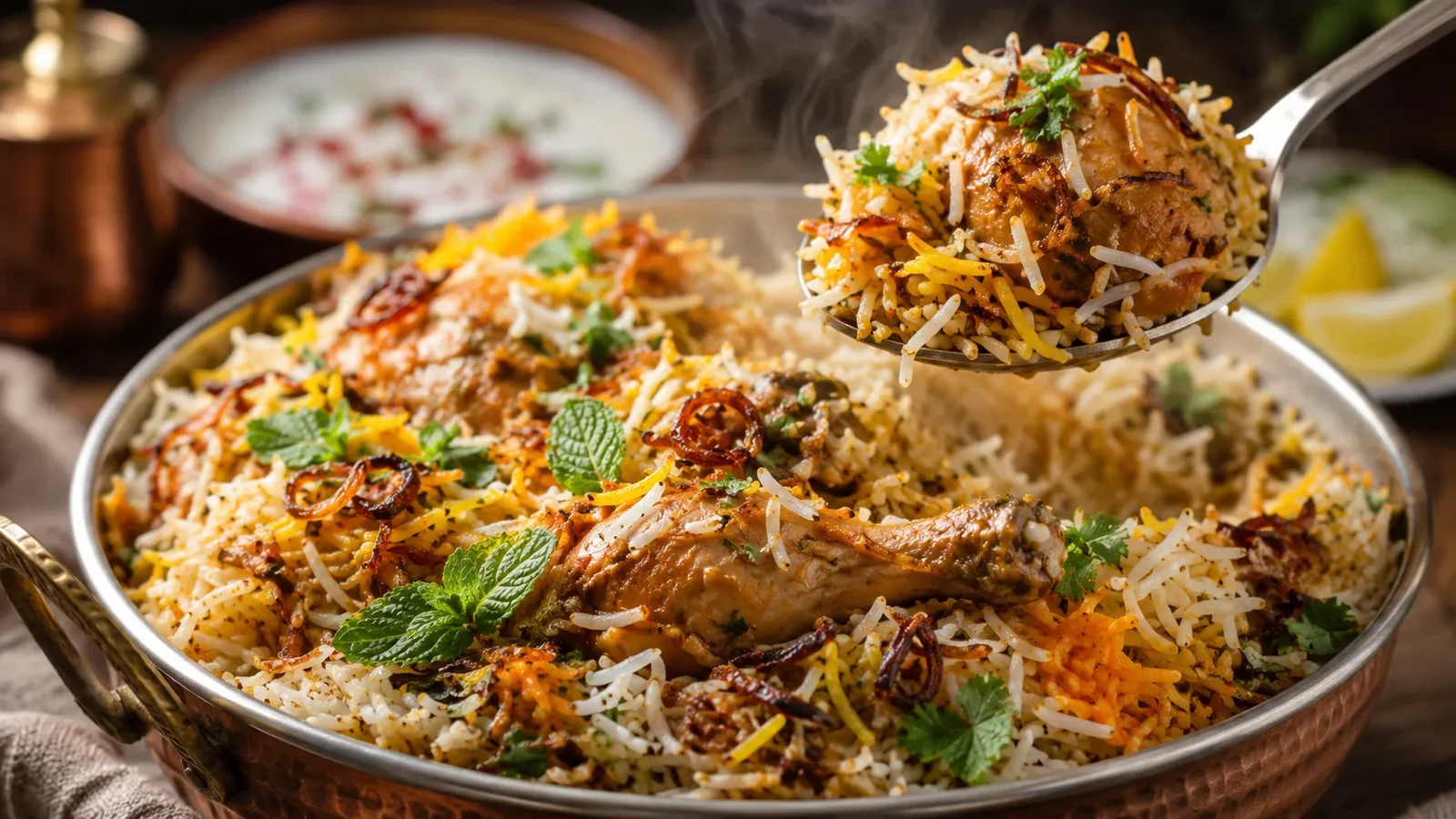 How to Recognize Real Biryani
To recognize real biryani, check rice separation, layering, aroma, and moisture. Real biryani tastes layered, not mixed into one soft rice mass.
On a plate, what is biryani should show separate grains and gentle color changes.
Check the Rice
Look for long, separate grains. A serving spoon should lift rice without pulling sticky clumps from the pot.
Check grain length after steaming. Good basmati rice expands close to 0.5 inch (1.3 cm) and keeps a slim shape.
Check the Layers
Look for visible color variation. A proper pot shows white rice, golden saffron rice, masala-stained rice, herbs, and fried onions.
A flat orange color signals overmixing or excess food color. Natural variation shows controlled layering and gentle serving.
Check the Dum Aroma
Smell the pot after resting. Dum cooking should release rice fragrance, spice warmth, onion sweetness, and herb freshness.
Use a heavy pot with a tight lid. A 6-quart (5.7 L) Dutch oven works for 4 to 6 servings.
How to Make Biryani at Home
To make biryani at home, cook the masala, parboil the rice, layer the pot, and steam on low heat. A beginner can finish chicken biryani in 90 minutes.
The method matters more than expensive ingredients. You need measured salt, good rice, controlled heat, and patient resting time.
In practice, what is biryani becomes a sequence, not a single mixing step.
| Task | Timing | Method | Difficulty |
|---|---|---|---|
| Rice rinse and soak | 30 minutes | Rinse 3 times, then soak 2 cups (400 g) rice | Easy |
| Masala cooking | 25 to 35 minutes | Cook 2 lb (900 g) chicken with yogurt, tomatoes, onions, and spices | Medium |
| Rice parboiling | 6 to 8 minutes | Boil rice until 70 percent done, then drain | Medium |
| Layering | 8 minutes | Stack masala, rice, herbs, fried onions, and saffron milk | Easy |
| Dum steaming | 20 to 25 minutes | Seal pot and cook on very low heat | Medium |
| Resting | 10 minutes | Keep lid closed before serving | Easy |
Stage 1: Marinate the Protein
Marinate the protein for flavor and tenderness. Use yogurt, salt, chili, turmeric, coriander, cumin, garam masala, lemon, and ginger garlic paste.
For chicken, marinate 30 minutes. For mutton or beef, marinate 4 hours in the refrigerator at 40°F (4°C).
Stage 2: Parboil the Rice
Boil the rice in plenty of salted water. Add bay leaf, cinnamon, cloves, cardamom, and cumin seeds to the water.
Drain the rice before the center fully softens. The rice finishes during dum, so fully cooked rice becomes mushy.
Stage 3: Layer and Steam
Layer masala at the bottom, then rice, mint, coriander, fried onions, lemon juice, and saffron milk. Repeat the layers once.
Seal the pot with foil or dough. Cook on very low heat for 20 to 25 minutes, then rest for 10 minutes.
What Biryani Mistakes Should You Avoid?
Avoid 3 mistakes: overboiled rice, wet masala, and rough mixing. Mistakes show what is biryani by showing what biryani should never become.
Overboiled Rice
Overboiled rice ruins structure. Stop boiling when the grain feels firm in the center and soft on the edges.
Use a wide pot with at least 4 quarts (3.8 L) water for 2 cups (400 g) rice. Crowded rice breaks faster.
Wet Masala
Wet masala turns biryani into curry rice. Cook chicken masala until oil separates and the base looks thick.
Keep the masala moist, not soupy. A spoon should leave a visible trail across the bottom of the pot.
Rough Mixing
Rough mixing breaks rice and hides layers. Serve biryani from the side with a flat spoon.
Lift rice and masala together. Do not stir the full pot before serving guests.
What Should You Serve With Biryani?
Serve biryani with cooling, sour, crunchy, and grilled sides. The serving answer to what is biryani helps you build a balanced plate.
For serving, what is biryani means a full plate that still needs cooling sides.
- Add raita: Use cucumber raita, mint raita, boondi raita, or onion raita.
- Add salad: Use kachumber salad, onion rings, cucumber slices, and lemon wedges.
- Add gravy: Use mirchi ka salan, baghare baingan, shorba, or light tomato chutney.
- Add protein sides: Use seekh kebab, chicken tikka, chapli kebab, or fried fish.
- Add drinks: Use mango lassi, mint lemonade, salted lassi, or masala chai.
For flavor education, LaGrub explains Desi cooking differences in a helpful guide. That guide helps you see why Desi food uses layered seasoning.
How to Store and Reheat Biryani Safely
To store biryani safely, cool biryani quickly, pack biryani in shallow containers, and refrigerate biryani within 2 hours. Eat refrigerated biryani within 3 days.
Use airtight containers that hold 2 cups (480 ml) per portion. Smaller portions cool faster and reheat more evenly.
To reheat biryani, sprinkle 1 tablespoon (15 ml) water over 1 serving. Cover the serving and heat until the center reaches 165°F (74°C).
You can freeze biryani for 2 months. Pack portions in freezer-safe boxes and label each box with the cooking date.
Do not reheat biryani again and again. Repeated heating dries rice, weakens flavor, and raises food safety risk.
FAQs About Biryani
Is biryani Indian or Pakistani?
Both. Biryani belongs to South Asian cuisine, and India, Pakistan, Bangladesh, and diaspora communities cook many regional versions.
Is biryani spicy?
Yes, many versions taste spicy, but spice level changes by region. Pakistani biryani, Sindhi biryani, and Karachi biryani usually taste hotter.
Is biryani healthy?
Yes, biryani gives protein, rice, herbs, and spices, but portion size matters. Use lean meat, less oil, and more vegetables for lighter plates.
Is biryani the same as pulao?
No. Biryani uses layers and stronger masala. Pulao cooks rice and meat together in stock for a gentler flavor.
Can beginners cook biryani at home?
Yes. Beginners can cook chicken biryani by measuring ingredients, parboiling rice to 70 percent, and steaming on low heat.
Final Takeaway: What Is Biryani for Modern Home Cooks?
Biryani is a layered rice meal that carries history, celebration, and home cooking skill in one pot. The final answer to what is biryani stays simple: rice, masala, protein, herbs, and steam create the dish.
You can start with chicken biryani because chicken cooks faster than mutton, beef, and lamb. Use basmati rice, yogurt marinade, fried onions, mint, coriander, and controlled dum heat.
LaGrub helps you cook Desi food with clearer steps, real flavor, and practical guidance. After one successful pot, what is biryani becomes easier to explain and repeat.
Start with the Chicken Biryani Recipe, then build your own table memory around a pot of fragrant rice.

Sahar Syed
Sahar Syed writes for LaGrub on cooking, recipes, and mindful culinary living.
Get a desi recipe worth cooking, every week
One tested recipe a week. Nothing else, and unsubscribe any time.


