

Mediterranean food is a broad cooking style shaped by countries around the Mediterranean Sea. It is known for olive oil, vegetables, legumes, grains, seafood, herbs, yogurt, cheese, breads, and simple meals built around fresh ingredients.
Mediterranean food is the cuisine of countries around the Mediterranean Sea. It includes food from Greece, Italy, Spain, Turkey, Lebanon, Morocco, Tunisia, Egypt, southern France, Cyprus, and nearby coastal regions.
What is Mediterranean food in daily life? It is food built with olive oil, vegetables, legumes, grains, seafood, herbs, yogurt, cheese, breads, and bright sauces.
Mediterranean cuisine does not belong to 1 country. The Mediterranean Sea connects 3 continents: Europe, Asia, and Africa.
That geography gives the food many voices. A Greek salad, Turkish mezze plate, Moroccan tagine, Lebanese tabbouleh, Spanish paella, and Italian minestrone all fit the wider Mediterranean table.
What Is Mediterranean Food in Simple Words?
Mediterranean food means the everyday and festive cooking of Mediterranean-bordering cultures. The cuisine uses fresh produce, grains, legumes, olive oil, seafood, herbs, and simple cooking methods.
People often ask what is Mediterranean food because the phrase appears on restaurant menus and diet guides. The answer changes by region, dish, and purpose.
Mediterranean food can mean grilled fish with lemon in Greece, pasta with tomatoes in Italy, chickpea stew in Tunisia, or lamb kebabs in Turkey.
Mediterranean food also includes snacks and spreads. Examples include hummus, baba ganoush, tzatziki, muhammara, olives, feta, labneh, and warm flatbread.
The best simple definition uses 4 ideas: coastal geography, seasonal ingredients, shared pantry staples, and strong regional identity.
For more meal inspiration beyond 1 region, LaGrub's global recipe collection helps readers compare cooking styles across cultures.
Which Countries Shape Mediterranean Food?
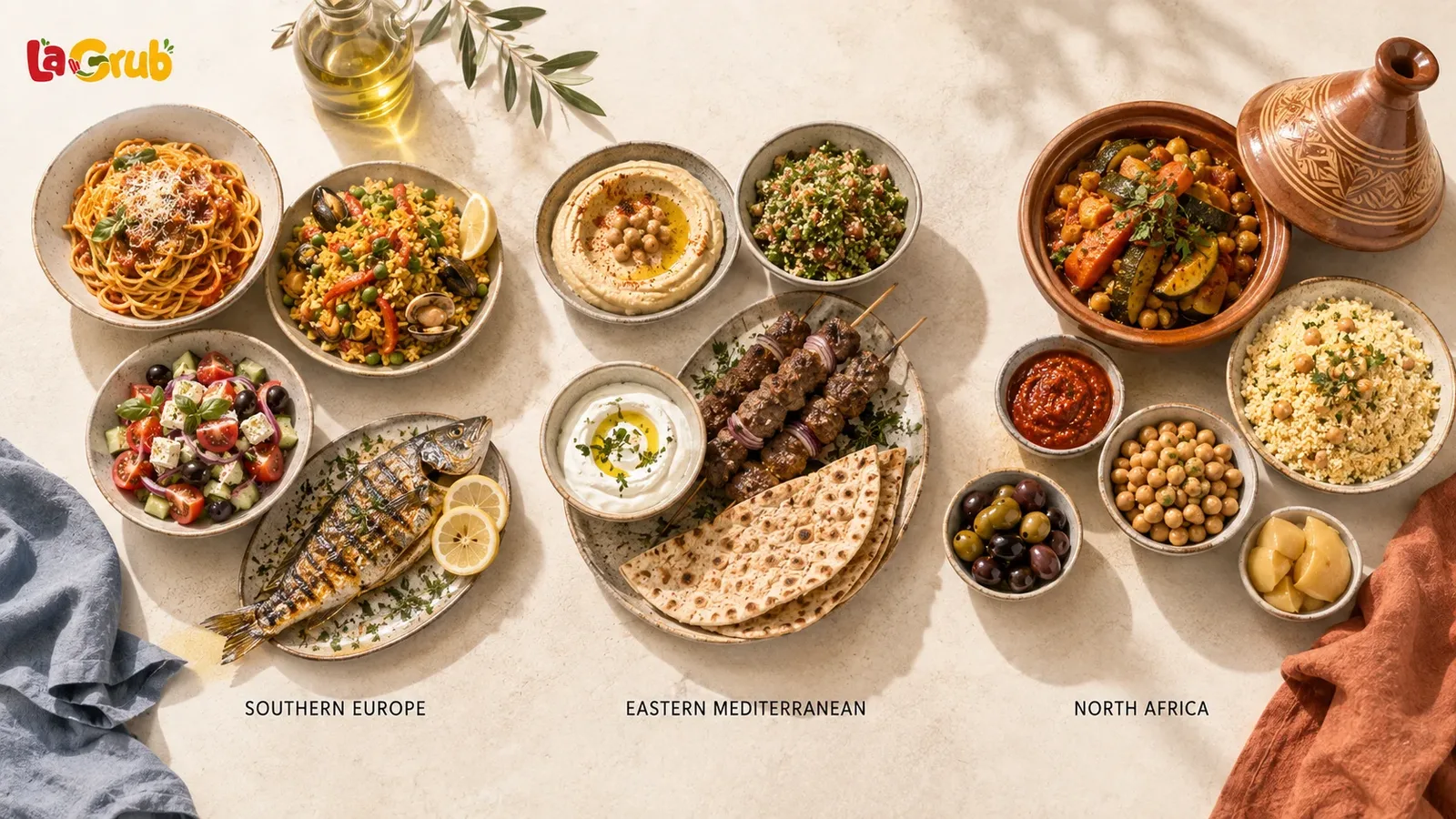
Mediterranean food comes from countries around the Mediterranean Sea, not only Greece and Italy. The region includes Southern Europe, the Eastern Mediterranean, and North Africa.
This global view matters because many readers see Mediterranean food through 3 famous dishes: Greek salad, pasta, and hummus.
Those dishes matter, but the region offers many more foods. Examples include couscous, tagine, shakshuka, paella, dolma, menemen, seafood stew, and lentil soup.
Southern European Food Examples
Southern European Mediterranean food often uses olive oil, tomatoes, herbs, seafood, pasta, rice, and bread. Italy, Spain, Greece, and southern France lead this group.
Italian examples include minestrone, caponata, pasta al pomodoro, grilled branzino, ribollita, and focaccia.
Spanish examples include gazpacho, paella, pan con tomate, tortilla espanola, patatas bravas, and grilled sardines.
Greek examples include horiatiki salad, moussaka, souvlaki, spanakopita, gigantes beans, and lemon potatoes.
Eastern Mediterranean Food Examples
Eastern Mediterranean food often uses legumes, yogurt, grilled meats, herbs, pickles, sesame, and flatbreads. Turkey, Lebanon, Syria, Palestine, Israel, Cyprus, and nearby areas shape this table.
Turkish examples include menemen, simit, kisir, imam bayildi, mercimek corbasi, kofte, and baklava.
Levantine examples include hummus, falafel, tabbouleh, fattoush, shawarma, kibbeh, labneh, and manakish.
LaGrub's Turkish cookbook guide gives readers a deeper look at one important Mediterranean food tradition.
North African Food Examples
what is mediterranean food
North African Mediterranean food often uses couscous, preserved lemon, olives, harissa, cumin, coriander, lamb, fish, and chickpeas. Morocco, Tunisia, Algeria, Libya, and Egypt shape this side.
Moroccan examples include chicken tagine, zaalouk, harira, couscous with vegetables, and grilled sardines.
Tunisian examples include brik, shakshuka, lablabi, harissa-spiced fish, and couscous with lamb.
Egyptian examples include ful medames, koshari, molokhia, baladi bread, lentil soup, and grilled fish.
What Ingredients Define Mediterranean Food?
Mediterranean food depends on vegetables, legumes, grains, olive oil, herbs, seafood, dairy, and bread. These ingredients appear in different forms across the region.
Common ingredients do not make every dish taste the same. Greek oregano, Tunisian harissa, Turkish yogurt, Spanish saffron, and Moroccan preserved lemon create different flavors.
That difference explains why the question what is Mediterranean food needs more than 1 ingredient list.
Plant Foods and Legumes
Vegetables and legumes build the center of many Mediterranean meals. Common vegetables include tomatoes, cucumbers, eggplant, zucchini, onions, peppers, spinach, artichokes, and fennel.
Common legumes include chickpeas, lentils, white beans, fava beans, black-eyed peas, and split peas.
Grains and starches include bulgur, couscous, rice, pasta, barley, farro, potatoes, and country bread.
Olive Oil, Herbs, and Acidity
Olive oil, herbs, and acidity give Mediterranean food its recognizable freshness. Extra virgin olive oil appears in salads, stews, dips, grilled foods, and vegetable dishes.
Herbs include parsley, mint, basil, oregano, rosemary, dill, thyme, and cilantro in some regional dishes.
Acidic ingredients include lemon juice, vinegar, tomatoes, sumac, yogurt, pickles, capers, and preserved lemons.
Fish, Dairy, and Breads
Fish, dairy, and bread complete many Mediterranean tables. Seafood examples include sardines, sea bass, tuna, shrimp, calamari, mussels, and anchovies.
Dairy examples include feta, halloumi, labneh, ricotta, yogurt, pecorino, and manchego.
Breads include pita, focaccia, simit, lavash, khobz, pan con tomate bread, and crusty country loaves.
What Is Mediterranean Food Compared With the Mediterranean Diet?
Mediterranean food is a cuisine family, while the Mediterranean diet is a health-focused eating pattern. This difference prevents a common mistake.
What is Mediterranean food on a menu? The phrase can include rich lamb, fried seafood, sweet pastries, creamy dips, and festive dishes.
What is Mediterranean food in diet advice? The phrase usually points to vegetables, legumes, whole grains, fish, olive oil, nuts, fruit, and moderate dairy.
A fried dessert can belong to Mediterranean cuisine without serving as a daily Mediterranean diet food.
A creamy pasta can come from a Mediterranean country without matching every modern diet guideline.
The Mediterranean diet borrows from traditional regional patterns, but the diet version selects a narrower daily pattern.
That distinction helps global readers cook with culture and still make practical choices.
What Are Popular Mediterranean Dishes?
Popular Mediterranean dishes include salads, dips, stews, grilled proteins, rice dishes, pastas, breads, and desserts. These foods show the region's range.
Serve dips: hummus, baba ganoush, tzatziki, labneh, muhammara, and tapenade.
Serve salads: Greek salad, tabbouleh, fattoush, caprese, panzanella, and zaalouk.
Serve mains: paella, tagine, moussaka, souvlaki, shakshuka, branzino, and minestrone.
Serve breads: pita, focaccia, simit, lavash, khobz, and country loaf.
Serve sweets: baklava, basbousa, cannoli, gelato, orange cake, and rice pudding.
Each dish answers what is Mediterranean food from a different angle. A mezze table shows sharing, while a fish dinner shows coastal simplicity.
A bean stew shows pantry cooking. A rice dish shows celebration cooking. A yogurt sauce shows freshness and balance.
Is Middle Eastern Food Part of Mediterranean Food?
Yes, some Middle Eastern food belongs within Mediterranean food when the culture connects to the Mediterranean region. Lebanon, Syria, Palestine, Israel, and parts of Turkey sit within that wider food map.
Middle Eastern Mediterranean dishes include hummus, falafel, tabbouleh, fattoush, labneh, shawarma, kibbeh, manakish, and stuffed grape leaves.
Not every Middle Eastern dish counts as Mediterranean food. The Middle East includes inland cuisines, Gulf cuisines, Persian food, and other traditions beyond the Mediterranean Sea.
The same rule applies to Europe and North Africa. Not every Italian, Spanish, Egyptian, or Moroccan dish fits the everyday Mediterranean diet pattern.
Readers should use geography and ingredient patterns together. That approach avoids narrow labels and respects regional identity.
For another way to compare food cultures, LaGrub's guide to cooking style differences shows how techniques shape flavor.
How to Build a Mediterranean Plate at Home
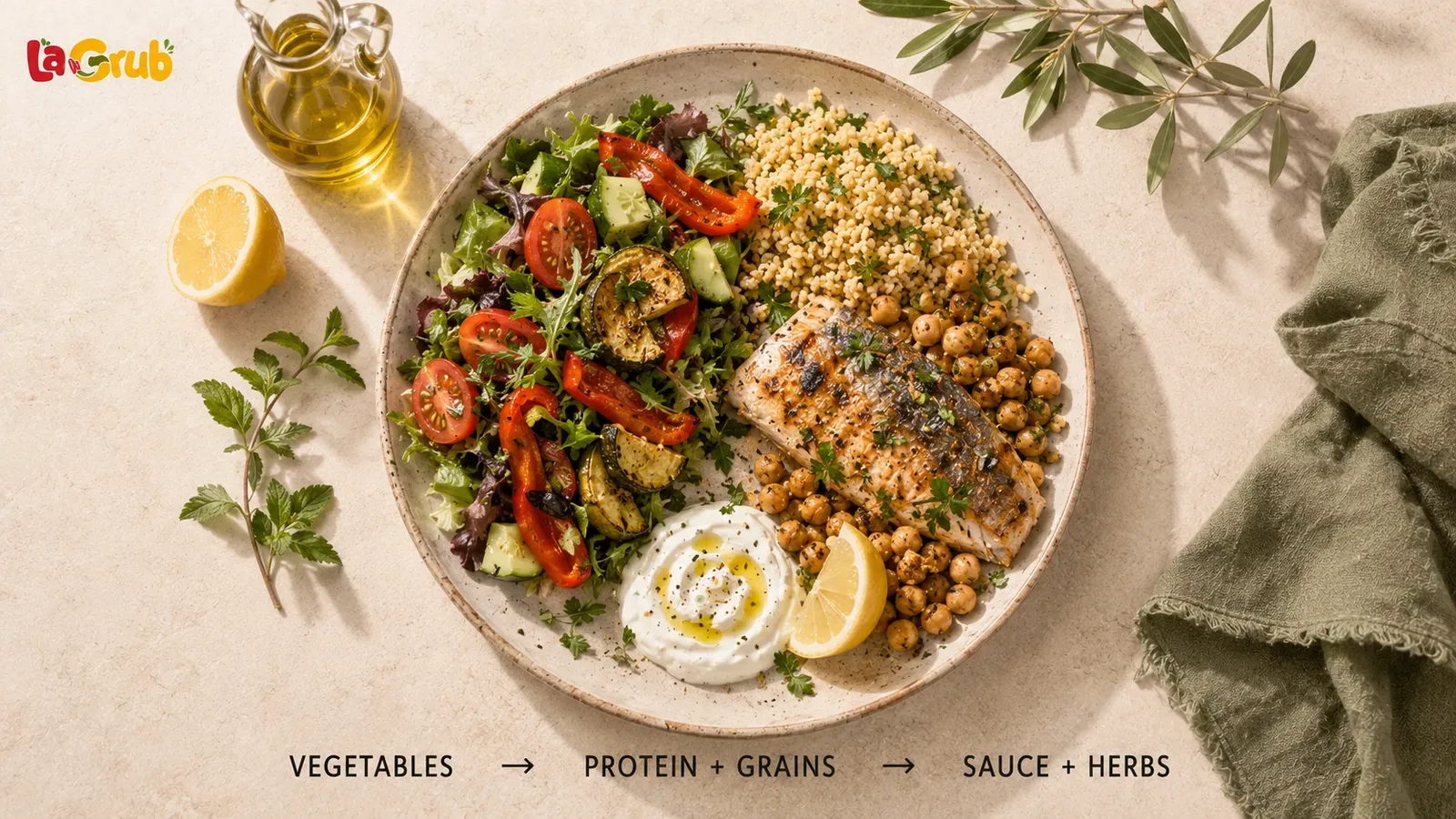
To build a Mediterranean plate at home, start with vegetables, add protein and grains, then finish with sauce, herbs, and acidity. This method works for lunch, dinner, and meal prep.
A balanced plate can use 2 cups (300 g) vegetables, 1 cup (180 g) cooked grains, and 4 oz (115 g) protein.
Add 1 tablespoon (15 ml) olive oil, 2 tablespoons (30 ml) yogurt sauce, and 1 tablespoon (15 ml) lemon juice.
| Task | Timing | Method | Difficulty |
|---|---|---|---|
| Choose vegetables | 5 minutes | Use tomatoes, cucumbers, eggplant, zucchini, peppers, or greens | Easy |
| Add starch | 15 to 25 minutes | Cook rice, couscous, bulgur, pasta, potatoes, or bread | Easy |
| Add protein | 10 to 20 minutes | Use chickpeas, lentils, fish, chicken, eggs, halloumi, or beans | Medium |
| Add sauce | 5 minutes | Mix yogurt, tahini, olive oil, lemon, garlic, or herbs | Easy |
| Finish plate | 2 minutes | Add herbs, olives, nuts, seeds, or cheese | Easy |
Start With Vegetables
Vegetables set the color, texture, and freshness of a Mediterranean plate. Use raw, grilled, roasted, or stewed vegetables.
Raw examples include tomatoes, cucumbers, onions, lettuce, radishes, and peppers.
Cooked examples include eggplant, zucchini, spinach, artichokes, potatoes, and carrots.
Add Protein and Grains
Protein and grains make the plate filling. Choose chickpeas, lentils, beans, eggs, fish, chicken, lamb, halloumi, or yogurt.
Choose grains and starches like bulgur, couscous, rice, pasta, barley, potatoes, pita, or focaccia.
For a quick meal, combine chickpeas, cucumber, tomatoes, parsley, olive oil, lemon, and toasted pita.
Finish With Sauce and Herbs
what is mediterranean food
Sauce and herbs give Mediterranean food its final lift. Use lemon, olive oil, tahini, yogurt, garlic, vinegar, or tomato sauce.
Add herbs like mint, parsley, oregano, dill, basil, rosemary, and thyme.
Add texture with almonds, pine nuts, sesame seeds, pistachios, olives, capers, or crumbled feta.
What Should Beginners Buy First for Mediterranean Cooking?
Beginners should buy 12 Mediterranean staples first. The first pantry should cover oil, acid, grains, legumes, herbs, vegetables, and easy proteins.
Buy extra virgin olive oil for salads, dips, and finishing dishes.
Buy lemons for dressings, fish, soups, and grilled vegetables.
Buy chickpeas for hummus, salads, soups, and stews.
Buy lentils for soups, warm salads, and simple one-pot meals.
Buy tomatoes for sauces, salads, stews, and roasted dishes.
Buy cucumbers for salads, yogurt sauce, mezze, and sandwiches.
Buy garlic for sauces, stews, dips, and marinades.
Buy parsley and mint for tabbouleh, salads, sauces, and garnishes.
Buy oregano and cumin for Greek, Turkish, Levantine, and North African dishes.
Buy yogurt for sauces, breakfasts, marinades, and dips.
Buy feta or halloumi for salads, bowls, wraps, and grilled plates.
Buy pita, rice, pasta, couscous, or bulgur for easy meal bases.
These 12 staples create many meals. Examples include chickpea salad, lentil soup, yogurt chicken, tomato pasta, hummus plate, and grilled vegetable bowls.
Choose 4 staples first when money feels tight: olive oil, lemons, chickpeas, and tomatoes. Add herbs and yogurt during the next grocery trip.
What Does Mediterranean Food Look Like on a Plate?
A Mediterranean plate usually looks colorful, fresh, and varied. You often see vegetables, grains, legumes, protein, sauce, herbs, and olive oil together.
A simple lunch plate can include 1 cup (180 g) couscous, 1 cup (170 g) chickpeas, and 2 cups (300 g) chopped vegetables.
Add 3 oz (85 g) grilled fish, 2 tablespoons (30 ml) yogurt sauce, and 1 tablespoon (15 ml) olive oil.
A family-style table can include 6 dishes: salad, dip, bread, grilled protein, cooked vegetables, and fruit.
Named examples include tabbouleh, hummus, pita, chicken skewers, roasted eggplant, and orange slices.
What is Mediterranean food at a restaurant? The plate often arrives as mezze, salad bowls, grilled seafood, wraps, rice plates, or stews.
Mezze examples include olives, feta, hummus, labneh, falafel, dolma, and grilled halloumi.
Warm meal examples include seafood pasta, lamb tagine, lentil soup, chicken souvlaki, tomato rice, and stuffed peppers.
The visual clue is balance. The best Mediterranean plates use freshness, acidity, herbs, and texture without hiding the main ingredient.
For weeknight cooking, keep the plate simple. Use 1 pan, 1 bowl, and 1 sauce. Examples include tomato chickpea stew, tuna white bean salad, lemon chicken rice, and roasted vegetable pita.
For guests, build a shared table instead of 1 plated dish. Serve 3 dips, 2 salads, 1 bread basket, 1 protein, and 1 fruit dessert.
Is Mediterranean Food Healthy?
Mediterranean food can support balanced eating when meals emphasize plants, legumes, whole grains, olive oil, fish, nuts, and simple cooking. The health value depends on the dish.
What is Mediterranean food from a health viewpoint? It is often a plant-forward pattern with olive oil, beans, vegetables, fruit, grains, fish, and yogurt.
That pattern differs from a platter heavy with fried foods, sweets, creamy sauces, and large meat portions.
Health organizations often discuss the Mediterranean diet because the pattern has strong research support for heart-friendly eating.
Readers with medical needs should follow clinician guidance. Food articles cannot replace personal medical care.
For daily cooking, use Mediterranean ideas as tools. Add more vegetables, beans, fish, herbs, and olive oil when those foods fit your budget.
FAQs About Mediterranean Food
Is Mediterranean food only Greek food?
No. Mediterranean food includes Greek food plus Italian, Spanish, Turkish, Levantine, North African, Cypriot, and southern French traditions.
Is Mediterranean food the same as Middle Eastern food?
No. Some Middle Eastern dishes fit Mediterranean food, but Middle Eastern cuisine covers more regions than the Mediterranean coast.
Is Mediterranean food always healthy?
No. Many Mediterranean meals are balanced, but rich desserts, fried foods, and large meat dishes still need moderation.
Can beginners cook Mediterranean food at home?
Yes. Beginners can start with hummus, Greek salad, lentil soup, tomato pasta, grilled fish, and chickpea bowls.
Does Mediterranean food include meat?
Yes. Mediterranean food includes meat dishes such as lamb kebabs, chicken souvlaki, kofta, meat tagine, and grilled sausages.
Final Takeaway: What Is Mediterranean Food for Global Home Cooks?
What is Mediterranean food for global home cooks? Mediterranean food is a flexible cuisine family built around fresh ingredients, regional identity, and shared meals.
You can start with olive oil, chickpeas, tomatoes, herbs, yogurt, grains, seafood, vegetables, and simple sauces.
You do not need a perfect regional pantry. You need fresh ingredients, clear flavor balance, and respect for each dish's origin.
Explore LaGrub's global recipe collection to keep building meals with confidence, flavor, and curiosity.

Sahar Syed
Sahar Syed writes for LaGrub on practical home cooking, food culture, and clear recipe guidance for global readers.
Get a desi recipe worth cooking, every week
One tested recipe a week. Nothing else, and unsubscribe any time.


