

Wondering why is Pakistani food so oily? Oil helps cook spices, brown onions, develop masala, and support techniques such as bhunao. As moisture reduces, the oil can become visible on top. However, everyday Pakistani home cooking is often much lighter than the rich curries served at restaurants, weddings, and special gatherings
If you are wondering why is Pakistani food so oily, the answer is more complex than simply using too much cooking oil. Fat plays a role in frying spices, cooking masala, browning ingredients, and developing flavour. However, everyday Pakistani home food is often far less oily than restaurant, wedding, or celebration dishes.
Why Is Pakistani Food So Oily?
Look at a restaurant karahi, nihari, or qorma and you may see a shiny layer of oil sitting on top. For someone new to Pakistani cuisine, it can seem as if oil has simply been poured over the finished dish.
That is not always what happened.
Many Pakistani curries begin by cooking onions, ginger, garlic, tomatoes, spices, or other ingredients in oil or ghee. As these ingredients cook, their moisture reduces. Eventually, some of the cooking fat becomes visible again.
This is why you may see oil around the edges of a cooked masala.
However, there is an important difference between oil separation and genuinely excessive oil.
A cook may need enough fat to fry the masala effectively, but that does not mean every curry needs a deep layer floating on top.
Restaurant food can also be richer than everyday home cooking. Special meals, wedding dishes, and dawat food may use more oil or ghee than a simple weekday daal or sabzi.
So, asking why is Pakistani food so oily really requires us to look at cooking technique, the type of dish, and where the food was prepared.
Why Is Oil Important in Pakistani Cooking?
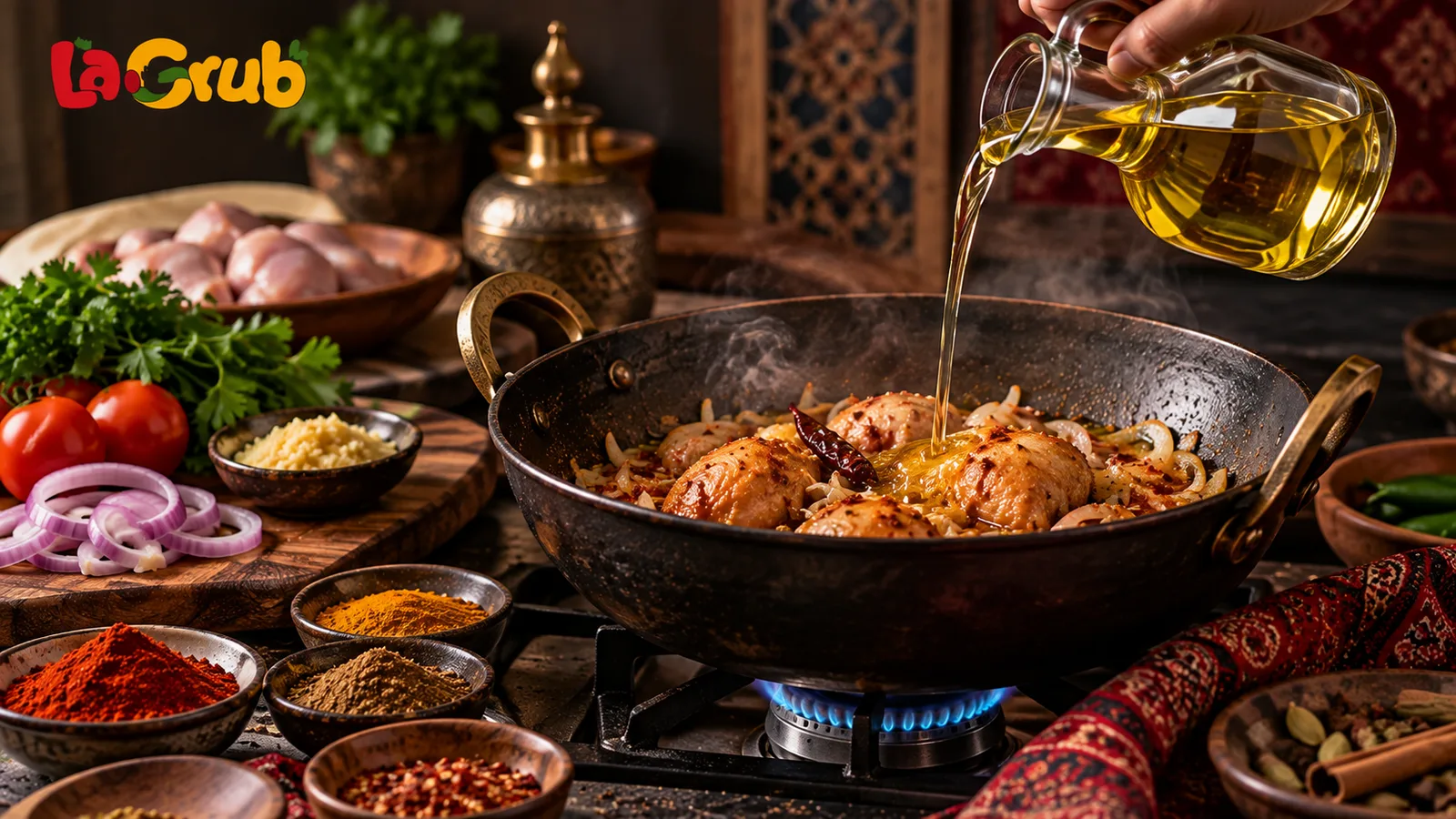
Cooking oil does more than make food look glossy.
It provides the cooking medium that helps onions brown and aromatics cook. It also helps spices develop their aroma and allows ingredients to fry rather than simply boil in their own moisture.
Think about a basic Pakistani masala.
Onions may first be cooked until soft or golden. Ginger and garlic follow. Tomatoes and ground spices are then added and cooked down.
Without enough cooking fat, these ingredients can stick to the pan or burn before the masala reaches the desired stage.
However, “enough” does not mean unlimited.
The right amount depends on the dish, quantity, pan, heat level, ingredients, and cooking method.
That is why two people can cook the same Pakistani curry with different amounts of oil and still produce good results.
What Is Bhunao and Why Does It Need Oil?
To understand oily-looking Pakistani food, it helps to understand bhunao.
Bhunao, sometimes described as bhunna or bhunai, is an important cooking technique in Desi kitchens. In simple terms, it means cooking a mixture down while stirring and frying it so the flavours become more concentrated.
This often happens when preparing a curry base.
What Happens to Masala During Bhunao?
Imagine onions, tomatoes, ginger, garlic, spices, and oil in a pan.
At first, the mixture contains plenty of moisture. Tomatoes release water, onions soften, and steam rises from the pan.
As cooking continues, that water reduces.
The mixture becomes thicker and more concentrated. The raw smell of ginger, garlic, tomatoes, and ground spices begins to change.
At this point, regular stirring becomes important because the masala can begin sticking to the bottom.
The goal is not to burn it. Instead, you are developing a deeper cooked flavour.
Why Does the Oil Separate?
When a masala contains plenty of water, the oil can appear mixed throughout the sauce.
As the water cooks away, the mixture changes.
Eventually, oil may become visible around the sides of the pan or in small patches on top. Pakistani cooks often use this visual change as one clue that the masala has cooked down.
That does not mean you need a huge pool of fat.
A small amount of visible separation can happen without the finished curry being excessively greasy.
This distinction is important when discussing oil in Pakistani food.
Why Does Oil Float on Top of Pakistani Curry?
Seeing oil on top of curry can be confusing because we often expect sauces to stay completely mixed.
Pakistani curries are different from emulsified sauces that are designed to hold fat and water together.
As the dish cooks, moisture evaporates and the ingredients change texture. Fat may separate from the thicker masala and become visible on the surface.
Meat can contribute additional fat as well.
A beef or mutton curry may therefore contain both the cooking oil added at the beginning and fat rendered naturally from the meat.
Some dishes show this more clearly than others.
A rich nihari, qorma, or meat curry can develop a noticeable shine. A simple daal or vegetable dish may look completely different.
Visible oil is therefore partly a result of how the dish is cooked, but a thick layer can also simply mean that more fat was used than you personally prefer.
Does Oil Help Pakistani Spices Taste Better?
Oil has an important relationship with spices and aromatics.
Heating cumin, coriander, chilli, turmeric, black pepper, cardamom, cloves, cinnamon, or other seasonings in a fat-based cooking environment can help build aroma and distribute flavour through the dish.
Ginger, garlic, onions, and chillies also behave differently when fried compared with being boiled in water.
That does not mean more oil equals more flavour.
The quality of a Pakistani curry depends on much more than the amount of fat.
Good flavour also comes from:
Browning onions correctly and cooking ginger and garlic without burning them
Allowing tomatoes and masala to cook properly instead of rushing the process
Balancing salt, chilli, whole spices, ground spices, acidity, herbs, and fresh garnishes
Giving meat, lentils, or vegetables enough time to absorb and develop flavour
Using techniques such as tarka, grilling, slow cooking, and bhunao properly
Adding another half cup of oil cannot fix poorly cooked onions or raw-tasting masala.
Technique matters more.
Why Is Pakistani Restaurant Food So Oily?
Restaurant food is one of the main reasons people ask why is Pakistani food so oily.
A restaurant curry may have far more visible oil than the same dish prepared at home.
There can be several reasons for this.
Restaurants often want food to taste rich and immediately satisfying. Fat can contribute richness, carry flavour, and create the glossy appearance that some diners associate with restaurant-style curry.
Restaurants also cook larger quantities than most home cooks.
A kitchen preparing a large batch of curry needs to manage sticking, heat, holding time, and consistency. Recipes and methods designed for commercial service can therefore look different from a small family batch.
Customer expectations matter too.
Some diners associate a glossy qorma, nihari, or karahi with indulgence and restaurant quality. As a result, richer preparation can become part of the expected style.
However, not every Pakistani restaurant cooks this way.
The amount of oil can vary enormously between restaurants, chefs, and dishes.
Pakistani Restaurant Food vs Home Cooking
One of the biggest mistakes is assuming that restaurant food represents what Pakistani families eat every day.
It often does not.
A home cook preparing daal on a weekday may use a modest amount of oil for the tarka. Sabzi can be cooked with controlled fat. Chicken salan can also be made lighter than many restaurant versions.
Meals such as khichdi, daal chawal, vegetables with roti, chana, and simple rice dishes do not need to arrive with a layer of oil floating on top.
Home cooks also adjust recipes according to family preferences.
One household may enjoy a richer curry. Another may deliberately use less oil.
Therefore, Pakistani home cooking can be much lighter than someone might expect after eating only takeaway food.
If you want to explore how Pakistani and Desi dishes are actually prepared at home, LaGrub's recipe collection is a useful place to explore different cooking styles beyond restaurant curries.
Is All Pakistani Food Oily?
No.
Pakistani cuisine includes a huge range of dishes, and their fat content varies greatly.
Some foods are naturally richer because of how they are prepared. Fried snacks obviously use more oil than steamed or boiled foods. Qorma may be richer than daal. Restaurant karahi may contain more visible fat than home-cooked sabzi.
Grilled foods create another experience entirely.
Seekh kebab, tikka, and sajji rely heavily on meat, seasoning, heat, browning, and smoke rather than being served in an oily gravy.
Then there are lentils, chickpeas, vegetables, rice dishes, roti, yoghurt-based sides, salads, and other everyday foods.
Even within one category, recipes vary.
There is no fixed amount of oil that makes food “Pakistani.”
Does Authentic Pakistani Food Need Lots of Oil?
Authenticity is not measured by the depth of the oil floating on your curry.
Traditional techniques may require cooking fat, but that does not mean you need to reproduce the richest restaurant version at home.
What matters is understanding what the oil is doing.
If you dramatically reduce it without changing anything else, your masala may stick. You might rush the cooking because you are afraid it will burn. The spices and aromatics may not develop in the same way.
However, if you reduce the oil while adjusting your technique, you can still create a flavourful meal.
Use appropriate heat. Stir when needed. Add small splashes of water if the masala catches. Give tomatoes enough time to soften and reduce.
Authentic Pakistani cooking is about ingredients, methods, flavour, and food culture, not about chasing the largest possible amount of visible oil.
Can You Make Pakistani Food With Less Oil?
Yes. Many Pakistani dishes can be prepared with less oil.
The easiest approach is to reduce it gradually rather than taking a recipe that uses a generous amount and trying to cook it almost completely dry.
A few practical changes help:
Use a heavy-bottomed or good non-stick pan so masala is less likely to catch.
Keep an eye on the heat instead of cooking everything on maximum flame.
Stir more often when using less oil.
Add a small splash of water when the masala begins sticking before it has cooked properly.
Use natural flavour builders such as ginger, garlic, tomatoes, spices, herbs, lemon, and properly browned onions.
Choose grilling, roasting, simmering, or air frying where those methods suit the dish.
The aim should be less oily Pakistani food, not flavourless food.
Can You Still Bhunao Masala With Less Oil?
Yes, but it may require more attention.
Oil gives the ingredients room to fry and can reduce sticking. When you use less of it, onions, tomatoes, and spices can catch on the bottom more easily.
That is where heat control matters.
If the pan becomes too dry before the masala has finished cooking, add a small splash of water and scrape up the flavourful browned material from the bottom.
Then continue cooking.
As that water evaporates, the masala can return to a frying stage.
You may not see the dramatic pool of separated oil that appears in a restaurant curry, but that does not automatically mean the masala has failed.
Look at texture, aroma, colour, and how thoroughly the ingredients have cooked as well.
Can You Add Water While Doing Bhunao?
Yes, small amounts of water can be useful during bhunao.
If onions, tomatoes, spices, or meat begin sticking before they have developed enough flavour, a splash of water can loosen the mixture from the bottom of the pan.
However, there is a difference between a splash and turning the dish into soup.
Too much water lowers the pan temperature and moves the cooking process back towards simmering.
You then need to evaporate that water before the masala can become concentrated again.
Add only what you need, allow it to cook away, and continue stirring.
This technique is particularly helpful when making Pakistani food with less oil.
Why Are Nihari, Qorma and Karahi Often Richer?
Certain dishes contribute heavily to the idea that all Pakistani food is oily.
Nihari is meant to be rich and deeply savoury. Depending on the meat used, some of the fat may also come naturally from the meat during slow cooking.
Qorma traditionally belongs to the richer side of Desi cuisine. Its combination of cooking fat, meat, yoghurt, onions, and spices can create a glossy gravy.
Karahi varies considerably.
A home-style chicken karahi can be made with controlled oil, while some restaurant versions are intentionally much richer.
These dishes are important parts of Pakistani cuisine, but they should not be used to represent every Pakistani meal.
Comparing a restaurant nihari with a simple bowl of home-cooked daal is like comparing celebration food with a weekday dinner. They are designed for different experiences.
Oil vs Ghee in Pakistani Cooking
Oil and ghee both appear in Pakistani kitchens, but they are not exactly the same.
Vegetable oils have become common for everyday cooking because they are convenient and relatively neutral in flavour.
Ghee has a richer taste and aroma. It may be used in curries, rice dishes, parathas, daal tarka, desserts, and foods where its flavour is part of the desired result.
Butter can also appear in some dishes.
Meanwhile, meat itself may release fat during cooking.
Which fat is used depends on the recipe, household, region, budget, availability, and personal preference.
There is no rule saying every authentic Pakistani recipe must use ghee, nor does replacing ghee with cooking oil automatically make a dish inauthentic.
Everyday Pakistani Food vs Dawat Food
Context explains a lot about rich Pakistani food.
A Tuesday lunch at home is not the same as a wedding meal.
When guests visit for a dawat, families may prepare foods that feel more generous or special. That could mean biryani, qorma, karahi, kebabs, fried starters, rich desserts, and several side dishes.
Everyday meals are usually more practical.
A family may eat:
Daal chawal with achar or yoghurt
Roti with bhindi, aloo, saag, or another sabzi
Chicken salan, keema, or chana
Khichdi or a simple rice dish
Leftovers from the previous meal
This difference matters because visitors may experience Pakistan through weddings, restaurants, celebrations, or food videos and assume that rich food represents every meal.
LaGrub's What Is a Dawat Dinner? guide explores the role of shared meals and special dishes in Desi hospitality.
Does Less Oil Mean Less Flavour?
Not necessarily.
Reducing oil and removing flavour are two completely different things.
Suppose you cut the oil in a curry but still brown the onions properly, cook the ginger and garlic, reduce the tomatoes, balance the spices, season correctly, and give the dish enough time.
That curry can still taste deeply savoury.
Now imagine using plenty of oil but rushing every stage.
The onions stay pale. The tomatoes taste raw. The spices have not cooked properly. There is not enough salt, and the meat has not had time to absorb the masala.
That dish may be oily, but it will not necessarily be delicious.
This is why learning how to cook Pakistani food is more useful than simply memorising a quantity of oil.
Flavour is built in stages.
Can You Remove Oil From Pakistani Curry?
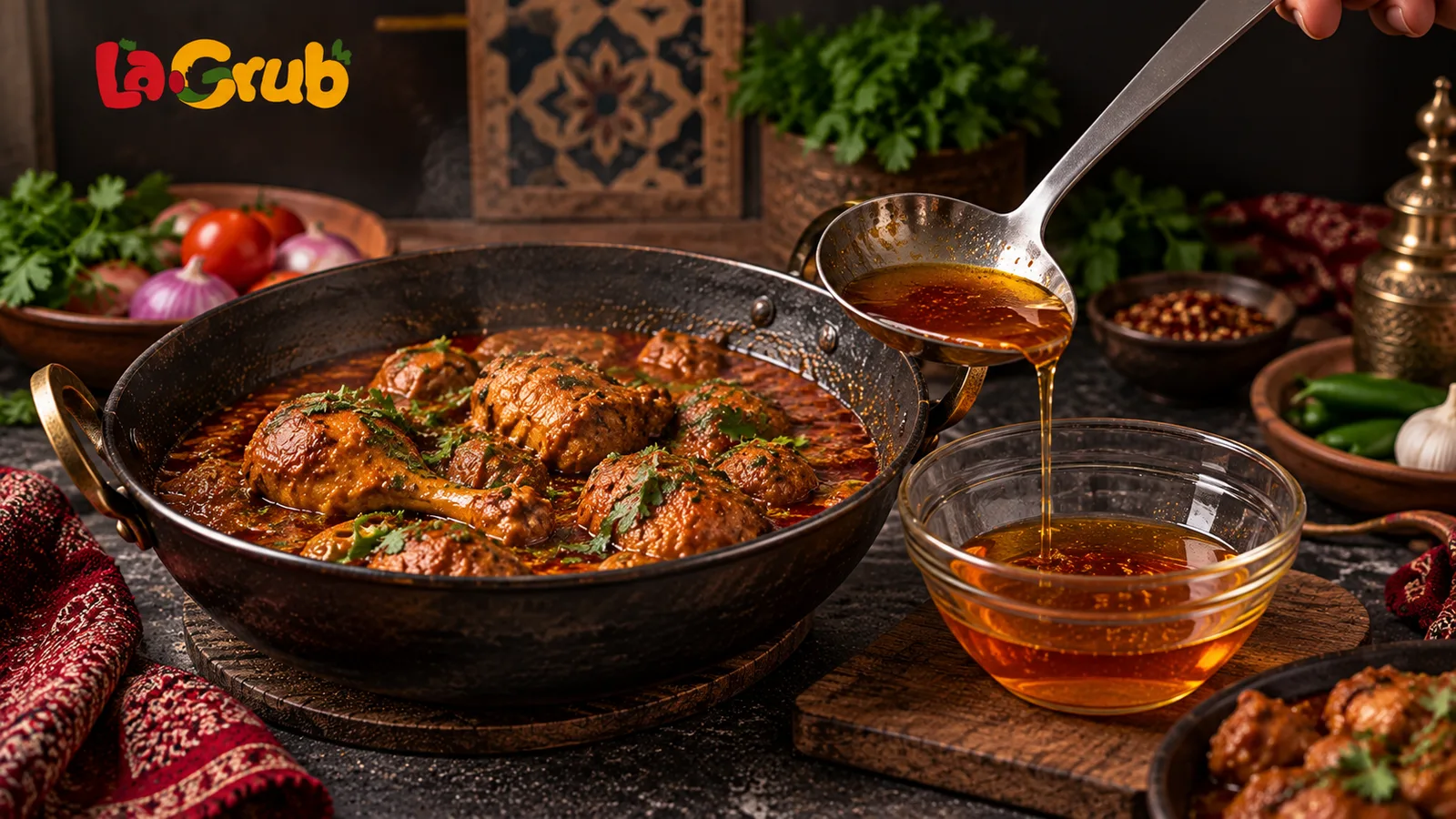
If you order a curry and find a large layer of oil on top, you do not have to eat all of it.
You can carefully spoon off some of the visible excess before serving.
For home cooking, however, controlling the amount at the beginning is usually easier.
Remember that a small sheen of oil and a thick floating layer are not the same thing.
If a recipe uses meat with a significant amount of fat, you may also find that more fat appears during cooking than you originally added.
The goal is not to make every Pakistani curry completely fat-free. Instead, aim for a balance that works for the dish and your own preferences.
How to Make Pakistani Food Less Oily Without Losing Flavour
The best low-oil Pakistani cooking does not depend on simply removing fat. It depends on becoming better at the other parts of the recipe.
Start by measuring your oil rather than pouring directly from the bottle.
Give onions enough time to cook. Keep your ginger and garlic from burning. Let tomatoes soften fully. Use the right spices for the dish instead of adding more of everything.
Control your heat and keep a small amount of water nearby for deglazing if necessary.
Fresh ingredients can also make lighter food feel more complete.
Coriander, mint, green chilli, ginger, lemon, yoghurt, and chutneys can add freshness and contrast without relying on another layer of oil.
Most importantly, choose the cooking method that fits the food.
A kebab can be grilled. A vegetable dish may need only a modest amount of fat. A daal can get much of its aroma from a carefully prepared tarka.
For more ideas that focus on practical home cooking rather than restaurant-style excess, LaGrub's Desi Dastarkhwan cookbook collection brings together authentic Desi recipes designed for home kitchens.
FAQs
Why Does Pakistani Curry Have Oil on Top?
Oil can become visible when water cooks out of a masala and the fat separates from the concentrated mixture. Meat may also release its own fat. A small amount of separation can be part of the cooking process, while a large floating layer may simply mean the dish contains more fat than you prefer.
Can Pakistani Food Be Cooked With Less Oil?
Yes. Many Pakistani dishes can be made with less oil by controlling the heat, stirring more often, using a suitable pan, and adding small splashes of water when masala begins sticking. Reducing oil does not mean you have to remove spices or flavour.
Does Oil Separation Mean the Masala Is Ready?
Oil separation can be one useful visual sign that a masala has reduced and cooked, but it should not be the only sign you use. The onions and tomatoes should be properly cooked, raw aromas should have changed, and the masala should have the right colour, smell, and texture for the recipe.
Why Do Pakistani Restaurants Use So Much Oil?
Some restaurants use more oil to create richness, manage large-batch cooking, prevent sticking, or achieve a glossy restaurant-style finish. However, practices vary widely. Restaurant food should not be treated as a perfect representation of everyday Pakistani home cooking.
Is Pakistani Home Food as Oily as Restaurant Food?
Not necessarily. Many Pakistani households prepare daal, vegetables, chicken salan, chana, rice, keema, and other everyday foods with much less visible oil than restaurant dishes. The amount varies by household, recipe, and personal preference.
Conclusion
So, why is Pakistani food so oily?
Part of the answer is technique.
Oil or ghee helps cooks brown onions, fry aromatics, develop spices, perform bhunao, and create the concentrated masala that forms the base of many Pakistani dishes. As moisture evaporates, some of that fat can separate and become visible.
But visible oil separation is not the same as needing a huge pool of oil.
Restaurant food, dawat dishes, weddings, and rich foods such as nihari or qorma can use more fat than everyday Pakistani home cooking. Simple daal, sabzi, chana, rice dishes, grilled foods, and home curries can be much lighter.
You can also cook many traditional dishes with less oil by adjusting the technique rather than stripping away the flavour.
Use a suitable pan, control the heat, stir carefully, cook your masala properly, and rely on onions, ginger, garlic, tomatoes, spices, herbs, lemon, yoghurt, and good cooking technique to create depth.
Pakistani food should taste rich because its flavours have been developed, not simply because oil has been added.
Explore LaGrub for more Desi recipes, practical cooking guides, and cookbooks that help you understand the techniques behind Pakistani food and recreate them confidently in your own kitchen.

Maimoona Ehtisham
Maimoona Ehtisham writes for LaGrub on cooking, recipes, and mindful culinary living.
Get a desi recipe worth cooking, every week
One tested recipe a week. Nothing else, and unsubscribe any time.


