

Wondering how to heat up meal prep without getting dry chicken, hard rice, or soggy vegetables? The key is choosing the right reheating method for each food. Whether you use a microwave, oven, air fryer, or hob, a few simple techniques can help keep your prepared meals moist, evenly heated, and enjoyable
Learning how to heat up meal prep properly can stop your food from becoming dry, soggy, rubbery, or cold in the middle. The best reheating method depends on what you prepared. Microwaves offer speed, while ovens, air fryers, and the hob can give better results for foods that need moisture or crisp texture.
How to Heat Up Meal Prep Properly
There is no single reheating method that works perfectly for every meal.
A container of curry and rice behaves very differently from roasted chicken, crispy potatoes, pasta, or vegetables. Therefore, the first step is not choosing a heating time. It is looking at what is inside your container.
Moist meals usually tolerate microwaving well. Foods that are meant to stay crisp may taste better when reheated in an oven or air fryer. Soups and curries can often be warmed gently on the hob.
The way you store your food also affects how well it reheats.
Check How Your Meal Was Stored
Before reheating, check whether the meal came from the refrigerator or freezer.
A refrigerated portion will usually heat much faster than a frozen block of food. Frozen meals may also heat unevenly if the centre has not thawed.
When practical, move a frozen meal to the refrigerator ahead of time so it can thaw gradually.
Separate Cold and Crispy Ingredients
Do not automatically heat every ingredient in the container.
Fresh salad, yoghurt-based sauces, herbs, avocado, pickles, crunchy toppings, and similar ingredients may be better added after the hot portion has been reheated.
Think of your container as three groups:
Hot ingredients such as rice, meat, cooked vegetables, pasta, curry, or stew
Cold ingredients such as salad, yoghurt sauce, or fresh garnishes
Crispy ingredients such as toasted toppings, fried elements, or crunchy vegetables
Separating these components can make a huge difference to the final texture.
Choose a Reheating Method
Think about what made the original meal enjoyable.
If it was soft, saucy, or moist, the microwave or hob may work well.
If the meal depends on crisp edges or a roasted texture, consider the oven or air fryer.
Choosing the method based on the food is much better than automatically microwaving every container.
How to Heat Up Meal Prep in the Microwave
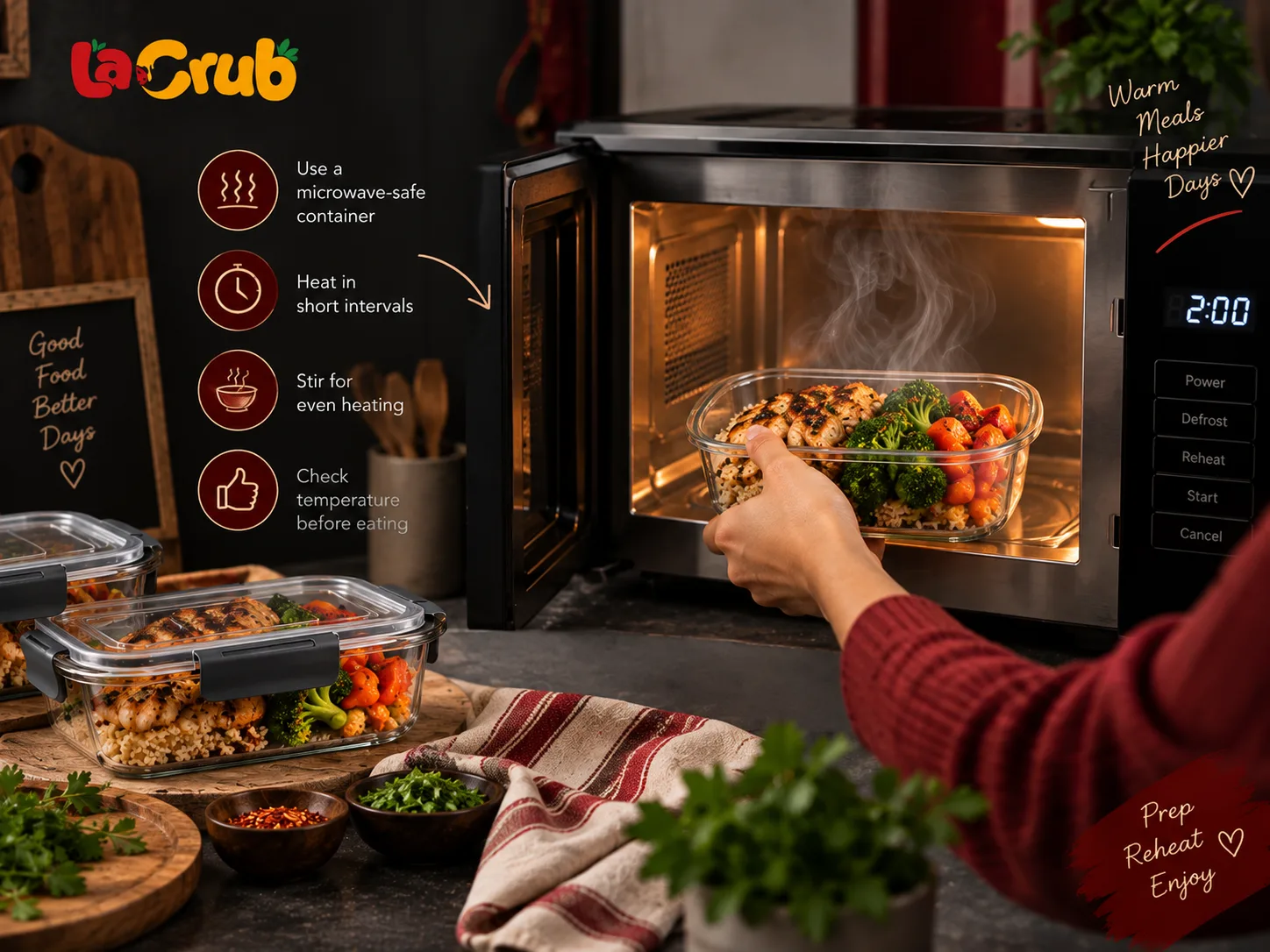
For most people, the microwave is the quickest way to reheat meal prep.
It is especially convenient at work, university, or on busy days when you do not want to wash another pan.
Start by making sure your container is suitable for microwave use. If you are unsure, transfer the food to an appropriate plate or bowl.
Spread the food into a reasonably even layer. Dense piles can make the outside extremely hot while the centre remains cold.
Loosely cover the meal when appropriate. This can help retain moisture and reduce splattering.
Heat the food in stages rather than assuming every meal needs the same number of minutes.
Stop partway through and stir, rotate, or rearrange the food where possible. Then continue heating until the meal is hot throughout.
Microwave strength, portion size, food density, and starting temperature all affect reheating time, so a fixed number of minutes will never suit every meal.
How to Keep Meal Prep From Drying Out
Dry food is one of the most common complaints about heating meal prep.
Chicken becomes tough. Rice becomes hard. Pasta loses its sauce. Meat becomes chewy.
Often, the problem is not the microwave itself. It is too much heat, too little moisture, or food that was already overcooked before storage.
Adding a small amount of moisture can help certain foods.
Rice may benefit from a little water before reheating. Pasta may need extra sauce. Chicken can be easier to enjoy when stored and reheated with a suitable sauce rather than completely dry.
Covering food while reheating can also help trap some steam.
However, do not add water to everything. Crispy foods need a different approach.
How to Stop Reheated Meal Prep Getting Soggy
Dryness and sogginess are opposite problems, but both often come from using the wrong reheating method.
Imagine a container with roasted chicken, rice, salad, sauce, and a crispy topping.
Putting the entire container in the microwave may warm the chicken and rice, but it can wilt the salad, warm the sauce, and soften the crunchy topping.
Instead, remove ingredients that should remain cold or crisp.
Reheat only the components that benefit from heat. Add the fresh elements afterwards.
For foods that were originally crispy, an oven or air fryer may give a better result than steaming them inside a microwave.
Should You Reheat Everything in the Same Container?
Sometimes.
A curry and rice meal may reheat well together because both components benefit from warmth and moisture.
Chicken, rice, and cooked vegetables may also be reheated together when their textures are compatible.
However, mixed meals become more difficult when they contain both hot and cold ingredients.
A chicken rice bowl with yoghurt sauce and fresh cucumber should not necessarily be treated as one reheating unit.
Store sensitive ingredients separately when you know they will need different treatment later.
This small amount of planning during meal prep can make reheating much easier.
How to Reheat Rice Meal Prep
Rice is convenient for meal prep, but refrigeration can make it feel firmer and drier.
When reheating rice meal prep, break apart large clumps before heating where possible.
Add a small amount of water when the rice seems dry. Covering it loosely can help create steam as it heats.
Stir or fluff the rice during or after reheating so the heat and moisture are distributed more evenly.
If you regularly prepare rice for weekly meals, LaGrub's guide to cooking basmati rice perfectly can help you start with fluffy grains that are easier to portion and pair with curries, chicken, vegetables, and other meal-prep dishes.
Remember that good reheated rice starts with good storage. Cool and store prepared rice properly rather than leaving it sitting out for long periods.
How to Reheat Chicken Meal Prep Without Drying It Out
Chicken can be difficult to reheat because it may become dry or rubbery.
The problem often begins during the first cooking session.
If chicken is heavily overcooked before refrigeration, another round of heating can make the texture even tougher.
When reheating chicken meal prep, use controlled heat and avoid continuing long after the chicken is hot.
Chicken stored with curry, gravy, or another suitable sauce may retain moisture better than a completely dry piece.
If using a microwave, shorter heating intervals can give you more control.
For roasted chicken, the oven may provide a better overall texture when you have enough time.
How to Reheat Pasta Meal Prep
Pasta can become dry, sticky, or overly soft after refrigeration.
Saucy pasta is often easier to reheat because there is already moisture in the dish.
If the pasta seems dry, add a small amount of suitable sauce or moisture before heating.
Stirring during reheating can help distribute sauce and heat more evenly.
On the hob, pasta can be warmed gently in a pan with extra sauce when needed.
The microwave is faster, especially for work lunches, but avoid heating the pasta much longer than necessary.
If possible, slightly under rather than over-softening pasta during the original cooking stage can also help it maintain a pleasant texture later.
How to Reheat Vegetables Without Making Them Mushy
Vegetables require a little more thought because different vegetables contain different amounts of water.
Soft vegetables can become even softer when repeatedly heated.
Roasted vegetables may lose their browned texture in the microwave because trapped steam softens the surface.
If you care about crisp edges, use an oven or air fryer where suitable.
If speed matters more than texture, microwave reheating is still practical.
Also remember that not every vegetable needs reheating. Fresh cucumber, tomato, lettuce, herbs, and similar ingredients may be better kept cold and added after the rest of the meal is warm.
Microwave vs Oven vs Air Fryer vs Hob
The best way to reheat meal prep depends on whether you value speed, moisture, or texture.
Microwave
The microwave is usually best for convenience.
It works particularly well for rice bowls, curries, stews, soups, saucy pasta, and many work lunches.
The biggest advantage is speed. The main challenge is uneven heating or texture changes when food is heated too aggressively.
Oven
The oven takes longer but gives you more control with baked, roasted, and crispy foods.
It can work well for chicken, casseroles, pasta bakes, pizza, roasted vegetables, bread, and larger portions.
For a deeper guide, LaGrub's How to Reheat Food in Oven explains how moisture, covering, temperature, and timing affect different leftovers.
Air Fryer
The air fryer can be useful when the outside of the food should be crisp.
Roasted potatoes, some chicken dishes, fried foods, and other texture-sensitive items may benefit from moving air and dry heat.
However, it is less suitable for very wet foods such as soups or loose curries.
Hob
The hob is excellent for food that benefits from stirring.
Soups, curries, chilli, stews, sauces, and some pasta dishes can be warmed gently in a saucepan or frying pan.
A small amount of added liquid can help when a dish has thickened in the refrigerator.
How to Heat Up Meal Prep Without a Microwave
You do not need a microwave to enjoy prepared meals.
The hob is one of the simplest alternatives. Place suitable food in a pan, use moderate or low heat where appropriate, and stir as it warms.
For dry foods, a small amount of liquid may help prevent sticking or drying.
The oven works well when you have more time, especially for larger portions and foods where texture matters.
An air fryer can be useful for smaller crispy portions.
Choose the method according to the meal rather than trying to force every dish into the same appliance.
How to Reheat Frozen Meal Prep
Freezing is useful when you prepare more food than you can reasonably eat from the refrigerator within a few days.
However, reheating frozen meal prep can be trickier because a solid frozen portion does not heat evenly.
When practical, transfer the meal from the freezer to the refrigerator in advance and let it thaw safely.
Once thawed, you can reheat it more like a normal refrigerated portion.
Some foods can also be reheated from frozen when the cooking method and packaging are suitable, but expect the process to take longer.
Why Does Frozen Meal Prep Heat Unevenly?
The outside of a frozen meal begins warming before the centre.
That means the edges may become extremely hot while the middle is still frozen.
Stirring, rotating, separating pieces, or using a suitable lower-power microwave setting can help.
Do not judge the entire container by one hot spoonful. Check different areas, especially the centre and thickest parts.
How to Reheat Meal Prep for Work
Work lunches need to be practical.
If you have only a microwave and a short break, prepare food that works with those limits.
Good options often include rice bowls, curries, stews, chilli, pasta, and other dishes that retain moisture.
Meals that depend entirely on a crisp texture may be less satisfying when your only option is an office microwave.
Design your meal prep for work around reheating from the beginning.
Pack cold sauces separately. Keep salad away from hot ingredients. Choose containers that are easy to transport and appropriate for the way you plan to reheat the meal.
This can save time and prevent disappointing lunches.
Which Meal Prep Foods Reheat Best?
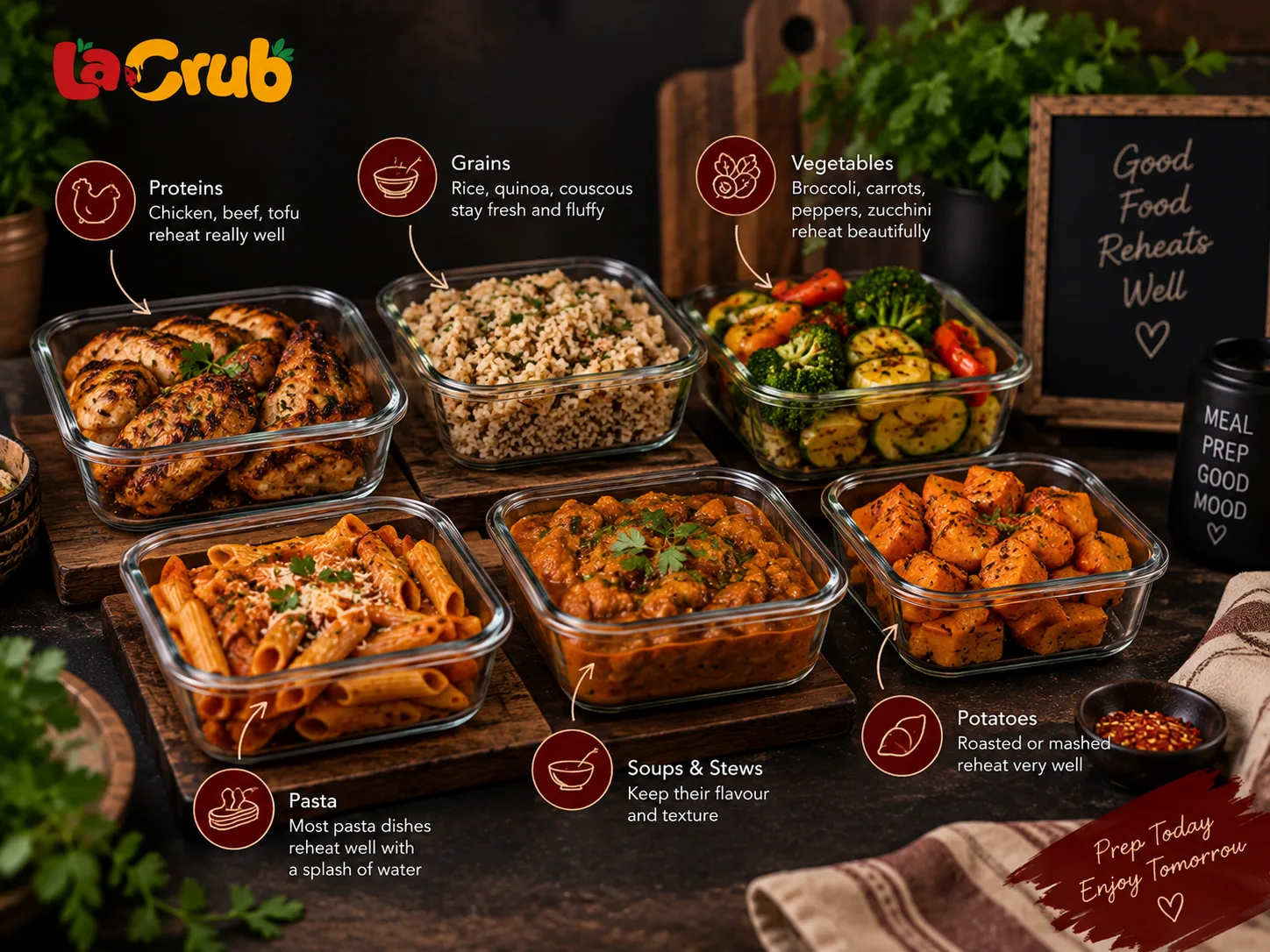
Some foods naturally handle reheating better than others.
Moisture-rich meals are often forgiving because sauces help protect the ingredients.
Good choices can include:
Curries, chilli, soups, stews, rice bowls, casseroles, saucy pasta, and many one-pot dishes
Foods needing more care include chicken breast, fish, eggs, plain pasta, and certain vegetables
Texture-sensitive foods include fried dishes, roasted potatoes, crispy coatings, toasted bread, and crunchy toppings
This does not mean you cannot meal prep texture-sensitive foods. You simply need to choose a reheating method that suits them.
If you want dishes that naturally work well as leftovers, LaGrub's One Pot Desi Meals for Busy Weeknights includes pulao, dal, khichdi, keema rice, and other comforting meals that can inspire batch cooking.
Do You Have to Reheat Meal Prep?
No. Not every prepared meal needs to be hot.
Some dishes are designed to be enjoyed cold.
Salads, certain wraps, yoghurt-based breakfasts, cold grain bowls, sandwiches, and other chilled foods can make excellent meal-prep options.
This can be especially useful when you do not have access to a microwave at work or university.
However, a food that should be refrigerated does not become shelf-stable just because you plan to eat it cold. Keep perishable prepared foods properly chilled until needed.
How to Reheat Meal Prep Safely
Texture matters, but food safety matters more.
Store cooked meals promptly and keep refrigerated foods properly chilled.
For a full week of meal prep, consider refrigerating the meals you will eat earlier and freezing suitable later portions rather than assuming every cooked dish should remain in the refrigerator for seven days.
When reheating, make sure the food becomes thoroughly hot rather than leaving a cold centre.
Try to heat the portion you intend to eat rather than repeatedly warming and cooling the same container.
Also use suitable cookware or containers for your chosen appliance.
FAQs
How Long Should You Heat Meal Prep in the Microwave?
There is no universal microwave time. It depends on the portion size, microwave power, type of food, and whether the meal is refrigerated or frozen. Heat in stages, stir or rotate where possible, and make sure the centre is thoroughly hot.
Can You Reheat Meal Prep Straight From the Fridge?
Yes, many refrigerated prepared meals can be reheated directly from the fridge. Choose a method that suits the food and make sure it heats evenly throughout.
Should You Thaw Frozen Meal Prep Before Reheating?
Thawing in the refrigerator can make many frozen meals easier and more even to reheat. Some meals can be heated from frozen when appropriate, but they usually require more time and attention to ensure the centre heats properly.
How Do You Reheat Meal Prep Without Drying It Out?
Use controlled heat, avoid heating longer than needed, and add a little suitable moisture to foods such as rice or pasta when necessary. Sauces and loosely covering certain dishes can also help retain moisture.
What Is the Best Way to Reheat Meal Prep Without a Microwave?
Use the hob for curries, soups, stews, sauces, and many pasta dishes. An oven works well for roasted and baked foods, while an air fryer can help restore crisp texture to suitable foods.
Conclusion
Learning how to heat up meal prep is less about finding one perfect reheating time and more about understanding the food in front of you.
A microwave is excellent when you need speed. An oven can protect or restore texture. An air fryer is useful for suitable crispy foods, while the hob gives you control over soups, curries, stews, pasta, and sauces.
The secret is to plan reheating before you even pack the meal.
Keep cold toppings separate. Protect crispy ingredients. Add moisture to foods that tend to dry out. Freeze suitable later portions, and avoid repeatedly heating the same food.
Most importantly, choose meals that suit your routine. If you only have a microwave at work, prepare microwave-friendly lunches. If you eat at home, use the oven, hob, or air fryer when they give you a better result.
Explore LaGrub for more meal-prep ideas, cooking techniques, and practical food guides that help everyday meals taste better. Once you match the right reheating method to the right food, reheating meal prep becomes much easier, and yesterday's meal can still feel like something you actually want to eat.

Maimoona Ehtisham
Maimoona Ehtisham writes for LaGrub on cooking, recipes, and mindful culinary living.
Get a desi recipe worth cooking, every week
One tested recipe a week. Nothing else, and unsubscribe any time.


